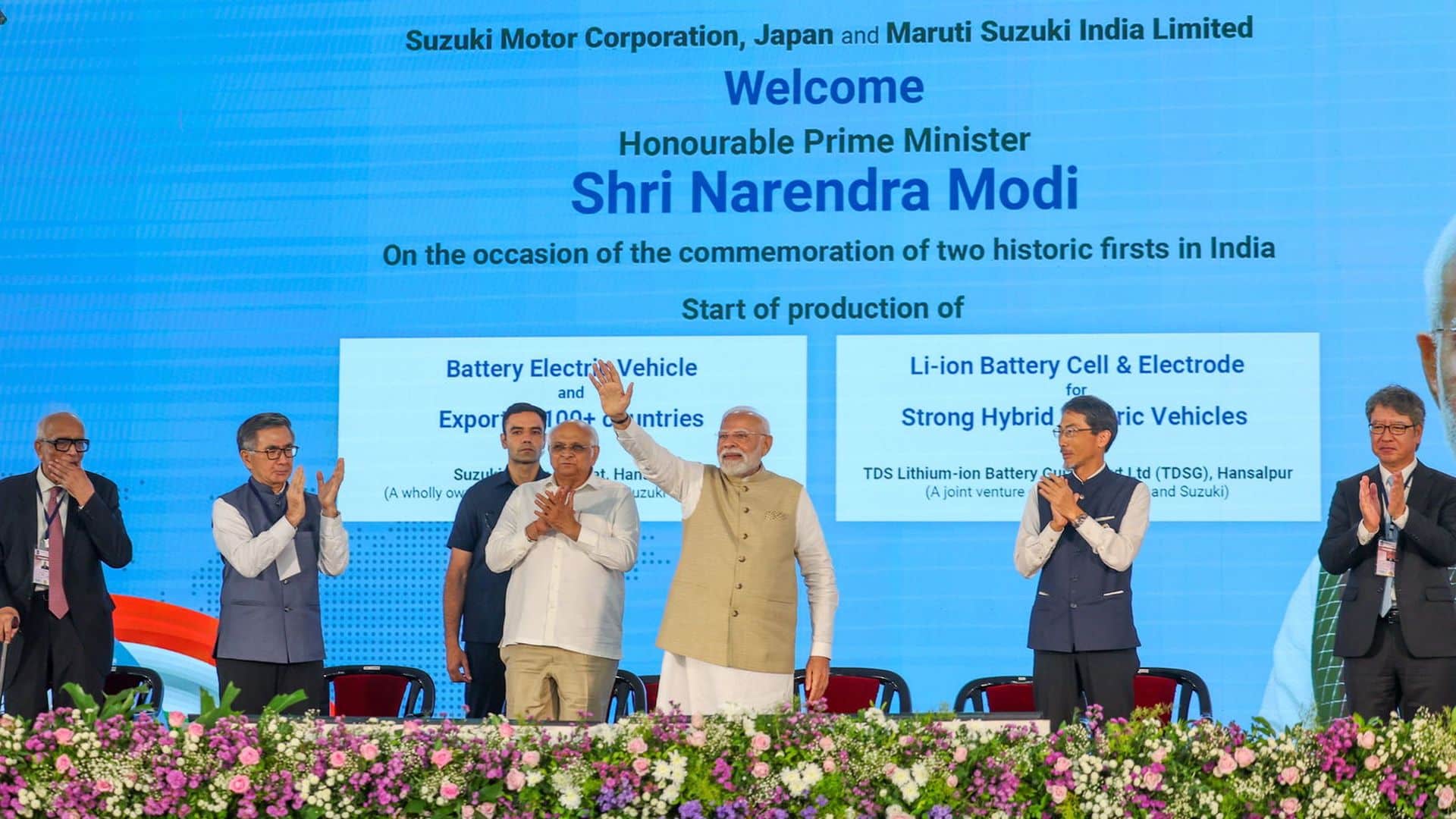


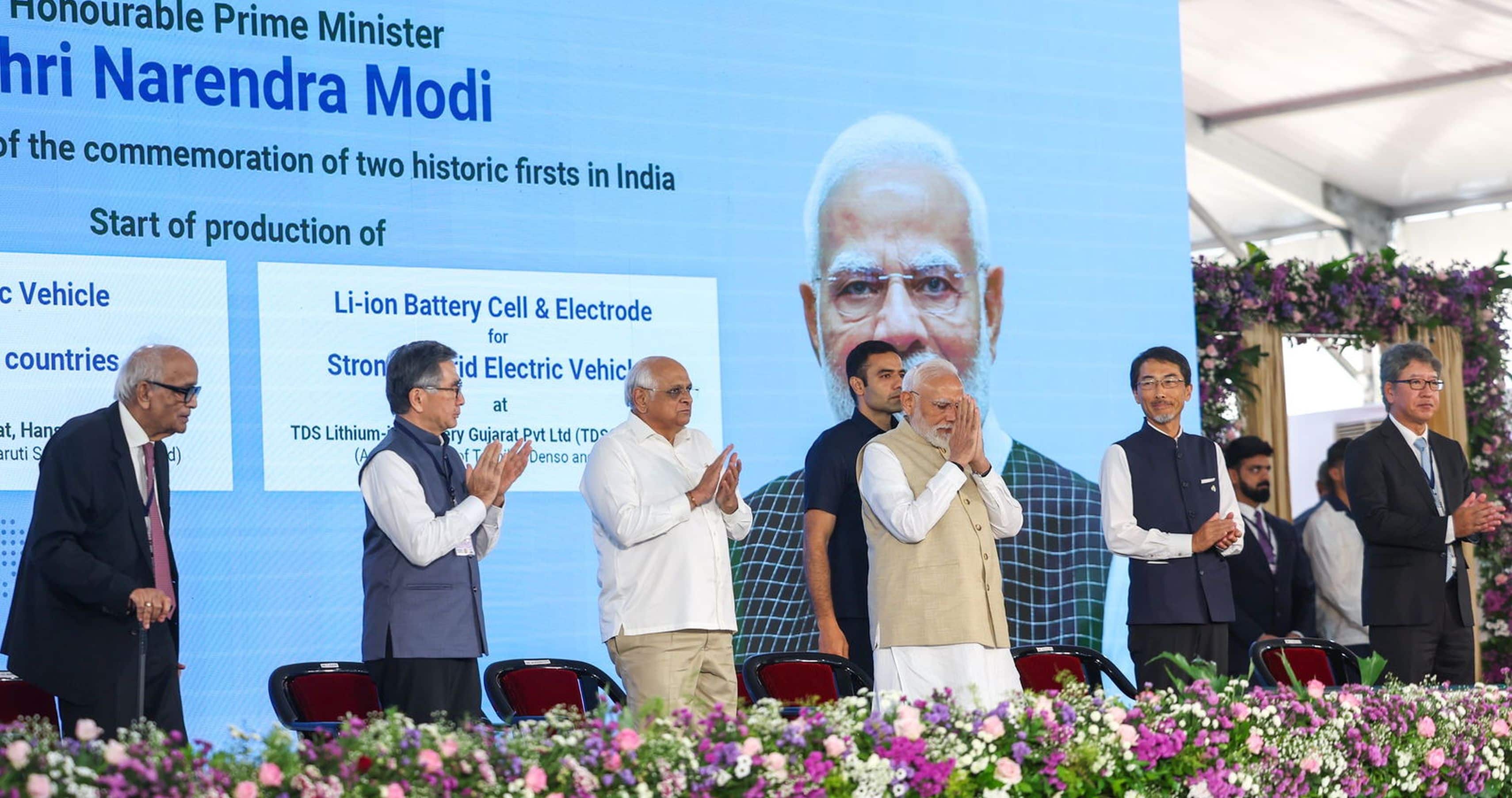
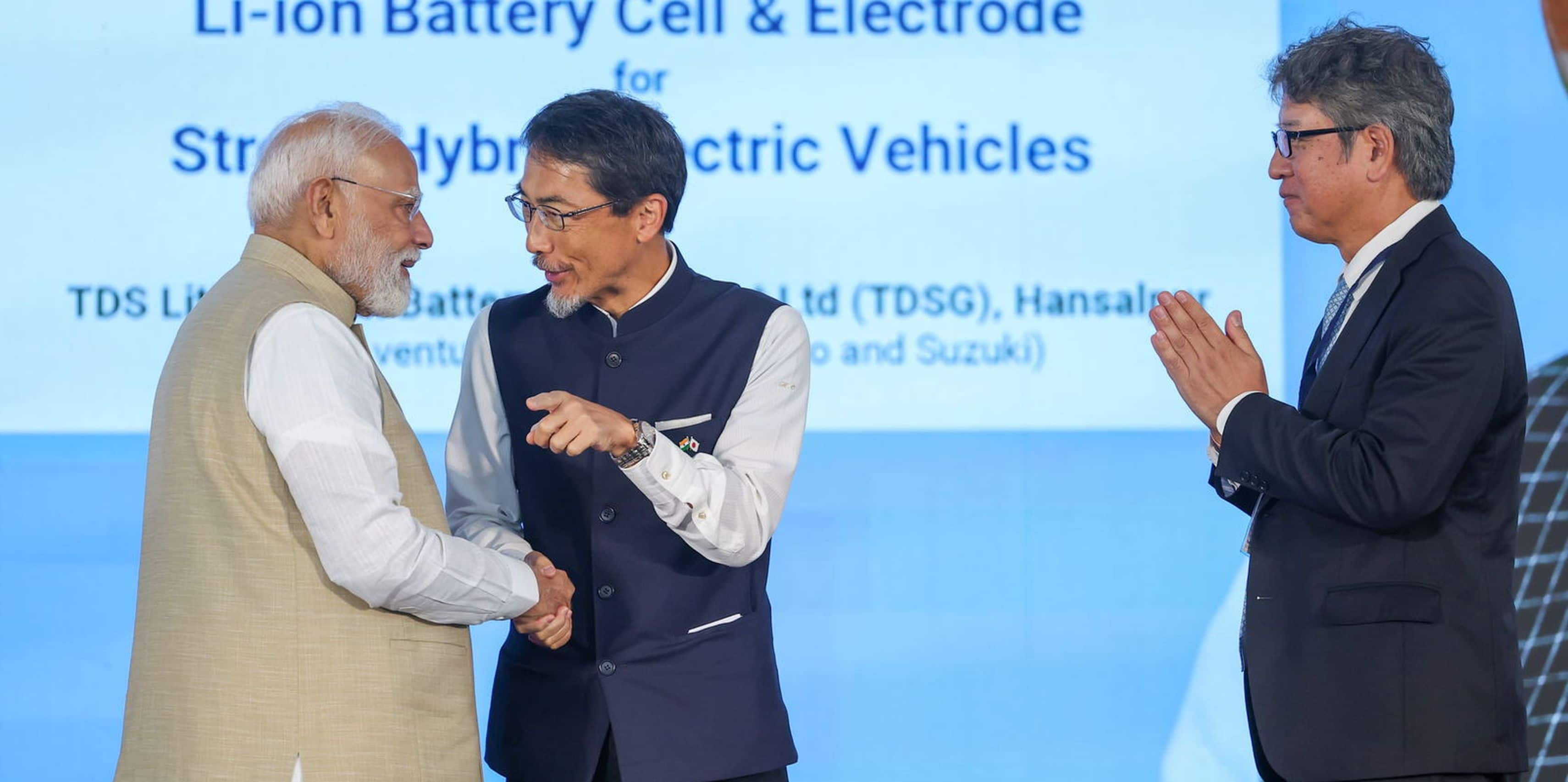
Taking large strides towards becoming Aatmanirbhar in the field of green energy, the Prime Minister Shri Narendra Modi inaugurated the green mobility initiatives in Hansalpur, Gujarat today. Addressing the gathering, the Prime Minister noted that amid the festive spirit of Ganeshotsav, a new chapter is being added to India’s ‘Make in India’ journey. He remarked that this marks a significant leap towards the shared goal of “Make in India, Make for the World.” Shri Modi highlighted that starting today, electric vehicles manufactured in India will be exported to 100 countries. He further announced the commencement of Hybrid Battery Electrode manufacturing in the country. Emphasising that today also brings a new dimension to the friendship between India and Japan, the Prime Minister extended his heartfelt congratulations to all citizens of India, to Japan, and to Suzuki Motor Corporation.
Recalling that the seeds of India’s success story were sown 12–13 years ago, Shri Modi said that in 2012, during his tenure as Chief Minister, land was allotted to Maruti Suzuki in Hansalpur. He emphasized that even at that time, the vision was of Aatmanirbhar Bharat and Make in India. He remarked that those early efforts are now playing a significant role in fulfilling the nation’s current resolutions.
Expressing his heartfelt remembrance of the late Mr. Osamu Suzuki, the Prime Minister stated that the Government of India had the honour of conferring the Padma Vibhushan upon him. He remarked that he is pleased to witness the vast expansion of the vision Mr. Osamu Suzuki had envisioned for Maruti Suzuki India.
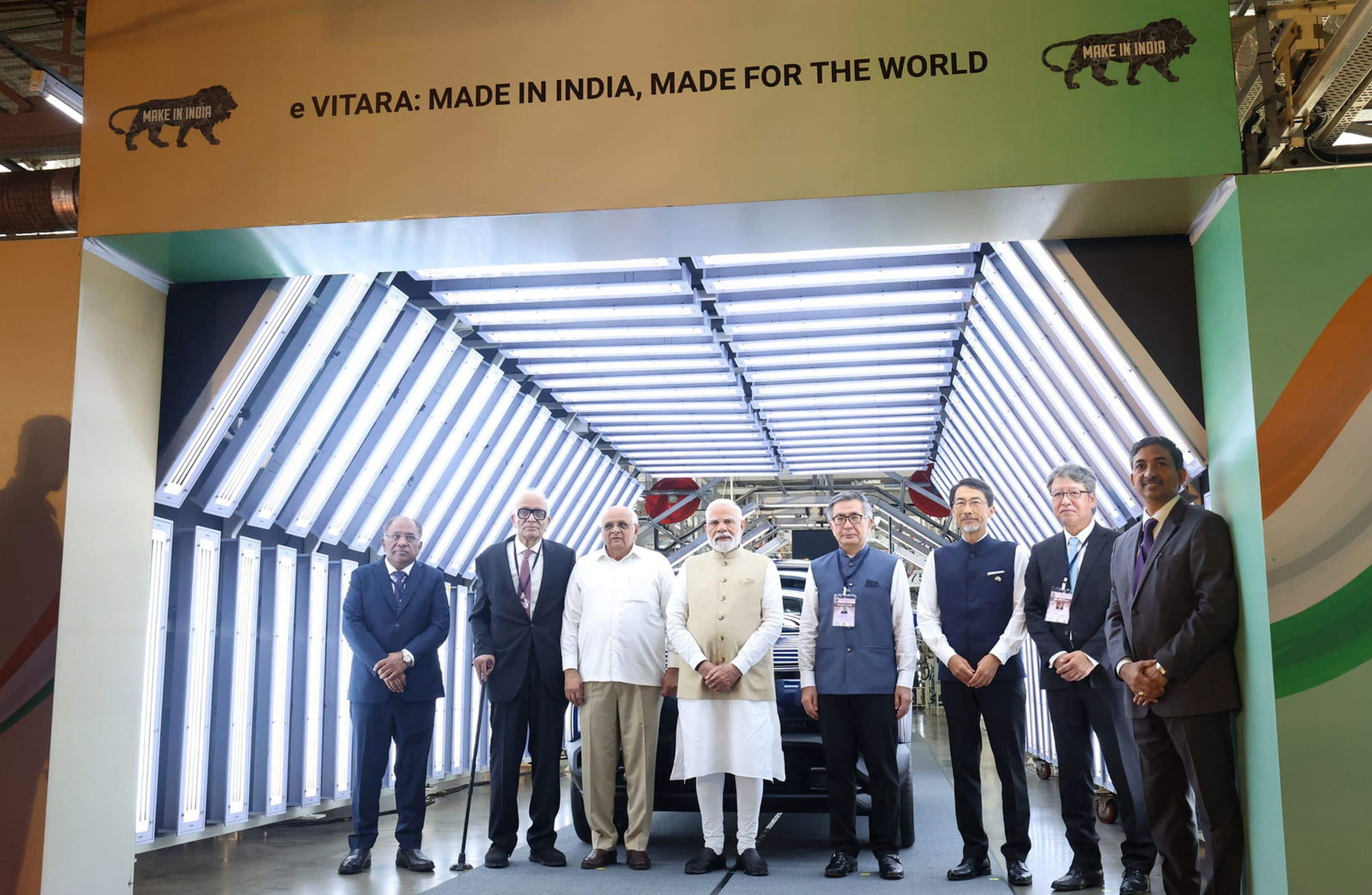
“India possesses the strength of democracy and the advantage of demography; India also has a vast pool of skilled workforce, creating a win-win situation for every partner”, emphasised Shri Modi. He pointed out that Suzuki Japan is manufacturing in India, and the vehicles produced here are being exported back to Japan. The Prime Minister remarked that this reflects not only the strength of India-Japan relations but also the growing trust of global companies in India. He stated that companies like Maruti Suzuki have effectively become brand ambassadors of Make in India. Noting that for four consecutive years, Maruti Suzuki has been India’s largest car exporter, the Prime Minister announced that from today, EV exports will also begin on the same scale. He affirmed that in dozens of countries around the world, the EVs that will run will proudly bear the label—Made in India.
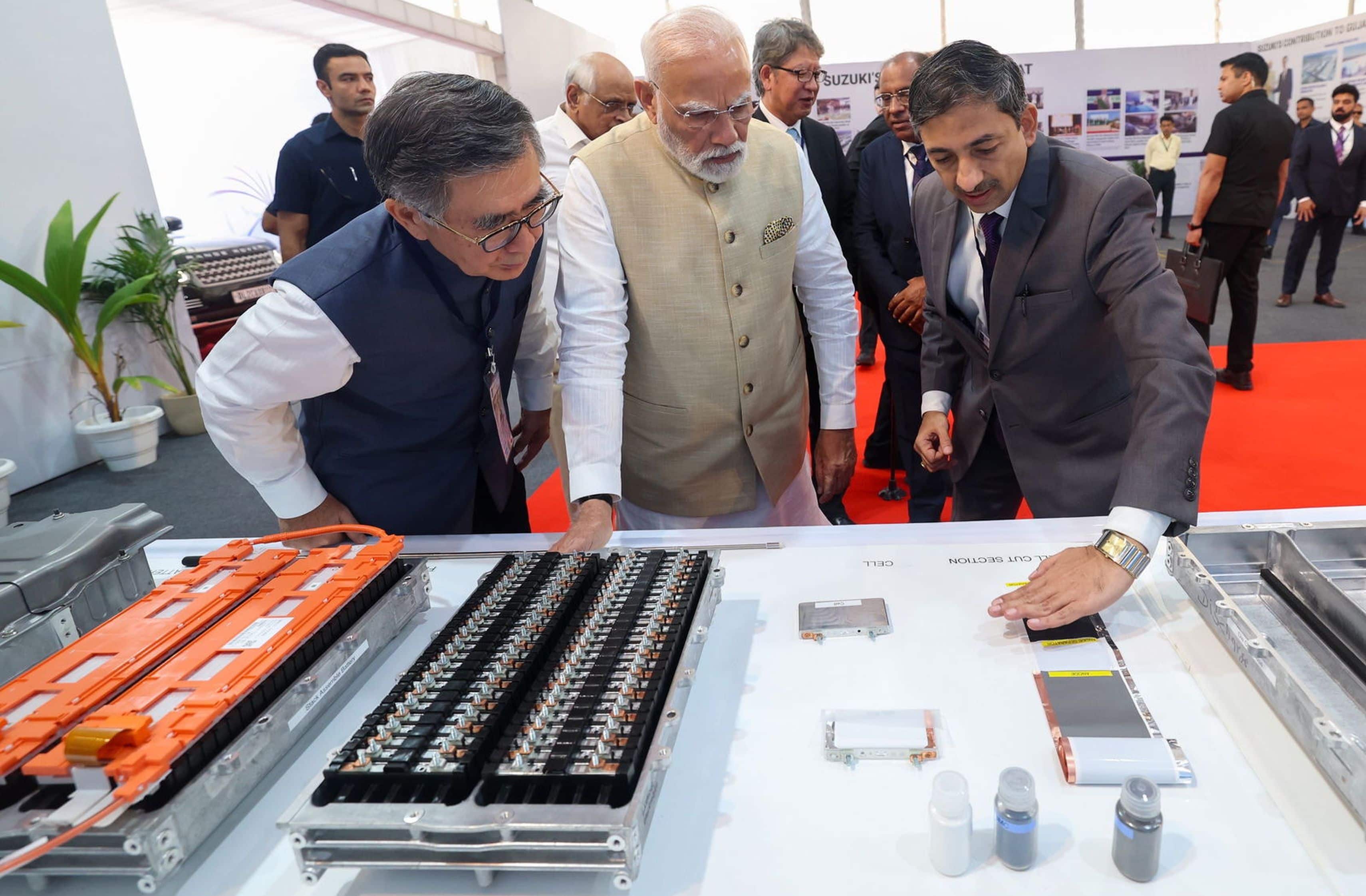
Underlining that the most critical component of the EV ecosystem is the battery, the Prime Minister said that until a few years ago, batteries in India were entirely imported. He added that to strengthen EV manufacturing, it was essential for India to begin domestic battery production. Shri Modi recalled that in 2017, the foundation of the TDSG battery plant was laid with this vision. He announced that under a new initiative by TDSG, three Japanese companies will jointly manufacture battery cells in India for the first time. He added that battery cell electrodes will also be produced locally within India. The Prime Minister emphasized that this localization will empower India’s self-reliance. He remarked that this will accelerate the growth of the hybrid electric vehicle sector. He extended his best wishes for this historic beginning.
Mentioning that until a few years ago, EVs were viewed merely as an alternative option, the Prime Minister emphasized his belief that EVs offer concrete solutions to multiple challenges. He recalled that during his visit to Singapore last year, he had proposed converting old vehicles and ambulances into hybrid EVs. Shri Modi commended Maruti Suzuki for accepting this challenge and developing a working prototype within just six months. He shared that he personally reviewed the prototype of the hybrid ambulance and said that these hybrid ambulances align perfectly with the PM E-DRIVE scheme. The Prime Minister noted that under this ₹11,000 crore scheme, a dedicated budget has been allocated for e-ambulances. He highlighted that hybrid EVs will help reduce pollution and offer a viable option to transform old vehicles.
Affirming that clean energy and clean mobility represent the future of India, Shri Modi emphasized that through such efforts, India is rapidly emerging as a reliable hub for clean energy and clean mobility.
The Prime Minister noted that at a time when the world is grappling with supply chain disruptions, India’s policy decisions over the past decade are proving highly effective. Recalling that in 2014, upon receiving the opportunity to serve the nation, preparations for this transformation were initiated, the Prime Minister highlighted the launch of the Make in India campaign and the creation of a conducive environment for both global and domestic manufacturers. He stated that India is working to make its manufacturing sector efficient and globally competitive. He added that industrial corridors are being developed to support this vision as well as plug-and-play infrastructure and logistics parks are being established across the country. The Prime Minister further noted that manufacturers in several sectors are being provided benefits under the Production Linked Incentive scheme.
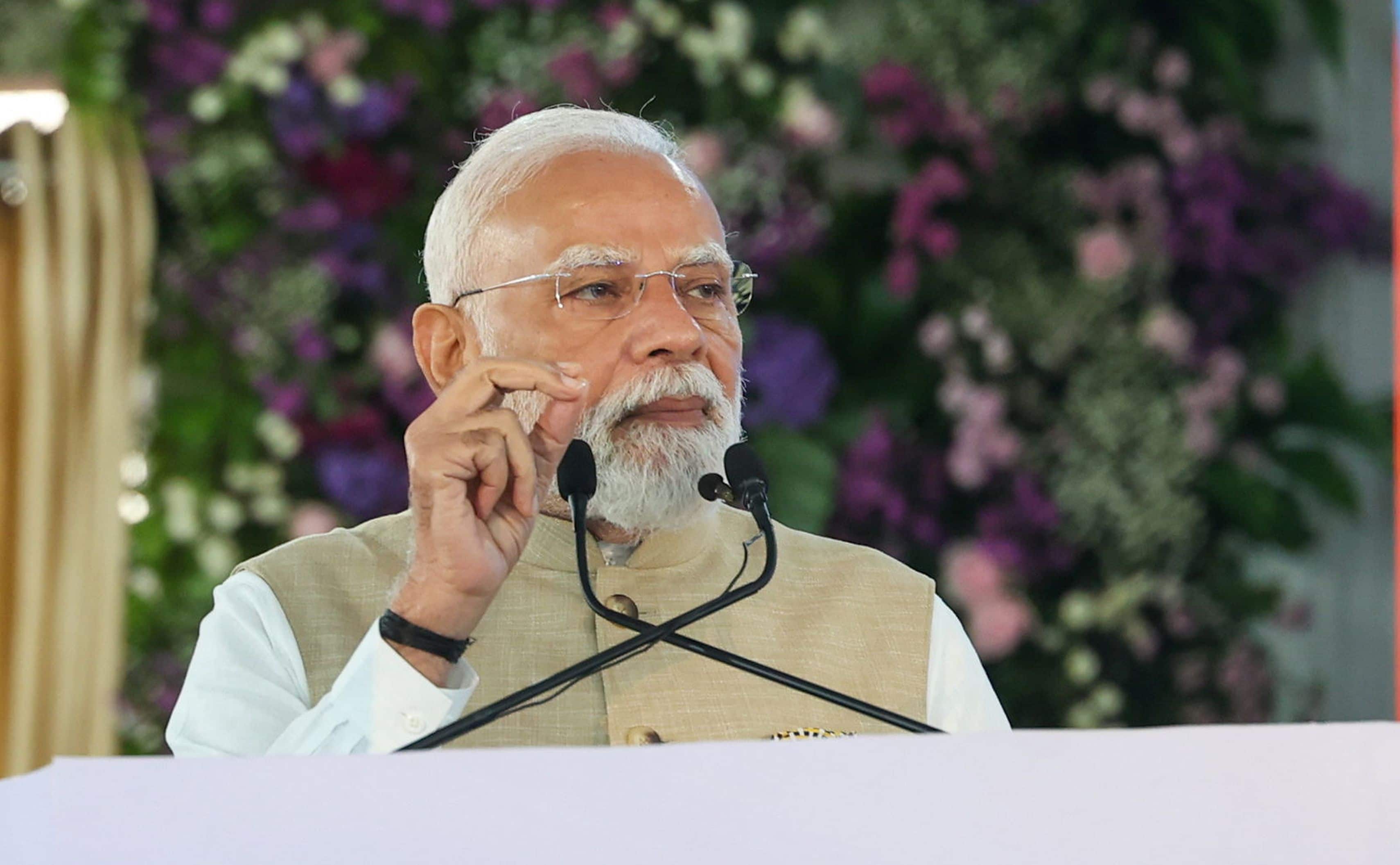
Stressing that through major reforms, longstanding challenges faced by investors have been resolved, Shri Modi remarked that these reforms have made it easier for investors to invest in Indian manufacturing. He highlighted the tangible outcomes of these efforts, noting that in this decade alone, electronics production in India has increased by nearly 500 percent. Emphasising that mobile phone production has surged by up to 2,700 percent compared to 2014, the Prime Minister added that defence production has also witnessed growth of over 200 percent in the past decade. He stated that this success is motivating all states across India and a healthy competition has emerged among states regarding reforms and investment, benefiting the entire nation. Shri Modi urged the states to come up with pro-development policies and reforms with enhanced ease of doing business facilities to attract global investors.
“India will not stop here; in sectors where India has performed well, the goal is to achieve even greater excellence”, asserted the Prime Minister underlining that the government is prioritizing Mission Manufacturing to drive this progress. He highlighted that India’s focus will now shift towards futuristic industries. Talking about how the semiconductor sector is taking off, with six plants set to be established across the country, Shri Modi affirmed the commitment to further advance semiconductor manufacturing in India.
Shri Modi added that the Government of India is also attentive to the challenges faced by the auto industry due to shortages of rare earth magnets. To strengthen national capabilities in this area, he mentioned the launch of the National Critical Mineral Mission. Under this mission, over 1,200 exploratory campaigns will be conducted across various locations in India to identify critical minerals.
Prime Minister announced that he will be visiting Japan next week, emphasising that the relationship between India and Japan goes far beyond diplomatic ties—it is rooted in culture and mutual trust. He remarked that both nations see their own progress in each other’s development. Pointing out that the journey initiated with Maruti Suzuki has now reached the speed of a bullet train, Shri Modi highlighted that the major initiative to realize the industrial potential of the India-Japan partnership began in Gujarat. Recalling the past, the Prime Minister noted that when the Vibrant Gujarat Summit was launched 20 years ago, Japan was a key partner. He appreciated the warmth with which the people of Gujarat cared for their Japanese counterparts. The Prime Minister shared that industry-related rules and regulations were printed in Japanese to facilitate ease of understanding. He added that arrangements were made for Japanese cuisine to ensure comfort for Japanese guests. He acknowledged the Japanese fondness for golf and stated that 7–8 new golf courses were developed keeping their interests in mind. Shri Modi further noted that colleges and universities in India are now prioritizing Japanese language education.
“India’s ongoing efforts are strengthening the people-to-people connect between India and Japan. Both nations are now able to meet each other’s needs in skill development and human resources”, highlighted the Prime Minister. He urged companies like Maruti Suzuki to actively participate in such initiatives and promote youth exchange programmes.
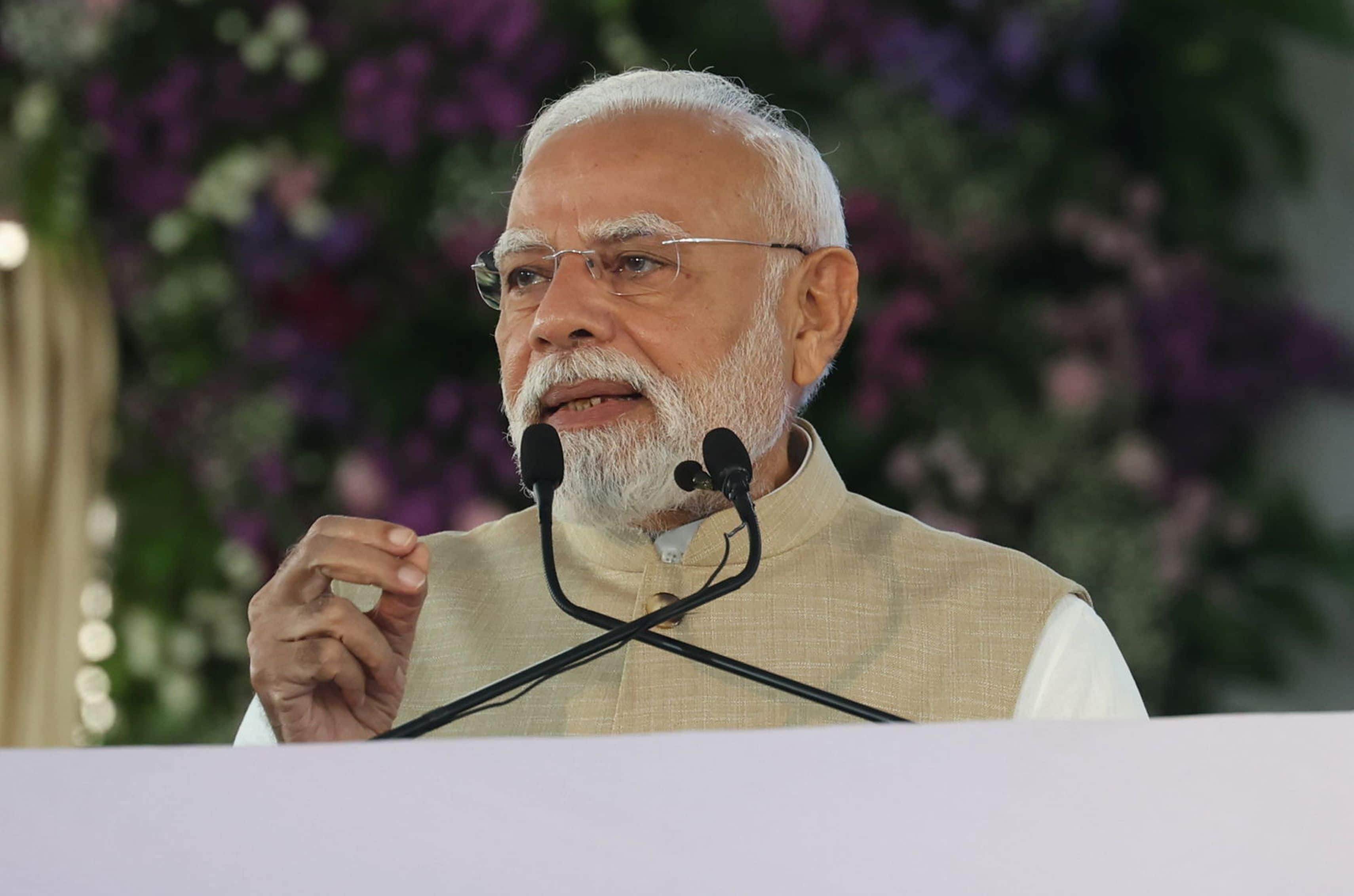
Emphasising the need to continue advancing in all key sectors in the coming years, the Prime Minister expressed confidence that today’s efforts will elevate the foundation of a developed India by 2047. He concluded by affirming his belief that Japan will remain a trusted partner in achieving this goal.
The Chief Minister of Gujarat, Shri Bhupendrabhai Patel, Japan’s Ambassador to India, H. E. Mr. Ono Keiichi, officials from Suzuki Motor Corporation were present among other dignitaries at the event.
Background
Prime Minister inaugurated two historic milestones at Suzuki Motor plant in Hansalpur, Ahmedabad. Together, these landmark initiatives underscore India’s emergence as a global hub for green mobility while advancing Prime Minister’s commitment to Make in India and Aatmanirbhar Bharat.
In a major example of the success of Make in India, Prime Minister inaugurated and flagged off the “e VITARA”, Suzuki’s first global strategic Battery Electric Vehicle (BEV). The Made-in-India BEVs will be exported to more than one hundred countries, including advanced markets such as Europe and Japan. With this milestone, India will now serve as Suzuki’s global manufacturing hub for electric vehicles.
Prime Minister also inaugurated the next phase of India’s battery ecosystem with the start of local production of hybrid battery electrodes at TDS Lithium-Ion Battery plant in Gujarat. The plant, a joint venture of Toshiba, Denso and Suzuki, will boost domestic manufacturing and clean energy innovation. This development ensures that more than eighty percent of the battery value will now be manufactured within India.
সম্পূৰ্ণ ভাষণ পঢ়িবলৈ ইয়াত ক্লিক কৰক
Make in India, Make for the World. pic.twitter.com/KZsJB9qrKt
— PMO India (@PMOIndia) August 26, 2025
India has the power of democracy, the advantage of demography and a very large pool of skilled workforce, making it a win-win situation for every partner. pic.twitter.com/TggFpUSLlR
— PMO India (@PMOIndia) August 26, 2025
The world will drive EVs that say… Made in India! pic.twitter.com/HFDCW83sqV
— PMO India (@PMOIndia) August 26, 2025
The Make in India initiative has created a favourable environment for both global and domestic manufacturers. pic.twitter.com/1RjY3VYjVo
— PMO India (@PMOIndia) August 26, 2025
In the coming times, the focus will be on futuristic industries and India is taking off in the semiconductor sector. pic.twitter.com/oVQcksqurI
— PMO India (@PMOIndia) August 26, 2025