Reforms by Conviction and Incentives

Published By : Admin | June 22, 2021 | 14:46 IST

The Covid-19 pandemic has come with whole new set of challenges to Governments across the world in terms of policy-making. India is no exception. Raising enough resources for public welfare while ensuring sustainability is proving to be one of the biggest challenges.

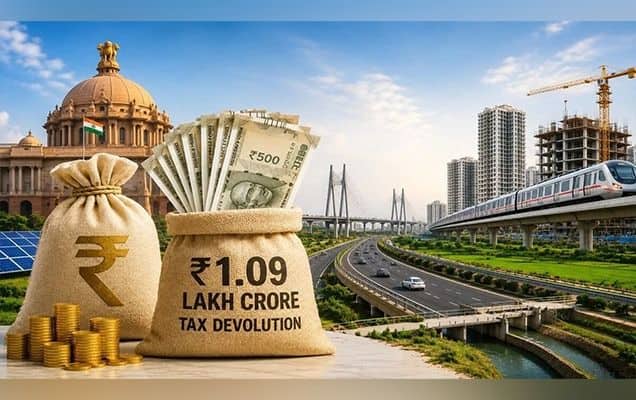
In this back-drop of financial crunch seen across the world, do you know that Indian states were able to borrow significantly more in 2020-21? It would perhaps pleasantly surprise you that states were able to raise an extra Rs 1.06 lakh crores in 2020-21. This significant increase in availability of resources was made possible by an approach of Centre-State bhagidari. 

When we formulated our economic response to the Covid-19 pandemic, we wanted to ensure that our solutions do not follow a ‘one size fits all’ model. For a federal country of continental dimensions, finding policy instruments at the national level to promote reforms by State Governments is indeed challenging. But, we had faith in the robustness of our federal polity and we moved ahead in the spirit of Centre-State bhagidari. 

In May 2020, as part of the Aatmanirbhar Bharat package, the Government of India announced that State Governments would be allowed enhanced borrowing for 2020-21. An extra 2% of GSDP was allowed, of which 1% was made conditional on the implementation of certain economic reforms. This nudge for reform is rare in Indian public finance. This was a nudge, incentivising the states to adopt progressive policies to avail additional funds. The results of this exercise are not only encouraging but also run contrary to the notion that there are limited takers for sound economic policies.

The four reforms to which additional borrowings were linked (with 0.25% of GDP tied to each one) had two characteristics. Firstly, each of the reforms was linked to improving the Ease of Living to the public and particularly the poor, the vulnerable, and the middle class. Secondly, they also promoted fiscal sustainability.

The first reform under the ‘One Nation One Ration Card’ policy required State Governments to ensure that all ration cards in the State under the National Food Security Act (NFSA) were seeded with the Aadhaar number of all family members and that all Fair Price Shops had Electronic Point of Sale devices. The main benefit from this is that migrant workers can draw their food ration from anywhere in the country. Apart from these benefits to citizens, there is the financial benefit from the elimination of bogus cards & duplicate members. 17 states completed this reform and were granted additional borrowings amounting to Rs. 37,600 crores. 

The second reform, aimed at improving ease of doing business, required states to ensure that renewal of business-related licences under 7 Acts is made automatic, online and non-discretionary on mere payment of fees. Another requirement was implementation of a computerized random inspection system and prior notice of inspection to reduce harassment and corruption under a further 12 Acts. This reform (covering 19 laws) is of particular help to micro and small enterprises, who suffer the most from the burden of the ‘inspector raj'. It also promotes an improved investment climate, greater investment and faster growth. 20 states completed this reform and were allowed additional borrowing of Rs. 39,521 crores. 

The 15th Finance Commission and several academics have emphasised the crucial importance of sound property taxation. The third reform required states to notify floor rates of property tax and of water & sewerage charges, in consonance with stamp duty guideline values for property transactions and current costs respectively, in urban areas. This would enable better quality of services to the urban poor and middle class, support better infrastructure and stimulate growth. Property tax is also progressive in its incidence and thus the poor in urban areas would benefit the most. This reform also benefits municipal staff who often face delay in payment of wages. 11 states completed these reforms and were granted additional borrowing of Rs. 15,957 crores. 

The fourth reform was introduction of Direct Benefit Transfer (DBT) in lieu of free electricity supply to farmers. The requirement was for formulation of a state-wide scheme with actual implementation in one district on a pilot basis by year end. Additional borrowing of 0.15% of GSDP was linked to this. A component was also provided for reduction in technical & commercial losses and another for reducing the gap between revenues and costs (0.05% of GSDP for each). This improves the finances of distribution companies, promotes conservation of water and energy and improves service quality through better financial and technical performance. 13 states implemented at least one component, while 6 states implemented the DBT component. As a result, Rs. 13,201 crore of additional borrowings was permitted. 

Overall, 23 states availed of additional borrowings of Rs. 1.06 lakh crores out of a potential of Rs. 2.14 lakh crores. As a result, the aggregate borrowing permission granted to states for 2020-21 (conditional and unconditional) was 4.5% of the initially estimated GSDP. 

For a large nation with complex challenges as ours, this was a unique experience. We have often seen that for various reasons, schemes and reforms remain un-operational often for years. This was a pleasant departure from the past where the Centre & States came together to roll out public friendly reforms in a short span of time amidst the pandemic. This was made possible due to our approach of Sabka Saath, Sabka Vikas and Sabka Vishwas. Officials who have been working on these reforms suggest that without this incentive of additional funds, enactment of these policies would have taken years. India has seen a model of ‘reforms by stealth and compulsion’. This is a new model of ‘reforms by conviction and incentives’. I am thankful to all the states who took the lead in ushering in these policies amidst tough times for the betterment of their citizens. We shall continue working together for the rapid progress of 130 crore Indians.

Explore More
শ্ৰী ৰাম জনমভূমি মন্দিৰৰ ধ্বজাৰোহণ উৎসৱত প্ৰধানমন্ত্ৰীৰ সম্বোধনৰ অসমীয়া অনুবাদ

Popular Speeches

শ্ৰী ৰাম জনমভূমি মন্দিৰৰ ধ্বজাৰোহণ উৎসৱত প্ৰধানমন্ত্ৰীৰ সম্বোধনৰ অসমীয়া অনুবাদ
Budget 2026 aims to build job-ready, formal talent base, say experts

Media Coverage

Budget 2026 aims to build job-ready, formal talent base, say experts
NM on the go

Nm on the go

Always be the first to hear from the PM. Get the App Now!
...
কাশী-তামিল সংগমম আৰু এক ভাৰত, শ্ৰেষ্ঠ ভাৰতলৈ শ্ৰদ্ধাঞ্জলি
January 15, 2026

A few days ago, I was in the sacred land of Somnath to be part of the Somnath Swabhiman Parv, marking a thousand years since the first attack on Somnath, which took place in 1026. People from all across India had come to be part of this moment of remembrance, united by a shared reverence for history, culture and the enduring spirit of the people of India. During the programme, I met a few people who had previously come to Somnath during the Saurashtra-Tamil Sangamam and had been to Kashi during the Kashi-Tamil Sangamam. Their words of appreciation for such platforms touched me and so, I thought of sharing a few thoughts on this subject.

During one of the Mann Ki Baat programmes, I had said that not learning Tamil is a major regret of my life. Fortunately, over the last few years, our Government has had several opportunities to further popularise Tamil culture across India and to deepen the spirit of ‘Ek Bharat, Shreshtha Bharat.’ A prime example of such an effort is the Kashi-Tamil Sangamam. In our ethos, Sangam or confluence has a special place. Seen in this light, the Kashi-Tamil Sangamam stands out as a truly distinctive initiative, one that celebrates the living unity of India’s many traditions while honouring their unique identities.

And what can be a better place than Kashi to host such a Sangamam. The same Kashi, which has remained a civilisational anchor from time immemorial… where, for thousands of years, people from all over have come in search of knowledge, meaning and Moksha.

Kashi’s connection with Tamil people and culture is very deep. It is in Kashi that Baba Vishwanath resides, while Tamil Nadu has Rameswaram. Tenkasi in Tamil Nadu is known as Kashi of the south or Dakshin Kashi. Saint Kumaraguruparar Swamigal forged a lasting link between Kashi and Tamil Nadu through his spirituality, scholarship and institution-building. Mahakavi Subramania Bharati, one of Tamil Nadu’s greatest sons, found in Kashi a space of intellectual growth and spiritual awakening. It was here that his nationalism deepened, his poetry sharpened and his vision of a free, united India took clearer shape. There are several such instances that highlight this close bond.

The first edition of Kashi-Tamil Sangamam took place in 2022. I recall attending the inauguration programme. Scholars, artisans, students, farmers, writers, professionals and many others from Tamil Nadu travelled to Kashi, Prayagraj and Ayodhya.

Subsequent editions expanded the scale and depth of this effort. The aim was to keep introducing fresh themes, innovative formats and deeper engagement, thus ensuring that the Sangamam continued to evolve while remaining rooted in its core spirit. In the second edition in 2023, technology was used on a larger scale to ensure that language does not become a barrier for people. In the third edition, the focus was on Indian knowledge systems. At the same time, academic discussions, cultural performances, exhibitions and interactions witnessed greater participation. Thousands of people have taken part in these events.

The fourth edition of the Kashi Tamil Sangamam commenced on 2nd December 2025. The theme picked was very interesting- Tamil Karkalam - Learn Tamil. It presented a unique opportunity for people in Kashi and other parts to learn the beautiful Tamil language. Teachers came from Tamil Nadu and the students of Kashi had a very memorable experience!

There were many other special events this time.

Tholkappiyam, the ancient Tamil literary classic, was translated into 4 Indian languages and 6 foreign languages.

A unique event, Sage Agasthya Vehicle Expedition (SAVE), was undertaken from Tenkasi to Kashi. On the way, various initiatives such as eye camps, health awareness camps, digital literacy camps, among other things, were held. The expedition paid homage to King Adi Veera Parakrama Pandiyan, the great Pandya ruler who spread the message of cultural oneness. There were exhibitions at Namo Ghat, academic sessions at Banaras Hindu University, as well as cultural programmes.

One of the things that makes me most happy about the Kashi-Tamil Sangamam is the participation of thousands of youngsters. It illustrates the passion among our Yuva Shakti to deepen their connect with our roots. It is a brilliant platform for them to showcase their talent and creativity during the various cultural programmes.

In addition to the Sangamam, efforts have been made to make the journey to Kashi memorable for the participants. The Indian Railways operated special trains to take people from Tamil Nadu to Uttar Pradesh. In many railway stations, particularly in Tamil Nadu, they were cheered, and the train journey was marked by melodious songs and conversations.

Here, I would also like to appreciate my sisters and brothers of Kashi and Uttar Pradesh for their warmth and hospitality shown to the delegates of the various Kashi-Tamil Sangamams. Several people opened the doors of their homes for the guests from Tamil Nadu. The local administration worked round the clock to ensure the guests had a seamless experience. As the MP from Varanasi, I could not be prouder!

This time, the valedictory function of the Kashi-Tamil Sangamam was held in Rameswaram and it was graced by the Vice President of India, Thiru CP Radhakrishnan Ji, who is himself a proud son of Tamil Nadu. He delivered a very inspiring address, emphasising India’s spiritual greatness and how such platforms deepen national integration.

The Kashi Tamil Sangamam has delivered meaningful outcomes like strengthening cultural understanding, fostering academic and people-to-people exchanges and creating lasting bonds between parts of the country that share a civilisational ethos. In the coming times, we want to make this platform even more vibrant. Most importantly, it has furthered the spirit of ‘Ek Bharat, Shreshtha Bharat.’ This spirit has flourished for centuries through our festivals, literature, music, art, cuisine, architecture, systems of knowledge and more.

This time of the year is very auspicious for people across the length and breadth of India. People are enthusiastically marking various festivals like Sankranti, Uttarayan, Pongal, Magh Bihu, which are, among other things, associated with the Sun, nature and farming. These festivals bring people together and deepen the spirit of harmony in our society. I convey my best wishes for these festivals and hope they continue to inspire us to deepen national unity through our shared heritage and collective participation.