



1. At the invitation of His Excellency Shri Ram Nath Kovind, President of the Republic of India and Smt. Savita Kovind, the First Lady, His Excellency U Win Myint, President of the Republic of the Union of Myanmar and Daw Cho Cho, the First Lady are paying a State Visit to India from 26 to 29 February 2020. President U Win Myint and the Myanmar delegation will also be visiting places of historical and cultural importance, including Bodh Gaya and Agra. The visit reinforced the tradition of high level interactions, symbolizing the strong friendly relations existing between the two neighbours.
2. A ceremonial welcome was accorded to President U Win Myint and First Lady Daw Cho Cho at Rashtrapati Bhawan, New Delhi on 27 February 2020. President Shri Ram Nath Kovind hosted a State Banquet in honour of the visiting Dignitaries. Prime Minister Shri Narendra Modi also met and hosted President U Win Myint for a lunch. Dr. S. Jaishankar, External Affairs Minister of India also called on President U Win Myint. Ten Memoranda of Understanding (MoUs)/Agreements were exchanged during the visit.
3. During the interactions, the leaders discussed a wide range of bilateral, regional and international issues of common interest. They emphasized that regular high level interactions have added momentum to the bilateral relations. They welcomed the synergies between Myanmar’s independent, active and non-aligned foreign policy and India’s ‘Act East’ and ‘Neighbourhood First’ policies, and reaffirmed their commitments to further strengthen partnership, explore new avenues of cooperation in order to expand bilateral relations for the mutual benefit of the two countries and peoples.
4. Both sides reiterated their mutual respect for the already- demarcated portion of the boundary between the two countries and affirmed their commitments to settle pending issues through the existing bilateral mechanisms, such as the Joint Boundary Working Group Meeting.
5. The two sides emphasized the centrality of connectivity in their relationship and reaffirmed their commitments to expedite the completion of the various India-funded projects presently underway in Myanmar, with Myanmar’s continued support and facilitation towards their execution.
6. Welcoming the opening of the two land border crossing points at Tamu-Moreh and Rihkhawdar-Zowkhawthar as international border gates, they noted the need to further facilitate the easy movement of passenger and cargo traffic by streamlining procedures and expeditiously developing infrastructure. The Indian side reiterated its commitment towards the construction of the modern Integrated Check Post as Phase-I at Tamu, Myanmar. Both sides agreed to work together for the earliest commencement of the project. The two sides committed to the early conclusion of discussions on the pending bilateral Motor Vehicles Agreement to facilitate cross border movement of vehicles. In this context, both sides welcomed the MoU between their respective private operators to launch a Coordinated Bus Service between Imphal and Mandalay by 7 April 2020.
7. Emphasizing the importance of promoting the well-being of the people in the remote areas across the borders of the two countries, both sides agreed to commence the establishment of the border haats, with a priority to carry out a pilot project, which was previously agreed by both sides in accordance with the MoU signed in 2012. The two sides look forward to setting up of border haats after finalizing the mutually agreed Mode of Operation.
8. Both sides also expressed satisfaction at the success of the Myanmar-India Border Area Development Programmes in providing infrastructure and socio-economic development in Chin State and Naga Self-Administered Region through the Indian grant-in-aid projects. Under this, 43 schools, 18 health centres and 51 bridges and roads have been constructed in the above areas over the last three years. Both sides acknowledged with satisfaction that 29 additional projects under the 4th year’s tranche of assistance of US$ 5 million, will be implemented in 2020-21.
9. Both leaders took note of the positive developments related to the Sittwe Port and the Kaladan Multi Modal Transit Transport Project. They welcomed the appointment, since 1 February 2020, of a Port Operator to operate and maintain the Sittwe Port and Paletwa Inland Water Transport Terminal and associated facilities. Once operational, this port will contribute to the economic development of the region and benefit the local people. Both sides also reaffirmed their commitment to the early completion of the Paletwa-Zorinpui road – the final leg of the Kaladan project. Once completed, the road will connect Sittwe Port to North-East India, generating more traffic for the Port. India appreciated Myanmar’s cooperation and efforts in facilitating the movement of project personnel, construction material and equipment for the construction of the road component of Kaladan Multi Modal Transit Transport Project across the Mizoram border through Zorinpui southwards towards Paletwa.
10. The two leaders took positive note of the progress of work on Kalewa - Yargyi road section of the Trilateral Highway, the work on which is expected to be completed by 2021. India reiterated its commitment to the early upgradation of the 69 bridges on the trilateral highway, with Myanmar agreeing to facilitate this.
11. Myanmar appreciated India’s assistance in the area of capacity building and training. Both sides agreed to jointly make flagship projects, such as Myanmar Institute of Information and Technology (MIIT) and Advanced Centre for Agricultural Research and Education (ACARE), sustainable on a long-term basis. Both leaders looked forward to the earliest upgradation of the Women’s Police Training Centre at Yamethin after finalization of modalities of the project. Both sides acknowledged the role which the Myanmar-India Industrial Training Centres at Pakokku and Myingyan, established with Indian grant assistance, are playing in imparting skills to Myanmar youth to enhance their employability. They noted efforts to build two new Centres at Monywa and Thaton which are progressing well.
12. India reiterated its commitment to support Myanmar’s efforts for promoting peace, stability and the socioeconomic development in Rakhine State through the Rakhine State Development Programme. Myanmar appreciated India’s provision of 250 pre-fabricated houses and relief materials for displaced persons in northern Rakhine in 2019. Both sides agreed to expedite the implementation of a set of 12 projects under the second phase of the Rakhine State Development Programme and to further strengthen their development cooperation within the framework of High Impact Community Development Projects and Quick Impact Projects under the Mekong-Ganga Cooperation mechanism. In this regard, they welcomed the signing of the Agreement on Indian Grant Assistance for Implementation of Quick Impact Projects (QIP) during the State Visit.
13. India reaffirmed its support for the recent steps taken by the Government of Myanmar to address the challenges in Northern Rakhine. India also expressed its support for the bilateral agreements signed between Myanmar and Bangladesh for the repatriation of the displaced persons from Rakhine State and hoped that Myanmar and Bangladesh would continue to work together for voluntary, sustainable and speedy repatriation of displaced people currently in the Cox Bazar area of Bangladesh to Myanmar in accordance with their bilateral agreements. The Myanmar side thanked India for its understanding of the complexity of the issue and for all its support extended to Myanmar.
14. The two sides noted the need to make efforts to enhance bilateral trade and economic engagement to their full potential. They noted that steps such as improving connectivity, market access, easing financial transactions, facilitating business-to-business connect and enabling bilateral and regional trading agreements would contribute to socio-economic development of both sides.
15. Both sides agreed to work together to enable the launch of India’s RuPay Card in Myanmar at the earliest, noting that National Payment Corporation of India (NPCI) needs to adhere to Myanmar laws and regulations and that the launch of RuPay Card would stimulate the economy of Myanmar and facilitate tourism and business from India.
16. The two sides also agreed to explore the creation of an India-Myanmar digital payment gateway which would help expand options for cross border remittance between the two countries. They also expressed interest in exploring a bilateral mechanism for settlement in local currency with the aim to boost cross border trade. In this regard, the two sides agreed to expeditiously convene the existing mechanism of India-Myanmar Joint Trade Committee meetings.
17. Both sides recognized the mutual benefit of greater integration in the energy sector between the two countries. India and Myanmar agreed to cooperate in the field of petroleum products, inter alia, for cooperation in refining, stockpiling, blending and retail through a Government-to-Government Memorandum of Understanding. Both sides agreed to encourage and facilitate cooperation among oil and gas companies of India and Myanmar for development of petroleum products, including enhancing trade and investments in this area. Both sides welcomed investments by Indian oil and gas Public Sector Undertakings (PSUs) in Myanmar’s upstream sector and agreed that efforts would be made to explore opportunities to export to India a portion of the output from such projects where investments have been made by Indian oil and gas PSUs.
18. Both sides reiterated that defence and security cooperation remains one of the key pillars of Myanmar-India bilateral relations. They commended the positive momentum in exchanging visits of defence personnel. The two leaders acknowledged that the MoU on Defence Cooperation, signed in July 2019, had set the path for closer cooperation. The Indian side reiterated its commitment to assist Myanmar in the capacity building of the Myanmar Defence Services and enhance cooperation to address mutual security concerns. Both sides reiterated their commitment to peace and stability along the border areas in order to promote the prosperity of the local people, the two countries and the region. They reiterated their commitment of not allowing any negative elements to use their respective soil for hostile activities against the other side.
19. The two leaders welcomed the enhanced maritime cooperation between the two countries. They also recognized the importance of addressing maritime challenges and strengthening maritime security. Both leaders acknowledged the signing of an MoU on Maritime Security Cooperation (MSC), conduct of a first meeting of the Joint Working Group (JWG) in September 2019 and commencement of exchange of white shipping data, as important steps in the area.
20. Emphasizing the importance of building a comprehensive legal framework for addressing mutual concerns on matters related to security, the two sides agreed to continue negotiations on various pending treaties such as a Mutual Legal Assistance Treaty on Civil and Commercial Matters and the Extradition Treaty. They reiterated their commitment for an early conclusion of these. India welcomed the decision by Myanmar to extend Tourist Visa on Arrival for Indian citizens in Myanmar till December 2020.
21. The Myanmar side appreciated India's offer of providing medical radiation equipment "Bhabhatron-2" for treatment of cancer patients. Both sides agreed to further strengthen cooperation in healthcare sector.
22. India reaffirmed its support for Myanmar’s efforts towards national reconciliation, peace process and democratic transition to establish a democratic federal union. The two sides expressed satisfaction over the various ongoing trainings , capacity building programmes, exposure visits and lecture series offered by India for Myanmar civil servants, sportsmen, parliamentarians, judicial and electoral officers and security personnel. India announced the extension of its National Knowledge Network (NKN) to Myanmar Universities. The Indian side also reiterated its readiness to support Myanmar in the establishment of the Myanmar Diplomatic Academy. Myanmar also noted with thanks India’s offer of providing technical assistance to the national ID project of Myanmar, based on India’s "Aadhar” project.
23. India also reaffirmed its support for Myanmar’s efforts toward national reconciliation and democratic transition to establish a democratic federal union. The Prime Minister of India expressed full support for Myanmar’s peace process, which is being pursued through a dialogue between the Government, Military and Ethnic Armed Groups under the Nationwide Ceasefire Agreement framework. Both leaders underlined the importance of stability and peace in pursuing the shared national goal of development in the region.
24. Recognizing the threat posed by terrorism, both sides agreed to cooperate in countering terrorist groups and their actions. Both sides condemned terrorism in all its forms and manifestations and emphasized the need for stronger international partnership in countering terrorism and violent extremism, including through increased sharing of information and intelligence. They agreed to enhance bilateral cooperation in this regard.
25. Further, the two sides agreed to continue their close cooperation at international fora such as the United Nations (UN) and other international organizations. The two sides also agreed to cooperate within other regional frameworks such as ASEAN, BIMSTEC, Mekong-Ganga Cooperation. Myanmar supported India’s efforts for becoming a permanent member in an expanded and reformed UNSC. The two sides reaffirmed their commitments to maintain a peaceful border and to promote the principles of openness, inclusiveness, transparency, respect for international law and ASEAN centrality in the Indo-Pacific region, which embraces all in a common pursuit of progress and prosperity. Both sides look forward to continuing the bilateral technical level talks regarding the submissions for the limit of continental shelf beyond 200 nautical miles based on the existing friendly relations and good neighbourliness.
26. Myanmar committed to take necessary steps to ratify the amendment to the Framework Agreement of the International Solar Alliance (ISA) at an early date, as part of an effort to enable all UN Member States to join the ISA and advance cooperation in the field of solar energy. Further, India reiterated the relevance of the Coalition of Disaster Resilient Infrastructure (CDRI) for disaster prone countries like India and Myanmar and encouraged Myanmar to consider joining the CDRI.
27. India welcomed the inclusion of Bagan in the list of UNESCO World Heritage Sites. The two sides welcomed the commencement of a first phase of work by the Archaeological Survey of India (ASI) to restore and conserve 12 pagodas under the first phase of a project to restore and conserve 92 earthquake-damaged pagodas in Bagan. Myanmar agreed to extend all necessary support to the ASI team, for undertaking this preservation work.
28. Both sides reiterated their strong commitment to further consolidate friendly and amicable bilateral ties between the two countries and agreed to intensify engagements at all levels.
29. President U Win Myint and First Lady Daw Cho Cho thanked President Shri Ram Nath Kovind and First Lady Smt. Savita Kovind for the warm and exceptional hospitality extended to the Myanmar delegation during their stay in India.
Published By : Admin |
February 27, 2020 | 15:22 IST
-
Share
-

-

-


Login or Register to add your comment
Explore More
NEXT READ

Media Coverage
India’s Defence Exports Explode: ₹40,000 Crore Milestone Signals a New Manufacturing Era

Nm on the go
Always be the first to hear from the PM. Get the App Now!

Text of PM’s remarks during inauguration of Swaminarayan Hindu Temple in Paris
September 06, 2026
-
Share
-
-
-
पूज्य महंत स्वामी, फ्रांस सरकार के सम्मानित प्रतिनिधिगण, उपस्थित अतिथिगण, इंडियन कम्युनिटी के मेरे साथी, देश दुनिया से जुड़े सभी हरि भक्त, देवियों और सज्जनों, जय स्वामीनारायण!
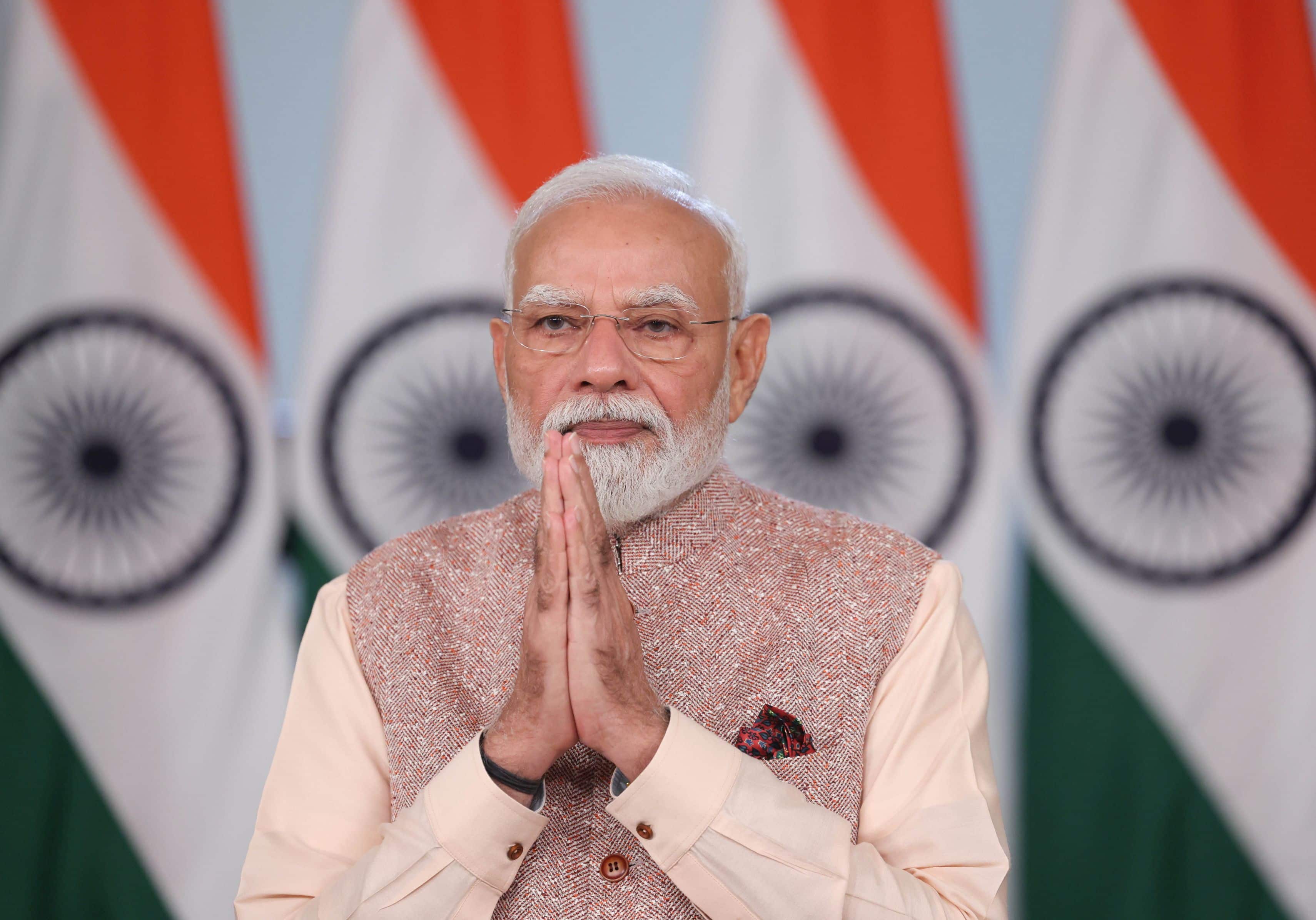
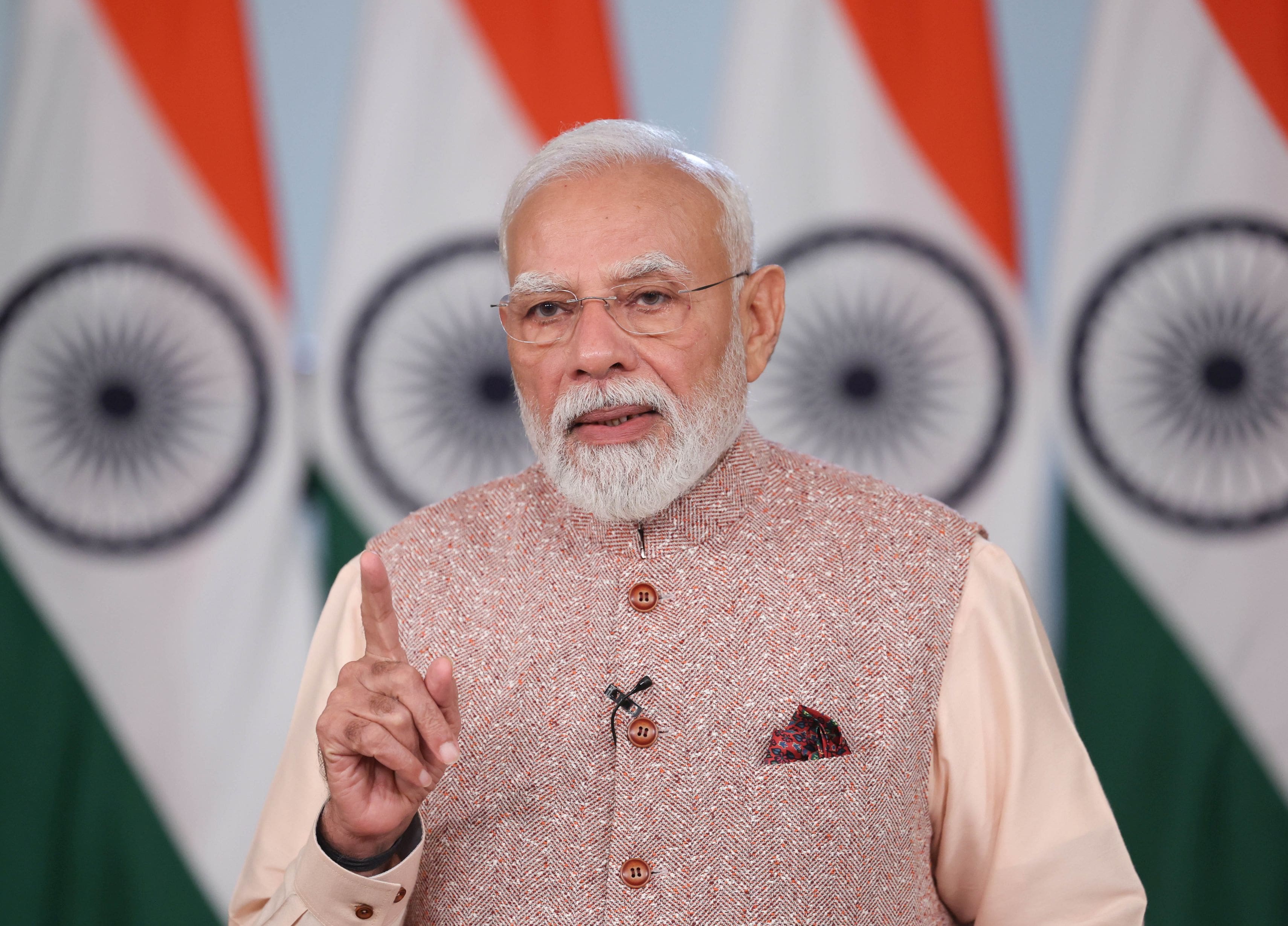
आज फ्रांस की राजधानी पेरिस में भव्य स्वामीनारायण मंदिर का लोकार्पण हो रहा है। यह लोकार्पण भारत और फ्रांस के सांस्कृतिक संबंधों का नया युग स्तंभ है। पूज्य संत जनों और सनातन परंपरा के श्रेष्ठ जनों के आशीर्वाद के साथ आज इस लोकार्पण का मंच ‘वसुधैव कुटुम्बकम’ के भाव का मंच बन गया है। भगवान स्वामीनारायण की कृपा और हमारे संतों का स्नेह, संतों का आशीर्वाद, मेरा सौभाग्य है कि मुझे ऐसे पुण्य अवसरों से जुड़ने का अवसर हमेशा मिलता रहता है। आज भी मैं भले ही पेरिस में आप सबके बीच उपस्थित नहीं हूं, लेकिन मन से और हृदय से, मैं स्वयं को आपके बीच ही अनुभव कर रहा हूं।
साथियों,
आज इस अवसर पर मैं परम पूज्य प्रमुख स्वामी जी महाराज का भी श्रद्धापूर्वक स्मरण करता हूं। प्राचीन काल में भारत का जो सांस्कृतिक आध्यात्मिक वैभव था, उन्होंने उसके पुनर्जागरण का एक अभियान शुरू किया था। आज उसका प्रकाश यूरोप समेत पूरी दुनिया में फैल रहा है। 2024 में अबू धाबी में भव्य मंदिर का लोकार्पण हुआ था। आज वहां हजारों लोग दर्शन करने जाते हैं और अब यहां पेरिस में स्वामीनारायण मंदिर का निर्माण सृजन की यह निरंतरता, यह संतों की संकल्प शक्ति का ही प्रमाण है। मैं पुनीत कार्य के लिए पूज्य महंत स्वामी का आभार प्रकट करता हूं, मैं उनके चरणों में प्रणाम करता हूं। मैं BAPS स्वामीनारायण संस्था को और करोड़ों हरि भक्तों को इस अवसर पर हृदय की गहराई से बधाई देता हूं।
साथियों,
BAPS के माध्यम से जब अलग-अलग देश में मंदिरों की प्राण प्रतिष्ठा होती है, तो वहां भारत के प्राचीन विचार और मानवीय मूल्य भी साथ-साथ ही जाते हैं और भारत का विचार कहता है ‘समानं मनः सह चित्तमेषाम्’ अर्थात हमारे मन समान हो, हमारे हृदय साथ जुड़े। इसलिए आज जब फ्रांस में इतना भव्य मंदिर बनकर तैयार हुआ है, यह फ्रांस की विविधता को तो समृद्ध करेगा ही, इससे भारत और फ्रांस के सांस्कृतिक संबंधों को भी ऊर्जा मिलेगी।
साथियों,
बीते वर्षों में भारत और फ्रांस के संबंध नई ऊंचाइयों तक पहुंचे हैं। मेरे मित्र, प्रेसिडेंट मैक्रों के साथ मिलकर दोनों देश एक Special Global Strategic Partnership बना रहे हैं। Technology, AI और Defence से लेकर Space और Climate Action तक हम एक नई गति और नई ऊर्जा के साथ मिलकर के आगे बढ़ रहे हैं। हम 2026 को India-France Year of Innovation के रूप में भी सेलिब्रेट कर रहे हैं। भारत-फ्रांस की ये Strategic Partnership इसलिए भी खास है, क्योंकि ये हमारे पुराने सांस्कृतिक-राजनैतिक सम्बन्धों की मजबूत बुनियाद पर टिकी है। इतिहास गवाह है, फ्रांस में भारतीय सैनिकों के बलिदान का इतिहास आज भी मन-मंदिर में जीवित है। भाषा से जुड़े विषयों में रुचि रखने वाले लोग यह भी जानते हैं कि फ्रेंच स्कॉलर्स ने संस्कृत को लोकप्रिय बनाने में कितनी अहम भूमिका निभाई है। रामकृष्ण परमहंस और स्वामी विवेकानंद पर रोमाँ रोलाँ की की लेखनी हमारी सोसाइटीज़ को और करीब लाई है। पेरिस से पुडुचेरी के अरबिंदो आश्रम तक 'The mother' की spiritual journey, उसने कितने ही भारतीय और फ्रेंच साधकों को inspire किया है।
साथियों,
दशकों पहले श्रील प्रभुपाद स्वामी भी फ्रांस आए थे। इस्कॉन के जरिए भारत फ्रांस के बीच आध्यात्मिक सम्बन्धों का नया अध्याय उन्होंने शुरू किया था। आज योग भी भारत-फ्रांस के people to people कनेक्ट का एक माध्यम बन चुका है। 'इंटरनेशनल योगा डे' पर एफिल टॉवर के सामने से आने वाली तस्वीरें फ्रांस में योग की लोकप्रियता का उदाहरण बनती हैं और अब BAPS के इस भव्य मंदिर के जरिए, हमारे उन सांस्कृतिक सम्बन्धों में एक नया अध्याय जुड़ रहा है।
साथियों,
इन दिनों, भारत फ्रांस Joint Ventures की संभावनाओं पर बातें होती हैं। स्वामीनारायण मंदिर ने इस संभावना में भी एक नया आयाम जोड़ा है। यह मंदिर 'मेड इन इंडिया' है और 'बिल्ट इन फ्रांस' है। इसके काफी पत्थरों को भारत में तराशा गया है। भारत की प्राचीन प्रतिभा यहाँ फ्रांस में आधुनिक इंजीनियरिंग से आकर जुड़ चुकी है। पेरिस में इस भव्य मंदिर ने आकार लिया है। इसलिए, मैं आशा करता हूँ, यह मंदिर सदियों तक भारत और फ्रांस के बीच सहयोग और संभावनाओं का भी प्रतीक बनकर उभरेगा।
साथियों,
स्वामीनारायण मंदिर हमेशा से भक्ति के साथ-साथ सेवा का माध्यम भी रहे हैं। मुझे बताया गया है, यह मंदिर भी सेवा प्रकल्पों का वैसा ही केंद्र बनेगा। मुझे विश्वास है कि यहाँ से भारतीय संस्कृति के जो स्वर निकलेंगे, उनका लाभ पूरे यूरोप में लोगों को मिलेगा। भविष्य में मुझे जब भी समय मिलेगा, मैं इस मंदिर में दर्शन करने का प्रयास अवश्य करूंगा। इन्हीं शब्दों के साथ, एक बार फिर आज के इस लोकार्पण समारोह में सम्मिलित सभी अतिथिगणों को, सभी परिवारों को, सभी हरि भक्तों को और पूरी Indian Diaspora को मेरी ओर से इस शुभारंभ पर्व की ढेरों शुभकामनाएं!
बहुत-बहुत धन्यवाद!
मर्सी बोकू!
जय स्वामीनारायण!
- Tags

- BAPS Swaminarayan Hindu Mandir
- Paris
- France
- Culture
- Vasudhaiva Kutumbakam
- Europe
- Abu Dhabi
- BAPS
- Global Strategic Partnership
- Technology
- Artificial Intelligence
- Defence
- space
- Climate Action
- India-France Year of Innovation 2026
- Swami Vivekananda
- International Yoga Day
- India First
- Joint Venture Project
- Make In India
- Speech


Posted via www.narendramodi.in