Infrastructure and connectivity act as arteries for development and growth of any nation. It is evident that infrastructure development has been given priority by the NDA government under PM Narendra Modi. For fulfilling the dream of New India, the NDA government is focussing on development of railways, roadways, waterways, aviation or affordable housing.
Railways
The Indian rail network is one of the largest railway networks in the world. The pace of track renewal, elimination of unmanned level crossings and commissioning of broad gauge lines has significantly improved during NDA government under PM Modi.
Railways recorded its best-ever safety record with less than 100 accidents in a year in 2017-18. Data reveals that 118 railway accidents were recorded in 2013-14 which have declined to 73 in 2017-18. 5,469 unmanned level crossings have been eliminated, with average pace of elimination at 20% more than that of 2009-14. All unmanned level crossings on broad gauge routes targeted to be eliminated by 2020 for better safety.

Bringing railways development on track, there is a 50% increase in track renewal, from 2,926 km during 2013-14 to 4,405 km during 2017-18. Broad gauge commissioned during 4 years of NDA government under PM Modi (9,528 km) is much greater than that commissioned during 2009-14 (7,600 km).
For the first time Northeast India is fully integrated with the rest of India with the entire network converted to broad gauge. It brought Meghalaya, Tripura and Mizoram on the rail map of India after 70 years of independence!
For developing New India, we need advanced technology too. The bullet train, planned from Mumbai to Ahmedabad, will reduce travel time from about 8 hrs to 2 hrs.
Aviation
Rapid progress is happening in civil aviation sector too. Promising affordable air travel under UDAN (Ude Desh ka Aam Nagrik), 25 operational airports have been added in just 4 years, as opposed to 75 airports between Independence and 2014. Regional air connectivity to unserved and underserved airports at subsidised fare of Rs 2,500 per hour has helped to fulfil dream of many Indians to travel by air. Thus, for the first time more people travelled in airplanes than in AC trains.
With passenger traffic growth in the range of 18-20% in the past three years, India has emerged as the world’s third largest aviation market. Number of domestic air passengers crossed 100 million in 2017.
Shipping
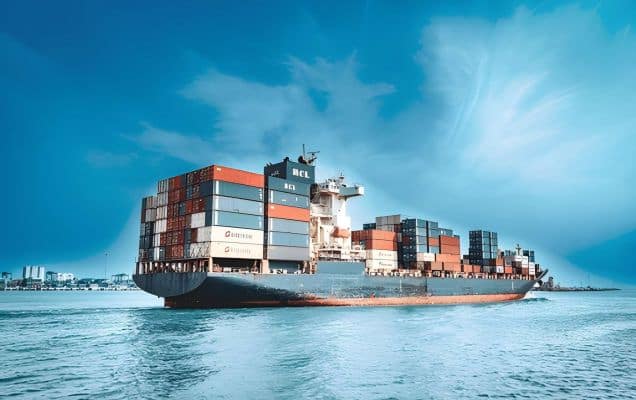
India is also taking rapid strides in the shipping sector under PM Narendra Modi’s government. Accelerating port-led development, the turn around time at major ports have been reduced by a third, from 94 hrs in 2013-14 to 64 hrs in 2017-18.
Consider the cargo traffic at major ports. It declined from 570.32 MT in 2010-11 to 545.79 MT in 2012-13. However, under the NDA government it improved to 679.367 MT during 2017-18, a whopping increase of more than 100 MT!
Inland waterways significantly reduce the transportation costs and boost the economy apart from reducing carbon foot print. 106 national waterways were added in the last 4 years compared to 5 national waterways in the last 30 years.
Road development
Expansion of highways with multi-modal integration has been taken up under transformative project Bharat Mala Pariyojana. National highway network expanded from 92,851 km in 2013-14 to 1,20,543 km in 2017-18.
Setu Bharatam project for safer roads, with total outlay of Rs. 20,800 crores, envisages building of railway overbridges or under passes to make all National Highways free of railway level crossings.
The pace of road construction has almost doubled. Speed of highways construction was 12 km per day during 2013-14 which stood at 27 km per day as of 2017-18.

Development of India’s longest ever tunnel, Chenani-Nashri, in Jammu as well as India’s longest bridge, Dhola-Sadiya, for enhanced connectivity to Arunachal Pradesh are testimony to the commitment to take development to hitherto untapped regions. Building of bridges over Narmada at Bharuch and Chambal at Kota have also improved road connectivity in the regions.
Roads act as catalysts for rural development. Considering its importance, almost 1.69 lakh kms of rural roads have been built in 4 years. Average speed of road construction improved from 69 km per day in 2013-14 to 134 km per day in 2017-18. Presently, rural road connectivity is more than 82%, as against 56% in 2014, making villages become a part of India’s development trajectory.
Tourism has immense potential for employment generation. To enhance pilgrimage experience along with a boost to the tourism sector, Char Dham Mahamarg Vikas Pariyojana was launched. It seeks to make journey safer, faster and more convenient. It entails development of around 900 km of national highways at an approximate cost of Rs 12,000 crore.
With boost to the infrastructure, more movement of freight takes place and adds strength to the economy. Due to efforts of the NDA government, highest ever freight loading (1,160 MT) was recorded in the year 2017-18.
Urban transformation
For urban transformation through Smart Cities, around 100 urban centres have been chosen to ensure improved quality of living, sustained urban planning and development. Various development projects in these cities will positively impact almost 10 crore Indians. These projects will cost Rs. 2,01,979 crores.
Around 1 crore affordable houses have been built under the Pradhan Mantri Awas Yojana in both rural and urban areas. To benefit the middle and neo middle classes, housing loans up to Rs 9 lakh and Rs 12 lakh are eligible for interest subvention of 4% and 3%.