وزیر اعظم نے بھارت کے عظیم ترین راجاؤں میں سے ایک، راجندر چولا اول کی عزت افزائی میں یادگاری سکہ جاری کیا
راجہ راج چولا اور راجندر چولا بھارت کی شناخت اور فخر کی علامت ہیں: وزیر اعظم
چولا سلطنت کی تاریخ اور وراثت ہمارے عظیم ملک کی طاقت اور اصل صلاحیت کی عکاسی کرتی ہے: وزیر اعظم
چولا دور ہندوستانی تاریخ کے سنہری ادوار میں سے ایک تھا؛ یہ دور اپنی زبردست فوجی طاقت کی وجہ سے ممتاز رہا: وزیر اعظم
راجندر چولا نے گنگائی کونڈا چولاپورم مندر قائم کیا؛ آج بھی یہ مندر ایک شاندار فن تعمیر کا نمونہ ہے جسے دنیا بھر میں سراہا جاتا ہے: وزیر اعظم
چولا راجاؤں نے بھارت کو ثقافتی اتحاد کی ایک ڈور میں پرو دیا تھا، آج ہماری حکومت اسی چولا دور کے وژن کو آگے بڑھا رہی ہے؛ کاشی-تمل سنگم اور سوراشٹر-تمل سنگم جیسے اقدامات کے ذریعے ہم ان صدیوں پرانے رشتوں کو مضبوط کر رہے ہیں: وزیر اعظم
جب نیا پارلیمنٹ ہاؤس افتتاح کے لیے تیار ہوا، تو ہمارے شیویت آدھینم کے سنتوں نے روحانی طور پر اس رسم کی قیادت کی؛ ”سینگول“ جو تمل ثقافت میں گہرائی سے جڑا ہوا ہے، اسے رسمی طور پر نئی پارلیمنٹ میں نصب کیا گیا: وزیر اعظم
ہماری شیویت روایت نے بھارت کی ثقافتی شناخت کو تشکیل دینے میں اہم کردار ادا کیا ہے اور چولا راجا اس وراثت کے کلیدی معمار تھے۔ آج بھی تمل ناڈو اس زندہ روایت کا ایک اہم مرکز ہے جہاں یہ مسلسل پروان چڑھ رہی ہے: وزیر اعظم
چولا دور میں بھارت نے جو معاشی اور عسکری ترقی حاصل کی، وہ آج بھی ہمیں متاثر کرتی ہے: وزیر اعظم
راجہ راج چولا نے ایک طاقتور بحری بیڑا تشکیل دیا، جسے راجندر چولا نے مزید مضبوط کیا: وزیر اعظم

ونکم چولا منڈلم!

معزز آدھینم مٹھادھیش ، چنمایا مشن کے سوامی، تمل ناڈو کے گورنر آر این روی جی، میرے کابینہ کے ساتھی ڈاکٹر ایل مروگن جی، مقامی رکن پارلیمنٹ تھروما-ولون جی، ڈائس پر موجود تمل ناڈو کے وزراء، پارلیمنٹ میں میرے ساتھی معزز جناب  الیاراجہ جی ، تمام اودواروں، عقیدت مندوں، طلباء، ثقافتی مورخین، اور میرے پیارے بھائیو اور بہنو! نمہ شیوائے۔

نمہ شیوائے  والگھا، نادن تال والگھا، امئی پولودم، ین ننجل نینگادان تال والگھا!!

میں دیکھ رہا تھا کہ جب جب  نینار ناگیندرن کا نام آتا ہے، چاروں طرف جوش و خروش کا ماحول بالکل بدل جاتا ہے۔
 

دوستو

دوستو

ایک طرح سے یہ بادشاہ کی قابل احترام سرزمین ہےاور اس مقدس سرزمین میں، جس طرح سے الیاراج نے آج ہم سب کو بھگوان شیو کی عقیدت میں غرق کیا، یہ ساون کا مہینہ ہو، راج راجہ کی عقیدہ کی سرزمین ہو اور الیاراج کی تپسیا ہو، کیا ہی شاندار ماحول ، بہت ہی شاندار ماحول ، اور میں تو کاشی کا ایم پی ہوں اور جب اوم نمہ شیوائے سنتا ہوں ،تو رونگٹے کھڑے ہوجاتے ہیں۔

دوستو

شیو درشن کی حیرت انگیز توانائی، سری الیاراجا کی موسیقی، اوڈوور کا نعرہ، یہ روحانی تجربہ واقعی روح کو جذبات سے بھر دیتا ہے۔

دوستو

ساون کامقدس مہینہ اور برہدیشور شیو مندر کی تعمیرشروع ہونے کے  ایک ہزار سال مکمل ہونے کے تاریخی موقع پر، ایسے شاندار وقت  میں مجھے بھگوان برہدیشور شیو کے قدموں میں حاضر ہونے اور ان کی پوجا کرنے کی سعادت حاصل ہوئی ہے۔ میں نے اس تاریخی مندر میں 140 کروڑ ہندوستانیوں کی بھلائی اور ہندوستان کی مسلسل ترقی کے لیے دعا کی ہے۔ میری خواہش ہے کہ سب کو بھگوان شیو کا آشیرواد ملے، نمہ: پاروتی پتئے ہر ہر مہادیو!
 

دوستو

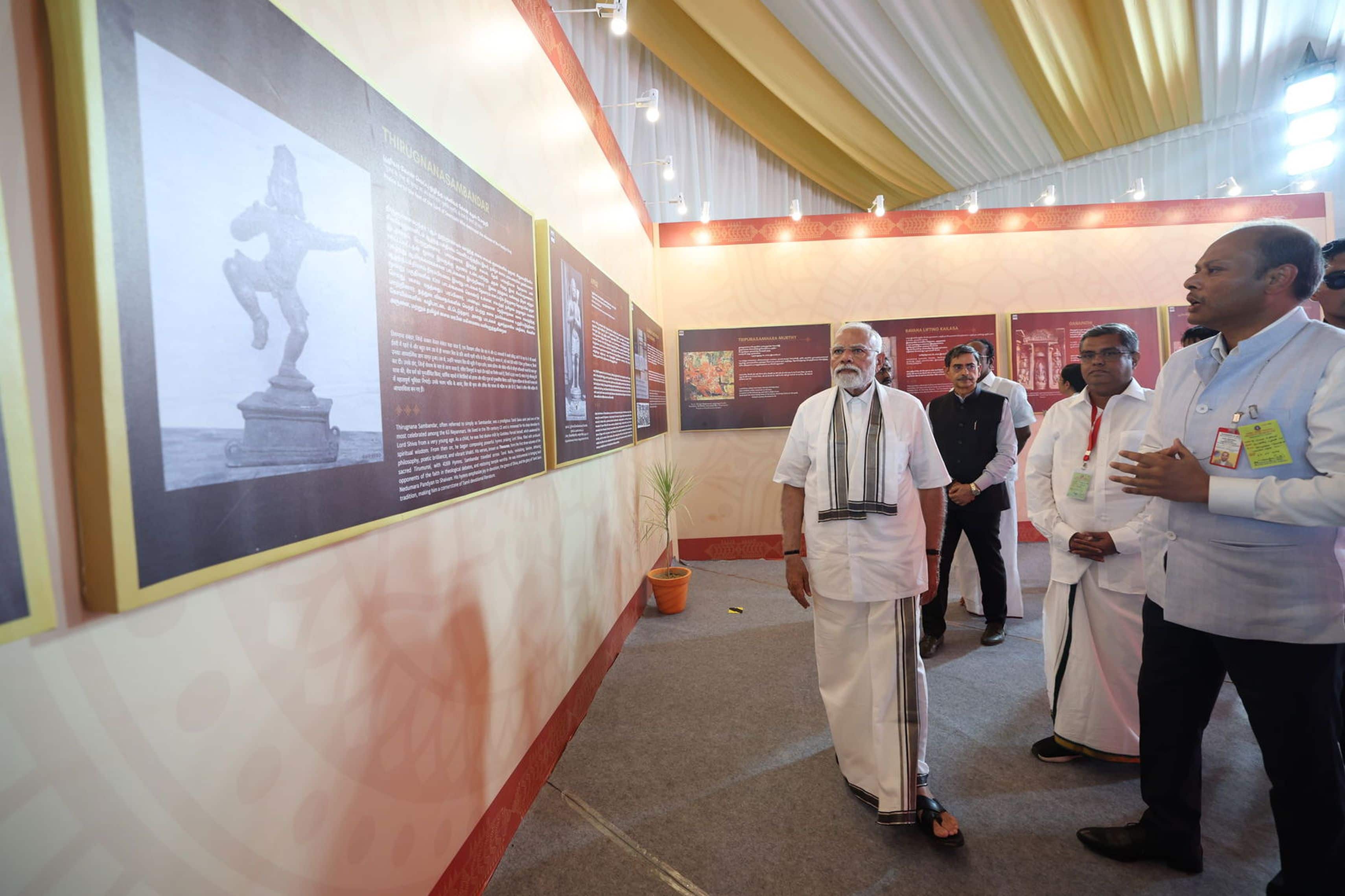
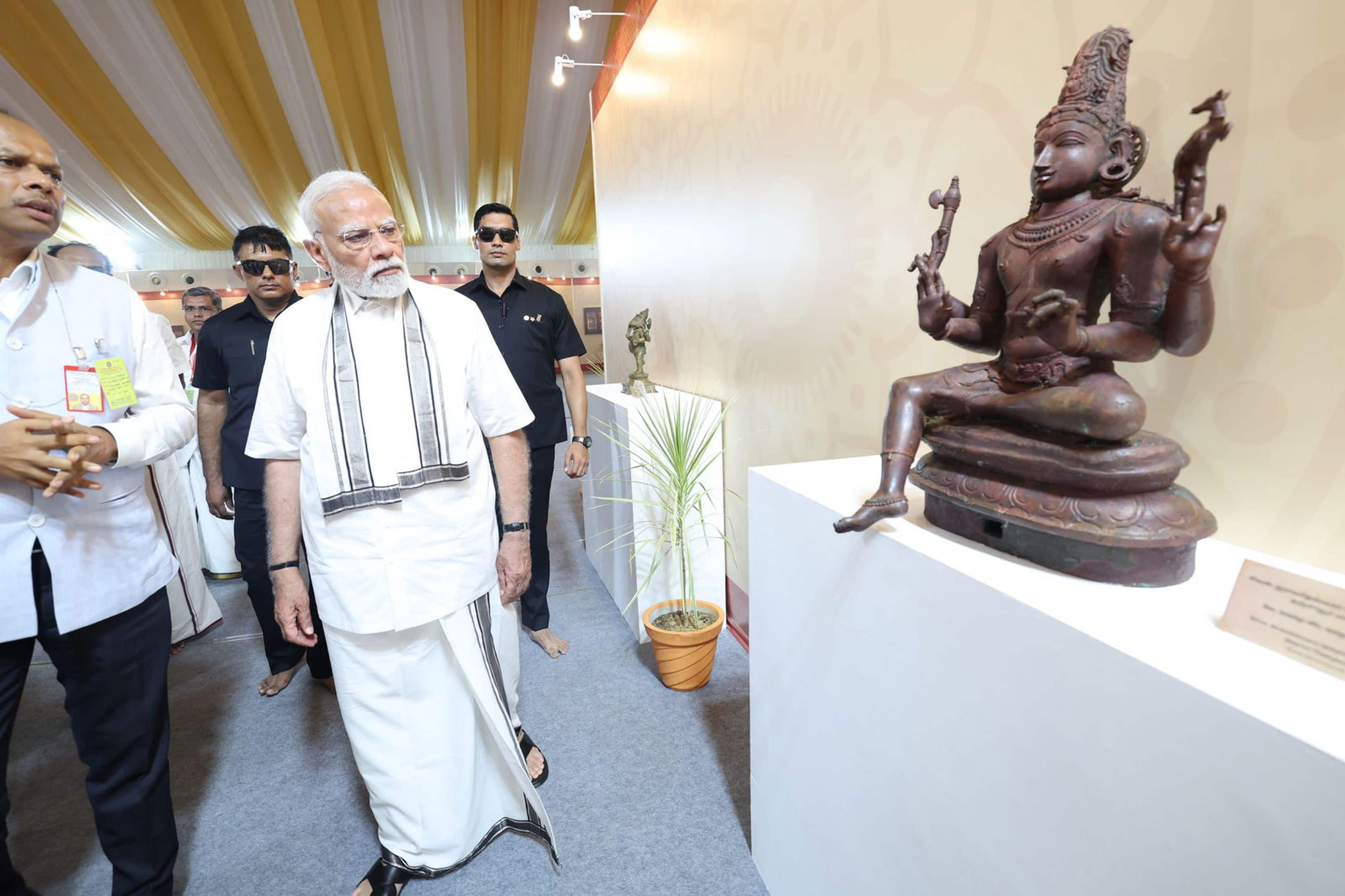
مجھے یہاں آنے میں دیر ہوئی، میں تویہاں جلدی پہنچ گیا تھا، لیکن حکومت ہند کی ثقافتی وزارت کی طرف سے منعقد کی گئی شاندار نمائش معلوماتی، متاثر کن ہے اور ہم سب کو اس بات پر فخر ہے کہ ہمارے آباؤ اجداد نے کس طرح ایک ہزار سال تک انسانی فلاح و بہبود کی سمت دی۔ یہ  کتنی  وسیع تھی ،کتنی  لمبی چوڑی تھی ،کتنا عظیم الشان تھا اور یہ مجھے بتایا گیا کہ گزشتہ ایک ہفتے سے ہزاروں لوگ اس نمائش کو دیکھنے آ رہے ہیں۔ یہ دیکھنے کے قابل ہے اور میں سب سے کہوں گا کہ اسے ضرور دیکھیں۔

دوستو

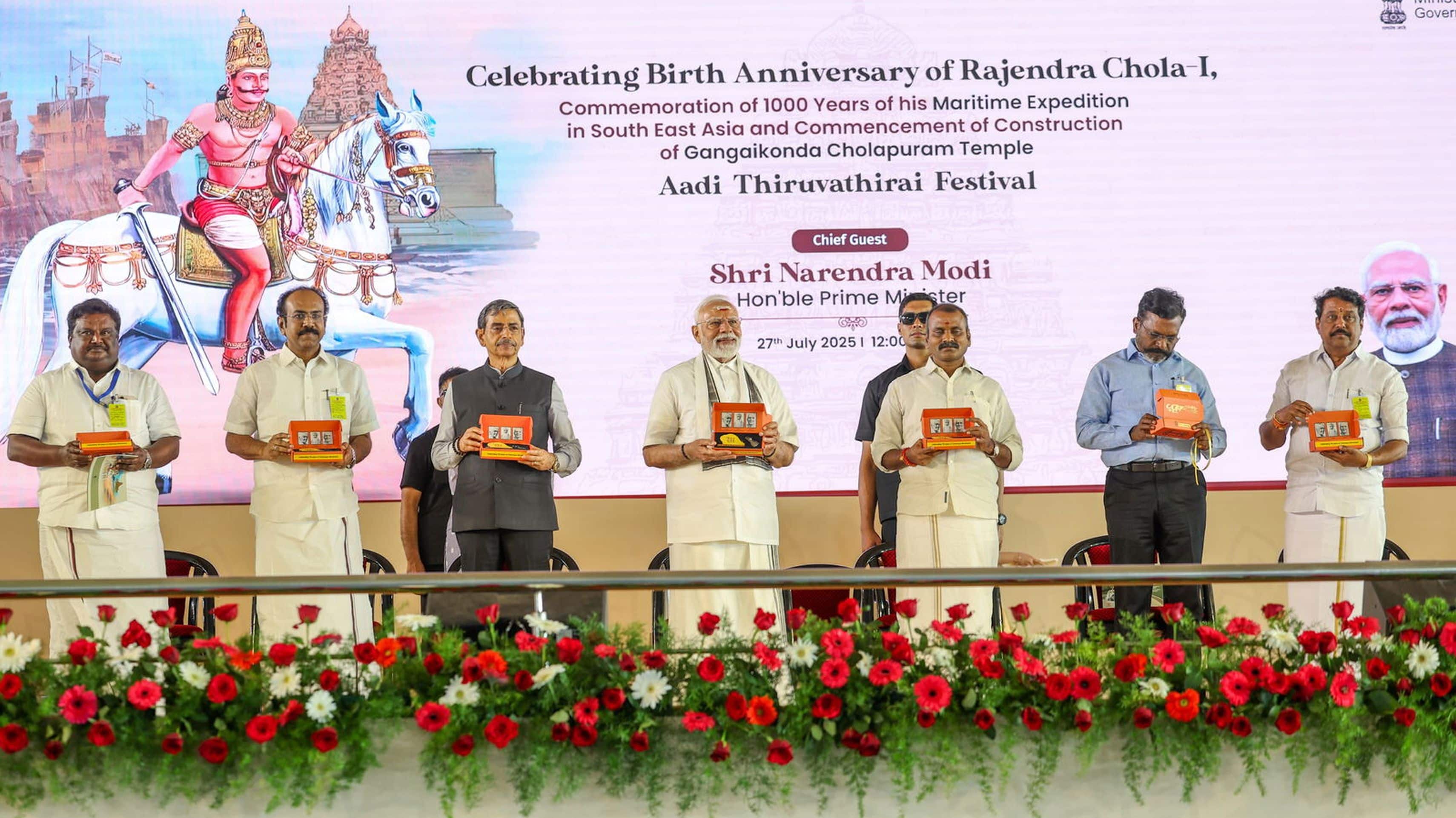
آج مجھے چنمایا مشن کی کوششوں سے یہاں تمل گیتا البم لانچ کرنے کا موقع بھی ملا ہے۔ یہ کوشش ہمارے ورثے کے تحفظ کے عزم کو بھی توانائی بخشتی ہے۔ میں اس کوشش سے جڑے تمام لوگوں کو مبارکباد دیتا ہوں۔
 

دوستو

چولا بادشاہوں نے اپنے سفارتی اور تجارتی تعلقات کو سری لنکا، مالدیپ اور جنوب مشرقی ایشیا تک بڑھایا۔ یہ بھی اتفاق ہے کہ میں کل ہی مالدیپ سے واپس آیا ہوں اور آج تمل ناڈو میں اس پروگرام کا حصہ  بنا ہوں۔

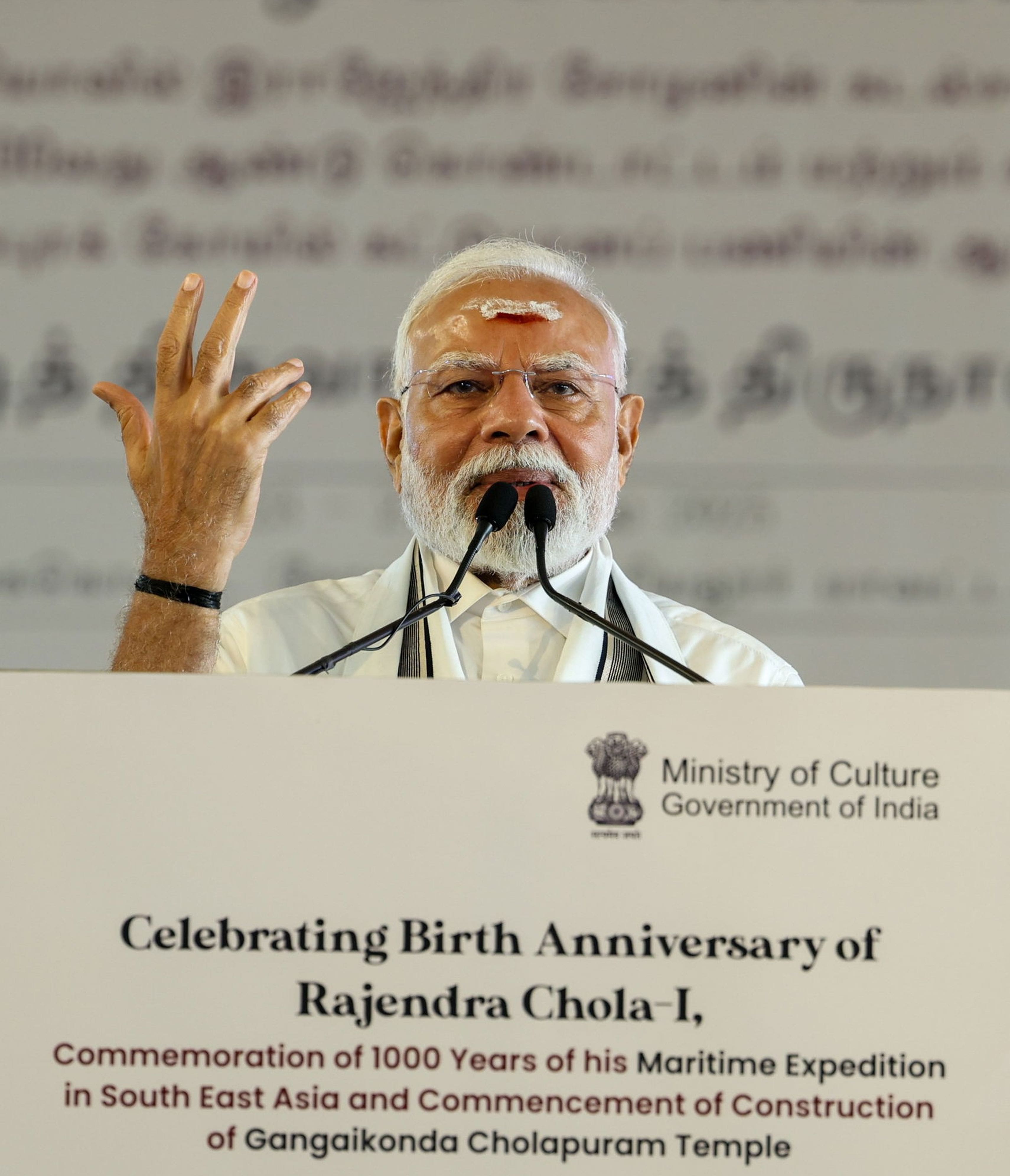
ہمارے صحیفے کہتے ہیں کہ شیو کے عقیدت مند شیو میں ضم ہو جاتے ہیں اور ان کی طرح امر ہو جاتے ہیں۔ یہی وجہ ہے کہ ہندوستان کا چولا ورثہ، جو شیو کی خصوصی عقیدت سے وابستہ ہے، آج بھی امر ہو گیا ہے۔ راج راجا چولا، راجندر چولا، یہ نام ہندوستان کی شناخت اور فخر کے مترادف ہیں۔ چولا سلطنت کی تاریخ اور ورثہ ہندوستان کی حقیقی صلاحیت کا اعلان ہے۔ یہ ہندوستان کے خواب کی تحریک ہے، جس کے ساتھ ہم ترقی یافتہ ہندوستان کے ہدف کی طرف بڑھ رہے ہیں۔ اس الہام کے ساتھ، میں راجندر چولا دا گریٹ کو سلام کرتا ہوں۔ پچھلے کچھ دنوں میں، آپ سب نے آدی تھروادیرائی اتسو منایا ہے۔ آج اس عظیم الشان تقریب کا اختتام ہو رہا ہے۔ میں ان تمام لوگوں کو مبارکباد دیتا ہوں جنہوں نے اس میں تعاون کیا۔

دوستو

مورخین کا خیال ہے کہ چولا سلطنت ہندوستان کے سنہری دوروں میں سے ایک تھی۔ اس دور کی شناخت اس کی اسٹریٹجک طاقت سے ہوتی ہے۔ چولا سلطنت نے بھی ہندوستان کی ماں جمہوریت کی روایت کو آگے بڑھایا۔ مورخین  جمہوریت کے نام پر برطانیہ کے میگنا کارٹا کی بات کرتے ہیں لیکن کئی صدیاں قبل چولا سلطنت میں کدوولائی امپ سے جمہوری نظام کے ذریعے انتخابات کرائے جاتے تھے۔ آج پوری دنیا میں پانی کے انتظام اور ماحولیات کے تحفظ کے بارے میں بہت زیادہ بات ہو رہی ہے۔ ہمارے اسلاف ان کی اہمیت کو بہت پہلے سمجھ چکے تھے۔ ہم ایسے کئی بادشاہوں کے بارے میں سنتے ہیں جو دوسری جگہوں کو فتح کرنے کے بعد سونا، چاندی یا مویشی لاتے تھے۔ لیکن دیکھیں راجندر چولا گنگا کا پانی لانے کے لیے مشہور ہیں، وہ گنگا کا پانی لے کر آئے تھے۔ راجندر چولا نے گنگا کا پانی شمالی ہندوستان سے لایا اور اسے جنوب میں قائم کیا۔ "گنگا جل میم جے ستھمبم" وہ پانی یہاں چولاگنگ یری، چولاگنگا جھیل میں چھوڑا گیا تھا جو آج پونیری جھیل کے نام سے مشہور ہے۔
 

دوستو

راجندر چولا نے گنگائی-کونڈاچولاپورم کوول بھی قائم کیاتھا۔ یہ مندر آج بھی دنیا کا فن تعمیر کا عجوبہ ہے۔ یہ بھی چولا سلطنت کا ہی تحفہ ہے کہ ماں کاویری کی اس سرزمین پر ماں گنگا کا تہوار منایا جا رہا ہے۔ مجھے بہت خوشی ہے کہ آج اس تاریخی واقعہ کی یاد میں کاشی سے ایک بار پھر گنگا کا پانی یہاں لایا گیا ہے۔ جب میں یہاں پوجا کرنے گیا تھا تو رسم دستور کے مطابق ادا کی گئی تھی، ابھیشیک گنگا کے پانی سے کیا گیا تھا اور میں کاشی کا عوام کا نمائندہ ہوں، اور میرا گنگا سے گہرا تعلق ہے۔ چول بادشاہوں کے یہ کام، ان سے جڑے یہ واقعات، 'ایک بھارت، شریشٹھ بھارت' کے مہایاگیا کو نئی توانائی، نئی طاقت اور نئی رفتار دیتے ہیں۔

بھائیو اور بہنو،

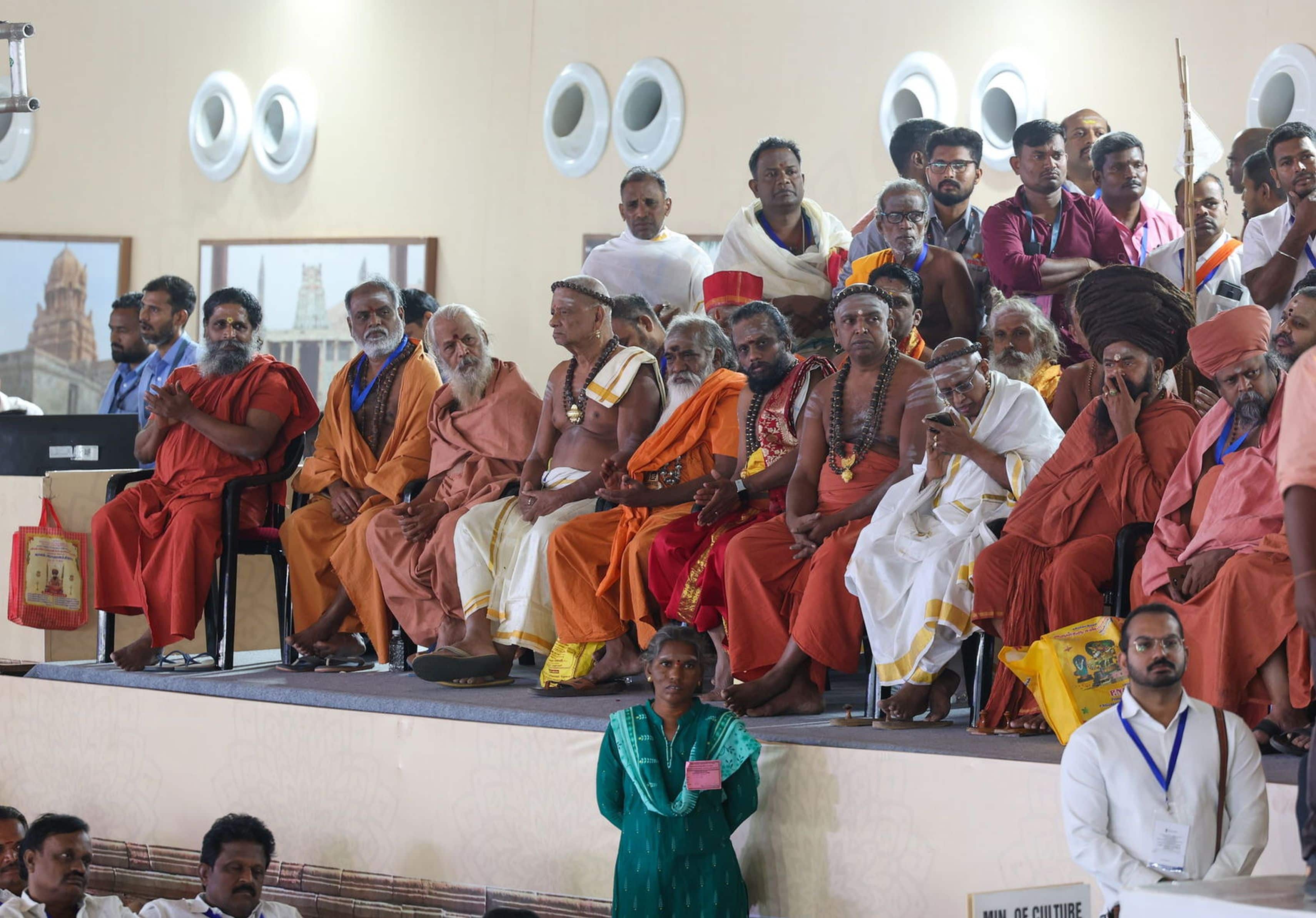
چولا بادشاہوں نے ہندوستان میں ثقافتی اتحاد کا رشتہ قائم کیا تھا۔ آج ہماری حکومت چولا دور کے انہی نظریات کو آگے بڑھا رہی ہے۔ ہم کاشی تمل سنگم اور سوراشٹرا تمل سنگم جیسے واقعات کے ذریعے صدیوں پرانے اتحاد کے بندھن کو مضبوط کر رہے ہیں۔ تمل ناڈو کے قدیم مندر جیسے گنگائی کونڈاچولاپورم کو بھی اے ایس آئی کے ذریعہ محفوظ کیا جا رہا ہے۔ جب ملک کی نئی پارلیمنٹ کا افتتاح ہوا تو ہمارے شیو آدھاینم کے سنتوں نے اس تقریب کی روحانی قیادت کی تھی، وہ سب یہاں موجود ہیں۔ تمل ثقافت سے وابستہ مقدس سینگول پارلیمنٹ میں نصب کیا گیا ہے۔ آج بھی جب وہ لمحہ یاد آتا ہے تو فخر سے بھر جاتا ہوں۔

دوستو

میں نے ابھی چدمبرم میں نٹراج مندر کے کچھ دکشتروں سے ملاقات کی ہے۔ انہوں نے مجھے اس الہی مندر کا مقدس پرساد پیش کیا، جہاں نٹراج کے روپ میں بھگوان شیو کی پوجا کی جاتی ہے۔ نٹراج کا یہ روپ ہمارے فلسفے اور سائنسی جڑوں کی علامت ہے۔ بھگوان نٹراج کا ایک ایسا ہی آنند ٹنڈوا مورتی بھی دہلی کے بھارت منڈپم کی خوبصورتی میں اضافہ کر رہا ہے۔ اس بھارت منڈپم میں G-20 کے دوران دنیا بھر کے نامور لیڈروں نے شرکت کی تھی۔
 

دوستو

ہماری شیو روایت نے ہندوستان کی ثقافتی تعمیر میں بہت اہم کردار ادا کیا ہے۔ چولا بادشاہ اس تعمیر کے اہم معمار تھے۔ اسی لیے تمل ناڈو آج بھی شیویت کی روایت کے زندہ مراکز میں بہت اہم ہے۔ عظیم نیانمار سنتوں کی وراثت، ان کا عقیدتی ادب، تمل ادب، ہمارے قابل احترام آدھینموں کے کردار نے سماجی اور روحانی میدان میں ایک نئے دور کو جنم دیا ہے۔

دوستو

آج جب دنیا عدم استحکام، تشدد اور ماحول جیسے مسائل سے دوچار ہے، شیوا اصول ہمیں حل کی راہ دکھاتے ہیں۔ آپ نے دیکھا، ترومولر نے لکھا تھا - "انبے شیوم"، یعنی محبت  ہی شیو ہے۔ Love is Shiva! اگر آج دنیا اس نظریے کو اپنا لے تو بیشتر بحران خود بخود حل ہو سکتے ہیں۔ ہندوستان آج ایک دنیا، ایک خاندان، ایک مستقبل کی شکل میں اس خیال کو آگے بڑھا رہا ہے۔

دوستو

آج ہندوستان ترقی کے ساتھ ساتھ وراثت کے منتر پر چل رہا ہے۔ آج کے ہندوستان کو اپنی تاریخ پر فخر ہے۔ پچھلی دہائی میں، ہم نے ملک کے ورثے کے تحفظ کے لیے مشن موڈ میں کام کیا ہے۔ ملک کے قدیم مجسمے اور نوادرات جنہیں چوری کرکے بیرون ملک فروخت کیا گیا تھا، واپس لایا گیا ہے۔ 2014 سے اب تک دنیا کے مختلف ممالک سے 600 سے زیادہ قدیم نمونے اورمورتیاں  ہندوستان واپس آچکی ہیں۔ ان میں سے 36 خاص طور پر ہمارے تمل ناڈو سے ہیں۔ آج بہت سے اہم ورثے جیسے نٹراج، لنگوڈبھوا، دکشنامورتی، اردناریشور، نندیکیشور، اوما پرمیشوری، پاروتی، سمبندر ایک بار پھر اس سرزمین کی خوبصورتی میں اضافہ کر رہے ہیں۔
 

دوستو

ہمارا ورثہ اور شیو فلسفہ کا اثر اب ہندوستان یا اس زمین تک محدود نہیں ہے۔ جب ہندوستان چاند کے جنوبی قطب پر اترنے والا پہلا ملک بنا تو ہم نے چاند کے اس نقطہ کو شیو شکتی کا نام دیا۔ چاند کا وہ اہم حصہ اب شیوا شکتی کے نام سے جانا جاتا ہے۔

دوستو

چول دور میں ہندوستان نے جو اقتصادی اور اسٹریٹجک ترقی حاصل کی وہ آج بھی ہماری تحریک ہے۔ راجراج چولا نے ایک طاقتور بحریہ بنائی۔ راجندر چولا نے اسے مزید مضبوط کیا۔ ان کے دور حکومت میں کئی انتظامی اصلاحات بھی کی گئیں۔ انہوں نے مقامی انتظامی نظام کو مضبوط کیا۔ ریونیو کا مضبوط نظام نافذ کیا گیا۔ تجارت کی ترقی، سمندری راستوں کا استعمال، فن و ثقافت کی ترویج و اشاعت، ہندوستان ہر سمت تیزی سے بڑھ رہا تھا۔

دوستو

چولا سلطنت ایک نئے ہندوستان کی تعمیر کے لیے ایک قدیم روڈ میپ کی طرح ہے۔ یہ ہمیں بتاتا ہے کہ اگر ہم ایک ترقی یافتہ قوم بننا چاہتے ہیں تو ہمیں اتحاد پر زور دینا ہو گا۔ ہمیں اپنی بحریہ، اپنی دفاعی افواج کو مضبوط کرنا ہو گا۔ ہمیں نئے مواقع تلاش کرنے ہوں گے۔ اور اس سب کے ساتھ ساتھ ہمیں اپنی اقدار کو بھی بچانا ہو گا۔ اور مجھے اطمینان ہے کہ آج ملک اسی  انسپائریشن کے  ساتھ آگے بڑھ رہا ہے۔

دوستو

آج کا ہندوستان اپنی سلامتی کو انتہائی اہمیت دیتا ہے۔ آپریشن سندورکے دوران دنیا نے دیکھا کہ بھارت کی سلامتی اور خودمختاری پر حملوں کا بھارت کس طرح جواب دیتا ہے۔ آپریشن سندور نے ثابت کر دیا ہے کہ بھارت کے دشمنوں، دہشت گردوں کے لیے کوئی جگہ محفوظ نہیں ہے۔ اور آج جب میں 3-4 کلو میٹر کا فاصلہ طے کر کے ہیلی پیڈ سے یہاں آ رہا تھا تو اچانک میں نے ایک بڑا روڈ شو دیکھا اور ہر کوئی آپریشن سندھور کی تعریف کر رہا تھا۔ آپریشن سندھ نے پورے ملک میں ایک نیا شعور بیدار کیا ہے، ایک نیا خود اعتمادی پیدا کیا ہے اور دنیا کو بھی بھارت کی طاقت کو تسلیم کرنا پڑ رہا ہے۔
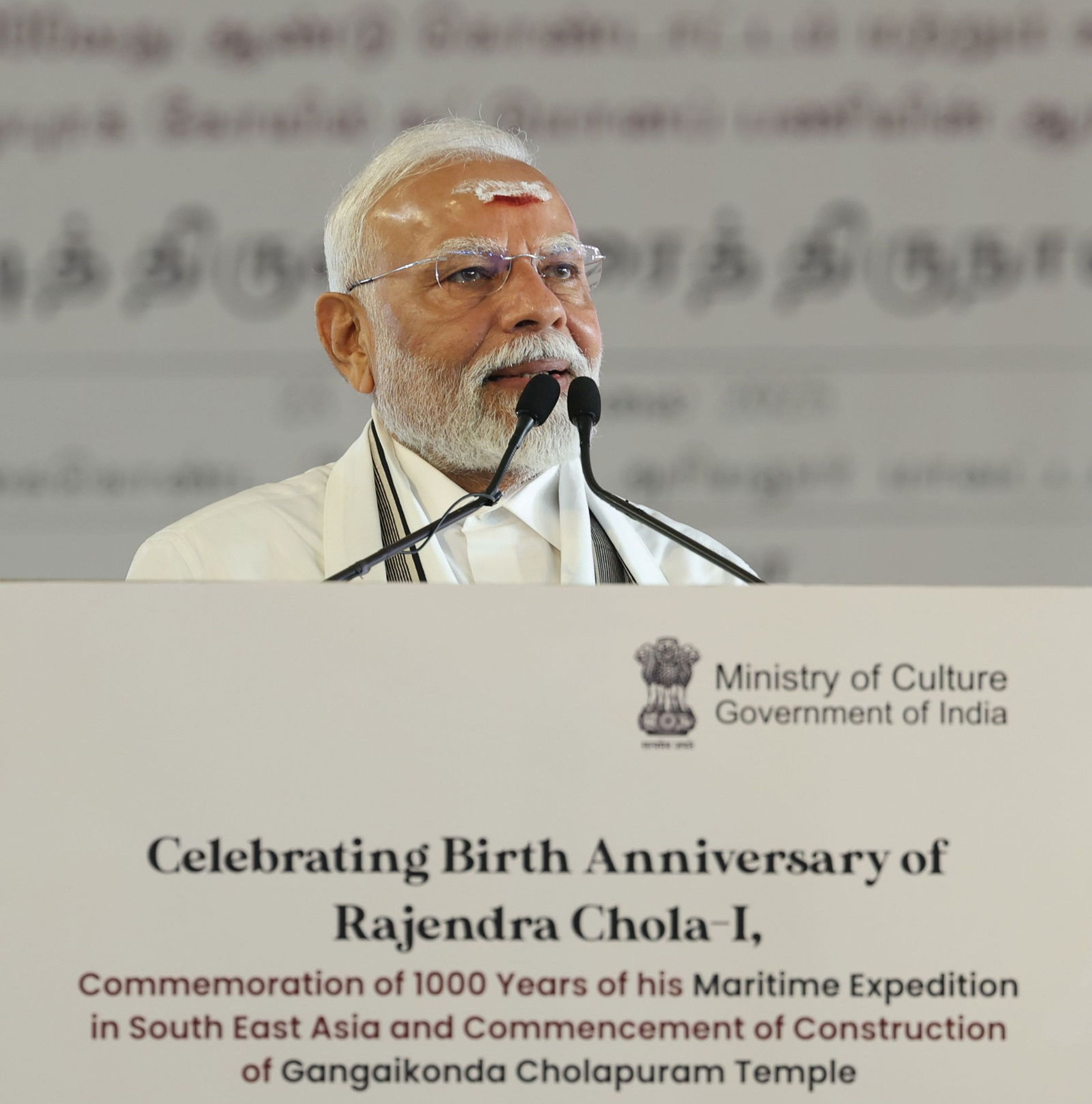
 

دوستو

ہم سب جانتے ہیں کہ جب راجندر چولا نے گنگائی کونڈاچولاپورم تعمیر کیا تو اس نے اس کی چوٹی کو تھنجاور کے برہدیشوارا مندر سے چھوٹا رکھا۔ وہ اپنے والد کے بنائے ہوئے مندر کو سب سے اونچا رکھنا چاہتا تھا۔ اپنی عظمت کے درمیان بھی، راجندر چولا نے عاجزی کا مظاہرہ کیا۔ آج کا نیا ہندوستان اسی جذبے پر آگے بڑھ رہا ہے۔ ہم مسلسل مضبوط ہو رہے ہیں، لیکن ہمارا جذبہ عالمی بھائی چارہ، عالمی فلاح و بہبود کا ہے۔

دوستو

اپنے وراثت پر فخر کے احساس کو آگے بڑھاتے ہوئے آج میں یہاں ایک اور قرارداد لے رہا ہوں۔ آنے والے وقتوں میں، ہم تمل ناڈو میں راجراجا چولا اور ان کے بیٹے اور عظیم حکمران راجندر چولا اول کے عظیم مجسمے نصب کریں گے۔ یہ مجسمے ہمارے تاریخی شعور کے جدید ستون بن جائیں گے۔

دوستو

آج ڈاکٹر اے پی جے عبدالکلام جی کی برسی بھی ہے۔ ایک ترقی یافتہ ہندوستان کی قیادت کرنے کے لیے ہمیں ڈاکٹر کلام، چولا راجاؤں جیسے لاکھوں نوجوانوں کی ضرورت ہے۔ طاقت اور لگن سے بھرے ایسے نوجوان 140 کروڑ ہم وطنوں کے خواب پورے کریں گے۔ ہم مل کر ایک بھارت شریشٹھ بھارت کی قرارداد کو آگے بڑھائیں گے۔ اس احساس کے ساتھ میں ایک بار پھر آپ سب کو اس موقع پر مبارکباد دیتا ہوں۔ بہت بہت شکریہ۔

میرے ساتھ بولئے،

بھارت ماتا کی جے

بھارت ماتا کی جے

بھارت ماتا کی جے


Explore More
شری رام جنم بھومی مندر دھوجاروہن اتسو کے دوران وزیر اعظم کی تقریر کا متن

Popular Speeches

شری رام جنم بھومی مندر دھوجاروہن اتسو کے دوران وزیر اعظم کی تقریر کا متن
Exclusive: Just two friends in a car, says Putin on viral carpool with PM Modi

Media Coverage

Exclusive: Just two friends in a car, says Putin on viral carpool with PM Modi
NM on the go

Nm on the go

Always be the first to hear from the PM. Get the App Now!
...
Joint Statement following the 23rd India - Russia Annual Summit
December 05, 2025

INDIA - RUSSIA: A Time-Tested Progressive Partnership, Anchored in Trust & Mutual Respect

At the invitation of the Prime Minister of India Shri Narendra Modi, the President of the Russian Federation, H.E. Mr. Vladimir Putin, paid a State visit to India on December 04-05, 2025 for the 23rd India-Russia Annual Summit.

The Leaders reaffirmed their support for further strengthening of the Special and Privileged Strategic Partnership between India and Russia. This year marks the 25th anniversary of the Declaration on Strategic Partnership between India and Russia, established during the first State Visit of H.E. President Vladimir Putin to India in October 2000.

The Leaders emphasized the special nature of this long standing and time-tested relationship, which is characterised by mutual trust, respect for each other’s core national interests and strategic convergence. They underscored that, as major powers with shared responsibilities, this important relationship continues to be an anchor of global peace and stability that should be ensured upon the basis of equal and indivisible security.

The Leaders positively assessed the multi-faceted mutually beneficial India-Russia relations that span all areas of cooperation, including political and strategic, military and security, trade and investment, energy, science and technology, nuclear, space, cultural, education and humanitarian cooperation. It was noted with satisfaction that both Sides are actively exploring new avenues for cooperation while further strengthening cooperation in the traditional areas.

The Leaders underlined that India-Russia ties have remained resilient in the backdrop of the prevailing complex, challenging and uncertain geopolitical situation. Both Sides have strived to forge a contemporary, balanced, mutually beneficial, sustainable and long-term partnership. Development of India-Russia relations across the entire spectrum is a shared foreign policy priority. The Leaders agreed to make all efforts to unlock the full potential of the strategic partnership.

The Leaders welcomed the opening of two Consulates General of India in Yekaterinburg and Kazan, and looked forward to their early operationalisation to further strengthen inter-regional cooperation, trade and economic relations and people to people ties.

The Leaders noted with satisfaction the continued intensification of contacts at all levels since the last Summit, including meetings between them on the sidelines of the 16th BRICS Summit in Kazan and the 25th SCO Summit in Tianjin; holding of the 26th Session of the India-Russia Intergovernmental Commission (IRIGC) on Trade, Economic, Scientific, Technological and Cultural Cooperation (IRIGC-TEC) co-chaired by the External Affairs Minister of India and the First Deputy Prime Minister of Russia and the 22nd Session of the IRIGC on Military & Military-Technical Cooperation (IRIGC-M&MTC) co-chaired by the Defence Ministers of the two countries; visits of Lok Sabha Speaker, External Affairs Minister, Raksha Mantri, Minister of Railways, Information Technology, and Information & Broadcasting, Ministers of State of Home Affairs, Defence, Youth Affairs & Sports, Textiles and Vice Chairman NITI Aayog from the Indian side; visits of Russia’s Chairman of the State Duma, First Deputy Prime Minister, Deputy Prime Minister, Minister of Energy, Minister of Culture; and holding of strategic dialogue at the level of National Security Advisors, Foreign Office Consultations, consultations on UN issues, meeting of the Joint Working Group on Counter Terrorism, etc.

Trade and Economic partnership

The Leaders reaffirmed their shared ambition to expand bilateral trade in a balanced and sustainable manner, including by increasing India’s exports to Russia, strengthening industrial cooperation, forging new technological and investment partnerships, especially in advanced high-technology areas and finding new avenues and forms of cooperation.

The Leaders welcomed the adoption of the Programme for the Development of Strategic Areas of India - Russia Economic Cooperation till 2030 (Programme 2030).

The Leaders appreciated the ongoing intensification of the joint work on a Free Trade Agreement on goods between India and the Eurasian Economic Union covering sectors of mutual interest. They also directed both Sides to intensify efforts in negotiations on a mutually beneficial agreement on the promotion and protection of investments.

The Leaders welcomed the results of the 25th and 26th Sessions of the India-Russia Intergovernmental Commission on Trade, Economic, Scientific, Technical and Cultural Cooperation (IRIGC-TEC) and the India-Russia Business Forum held in New Delhi (November 2024) and Moscow (August 2025) respectively.

The Sides underline the importance of an open, inclusive, transparent and non-discriminatory multilateral trade system with the World Trade Organization at its core. Both Sides emphasised that addressing tariff and non-tariff trade barriers, removing bottlenecks in logistics, promoting connectivity, ensuring smooth payment mechanisms, finding mutually acceptable solutions for issues of insurance and reinsurance and regular interaction between the businesses of the two countries are among the key elements for timely achievement of the revised bilateral trade target of USD 100 billion by 2030.

Russia and India have agreed to continue jointly developing systems of bilateral settlements through use of the national currencies in order to ensure the uninterrupted maintenance of bilateral trade. Additionally, the Sides have agreed to continue their consultations on enabling the interoperability of the national payment systems, financial messaging systems, as well as central bank digital currency platforms.

The Sides welcomed steps to ensure long-term supply of fertilizers to India and discussed the potential establishment of joint ventures in this area

The Sides welcomed the signing of agreements related to mobility of skilled workers.

The Russian Side welcomed the participation of Indian delegations in the Saint Petersburg International Economic Forum (June 2025) and the Eastern Economic Forum (September 2025). The two Sides noted the contribution of the India-Russia Business Dialogue organised on the sidelines of these economic forums for promotion of bilateral trade, economic and investment cooperation.

The Leaders noted the importance of productive and mutually beneficial bilateral trade in mineral resources, including energy sources, precious stones and metals, as well as critical raw materials for the reliability of the international supply chains. Efficient cooperation in this area, carried out by Russia and India as sovereign states, is a significant component of their national security and social wellbeing.

Energy partnership

The two Sides discussed and commended their wide ranging cooperation in the energy sector as a significant pillar of the Special and Privileged Strategic Partnership. The Sides noted the current and potential cooperation between Indian and Russian companies in fields such as oil and oil products, oil refining and petrochemical technologies, oilfield services and upstream technologies and related infrastructure, LNG and LPG related infrastructure, various existing projects in their countries, underground coal gasification (UCG) technology, nuclear projects, etc. They also noted the importance of expeditious resolution of issues related to investment projects in this area, and agreed to resolve the various concerns being faced by their investors in the energy sector.

Transport and Connectivity

The two Sides agreed to deepen cooperation in building stable and efficient transport corridors, with the focus on expanding logistics links for improving connectivity and enhancing infrastructure capacity to support the International North-South Transport Corridor (INSTC), the Chennai–Vladivostok (Eastern Maritime) Corridor, and the Northern Sea Route. They welcomed the signing of the MoU on the Training of Specialists for Ships Operating in Polar Waters.

The Sides noted the fruitful cooperation between the railways of Russia and India, aimed at establishing partnerships in the field of mutually beneficial technology exchange.

Cooperation in the Russian Far East and Arctic

The two Sides confirmed their readiness to intensify trade and investment cooperation in the Far East and the Arctic zone of the Russian Federation. The Program of India-Russia Cooperation in Trade, Economic and Investment Spheres in the Russian Far East for the period from 2024-2029 provides the necessary framework for further cooperation between India and the Russian Far East region, especially in the sectors of agriculture, energy, mining, manpower, diamonds, pharmaceuticals, maritime transport, etc.

Both Sides underscored the importance of holding regular bilateral consultations on Arctic related issues and welcomed the progress made in multi-faceted bilateral cooperation on the Northern Sea Route. The Russian Side appreciated the participation of the Indian delegation in the 6th International Arctic Forum held in Murmansk in March 2025. The Indian Side expressed its readiness to play an active role as an Observer in the Arctic Council.

Civil Nuclear Cooperation, Cooperation in Space

The Sides confirmed their intention to broaden cooperation in nuclear energy, including fuel cycle, life cycle support for operating Kudankulam Nuclear Power Plant (KKNPP) and non-power applications, as well as to elaborate new agenda of interaction in the field of peaceful use of atomic energy and related high technologies. The Sides noted the importance of the cooperation in the peaceful uses of nuclear energy as a significant component of the strategic partnership taking into account the plans of the Government of India to increase India’s nuclear energy capacity to 100 GW by 2047.

The Sides welcomed the progress achieved in implementation of KKNPP including the construction of the remaining NPP units and agreed on adhering to the timeline for supplies of equipment and fuel.

The Sides noted the importance of further discussion on the second site in India for NPP; the Indian Side will strive to finalize formal allotment of the second site in accordance with earlier signed agreements.

The Sides agreed to accelerate technical and commercial discussions on the VVER of the Russian design, research and joint development of NPPs, localization and joint manufacturing of nuclear equipment and fuel assemblies for Russian designed large capacity NPPs subject to terms and conditions as mutually agreeable.

Noting the importance of cooperation in Space, the two Sides welcomed the enhanced partnership between the Indian Space Research Organisation and the Russian State Space Corporation "Roscosmos” in the use of outer space for peaceful purposes, including in the human spaceflight programs, satellite navigation and planetary exploration. They noted the progress in mutually beneficial cooperation in rocket engine development, production and use.

Military and Military Technical Cooperation

Military and Military-Technical Cooperation has traditionally been a pillar of the Special and Privileged Strategic Partnership between India and Russia, which has grown from strength to strength through several decades of joint efforts and fruitful cooperation, steered by the IRIGC-M&MTC.

The Leaders welcomed the outcomes of the 22nd Session of the IRIGC- M&MTC held in New Delhi on December 4, 2025. Responding to India’s quest for self-reliance, the partnership is reorienting presently to joint research and development, co-development and co-production of advanced defence technology and systems.

The Leaders expressed satisfaction with regular military contacts, including the meeting of Defence Ministers in Qingdao in June 2025 on the sidelines of the SCO Member-States’ Defence Ministers’ Meeting. Both Sides appreciated the Joint Military Exercises INDRA of the Armed Forces and reaffirmed their commitment to maintain the momentum of joint military cooperation activities and expand military delegation exchanges.

Both Sides agreed to encourage joint manufacturing in India of spare parts, components, aggregates and other products for maintenance of Russian origin arms and defence equipment under Make-in-India program through transfer of technology and setting up of joint ventures for meeting the needs of the Indian Armed Forces as well as subsequent export to mutually friendly third countries.

Cooperation in Science & Technology

Both Sides called for ramping up government-to-government, academia and private sector collaboration to promote application of critical and emerging technologies.

Recognizing the strategic importance of critical minerals for emerging technologies and advanced manufacturing, the two Sides expressed interest in deepening cooperation in exploration, processing and recycling technologies of critical minerals and rare earths.

Emphasizing the importance of joint research in science, technology and innovation, the two Sides called for strengthening cooperation under the "Roadmap for Science, Technology & Innovation Cooperation”. They agreed to facilitate collaboration between government and private sector to harness opportunities for start-ups and SMEs of the two countries to address societal challenges through innovative technologies, including joint R&D and co-development of technologies. They confirmed their interest in further developing cooperation in the sphere of digital technologies, including those related to information protection, security of critical infrastructure and law enforcement. Both Sides agreed to design and implement soft support programs for start-ups to enable knowledge exchange, capacity building, and greater engagement of innovators and entrepreneurs.

Taking into account the existing rich experience of interaction between India and Russia in the field of science and higher education, the Sides expressed mutual interest in developing partner ties between educational and scientific organizations, including the implementation of various forms of academic mobility, educational programmes, scientific and research projects and the holding of specialized international exhibitions, conferences, seminars. Emphasizing the importance of joint research in science, technology and innovations, the Sides confirmed their readiness to expand cooperation within the framework of the Roadmap for Indian-Russian Cooperation in Science, Technology and Innovations.

Cultural cooperation, Tourism and people to people exchanges

The two Sides agreed that cultural interaction and people to people exchanges are an important component of the India-Russia Special and Privileged Strategic Partnership. They appreciated the participation in major international cultural forums, book fairs, festivals and art competitions organized in both countries and welcomed the holding on a parity basis, of Cultural Exchange Festivals in their countries, aimed at the fullest demonstration of Indian and Russian culture.

Both Sides supported the idea of expanding cooperation in the film industry, including development of joint film production and mutual participation in international film festivals held in India and Russia.

The two Sides appreciated the steady increase in tourist exchanges between Russia and India and welcomed simplification of visa formalities, including introduction of e-Visa by both countries. They agreed to continue the work on further simplification of the visa regime in future.

The two Sides noted with appreciation the enhanced exchanges and contacts between the experts, think-tanks and institutes of India and Russia. Over the years, this track of dialogue has promoted increased mutual understanding between Indian and Russian strategic and policy making circles and businesses so as to further strengthen the Strategic Partnership.

Recognizing the traditionally strong cooperation between India and Russia in the sphere of education, both Sides appreciated efforts to ensure well-being of students and agreed to continue their efforts in promoting educational linkages between universities and educational institutions.

Cooperation in the UN and multilateral fora

Both Sides noted the high level of political dialogue and cooperation between them on issues at the UN and agreed to deepen it further. They stressed the importance of reinvigorating multilateralism, with a central coordinating role played by the United Nations. They also underlined the primacy of respect for international law and emphasized their commitment to the purposes and the principles of the UN Charter.

Both Sides called for comprehensive reform of the UN Security Council to reflect contemporary global realities and to make it more representative, effective and efficient in dealing with issues of international peace and security. Russia reiterated its steadfast support for India’s permanent membership in a reformed and expanded UN Security Council.

The two Sides highlighted their cooperation within the G20 format and agreed to intensify it. They emphasized that the important practical legacy of India’s G20 Presidency in 2023 was the consolidation of the priorities of the countries of the Global South in the agenda of the main platform for international economic and financial cooperation, as well as the entry of the African Union into the ranks of full members of the forum. They welcomed the holding of the Voice of Global South virtual summits under the Indian presidency, which sent an important signal in favour of strengthening the position of developing countries in global affairs.

They emphasized that the G20 is the premier international economic forum that provides a platform for dialogue of both emerging and developed economies on an equal and mutually beneficial footing. They recognized the importance of the continued and productive functioning of the G20, based on consensus and focusing on its key mandate.

Both Sides stressed the importance of strengthening their BRICS partnership and further committed themselves to promote cooperation in the expanded BRICS under the three pillars of political and security, economic and financial, cultural and people-to-people cooperation. They reaffirmed their commitment to the BRICS spirit of mutual respect and understanding, sovereign equality, solidarity, democracy, openness, inclusiveness, collaboration and consensus. Russia pledged its full support for India's upcoming BRICS Chairship in 2026.

The Sides reiterated the importance of their joint work within the framework of the Shanghai Cooperation Organization (SCO) for further deepening Special and Privileged Strategic Partnership between Russia and India.

India commended the Russian side for the successful hosting of the SCO Council of Heads of Government Meeting in Moscow on 17-18 November 2025 under the Chairmanship of Hon’ble Prime Minister of the Russian Federation. The Russian side appreciated India’s initiative to establish SCO Civilizational Dialogue Forum, the inaugural session of which will be held in India in 2026.

The Sides noted SCO’s increasing role in the formation of representative, democratic, fair multipolar world order, based on universally recognized principles of international law, and cultural and civilizational diversity.

Both sides emphasized the importance of further strengthening SCO’s potential and cooperation in the fields of politics, security, economy, culture and humanitarian ties. In this context the two Sides stressed the necessity of promoting modernization of SCO, especially in the fields of countering terrorism, extremism, separatism, drug trafficking, cross-border organized crime, and information security threats. They will pay special attention to establishment of the Universal Center on Countering Security Challenges and Threats in Tashkent and Counter-Narcotics Center in Dushanbe.

The two Sides agreed to continue interaction within G20, BRICS and SCO on key issues such as efforts towards reformed multilateralism, reform of international economic governance institutions and Multilateral Development Banks, contributing to the achievement of the SDGs in its economic, social and environmental dimensions, stimulating economic growth, enhancing sustainability and developing resilience of international supply chains, including critical minerals, compliance with free and fair trade norms and climate change.

The two Sides intend to further strengthen cooperation within the UN Committee on the Peaceful Uses of Outer Space (UN COPUOS), including the issues of the long-term sustainability of outer space activities.

Both Sides reaffirmed their commitment to further strengthening global efforts for non-proliferation of weapons of mass destruction. Russia expressed its strong support for India’s membership of the Nuclear Suppliers Group. The two Sides urged all members of the international community to work towards enhancing the level of mutual trust in order to promote global peace and security. The Sides emphasized the non-proliferation nature of export controls and their intention to continue cooperation in this area with the aim of ensuring balance between security and commercial consideration, as well as peaceful uses of technology.

The Sides underlined the importance of strengthening cooperation within various regional fora, aimed at deepening regional peace and security, including the East Asia Summit, ASEAN Regional Forum, ASEAN Defence Ministers’ Meeting Plus.

The Parties the need for strict compliance with and consistent strengthening of the Convention on the Prohibition of the Development, Production and Stockpiling of Bacteriological (Biological) and Toxin Weapons and on their Destruction (BTWC), including through its institutionalization, as well as the adoption of a legally binding protocol with an effective verification mechanism. They oppose the establishment of any mechanisms that duplicate functions of the BTWC.

The Sides the urgent need to start negotiations on a legally binding instrument on prevention of an arms race in outer space with the prohibition of the placement of weapons in outer space and the threat or use of force in outer space, from outer space or against outer space. The Sides note that the basis for such a document could be the draft of the Treaty on the Prevention of the Placement of Weapons in Outer Space and of the Threat or Use of Force Against Outer Space Objects as well as the report of the relevant Group of Governmental Experts, adopted in 2024.

The leaders, reaffirming their commitment to the principles reflected in international treaties that ensure the conservation of biological diversity and the protection of rare and endangered species, especially migratory bird species, that uniting our countries.

Both Sides welcomed the adoption of the Framework Agreement by the Russian side to join the International Big Cat Alliance (IBCA). The Indian Side looked forward to Russia’s early joining of the International Solar Alliance and the Coalition of Disaster Resilient Infrastructure (CDRI).

The Sides agreed to continue the development of joint approaches to addressing global economic challenges, mobilising increased access to climate finance and technologies for developing countries and economies in transition, and ensuring a reasonable reform of international institutions of economic governance, in particular multilateral development banks.

Counter Terrorism

Both Sides reaffirmed their commitment to strengthening bilateral and multilateral cooperation in the field of combating such common challenges and threats such as terrorism, extremism transnational organized crime, money laundering, terrorist financing and illicit drug trafficking.

The two Leaders reaffirmed their strong commitment to preventing and countering terrorism in all its forms and manifestations including cross-border movement of terrorists and terrorist financing networks and safe havens. They condemned in the strongest terms the terrorist attack in India in Pahalgam, Jammu and Kashmir, on April 22, 2025, and in Russia at the Crocus City Hall in Moscow on March 22, 2024. They unequivocally condemned all acts of terrorism as criminal and unjustifiable, regardless of their motivation by any religious or ideological pretexts, whenever, wherever, and by whomsoever they may be committed. They also called for concerted actions against all UN-listed terrorist groups and entities, including Al Qaeda, ISIS/Daesh and their affiliates, aimed at rooting out terrorists’ safe havens, countering the spread of terrorist ideology, eliminating terrorist financing channels and their nexus with transnational crime, and halting cross-border movement of terrorists, including foreign terrorist fighters.

The Sides called for an uncompromising fight against international terrorism and extremism in all their forms and manifestations, noting the importance of increasing cooperation in this area, without hidden agendas and double standards on the solid basis of international law and the UN Charter. Besides, they stressed the need for firm implementation of relevant resolutions of the UN Security Council, the UN General Assembly, as well as the balanced implementation of the UN Global Counter-Terrorism Strategy.

Both Sides emphasized the primary responsibility of States and their competent authorities in combating terrorism. They called for a zero-tolerance policy on terrorism and expeditious finalization and adoption of the Comprehensive Convention on International Terrorism in the UN framework, as well as implementation of the UNGA and the UNSC resolutions on countering terrorism and violent extremism conducive to terrorism.

The two Sides recalled the Special Meeting of the UNSC Counter Terrorism Committee (CTC) held in India in October 2022 under India’s Chairship of the CTC and welcomed the unanimously adopted Delhi Declaration on countering the use of new and emerging technologies for terrorist purposes. They noted that the declaration aims to cover the main concerns surrounding the terrorist exploitation of Information and Communications Technology, such as payment technologies, social media platforms and fundraising methods and misuse of unmanned aerial vehicles (UAVs or drones). Both Sides also expressed their readiness to develop further cooperation in this field with a special focus on preventing radicalization and the spread of extremist ideology in the online space. In this regard, they noted with satisfaction the positive dynamics of strengthening relevant mechanisms within the SCO and BRICS formats.

Regional and International Issues

Both Sides noted with appreciation the close coordination between India and Russia on Afghanistan, including through the dialogue mechanism between the Security Councils of both countries. They emphasized the important role of the Moscow Format meetings.

The Leaders welcomed the counter-terrorism measures against international terrorist groups, including ISIS and ISKP and their affiliates, and expressed confidence that the fight against terrorism in Afghanistan would be comprehensive and effective. They stressed the need to ensure urgent and uninterrupted humanitarian assistance to the Afghan people.

Both Sides reiterated their commitment to peace and stability in the Middle East/ West Asia, calling for restraint, protection of civilians and compliance with international law, and the need to refrain from taking actions that could further escalate the situation and compromise regional stability. They stressed the importance of resolving the Iran nuclear issue through dialogue. They expressed concern over the humanitarian situation in Gaza and strongly stressed the importance for all parties concerned to remain committed to agreements and understandings reached between them for cessation of conflict, humanitarian assistance and a sustainable peace.

The Sides noted the importance of expanding efforts to combat climate change and achieving the goals of the United Nations Framework Convention on Climate Change UNFCCC and the Paris Agreement. The Sides welcomed the 1st meeting of the Joint Russia-India Working Group on the issues of climate change and low-carbon development held on September 10, 2025 in New Delhi within the framework of the Memorandum of Understanding on the issues of climate change and low-carbon development. The Sides agreed to intensify the bilateral dialogue on implementing mechanisms of the Article 6 of the Paris Agreement, developing low-carbon technologies and using sustainable finance instruments.

The Sides agreed to continue interaction within G20, BRICS, SCO on the key issues of climate change. The Sides welcomed the results achieved by a coordinated work within the BRICS Contact Group on Climate Change and Sustainable Development; including the launch of the BRICS Climate Research Platform and the BRICS Laboratory for Trade, Climate and Sustainable Development. Both sides encouraged fruitful cooperation in the area of addressing climate change in BRICS during the India Chairship in grouping in 2026.

The Sides noted with satisfaction the resilience of the India-Russia Special and Privileged Strategic Partnership and the convergent and complementary approaches of their foreign policy priorities, and reaffirmed their commitment for further strengthening it. They stressed that India and Russia as major powers will continue to strive for global peace and stability in a multipolar world as well as in a multipolar Asia.

H.E. President Vladimir Putin thanked Prime Minister Shri Narendra Modi for the gracious hospitality extended to him and his delegation in New Delhi and invited him to visit Russia in 2026 for the 24th India-Russia Annual Summit.