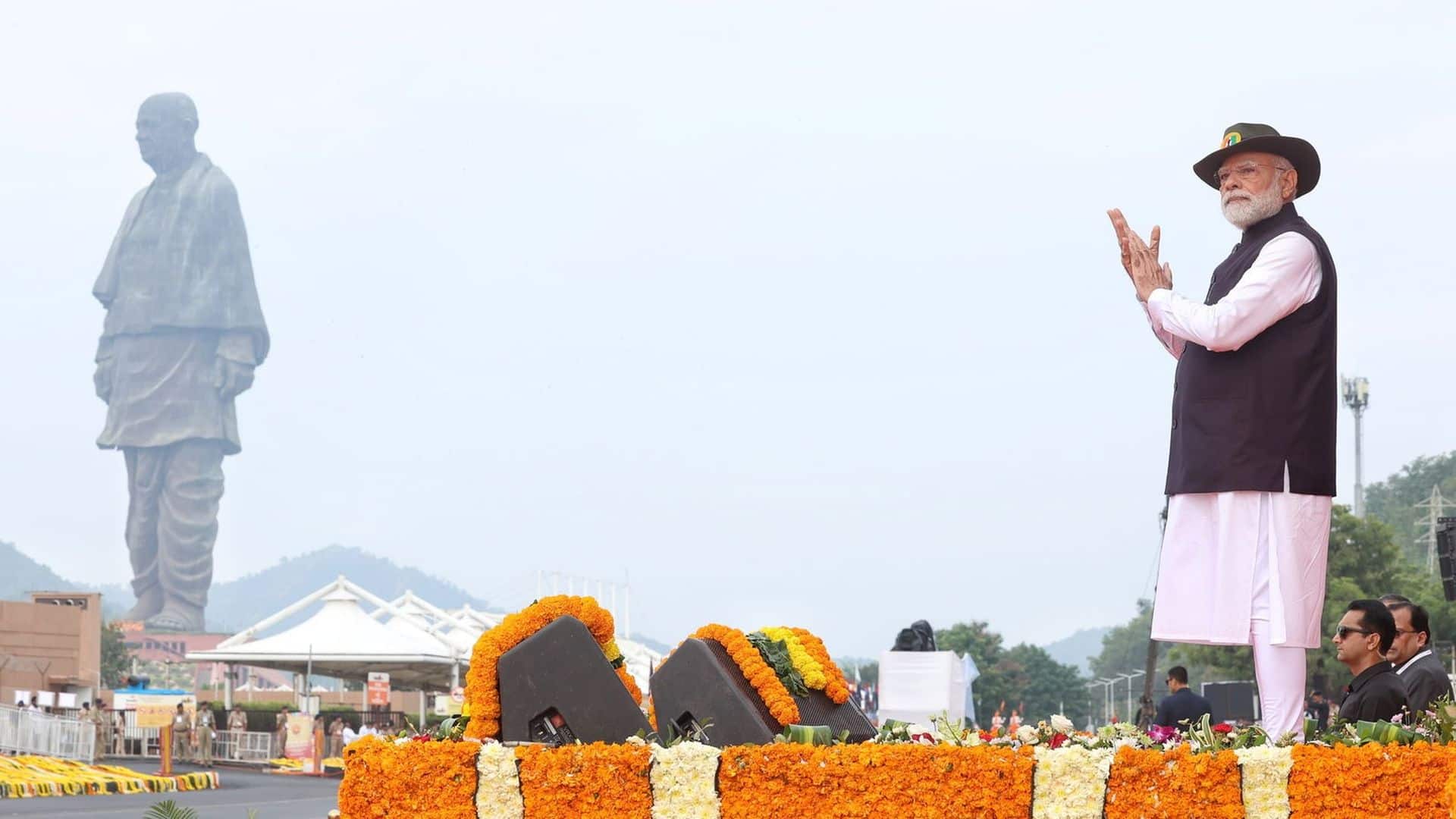


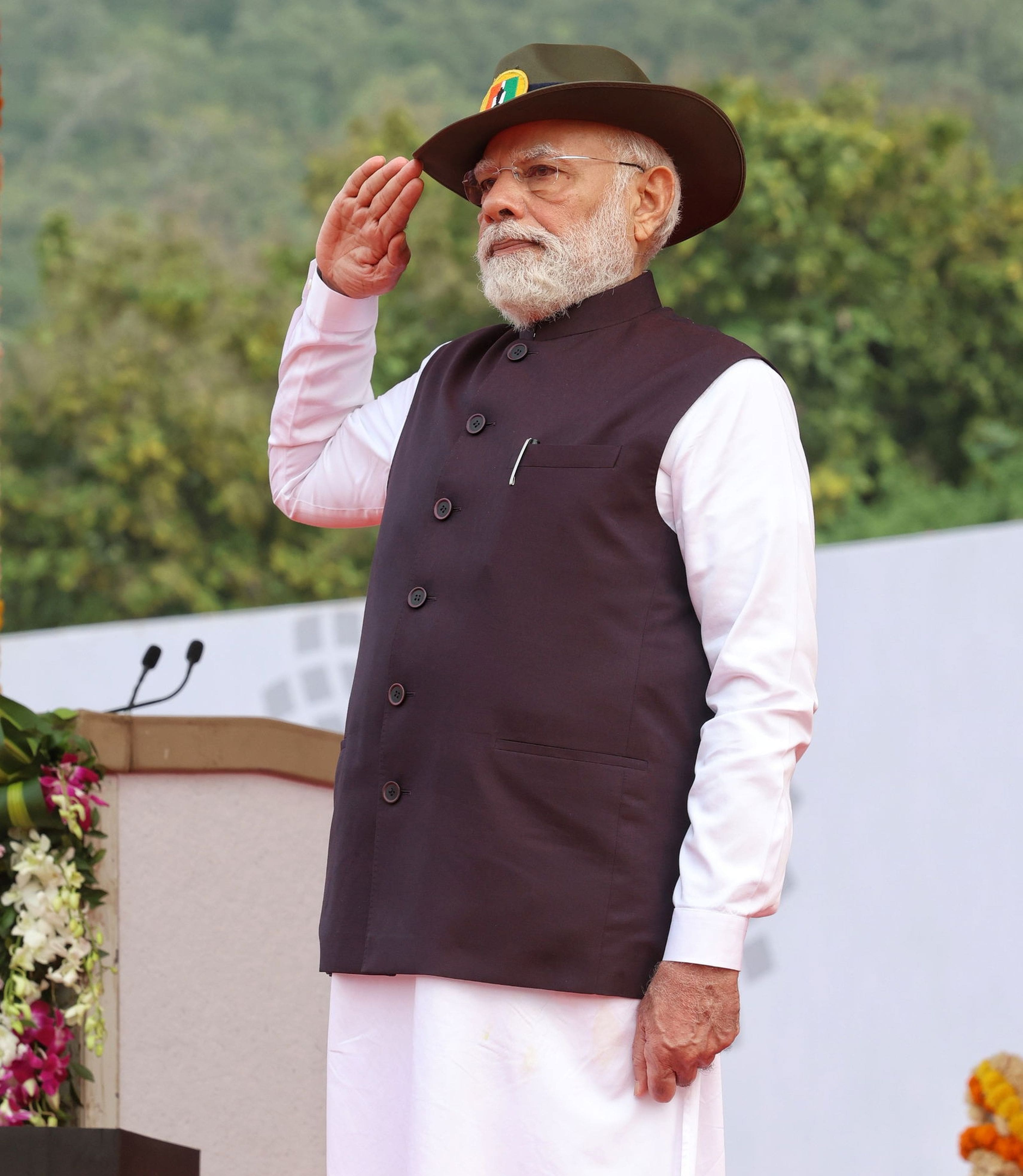
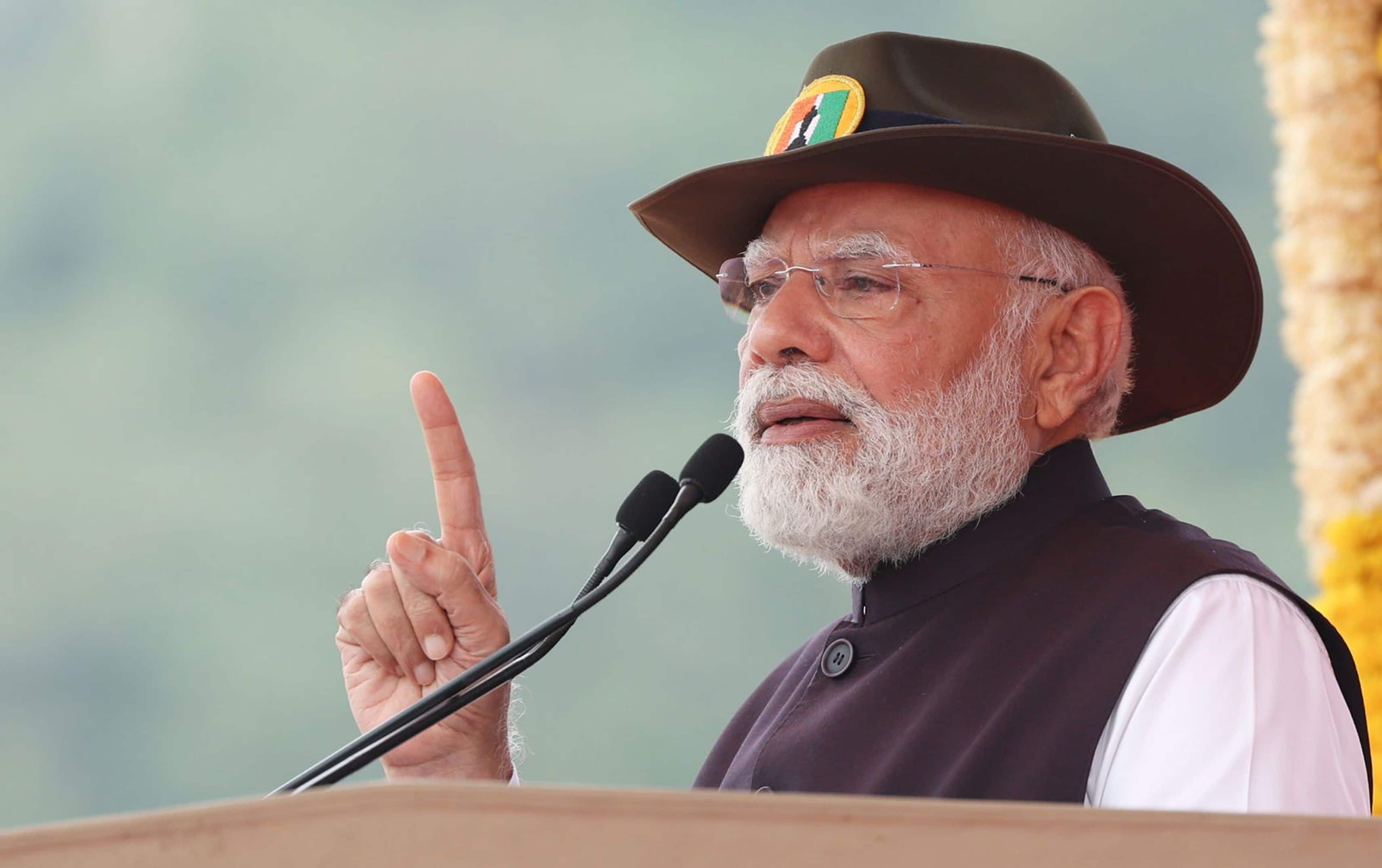
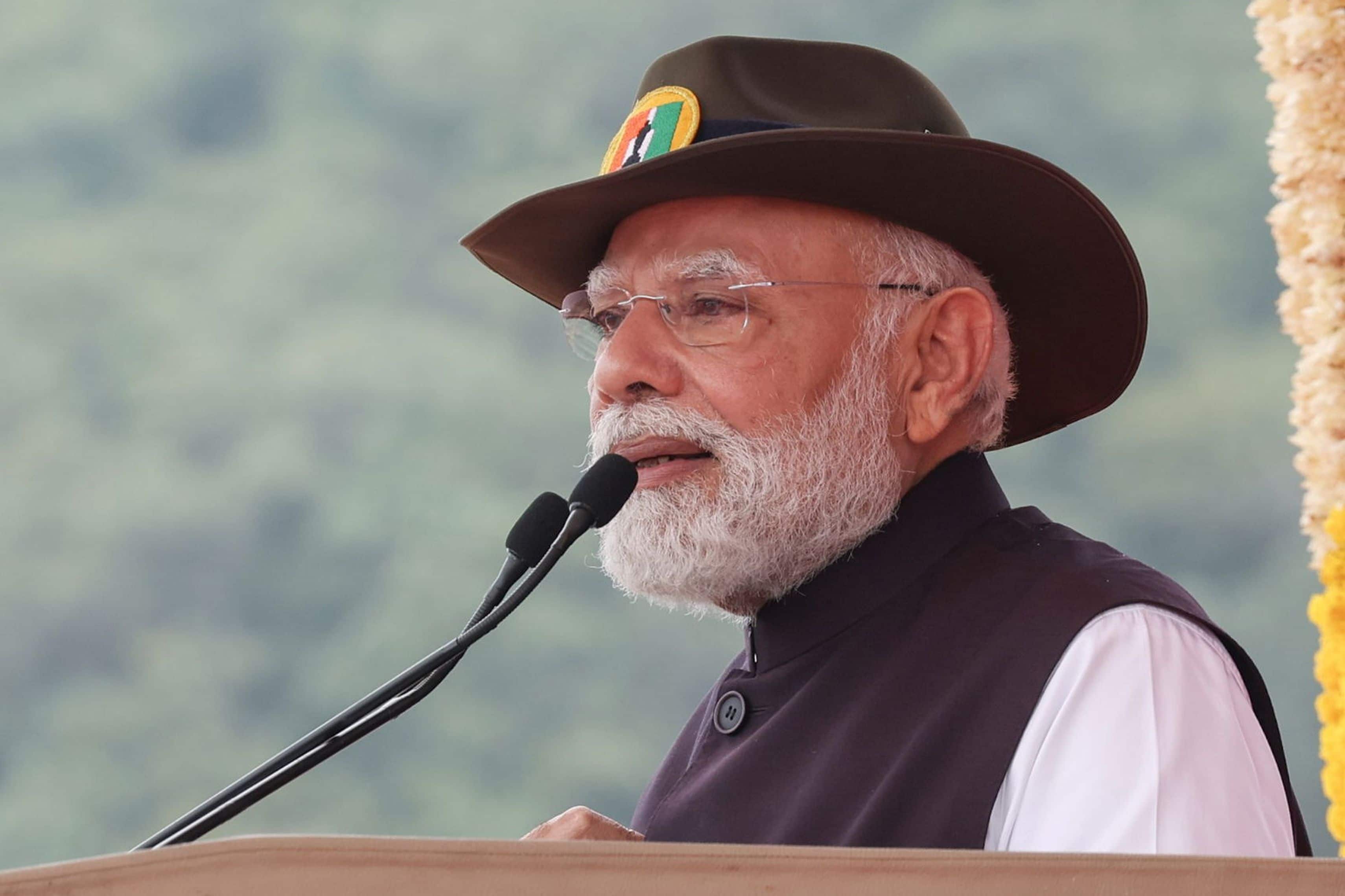
Prime Minister Shri Narendra Modi addressed the Rashtriya Ekta Diwas programme in Kevadia, Gujarat today. Speaking on the occasion, Prime Minister remarked that the 150th birth anniversary of Sardar Patel is a historic occasion. Describing the morning in Ekta Nagar as divine and the panoramic view as awe-inspiring, Shri Modi noted the collective presence at the feet of Sardar Patel and stated that the nation is witnessing a moment of great significance. He highlighted the nationwide Run for Unity and the enthusiastic participation of crores of Indians and emphasized that the resolve of New India is being tangibly felt. Referring to the events held earlier and the remarkable presentation from the previous evening, the Prime Minister observed that they reflected the traditions of the past, the labour and valour of the present, and a glimpse of future accomplishments. He informed that a commemorative coin and a special postal stamp have been released to mark Sardar Patel’s 150th birth anniversary. The Prime Minister extended his heartfelt greetings and best wishes to all 140 crore citizens of the country on the occasion of Sardar Patel’s birth anniversary and Rashtriya Ekta Diwas.
Prime Minister Shri Modi stated that Sardar Patel believed time should not be wasted in writing history; instead, efforts should be made to create history. He emphasized that this conviction is evident throughout Sardar Patel’s life story, highlighting that the policies and decisions taken by Sardar Patel created a new chapter in history. He recalled how Sardar Patel accomplished the seemingly impossible task of integrating over 550 princely states after independence. The idea of ‘Ek Bharat, Shreshtha Bharat’ was paramount for Sardar Patel. Shri Modi noted that this is why Sardar Patel’s birth anniversary has naturally become a grand festival of national unity. Just as 140 crore Indians celebrate Independence Day on 15th August and Republic Day on 26th January, the significance of Ekta Diwas has now reached a similar stature. He informed that today, crores of people have taken the pledge of unity and resolved to promote actions that strengthen the unity of the nation. He added that in Ekta Nagar itself, the Ekta Mall and Ekta Garden stand as symbols reinforcing the thread of unity.
“Every action which weakens the unity of the nation must be avoided by every citizen”, emphasised the Prime Minister, stressing that this is the need of the hour and the core message of Ekta Diwas for every Indian. He highlighted that Sardar Patel placed the sovereignty of the nation above all else. However, he expressed regret that in the years following Sardar Patel’s demise, successive governments did not demonstrate the same seriousness towards national sovereignty. He pointed to the mistakes made in Kashmir, the challenges in the Northeast, and the spread of Naxal-Maoist terrorism across the country as direct threats to India’s sovereignty. The Prime Minister remarked that instead of following Sardar Patel’s policies, the governments of that era chose a spineless approach, the consequences of which were borne by the nation in the form of violence and bloodshed.
Pointing out that many in today’s younger generation may not be aware that Sardar Patel wished for the complete integration of Kashmir, just as he had successfully merged other princely states, Shri Modi stated that however the then Prime Minister did not allow this wish to be fulfilled. Shri Modi further noted that Kashmir was divided by a separate constitution and a separate emblem. He remarked that the mistake committed by the then ruling party on Kashmir engulfed the nation in turmoil for decades. Due to their weak policies, a part of Kashmir fell under Pakistan’s illegal occupation, and Pakistan further fueled terrorism. The Prime Minister emphasized that both Kashmir and the nation paid a heavy price for these missteps. Yet, he added, the then government continued to bow before terrorism.
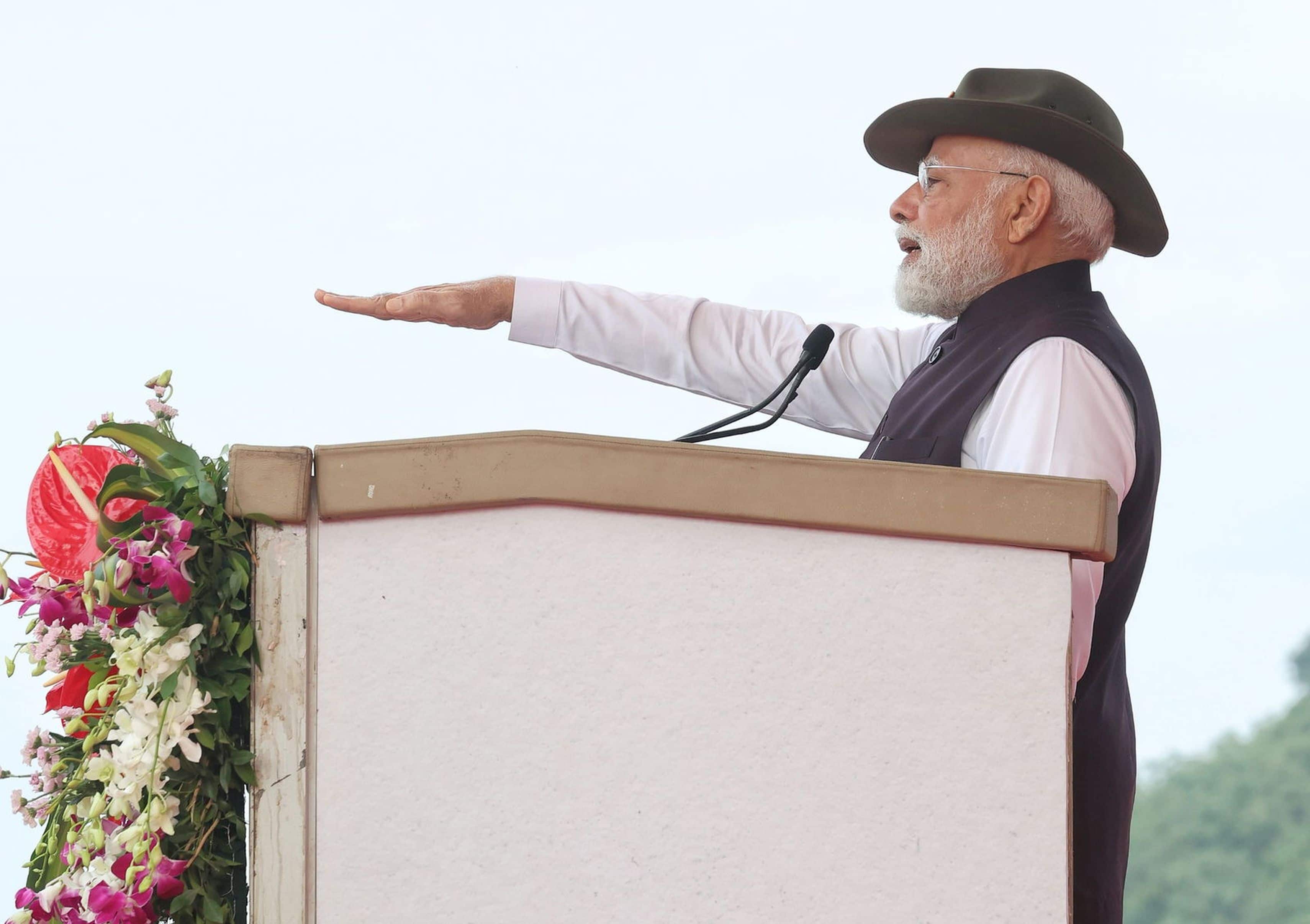
Criticizing the current opposition party for having forgotten Sardar Patel’s vision, Shri Modi said that their party did not. He emphasized that after 2014, the nation once again witnessed a steely resolve inspired by Sardar Patel. The Prime Minister highlighted that today, Kashmir has broken free from the shackles of Article 370 and is fully integrated into the mainstream. He remarked that even Pakistan and the masterminds of terrorism have now realized the true strength of India. Referring to Operation Sindoor, the Prime Minister said the entire world has seen that if anyone dares to challenge India, the country responds by striking within enemy territory. He asserted that India’s response is always stronger and decisive. This, he said, is a message to the enemies of India—“this is the India of the Iron Man, Sardar Patel, and it will never compromise on its security and honour”.
“In the domain of national security, India’s greatest achievement in the past eleven years has been breaking the backbone of Naxal-Maoist terrorism”, exclaimed the Prime Minister. He recalled that prior to 2014, the situation in the country was such that Naxal-Maoist groups operated their own rule from within the heart of India. In these areas, the Constitution of India did not apply, and police and administrative systems were unable to function. Shri Modi highlighted that Naxals openly issued diktats, obstructed road construction, and bombed schools, colleges, and hospitals, while the administration appeared helpless before them.
“Post 2014, our government launched a decisive offensive against Naxal-Maoist terrorism”, stated Shri Modi, emphasising that even the supporters of Naxals residing in urban areas—urban Naxals—were sidelined. He highlighted that the ideological battle was won and direct confrontation was undertaken in Naxal strongholds, adding that the results are now visible to the entire nation. The Prime Minister said, prior to 2014, around 125 districts in the country were affected by Maoist terrorism. Today, this number has reduced to just 11, with only three districts facing severe Naxal influence. From the land of Ekta Nagar, in the presence of Sardar Patel, the Prime Minister assured the nation that the government will not stop until India is completely free from Naxal-Maoist threats.
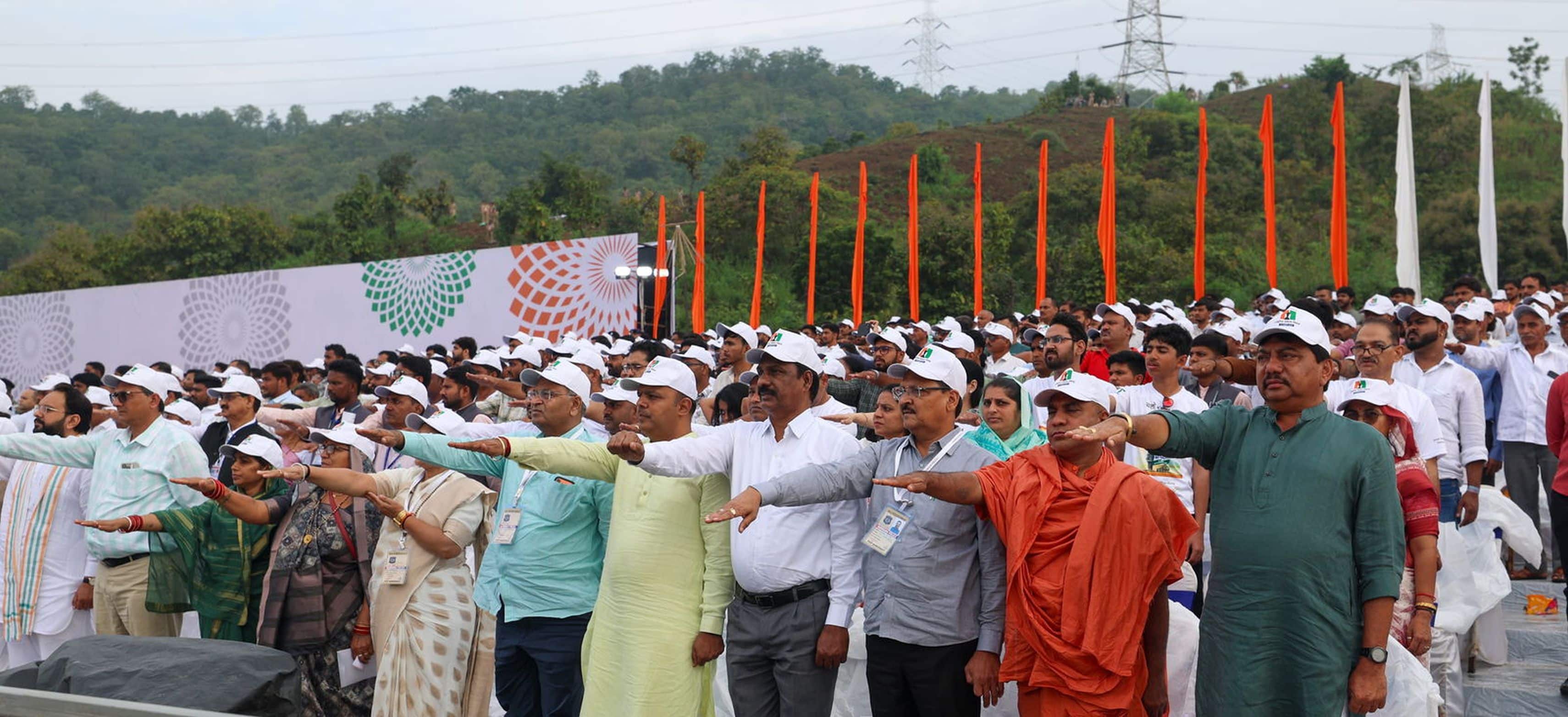
Underlining that today, the unity and internal security of the nation face a grave threat from infiltrators, the Prime Minister remarked that for decades, foreign infiltrators have entered the country, seized resources meant for citizens, disrupted demographic balance, and jeopardized national unity. He criticized previous governments for turning a blind eye to this serious issue and accused them of compromising national security for vote-bank politics. Shri Modi affirmed that for the first time, the country has resolved to fight this major threat decisively. He recalled announcing the Demography Mission from the Red Fort to address this challenge. He expressed concern that even now, when the issue is being raised seriously, some individuals are prioritizing personal interests over national welfare. Shri Modi further stated that these people are engaged in political battles to grant rights to infiltrators and are indifferent to the consequences of national disintegration. He warned that if the security and identity of the nation are endangered, every citizen will be at risk. Therefore, on Rashtriya Ekta Diwas, the Prime Minister called upon the nation to reaffirm its resolve to remove every infiltrator residing in India.
Underscoring that in a democracy, national unity also means respecting the diversity of thought, Shri Modi emphasized that while differences of opinion are acceptable in a democracy, personal discord should not exist. He expressed concern that after independence, those entrusted with the responsibility of leading the nation attempted to undermine the spirit of ‘We the People’. He remarked that individuals and organizations with differing ideologies were discredited and political untouchability was institutionalized. He pointed out how the previous governments treated Sardar Patel and his legacy, and similarly marginalized Baba Saheb Ambedkar during his lifetime and even after his passing. The Prime Minister added that the previous governments adopted the same approach towards leaders like Dr. Ram Manohar Lohia and Jayaprakash Narayan. Mentioning that this year marks 100 years of the Rashtriya Swayamsevak Sangh, Shri Modi highlighted the various attacks and conspiracies faced by the organization. He further added that there was a deliberate attempt to isolate every individual and idea outside one party and one family.
Underlining that the nation takes pride in having ended the political untouchability that once divided the country, the Prime Minister highlighted the construction of the Statue of Unity in honour of Sardar Patel and the establishment of Panchteerth dedicated to Baba Saheb Ambedkar. He recalled that Baba Saheb’s residence and Mahaparinirvan site in Delhi had suffered neglect during previous dispensation’s rule, but have now been transformed into a historic memorial. The Prime Minister pointed out that during the previous government’s era, only one former Prime Minister had a dedicated museum. In contrast, our government has built the Prime Ministers’ Museum to honour the contributions of all former Prime Ministers. He noted that Karpoori Thakur was conferred the Bharat Ratna, and even Shri Pranab Mukherjee, who spent his entire life in the current opposition party, was honoured with the Bharat Ratna. Leaders from opposing ideologies, such as Mulayam Singh Yadav, were also recognized with Padma awards. The Prime Minister emphasized that these decisions were driven by the intent to rise above political differences and strengthen the spirit of national unity. He added that this inclusive approach was also reflected in the multi-party delegation that represented India abroad following Operation Sindoor.
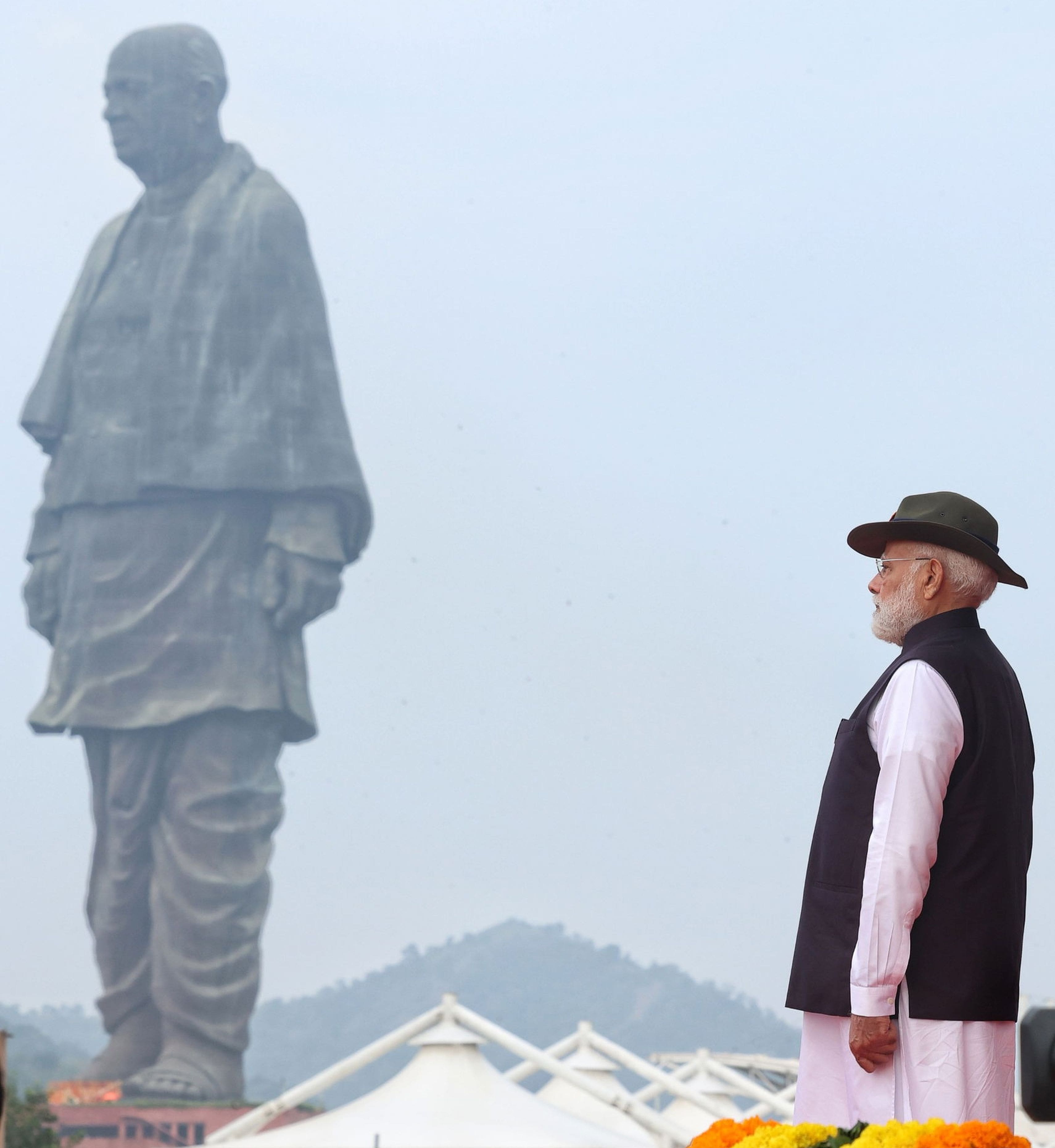
“The mindset of attacking national unity for political gain is a reflection of a colonial mentality”, remarked the Prime Minister, adding that the current opposition party not only inherited power and party structure from the British but also internalized their mindset of subjugation. Noting that in a few days, the nation will mark 150 years of the national song, Vande Mataram, Shri Modi recalled that in 1905, when the British partitioned Bengal, Vande Mataram became the collective voice of resistance for every Indian and a symbol of unity and solidarity. The British even attempted to ban the chanting of Vande Mataram, but failed. However, the Prime Minister asserted, what the British could not do, the previous government eventually did. He stated that they removed a portion of Vande Mataram on religious grounds, thereby dividing society and advancing the colonial agenda. The Prime Minister declared with full responsibility that the day the current opposition party decided to fragment and truncate Vande Mataram, it laid the foundation for the partition of India. He further criticized them that had they not committed that grave mistake, the image of India today would have been very different.
Shri Modi stated that due to the mindset of those in power at the time, the country continued to carry colonial symbols for decades. He recalled that the emblem of colonial rule was removed from the Indian Navy’s flag only after our government came to power. He noted that Rajpath was renamed Kartavya Path as part of this transformation. The Prime Minister highlighted that the Cellular Jail in Andaman, a site of sacrifice during the freedom struggle, was accorded the status of a national memorial only when Morarji Desai’s government was in office. He pointed out that until recently, many islands in Andaman bore names of British figures. These have now been renamed in honour of Netaji Subhas Chandra Bose, and several islands have been named after Param Vir Chakra awardees along with the installation of Netaji Subhash’s statue at India Gate in New Delhi.
Remarking that due to a colonial mindset, even soldiers who laid down their lives for the nation were not accorded proper respect, the Prime Minister highlighted that the establishment of the National War Memorial has immortalized their memories. He noted that 36,000 personnel have sacrificed their lives for internal security, including members of the police, BSF, ITBP, CISF, CRPF, and other paramilitary forces, whose valour had long been denied due recognition. Shri Modi affirmed that it is their government that built the Police Memorial to honour those martyrs. “The country is now removing every symbol of colonial mentality and strengthening the spirit of ‘Nation First’ by honouring those who sacrificed for the nation”, stated Shri Modi
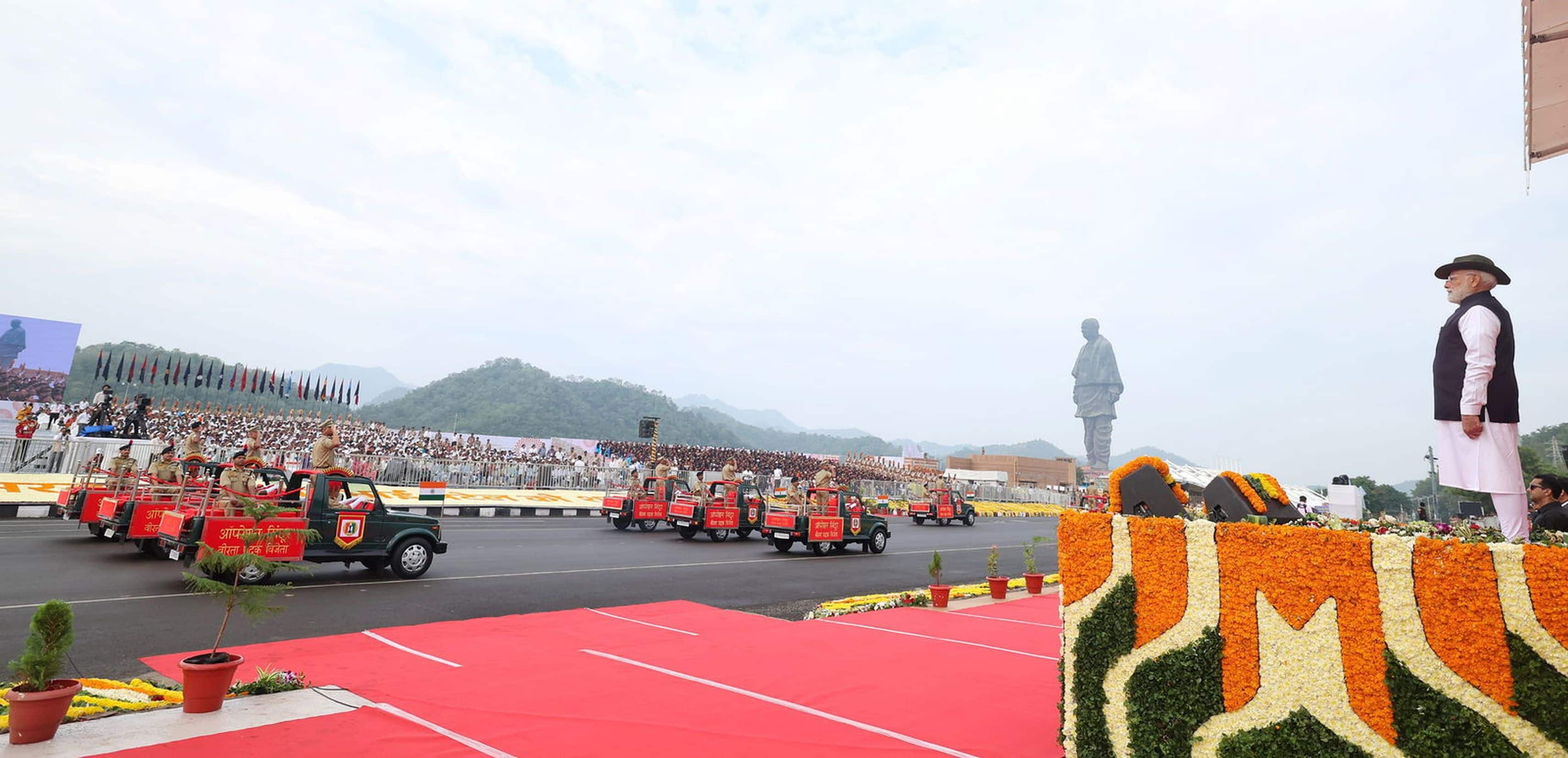
Emphasising that unity is the foundation of a nation and society’s existence, the Prime Minister said, as long as unity prevails in society, the integrity of the nation remains secure. He asserted that to achieve the goal of a developed India, every conspiracy aimed at breaking national unity must be defeated. He stated that the country is actively working on every front of national unity.
The Prime Minister outlined four foundational pillars of India’s unity, the first being cultural unity. He remarked that India’s culture has kept the nation alive as a unified entity for thousands of years, independent of political circumstances. He cited the twelve Jyotirlingas, seven sacred cities, four Dhams, over fifty Shaktipeeths, and the tradition of pilgrimages as the vital energy that makes India a conscious and living nation. He noted that this tradition is being advanced through events like the Saurashtra Tamil Sangamam and Kashi Tamil Sangamam. He added that through International Yoga Day, India’s profound yogic science is gaining new global recognition, and yoga is becoming a medium that connects people.
Elaborating on the second pillar of India’s unity - linguistic unity, Shri Modi stated that India’s hundreds of languages and dialects are a reflection of the nation’s open and creative mindset. He emphasized that in India, no community, authority, or sect has ever weaponized language or attempted to impose one language over others. This, he said, is why India has become one of the richest nations in terms of linguistic diversity. The Prime Minister likened India’s languages to musical notes that strengthen the country’s identity. He affirmed that every language is considered a national language and proudly noted that India is home to Tamil, one of the world’s oldest languages, and Sanskrit, a treasure of knowledge. He acknowledged the unique literary and cultural wealth of every Indian language and stated that the government is actively promoting all of them. Shri Modi expressed the desire for children in India to study and progress in their mother tongue, and for citizens to learn and appreciate other Indian languages. He emphasized that languages should become the threads of unity and that this is not a one-day task but a continuous effort that requires collective responsibility.
Stating that the third pillar of India’s unity is development free from discrimination, Shri Modi emphasized that poverty and inequality are the greatest vulnerabilities in the social fabric, which have often been exploited by the nation’s adversaries. He recalled that Sardar Patel aspired to formulate a long-term plan to combat poverty. Quoting Sardar Patel, the Prime Minister noted that had India attained independence ten years prior to 1947, the country would have overcome the crisis of food scarcity by that time. Sardar Patel believed that just as he resolved the challenge of integrating princely states, he would have tackled food shortages with equal resolve. Shri Modi further remarked that such was Sardar Patel’s determination, and that the same spirit is essential to confront major challenges today. He expressed pride that the government is working to fulfill Sardar Patel’s unfinished commitments. Over the past decade, 25 crore citizens have been lifted out of poverty. Millions of poor families are receiving homes, clean drinking water is reaching every household, and free healthcare services are being provided. He affirmed that ensuring a life of dignity for every citizen is both the nation’s mission and vision. These policies, free from discrimination and corruption, are strengthening national unity.

Outlining the fourth pillar of national unity - the connection of hearts through connectivity, Shri Modi highlighted that record numbers of highways and expressways are being built across the country. Trains like Vande Bharat and Namo Bharat are transforming Indian Railways. He noted that even smaller cities are now gaining access to airport facilities. The Prime Minister emphasized that this modern infrastructure has not only changed the world’s perception of India but has also reduced distances between North and South, East and West. He remarked that people are now easily travelling across states for tourism and business. This, he said, marks a new era of people-to-people connection and cultural exchange, which is strengthening national unity. He further added that Digital connectivity is also further strengthening the people-to-people connect.
Recalling Sardar Patel’s words that his greatest joy came from serving the nation, the Prime Minister echoed this sentiment, urging every citizen to embrace the same spirit. He emphasized that there is no greater happiness than working for the country, and that devotion to Maa Bharati is the highest form of worship for every Indian. Shri Modi remarked that when 140 crore Indians stand together, even mountains make way, and when they speak in one voice, their words become the proclamation of India’s success. He called upon the nation to adopt unity as a solemn resolve, to remain undivided and unwavering. He stated that this is the true tribute to Sardar Patel. Expressing confidence, the Prime Minister concluded by affirming that together, the nation will strengthen the resolve of ‘Ek Bharat, Shreshtha Bharat’ and fulfill the dream of a developed and self-reliant India. With this spirit, he once again paid homage at the feet of Sardar Patel.
Background
Prime Minister participated and addressed the Rashtriya Ekta Diwas celebrations and offered floral tribute to Sardar Vallabhbhai Patel. He also administered the Ekta Diwas pledge and witnessed Ekta Diwas Parade.
The parade included contingents from BSF, CRPF, CISF, ITBP and SSB along with various state police forces. Key attractions this year included a BSF marching contingent comprising exclusively Indian breed dogs such as Rampur Hounds and Mudhol Hounds, Gujarat Police’s Horse Contingent, Assam Police’s Motorcycle Daredevil Show, and BSF’s Camel Contingent and Camel Mounted Band.
The parade also honoured five Shaurya Chakra awardees from CRPF and sixteen gallantry medal winners from BSF who displayed exceptional courage in anti-Naxal operations in Jharkhand and counter-terror operations in Jammu & Kashmir. BSF personnel also were recognised for their valour during Operation Sindoor.
This year’s Rashtriya Ekta Diwas parade featured ten tableaux from NSG, NDRF, Gujarat, Jammu & Kashmir, Andaman & Nicobar Islands, Manipur, Maharashtra, Chhattisgarh, Uttarakhand and Puducherry, depicting the theme ‘Unity in Diversity’. A cultural programme featuring 900 artists showcased India’s classical dances representing the richness and diversity of Indian culture. The Rashtriya Ekta Diwas celebrations this year hold special significance as the nation marks the 150th birth anniversary of Sardar Vallabhbhai Patel.

Prime Minister interacted with Officer Trainees of the 100th Foundation Course at the culmination of Aarambh 7.0. The 7th edition of Aarambh is being held on the theme of “Reimagining Governance.” The 100th foundation course includes 660 Officer Trainees from across 16 civil services of India and 3 civil services of Bhutan.
Click here to read full text speech
After Independence, Sardar Patel accomplished the seemingly impossible task of uniting over 550 princely states.
— PMO India (@PMOIndia) October 31, 2025
For him, the vision of 'Ek Bharat, Shreshtha Bharat' was paramount. pic.twitter.com/XtVc21rO68
Every thought or action that weakens the unity of our nation must be shunned by every citizen.
— PMO India (@PMOIndia) October 31, 2025
This is the need of the hour for our country. pic.twitter.com/S7UZcrFOQb
This is Iron Man Sardar Patel's India.
— PMO India (@PMOIndia) October 31, 2025
It will never compromise on its security or its self-respect. pic.twitter.com/duZFVrI4gJ
Since 2014, our government has dealt a decisive and powerful blow to Naxalism and Maoist terrorism. pic.twitter.com/g2jE7k7pRI
— PMO India (@PMOIndia) October 31, 2025
On Rashtriya Ekta Diwas, our resolve is to remove every infiltrator living in India. pic.twitter.com/W1xYHD9yS9
— PMO India (@PMOIndia) October 31, 2025
Today, the nation is removing every trace of a colonial mindset. pic.twitter.com/zxKL9avri6
— PMO India (@PMOIndia) October 31, 2025
By honouring those who sacrificed their lives for the nation, we are strengthening the spirit of 'Nation First'. pic.twitter.com/CsUFSiiU5l
— PMO India (@PMOIndia) October 31, 2025
To achieve the goal of a Viksit Bharat, we must thwart every conspiracy that seeks to undermine the unity of the nation. pic.twitter.com/fkAB15B8Cu
— PMO India (@PMOIndia) October 31, 2025
The four pillars of India's unity:
— PMO India (@PMOIndia) October 31, 2025
Cultural unity
Linguistic unity
Inclusive development
Connection of hearts through connectivity pic.twitter.com/Yaunu2NBvM
The devotion to Maa Bharti is the highest form of worship for every Indian. pic.twitter.com/FprujcDtIl
— PMO India (@PMOIndia) October 31, 2025