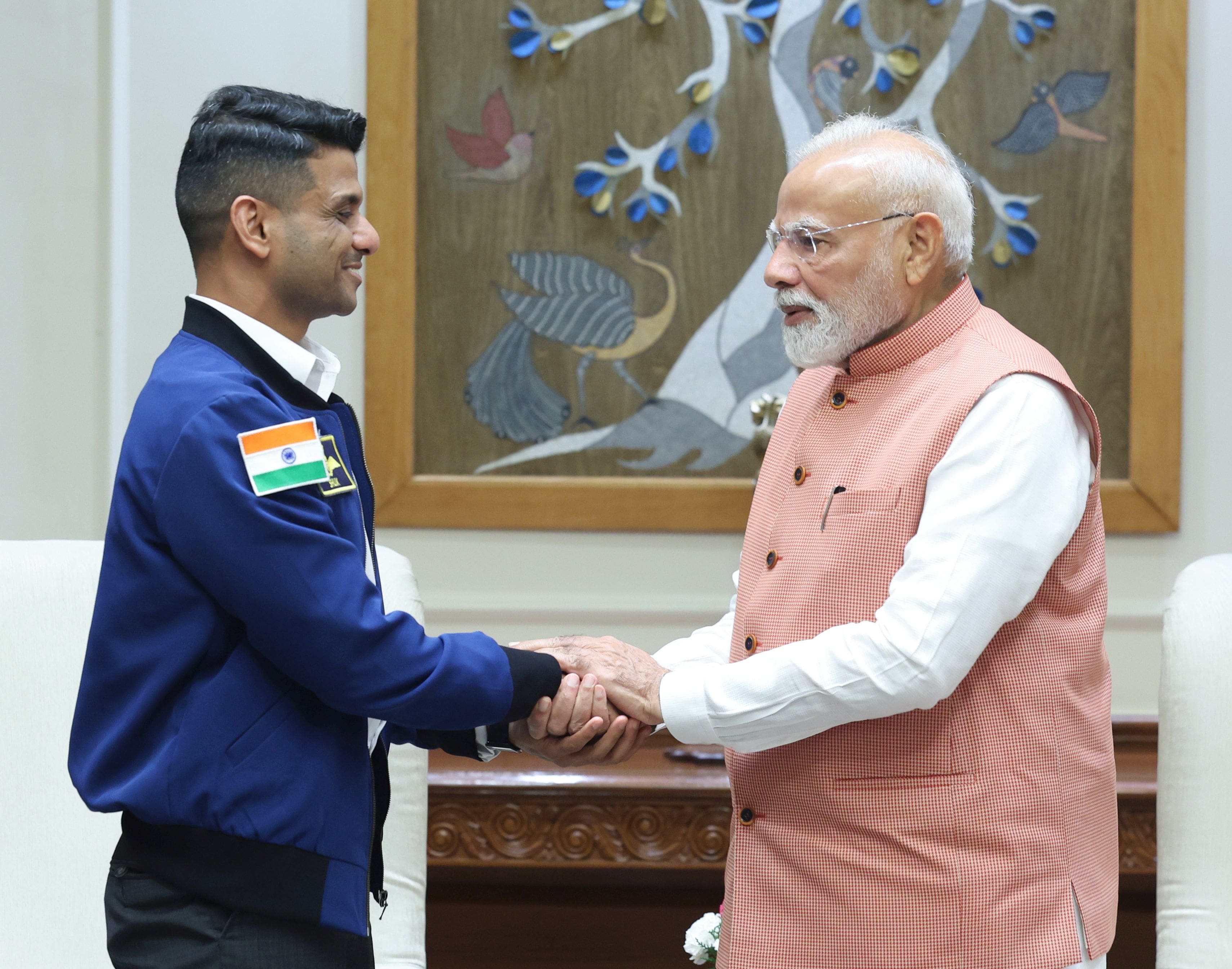
The Prime Minister Shri Narendra Modi interacted with Astronaut Shubhanshu Shukla in New Delhi yesterday. Reflecting on the transformative experience of space travel, the Prime Minister remarked that after undertaking such a significant journey, one must feel a change and he sought to understand how astronauts perceive and experience this transformation. Responding to the Prime Minister, Shubhanshu Shukla stated that the environment in space is distinctly different, with the absence of gravity being a key factor.
The Prime Minister asked whether the seating arrangement remains the same during the journey. Shukla confirmed this, saying, “Yes sir, it remains the same.” Shri Modi further noted that astronauts have to spend 23–24 hours in the same setup. Shukla affirmed this and added that once in space, astronauts can unfasten their seats and harnesses, and move freely within the capsule.
Continuing the interaction with astronaut Shubhanshu Shukla, delving into the physical and psychological impact of space travel, the Prime Minister inquired whether the capsule offered sufficient space. Shubhanshu Shukla responded that while it wasn’t very spacious, there was some room available. The Prime Minister remarked that the capsule seemed more comfortable than a fighter jet cockpit. Shukla affirmed, “It is even better than that, sir.”
Further, Shri Modi was briefed on the physiological changes that occur upon reaching space. Shukla highlighted that the heart rate slows down significantly, and the body undergoes several adjustments. However, within four to five days, the body acclimatizes and normalizes in the space environment. Shukla further explained that upon returning to Earth, the body experiences the same set of changes again. Regardless of one’s fitness level, walking becomes difficult initially. He shared his personal experience, stating that although he felt fine, he stumbled while taking his first steps and had to be supported by others. Even though one knows how to walk, the brain takes time to reorient and understand the new environment. The Prime Minister emphasized that space travel requires not just physical training but mental conditioning as well. Shukla agreed, stating that while the body and muscles possess strength, the brain requires rewiring to comprehend the new environment and recalibrate the effort needed to walk and function normally.
Discussing the exploration of the duration of space missions, Shri Modi inquired about the longest duration astronauts have spent in space. Shubhanshu Shukla informed that currently, individuals are staying up to eight months at a time, a milestone initiated with the present mission. The Prime Minister asked about the astronauts Shukla met during his mission. Shukla confirmed that some of them are scheduled to return in December.
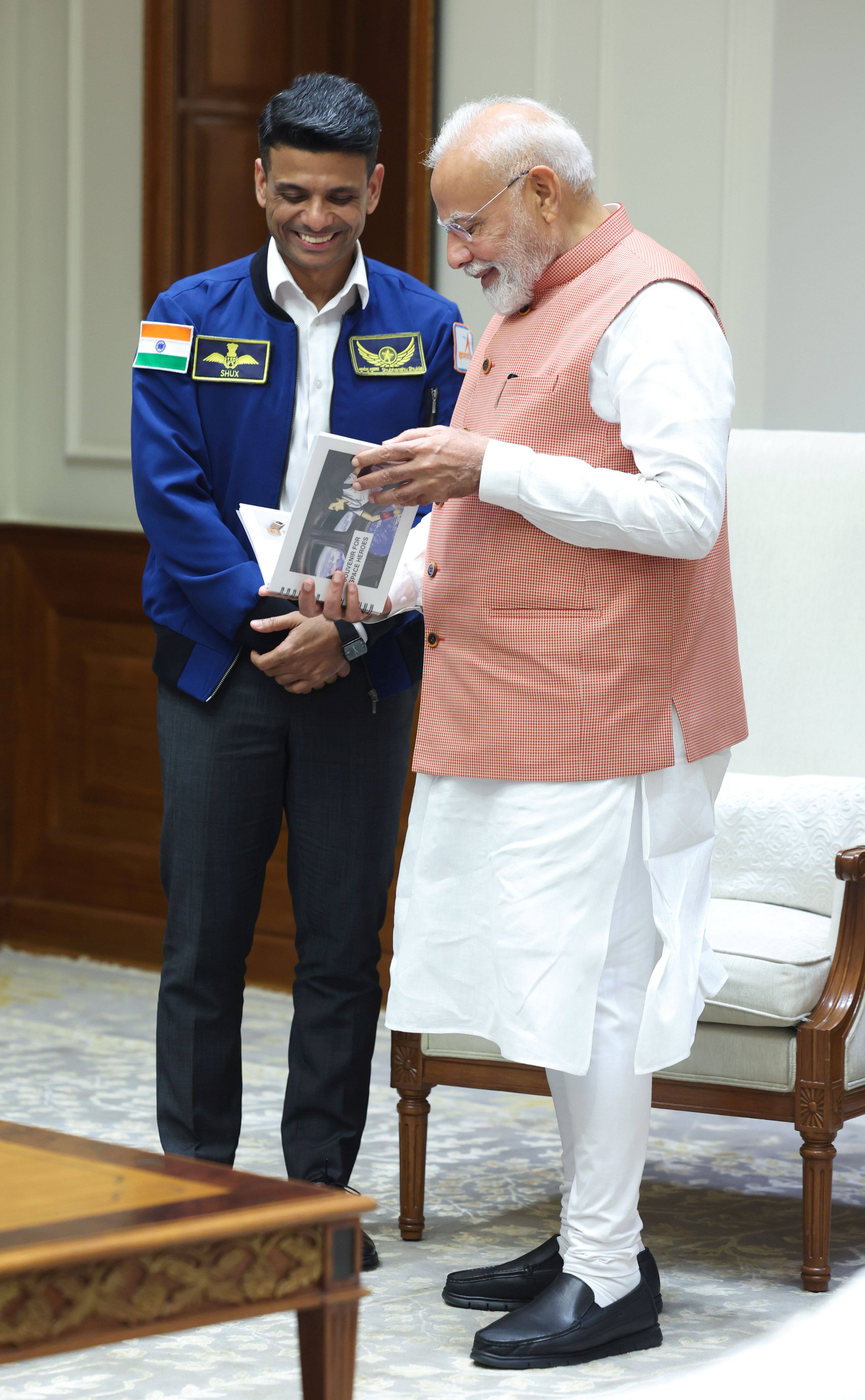
Shri Modi sought insights into the significance of Shukla’s experiments on growing Moong and Methi aboard the space station. Shukla expressed surprise that many people were unaware of certain developments. He highlighted that food remains a major challenge aboard space stations due to limited space and expensive cargo. The focus is on packing maximum calories and nutrition in minimal space. He explained that various experiments are underway, and growing certain foods is remarkably simple in space. Using minimal resources, such as a small dish and a bit of water, sprouts began emerging within eight days—an experiment Shukla personally witnessed aboard the station. Shukla emphasized that India’s unique agricultural innovations are now reaching microgravity research platforms. He noted the potential of these experiments to address food security challenges—not only for astronauts but also for vulnerable populations on Earth.
The Prime Minister asked how international astronauts reacted upon meeting an Indian astronaut. Shukla shared that over the past year, wherever he went, people were genuinely happy and excited to meet him. They frequently asked about India’s space activities and were well-informed about the country’s progress. Many were particularly enthusiastic about the Gaganyaan mission, inquiring about its timeline. Shukla’s crewmates even requested signed notes, expressing their desire to be invited to the launch and to travel aboard India’s spacecraft.
Shri Modi further asked why others referred to Shukla as a genius. Shukla humbly responded that people were kind in their remarks. He attributed their appreciation to his rigorous training—first in the Indian Air Force and later as a space pilot. Initially believing that academic study would be minimal, Shukla discovered that the path required extensive learning. Becoming a space pilot, he explained, is akin to mastering an engineering discipline. He underwent years of training under Indian scientists and felt well-prepared for the mission.

Prime Minister Shri Narendra Modi reviewed the progress of the “homework” he had earlier assigned to astronaut Shubhanshu Shukla. Shukla reported that the progress has been excellent. He affirmed that the task was indeed given and was very important, stating that his journey itself was meant to create awareness. He emphasized that while the mission was successful and the team returned safely, it was not the end—it was only the beginning. The Prime Minister reiterated that this was the first step. Shukla echoed the sentiment, saying, “Yes sir, it is the first step.” He emphasized that the core objective of this initiative was to learn as much as possible and bring those insights back.
The Prime Minister highlighted the need to build a large pool of astronauts in India, suggesting that 40–50 individuals should be ready for such missions. He noted that until now, very few children may have considered becoming astronauts, but Shukla’s journey would likely inspire greater belief and interest.
Shukla reflected on his childhood, recalling that when Rakesh Sharma went to space in 1984, the idea of becoming an astronaut never occurred to him due to the absence of a national program. However, during his recent mission, he interacted with children on three occasions—once through a live event and twice via radio. In each of these events, at least one child asked him, “Sir, how can I become an astronaut?”. Astronaut Shukla stated that this achievement is a major success for the country, emphasizing that today’s India no longer needs to merely dream—it knows that spaceflight is possible, that options exist, and that becoming an astronaut is achievable. “Representing India in space was a great opportunity, and now it is his responsibility to help more people reach this milestone”, added Shukla.
Prime Minister Shri Narendra Modi remarked that India now has two major missions ahead—Space Station and Gaganyaan and highlighted that Shukla’s experience would be of great value in these upcoming endeavours.
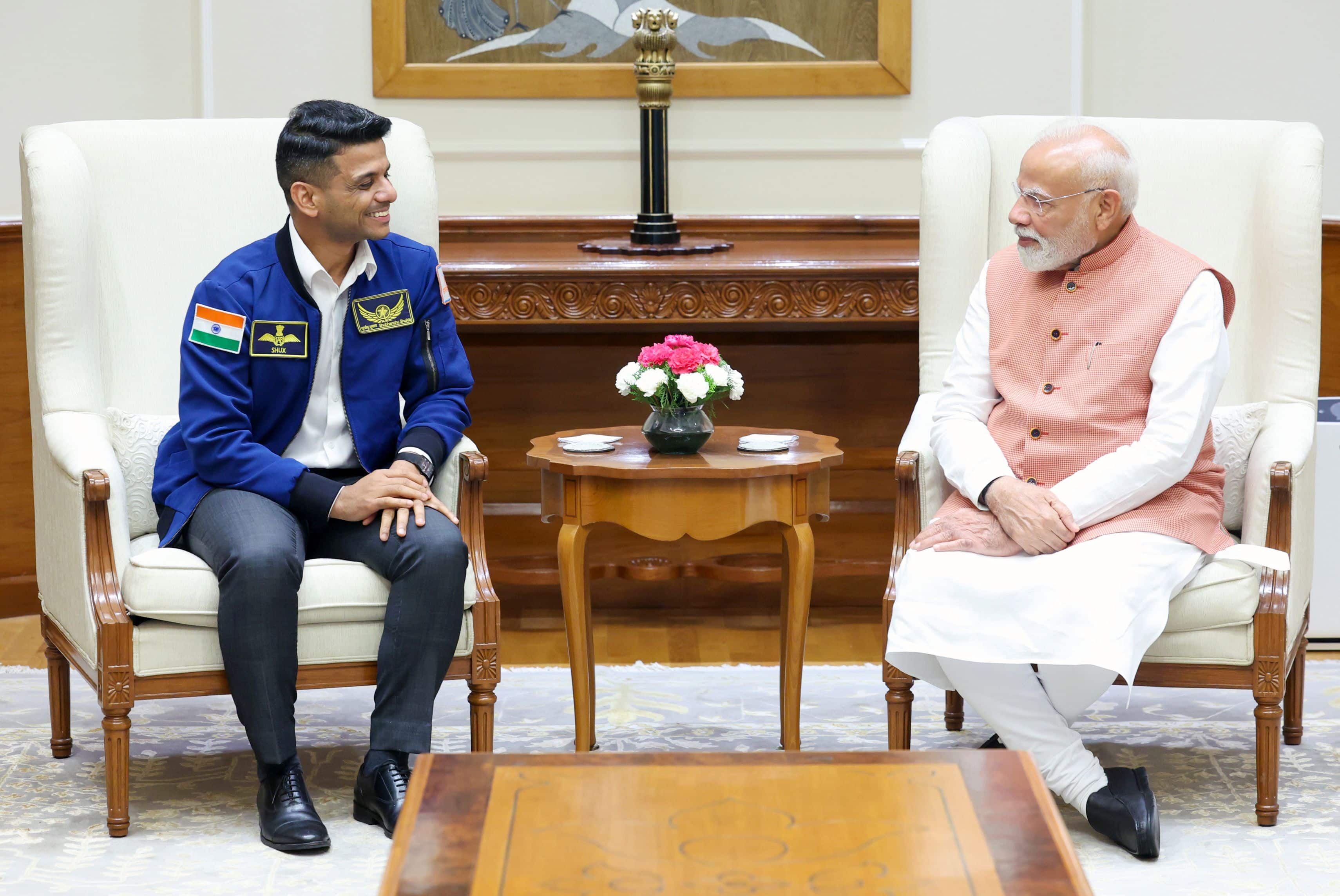
Shukla responded affirmatively, noting that this is a major opportunity for the country, especially given the sustained commitment of the Government under Prime Minister Modi’s leadership. He pointed out that despite setbacks such as Chandrayaan-2 not being successful, the Government continued to support the space program with consistent budgeting, leading to the success of Chandrayaan-3. He emphasized that such support, even after failures, is being observed globally and reflects India’s capability and positioning in the space domain. Shukla stated that India can acquire a leadership role and that a space station led by Bharat, with participation from other nations, would be a powerful tool.
Shukla further referred to the Prime Minister’s remarks on Independence day on Atmanirbharta in space manufacturing and said that all these elements are interconnected—the vision for Gaganyaan, the Space station, and the moon landing—forming a vast and ambitious dream. Prime Minister Modi affirmed that if India pursues these goals with self-reliance, it will succeed.