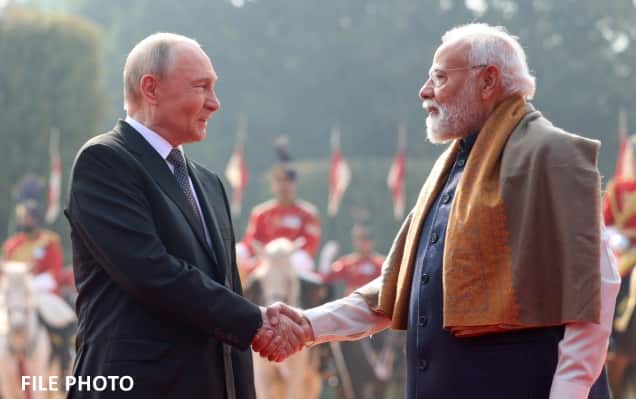
PM Modi chairs high level meeting on drought & water scarcity situation in parts of Karnataka
Karnataka CM Siddaramaiah thanks PM Modi for Centre's assistance for drought hit areas
Centre and the State should work together to tackle the problem of drought: PM
Time has come when there should be healthy competition among States to speak of efforts in water conservation: PM Modi

The Prime Minister Shri Narendra Modi, today chaired a high level meeting on the drought and water scarcity situation in parts of Karnataka. The Chief Minister of Karnataka, Shri Siddaramaiah, was present in the meeting. Senior officials from the Government of India, and the State of Karnataka, were also present.

Initiating the discussion, the Prime Minister said he is holding separate meetings with Chief Ministers of 11 drought-affected States, to see what can be done to mitigate the problems posed by drought, and also to focus attention on medium to long term measures.

The Chief Minister of Karnataka thanked the Government of India for the assistance of Rs. 1540.20 crore against the Kharif memorandum, and said that this has been fully utilized to assist the farmers. He said that this amount was transferred to farmers through Real-Time Gross Settlement (RTGS). He further said that Rs. 723.23 crore had recently been approved for the Rabi memorandum, which should be released expeditiously.


It was informed that this was in addition to the Rs. 207 crore released as central share of SDRF for 2015-16. Further, Rs. 108.75 crore has already been released as first instalment of SDRF for 2016-17.

It was further informed that Rs 603 crore would be made available with Karnataka during 2016-17 for water conservation and drought proofing under various schemes of Government of India. Similarly, Rs 830 crore would be available under various agriculture schemes.

The Chief Minister described the problems being faced by people owing to the severe drought. He said that major rivers and reservoirs in the State are facing acute water shortage. He explained the various measures undertaken by the State Government, including desilting, construction of farm ponds, steps towards drip irrigation, and ensuring adequate drinking water supply.

The Prime Minister discussed various measures for desilting, water conservation and recharging of ground water, with the Chief Minister. He urged the State Government to give maximum attention to desilting, farm tanks and check dams over the next 30 to 40 days, before the onset of the monsoon.


The Chief Minister apprised the Prime Minister about the steps taken by Karnataka, for waste water management. Appreciating these efforts, the Prime Minister emphasized that this should be taken up in a big way in the towns and cities.

Shri Siddaramaiah apprised the Prime Minister about the preparatory steps taken towards implementation of the Pradhan Mantri Fasal Bima Yojana. The State Government also made some suggestions regarding crop insurance.

The Chief Minister presented a memorandum to the Prime Minister, and the Prime Minister assured him of all possible support.

The Prime Minister said that the Centre and the State should work together to tackle the problem of drought, which he described as “our” problem. He said that solutions to the problem would have to be found together.

The Prime Minister said that the time has come when there should be healthy competition among States to speak of efforts in water conservation and management, the way efforts to increase GSDP and investment are spoken about. The Prime Minister also asked NITI Aayog to develop an index to measure water conservation and management.

Explore More
ശ്രീരാമജന്മഭൂമി ക്ഷേത്രത്തിലെ പതാക ഉയർത്തൽ ഉത്സവത്തിനിടെ പ്രധാനമന്ത്രി നടത്തിയ പ്രസം​ഗം

ജനപ്രിയ പ്രസംഗങ്ങൾ

ശ്രീരാമജന്മഭൂമി ക്ഷേത്രത്തിലെ പതാക ഉയർത്തൽ ഉത്സവത്തിനിടെ പ്രധാനമന്ത്രി നടത്തിയ പ്രസം​ഗം
Regional languages take precedence in Lok Sabha addresses

Media Coverage

Regional languages take precedence in Lok Sabha addresses
NM on the go

Nm on the go

Always be the first to hear from the PM. Get the App Now!
...
Cabinet approves three new corridors as part of Delhi Metro’s Phase V (A) Project
December 24, 2025

The Union Cabinet chaired by the Prime Minister, Shri Narendra Modi has approved three new corridors - 1. R.K Ashram Marg to Indraprastha (9.913 Kms), 2. Aerocity to IGD Airport T-1 (2.263 kms) 3. Tughlakabad to Kalindi Kunj (3.9 kms) as part of Delhi Metro’s Phase – V(A) project consisting of 16.076 kms which will further enhance connectivity within the national capital. Total project cost of Delhi Metro’s Phase – V(A) project is Rs.12014.91 crore, which will be sourced from Government of India, Government of Delhi, and international funding agencies.

The Central Vista corridor will provide connectivity to all the Kartavya Bhawans thereby providing door step connectivity to the office goers and visitors in this area. With this connectivity around 60,000 office goers and 2 lakh visitors will get benefitted on daily basis. These corridors will further reduce pollution and usage of fossil fuels enhancing ease of living.

Details:

The RK Ashram Marg – Indraprastha section will be an extension of the Botanical Garden-R.K. Ashram Marg corridor. It will provide Metro connectivity to the Central Vista area, which is currently under redevelopment. The Aerocity – IGD Airport Terminal 1 and Tughlakabad – Kalindi Kunj sections will be an extension of the Aerocity-Tughlakabad corridor and will boost connectivity of the airport with the southern parts of the national capital in areas such as Tughlakabad, Saket, Kalindi Kunj etc. These extensions will comprise of 13 stations. Out of these 10 stations will be underground and 03 stations will be elevated.

After completion, the corridor-1 namely R.K Ashram Marg to Indraprastha (9.913 Kms), will improve the connectivity of West, North and old Delhi with Central Delhi and the other two corridors namely Aerocity to IGD Airport T-1 (2.263 kms) and Tughlakabad to Kalindi Kunj (3.9 kms) corridors will connect south Delhi with the domestic Airport Terminal-1 via Saket, Chattarpur etc which will tremendously boost connectivity within National Capital.

These metro extensions of the Phase – V (A) project will expand the reach of Delhi Metro network in Central Delhi and Domestic Airport thereby further boosting the economy. These extensions of the Magenta Line and Golden Line will reduce congestion on the roads; thus, will help in reducing the pollution caused by motor vehicles.

The stations, which shall come up on the RK Ashram Marg - Indraprastha section are: R.K Ashram Marg, Shivaji Stadium, Central Secretariat, Kartavya Bhawan, India Gate, War Memorial - High Court, Baroda House, Bharat Mandapam, and Indraprastha.

The stations on the Tughlakabad – Kalindi Kunj section will be Sarita Vihar Depot, Madanpur Khadar, and Kalindi Kunj, while the Aerocity station will be connected further with the IGD T-1 station.

Construction of Phase-IV consisting of 111 km and 83 stations are underway, and as of today, about 80.43% of civil construction of Phase-IV (3 Priority) corridors has been completed. The Phase-IV (3 Priority) corridors are likely to be completed in stages by December 2026.

Today, the Delhi Metro caters to an average of 65 lakh passenger journeys per day. The maximum passenger journey recorded so far is 81.87 lakh on August 08, 2025. Delhi Metro has become the lifeline of the city by setting the epitome of excellence in the core parameters of MRTS, i.e. punctuality, reliability, and safety.

A total of 12 metro lines of about 395 km with 289 stations are being operated by DMRC in Delhi and NCR at present. Today, Delhi Metro has the largest Metro network in India and is also one of the largest Metros in the world.