Hon’ble CM dedicates Smriti Van on 63rd Van Mahotsav

Published By : Admin | July 30, 2012 | 13:27 IST

Hon’ble CM dedicates Smriti Van on 63rd Van Mahotsav

Place: Mangadh Hill, Santrampur Taluka, Panchmahal

  •  A healthier system for the society is erected everytime Van Mahotsav is celebrated.
  •  The state government started Science schools in some 45 Adivasi talukas and as a result —all Adivasi seats of medical and engineering colleges are filled today.
  •  Adivasis held such high regards for Shri Govind Guru that when Britishers came to kill him, they didn’t escape but instead fought the British officials bravely.
  •  Martyrdom can’t be ignored, says Shri Modi
  •  Gujarat government has accomplished the task of providing houses to the Adivasis people living under 0-16 poverty line.
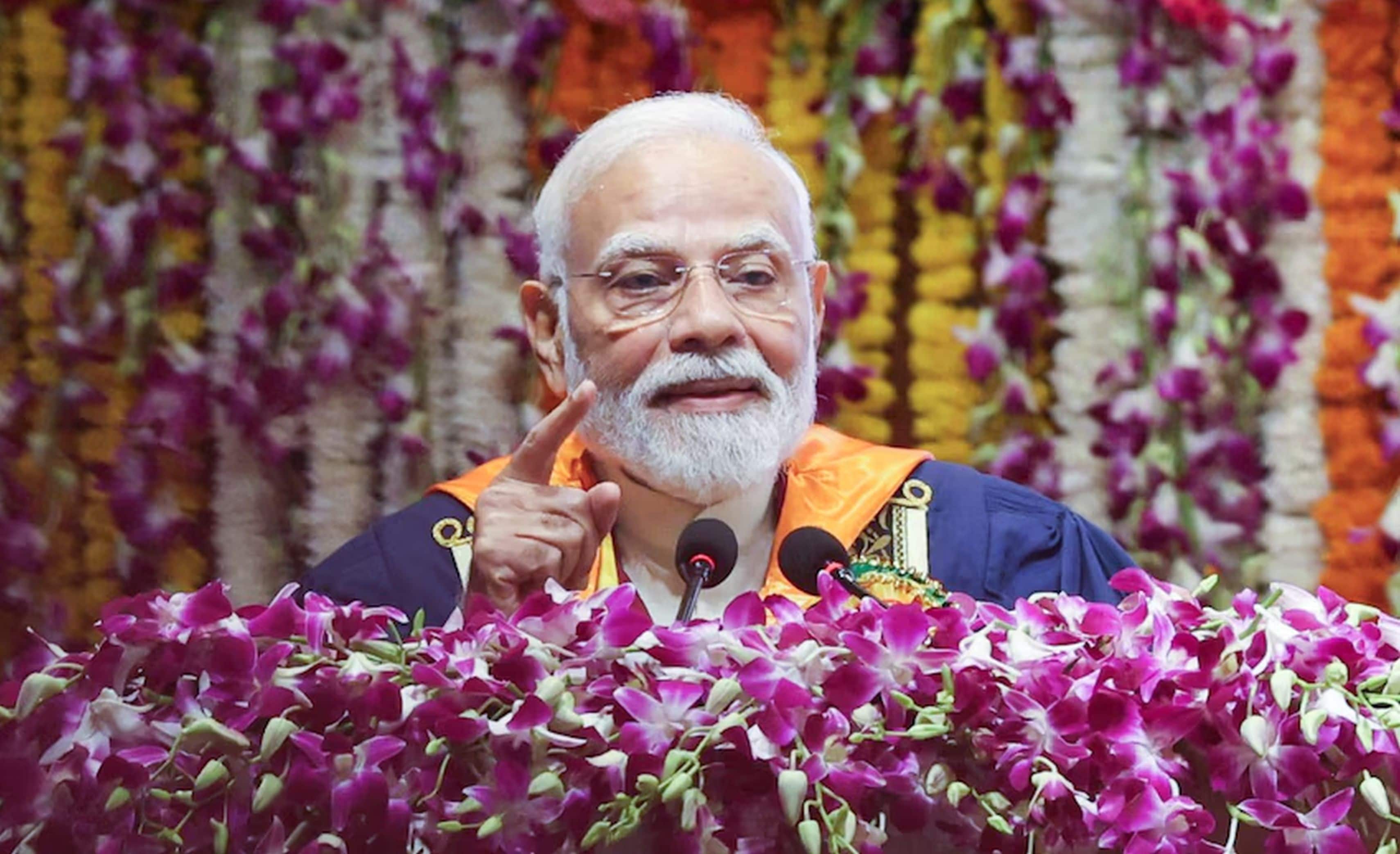
On the occasion of 63rd Van Mahotsav, Chief Minister Narendra Modi inaugurated Smriti Van in Mangadh, the birth place of Shri Govind Guru, an unsung hero of India’s freedom struggle. At the event Shri Modi talked about how the Adivasi brothers and sisters under the leadership of Govind Guru laid down their lives for India’s independence. You can view the details of the event here.

A warm welcome to all my dear tribal ladies and gentlemen who have come from Madhya Pradesh, Rajasthan and Gujarat to this holy land where people shed their blood for the freedom struggle under the leadership and guidance of Shri Govind Guru, the unsung hero of India’s independence.

It may have happened for the first time that a government has organised a Van Mahotsav in a forest! Gujarat government has started a new trend. The government, on occasions such as Van Mahotsav celebrations, has not only made promises of saving the environement and preventing deforestation but, has also associated the occasion with cultural heritage. Have you ever seen a board reading don’t destroy a Tulsi (basil) plant? I am sure the answer is ‘No’. The reason is everyone believes Tulsi is a holy plant and a form of God, so it must not be destroyed. It points out to one thing that once faith is developed for a thing, people and society unintentally preserve and nurture it. The state government has thus changed the entire concept of Van Mahotsav. We know that Van Mahotsav celebrations are being held for the past so many years in the state, then why can’t we make this custom permanent? Celebrating the event with people and planting few trees with good intension, the state government has given a new shape to Van Mahotsav program. This way a healthier system is developed for the society.

When you go to Ambaji, you get shelter inside the temple. But if you wish to sit in the open along with your family, then you won’t find a place to sit. Long before the concept of celebrating Van Mahotsav was ideated, we had decided to create ‘Mangalya Van’ nearby Ambaji Hill and nobody would be allowed to visit it. Gradually Mangalya Van grew so vast and thousands of people on their way to Ambaji on ‘Bhadarvi Poonam’ would visit the Van. Jain travelers, especially Digambar Jains, when go to Taranga pilgrimage, have to cross the hills of Taranga and friends believe me, there you will not see any trees growing . There is one such belt where you will find deserted and barren land only. Thus we decided to create ‘Tirthankar Van’ on that deserted land and plant trees where the 24th Tirthankar had attained enlightenment. We told people who came to worship Lord Mahavir to water the plants there. Ladies and gentlemen, Shravan month is going on and everyone worships Lord Bholenath. When you visit Somnath, strong brackish wind from the sea blows. Then why can’t we have plush greenery in the same area? People from across the country come to visit Somnath temple. We should thus make the place worth a visit. So keeping this in mind, we organized one Van Mahotsav at Somnath and created ‘Harihar Van’ there. We thus planted saplings that are dear to Lord Somnath and grew a canopy of ‘Bili’ (aegle marmelos) trees. In Shamalaji, your tribal Bhil society’s Kaliya, is in Shamlaji. People while going to Udaipur and Shrinathji halt at Shamalaji. Now friends, we have created Kaliya van at Shamalaji —‘Shamal Van’.


If  this is not it, we have made an arrangement where a lotus plucked from the Kaliya Van is offered to Lord Vishnu daily every morning. Also a child who goes to the Van and wishes to study botany, can do so. He can also get his assessment done via ‘kiosk’ and obtain marks for the same. The child can thus pay a visit to the Shamlaji temple and go to the botanical gardern. Ladies and gentlemen, devotees have to climb up a hill in Palitana, a piligrimage place. We have developed a ‘Pavak Van’ there and the speciality of that van is that it is built in the shape of a human body. The trees that have been grown in the Van have medicinal value. The saplings are planted in such a way—for example a tree, that has a medicinal value of treating knee pain or other knee related problems, has been grown at the place of knee in the human body. After visiting the van, even the most illiterate person would be able to tell which tree has what medicnal values and how these can be helpful in curing body ailments. If you spend some time in the van, you would surely come to know the utility of trees.

Ladies and gentlemen, we have carried out several such experiments. If you go to Chotila, you will come across ‘Bhakti Van’. Come to Pavagadh, and you will see ‘Virasat Van’. It is the world heritage site of Champaner where you will also find Ma Kali seated majestically. Today when we talk about Van Mahotsav, mention of Shri Govind Guru makes the tribal people as well as every Indian feel proud.

However, unfortunately this name has been erased from the history books. Only a few families, or a couple of abbots might still have few memories of Shri Govind Guru. People of Mangadh might visit this place once a year on Poornima (full moon) or whenever a fair is held there. It is thus only during these times that Shri Govind Guru is remembered by the people.

Friends! It is a historic event. It has been almost one century. 99 years ago under the tutelage of Shri Govind Guru, unarmed group of devotees working as social reformers raised their voice against the British Empire and instilled fear amongst its officers. During pre-indpendence times, Shri Govind Guru in London was known as a social reformer of Santrampur-Dahod belt of Panchmahal district, who wandered and talked to people and spread awareness among them about India’s independence. Shir Guru had such a personality that people were ready to sacrifice their lives for him and the cause he supported. This was how people in London knew Shri Govind Guru. It was also feared that an intense battle for India’s freedom would be triggered soon. So a conspiracy to kill Shri Govind Guru was planned and people were hired for the same. The Adivasis friends held such high regards for Shri Govind that when the Britishers came to kill him, the Adivasis didn’t escape or run but instead fought the British officials bravely.

The British were equipped with cannons and barrels of guns; fierce firing started and one after another my Adivasi brothers sacrificed their lives only to save Shri Govind Guru. Dead bodies could be seen everywhere and friends imagine, the number of people who died fighting were double the number of people who were massacarred at Jallianwala Bagh by the Britishers. The bloodbath that took place at Jallianwala Bagh is there in the history of India’s Independence but there is no mention of Mangadh massacre. The sacrifice made by my Adivasis brothers has been forgotten. People like Birsa Munda and more than 1500 Adivasi youth led by Shri Govind Guru laid down their lives without any hesitation, only to make India free from the clutches of British empire, but unfortunately no one remembers sacrifices made by them.

Today I felt the urge to tell the whole world about the unheard story of Mangadh. When we have cenetary celebrations, the Adivasi people can visit this place throughout the year. Processions will continue and in 2013 when the celebrations get over, we will be proud of the fact that everyone celebrated the death anniversary of Mahatma Gandhi and Pundit Nehru among other luminaries. But it is disheartening to know that people have forgotten the sacrifice made by Shri Govind Guru and his Adivasi followers.

There is someone in Gujarat who has remembered Shri Govind Guru and wants to celebrate centenary. People might feel that the government is doing all this because of the upcoming elections, but gentlemen, it is not our fault that centenary and elections are falling around the same time. People who associate such things with election and politics are insulting the martyrs!

Ladies & gentlemen, Shyamji Krishna Verma, who led armed revolution in India, and discovered great personalities like Veer Savarkar, had instilled bravery in people like Madan Lal Dhingra. Revoltunationists like Bhagat Singh-Sukhdev-Azad considered Madan Lal Dhingra an inspiration. Shyamji Krishna Verma, son of Kutch, fought the freedom struggle against the Britishers in London. He gave scholarships to those who were involved in armed revolution for the freedom struggle. Shyamji Krishna Verma, at the time of his death in 1930, left a note stating “I could not see freedom in my lifetime, but preserve my remains and it is my last wish that whenever my country becomes free, take my remains to the land of my free country, so that I can get salvation and peace”. This is what Vermaji had written before he took his last breath. He died in 1930 and India got freedom in 1947. The tricolor was hoisted on 15th August and ignoring Vermaji’s last wishes, the Indian government didn’t sent someone to bring his remains on the very next day. The government did not care for the country’s martyrs.

Friends! I got the privilege and carried the ashes of the son of Mother India on my shoulders and brought them to India from the foreign land in 2003. Today, a memorial of Shyamji Krishna Verma has been built in Mandavi in Kutch. Now every year thousands of students and tourists from all over the world visit this monument. A day will come when people from all over the world will come here to pay rich tributes to more than 1500 martyr Adivasi youths and visit the the place.

Ladies and gentlemen, it has been so many years after India’s independence, and there have been several social reforms. We have conducted a small exhibition there..so if you wish, you can visit it. In those days, Shri Govind Guru used to motivate the Adivasi people. Whatever he said during those times, is rendered useful even today.

He would prepare devotees under ‘Bhagat Panth’ and worked for the society’s betterment. He spent so many years of his life in prison at Sabarmati jail of Ahmedabad. British government feared Shri Govind Guru and thus sent him to Hyderabad jail and compelled him to spend his life there. It is sad to admit that no one remembers Shri Govind Guru. One shall be discouraged from failing to remember a person who has devoted his life for the welfare of Adivasis. We have made a resolution so that coming generations will remember Shri Govind Guru and we want to send this message across to everyone. Martyrdom can’t be ignored and let to go waste. If Adivasi youth comes to know about the fact that their ancestors sacrificed their lives for such a noble cause, I am sure they will also get inspiration from Shri Govind Guru.

Ladies and gentlemen, all these years after independence, all the governments have been unsuccessful in carrying out any welfare work for the Adivasis. They gathered thousands of votes in the name of welfare of the Adivasis but in vain as their standard of living didn’t change and remained the same. The government has tried to provide drinking water to the Adivasis; water for irrigation of the fields and a house for shelter—the government has taken care of it all.

Ladies and gentlemen, we have accomplished the task of providing houses to the Adivasis people living under 0-16 poverty line. And now we are going to consider people who fall between 17 and 20 poverty line. And the task of providing houses to more than 2 lakh Adivasis will be done by next December.

Just imagine, we have begun working for the welfare of the society and have scaled these heights. Nobody could achieve what we achieved in a span of 50 years. Rs15,000 crore package was decided to be allotted to ‘Van Bandhu Kalyan’ scheme but Rs18,000 crore was given and it has been now scaled to Rs40,000 crore. Friends the allotment money is huge for the Adivasis!

Friends, violence among people from different casts in the name of reservation is incited by people. But friends I would ask you do you get benefit from the reservation? If the son of an Adivasi wants to become a doctor or an engineer, don’t you think he would first be required to study Science in his school till standard 12th? You will be sorry to know that in entire Adivasi belt from Umargam to Ambaji there was no Science school. When I came in 2001, there were 45 such talukas in the state where earlier there were no Science schools up to standard 12th. If there is no Science school up to standard 12th, how do think an Adivasi child can become a doctor or an engineer? How will he get the benefit of reservation? You keep politics alive by spreading lies in the name of reservation and do nothing for the welfare of Adivasis. Ladies & Gentlemen, we started Science schools in all the 45 tribal talukas and the result was —all Adivasi seats of medical and engineering colleges are filled today. We have worked in this direction so as to help a deserving Adivasi boy or a girl child become a doctor or an engineer. We started nursing schools and ITIs in Adivasi areas. We took care of the education and growth of the Adivasi children.

Friends there was a time when Adivasi brothers of Panchmahal district would make a living out of working as a construction labour in the cities in the extreme heat of 44° temperature. Today I am proud to say that every taluka of Panchmahal district is home to many Adivasi road contractors. They now use JCB machines. Recently during a Sadbhavna Mission program few people from the Adivasi community of Bakshi Panch came to meet me. These people rear donkeys and then use them to carry sand. They had brought a plastic toy for me which they gifted me at the Sadbhavna program. I was pleased and asked, “Why have you gifted me this plastic JCB toy? There is no one at my home to play with it.” They said, “Sir, we have brought this JCB as till yesterday we used donkeys to carry sand and other road construction material. But now we have progressed as the government under your leadership has shown us the right path. We got this JCB so that we could show you the sample and thank you for the same”. Today Adivasis of Panchmahal and Dahod have become contractors who were once laborers in the cities. In the Dang district, there were no schemes for the welfare of Adivasi brothers. We took up milk production work in Dang district and worked in the direction of providing cattle. Now Adivasis of Dang district have become self-sufficient. We have begun a campaign in Dahod for increasing the milk production capacity and availability of milk-yielding animals. On one side we offered cattle to Adivasis so that they earn a descent livelihood by selling milk, on the other hand the government sitting in Delhi has started giving subsidies to slaughter houses. The Delhi government gives subsidy of Rs50 crores to slaughter houses for exporting beef and is also exporting lakhs of tons of beef to foreign countries.

Friends, this is the same country where the revolt of 1857 took place when Indian sepoys were forced to use cartridges greased with the fat of cow and pig and the government in Delhi today is offering prmotionl prizes for exporting beef! When the country was facing severe crisis, Govind Guru gave up his life for the noble cause of saving the cow. Govind Guru wandered from one village to another and taught people to take care of the cows. On Shri Govind Guru’s insistence, many people embraced martyrdom and became a threat to the British government. Mangadh has brought glory to Gujarat and in the memory of the martyrs of this holy land, we created the Shahid Smriti Van. Ladies and gentlemen, if we want to fight environment, we will have to save trees and sow saplings too.

It becomes a concern for everyone when monsoon gets delayed. Whether it is a king or a beggar…everyone in the country gets worried. There are some useless people too, who perfrom ‘yagna’ to please the God and pray that it rains. As that will benefit them in the votebank politics during elections. Elections will come and go my friends. If it doesn’t rain, a lot of problems will occur. So let us all pray that may God shower his blessings in the form of rain and Gujarat becomes plush green. Let us take this opportunity in our hands. Rain is the greatest blessings of God and without which life is not feasible on the Earth.

Ladies and gentlemen, we have chosen the path of development and want to carry out work accordingly. We want to change lives of the Adivasi people of our state! Recently the government of India published a figure. The government officials said there is unemployment in the entire country, and if there is minimum unemployment anywhere in India, it is the state of Gujarat. Had the Gujarat government not made progress, the youth of this state would have remained unemployed. If youngsters do not get employment, the living status of their families will never change for good and our struggle for growth will be halted. We want to teach every youth via ‘Vanbandhu Kalyan Yojana’, skill development and proficiency development programs so that they can develop strength that will enable them to even draw water from stones.

Friends, Mangadh is a very difficult terrain, but today I can see a huge crowd gathered here. Several people have gathered here for the occasion. We wanted to go back into the time and remember Shri Govind Guru. Ladies and gentlemen, seeds of a better and free India were sown here on this land of Mangadh. Nobody after today will be able to forget Shri Govind Guru as I can visualize people trying to erase him from the pages of history. No one can forget the bravery with which our Adivasi brothers and sisters fought for India’s independence.

My Adivasi peole let us not only preserve forests but also increase the number of trees. You would have seen that each village here is allotted Rs15 to 20 lakh. Take advantage of the government scheme. Plant as many trees as you can and our government will give you money for planting each tree. When so much money is coming your way, you should not show your back and grow trees. I would want to convey a message to the officials of Forest Department that they should also engage in work that is not part of their jobs. Friends by doing such great work, you will be remembered all your life. It gives me immense pleasure to witness such historic work in progress. In future, you can bring your children here to show them your work. Your children will learn from this. Now say with me ‘Govind Guru Amar Raho’. Also repeat after me ‘Shahido…’ (Martyrs) first ‘Amar Raho…’

Govind Guru, Amar Raho… Govind Guru, Amar Raho…!

Shahidon, Amar Raho… Shahidon, Amar Raho… Shahidon, Amar Raho…!

Explore More
ശ്രീരാമജന്മഭൂമി ക്ഷേത്രത്തിലെ പതാക ഉയർത്തൽ ഉത്സവത്തിനിടെ പ്രധാനമന്ത്രി നടത്തിയ പ്രസം​ഗം

ജനപ്രിയ പ്രസംഗങ്ങൾ

ശ്രീരാമജന്മഭൂമി ക്ഷേത്രത്തിലെ പതാക ഉയർത്തൽ ഉത്സവത്തിനിടെ പ്രധാനമന്ത്രി നടത്തിയ പ്രസം​ഗം
In a first, NCERT adds Emergency to Class 9 textbooks; chapter details rights suspension and press censorship

Media Coverage

In a first, NCERT adds Emergency to Class 9 textbooks; chapter details rights suspension and press censorship
NM on the go

Nm on the go

Always be the first to hear from the PM. Get the App Now!
...
India is not only a fast-growing economy, but also a credible one: PM Modi
June 22, 2026
India is not only a fast-growing economy, but also a credible one: PM
Along with being a rising power, India is also a reliable power: PM
For India, Nation First is the highest guiding principle: PM
Maoist terror is breathing its last in India: PM
The shift in mindset from "this can never be done" to "this will be done" is India's greatest achievement: PM
The government is empowering the poor and middle-class: PM
The collective efforts of 140 crore Indians will realise the dream of a Viksit Bharat: PM

Swar Sadhana, Manokamana, Aradhana - after such an auspicious beginning, it would have been wonderful if your program had continued. Greetings to all of you.

I extend my regards to all viewers of Republic TV Network, which now broadcasts in many languages. I also welcome all companions who have come to participate in this summit. In 24-hour news channels, breaking news holds great importance. And nowadays, if you look anywhere in the world, the entire world seems to be in breaking news mode. Amidst such hustle and bustle, you are hosting and participating in this summit, and therefore you deserve special congratulations. This time, your theme of discussion is equally significant: Great Power India: Nation First.

Friends,

Our scriptures say: Yato Dharmastato Jayah! - meaning, the root of victory and strength is Dharma. And Dharma means duty, Dharma means justice, Dharma means equality, Dharma means dialogue, Dharma means compassion. This very essence is embedded in the spirit of Nation First. India views its power through this lens, weighing it on this scale.

Friends,

India has another unique quality, which the world has now acknowledged. We are not a nation that reacts hastily to momentary events. We are a nation that has witnessed both development and destruction, endured them as well. We are a nation with the memory chip of ages embedded in our consciousness - a nation with the memory chip of millennia. That is why what India is doing today - and I say this with full responsibility - what India is doing today will write the future of the next thousand years. This is India’s greatest guarantee to the world. India is not only a fast-growing economy, it is also a credible economy. Alongside being a rising power - and you even stretched the dictionary to call it a superpower - I would certainly say that India is a reliable power. Just a few days ago, I returned from the G7 Summit, and every leader, every country understands very well that for today’s India, Nation First is the greatest mantra, the highest principle.

Friends,

Just a few days ago, our government completed 12 years. Arnab even compelled you to clap for that. If you weigh the achievements of the past twelve years, you will find that at the core of every decision, every step, every effort lies the spirit of Nation First. From the Swachh Bharat Abhiyan to Make in India, from emphasizing khadi to encouraging local products - all these initiatives succeeded because the people of the country placed the nation above all and fulfilled their duty. I salute the citizens of this country.

Friends,

Here with us is our companion, Shri Sridhar Vembu ji. When our entrepreneurs walk with the spirit of Nation First, when they set their goals by understanding the needs of the nation, institutions are built and the country prospers. I don’t know how much has been discussed here about Shri Vembu ji’s work, but recently I went to VivaTech in France. There were nearly 1.5 to 2 lakh young people there. As I and the President of France walked through different stalls to see the innovations of the youth, we came to the Zoho stall. I was astonished and filled with pride to see the crowd of European youth gathered there, eager to understand what this new creation was. Perhaps in India it is not discussed as much, but what I saw in France was remarkable. Congratulations to you.

Friends,

The impact of Nation First in government policy and decisions can be seen in our tribal regions. I am not here to deliver philosophy, but let me share a few light examples so you can understand how work happens. I speak of tribal areas - a population of more than 100 million, the tribal society. We all know that for decades, Maoist terror had entrenched itself there. Even in the 21st century, these terrorists did not allow a single facility to reach those areas. No government vehicle could pass through; they would be riddled with bullets. Many governments came and went, generations passed, and it seemed this misfortune of violence would remain forever. You can imagine - between 2004 and 2014, in those ten years, due to Maoist terror, more than 17,000 violent incidents occurred, and nearly 7,000 lives were lost.

Friends,

For you, today’s headline or half-hour TV debate might be that Maoist terrorism has ended. But things don’t happen like that. It requires immense effort, and that is why I want to explain. Nowadays, some people keep waving the Constitution, but when they were in government, in Naxal-affected areas, even uttering the word “Constitution” could get you shot. At that time, they sat silently, their hands trembling, unable to hold up the Constitution. The Congress was hardly affected by that painful situation.

Friends,

After 2014, we moved forward with the spirit of Nation First to change the situation. We did not just talk, we did not just announce, we acted. We resolved to uproot Naxalism-Maoism completely, and today the whole country can see the result. Maoist terrorism in India is now counting its final breaths.

And friends,

Often the final outcome is so vast and significant that the hard work behind it goes unnoticed. I want to especially tell Republic TV viewers about this.

Friends,

In those Naxal-affected areas where even going out in daylight would terrify ordinary people - fearing abduction, extortion, or looting - where even speaking of development was impossible, we advanced with a pledge of progress. In the past 12 years, our government has built more than 12,000 kilometers of roads in such regions. Many times, our construction equipment was burned, contractors were chased away. If 25 people worked on a road, 200 police personnel had to guard them so the work could continue. We did all this because we had resolved to do it.

Friends,

We built more than 9,500 mobile towers. Earlier, even one tower could not be installed, and if installed, it would be destroyed. Because they always wanted to fuel anger. We brought mobile connectivity to nearly 45,000 villages. In Naxal-affected districts, more than 1,800 bank branches were opened. Around 75,000 banking correspondents and more than 6,000 new post offices were established. We did not rely only on bombs, guns, and bullets, friends - we invested every ounce of strength given by God to win hearts.

Friends,

With firm resolve, we went into Naxal-affected areas to fulfill the hopes and aspirations of ordinary people. You will be astonished - a notorious Naxalite, with a bounty of crores on his head, his mother received a ration card from us for the first time. Her son never allowed her to get one, because he wanted to run his terror regime. There are countless such incidents. I was shocked. And the government of that time sat silently, blind to the Constitution. But the result of all these efforts was a new wave of trust among the people. Today, look at Bastar - instead of bombs and guns, Bastar Olympics are celebrated with great enthusiasm. Two editions have already been held. In the first, more than 1.5 lakh youth participated, and in the second, nearly 4 lakh youth joined. Where once there was terror, now talent is finding opportunity, and sports are flourishing.

Friends,

One of the greatest achievements of these 12 years of service has been building an India filled with hope and aspiration, rising out of despair.

Friends,

Naxalism may have been concentrated in certain areas, but its pain was felt across every corner of India. And when news began to spread that Naxalism was ending, the sense of trust was not limited to those affected regions - it spread across the entire nation. In the ten years before 2014, under the Congress government, the discontent was not only about governance. The despair was far deeper. The nation had lost hope. People felt nothing could change, nothing could improve.

Friends,

In the past 12 years, India has transformed despair into hope, and this gives me the greatest satisfaction. Today, everyone feels that with a little more effort, things can be achieved. Gone are the days when the only refrain was “It cannot happen, it cannot happen.” That era has passed. Today, the spirit is “It will happen.” This new confidence is India’s true achievement, and this is real power. Challenges remain, and they always will. Challenges are shape-shifters, appearing in new forms. But whatever form they take, we will fight and we will win. When the nation moves forward with the belief that “it can be done and we will do it,” dreams are fulfilled.

Friends,

I want to speak here about more than 100 districts and over 500 blocks in India. These were left behind on every parameter of development, and earlier governments had stamped them as “backward districts” and “backward areas.” We lifted these vast regions out of the despair of backwardness and ignited aspirations for development. First, we changed their identity. We said these are “aspirational districts,” these are “aspirational blocks.” We created programs for aspirational districts and aspirational blocks, and the government began working meticulously on every parameter of development. In each district, we identified three aspects to overcome, in others six aspects, and focused efforts began. Today, these aspirational districts and blocks are driving the overall growth of states. Earlier, they dragged growth backward. These districts had large populations living in poverty and deprivation. In recent years, 250 million poor people have defeated poverty, and aspirational districts have played a major role in this.

Friends,

We see that when one person is cured of illness, it is not just that individual who recovers - the whole family feels relief. Similarly, when a son or daughter achieves something, it is not just their achievement, but the entire family is filled with pride and confidence. In the same way, when someone rises out of poverty, the entire society benefits, the nation benefits. When 250 million people have come out of poverty and entered the neo-middle class, the benefit is not limited to those families. The middle class also gains, because these are new consumers who drive the economy, ultimately creating opportunities for the middle class. Thus, poverty reduction is not merely a matter of welfare - it is a story of expanding opportunities, a source of new aspirations.

Friends,

The vast middle class that has emerged in the country over the past 12 years has been a major priority for the government. For the ease of living of the middle class, the government has worked at every level. Take the dream of owning a home. Every middle-class family desires to have their own house. In 2014, if a family wanted to buy a home, home loans came with double-digit interest rates. Today, loans are available from banks at 7–8 percent interest. Earlier, getting a loan was like winning a war, requiring immense effort. Today, it is possible from the comfort of one’s home. Here in Delhi-NCR, people know how thousands of urban middle-class homes were stuck incomplete. Families had paid their life savings to builders, who showed glossy pamphlets and dreams, but the houses were never delivered. Families had to pay rent while waiting endlessly for their homes. It was a terrible situation. To complete these stalled projects, we created a special fund of ₹25,000 crore. You will be glad to know that nearly 60,000 long-delayed homes have now been delivered across the country.

Friends,

Another aspect that affects daily life is connectivity and transport. Today, if you look at social media, tourists from around the world are amazed by our metro system.

Friends,

In 2014, about 2.8 million people traveled daily by metro. Today, nearly 12.8 million people travel by metro every day. Now, high-speed trains like Vande Bharat, Namo Bharat, and Amrit Bharat are connecting the nation. With better roads and highways, not only is time saved, but vehicle maintenance costs have also reduced. In recent years, the number of airports has doubled. This has given the middle class in many smaller cities the opportunity to fly for the first time.

Friends,

In the past 12 years, India has not only increased the earnings of the middle class but also their savings. In 2013–14, income up to about ₹2 lakh was taxable, and the middle class bore that burden. Today, income up to ₹12 lakh is tax-free. In other words, tax-free income has multiplied several times.

Friends,

GST reforms have also brought great convenience to the middle class. Filing taxes has become easier, saving both time and money. Income tax returns can now be filed from home, and even settlement issues are handled in a faceless manner.

Friends,

A major expense for middle-class families is treatment for diabetes and other lifestyle-related conditions. At Jan Aushadhi Kendras, such medicines are available at an 80 percent discount. If earlier you spent ₹1,000, today you spend only ₹200, saving ₹800. Over the years, this has resulted in savings of nearly ₹40,000 crore for countless families. Another significant portion of the middle-class budget goes toward healthcare for the elderly. Today, every citizen above 70 years of age is entitled to free treatment up to ₹5 lakh.

Friends,

It is human nature to forget past difficulties when conveniences become routine. Earlier, you paid tax on ₹2 lakh income; now, up to ₹12 lakh is tax-free. Yet applause comes only when reminded. On the other hand, if a bus or train is delayed, complaints pour in. This is the most vocal class.

Friends,

As I said, people forget old troubles. You may not even remember the difficulties once faced in getting a driving license or passport. Earlier, it was a struggle. Today, obtaining a driving license is easier, and passports are usually issued within three days.

Friends,

I know the way our government works has raised people’s aspirations. Once a demand is met, people immediately seek something better, something upgraded. If earlier the demand was for a new road, once built, the next question is: when will the metro arrive? Earlier, expectations were that trains should arrive on time and provide clean seating. Today, the demand is: why isn’t Vande Bharat running on our route?

Friends,

Some see this as dissatisfaction, but it is aspiration. In fact, even the Congress party constantly says, “Modi ji, this should happen, that should happen.” They trust that if anyone can deliver, it is this government.

Friends,

Aspirations arise only where people believe dreams can be fulfilled. This is the aspiration of India’s youth, poor, and middle class. Today, it is the driving energy of BJP-NDA governments.

Friends,

On one side, a large section of the nation is aspirational. On the other side, there is a political group whose life mantra has become “Always Against.” This group is filled with chronic dissatisfaction. Let me share some symptoms so Republic TV viewers can recognize them. They will say, “Why doesn’t this place have 24-hour electricity?” But the next day, they protest against dams, solar parks, thermal plants, or nuclear projects. One day they ask why there is no electricity, the next day they oppose power generation. These are the same people who once opposed mineral mining, but today ask where India’s rare earth mineral reserves and supply chains are, and why India doesn’t have an EV ecosystem like other countries. They once debated “data versus flour,” but now demand to know what India has done in AI. In one breath, they say AI should have advanced further, and in the next, they oppose data centers and semiconductor plants, listing endless drawbacks on social media, TV debates, and newspapers.

Friends,

These people bring up corruption indices from around the world to put India in the dock. Their ecosystem’s media amplifies it 24/7. But when action is taken against corruption, they are the first to cry foul, claiming raids and investigations are harassment. They question why action is taken now, why not then, why against A and not B. This is their game.

Friends,

It is vital for the nation to understand their character. Especially our youth, and Gen Z in particular, must recognize them quickly. Otherwise, as I say, “Suryavanshi has arrived,” and he explains swiftly.

Friends,

These people claim the armed forces lack freedom and weapons. But when the government makes a defense deal or buys modern arms, they are the first to question why. They challenge India’s diplomacy worldwide, but when India builds infrastructure projects for diplomacy and security, they protest loudly.

Friends,

At this crucial juncture, India must identify such people, understand their flawed arguments, and remain alert. Unfortunately, today the main opposition party, Congress, has been taken over by such elements. To imagine Congress speaking of Nation First, as it did in Gandhi ji’s time, is now a false dream.

Friends,

The world today is challenging old paradigms, and the scale of disruption is immense. But these challenges also bring new opportunities. Every youth, entrepreneur, innovator, and startup in India must focus on these opportunities. The government, with the spirit of Nation First, stands fully with the people. India is now riding the Reform Express. This momentum will only accelerate. From this Republic TV platform, I say again: our dreams are vast, and our efforts will be equally immense. The collective endeavor of 1.4 billion Indians will build a developed India. And I assure you, you will see this developed India with your own eyes. It will not be left for future generations to wait. With this confidence, I once again extend my best wishes to Republic TV, its viewers, and all of you. Thank you very much!