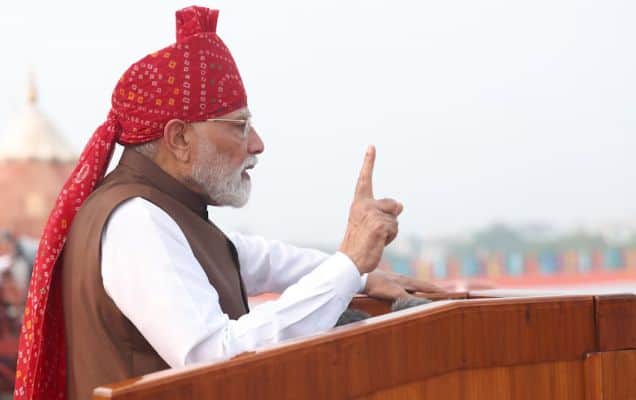
تعلیم کے شعبے میں کئی کلیدی اقدامات کا بھی آغاز کیا
آزادی کا امرت مہوتسو کے تحت شروع کیے گئے نئے اقدامات تعلیم میں انقلاب پیدا کریں گے اور بھارتی تعلیمی نظام کو عالمی نقشے پر جگہ دلائیں گے: پی ایم
ہم تبدیلی کے دور سے گزر رہے ہیں، خوش قسمتی سے ہمارے پاس جدید اور مستقبل پر مبنی نئی تعلیمی پالیسی بھی ہے: پی ایم
عوام کی شرکت ایک بار پھر بھارت کا قومی کردار بن رہا ہے: پی ایم
وزیراعظم کی درخواست کے مطابق اولمپک اور پیرالمپکس میں تمغے پانے والا ہر کھلاڑی 75 اسکولوں کا دورہ کرے گا
تعلیم کے شعبے میں نئی تبدیلی نہ صرف پالیسی پر مبنی ہے بلکہ شرکت پر بھی مبنی ہے: پی ایم
''ودیانجلی -2.0'سب کا ساتھ، سب کا وکاس، سب کا وشواس کے ساتھ 'سب کا پریاس'کے لیے ملک کے عزم کا ایک پلیٹ فارم ہے: پی ایم
نشٹھا -3.0 اہلیت پر مبنی تدریس ، فنون کے ارتباط اور تخلیقی و تنقیدی سوچ کی ہمت افزائی کرے گا: پی ایم
Nishtha 3.0 will encourage competency-based teaching, art integration, and creative & critical thinking: PM

نمسکار!

شکشک پرو کے اس اہم پروگرام میں ہمارے ساتھ جڑ رہے ہیں کابینہ کے میرے ساتھی جناب دھرمیندر پردھان جی، محترمہ ان پورنا دیوی جی، ڈاکٹر سبھاس سرکار جی،ڈاکٹر راج کمار رنجن سنگھ جی، ملک کے الگ الگ ریاستوں کے عزت مآب وزرائے تعلیم ، قومی تعلیمی پالیسی کا خاکہ تیار کرنے والی کمیٹی کے صدر ڈاکٹر کستوری رنگن جی ، ان کی ٹیم کے سبھی معزز ارکان ، پورے ملک سے ہمارے ساتھ موجود سبھی دانشور ، اساتذہ اور پیارے طلباء

میں سب سے پہلے ، قومی ایوارڈ پانے والے ہمارے اساتذہ کو بہت بہت مبارکباد دیتا ہوں ۔ آپ سبھی نے مشکل وقت میں ملک میں تعلیم کے لیے ، طلباء کے مستقبل کے لیے جو ایک اہم کوشش کی ہے، تعاون دیا ہے، وہ بیش قیمت ہے، قابل ستائش ہے۔ اس پروگرام میں ہمارے جو طلباء موجود ہیں ، میں ان کے بھی چہرے اسکرین پر دیکھ رہا ہوں ۔ ڈیڑ ھ ۔دو برسوں میں پہلی مرتبہ ایک الگ سی چمک آ پ کے چہروں پر نظر آ رہی ہے۔ یہ چمک ممکنہ طور پر اسکول کھلنے کی لگتی ہے۔ طویل عرصے بعد اسکول جانا ، دوستوں سے ملنا، کلاس میں پڑھائی کرنا ، اس کا لطف ہی کچھ اور ہوتا ہے۔ لیکن جوش کے ساتھ ساتھ کورونا کے اصولوں پر بھی عمل درآمد ہم سب کو، آپ کو بھی پوری سختی کے ساتھ کرنا ہے۔

ساتھیو!

آج شکشک پرو کے موقع پر کئی نئی اسکیموں کا آغاز ہوا ہے۔ اور بھی ہم نے ایک چھوٹی سی فلم کے ذریعہ ان سبھی اسکیموں کے بارے میں جانکاری حاصل کی ہے۔ یہ پہل اس لیے بھی اہم ہے کیوں کہ ملک ابھی آزادی کا امرت مہوتسو منا رہا ہے۔ آزادی کے 100 سال پورے ہونے پر بھارت کیسا ہوگا ، اس کے لیے آج بھارت نئے عہد کر رہا ہے۔ آج جو اسکیمیں شروع ہوئی ہیں وہ مستقبل کے بھارت کو ایک نئی شکل دینے میں ایک اہم کردار ادا کرے گی۔ آج ودیانجلی-2.0 ، نشٹھا -3.0، ٹاکنگ بکس اور یو ڈی ایل پر مبنی آئی ایس ایل ڈکشنری جیسے نئے پروگرام اور سہولیات لانچ کی گئی ہے۔ اسکول میں معیاری تجزیے اور یقین دہانی کے فریم ورک یعنی ایس کیو اے اے ایف جیسی جدید شروعات ہوئی ہے۔ مجھے پورا یقین ہے کہ یہ نہ صرف ہمارے تعلیمی نظا م کو عالمی طور پر مسابقتی بنائیں گی بلکہ ہمارے نوجوانوں کو بھی مستقبل کے لیے تیار بنانے میں بہت مدد کریں گی۔

ساتھیو!

اس کورونا کے دور میں آپ سبھی دکھا چکے ہیں کہ ہماری تعلیمی نظام کی صلاحیت کتنی زیادہ ہے۔ چیلنج بہت زیادہ تھے لیکن آپ سبھی نے ان چیلنجوں کا تیزی سے حل بھی نکالا۔ آن لائن کلاسز ، گروپ ویڈیو کال ، آن لائن پروجکٹس ، آن لائن اکزام ، پہلے ایسے الفاظ بھی بہت سے لوگوں نے سنے ہی نہیں تھے۔ لیکن ہمارے اساتذہ نے ، والدین نے، ہمارے  نوجوانوں نے انہیں آسانی کے ساتھ روزمرہ کی زندگی کا حصہ بنا دیا۔

ساتھیو!

اب وقت آ گیا ہے کہ ہم اپنی ان صلاحیتوں کو آگے بڑھائیں ۔ ہم نے اس مشکل وقت میں جو کچھ سیکھا ہے اسے ایک نئی سمت دیں۔ خوش قسمتی سے آج ایک طرف ملک کے پاس بدلاؤ کا ماحول ہے تو ساتھ ہی نئی قومی تعلیمی پالیسی جیسی جدید اور مستقبل پر مبنی پالیسی بھی ہے اس لیے پچھلے کچھ عرصے سے ملک لگاتار تعلیم کے شعبے میں ایک کے بعد ایک فیصلے کر رہا ہے۔ ایک تبدیلی ہوتے دیکھ رہا ہے۔ اور اس کے پیچھے جو سب سے بڑی قوت ہے ، اس سمت میں آپ سبھی دانشوروں کا دھیان دلانا چاہتا ہوں ۔ یہ مہم صرف پالیسی پر مبنی نہیں ہے بلکہ شرکت پر بھی مبنی ہے۔ این ای پی کی تیاری سے لے کر نفاذ تک ، ہر سطح پر ماہرین تعلیم کا ، ماہرین کا ، اساتذہ کا ، سب کا تعاون رہا ہے۔ آپ سبھی اس کے لیے قابل ستائش ہیں۔ اب ہمیں اس ساجھیداری کو ایک نئی سطح تک لے کر جانا ہے، ہمیں اس میں سماج کو بھی جوڑنا ہے۔

ساتھیو!

ہمارے یہاں کہاوت ہے

واییہ کرتے وردھتے ایوم نتیم ، ودیادھنم سرو دھن پردھانم ۔

یعنی ، تعلیم سبھی اثاثوں میں ، سبھی دولتوں میں سب سے بڑی دولت ہے۔ کیوں کہ تعلیم ہی ایسی دولت ہے جو دوسروں کو دینے سے ، دان کرنے سے بڑھتی ہے، تعلیم کا دان ، تعلیم دینے والے کی زندگی میں بھی بہت بڑی تبدیلی لاتا ہے۔ اس پروگرام میں جڑے آپ سبھی اساتذہ نے بھی دل سے یہ محسوس کیا ہوگا۔ کسی کو کچھ نیا سکھا دینے کا جو سکھ اور اطمینان ہوتا ہے وہ الگ ہی ہوتا ہے۔ ودیانجلی 2.0 اسی قدیم روایت کو اب ایک  نئے کلیور میں مضبوط کرے گی۔ ملک نے سب کا ساتھ ، سب کا وکاس ، سب کا وشواس کے ساتھ سب کا پریاس کا جو عہد کیا ہے، ودیانجلی2.0اس کے لیے ایک بہت ہی اہم  پلیٹ فارم کی طرح ہے۔وائبرینٹ پلیٹ فارم کی طرح۔ اس میں ہمارے سماج کو ، ہمارے پرائیویٹ سیکٹر کو آگے آنا ہے اور سرکاری اسکولوں میں تعلیم کی افادیت بڑھانے میں  اپنا تعاون دینا ہے۔

ساتھیو!

یہ عہد قدیم سے بھارت میں سماج کی مشترکہ قوت پر بھروسہ کیا گیا ہے۔ یہ عرصے تک ہماری سماجی روایتوں کا حصہ رہا ہے۔ جب سماج مل کر کچھ کرتا ہے ، تو خواہش کے مطابق نتائج ضرور ملتے ہیں اور آپ نے یہ دیکھا ہوگا ، اور دیکھا ہے کہ گزرے کچھ برسوں میں عوامی حصہ داری اب پھر بھارت کا قومی کردار بنتا جا رہا ہے۔ پچھلے 6-7 برسوں میں عوامی حصہ داری کی طاقت سے بھارت میں ایسے ایسے کام ہوئے ہیں جن کا کوئی تصور بھی نہیں کرسکتا ۔ چاہے سوچھتا آندولن ہو، سہولت کو چھوڑنے کے جذبے سے ہر غریب کے گھر میں گیس کا کنکشن پہنچانا ہو ، غریبوں کو ڈیجیٹل لین دین سکھانا ہو، ہر شعبے میں بھارت کی ترقی میں عوامی ساجھیداری سے قوت حاصل کی ہے۔ اب ودیانجلی بھی اسی سلسلے میں ایک سنہرا باب بننے جا رہی ہے۔ ودیانجلی ملک کے ہر شہری کے لیے اپیل ہے کہ وہ اس میں ساجھیدار بنے ، ملک کے مستقبل کو تیار کرنے میں اپنا سرگرم کردار ادا کریں، دو قدم آگے آئیں۔ آپ ایک انجینیئر ہو سکتے ہیں، ایک ڈاکٹر ہوسکتے ہیں، ایک ریسرچ سائنٹسٹ ہو سکتے ہیں، آ پ کہیں آئی اے ایس افسر بن کر ، کہیں کے کلکٹر کے طور پر کام کرتے ہیں پھر بھی آپ کسی اسکول میں جاکر بچوں کو کتنا کچھ سکھا سکتے ہیں۔ آپ کے ذریعہ ان بچوں کو جو سیکھنے کو ملے گا اس سے ان کے خوابوں کو نئی سمت مل سکتی ہے۔ آپ اور ہم ایسے کتنے ہی لوگوں کے بارے میں جانتے ہیں جو ایسا کر بھی رہے ہیں۔ کوئی بنیک کا ریٹائرڈ مینیجر ہے لیکن اتراکھنڈ میں  ریٹائرمنٹ کے بعد دور دراز پہاڑی علاقے کے اسکول میں بچوں کو پڑھا رہا ہے۔ کوئی میڈیکل فیلڈ سے جڑا ہے لیکن غریب بچوں کو آن لائن کلاسز دے رہا ہے، ان کے لیے وسائل دستیاب کرا رہا ہے۔ یعنی آپ چاہے سماج میں کسی بھی کردار میں ہوں، کامیابی کی کسی بھی سیڑھی پر ہوں، نوجوانوں کے مستقبل کی تعمیر میں آپ کا کردار بھی ہے، آپ کی ساجھیداری بھی ہے۔ ابھی حال ہی میں ختم ہوئے ٹوکیو اولمپکس اور پیرا اولمپکس میں ہمارے کھلاڑیوں نے شاندار کارکردگی کا مظاہرہ کیا ۔ ہمارے نوجوان ان سے کتنے متاثر ہوئے ہیں ۔ میں نے اپنے کھلاڑیوں سے درخواست کی ہےکہ آزادی کے امرت مہوتسو کے موقع پر ہر کھلاڑی کم از کم 75 اسکولوں میں جائے ۔ مجھے خوشی ہے کہ ان کھلاڑیوں نے میری بات کو مان لیا ہے۔ اور میں سبھی معزز اساتذہ سے کہوں گا، پروفیسر صاحبان سے کہوں گا کہ آپ اپنے علاقے میں ان کھلاڑیوں سے رابطہ کیجیے ، ان کو اپنے اسکول میں بلائیے ۔ بچوں کے ساتھ ان کی بات چیت کروائیے ، دیکھئیے اس سے ہمارے طلباء کو کتنی تحریک ملے گی ۔ کتنے باصلاحیت طلباء کو کھیلوں میں آگے جانے کا حوصلہ ملے گا۔

ساتھیو!

آج ایک اور اہم شروعات اسکولوں میں معیاری تجزیے اور یقین دہانی کا فریم ورک یعنی ایس کیو اے اے ایف کے ذریعہ سے بھی ہورہی ہے۔ ابھی تک ملک میں ہمارے اسکولوں کے لیے ، تعلیم کے لیےکوئی ایک مشترکہ سائنسی خاکہ ہی نہیں تھا۔ مشترکہ فریم ورک کے بغیر تعلیم کے سبھی پہلوؤں جیسے کہ درسیات ، تدریسیات ، تجزیہ ، بنیادی ڈھانچہ ، شمولیت والی سرگرمی اور حکمرانی کا عمل ، ان سبھی کے لیے معیار قائم کرنا مشکل ہوتا تھا۔ اس سے ملک کے الگ الگ حصوں میں ، الگ الگ اسکولوں میں طلباء کو تعلیم میں عدم یکسانیت کا شکار ہونا پڑتا ہے۔ لیکن ایس کیو اے اے ایف اب اس خلیج کو پر کرنے کا کام کرے گا۔ اس کی سب سے بڑی خوبی ہے کہ اس فریم ورک میں اپنی ضرورت کے مطابق تبدیلی کرنے کی لچک بھی ریاستوں کے پاس ہوگی۔ اسکول بھی اس کی بنیاد پر اپنا تجزیہ خود ہی کر سکیں گے۔ اس کی بنیاد پر اسکولوں کو ایک یکسر تبدیلی کے لیے ہمت افزائی بھی کی جا سکے گی۔

ساتھیو!

تعلیم میں عدم یکسانیت کو ختم کرکے اسے جدید بنانے میں قومی ڈیجیٹل تعلیمی آرکیٹیکچر یعنی این –ڈیئر کا بھی بڑا کردار ہونے والا ہے۔ جیسے یو پی آئی انٹر فیس نے بیکنگ سیکٹر میں انقلاب بپا کیا ہے، ویسے ہی این-ڈیئر سبھی تعلیمی سرگرمیوں کے درمیان ایک سپر رابطے کا کام کرے گا۔ ایک اسکول سے دوسرے اسکول میں جانا ہو، یا ہائر ایجوکیشن میں ایڈمیشن ، ملٹیپل انٹری-ایکژٹ کا نظام ہو یا اکیڈمک کریڈٹ بینک اور طلباء کی صلاحیت کا ریکارڈ ، سب کچھ این –ڈیئر کے ذریعہ آسانی سے دستیاب ہوگا۔ یہ سبھی تبدیلیاں ہمارے نئے دور کی تعلیم کا چہرا بھی بنیں گی اور معیاری تعلیم میں تفریق کو بھی ختم کریں گی۔

ساتھیو!

آپ سبھی اس بات سے واقف ہیں کہ کسی بھی ملک کی ترقی کے لیے تعلیم نہ صرف شمولیت والی ہونی چاہیے بلکہ برابری پر بھی مبنی ہونی چاہیے۔ اسی لیے آج ملک ٹاکنگ بکس اور آڈیو بکس جیسی تکنیک کو تعلیم کا حصہ بنا رہا ہے۔ آموزش کے ہمہ گیر ڈیزائن یعنی یو ڈی ایل پر مبنی 10 ہزار الفاظ پر مشتمل انڈین سائن لینگویج ڈکشنری کو بھی تیار کیا گیا ہے۔ آسام کے بیہو سے لیکر بھرت ناٹیم تک اشاروں کی زبان ہمارے یہاں صدیوں سے فن اور تہذیب کا حصہ رہی ہے۔ اب ملک پہلی بار اشاروں کی زبان کو ایک مضمون کے طور پر درسیات کا حصہ بنا رہا ہے تاکہ جن معصوم بچوں کو اس کی خاص ضرورت ہے وہ پیچھے نہ رہ جائیں۔ یہ تکنیک دویانگ نوجوانوں کے لیے بھی ایک نئی دنیا کی تعمیر کرے گی۔ اسی طرح نپن بھارت ابھیان میں تین سال سے آٹھ سال تک کے بچوں کے لیے بنیادی خواندگی اور عددی مشن لانچ کیا گیا ہے۔ تین سال کی عمر سے ہی سبھی بچے لازمی طور پر پری اسکول تعلیم حاصل کریں ۔ اس سلسلے میں ضروری قدم اٹھائے جائیں گے۔ ان سبھی کوششوں کو ہمیں کافی آگے تک لے کر جانا ہے۔ اور اس میں آپ سبھی کی ، خاص طور سے ہمارے اساتذہ دوستوں کا رول بہت ہی اہم ہے۔

ساتھیو!

ہمارے شاشتروں میں کہا گیا ہے: درشٹانتو نیو درشٹی: تری بھوون جٹھرے، سد گرو: گیان داتو''

یعنی پوری کائنات میں گرو جیسا کوئی نہیں ہوتا، کوئی برابری نہیں ہوتی ، جو کام گرو(استاد) کر سکتا ہے۔ اس لیے آج ملک اپنے نوجوانوں کے لیے تعلیم سے جڑی جو بھی کوششیں کر رہا ہے  اس کی باگ ڈور ہمارے ان اساتذہ بھائی بہنوں کے ہی ہاتھوں میں ہے۔ لیکن تیزی سے بدلتے اس دور میں ہمارے اساتذہ کو بھی نئے نظام اور تکنیک کے بارے میں تیزی سے سیکھنا ہوتا ہے۔ نشٹھا ٹریننگ پروگرام سے ، اس ٹریننگ پروگرام کا ایک اچھا سا نشٹھا آپ کے سامنے بھی پیش کیا گیا ہے۔ اس نشٹھا ٹریننگ پروگرام کے ذریعہ ملک اپنے اساتذہ کو ان ہی تبدیلیوں کے لیے تیار کر رہا ہے۔ نشٹھا3.0 اب اس سمت میں ایک اور اگلا قدم ہے اور میں اسے بہت اہم قدم تصور کرتا ہوں ۔ ہمارے اساتذہ اب صلاحیت پر مبنی تدریس ، فنون کے ارتباط ، اعلی سوچ اور تخلیقی اور تنقیدی سوچ جیسے نئے طور طریقوں سے متعارف ہوں گے تو وہ مستقبل کے لیے نوجوانوں کو اور زیادہ آسانی سے تیار کر سکیں گے۔

ساتھیو!

بھارت کے اساتذہ میں کسی بھی عالمی معیار پر کھرا اترنے کی صلاحیت ہوتی ہے، ساتھ ہی ان کے پاس اپنی مخصوص پونجی بھی ہے۔ ان کی یہ مخصوص پونجی، یہ مخصوص قوت، ان کے باطن میں ہندوستانی تہذیب کی ہے۔ اور میں آپ کو ، اپنے دو تجربات بتانا چاہتا ہوں ۔ میں وزیراعظم بن کر جب پہلی بار بھوٹان گیا تو وہاں کا شاہی خاندان ہو، وہاں کے حکمرانی سے جڑے لوگ ہوں، بڑے فخر سے کہتے تھے کہ پہلے ہمارے یہاں تقریباً سبھی اساتذہ بھارت سے آتے تھے اور یہاں کے دور دراز علاقوں میں پیدل جا کر پڑھاتے تھے۔ اور جب یہ اساتذہ کی بات کرتے تھے، بھوٹان کا شاہی خاندان ہو یا وہاں کے حکمراں ، بڑا فخر محسوس کرتے تھے ۔ ان کی آنکھوں میں چمک نظر آتی تھی  ویسے ہی جب میں سعودی عرب گیا اور شاید سعودی عرب کے شاہ سے جب بات کر رہا تھا تو وہ اتنے فخر کے ساتھ مجھے اس کی وضاحت کر رہے تھے کہ مجھے بھارت کے ایک استاد نے پڑھایا ہے۔ میرا استاد بھارت کا تھا۔ اب دیکھیے استاد کے تئیں کوئی بھی شخص کہیں بھی پہنچے اس کے دل میں کیا جذبہ ہوتا ہے۔

ساتھیو!

ہمارے اساتذہ اپنے کام کو صرف ایک پیشہ نہیں سمجھتے ان کے لیے پڑھانا ایک انسانی خدمت ہے، ایک مقدس اور اخلاقی فریضہ ہے۔ اس لیے ہمارے یہاں اساتذہ اور بچوں کے درمیان پیشہ ورانہ رشتہ نہیں ہوتا بلکہ خاندانی رشتہ ہوتا ہے۔ اور یہ رشتہ ، یہ تعلق پوری زندگی کا ہوتا ہے۔ اس لیے بھارت کے اساتذہ دنیا میں جہاں کہیں بھی جاتے ہیں اپنی ایک الگ چھاپ چھوڑتے ہیں۔ اس وجہ سے آج بھارت کے نوجوانوں کے لیے دنیا میں بے شمار امکانات بھی ہیں۔ ہمیں جدید تعلیم کے ماحولیاتی نظام کے حساب سے خود کو تیار کرنا ہے اور ان امکانات کو مواقع میں بدلنا بھی ہے۔ اس کے لیے ہمیں لگاتار اختراعات کرتے رہنا ہے۔ ہمیں تدریس –آموزش کے عمل کو لگا تار ری-ڈیفائن اور ری-ڈیزائن کرتے رہنا ہوگا۔ جو جذبہ آپ نے ابھی تک دکھا یا ہے اسے ہمیں اب اور اونچا اٹھانا ہے، اور حوصلہ دینا ہے۔مجھے بتایا گیا ہے کہ شکشک پرو کے اس موقع پر آپ آج سے 17 ستمبر تک ، 17 ستمبر ہمارے ملک میں وشوکرما جینتی کے طور پر منایا جا تا ہے۔ یہ وشوکرما اپنے آپ میں تعمیر کرنے والے ہیں، کام کو تکمیل تک پہنچانے والے ہیں، جو 07 تاریخ سے 17 تاریخ تک الگ الگ موضوعات پر ورک شاپ ، سیمینار منعقد کر رہے ہیں۔ یہ اپنے آپ میں ایک قابل ستائش کوشش ہے۔ ملک بھر کے اتنے اساتذہ ، ماہرین اور پالیسی ساز جب ایک ساتھ غورو فکر کریں گے تو اس سے آزادی کے امرت مہوتسو میں اس امرت کی اہمیت اور زیادہ بڑھ جائے گی۔ آپ کے اس اجتماعی غوروفکر سے قومی تعلیمی پالیسی کو کامیابی کے ساتھ نافذ کرنے میں بھی کافی مدد ملے گی۔ میں چاہوں گا کہ اسی طرح آپ لوگ اپنے شہروں میں ، گاؤں میں بھی مقامی سطح پر کوشش کریں۔ مجھے یقین اس سمت میں سب کی کوششوں سے دیش کے عہد کو نئی رفتار ملے گی ۔ امرت مہوتسو میں ملک نے جو ہدف طے کیے ہیں انہیں ہم سب مل کر حاصل کریں گے۔ ان ہی نیک تمناؤں کے ساتھ آپ سبھی کا بہت بہت شکریہ اور میری نیک خواہشات۔

Explore More
شری رام جنم بھومی مندر دھوجاروہن اتسو کے دوران وزیر اعظم کی تقریر کا متن

Popular Speeches

شری رام جنم بھومی مندر دھوجاروہن اتسو کے دوران وزیر اعظم کی تقریر کا متن
Rajasthan enters India’s semiconductor map with inauguration of state’s first chip packaging facility in Bhiwadi

Media Coverage

Rajasthan enters India’s semiconductor map with inauguration of state’s first chip packaging facility in Bhiwadi
NM on the go

Nm on the go

Always be the first to hear from the PM. Get the App Now!
...
India-Netherlands Joint Statement on the visit of Prime Minister of India to Netherlands
May 17, 2026

At the invitation of the Prime Minister of the Netherlands, Mr. Rob Jetten, Prime Minister Shri Narendra Modi paid an official visit to the Netherlands on 16-17 May 2026. This marked Prime Minister Modi’s second visit to Netherlands.

In the morning of May 16, Prime Minister Modi was hosted by Their Majesties King Willem Alexander and Queen Maxima of the Netherlands at the Royal Palace Huis ten Bosch in the Hague for a bilateral meeting. Their Majesties also hosted a luncheon for Prime Minister Modi.

Prime Minister Jetten and Prime Minister Modi met for restricted and delegation level talks, followed by a dinner in the evening of May 16. Both Prime Ministers recalled the longstanding and historical trade linkages, deep rooted people-to-people ties and robust bilateral relations between the two countries and expressed their desire for further expanding and deepening this multifaceted relationship. In this context, the two leaders noted with satisfaction the progress achieved in recent years across various cooperation programmes through regular interactions, including at the highest political level and through the fruitful collaboration during India’s Presidency of the G20 in 2023 and the AI Impact Summit in New Delhi in February 2026.

Acknowledging the strong momentum in the relationship and the growing convergences between the two countries, the two leaders decided to elevate the relations between India and the Netherlands to a 'Strategic Partnership'. In this context, they welcomed the adoption of a Strategic Partnership Roadmap under which both sides agreed to work through regular and structured cooperation in all areas, including political, trade and investment, defence & security cooperation, cyber security, critical & emerging technologies including semiconductors, space, AI & quantum system, science & innovation, sustainability, health, sustainable agriculture and food systems, water management, climate change and energy transition, sustainable transport, maritime development, education, culture and people-to-people ties. The two sides also agreed to explore exchanges in the domain of policy planning.

Both leaders welcomed in this regard the agreements concluded in December 2025 across different priority sectors, such as on defence, semiconductors and related emerging technologies, enhanced cooperation in digital and cyberspace, collaboration in pharmaceuticals and medical devices, the establishment of a Joint Trade and Investment Committee, as well as the cooperation between the maritime museums in Lothal and Amsterdam.

The two leaders noted the Pact for the Future and reaffirmed their commitment to upholding shared values and principles including democracy, human rights, international peace and security, and a rules-based international order in line with the purposes and principles of the UN Charter. Both governments also underscored their commitment to strengthen and reform the multilateral system including expansion of both permanent and non-permanent categories of membership of the UN Security Council to reflect contemporary realities and called for text-based negotiations within a fixed timeframe. Prime Minister Modi thanked Prime Minister Jetten for the continued Dutch support to India’s permanent membership of a reformed and expanded UN Security Council.

Both leaders reaffirmed their commitment to further deepen the India-EU Strategic Partnership and welcomed in this regard the conclusion of negotiations for a mutually beneficial India-EU Free Trade Agreement in January this year. They agreed that the free trade agreement will strengthen political and economic ties between the world's second and fourth largest economies, at a time of rising geopolitical tensions and global economic challenges and highlight the joint commitment to economic openness and rules-based trade. The two leaders further welcomed the simultaneous signing of the Security and Defence partnership that will strengthen EU and India’s dialogue and cooperation on security and defence, and deliver concrete results in areas such as maritime security, cyber, counterterrorism and defence industrial collaboration.

The leaders agreed on the importance of a free, open, secure and peaceful lndo-Pacific, based on respect for international law, sovereignty and territorial integrity, freedom of navigation, and absence of coercion and conflicts. Recalling the EU Strategy on the Indo-Pacific, Prime Minister Jetten announced the decision of the Netherlands to join the Indo-Pacific Oceans Initiative (IPOI) and co-lead the Capacity Building & Resource Sharing pillar along with Germany and the European Union.

On Ukraine, the two sides expressed concern over the ongoing war, which continues to cause immense human suffering and carries global consequences. Both leaders agreed to continue to support efforts towards the achievement of a comprehensive, just, and lasting peace in Ukraine through dialogue and diplomacy, based on the principles of the UN Charter and international law.

Both leaders expressed deep concern over the situation in West Asia / the Middle East, noting its serious implications for the region and the wider world, including immense human suffering and disruptions to global energy supplies and trade networks. The leaders welcomed the ceasefire announced on 08 April 2026. They underscored the importance of de-escalation, dialogue and diplomacy and expressed hope for lasting peace in West Asia / the Middle East. They also called for freedom of navigation and global flow of commerce through the Strait of Hormuz, while opposing any restrictive measures, and reaffirmed their support for ongoing efforts and initiatives in this regard.

Economic Cooperation, Trade & Investment

Both leaders noted that the Netherlands–India economic partnership stands out as a model of cooperation, driven by shared priorities such as sustainability, innovation, and long-term growth, creating mutual prosperity for both nations. They welcomed the growth in bilateral trade between the two countries, supported by efficient supply chains and shared commitment to open markets. The Netherlands, with its world class logistics network also serves as a strategic gateway to Europe for Indian exporters, including via its Port of Rotterdam whilst India offers a vast and dynamic market for Dutch companies who will also benefit significantly from upscaling opportunities, its business friendly environment, and the availability of a vast and skilled talent pool in India. At the same time, Indian businesses can leverage advanced Dutch expertise, particularly in water management, sustainable agriculture, and smart cities.

Expressing satisfaction with the existing economic collaboration between the two countries, the leaders emphasized the immense potential for further growth particularly in light of opportunities arising from the India-EU Free Trade Agreement. The Netherlands continues to remain one of India’s major trade and investment partners, reflecting the depth and resilience of the bilateral economic ties.

In order to further facilitate trade and investment, the Prime Ministers welcomed the signing of the Agreement on Mutual Administrative Assistance in Customs Matters, enabling the exchange of information between the customs authorities of the countries and thus contributing to enhanced customs enforcement and the facilitation of legitimate trade between India and the Netherlands.

The leaders reaffirmed their commitment to further advancing bilateral trade and investment through, amongst others, the India–Netherlands Joint Trade and Investment Committee and the Fast Track Mechanism. They agreed to focus on enhancing investment facilitation and strengthening innovation ecosystems to support sustainable growth, job creation and resilient value chains.

Both Prime Ministers underscored the strong potential for cooperation in startups and innovation, noting that solutions developed in India and the Netherlands can scale globally, including across Indian and EU markets. They agreed to further connect both countries’ startup ecosystems, facilitate exchanges, and explore digital soft-landing programmes, as well as increased participation in trade missions, innovation missions and technology summits.

Defence & Security Cooperation

Both leaders welcomed the signing of the Letter of Intent on Defence Cooperation and emphasized the importance of deepening of the defence cooperation between the two countries including through regular interaction between respective Ministries of Defence and staff level talks, to coordinate exchanges of information, visits, research, innovation and training activities. They also concurred to move towards further expanding the scope of Defence Industrial Cooperation between the two countries.

Both leaders also agreed to enhance cooperation in the defence sector, under EU mechanisms and with other partners, and will explore possibilities of establishing a Defense Industrial Roadmap in which defence industrial collaboration for manufacturing of defence equipment, systems, components and other key capabilities through co-development, transfer of technology and setting up of joint ventures for co-production towards meeting the needs of the Armed Forces of both countries are laid down.

The leaders agreed to further enhance the security co-operation, including through regular exchanges between the National Security Apparatus of both countries on traditional and non-traditional security issues, including defence, maritime security, economic security, critical and emerging technologies, cyber security, counter terrorism and other mutually agreed matters of international security.

Both leaders expressed satisfaction with the annual bilateral cyber consultations as well as noted the holding of 8th session of the online cyber school, as means to further strengthen cooperation between the two countries to ensure an open, free and secure cyberspace. In this context, the leaders welcomed the signing of the Letter of Intent on enhanced collaboration in cyberspace, including closer coordination in multilateral fora and joint efforts on countering cyber threats and cybercrime through capacity building and the exchange of knowledge.

Both leaders underlined the importance of an open, free, secure, stable, accessible and peaceful ICT environment, which is seen as an enabler for innovation and economic growth and innovation. In this regard Prime Minister Modi thanked the Netherlands for its constructive participation in the AI Impact Summit that took place on 19 February 2026 in New Delhi.

Prime Minister Jetten strongly condemned the heinous and abhorrent terrorist attack on civilians in Pahalgam, Jammu & Kashmir, India in April 2025 and expressed Netherlands’ solidarity and unwavering support to India in its fight against terrorism, including cross-border terrorism and the two leaders called for holding the perpetrators accountable. The two Prime Ministers unequivocally condemned terrorism in all its forms and manifestations. They called for zero tolerance approach to terrorism and rejected double standards in countering terrorism.

The two leaders reaffirmed the need to combat terrorism in a comprehensive and sustained manner through both bilateral and multilateral mechanisms, including in the UN and the FATF. They further called for concerted action against all terrorists and terrorist groups, including groups proscribed by the United Nations Security Council (UNSC) 1267 Sanctions Committee and their proxies, affiliates, sponsors, backers and financiers. Both sides also called upon all countries to continue to work towards eliminating terrorist safe havens and infrastructure as well as to disrupt terrorist networks and their financing and bring perpetrators of terrorism to justice swiftly, in accordance with international law. Prime Minister Jetten expressed support for India’s endeavors to establish a UN Comprehensive Convention on International Terrorism (CCIT).

Both leaders noted with concern the growing threats from the use of new and emerging technologies for terrorist purposes such as unmanned aircraft systems, use of virtual assets by terrorists, and terrorist entities and the misuse of information and communication technologies for radicalization.

Recognizing a shared commitment to combat terrorism and strengthen the framework for global cooperation in this regard, both leaders emphasized the importance of upholding international standards on anti-money laundering and combating the financing of terrorism by all countries.

Emerging technologies, Innovation, Science, and Education

Both leaders welcomed the signing of the MoU on a Partnership on Semiconductors and Related Emerging Technology, which provides the framework for intensified cooperation in semiconductors, including in the areas of investment, research and talent exchange.

Both leaders welcomed the ongoing cooperation in the field of science, technology and innovation, focusing on launching public-private partnerships and connecting the expertise of governments, businesses, and knowledge institutions, through the already active Joint Working Group on Science, Technology and Innovation, which facilitates joint R&D projects, talent mobility, and technology transfer, through regular bilateral dialogues. Both leaders reflected on the almost fifty large research and innovation programs which were jointly launched in the past years and underlined the growing importance of continued collaboration in the domain of key enabling technologies, aimed at addressing common societal challenges with shared solutions.

Both leaders also welcomed the initiative to connect the Dutch Semicon Competence Centre to the Indian Semiconductor Mission (ISM), which aims to support and strengthen the semiconductor sector, specifically industries, startups, scale-ups, SMEs, and their suppliers, through collaboration, technology and talent development. Further both Prime Ministers expressed their appreciation for the Indo-Dutch Semicon Online School and its continuation for next phase.

The two leaders welcomed the adoption of a Memorandum of Cooperation between Eindhoven University of Technology and University of Twente and six Indian leading Technical Institutes (IISc Bangalore, IIT Bombay, IIT Delhi, IIT Gandhinagar, IIT Guwahati and IIT Madras) for a brain bridge in semiconductors and related technologies, with industry partnership from NXP, ASML, TATA and CG Semi. This would catalyse the R&D and talent development with academia and industry participation from both sides.

Recognizing the strategic importance of critical minerals for continued innovation, and the need for global cooperation to build resilient and sustainable supply chains, the two leaders expressed their mutual interest in strengthening cooperation across the critical minerals value chain, including exploration, research and innovation, integration of value chains, supply chain resilience, circularity and ESG standards and related assessments. In this context, the leaders welcomed the signing of a Memorandum of Understanding on Critical Minerals.

The two leaders also welcomed the signing of a Memorandum of Understanding on Higher Education between the Ministry of Education of India and the Ministry of Education, Culture and Science of the Netherlands to promote cooperation between the higher education institutions of the two countries, in accordance with their respective academic and educational priorities and needs.

Both leaders also expressed satisfaction at the on-going institutional cooperation between Dutch and Indian universities including recent collaborations for example between: University of Groningen and Nalanda University; Delft University of Technology and Mumbai Metropolitan Regional Development Authority; Survey of India and ITC, University of Twente; Vrije Universiteit Amsterdam and Indian Institute of Technology Roorkee; and many more. Both leaders acknowledged that platforms like Indo-Dutch Education & Academic Network can play a significant part to further strengthen the educational and scientific collaboration.

Both leaders acknowledged the ongoing space partnership between India and the Netherlands and the possibility for intensifying the same, specifically on using space-based applications in addressing societal challenges including climate change, water issues, food security as well as air quality.

Energy Security and Transition / Circular Economy

Noting the active bilateral cooperation in biofuels and bio-chemicals, Prime Minister Modi welcomed the Netherlands joining the Global Biofuel Alliance that was launched during India’s Presidency of the G20. The two Prime Ministers also reaffirmed their commitment to work on bio-economy and reflected on the success of Mission Innovation Program on Biorefineries, co-chaired by India and the Netherlands.

Acknowledging the ongoing cooperation on ‘waste to value’, the leaders noted that the 2025 update of the Dutch National Circular Economy Programme 2023-2030 and the Indian presidency of the World Circular Economy Forum (WCEF) 2026 will provide the opportunity for expansion of the partnership in new areas. This includes industrial circularity, solid and liquid waste management for sustainable and climate resilient urban systems, by technology deployment in pilot and scalable projects, introduction of innovation, and opportunities for trade and investment promotion, such as through B2B partnerships for which Dutch companies were invited to join the Resource Efficiency and Circular Economy Industry Coalition (RECEIC). In the field of sustainable mobility, cooperation may be deepened in areas such as smart and inter operable charging infrastructure, battery technology and system integration, standardization and open protocols, heavy and medium-heavy zero-emission vehicles, smart urban mobility systems and multimodal integration, and, alternative fuels and active mobility.

With a view to further strengthening the partnership between India and the Netherlands in the field of Renewable Energy, the two leaders welcomed the establishment of a Joint Working Group under the Memorandum of Understanding on Renewable Energy which provides ample scope for a diversified agenda for cooperation in renewable energy, including innovative solar energy, green hydrogen, storage and investments in the renewable energy sector to facilitate energy transition.

To further strengthen the cooperation and two-way investments on renewable energy, the leaders launched the ambitious India-Netherlands Roadmap on the Development of Green Hydrogen. The leaders agreed that the roadmap will help support India’s ambition, vast potential and competitive advantages for production, usage and export of Green Hydrogen while also contributing to a swifter adoption of Green Hydrogen as a sustainable source of energy in both countries.

In addition to this, the renewal of the Joint Statement of Intent on Capacity Building for Energy Transition between NITI Aayog and the Netherlands will ensure continued collaboration in Energy Security and Transition areas.

The two leaders furthermore welcomed the signing of a Memorandum of Understanding between the University of Groningen (RUG) and 19 Indian Institutes for Technology (IITs) to strengthen academic cooperation. They also welcomed the establishment of a PhD Fellowship Programme on Hydrogen between the Department of Science and Technology of India and RUG.

Water Management

The two leaders noted the progress made under the Strategic Partnership on Water in building upon the synergies between the water related requirements of India and the expertise and experience of the Netherlands. Both Prime Ministers appreciated the joint efforts being undertaken in the field of water and river management, including partnership in the Namami Gange Mission, urban water management for climate resilience through Urban River Management Plans in combination with ‘Water as Leverage’, delta management, water quality management, waste water re-use and introduction of new water technologies. Both leaders emphasized the importance of safely managed sanitation and inclusive access to clean water and acknowledged the contribution of the Netherlands in sustainable finance for WASH related developmental projects internationally, aligned with India’s Swachh Bharat Mission goals.

Both leaders welcomed the establishment of a Centre of Excellence on Water under the aegis of Ministry of Jal Shakti, Government of India in collaboration with the Ministry of Infrastructure & Water Management, Government of the Netherlands at the Indian Institute for Technology (IIT) Delhi. The leaders also noted the progress under various ongoing joint programs in the states of Uttar Pradesh, Maharashtra, West Bengal, Tamil Nadu and Keralam.

Both leaders agreed to further enhance cooperation on the Kalpasar Project in Gujarat, where Dutch expertise and technical assistance in the Project can lead to the further strengthening of Strategic Partnership on Water.

The leaders noted the progress made so far on the Urban Water Infrastructure Resilience program of the India-led global Coalition for Disaster Resilient Infrastructure (CDRI), through which the Netherlands shares its expertise as part of its membership. Both leaders look forward to the roll-out of the developed training program both in Indian cities with the National Disaster Management Authority (NDMA) and globally in others of the 50+ CDRI member countries.

Maritime development

The two Prime Ministers noted the recently renewed Memorandum of Understanding on Maritime Cooperation and underscored the importance of continued collaboration towards a safe, secure and sustainable maritime sector, supporting the development of a strategic ‘Green and Digital Sea Corridor’ between India and the Netherlands, as outlined in the Letter of Intent signed in October 2025. In this context, they agreed to further deepen and broaden their partnership in the areas of smart and sustainable development of ports and inland waterways, supply chain optimization and green ports and shipping. As a next step, both Prime Ministers agreed to explore developing a comprehensive 'Strategic Roadmap on a Green and Digital Sea Corridor' which aims at working towards an environmentally sustainable, digitally integrated and economically efficient future-ready maritime corridor between India and the Netherlands.

Given the shared interest in global and regional maritime security, particularly in the Indo-Pacific region, both Prime Ministers agreed to exchange best practices – between relevant government entities, businesses and knowledge institutes – in the field of protecting critical infrastructure including cyber resilience in ports and inland waterways and promoting diversified and resilient supply chains (including critical raw materials, medicine and food).

Health Sector

Both leaders emphasized the importance of scaling up bilateral cooperation on health, particularly in addressing global public health risks such as infectious diseases and anti-microbial resistance, as well as the growing impact of non-communicable diseases. Both leaders agreed to encourage further cooperation in digital health (including AI and cybersecurity) and capacity building. They welcomed the renewal of the Memorandum of Understanding on Healthcare and Public Health and consideration of new co-operation initiatives in areas such as women’s health, capacity development for climate and health preparedness, and knowledge exchange on sustainable healthcare systems in both countries. In the light of this renewed Memorandum of Understanding. The two leaders also welcomed the recently signed Letter of Intent between the Dutch National Institute for Public Health and the Environment (RIVM) and the Indian Council of Medical Research (ICMR), focusing on areas such as infectious diseases, vector-borne diseases, One Health and disease surveillance.

Both leaders further underscored that, within the framework of the India-Netherlands strategic partnership, enhanced focus will be given to collaboration in pharmaceuticals and medical devices, to ensure high-quality, accessible, safe, and sustainable healthcare. In 2026, the first Joint Working Group meeting will be convened under the newly signed Memorandum of Understanding to discuss the implementation and further development of the Memorandum of Understanding and its WorkPlan, and to identify key opportunities for collaboration, including through academic cooperation, regulatory cooperation, business engagement, and knowledge exchange on market access.

Agriculture & food systems

Both leaders noted with satisfaction the on-going India-Netherlands collaboration in the field of agriculture, food systems and responsible value chains, including the exchange of knowledge and experience sharing through the Joint Working Group on Agriculture. The leaders welcomed the growing presence of Dutch companies in India in the field of protected cultivation, food processing, dairy and poultry. The leaders underscored the importance of leveraging the opportunities for co-operation between Indian and Dutch companies related to the agricultural sector including agri-tech.

The leaders reviewed the progress in setting up of Centers of Excellence in agri-related sectors in India, with Dutch expertise. These Centres are promoting technology in high-tech greenhouse agricultural productions as well as improved agricultural inputs and capacity building for smallholder farmers, leading to more sustainable and higher quality/productivity and reduced water and agro-chemical use.

The leaders underscored their commitment to further enhancing the impact and effectiveness of the Centers through continued collaboration and knowledge exchange. They also agreed to explore expanded collaboration in vocational education across various aspects of the food systems.

The leaders further welcomed the signing of a Joint Declaration between the Ministry of Fisheries, Animal Husbandry and Dairying and the Ministry of Agriculture, Fisheries, Food Security and Nature of the Netherlands as well as the establishment of an Indo-Dutch Center of Excellence on Training in Dairy at the Center of Excellence for Animal Husbandry (CEAH), Bengaluru. Both sides agreed to continue to explore cooperation in Dairy and other allied agricultural sectors including food processing.

The leaders noted the work being undertaken, to boost Indian-Dutch cooperation in horticulture for establishment of Clean Plant Centres (CPCs) under India’s ongoing Clean Plant Programme in order to promote the availability of disease free, quality planting material of high value horticultural and fruit crops for global competitiveness of Indian Horticulture Sector. In this regard, the leaders welcomed the conclusion of the Memorandum of Understanding on capacity building and support between Naktuinbouw and National Horticulture Board, Department of Agriculture & Farmers’ Welfare, Government of India

Underscoring the importance of food safety and security, both leaders welcomed the Memorandum of Understanding between Netherlands Food and Consumer Product Safety Authority (NVWA) and Food Safety and Standards Authority of India (FSSAI).

People-to-People Exchanges & Culture

The two Prime Ministers acknowledged the strong people-to-people ties which represent an important pillar of the India-Netherlands relationship. Prime Minister Jetten showed gratitude for the contribution made by the Indian community in the Netherlands to Dutch society. Both leaders reaffirmed their resolve to further facilitate people-to-people contacts between the two countries, particularly through youth, academia, professional workforce, sports, and cultural exchanges.

Noting the importance of facilitating fair migration and mobility between the two countries, both leaders welcomed the signing the Memorandum of Understanding on Migration and Mobility.

The two countries also agreed to further strengthen cooperation with a view to prevent and combat irregular migration and trafficking of human beings, and encourage the fair mobility of highly skilled professionals. This approach is guided by international standards that ensure migrant workers are treated with dignity and respect, including fair mobility, transparent visa processes, and the protection of workers' rights.

The two Prime Ministers agreed to deepen cultural ties between the two countries through enhanced cultural cooperation including by promoting exhibitions and cultural initiatives to deepen mutual knowledge, in fields such as, design, performing arts, visual arts, museum and heritage cooperation and exchanged views on the possible establishment of a Joint Working Group on Cultural Cooperation.

Highlighting the importance of mutual cultural appreciation, the leaders appreciated the efforts to showcase the artworks of Amrita Sher-Gil exhibition at the Drents Museum, as part of the Memorandum of Understanding between the Drents Museum and the National Gallery of Modern Art. They also looked forward to the return exhibition showcasing an artwork by Van Gogh and other Dutch artworks at the National Gallery of Modern Art.

Both Prime Ministers underscored the importance of cooperating in the return and restitution of cultural artifacts and in that regard welcomed the return of the Chola Era Copper Plates from the University of Leiden to the Indian authorities.

Recalling the centuries-old bilateral maritime history between India and the Netherlands, both leaders welcomed the signing of the Memorandum of Understanding for cooperation in development of the National Maritime Heritage Complex (NMHC) in Lothal (Gujarat), between National Maritime Museum of Amsterdam and the Ministry of Ports, Shipping and Waterways of India.

The talks were held in a friendly and cordial atmosphere, and both leaders expressed their confidence in the ample scope for further development of bilateral relations and of the multifaceted cooperation across sectors of India-Netherlands Strategic Partnership Roadmap. Prime Minister Modi thanked Prime Minister Jetten for the warm hospitality and extended an invitation to Prime Minister Jetten to visit India at his earliest convenience.