Published By : Admin |
October 26, 2017 | 20:16 IST
Share
PM Modi meets and interacts with over 360 Officer Trainees of the 92nd Foundation Course at the LBSNAA in Mussoorie
PM Modi discusses a variety of subjects such as administration, governance, technology and policy-making with Officer Trainees
The Prime Minister, Shri Narendra Modi, today met and interacted with over 360 Officer Trainees of the 92nd Foundation Course at the Lal Bahadur Shastri National Academy of Administration (LBSNAA) in Mussoorie, Uttarakhand. He is at LBSNAA on a two-day visit.
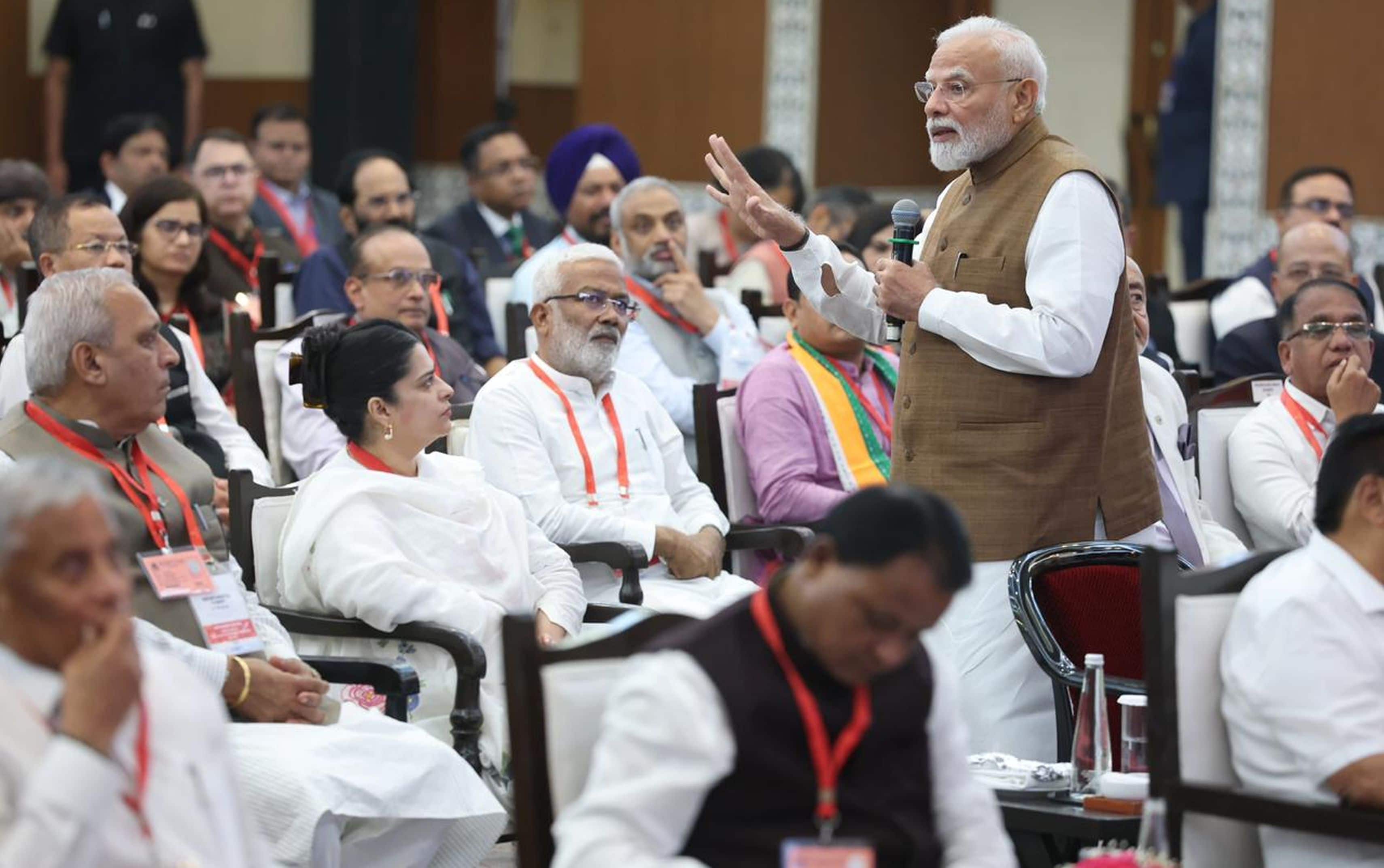
He had a lively informal interaction with the officer trainees in four groups. During the wide-ranging interaction, which lasted nearly four hours, the Prime Minister urged the Officer Trainees to express their ideas and thoughts to him frankly and without fear. A variety of subjects such as administration, governance, technology and policy-making came up for discussion. The Prime Minister encouraged the Officer Trainees to study and research governance issues in depth, so that they could understand them well. He also stressed on the need for them to develop a national vision. The discussions were marked by a large degree of experience-sharing.
He interacted with faculty members of the Academy, who gave him an overview of the work being done there, to train India's civil servants.
The Prime Minister visited the state-of-the-art Gandhi Smriti Library at LBSNAA. He attended a short cultural programme by the Officer Trainees.
Earlier, on arrival at the Academy, the Prime Minister offered floral tributes on the statues of Sardar Vallabhbhai Patel and former Prime Minister Lal Bahadur Shastri.
Cabinet Secretary, Shri P.K. Sinha, and Director, LBSNAA, Smt. Upma Chawdhry were present during the interactions.
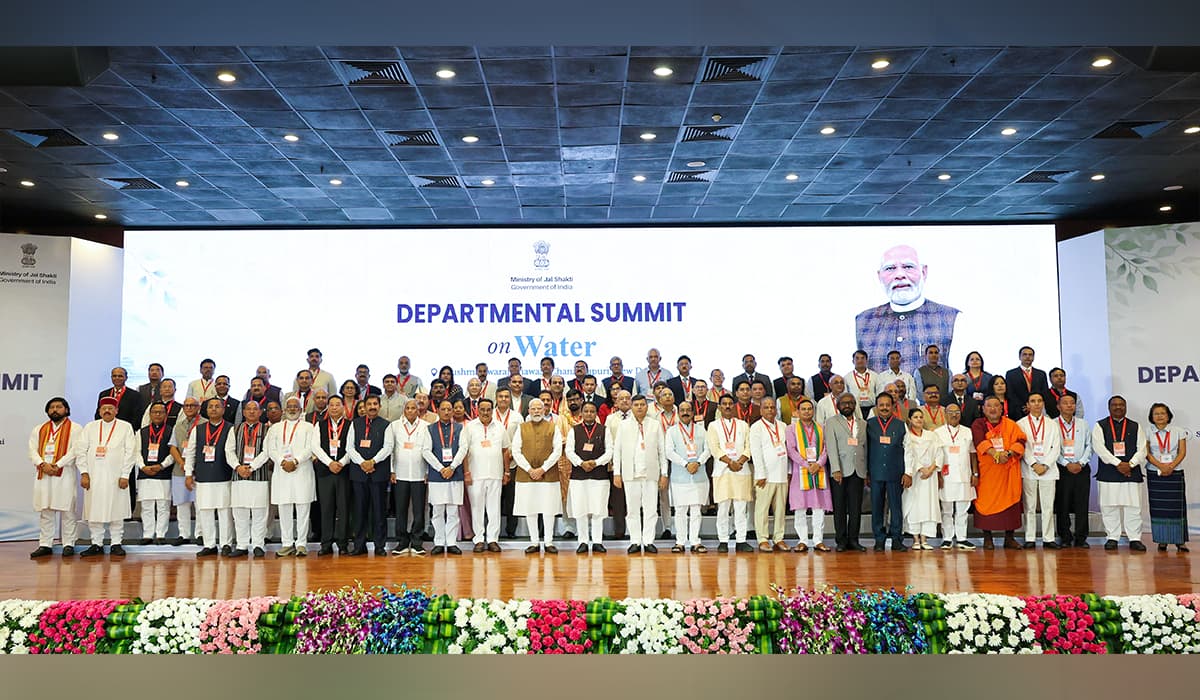
PM chairs valedictory session of National Departmental Summit on Water
September 02, 2026
Share
This marks the first in a series of Summits envisioned by PM to strengthen spirit of Team India and deepen cooperative federalism
PM stresses adoption of a continuous process of review and follow up to act on actionable and time-bound outcomes
Emphasising Jan Bhagidari, PM calls for promoting Jal Utsav to deepen public awareness on water conservation
PM calls for greater adoption of water-saving technologies and learning from global best practices
PM calls for robust water data governance through effective use of AI
PM suggests structured inter-State Study-visits involving public representatives, officials and farmers on water related issues
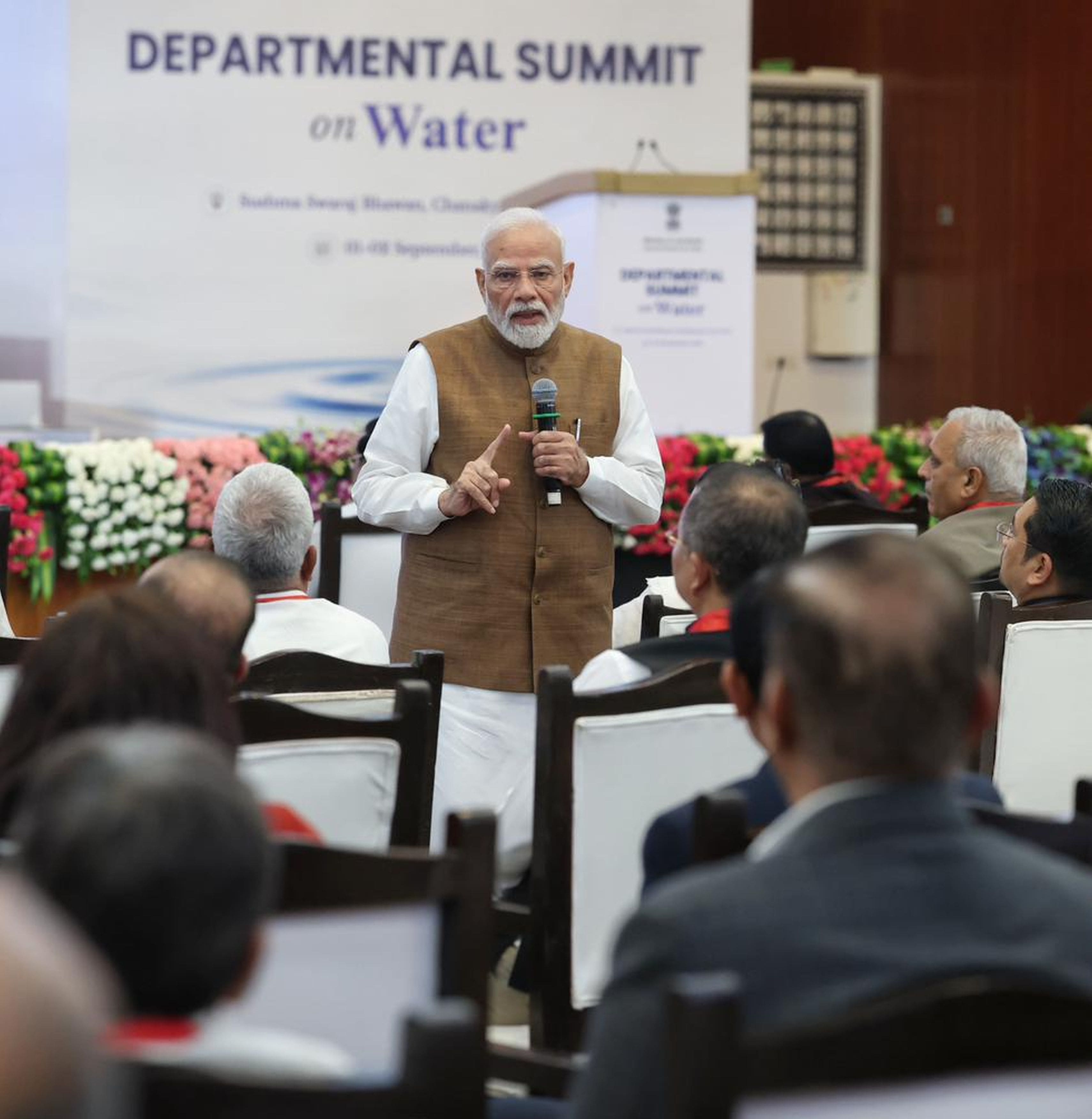
Prime Minister Shri Narendra Modi today chaired the valedictory session of the two-day National Departmental Summit on Water, organised by the Ministry of Jal Shakti. The Summit is the first in a series of Departmental Summits envisioned by Prime Minister to strengthen the spirit of Team India, deepen cooperative federalism and foster collective ownership of national priorities through closer collaboration between the Centre and the States. It brought together Ministers and senior officials from States and Union Territories for focused deliberations on various dimensions of India’s water security.
Prime Minister appreciated the intensive two-day deliberations and emphasised that the actionable and time-bound action points emerging from the Summit should be pursued through a continuous process of review and learning. He suggested that the Summit should not remain a one-time exercise and called for a continuous process of review and follow-up.
Prime Minister called for sensitising Urban Local Bodies to the challenges arising from urbanisation, including population growth and future water requirements, and suggested organising similar Chintan Shivirs for Urban Local Bodies. He called for greater adoption of water-saving technologies. He also suggested dedicated exhibitions and workshops, including exposure to global best practices, to enable Indian manufacturers and stakeholders to develop and scale efficient solutions.
Emphasising Jan Bhagidari, Prime Minister suggested promoting “Jal Utsav” to create greater awareness among people. Prime Minister called for making de-silting a regular programme and developing clear criteria and SOPs for de-silting. On dam safety, he stressed rigorous preparedness before every monsoon, adherence to prescribed precautions and creating awareness among school students, including through suitable incorporation in educational curricula.
Prime Minister further called for strengthening knowledge and capacity on water management and governance in universities and higher educational institutions. He suggested structured inter-State study-visits involving public representatives, officials and farmers to facilitate practical learning and replication of successful interventions.
Prime Minister called for robust water data governance, with water-sector data brought together, systematically managed, analysed and effectively utilised. He recommended the use of AI for data collection and analysis through a uniform format. He also stressed anticipatory and integrated planning to address water scarcity through suitable utilisation of treated water for agriculture and industrial purposes.
Drawing upon his experience as Chief Minister of Gujarat, Prime Minister noted that instances of water scarcity could be transformed into opportunities through systematic planning, commitment and deployment of adequate resources and capable officers.
Union Minister for Jal Shakti Shri C. R. Patil highlighted four key outcomes of the summit: accelerated completion of water infrastructure projects; strengthening water conservation as a sustained people’s movement; ensuring long-term sustainability of drinking-water sources; and institutionalising effective operation and maintenance of rural drinking-water schemes.
Water security is vital for India and for our planet.
It calls for innovative ideas, technology and above all, Jan Bhagidari.
At the National Departmental Summit on Water, highlighted some key priorities: