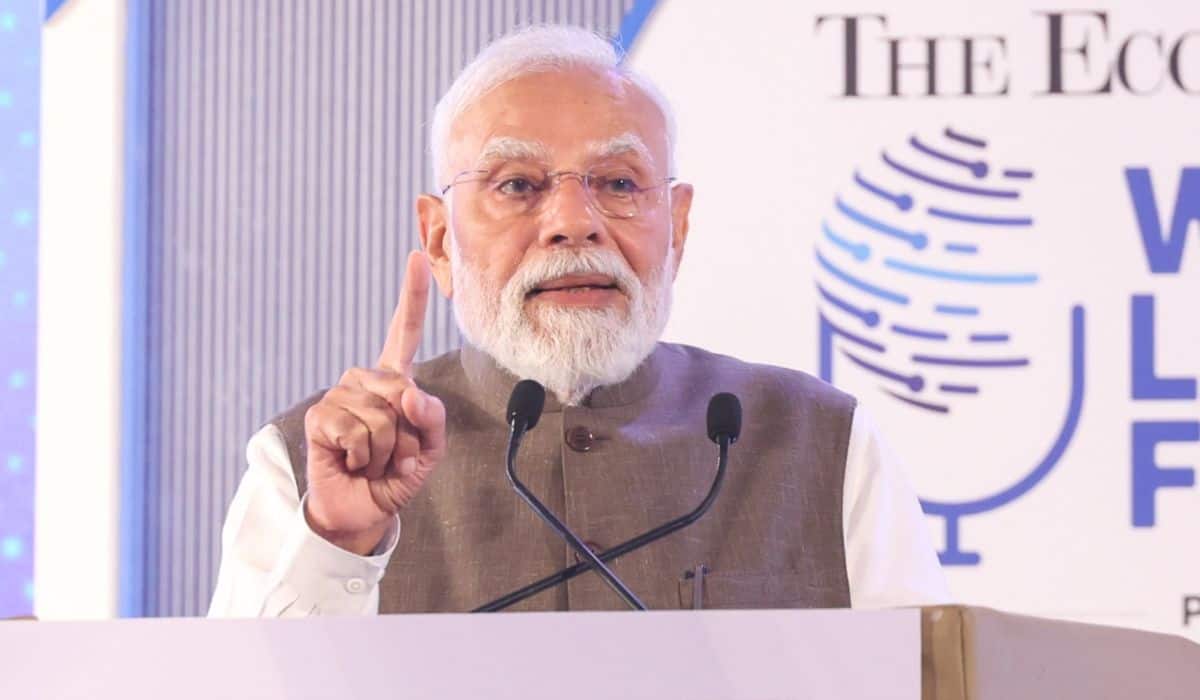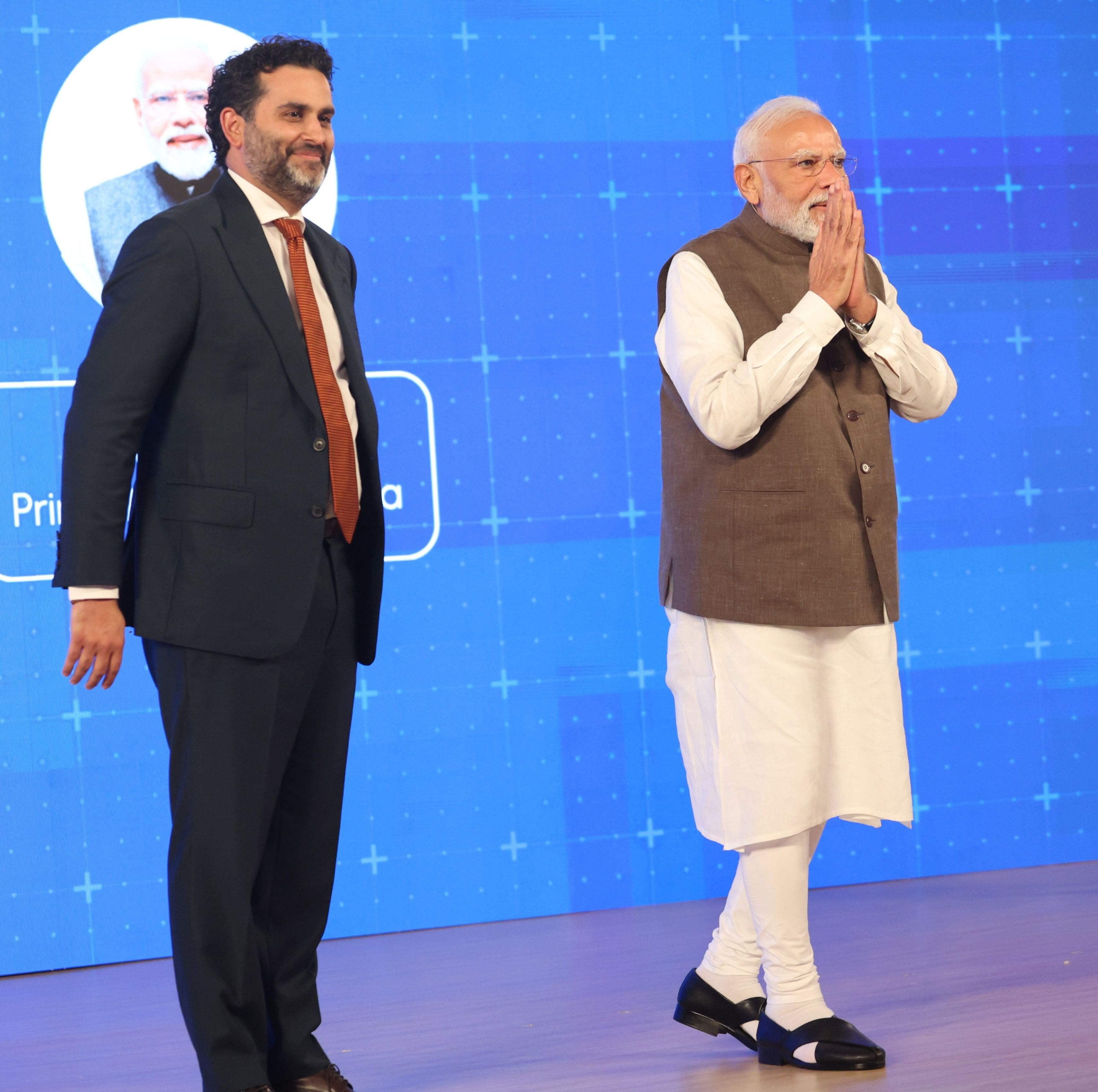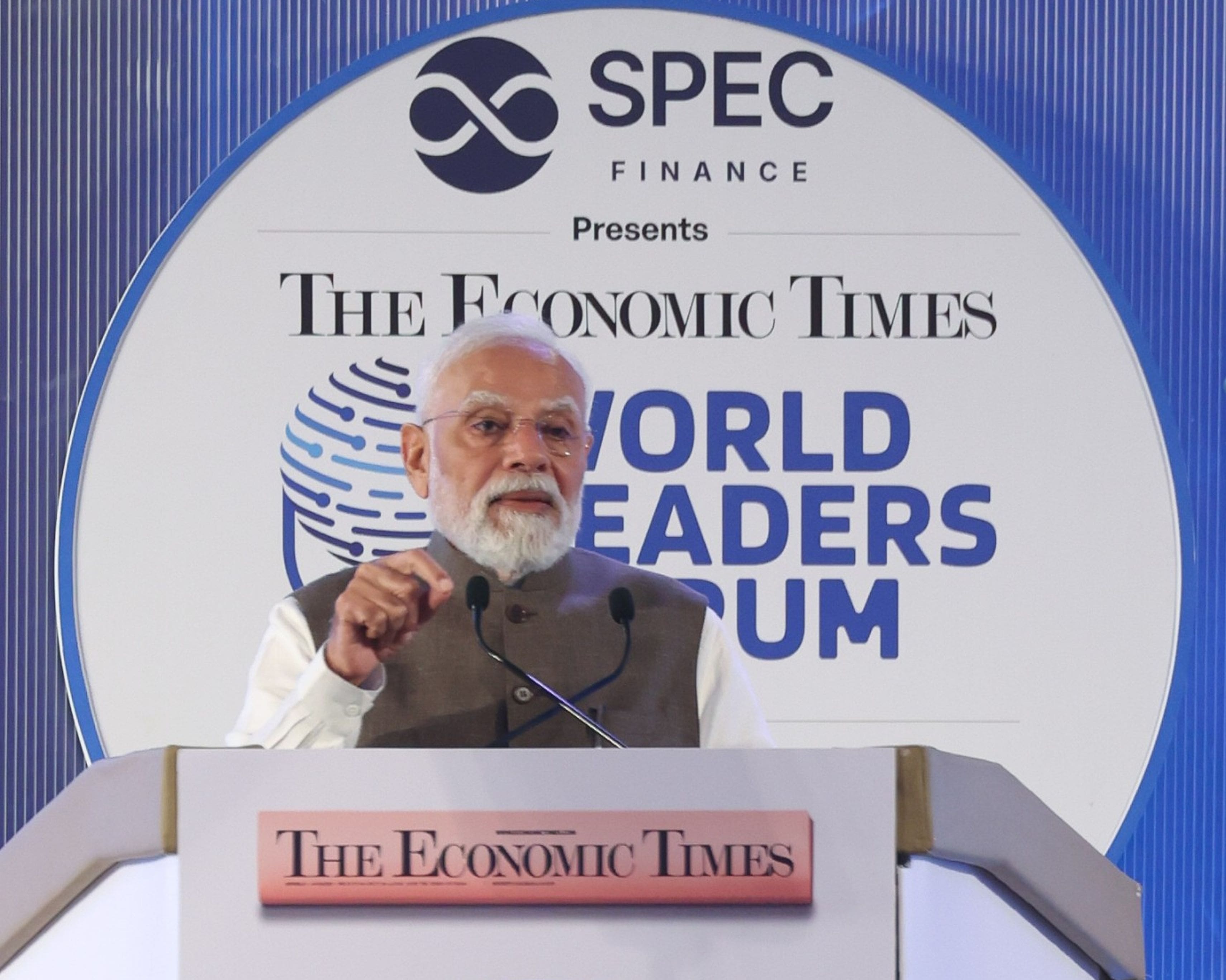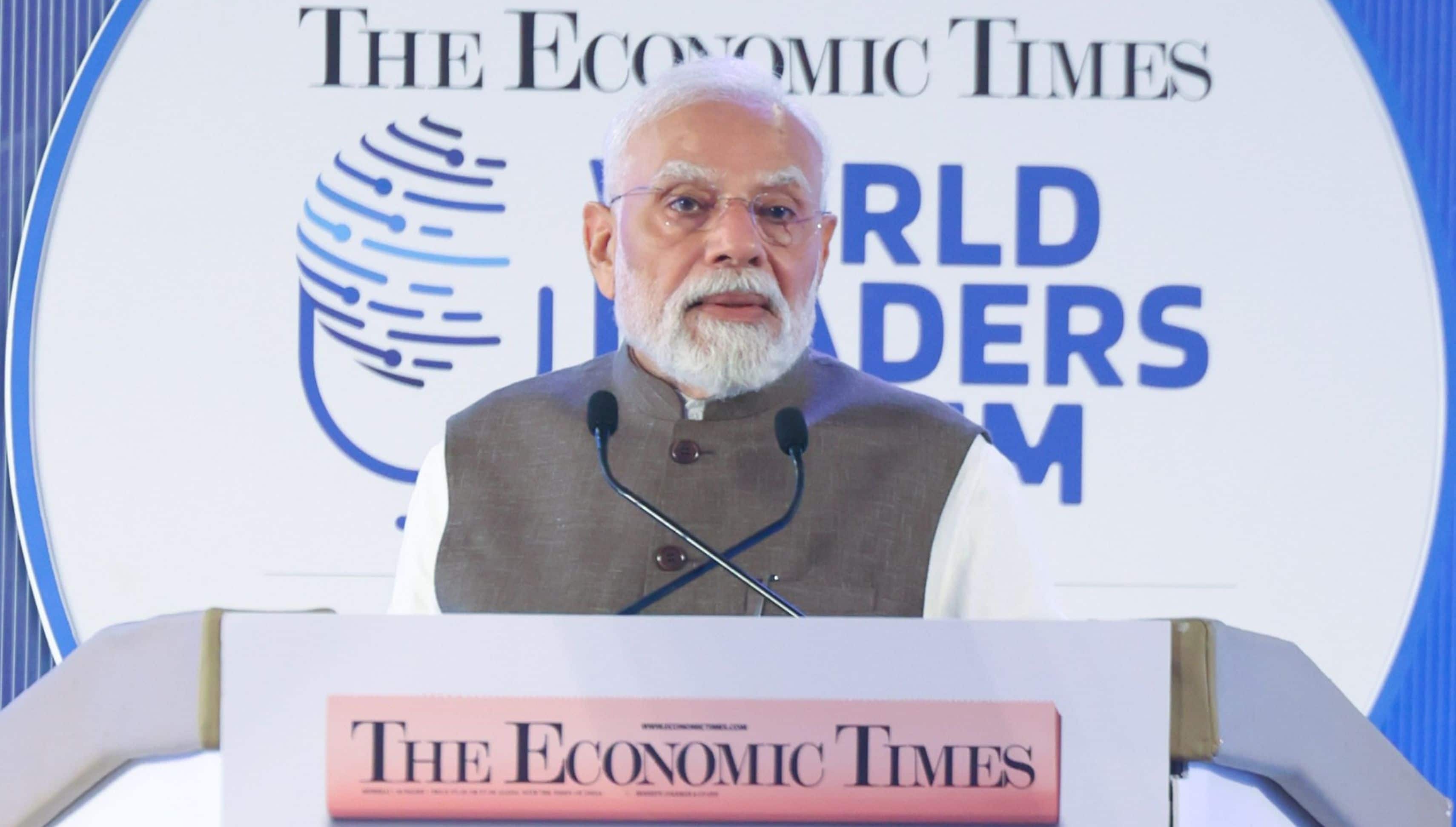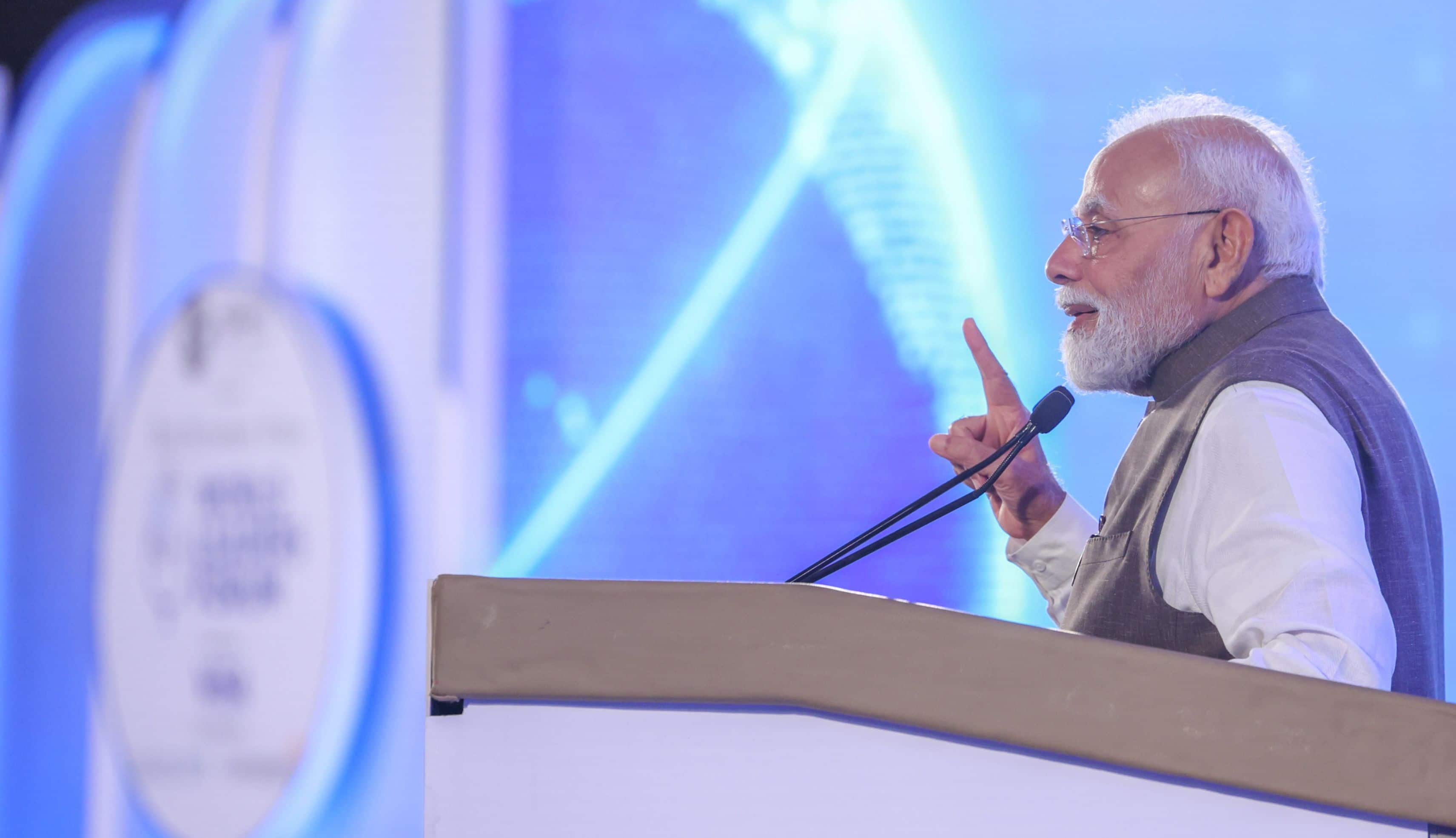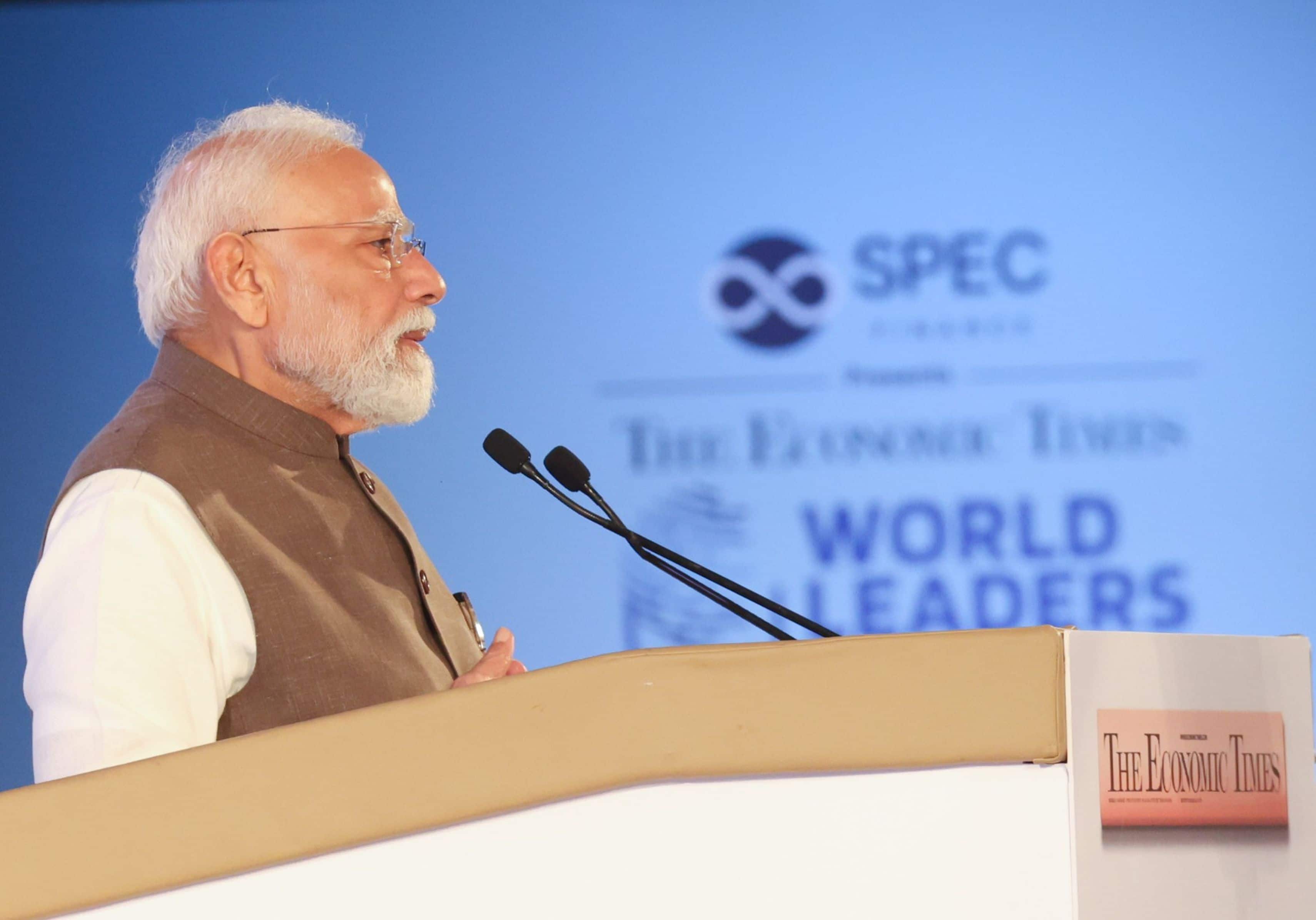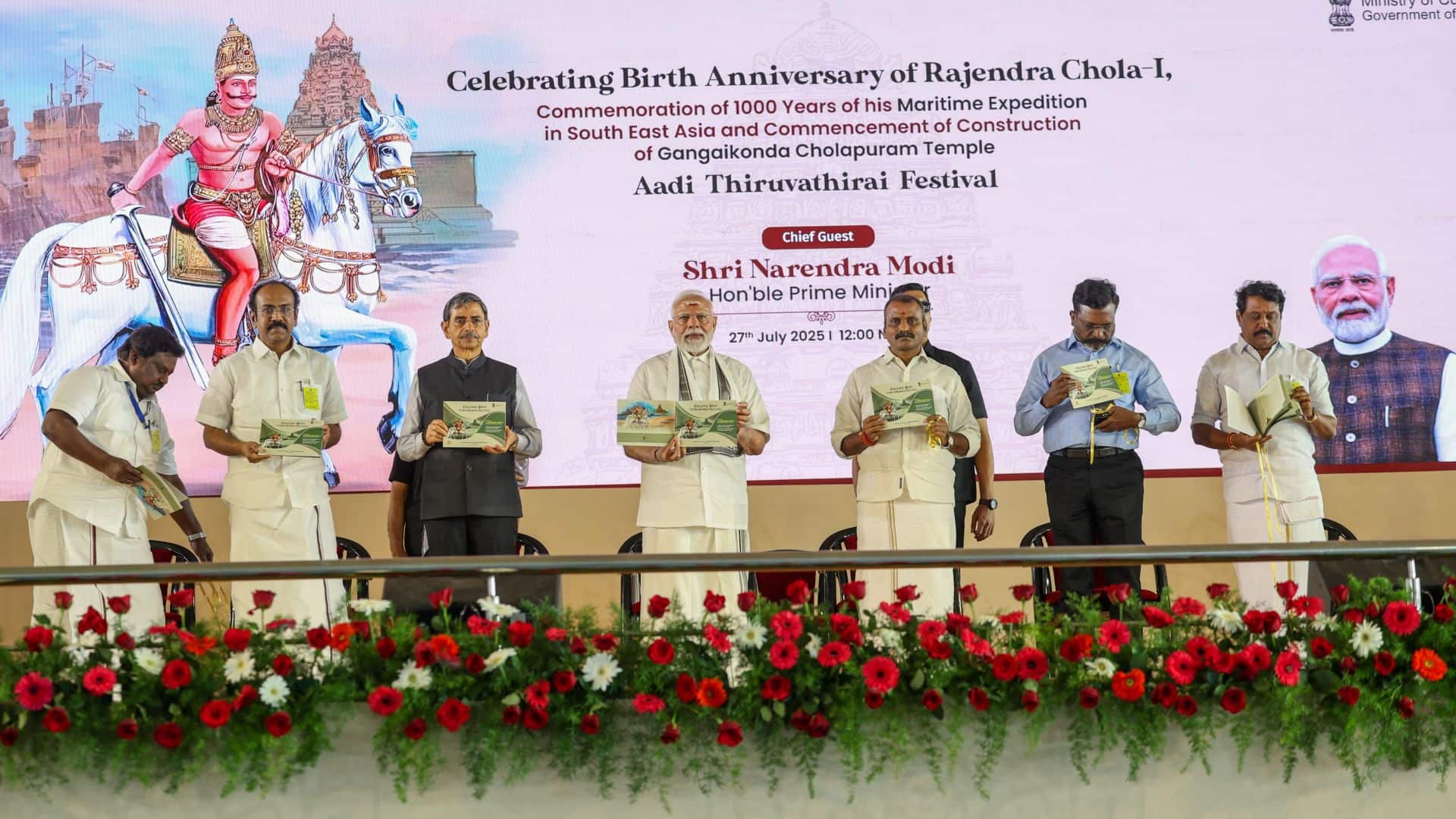


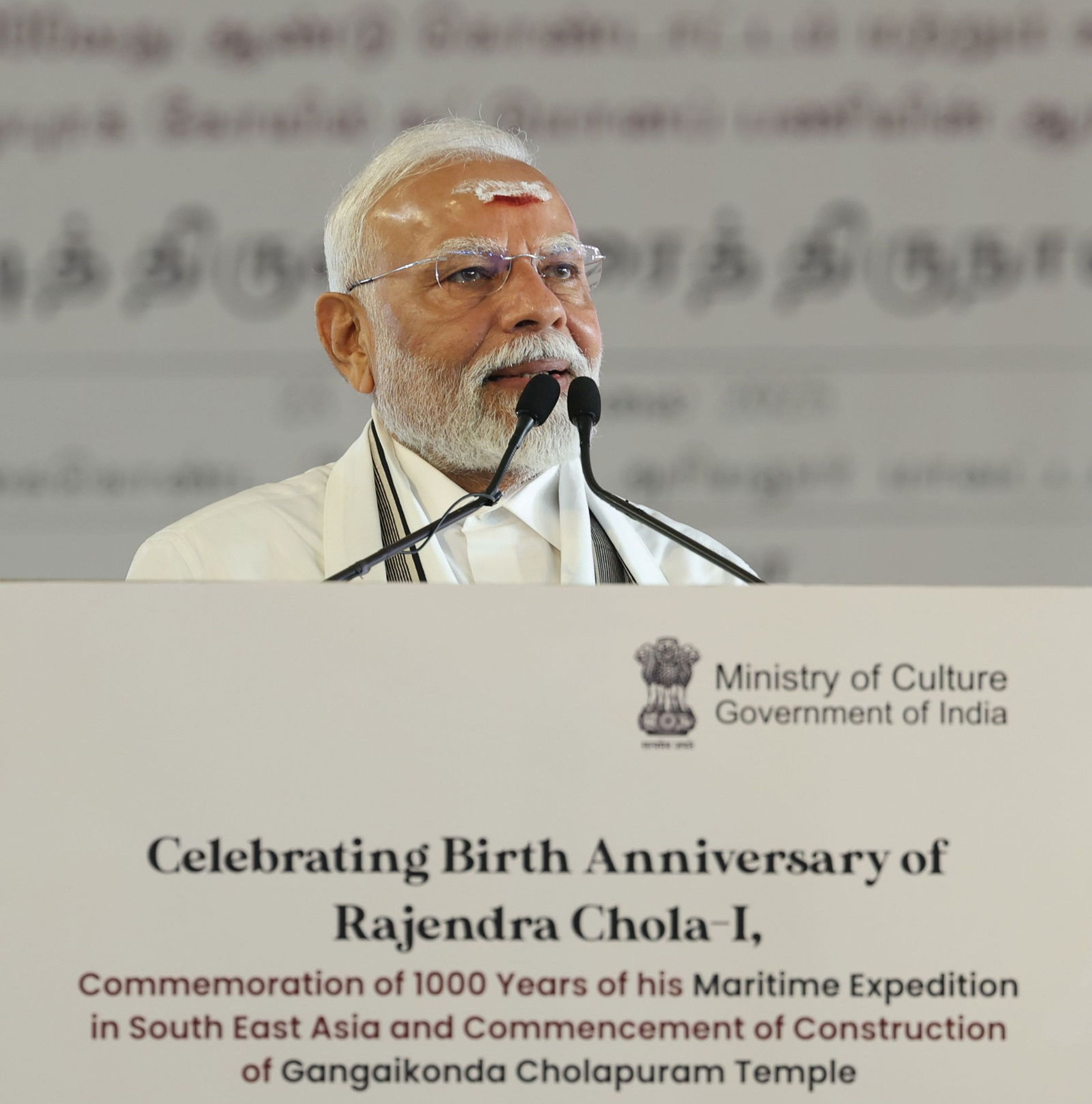
Prime Minister Shri Narendra Modi addressed the Aadi Thiruvathirai Festival at Gangaikonda Cholapuram temple in Tamil Nadu today. Bowing to the almighty Lord Shiva, reflecting on the profound spiritual energy experienced through the divine Shiva Darshan in the holy land of Raja Raja Chola, accompanied by the music of Shri Ilaiyaraaja and the sacred chanting of the Odhuvars, Shri Modi remarked that the spiritual atmosphere deeply moved the soul.
Noting the significance of the holy month of Sawan and the historic occasion marking 1,000 years since the construction of the Brihadisvara Shiva Temple, Shri Modi expressed his privilege in being present at the feet of Lord Brihadisvara Shiva during such an extraordinary moment and performing worship at the revered temple. He prayed at the historic Brihadisvara Shiva Temple for the welfare of 140 crore Indians and the continued progress of the nation and expressed his wish that Lord Shiva's blessings reach everyone, invoking the sacred chant of Lord Shiva.
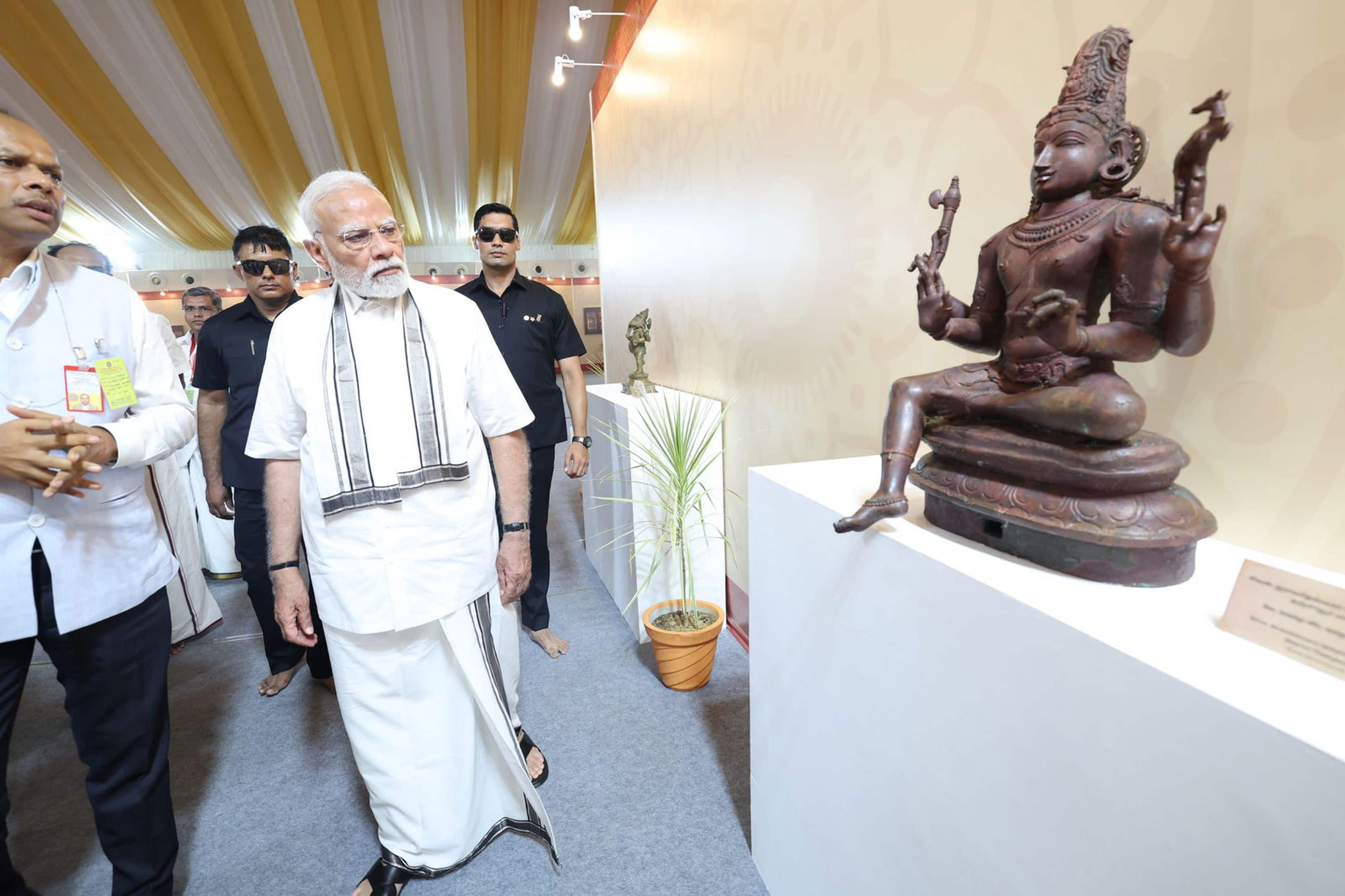
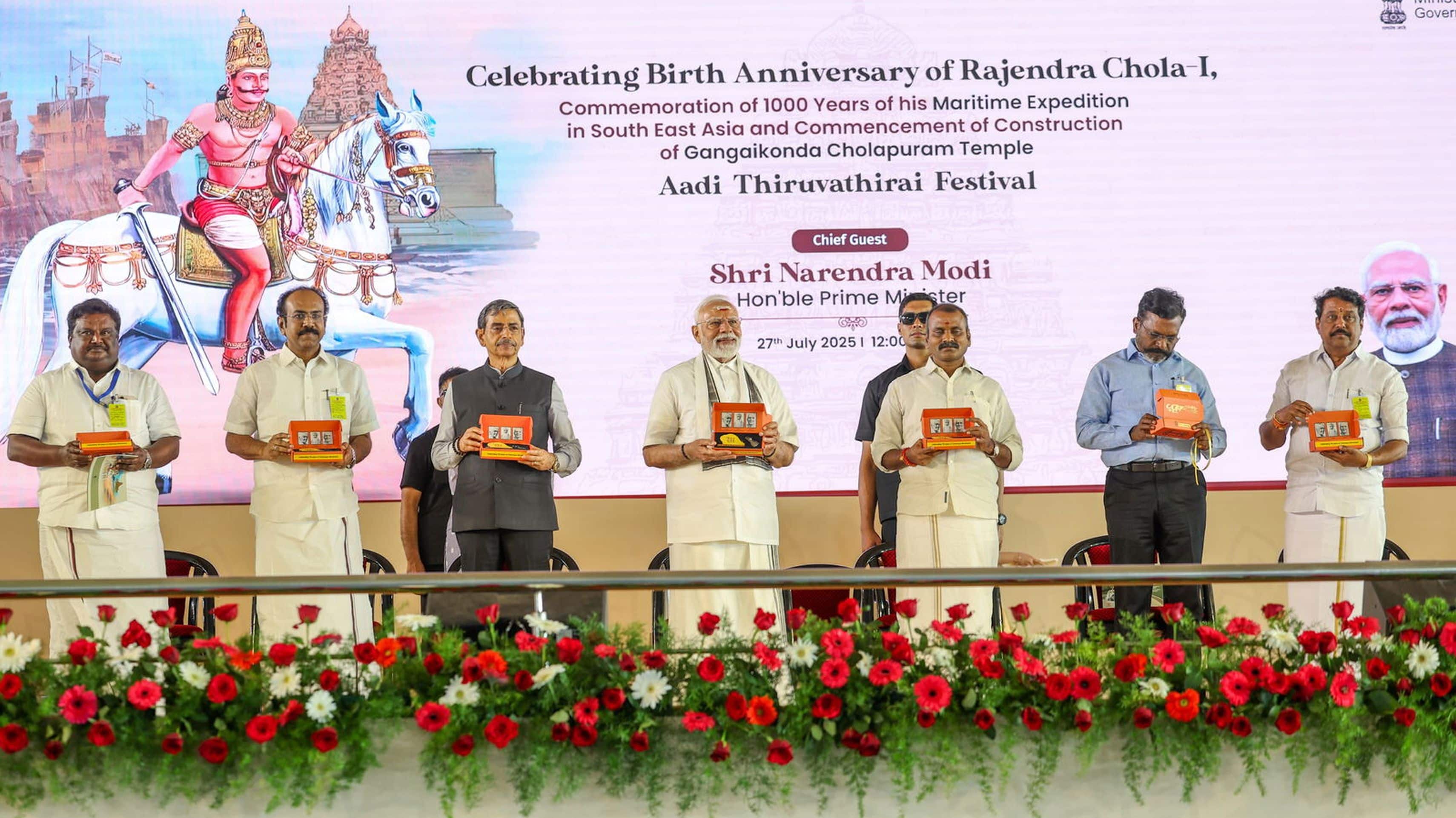
Shri Modi urged the people to visit the exhibition on 1000 years of history related to the roadmap by our ancestors for human welfare & prosperity organised by the Union Ministry of Culture. He also attended the launch of the Tamil Gita album, facilitated by the Chinmaya Mission, remarking that the initiative energizes the nation's resolve to preserve its heritage. He congratulated all individuals associated with this effort.
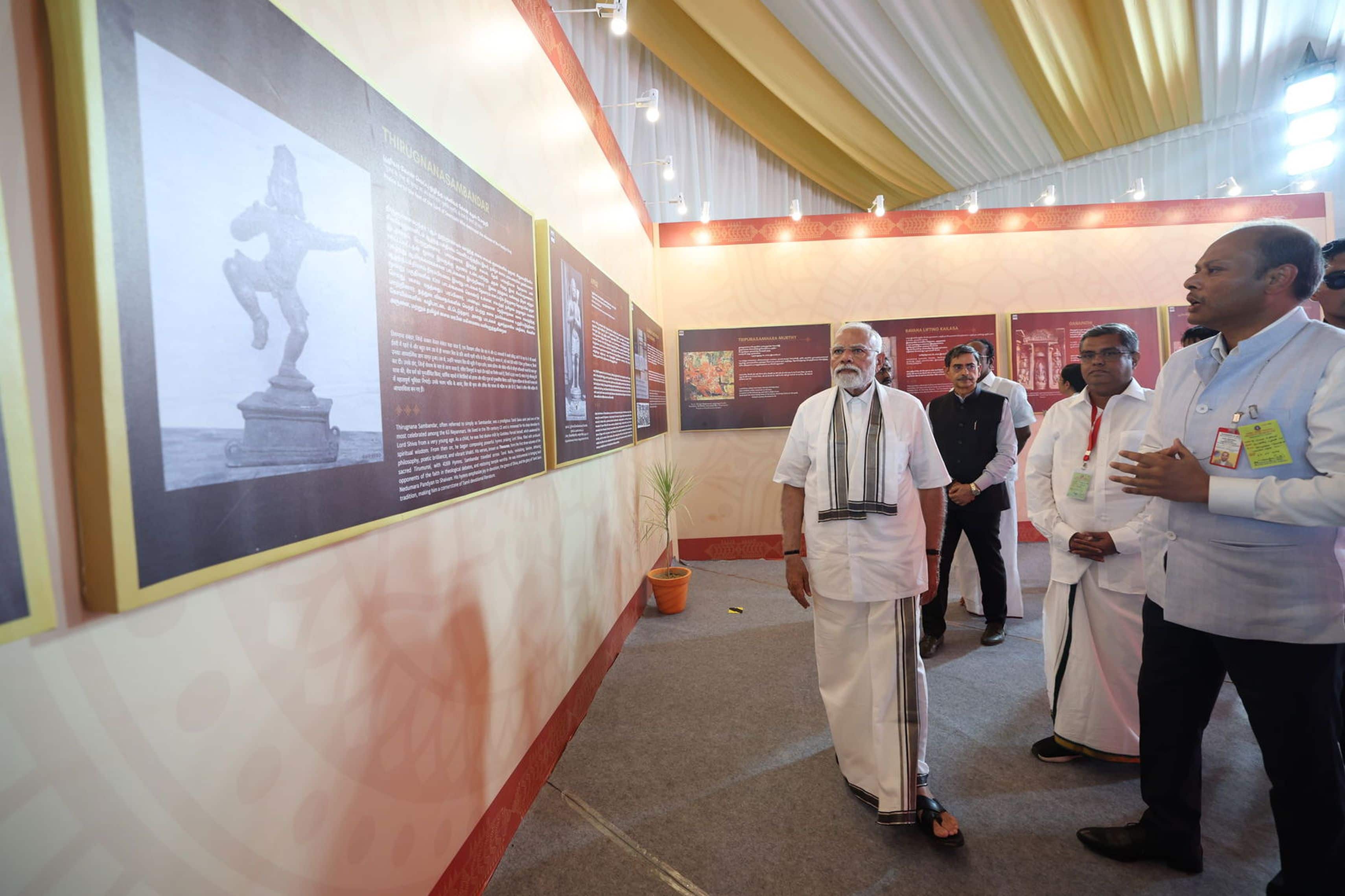
Further, the Prime Minister highlighted that the Chola rulers had extended their diplomatic and trade relations to Sri Lanka, the Maldives, and Southeast Asia. He noted the coincidence of having returned from the Maldives just yesterday and today being part of this programme in Tamil Nadu.
Quoting scriptures stating that those who meditate upon Lord Shiva become eternal like Him, Shri Modi remarked that India's Chola heritage, rooted in unwavering devotion to Shiva, has attained immortality. “The legacy of Rajaraja Chola and Rajendra Chola is synonymous with India's identity and pride”, exclaimed the Prime Minister, stating that the history and heritage of the Chola Empire proclaim the true potential of India. He emphasized that this heritage inspires the national aspiration of building a developed India, paying tribute to Rajendra Chola the Great, acknowledging his enduring legacy. Noting that the Aadi Thiruvathirai festival was recently celebrated, Shri Modi stated that today's grand programme marks its conclusion and congratulated all those who contributed to the event.
“The historians consider the Chola period to be among the golden eras of India, an era distinguished by its military strength”, stated the Prime Minister, underlining that the Chola Empire advanced India's democratic traditions, often overlooked in global narratives. He noted that while historians speak of Britain’s Magna Carta in the context of democracy, the Chola Empire had implemented democratic election practices centuries earlier through the Kudavolai Amaippu system. Shri Modi pointed out that global discourse today often centers around water management and ecology preservation, emphasising that India's ancestors understood the importance of these issues long ago. He cited that while many kings are remembered for acquiring gold, silver, or livestock from other regions, Rajendra Chola is recognized for bringing sacred Ganga water. The Prime Minister recalled that Rajendra Chola transported Ganga water from North India and established it in the South. He referred to the phrase “Ganga Jalamayam Jayastambham,” explaining that the water was channeled into the Chola Ganga Lake, now known as the Ponneri Lake.
Highlighting that Rajendra Chola established the Gangaikonda Cholapuram Temple, which continues to be recognized globally as an architectural wonder, Shri Modi remarked that the celebration of Ganga on the land of Mother Kaveri is also a legacy of the Chola Empire. He expressed his delight that, in memory of this historic episode, Ganga water has once again been brought from Kashi to Tamil Nadu, noting that a formal ritual was conducted at the site. As the elected representative from Kashi, the Prime Minister shared his deep emotional connection with Mother Ganga. He stated that the efforts and programmes associated with the Chola kings are akin to a sacred endeavour—symbolic of “Ek Bharat, Shreshtha Bharat”, giving the initiative a new and fresh momentum.
“The Chola rulers had woven India into a thread of cultural unity. Today, our government is carrying forward the same ideals from the Chola era”, stated the Prime Minister. He highlighted that programmes like the Kashi Tamil Sangamam and the Saurashtra Tamil Sangamam are reinforcing centuries-old bonds of unity. Shri Modi added that ancient temples such as Gangaikonda Cholapuram in Tamil Nadu are being preserved through the Archaeological Survey of India. Recalling that during the inauguration of the new Parliament building, saints from the Shiv Adheenam led the ceremony with spiritual guidance, the Prime Minister noted that the sacred Sengol, associated with Tamil tradition, has been ceremonially installed in Parliament, a moment which he still remembers with immense pride.
Recalling his meeting with Dikshitars from the Chidambaram Nataraja Temple, Shri Modi shared that they presented him with the sacred offering from the divine temple where Lord Shiva is worshipped in his Nataraja form. He remarked that this form of Nataraja symbolizes India's philosophy and scientific foundations. The Prime Minister added that a similar Ananda Tandava idol of Lord Nataraja adorns Bharat Mandapam in Delhi, where global leaders had gathered during the G-20 summit in 2023.
“India’s Shaivite tradition has played a vital role in shaping the nation’s cultural identity. The Chola emperors were key architects in this cultural development and Tamil Nadu continues to be an important center of vibrant Shaivite heritage”, exclaimed the Prime Minister, highlighting the legacy of the revered Nayanmar saints, their devotional literature, Tamil literary contributions, and the spiritual influence of the Adheenams. He stated that these elements catalyzed a new era in both social and spiritual spheres.
Noting that the world today is facing challenges like instability, violence, and environmental crises, Shri Modi emphasized that Shaivite philosophy offers pathways to meaningful solutions. He cited the teachings of Tirumular, who wrote ‘Anbe Sivam’, meaning “Love is Shiva.” The Prime Minister remarked that if the world embraced this thought, many crises could resolve on their own, stating that India is advancing this philosophy through the motto ‘One World, One Family, One Future’.
“Today, India is guided by the mantra of ‘Vikas Bhi, Virasat Bhi’, and modern India takes pride in its history”, said Shri Modi, remarking that over the past decade, the nation has worked in mission mode to preserve its cultural legacy. He noted that ancient statues and artifacts, which had been stolen and sold abroad, have been brought back to India. The Prime Minister pointed out that since 2014, more than 600 ancient artifacts have been repatriated from various countries around the world, with 36 of these artifacts are specifically from Tamil Nadu. He highlighted that many valuable heritage items—including Nataraja, Lingodbhavar, Dakshinamurthy, Ardhanarishwara, Nandikeswara, Uma Parameshwari, Parvati, and Sambandar—are once again adorning the land.
Emphasizing that India’s heritage and the influence of Shaiva philosophy are no longer confined to its geographic borders, Shri Modi recalled that when India became the first country to land on the Moon’s South Pole, the designated lunar site was named “Shiv-Shakti” and is recognized globally.
“The economic and strategic advancements achieved during the Chola era remain a source of inspiration for modern India; Rajaraja Chola established a powerful navy, which was further strengthened by Rajendra Chola”, cited the Prime Minister, remarking that the Chola period witnessed key administrative reforms, including the empowerment of local governance systems and implementation of a robust revenue structure. He noted that India progressed swiftly in all directions through commercial advancement, utilization of maritime routes, and the promotion of art and culture, emphasising that the Chola Empire serves as an ancient roadmap for building a new India. Shri Modi further stated that to become a developed nation, India must prioritize unity, strengthen its navy and defense forces, seek new opportunities, and safeguard its core values. He expressed satisfaction that the country is moving forward inspired by this very vision.
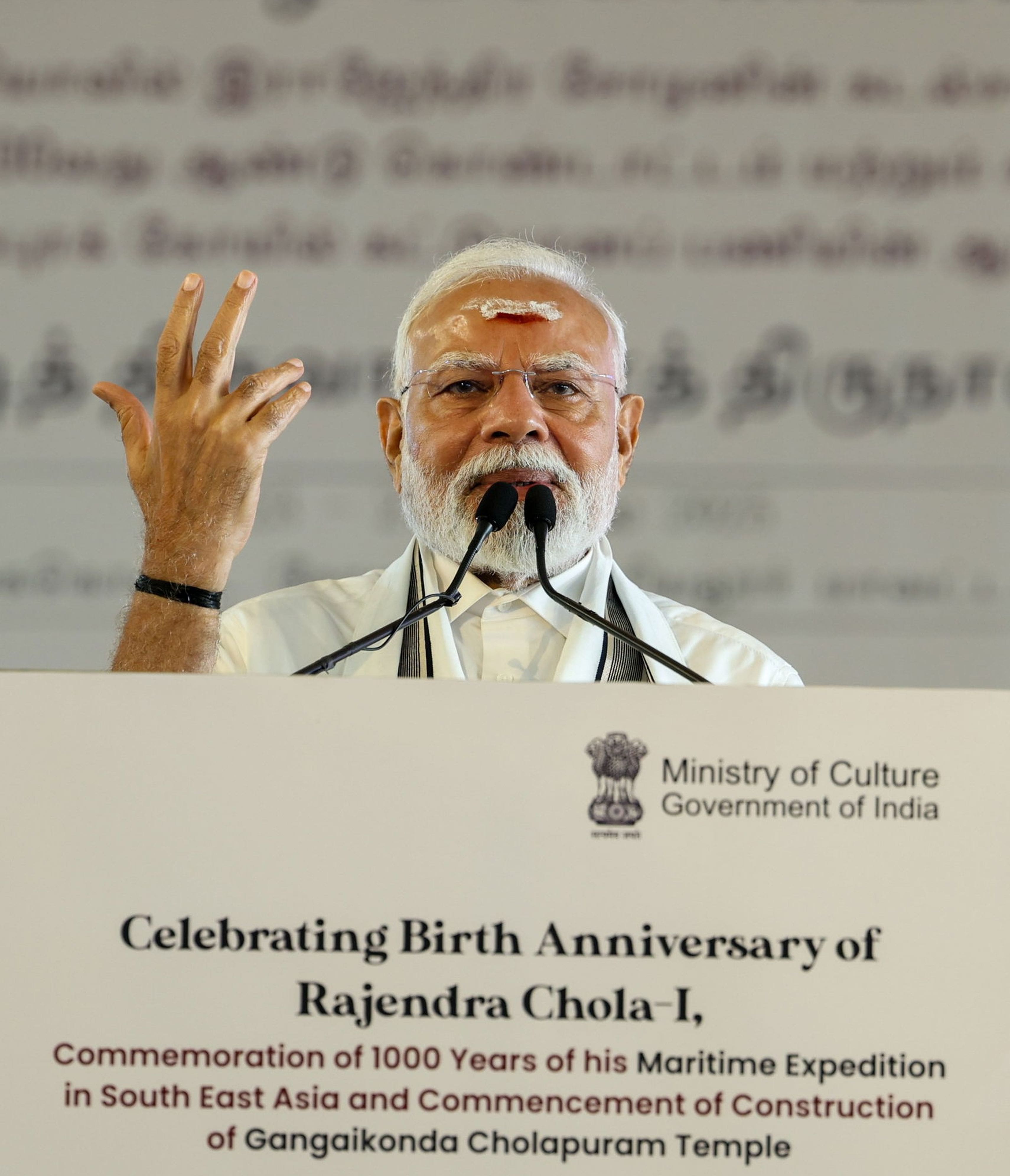
Underscoring that today’s India places the highest priority on its national security, the Prime Minister citing Operation Sindoor, stated that the world witnessed India's firm and decisive response to any threat against its sovereignty. He affirmed that the operation has sent a clear message—there is no safe haven for terrorists and enemies of the nation. He further added that Operation Sindoor has raised a new confidence in the people of India and the whole world is witnessing it. Shri Modi then drew a thoughtful parallel to the legacy of Rajendra Chola, highlighting the construction of Gangaikonda Cholapuram. Out of deep respect, its temple gopuram was built lower than that of his father’s Brihadisvara Temple in Thanjavur. Despite his achievements, Rajendra Chola exemplified humility. “Today’s New India embodies this same spirit—becoming stronger, yet rooted in values of global welfare and unity”, stated the Prime Minister.
Affirming his resolve to advance the spirit of pride in India’s heritage, Shri Modi announced that grand statues of Rajaraja Chola and his son, the illustrious ruler Rajendra Chola I, will be installed in Tamil Nadu in the coming time. He stated that these statues will serve as modern pillars of India’s historical consciousness. Noting that today marks the death anniversary of former President of India, Dr. A. P. J. Abdul Kalam, the Prime Minister remarked that to lead a developed India, the country needs millions of youth like Dr. Kalam and the Chola kings. He concluded by emphasising that such youth—filled with strength and devotion—will fulfill the dreams of 140 crore Indians. He added that together, we will advance the resolve of Ek Bharat, Shreshtha Bharat and extended his greetings to the nation on the occasion.
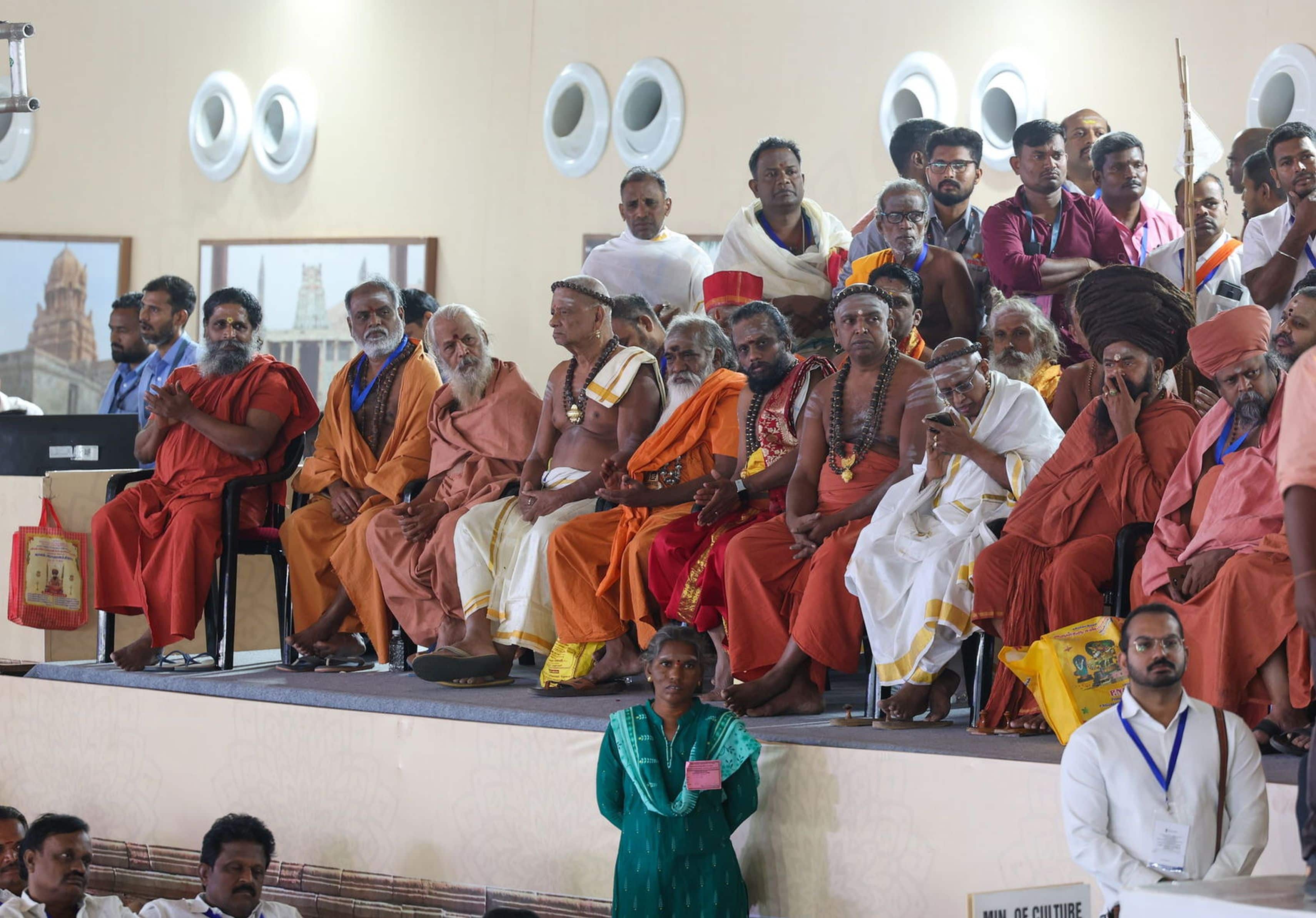
Revered Saints, the Governor of Tamil Nadu, Shri R. N Ravi, Union Minister Dr. L Murugan were present among other dignitaries at the event.
Background
Prime Minister released a commemorative coin honouring one of the greatest emperors of India, Rajendra Chola I, celebrating Aadi Thiruvathirai Festival during a public event at Gangaikonda Cholapuram Temple.
This special celebration also commemorates 1,000 years of the legendary maritime expedition of Rajendra Chola I to South East Asia and the commencement of the construction of the iconic Gangaikonda Cholapuram temple, a magnificent example of Chola architecture.
Rajendra Chola I (1014–1044 CE) was one of the most powerful and visionary rulers in Indian history. Under his leadership, the Chola Empire expanded its influence across South and Southeast Asia. He established Gangaikonda Cholapuram as the imperial capital after his victorious campaigns, and the temple he built there served as a beacon of Shaiva devotion, monumental architecture, and administrative prowess for over 250 years. Today, the temple stands as a UNESCO World Heritage Site, renowned for its intricate sculptures, Chola bronzes, and ancient inscriptions.
The Aadi Thiruvathirai festival also celebrates the rich Tamil Shaiva Bhakti tradition, fervently supported by the Cholas and immortalized by the 63 Nayanmars—the saint-poets of Tamil Shaivism. Notably, Rajendra Chola’s birth star, Thiruvathirai (Ardra), begins on 23rd July, making this year’s festival all the more significant.
Click here to read full text speech
Rajaraja Chola and Rajendra Chola symbolise India's identity and pride.
— PMO India (@PMOIndia) July 27, 2025
The history and legacy of the Chola Empire reflect the strength and true potential of our great nation. pic.twitter.com/3YrRyQJxlj
The Chola era was one of the golden periods of Indian history.
— PMO India (@PMOIndia) July 27, 2025
This period is distinguished by its formidable military strength. pic.twitter.com/RIMsri522c
Rajendra Chola established the Gangaikonda Cholapuram Temple.
— PMO India (@PMOIndia) July 27, 2025
Even today, this temple stands as an architectural wonder admired across the world. pic.twitter.com/CswBrMsYUp
The Chola emperors had woven India into a thread of cultural unity.
— PMO India (@PMOIndia) July 27, 2025
Today, our government is carrying forward the same vision of the Chola era.
Through initiatives like the Kashi-Tamil Sangamam and the Saurashtra-Tamil Sangamam, we are strengthening these centuries-old bonds of… pic.twitter.com/5kFCZ02WZ3
When the new Parliament building was inaugurated, the saints from our Shaivite Adheenams led the ceremony spiritually.
— PMO India (@PMOIndia) July 27, 2025
The sacred Sengol, deeply rooted in Tamil culture, has been ceremoniously installed in the new Parliament. pic.twitter.com/mWhBB8O2Qw
Our Shaivite tradition has played a vital role in shaping India's cultural identity.
— PMO India (@PMOIndia) July 27, 2025
The Chola emperors were key architects of this legacy. Even today, Tamil Nadu remains one of the most significant centres where this living tradition continues to thrive. pic.twitter.com/jjFmDinKTs
The economic and military heights India reached during the Chola era continue to inspire us even today.
— PMO India (@PMOIndia) July 27, 2025
Rajaraja Chola built a powerful navy, which Rajendra Chola further strengthened. pic.twitter.com/acdUWLHTdO