



Minister from UP government Sri Ahmad Hussain ji, the local representative from the area Sri Surendra Singh ji, our MLC Sri Kedar Nath Singh ji, respected sister Durga Devi ji, Sri Arvind ji and my dear brothers and sisters who have gathered here in large numbers.
The government of India has envisioned a new programme - The Saansad Aadarsh Graam Project. I, being a parliamentarian need to take responsibility of a village under this plan too. I have been reading different versions in the newspapers about my decision to adopt Jayapur village for this plan. Each one gives some version and this baffles me. I am surprised at how some fertile brains are working to spread stories about my decision to adopt this specific village. Such reasons given are ones that even I am not aware of. Why I chose this village has a very simple reason and the reason is that when Bhartiya Janta Party chose me to contest elections from Banaras, that time a big tragedy occurred where 5 people lost their lives in a fire in Jayapur. The first ever name that I became aware of after being selected for the Banaras constituency was that of Jayapur. That too I heard in a moment of crisis. Though I was neither the MP nor we had a government here, I called up the government officials, I called up my party workers and asked them to reach here for help. So this is the reason Jayapur occupied a place in my mind and my heart. So our relationship started in a moment of crisis and those relationships that spring from crisis often last a lifetime. So this is the reason for my association with Jayapur. I consider this as a fortunate association. Rest all the stories being spread are false and they have no basis. None that I am aware of.
Now some people are writing that the Prime Minster is adopting a village. Well, this scheme is such where it is the other way round i.e. the villages are adopting a parliamentarian. Whatever position we may hold, either that of Minister, Chief Minister or even a Prime Minister, nothing can be compared to the learning that we can receive from the villagers. If I intend to become a good people’s representative, if as a public representative I want to understand people and their problems, learn something worthwhile then I cannot do so by sitting with clerks and officers. I can gather this knowledge only by interactions with the learned and experienced people of the village. They might not have been to school or had college education but what they have is a vast store of knowledge and experience. They have such a vast body of experience that they know practical ways of resolving issues, which can be a great learning experience for the public representative. This is why I have chosen Jayapur and I request you to adopt me in return and teach me ways to resolve your issues. Even after so many years of Independence our villages remained where they were then. Why so? It is now your turn to say that for the past 60 years you sat in your offices at Lucknow and Delhi and made endless policies and spent millions to no avail. Now listen to us and do what we think is better for us.
I am also witnessing that the villages are competing to be adopted for this scheme. They are expecting the Parliamentarian to choose their village for adoption. The reason for this is a misconception among the villagers that if the parliamentarian adopts their village, a lot of money is going to flow in. Well this scheme has no money. This scheme does not involve money for if there is money, and then there will definitely be a corrupt person to pocket that money. The reason for launching this scheme was that despite running several schemes and spending lots of money, there was no change in lives of the villagers. The idea of this scheme is to find answers to these very questions.
A few days back I invited the senior bureaucrats for tea during Diwali. These are those top notch officials who practically run the country. All of them are so highly placed that a common citizen cannot possibly approach them. I called them and gave them a job. I asked them to visit the place of their first posting. That very place where they must have been posted for around a year, where they started their careers and received their initial training. I asked them to revisit those places with their children and families. Tell them how you started as a fresher, how you functioned out of your first office and try and remember those people who helped you. Take your families to meet your acquaintances there. I asked them to spend at least three days in that very same location. And think how far they have reached in these 30-40 years whereas the village you started in remained where it was. Go and see for yourself and show the same to your family also. I want to create sensitivity, something that invokes some kind of proactive thought, where they think that it is their responsibility to bring to the forefront all those who supported them when they were new. The public representatives need to think to bring development to all those who have been instrumental in bringing them onto the national political scene. Hence it is my vision to go among these very people, work along with them and see that the government policies designed for them are fully implemented. See if there is the desired change in the village. If there is a difficulty in launching these programmes, then whatever policy level changes need to be made can be decided. If the MP is successful in achieving this, then the entire machinery of the government will get accustomed to working for people.
I want to create an environment where the residents of Jayapur feel empowered about taking a decision for their well being. I have been seeing that Jayapur is in limelight these days a lot. Many government officials have visited the place. The village was cleaned, roads repaired. On asking why these special efforts are being made, it was the preparation for Modi ji’s visit. The villagers held the view that if Modi ji visits the village frequently it will become very clean. Are you correct in thinking this way? Now that the village has been cleaned, I would appreciate that you take a call that now all of us work together to keep the village clean. Isn’t this the beginning of an ideal village? I want you to think about the oldest tree in the village. Have you ever spared it a thought? Has the village school master ever thought of taking his students to that tree and tell them about its age, that it is some 150-200 years old, that generations from grandparents to parents to these children have played under this tree? This will foster a bonding with that tree. Today no village might know about its oldest tree. Why is this so? Are we no longer fond of them? Do we think about the elders of the village, how many are above 100 years of age, how many are above 75 years or more? How many children of the village sit with these elders and talk about the old days, about the childhood of their elders. How was their school, how were their teachers, what were the food habits at that time, how did they cope with the changing seasons. Have you ever tried this? Sadly, the closed and family like environment so common in a village scenario has suddenly started shrinking. Can we work together to bring back this environment?
Let me ask you. Do you know the day when your village was established? There must be a day when this village came into existence. If you do not know then go to the government offices and find out when this village found existence in government records. If no record exists then decide upon a day which would be celebrated as the day when this village was born, like we celebrate our birthday. All those who have left the village in order to earn their living will also come back that day. All the senior people of the village who have attained 75, 80 or 90 years should be honoured. Tell me, on such a day, will you not clean the village? Will there be change in the mindsets or not? If someone from the village has gone out, and one day if he returns, on finding the school fan missing, he will donate one?
How do we make our village an ideal one, not with the help of the government, but by awakening the collective strength of the society. We will decide that no child in the village would eat without first washing their hands. Tell me, do we need the government for this kind of a job. I was reading a report about a neighboring country where 40 out of 100 children die because of diseases related to not washing hands. Means 40 children out of hundred died because they did not wash hands. How much do we love our children? If the kids fall sick everyone feels sad. So let us all decide that no child from this village will ever eat anything without first washing his hands. You will not expect a prime minister to be talking about these issues. There must be some mistake. Well our leaders in the past were so accustomed of talking tall, that it never changed the ground realities. I am not here to talk big. I have to achieve a larger goal by these small targets.
I want to ask the people of this village, some must have passed 10th, some must have passed 12th grade, some might be graduates, people of different age groups like 50 or 60 years old- have you ever been to the school where your child goes to study? Have you seen the school? Do you check if the teacher comes or not? Is the drinking water clean or dirty, if there is a toilet or a library in the school, if the computers in the school are in a working condition or not. Have we ever taken an interest in these issues? What we have done is admitted our children in school, dumped our child there at the mercy of the teacher and left him to his fate. This attitude doesn’t work. We have to be more proactive. We can decide to make a committee of the members of one neighborhood who will go each day and supervise the functioning of the school. Tell me then, our school, however small it might be, will truly turn into a temple of learning or not. It is such an easy job.
I often tell the poor families in the villages to celebrate the birth of the girl child. But do we really celebrate the birth of a girl. Some families often end up feeling sad if a girl child is born. The daughter in law of the household has to face everybody’s ire. Will our Jayapur village celebrate the birth of a girl child? The goddess of wealth enters our household, so this should be celebrated or not, should we not be equally proud of our daughters. See, how few girls are being born in comparison to the number of boys. The reason of this is that the daughters are killed in the womb itself. If we kill the girl child in the womb itself so how will the social cycle function. If 1000 boys are born and only 800 girls are there, 200 boys will remain unmarried. What then will happen to our villages, our society? And is this the job of the government? Isn’t this our responsibility as a society to protect and honour our women? That is why I am here today, in Jayapur. We have decided whatever we were doing is past, now we have to think of a new way forward. I even say this that if you have a farm or a small piece of land, sow five plants when your daughter is born to celebrate the occasion. The girl will grow up and so will the trees. When she is old enough to get married, sell those trees and you will get the money to marry her off.
We have to work together to develop new social structure. When the village celebrates its inception day, there will be no room for casteism. All will live in unity, casteism will not survive and once free of this social ill, no one can stop you from being a force so strong beyond everyone’s imagination. Hence this entire Aadarsh Gram Yojana involves implementing government schemes properly, on time and effectively. We have to implement it in a fashion that optimum results are obtained. The MP will provide necessary guidance and the work will gather momentum. Once the government officers realize how the work is to be done in the village, others too will follow soon.
I have an intense desire to do many things for this village and the district of Banaras which are now under my responsibility. But I do not intend to work in the usual format of the governmental set up utilizing the funds of the government treasury. I want to use the people’s power by encouraging people’s participation.
A while back our Village Pradhan, Durga Devi ji was giving her speech. I asked her about her qualification? She informed that she had studied till the eighth standard. Now see, how high was her confidence level because of her education. I felt proud; I was truly impressed by the manner in which she expressed her views. Don’t we want our daughters to be educated? If our Pradhan is educated, so shall be all the daughters of this village.
Why is it so, that even for taking polio drops someone from the government office has to come to call us? Shouldn’t the youth of the village take the responsibility to see that all children receive polio drops, that no child should be inflicted by polio, that there is no one who is handicapped? The government can bring you the polio drops but it is your responsibility to see that the children receive it. So we will take this responsibility, won’t we?
I have spent time with you, interacted with party workers and officials to understand your problems. I am confident that people in the administration which is primarily being run by the state government, will see to it that the tasks are undertaken and duly taken to their culmination. What the government needs to do and what as villagers we need to do… we will decide now. And I repeat, the MP will not adopt the village, rather the village has to adopt the MP. We have to work in a new direction and create an ideal village. I am grateful to the people of Jayapur. Naturally if I have made inquiries about the works being done, the organizational functioning, then I will try to find new ways too. But I do not wish to discuss this on the stage here. I will raise these issues at the necessary forums. At the same time I expect you people to sit together and decide what works you can undertake and to work on your own collective strengths.
I have heard that there is a water crisis in this village. The government will do what it needs to do. But let us decide that we will not allow even a single drop of rainwater to go waste. There will no longer be water crisis. But all of us have to work together for this. Whatever we have been doing is past. Now we have to think of a new way forward. We have to march ahead with our social strength. We will no longer wait for the government to do something for us. We will work together as a force and involve our neighbouring villages too. I have seen this happening in some villages. The people have done it and so will Jayapur do it.
I express my gratitude for the love and respect showered by you and I want to assure you that we will work together as a team to create a new Jayapur, a better Jayapur.
With this belief in my heart, I express my sincere gratitude to you all. Thank You!
(The original speech was in Hindi, this is the English rendering. Original speech remains the authoritative version)
Text of Prime Minister Shri Narendra Modi's speech at Saansad Adarsh Graam event at Jayapur Varanasi
Published By : Admin |
November 7, 2014 | 15:06 IST
-
Share
-

-

-


Login or Register to add your comment
Explore More
NEXT READ

Popular Speeches
ਸ੍ਰੀ ਰਾਮ ਜਨਮ-ਭੂਮੀ ਮੰਦਿਰ ਧਵਜਾਰੋਹਣ ਉਤਸਵ ਦੌਰਾਨ ਪ੍ਰਧਾਨ ਮੰਤਰੀ ਦੇ ਭਾਸ਼ਣ ਦਾ ਪੰਜਾਬੀ ਅਨੁਵਾਦ
Media Coverage
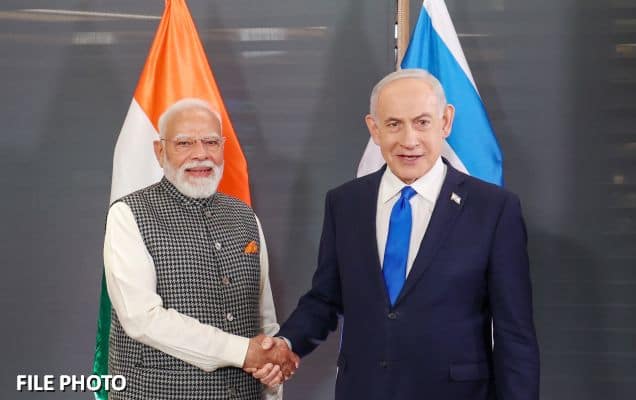
'PM Modi Is One Of Our Greatest Friends': Netanyahu Says Israel Is 'Investing Heavily' In India Ties

Nm on the go
Always be the first to hear from the PM. Get the App Now!

The government stands firmly with the youth in the fight against drugs: PM Modi
August 02, 2026
-
Share
-
-
-
I urge every citizen, especially our youth, to join this movement: PM
Today, as the nation has set the goal of a Viksit Bharat, it is imperative that the country's youth remain fit, brimming with self-confidence and permanently steer clear of drugs: PM
We must protect every youth from falling into the trap of addiction: PM
Society’ support, yoga and meditation give strength to our inner selves against addiction and today facilities like rehabilitation centers also help quit addiction: PM
Even if a youth has mistakenly fallen into the trap of addiction, it absolutely does not mean that all doors are closed for them: PM
We must always remember that if a child in the house falls victim to addiction, we must not hide it but seek medical help to free the child from addiction: PM
We should also create a culture of open communication with children in the family, so that you can hold their hand before they get caught in such a whirlpool: PM
I appeal to our professors to discuss the perils of drug abuse with their students and spearhead a movement against addiction on campuses to achieve significant results: PM
Namaskar!
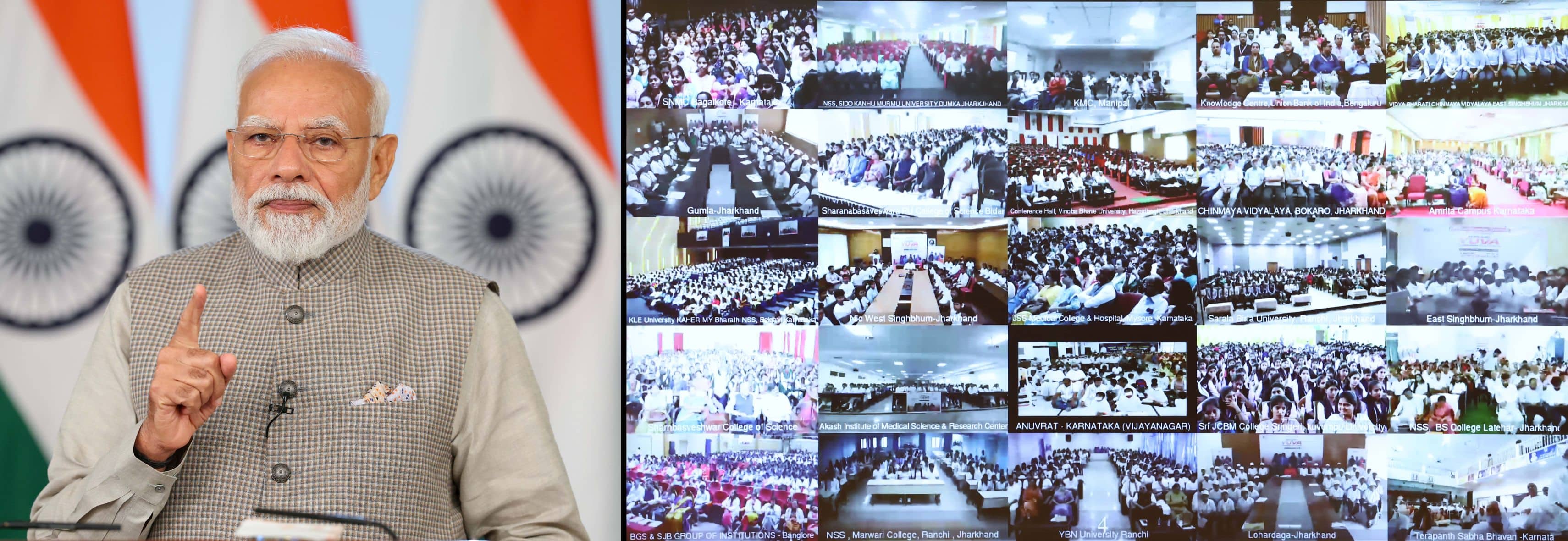
Today, all of us citizens of India have united for a great and important resolve. Saints from across the country, governors representing different states, chief ministers, other public representatives, and more than one crore young companions connected from over 28,000 locations are part of this program. On this auspicious occasion, I especially welcome and congratulate the millions of youth who have joined for this noble pledge. This campaign is for the individual, for the family, for society, and most importantly, for the nation.
Friends,
For the Viksit Bharat Sankalp Abhiyan, the name Nasha Mukt Yuva itself makes the resolve clear. As India sets the goal of becoming a developed nation, it is essential that our youth remain healthy in body and mind, full of self-confidence, and always free from the deadly habit of drugs. This is the purpose of the campaign. We must all resolve that our youth understand the dangers of addiction, remain aware, and stay away from it. The National Nasha Mukt Yuva Abhiyan now plays a major role in this resolve.
Friends,
As the MP from Kashi, I am proud that this campaign began last year as a pilot project on its sacred soil. Along with scientific clarity, it carries spiritual energy, blessings of saints, and our great cultural heritage. It embodies the cultural dedication that has rejected intoxication for centuries. That is why more than 125 spiritual organizations have joined us for the welfare of millions. Social organizations and NGOs have also taken this pledge. Together, through the Kashi Declaration, a roadmap was prepared. Today, the idea that arose from Kashi has become a national project. From today, the Nasha Mukt Yuva campaign begins across the country.
Friends,
Some efforts, when done individually, can feel tiring or discouraging. But when they become collective movements, when millions walk shoulder to shoulder, even those who could not act alone gain new energy. Collective strength is powerful, and today this campaign will touch every young heart. Just a short while ago, millions of youth across the country took the pledge of freedom from addiction. You resolved to keep your lives free from drugs, and to spread the message of de-addiction in your schools, colleges, and communities.
Friends,
This pledge taken today will continue for 100 weeks. Every Sunday, activities related to art, culture, sports, meditation, spirituality, and service will be organized. The message of de-addiction will reach new people. These 100 Sundays will be 100 strong steps toward a drug-free India.
Friends,
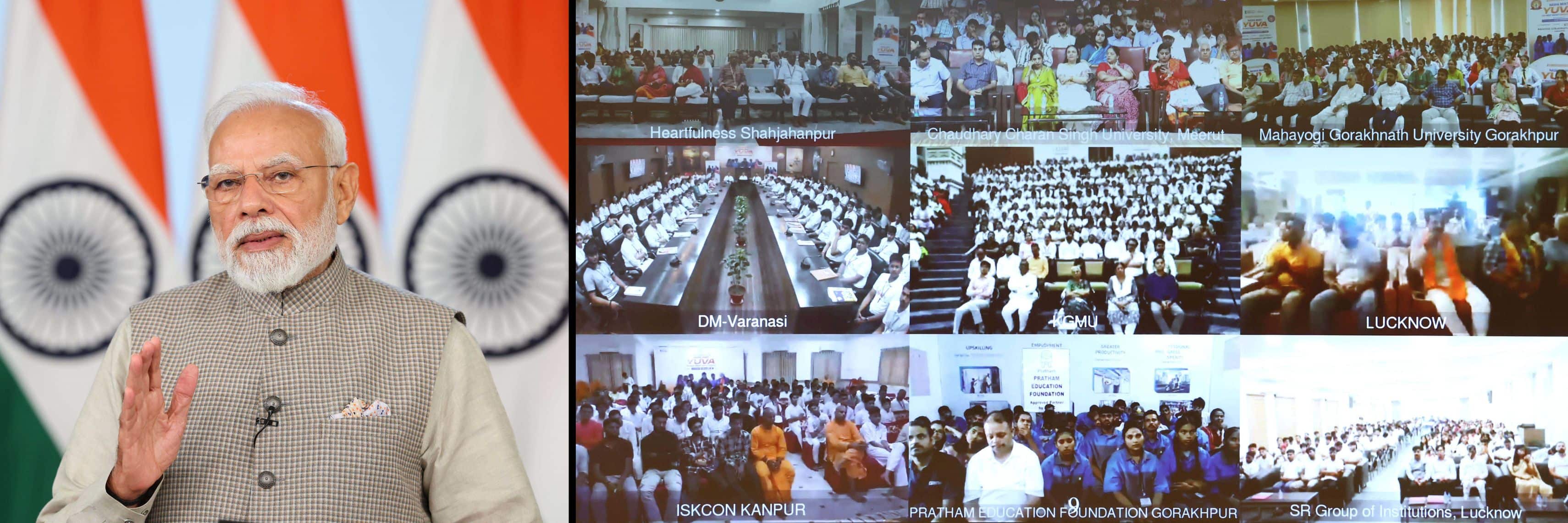
Today, lakhs of students from thousands of schools, colleges, and universities are connected online with this program. Lakhs of volunteers from My Bharat are also participating. Our NSS youth are with us too. From different regions, institutions, and backgrounds, more than one crore youth are united today. You are the leaders of this great movement. You have strengthened my belief in how aware, intelligent, and responsible India’s youth are toward their duties. I extend my best wishes to all of you for this campaign.
My young friends,
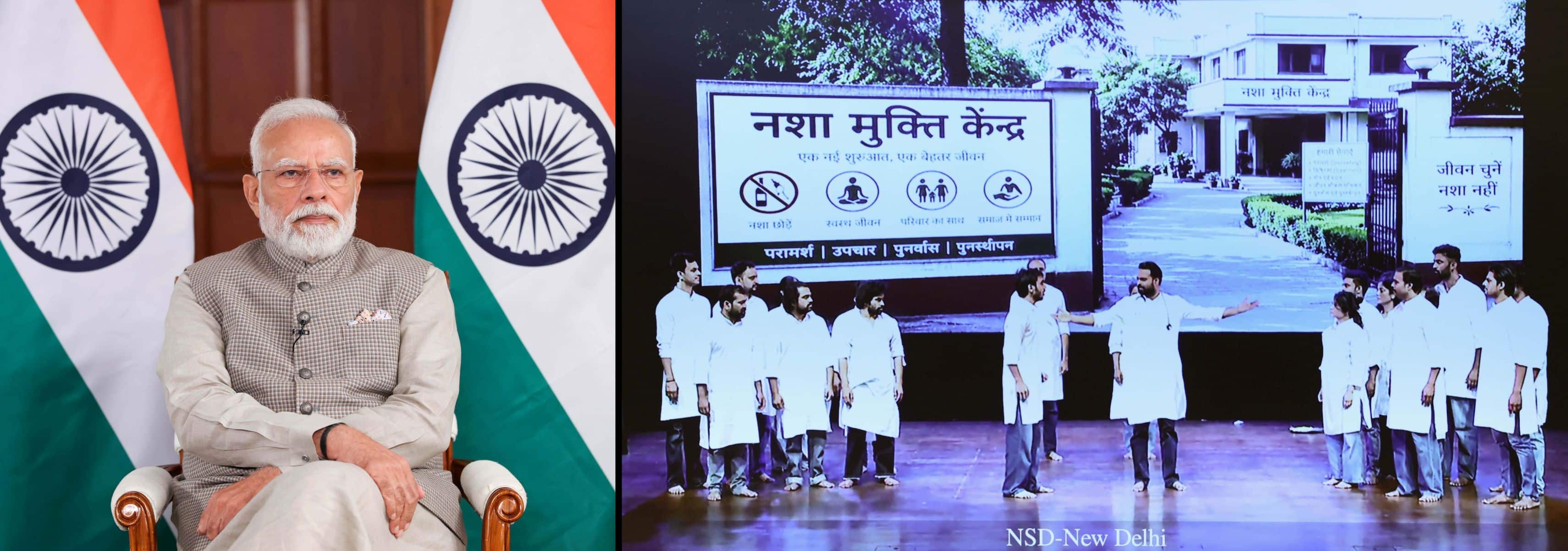
You are the Amrit Peedhi of India. In the next 20–25 years, you will shape your own lives, and it is you who will carry the nation to its goal of becoming a developed India by 2047. You will be the ones sitting at the summit, enjoying the fruits of that achievement. The country needs your energy, imagination, and talent. That is why, for the sake of the nation and for your own lives, it is essential to remain free from addiction. Drugs distract focus and gradually pull youth away from their dreams. The short play performed just now beautifully conveyed the problem, the crises it creates, and the collective path to overcome it. Though brief, it was not just a play - it was a powerful message, awakening us and inspiring us to fight.
Friends,
Today we see our youth excelling in startups, leading in AI, raising the tricolor in sports, and setting new records from space to science. But when a young person falls into drug addiction, it is not just one youth who loses - a dream dies, a family breaks, society suffers. Addiction robs a mother’s smile, shatters a father’s hopes, weakens a sister’s bond, steals a younger brother’s role model, and leaves elders watching their child waste away before their eyes. When this happens in families and society, the nation’s strength also weakens. Enemies exploit this, conspiring to trap our youth in addiction as part of their terror designs, flooding drugs to earn money and destroy countries like ours. That is why we must protect every youth from falling into this trap.
Friends,
By staying free from addiction, you must protect your potential. Remember, drugs may give a temporary “high,” but they bring your career and family life “low.” We must never give addiction any acceptance.
Friends,
Our society has always seen addiction as evil. Saints and gurus have warned us against it. Even the Guru Granth Sahib says: “Jitu peetai mati doori hoi baralu pavai vichi ai. Aapna paraia na pachhanai khasmahu dhake khai.” - meaning, when a substance clouds wisdom and discernment, when one forgets the difference between self and others, such intoxication leads only to downfall.
Friends,
Our culture has always given warnings and shown ways to escape addiction. Social support, the strength of yoga and meditation, all empower our inner self against drugs. Today we also have rehabilitation centers. So if a youth falls into addiction, it does not mean all doors are closed. Families must not hide it out of social prestige. Seek help, talk openly, consult experts, and use medical support to free your child. Build a culture of open dialogue at home, so you can notice early signs - withdrawal, secrecy, late nights, unusual demands for money - and intervene before it is too late.
Friends,
I appeal to professors in colleges and universities: along with academics, talk to students about the dangers of drugs. Start a movement in your campuses. Your efforts can bring big results. And remember, those who fight and overcome addiction are not weak - they are true warriors. Society must respect them, embrace them, and give them a second chance. Their courage, not their past, defines them.
Friends,
The government stands firmly with the youth in this campaign. Strict action is being taken against drug traffickers. Arrests have multiplied, and drugs worth thousands of crores have been seized. This shows how tough our government is against drugs. I am confident that the central and state governments will continue this mission in full force. I believe our youth will remain free from addiction, preserve their energy, and advance the resolve of a developed India. Seeing so many revered saints before me today, I bow to them with respect. Spiritual and social organizations across the country, with their devotees and youth, can take this campaign forward. In the coming 100 weeks, if each organization takes responsibility for one week, leads activities nationwide, and organizes major events every Sunday, imagine the scale of the movement we can build. I thank the saints, acharyas, and leaders of organizations for blessing this noble cause. I especially congratulate the more than one crore youth who have joined today. I commend the volunteers of My Bharat - whatever they resolve, they achieve. Recently, I met some of them who spent a week in India’s border villages, once called the “last villages,” now proudly called the “first villages.” Their experiences were inspiring. Today, they have organized this massive program, a symbol of their awareness and dedication to the nation. I congratulate and salute them. I am confident that through your collective efforts, this movement will reach every home, every young heart, and become a great deterrent to drug traffickers. Let us all move forward together. My best wishes to you all!
Thank you very much!
- Tags

- Nasha Mukt Yuva for Viksit Bharat Sankalp Abhiyan
- Yuva Shakti
- Youth
- MY Bharat
- Drugs Free India
- Viksit Bharat Sankalp Yatra
- Kashi
- Spirituality
- Sports
- Meditation
- Nation Building
- Viksit Bharat@2047
- Start up India
- Artificial Intelligence
- Space Sector
- Culture
- Yoga
- Ease Of Medical
- Spiritual Leaders
- Aspirational Blocks
- Speech


Posted via www.narendramodi.in