Your Excellency President Yoweri Museveni,
Your Excellency Vice President
Right Honourable Rebecca Kadaga, Speaker of the Ugandan Parliament,
Honourable Ministers,
Honourable Members of the Parliament,
Excellencies,
Brothers and Sisters,
Namaskar.
Bala Musija.
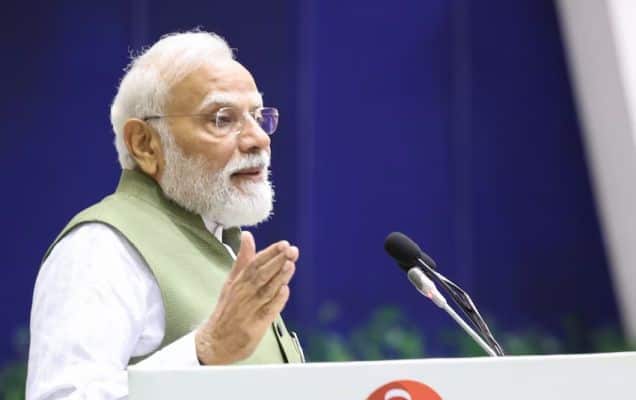
I am deeply honoured by the invitation to address this august House. I have had similar privilege in other Parliaments. This is, however, special. This honour has come to a Prime Minister of India for the first time. It is a great honour for the 1.25 billion people of India. I carry their greetings and warm wishes of friendship with me to this House and for all the people of Uganda. Your presence, Madam Speaker, reminds me of my Lok Sabha, which also has a lady Speaker. I also see a large number of young Members of Parliament here. This is good news for democracy. Every time I come to Uganda, I am enchanted by this "Pearl of Africa”. It is a land of immense beauty, great wealth of resources and rich heritage. Its rivers and lakes have nurtured civilisations across this large region. I am conscious of the history that brings us to this point, when the Prime Minister of the largest democracy is speaking to elected Members of the Parliament of another sovereign nation. Our ancient maritime links, the dark ages of colonial rule, the shared struggle for freedom, the uncertain paths as independent countries in a divided world, the dawn of the new opportunities and the unity of aspirations of our young population. All of these connect us.
Mr. President,
Our people are among the many threads that connect Uganda and India together. Over a century ago, the heroic labour connected Uganda to the shores of the Indian Ocean through railway. Your gracious presence today speaks of the precious bonds of friendship and solidarity between our people. You have brought peace and stability to your nation and to the region. You have put it on the path of growth and progress amidst many challenges. You have empowered women and made your nation more inclusive. Your visionary leadership has enabled Ugandan people of Indian origin to return to their cherished home, regain their lives and help rebuild the nation that they deeply love. In opening the State House to the celebration of Deepawali, you have lit up the many strands of ties that connect India and Uganda. Among these, the most sacred is the site at Jinja, at the source of River Nile, where a portion of the ashes of Mahatma Gandhi were immersed. In his life and beyond, he is one with Africa and Africans. And, at the sacred site in Jinja, where a statue of Gandhiji now stands, we will build a Gandhi Heritage Centre. As we approach the 150th birth anniversary of Mahatma Gandhi, there can be no better homage than a Centre to remind us of Africa’s role in shaping his mission that even inspired Africa to freedom and justice; and the universal and timeless values of his life and message.
Excellencies,
The story of India’s own freedom struggle is closely linked to Africa. It is not just the 21 years that Gandhiji spent in Africa, or the First Non- Cooperation Movement he led. For India, the moral principles of independence movement, or the peaceful means to pursue it, were not just confined to the boundaries of India or to the future of Indians. It was a universal quest for liberty, dignity, equality and opportunity for every human being. Nowhere did it apply more than in Africa. Twenty years before our independence, the leaders of our National Movement had linked India’s freedom struggle to the fight against colonial rule around the world, especially Africa. Even as India stood on the threshold of independence, the fate of Africa was not far from our minds. Mahatma Gandhi firmly believed that India’s freedom will remain incomplete so long as Africa remains in bondage. Free India did not forget his words. India pursued Afro-Asian solidarity in Bandung. We stood firm in opposition to apartheid in South Africa. We took leading and bold positions in former Rhodesia – which is now known as Zimbabwe, in Guinea Bassau, Angola and Namibia. Gandhiji’s peaceful resistance inspired leaders like Nelson Mandela, Desmond Tutu, Albert Luthuli, Julius Nyrere and Kwame Nkrumah. History is witness to the success of the ancient wisdom of India and Africa and the enduring strength of peaceful resistance. Some of the most profound changes in Africa came through Gandhian methods. India's principled support to Africa's liberation movements often came at a cost to our nation’s trade. But, nothing mattered in comparison to Africa's freedom.
Excellencies,
Our economic and international partnerships over the past seven decades have been prompted as much by economic impulse as by the moral principles and emotional bonds. We sought a fair and equitable access to markets and resources. We fought together to make development the foundation of global trade. And, we worked to diversify economic partnership between countries of the South. Our doctors and teachers went to Africa not just to seek professional opportunities, but in solidarity with a common cause of development as free nations. As President Museveni said at the 3rd India Africa Forum Summit in Delhi in 2015 and I quote - "We fought against colonial rule together. Let us fight for mutual prosperity together.” Excellencies,
Today, India and Africa stand on the threshold of a future of great promise: as confident, secure, youthful, innovative, and dynamic people. Uganda is an example of Africa on the move. It is witnessing increasing gender parity, rising educational and health standards, and expanding infrastructure and connectivity. It is a region with growing trade and investment. We are seeing a surge of innovation. We in India rejoice in every African success, because of our deep bonds of friendships.
Excellencies,
India is proud to be Africa’s partner. And, Uganda is central to our commitment to the continent. Yesterday, I announced two Lines of Credit for Uganda. The first, of 141 million US dollars for electricity lines. And the second, of 64 million US dollars for agriculture and dairy production. As in the past, we will continue to support the aspirations of the people of Uganda – in agriculture and healthcare, education and training, infrastructure and energy, capacity building in government and training in defence. I compliment President Museveni and this House on the decision to join the International Solar Alliance.
Excellencies,
As with Uganda, we have deepened our partnership and engagement across the vast expanse of Africa. In the past four years, our President, Vice President and I have collectively visited no less than 25 countries in Africa. Our Ministers have covered virtually all African nations. We were honoured to host all 54 countries - over 40 at Heads of State and Government level - at the third Africa-India Forum Summit in October 2015. We were also privileged to host many African leaders for the inaugural summit of the International Solar Alliance. Other than all these, 32 Heads of State or Government from Africa have visited India in the last four years. My home state Gujarat was proud to be the host of the first ever meeting of the African Development Bank in India last year. And we are also opening 18 new embassies in Africa.
Excellencies,
Our development partnership currently includes implementation of 180 Lines of Credit worth about USD 11 billion in over 40 African countries. At the last India Africa Forum Summit, we had committed a concessional Line of Credit of 10 billion U.S. dollars and 600 million dollars in grant assistance. Every year, over 8000 African youth are trained in a diverse set of programmes. As always, our efforts will be driven by your priorities. Indian companies have invested over US$ 54 billion in Africa. Our trade with Africa is now over US$ 62 billion. This is over 21 per cent more than in the previous year. Africa's exports to India are growing. And, our economic ties are now increasingly driven by new partnerships of innovation in the digital economy. The Pan Africa E-Network links 48 African countries to India, and to one another. It can become the new backbone for digital innovation in Africa. With several coastal nations, our partnership now increasingly seeks to harness the benefits of Blue Economy in a sustainable manner. And, India’s medicines turned the tide on diseases that were once a threat to Africa’s future. They also continue to make healthcare affordable and accessible to many.
Excellencies,
As we work together for prosperity, we have stood together for peace. Indian soldiers have served in blue helmets so that Africa’s children can look to a future of peace. We are proud of the work of Indian peacekeepers in over a dozen UN peacekeeping missions in Africa, since our first mission in Congo in 1960. In all the UN peacekeeping Missions in the world, 163 Indians have made the supreme sacrifice. This is among the highest number for any country. Almost 70 per cent of these embraced martyrdom just in Africa. Today, over 6,000 Indians serve in five peacekeeping operations in Africa. Indian women established a landmark with the first all-female Police Unit of the United Nations in Liberia. Our defence and security cooperation is growing with nations in Africa, as we work together to counter terrorism and piracy, and keep our seas secure.
Excellencies,
India's engagement with Africa will continue to be guided by 10 principles.
One, Africa will be at the top of our priorities. We will continue to intensify and deepen our engagement with Africa. As we have shown, it will be sustained and regular.
Two, our development partnership will be guided by your priorities. It will be on terms that will be comfortable for you, that will liberate your potential and not constrain your future. We will rely on African talent and skills. We will build as much local capacity and create as many local opportunities as possible.
Three, we will keep our markets open and make it easier and more attractive to trade with India. We will support our industry to invest in Africa.
Four, we will harness India’s experience with digital revolution to support Africa’s development; improve delivery of public services; extend education and health; spread digital literacy; expand financial inclusion; and mainstream the marginalised.
This will not just be our partnership to advance the UN Sustainable Development Goals, but also to equip the youth of Africa for their place in the digital age.
Five, Africa has 60 per cent of the world’s arable land, but produces just 10 per cent of the global output. We will work with you to improve Africa’s agriculture.
Six, our partnership will address the challenges of climate change. We will work with Africa to ensure a just international climate order; to preserve our biodiversity; and, adopt clean and efficient energy sources.
Seven, we will strengthen our cooperation and mutual capabilities in combating terrorism and extremism; keeping our cyberspace safe and secure; and, supporting the UN in advancing and keeping peace;.
Eight, we will work with African nations to keep the oceans open and free for the benefit of all nations. The world needs cooperation and not competition in the eastern shores of Africa and the eastern Indian Ocean. That is why India’s vision of Indian Ocean Security is cooperative and inclusive, rooted in security and growth for all in the region.
Nine, and, this is especially important to me: as global engagement in Africa increases, we must all work together to ensure that Africa does not once again turn into a theatre of rival ambitions, but becomes a nursery for the aspirations of Africa’s youth.
Ten, Just as India and Africa fought colonial rule together, we will work together for a just, representative and democratic global order that has a voice and a role for one-third of humanity that lives in Africa and India.
India's own quest for reforms in the global institutions is incomplete without an equal place for Africa. That will be a key purpose of our foreign policy.
Excellencies,
If this is to be a century of nations, rising together in freedom and equality; if this is to be an age when the light of opportunity dawns on all humans; if this is a time when our planet has a more hopeful future; then all of this magnificent continent of Africa must walk in step with the rest of the world. India will work with you and for you. Our partnership will build instruments of empowerment in Africa. We will stand in solidarity with your endeavours, in transparency, with respect and on the principle of equality. We will speak for you, and with you. Two-thirds of India and two-thirds of Africa is under the age of 35 years. And, if the future belongs to the youth, then this century is ours to shape and build. And, let us be guided by the Ugandan saying that is - "Anayejitahidi hufaidi” which means "one who makes the extra effort will benefit”. India has made that extra effort for Africa. And will always do so. For Africa's benefit.
Thank you. Thank you very much.
Asante Sana
Our ancient maritime links, the dark age of colonialism, the shared struggle for freedom, the uncertain paths as independent countries in a divided world, the dawn of the new opportunities and the unity of aspirations of our young population, all of this connect us: PM
— PMO India (@PMOIndia) July 25, 2018
Mr President, your visionary leadership has enabled Ugandans of Indian origin to return to their home, regain their lives and help rebuild the nation that they love.
— PMO India (@PMOIndia) July 25, 2018
In opening the State House to celebration of Deepawali, you have lit up the many strands of ties that bind us: PM
And, at the sacred site in Jinja, where a statue of Gandhiji now stands, we will build a Gandhi Heritage Centre.
— PMO India (@PMOIndia) July 25, 2018
As we approach the 150th birth anniversary of Mahatma Gandhi, there can be no better homage than a Centre to remind us of Africa’s role in shaping his mission: PM
The story of India’s own freedom struggle is intimately linked to Africa. It is not just the 21 years that Gandhiji spent in Africa, or the First Non- Cooperation Movement he led: PM
— PMO India (@PMOIndia) July 25, 2018
For India, the moral principles of independence movement, were not just confined to the boundaries of India.
— PMO India (@PMOIndia) July 25, 2018
It was a universal quest for liberty, dignity, equality and opportunity for every human being. Nowhere did it apply more than in Africa: PM
India pursued Afro-Asian solidarity in Bandung. We stood firm in opposition to apartheid in South Africa. We took leading and bold positions in former Rhodesia – now Zimbabwe, in Guinea Bassau, Angola and Namibia: PM
— PMO India (@PMOIndia) July 25, 2018
India's principled support to Africa's liberation movements often came at cost to our nation’s trade.
— PMO India (@PMOIndia) July 25, 2018
This mattered nothing in comparison to Africa's freedom: PM
Our international partnerships over the past 7 decades have been prompted as much by economic impulse as by moral principles & emotional bonds
— PMO India (@PMOIndia) July 25, 2018
We sought a fair & equitable access to markets and resources. We fought together to make development the foundation of global trade: PM
Today, India and Africa stand on the threshold of a future of great promise:
— PMO India (@PMOIndia) July 25, 2018
As confident, secure, youthful, innovative, and dynamic people: PM
India is proud to be Africa’s partner.
— PMO India (@PMOIndia) July 25, 2018
Uganda is central to our commitment to the continent.
I announced yesterday 2 Lines of Credit for Uganda.
The first, of US $ 141 million for electricity lines. And the second, of US $ 64 million for agriculture and dairy production: PM
We were honoured to host all 54 countries at the third Africa-India Forum Summit in October 2015.
— PMO India (@PMOIndia) July 25, 2018
We were also privileged to host many African leaders for the inaugural summit of the International Solar Alliance : PM
Our partnership currently includes implementation of 180 Lines of Credit worth about US $ 11 billion in over 40 African countries
— PMO India (@PMOIndia) July 25, 2018
At the last Africa India Forum Summit, we had committed a concessional Line of Credit of US $ 10 billion and US $ 600 million in grant assistance: PM
As we work together for prosperity, we have stood together for peace.
— PMO India (@PMOIndia) July 25, 2018
Indian soldiers have served in blue helmets so that Africa’s children can look to a future of peace.
We are proud of the work of Indian peacekeepers in over a dozen UN peacekeeping missions in Africa: PM
In all the UN peacekeeping Missions in the world, 163 Indians have made the supreme sacrifice. This is the highest number for any country.
— PMO India (@PMOIndia) July 25, 2018
Almost 70% of these embraced martyrdom just in Africa: PM
India's engagement with Africa will continue to be guided by 10 principles.
— PMO India (@PMOIndia) July 25, 2018
One, Africa will be at the top of our priorities. We will continue to intensify and deepen our engagement with Africa. As we have shown, it will be sustained and regular: PM
Two, our development partnership will be guided by your priorities.
— PMO India (@PMOIndia) July 25, 2018
It will be on terms that will be comfortable for you, that will liberate your potential and not constrain your future.
We will build as much local capacity & create as much local opportunities as possible: PM
Three, we will keep our markets open and make it easier and more attractive to trade with India.
— PMO India (@PMOIndia) July 25, 2018
We will support our industry to invest in Africa: PM
Four, we will harness India’s experience with digital revolution to support Africa’s development; improve delivery of public services; extend education and health; spread digital literacy; expand financial inclusion; and mainstream the marginalised: PM
— PMO India (@PMOIndia) July 25, 2018
Five, Africa has 60% of the world’s arable land, but produces just 10% of the global output. We will work with you to improve Africa’s agriculture.
— PMO India (@PMOIndia) July 25, 2018
Six, our partnership will address the challenges of climate change: PM
Seven, we will strengthen our cooperation and mutual capabilities in combating terrorism and extremism; keeping our cyberspace safe and secure; and, supporting the UN in advancing and keeping peace: PM
— PMO India (@PMOIndia) July 25, 2018
Eight, we will work with African nations to keep the oceans open and free for the benefit of all nations.
— PMO India (@PMOIndia) July 25, 2018
The world needs cooperation and not competition in the eastern shores of Africa and the eastern Indian Ocean: PM
Nine, and, this is especially important to me:
— PMO India (@PMOIndia) July 25, 2018
As global engagement in Africa increases,
We must all work together to ensure that Africa does not once again turn into a theatre of rival ambitions,
But becomes a nursery for the aspirations of Africa’s youth: PM
Ten, just as India and Africa fought colonialism together, we will work together for a just, representative and democratic global order that has a voice and a role for one-third of humanity that lives in Africa and India: PM
— PMO India (@PMOIndia) July 25, 2018
if this is a time when our planet has a more hopeful future
— PMO India (@PMOIndia) July 25, 2018
then all of this magnificent continent of Africa must walk in step with the rest of the world: PM
India will work with you and for you.
— PMO India (@PMOIndia) July 25, 2018
Our partnership will build instruments of empowerment in Africa.
We will stand in solidarity with your endeavours, in transparency, with respect and on the principle of equality.
We will speak for you, and with you: PM