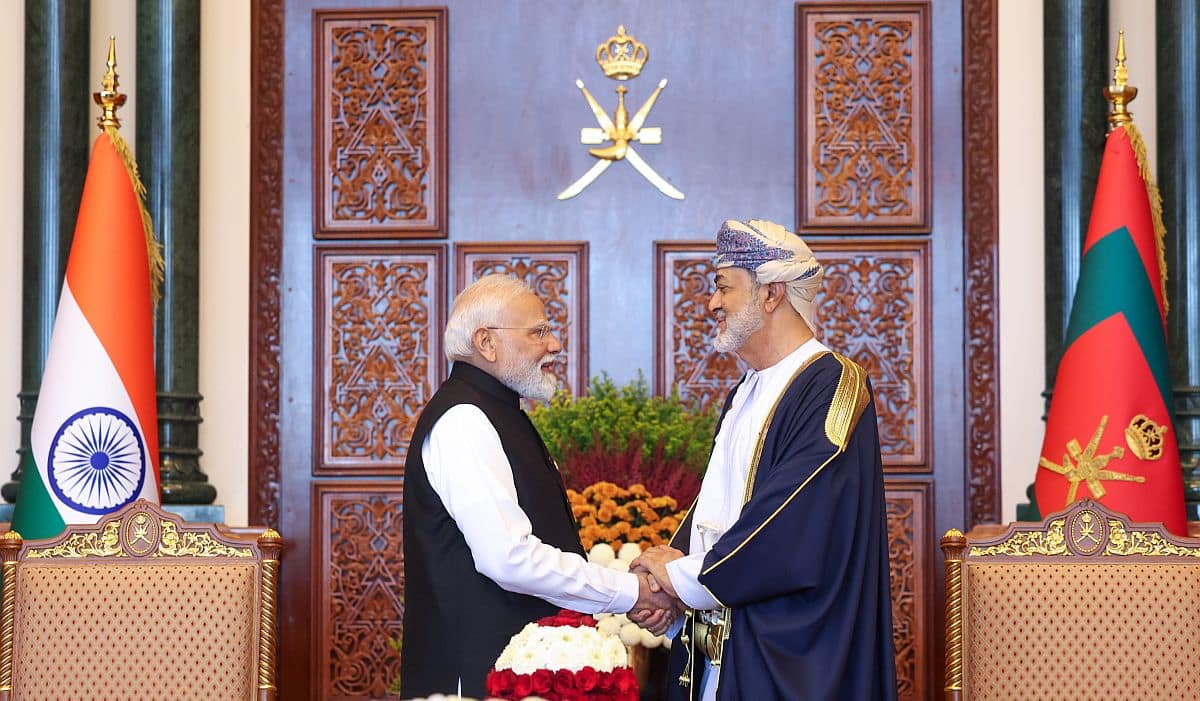
The President of the United States of America, the Honorable Donald J. Trump, paid a State Visit to India on 24-25 February 2020, at the invitation of Prime Minister Shri Narendra Modi.
Comprehensive Global Strategic Partnership
As the leaders of sovereign and vibrant democracies recognizing the importance of freedom, equal treatment of all citizens, human rights and a commitment to the rule of law, Prime Minister Modi and President Trump vowed to strengthen a India-U.S. Comprehensive Global Strategic Partnership, anchored in mutual trust, shared interests, goodwill and robust engagement of their citizens.
Prime Minister Modi and President Trump pledged to deepen defence and security cooperation, especially through greater maritime and space domain awareness and information sharing; joint cooperation; exchange of military liaison personnel; advanced training and expanded exercises between all services and special forces; closer collaboration on co-development and co-production of advanced defence components, equipment and platforms; and partnership between their defence industries.
Noting that a strong and capable Indian military supports peace, stability, and a rules-based order in the Indo-Pacific, and reaffirming his pledge to support the transfer to India of advanced U.S. military technology, President Trump welcomed India’s recent decision to procure MH-60R naval and AH-64E Apache helicopters. These capabilities will advance shared security interests, job growth and industrial cooperation between both countries. As India works to acquire new defence capabilities, President Trump reaffirmed India’s status as a Major Defense Partner affording it the highest consideration for procurement and technology transfer purposes. The leaders looked forward to early conclusion of defence cooperation enabling agreements including Basic Exchange and Cooperation Agreement.
Prime Minister Modi and President Trump resolved to enhance security of their homelands through cooperation and to jointly fight international crimes like human trafficking, terrorism and violent extremism, drug-trafficking and crimes in cyberspace. They welcomed the decision by the U.S. Department of Homeland Security and India’s Ministry of Home Affairs to reinvigorate the Homeland Security Dialogue. As a demonstration of their shared commitment to combatting the threat that illicit drugs pose to their citizens, they announced their intent to establish a new Counter-Narcotics Working Group between their respective law enforcement agencies.
Prime Minister Modi and President Trump recognized the increasing importance of the trade and investment dimension of the India-United States relationship, and the need for long-term trade stability that will benefit both the American and Indian economies. They agreed to promptly conclude the ongoing negotiations, which they hope can become phase one of a comprehensive bilateral trade agreement that reflects the true ambition and full potential of the bilateral commercial relations, advancing prosperity, investment, and job creation in both countries.
Prime Minister Modi and President Trump welcomed growing links between India and the United States in trade and investment in hydrocarbons. Through their Strategic Energy Partnership, India and the United States are seeking to enhance energy security, expand energy and innovation linkages across respective energy sectors, bolster strategic alignment, and facilitate increased engagement between industry and other stakeholders. Prime Minister Modi and President Trump noted the potential for the U.S. to meet India’s goal to diversify its import base for coking/metallurgical coal and natural gas, welcoming recent commercial arrangements intended to accelerate access to LNG in the Indian market. Prime Minister Modi and President Trump encouraged the Nuclear Power Corporation of India Limited and Westinghouse Electric Company to finalize the techno-commercial offer for the construction of six nuclear reactors in India at the earliest date.
Prime Minister Modi and President Trump expressed satisfaction with their longstanding and practical collaboration in science, technology and innovation. They welcomed an endeavour by Indian Space Research Organization (ISRO) and National Aeronautics and Space Administration (NASA) for development and launch in 2022 of a joint mission with the world’s first dual-frequency Synthetic Aperture Radar satellite, and applauded discussions that advance cooperation in Earth observation, Mars and planetary exploration, heliophysics, human spaceflight, and commercial space cooperation.
Prime Minister Modi and President Trump expressed their desire to increase higher education collaboration and educational exchange opportunities, including through the "Young Innovators” internships, and welcomed the recent growth in the number of Indian students in the United States.
In support of global efforts to prevent, detect, and respond to disease outbreaks such as novel COVID-19, Prime Minister Modi and President Trump committed to continuing their successful efforts in the areas of prevention, early detection, and rapid outbreak response. They hailed a bilateral Memorandum of Understanding (MoU) that seeks to promote access to high quality, safe, effective, and affordable medications for Indian and U.S. consumers. They welcomed the conclusion of an MoU which will help both countries address mental health challenges through innovative approaches.
Strategic Convergence in the Indo-Pacific
A close partnership between India and the United States is central to a free, open, inclusive, peaceful and prosperous Indo-Pacific region. This cooperation is underpinned by recognition of ASEAN centrality; adherence to international law and good governance; support for safety and freedom of navigation, overflight and other lawful uses of the seas; and unimpeded lawful commerce; and advocacy for peaceful resolution of maritime disputes in accordance with international law.
The United States appreciates India’s role as a net provider of security, as well as developmental and humanitarian assistance in the Indian Ocean Region. India and the United States remain committed to sustainable, transparent, quality infrastructure development in the region. Prime Minister Modi and President Trump welcomed the U.S. International Development Finance Corporation (DFC) announcement of a $600 million financing facility for renewable energy projects in India, and the DFC’s decision to establish a permanent presence in India this year.
Taking note of their countries’ shared commitment to advancing effective development solutions in the Indo-Pacific and globally, Prime Minister Modi and President Trump look forward to a new partnership between USAID and India’s Development Partnership Administration for cooperation in third countries.
India and the United States took note of efforts towards a meaningful Code of Conduct in the South China Sea and solemnly urged that it not prejudice the legitimate rights and interests of all nations according to international law.
Prime Minister Modi and President Trump decided to strengthen consultation through the India-U.S.-Japan trilateral summits; the 2+2 Ministerial meeting mechanism of the Foreign and Defence Ministers of India and the United States; and the India-U.S.-Australia-Japan Quadrilateral consultations, among others. Prime Minister Modi and President Trump looked forward to enhanced maritime domain awareness sharing among the United States, India, and other partners.
Partnership for Global Leadership
Prime Minister Modi and President Trump committed to working together to strengthen and reform the United Nations and other international organizations and ensure their integrity. President Trump reaffirmed the support of the United States for India’s permanent membership on a reformed U.N. Security Council. He also reaffirmed U.S. support for India’s entry to the Nuclear Suppliers Group without any delay.
India and the United States recognize that, to contain the build-up of sovereign debt in developing and low-income countries, it is important to ensure responsible, transparent, and sustainable financing practices for borrowers and creditors. Prime Minister Modi and President Trump expressed interest in the concept of the Blue Dot Network, a multi-stakeholder initiative that will bring governments, the private sector, and civil society together to promote high-quality trusted standards for global infrastructure development.
Prime Minister Modi and President Trump noted the importance of advancing education, economic empowerment and entrepreneurship of women and girls through finance, training, and mentorship initiatives, as well as measures to promote their full and free participation in the economy, in line with the United States’ Women’s Global Development and Prosperity (W-GDP) Initiative and the Government of India’s ‘Beti Bachao Beti Padhao’ programme.
India and the United States share interest in a united, sovereign, democratic, inclusive, stable and prosperous Afghanistan. They support an Afghan-led and Afghan-owned peace and reconciliation process that results in a sustainable peace; cessation of violence; elimination of terrorist safe havens; and preservation of the gains of the last 18 years. President Trump welcomed India’s role in continuing to provide development and security assistance to help stabilize and provide connectivity in Afghanistan.
Prime Minister Modi and President Trump denounced any use of terrorist proxies and strongly condemned cross-border terrorism in all its forms. They called on Pakistan to ensure that no territory under its control is used to launch terrorist attacks, and to expeditiously bring to justice the perpetrators of such attacks, including 26/11 Mumbai and Pathankot. They called for concerted action against all terrorist groups including Al-Qa’ida, ISIS, Jaish-e-Mohammad, Lashkar-e-Tayyiba, Hizb-ul Mujahideen, the Haqqani Network, TTP, D-Company, and all their affiliates.
India and the United States are committed to an open, reliable, and secure Internet that facilitates trade and communication. India and the United States recognized the need for an innovative digital ecosystem that is secure and reliable, and facilitates the flow of information and data. The leaders intend to foster cooperation among their industry and academia for open, secure, and resilient supply of strategic materials and critical infrastucture, and to independently evaluate the risk associated with deployment of emerging technologies.