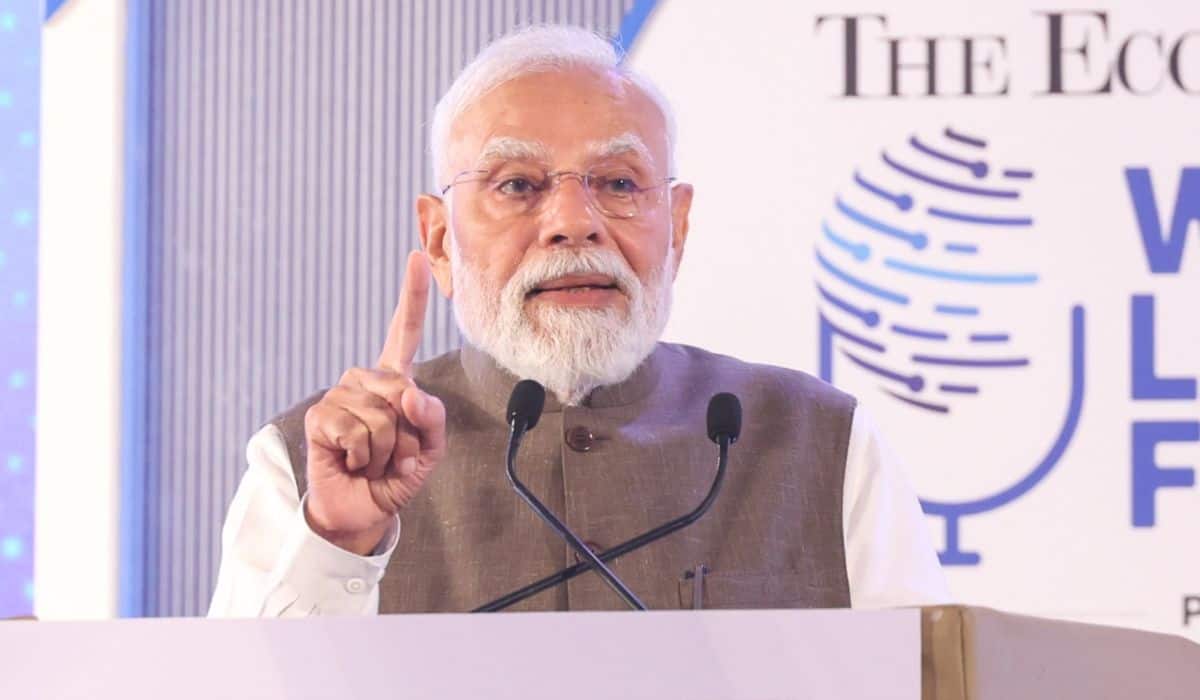
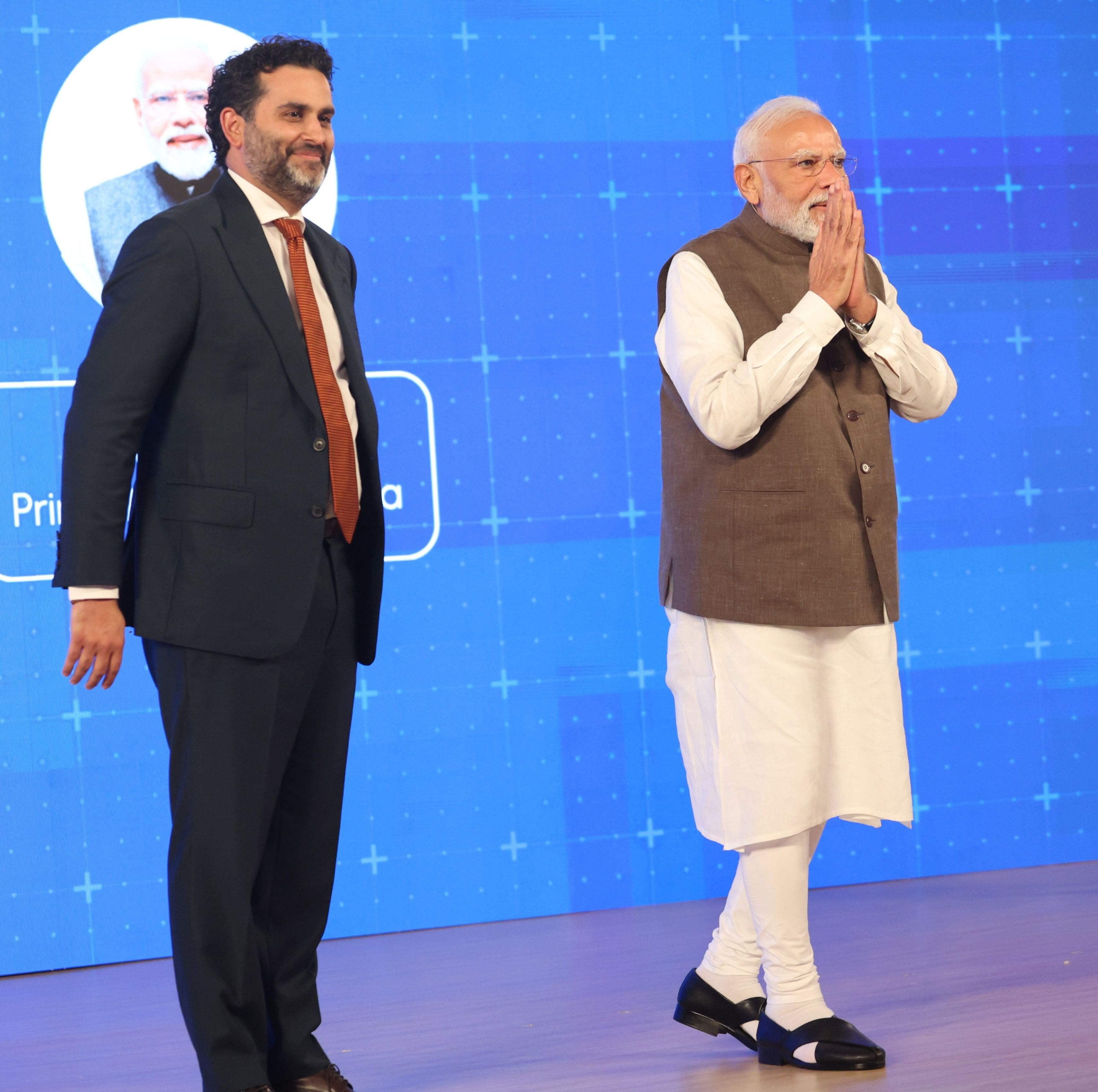
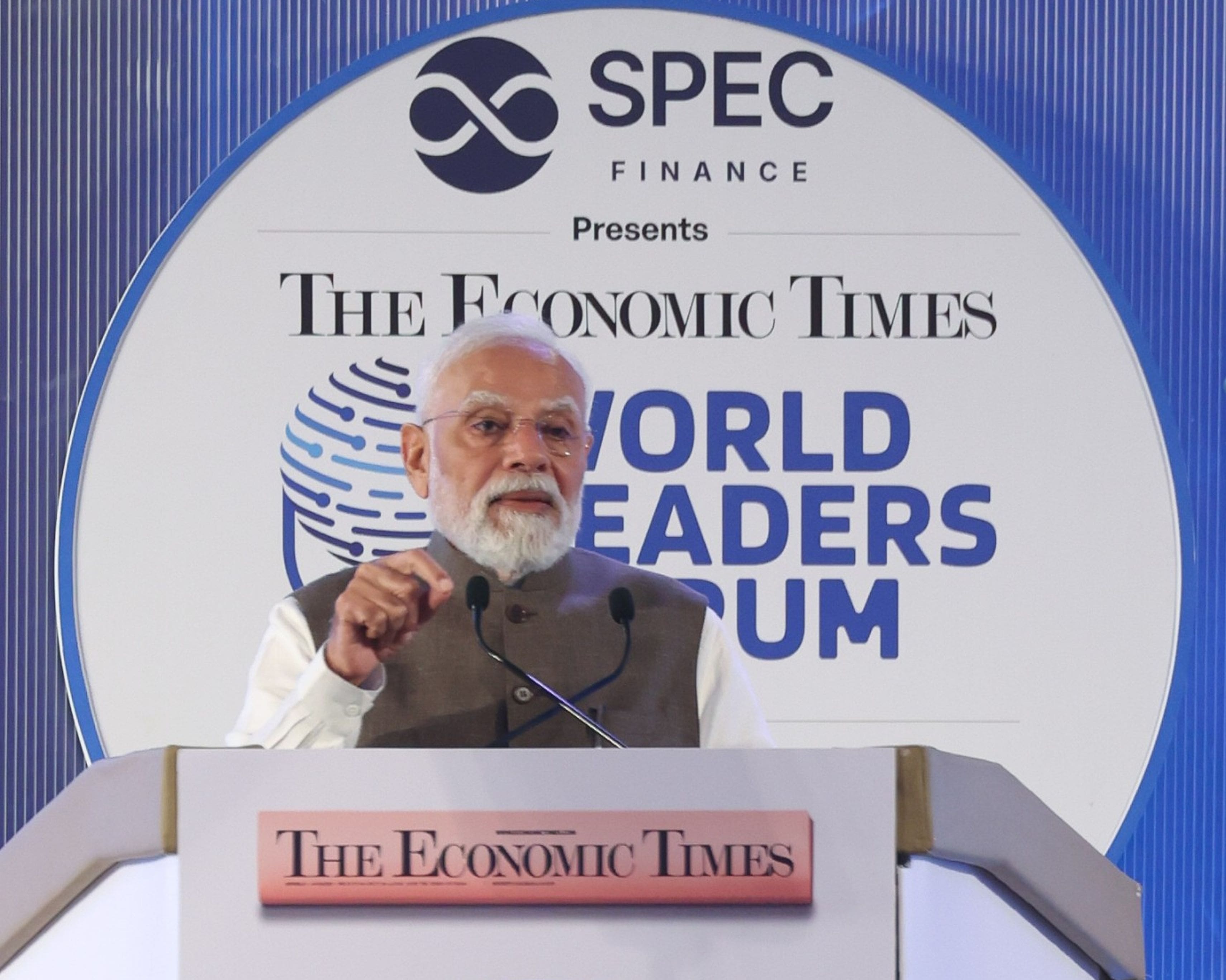
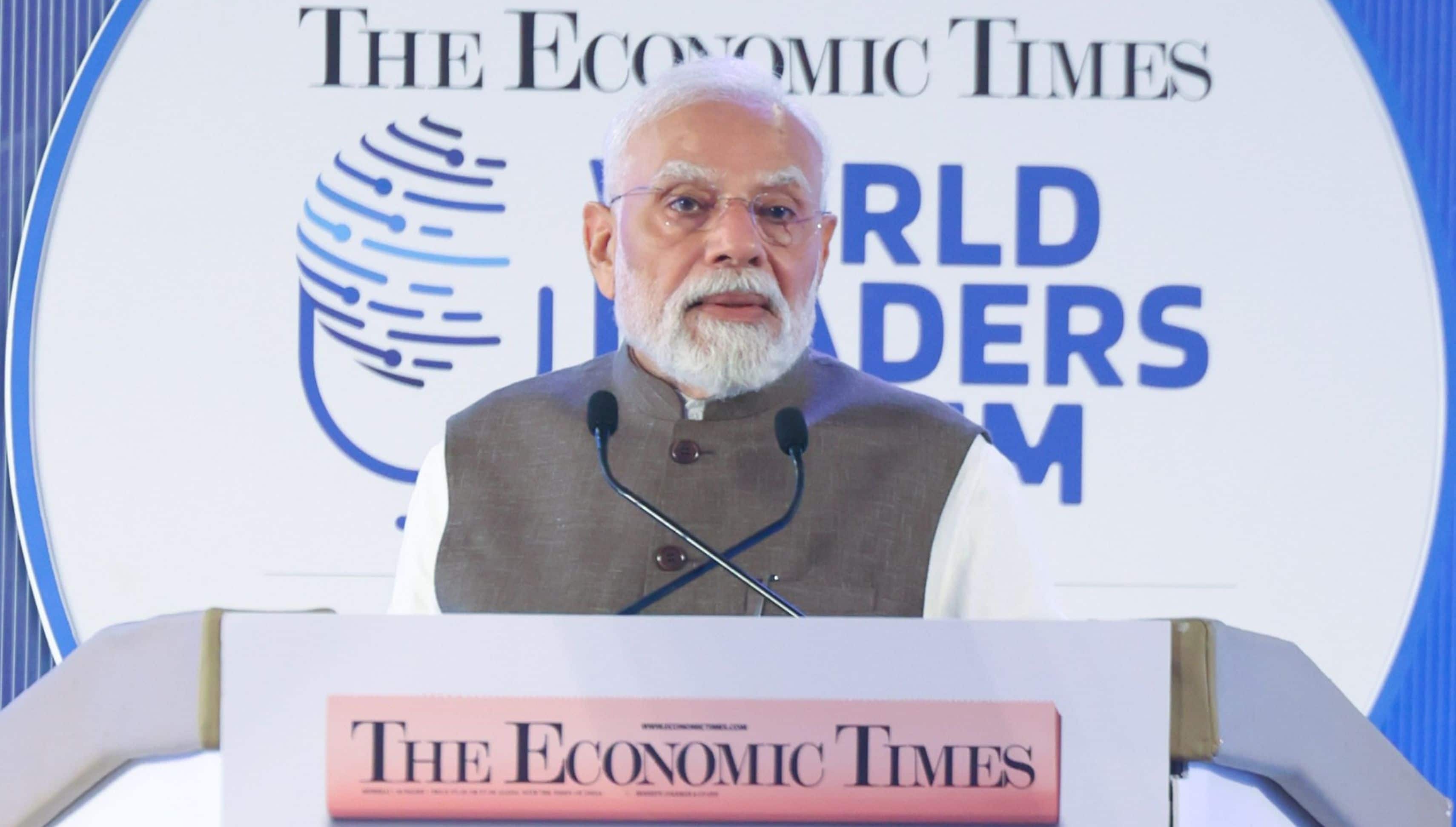
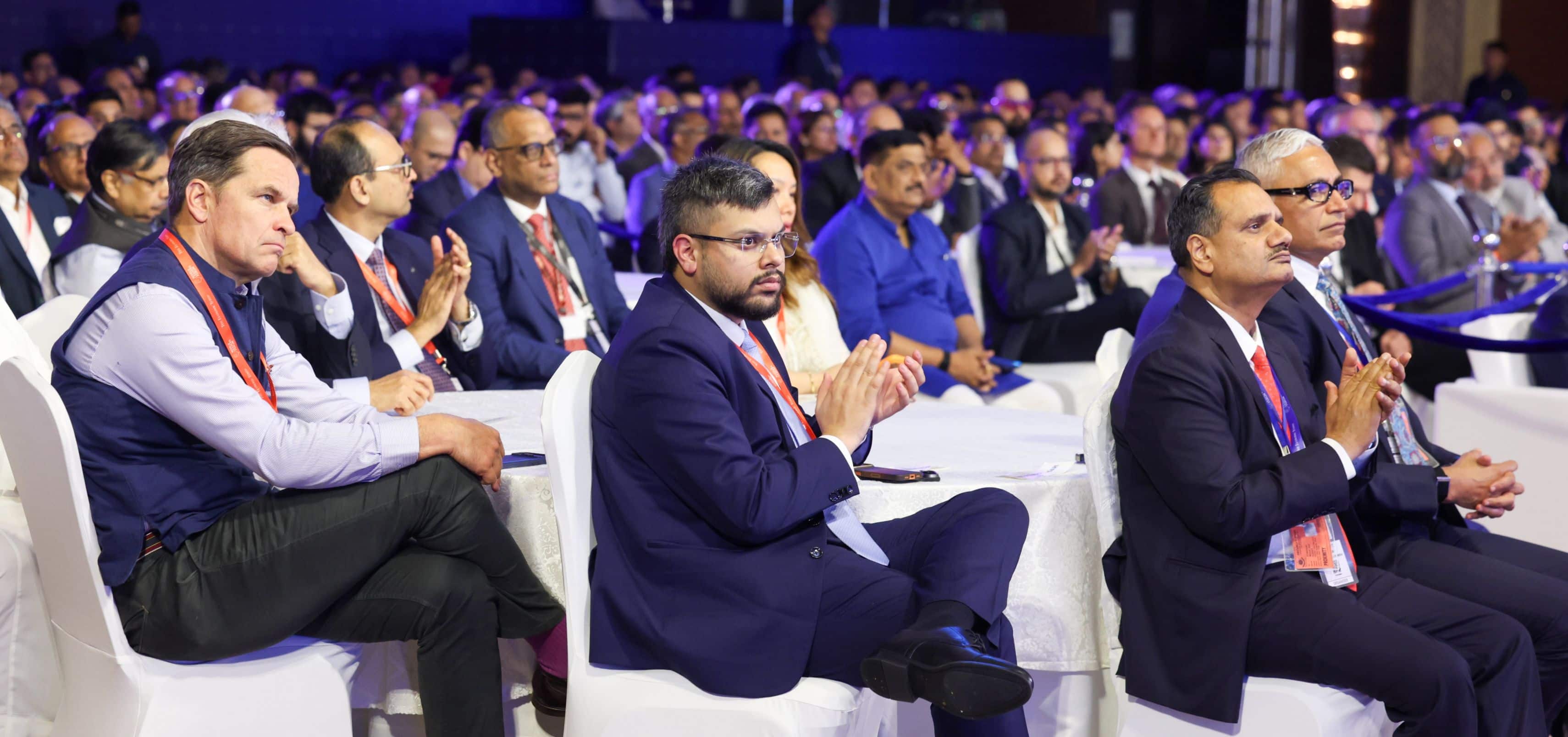
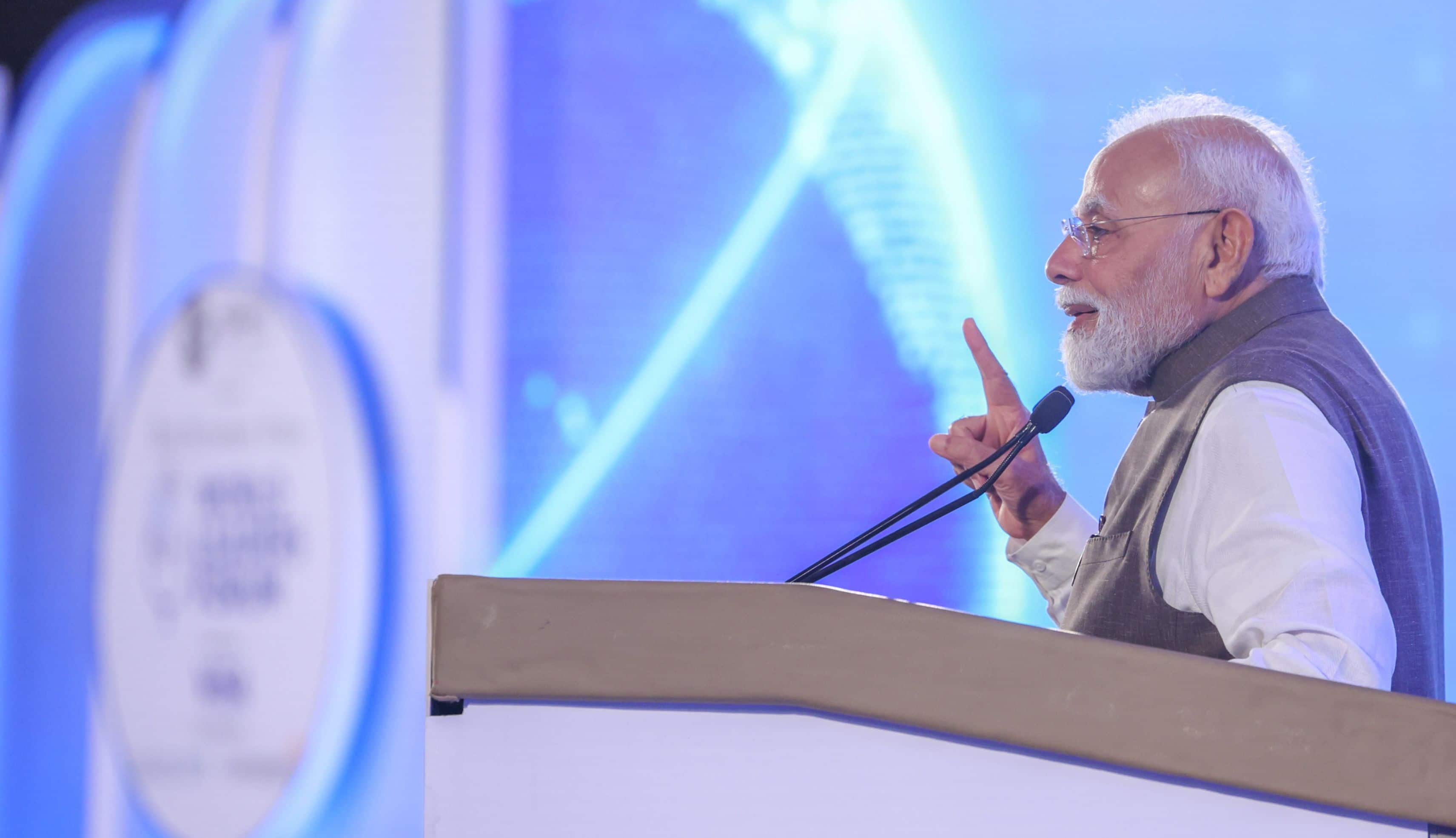
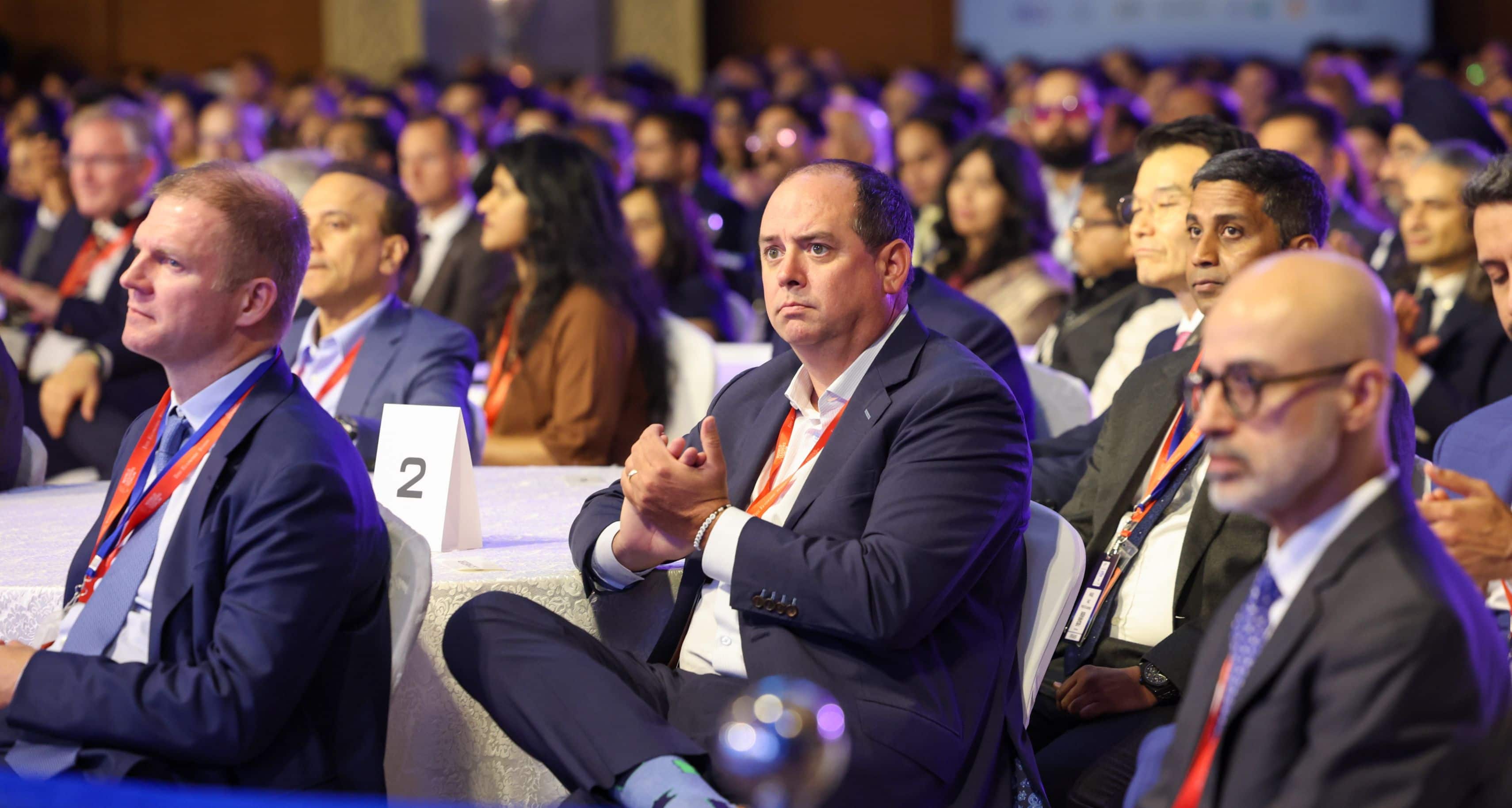
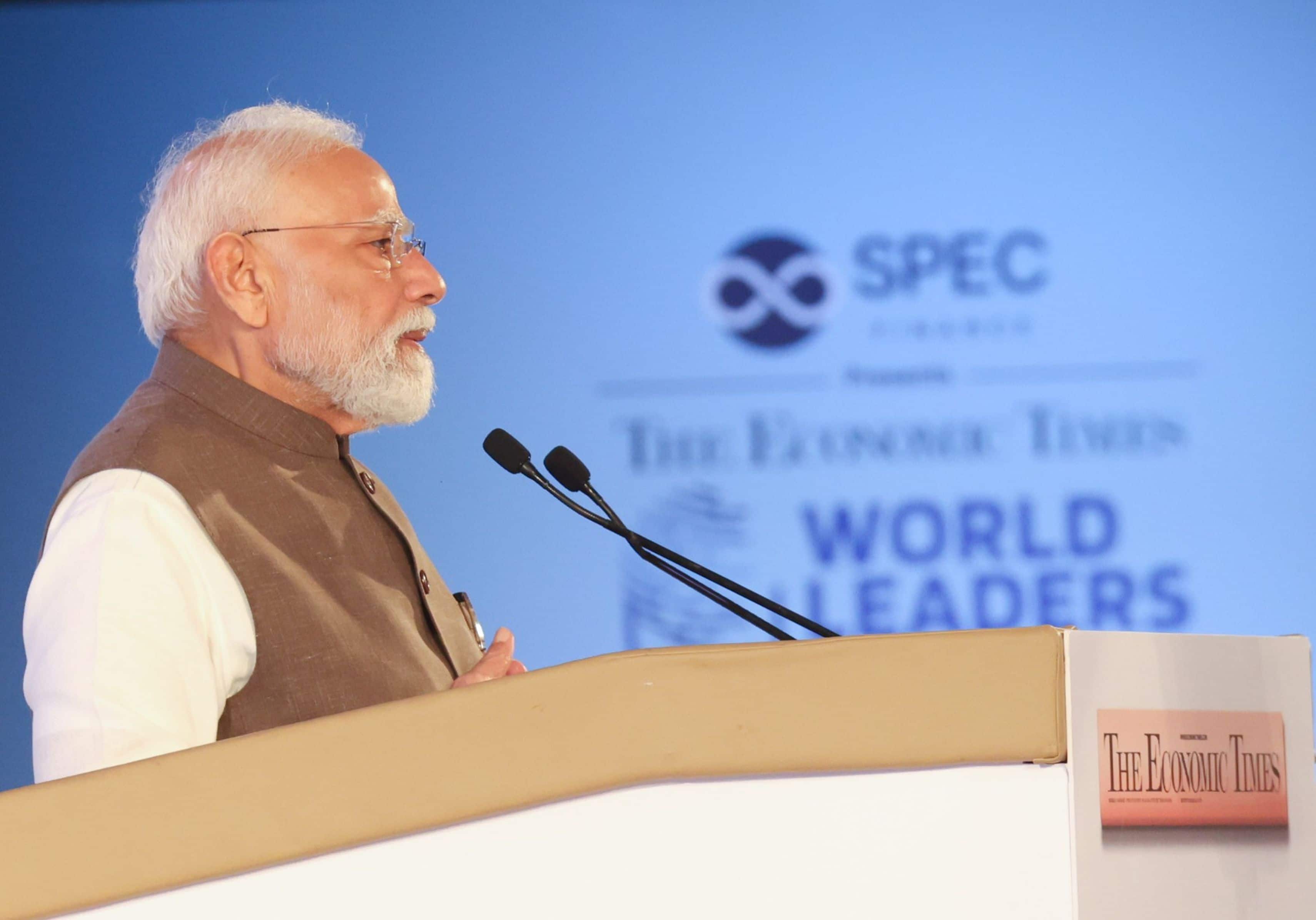
Our vision is to empower rural India by transforming villages into vibrant centres of growth and opportunity: PM
We have launched a campaign to guarantee basic amenities in every village: PM
Our government's intentions, policies and decisions are empowering rural India with new energy: PM
Today, India is engaged in achieving prosperity through cooperatives: PM

Finance Minister Nirmala Sitharaman ji, Minister of State for Finance Pankaj Chaudhary ji, esteemed members of NABARD's senior management present here, members of Self-Help Groups, Cooperative Banks, Farmer Producer Organizations (FPOs), all other distinguished guests, ladies and gentlemen,

Wishing you all a very Happy New Year 2025. The grand celebration of the Gramin Bharat Mahotsav at the beginning of 2025 reflects the progress of Bharat’s developmental journey and establishes a distinct identity. I extend my heartfelt congratulations to NABARD and all other collaborators for organizing this remarkable event.

Friends,

Those of us who are connected to villages, who have grown up in villages, understand the true strength of Bharat’s villages. For someone who resides in a village, the village also resides within them. Those who have lived in a village know how to truly embrace village life. I consider myself fortunate that my childhood was spent in a small town in a modest environment! And later, even when I stepped out of my home, most of my time was spent in the villages and rural areas of the country. As a result, I have experienced the challenges of village life firsthand and have also recognized the immense potential of our villages. Since childhood, I have seen how hard people in villages work, but due to the lack of capital, they don't get adequate opportunities. I have witnessed the incredible diversity of talent and abilities that people in villages possess! Yet, this potential often gets consumed in the basic struggles of life. Sometimes, crops fail due to natural calamities; other times, they have to discard their harvest due to the lack of access to markets. Having seen these hardships so closely, I was inspired to serve the villages and the underprivileged. It instilled in me a resolve to find solutions to their problems.

The work being carried out in the rural areas of the country today is also shaped by the lessons and experiences learned from villages. Since 2014, I have been continuously dedicated, every moment, to serving rural Bharat. Providing a life of dignity to the people in villages is a priority for this government. Our vision is to empower the people of Bharat’s villages, ensuring they have ample opportunities to progress within the village itself, without having to migrate elsewhere. We aim to make village life easier. To achieve this, we have launched a campaign to guarantee basic amenities in every village. Through the Swachh Bharat Abhiyan, we built toilets in every household. Under the Pradhan Mantri Awas Yojana, we provided millions of families in rural areas with pucca houses. Today, through the Jal Jeevan Mission, clean drinking water is reaching every household in thousands of villages.

Friends,

Today, people are getting access to better healthcare services in over 1.5 lakh Ayushman Arogya Mandirs. With the help of digital technology, we have connected the best doctors and hospitals in the country to villages, leveraging the benefits of telemedicine. Millions of people in rural areas have already availed telemedicine services through the e-Sanjeevani platform. During the COVID-19 pandemic, the world doubted how Bharat’s villages would cope with such a crisis. But we ensured that vaccines reached even the last person in every village.

Friends,

To strengthen the rural economy, it is crucial to formulate economic policies that consider every segment of the village population. I am glad that over the past 10 years, our government has created special policies and made decisions for every section of rural society. Just a few days ago, the Cabinet approved the extension of the PM Fasal Bima Yojana for another year. The price of DAP (Di-Ammonium Phosphate) fertilizer is skyrocketing globally. If our farmers had to buy it at international prices, they would be burdened so heavily that they could never recover. But we decided that no matter the global circumstances or the burden on us, we would not let that burden fall on our farmers. Even if we had to increase subsidies on DAP, we did so to stabilize its price for farmers. The intent, policies, and decisions of our government are infusing new energy into rural Bharat. Our goal is to provide maximum economic assistance to rural people so that they can not only farm but also find new opportunities for employment and self-employment in villages. With this vision, around 3 lakh crore rupees has been provided as financial assistance to farmers under the PM-Kisan Samman Nidhi. In the past 10 years, the amount of agricultural loans has increased by 3.5 times. Now, even livestock farmers and fish farmers are being issued Kisan Credit Cards. More than 9,000 Farmer Producer Organizations (FPOs) across the country are also being provided financial assistance. Additionally, we have consistently increased the Minimum Support Price (MSP) for several crops over the last decade.

Friends,

We have also launched initiatives like the Svamitva Yojana, through which village residents are receiving property ownership papers. Over the past 10 years, several policies have been implemented to promote MSMEs (Micro, Small, and Medium Enterprises). These businesses have benefited from the Credit Guarantee Scheme, which has directly supported over one crore rural MSMEs. Today, village youth are receiving significant support through schemes like Mudra Yojana, Start-up India, and Stand Up India.

Friends,

Cooperatives have played a significant role in transforming the landscape of villages. Today, Bharat is on the path to achieving prosperity through cooperatives. With this goal in mind, a new Ministry of Cooperation was established in 2021. Nearly 70,000 Primary Agricultural Credit Societies (PACS) across the country are being computerized to ensure that farmers and villagers receive better prices for their products and to strengthen the rural economy.

Friends,

Apart from agriculture, many people in our villages are engaged in traditional arts and skills. For example, blacksmiths, carpenters, and potters—most of them have lived and worked in villages. These artisans have made a significant contribution to the rural and local economy. However, in the past, they were often neglected. To address this, we have launched the Vishwakarma Yojana to empower them. This scheme provides affordable assistance to help them acquire new skills, create innovative products, and enhance their capabilities. The Vishwakarma Yojana is giving lakhs of traditional artisans across the country opportunities to progress and thrive in their trades.

Friends,

When intentions are noble, the results are equally satisfying. The hard work of the past 10 years is beginning to bear fruit for the nation. Just a few days ago, a major survey was conducted in the country, revealing several significant insights. Compared to 2011, consumption in rural Bharat—or the purchasing power of villagers—has almost tripled. This means that rural people are now spending more on items of their choice. Earlier, the situation was such that villagers had to spend more than 50% of their income on food and basic necessities. For the first time since independence, the expenditure on food in rural areas has fallen below 50%, and spending on other essential items has increased. This indicates that people are now buying things for their comfort, desires, and needs, investing more in improving their quality of life.

Friends,

Another important finding from the survey is that the gap in consumption between urban and rural areas has reduced. In the past, there was a significant difference between the amount spent by an urban family and a rural person, but now, gradually, rural people are catching up with their urban counterparts. Through our continuous efforts, this gap between rural and urban areas is narrowing. Rural Bharat is filled with many success stories that inspire us.

Friends,

When I look at these successes today, I often wonder why these things couldn't have been done during previous governments—why did we have to wait for Modi? For decades after independence, millions of villages across the country were deprived of basic needs. Tell me, where do the highest number of Scheduled Castes (SC), Scheduled Tribes (ST), and Other Backward Classes (OBC) live? These communities predominantly live in rural areas. Most of the people from these SC, ST and OBC communities live in villages. The previous governments did not address the needs of these communities adequately. As a result, there was continuous migration from villages, poverty continued to rise, and the gap between rural and urban areas widened. Let me give you another example. You know, what was the perception about our border villages in the past? They were called the last villages of the country. We stopped calling them the last village and instead said, "When the first rays of the sun emerge, they fall on the first village and it is not the last village, and when the sun sets, the last ray also falls on the first village in that direction." So, for us, these villages are not the last—they are the first. We have given them the status of being the "first village." To develop these border villages, we launched the Vibrant Villages Scheme. Today, the development of these villages is increasing the income of their people. This means that those who were never asked about their needs, Modi has honoured them. We have also launched the PM JANMAN Yojana to develop tribal areas. The regions that were deprived of development for decades are now receiving equal rights. In the last 10 years, our government has corrected many of the previous governments' mistakes. Today, we are advancing with the mantra that the development of villages leads to the development of the nation. The result of these efforts is that nearly 25 crore people in the country have come out of poverty in the past 10 years, and the largest number of these are people from our villages.

Just yesterday, a significant study by the State Bank of India was released. The report from the State Bank of India states that in 2012, rural poverty in Bharat was around 26%. But by 2024, rural poverty has reduced drastically to less than 5% from 26%. For decades, some people kept chanting slogans like "eradicate poverty." If you ask those in your village who are 70-80 years old, they will tell you that they have been hearing these slogans of “eradicate poverty” since they were 15-20 years old. Now, these people are in their 80s. But today, the situation has changed. Poverty is genuinely starting to decline in our country.

Friends,

Women have always had a significant role in Bharat’s rural economy, and our government is expanding that role further. Today, we are witnessing women redefine rural life as Bank Sakhi and Bima Sakhi. I once met a Bank Sakhi, and while speaking with all the bank sakhis, one of them told me that she handles daily transactions worth 50-60-70 lakh rupees. When I asked how, she replied, “I leave in the morning with 50 lakh rupees." In my country, a young woman walking around with 50 lakh rupees in her bag is a new face of our country. Across villages, women are creating a revolution through Self-Help Groups. We have made 1.15 crore women ‘lakhpati didis’. And being a ‘lakhpati didi’ doesn't mean just earning 1 lakh rupees once—it means earning more than 1 lakh rupees annually. Our resolve is to make 3 crore women ‘lakhpati didis’. We are also running special schemes for women from Dalit, backward, and tribal communities to empower them.

Friends,

Today, the focus on rural infrastructure in the country is greater than ever before. Most villages in the country are now connected to highways, expressways, and railways. Under the Pradhan Mantri Gram Sadak Yojana, nearly 4 lakh kilometres of roads have been constructed in rural areas over the past 10 years. In terms of digital infrastructure, our villages are becoming modern hubs of the 21st century. The people in our villages have disproven those who thought rural residents would not be able to adopt digital technology. I see here, everyone is recording videos on mobile phones—these are all villagers. Today, over 94% of rural households in the country have access to telephones or mobile phones. Banking services and world-class technologies like UPI are now available in villages. Before 2014, our country had fewer than 1 lakh Common Service Centres (CSCs). Today, the number has increased to over 5 lakh. These centres provide access to dozens of government services online. This infrastructure is driving progress in villages, creating job opportunities, and making rural areas an integral part of the country's growth.

Friends,

Here, we have the senior management of NABARD. You have played a crucial role in the success of many initiatives, from Self-Help Groups to Kisan Credit Cards. Going forward, your role will continue to be vital in fulfilling the country's objectives. You are all familiar with the strength of FPOs (Farmer Producer Organizations). With the establishment of FPOs, our farmers are now getting better prices for their crops. We should think about creating more FPOs and move forward in that direction. Currently, milk production is providing the highest returns to farmers. We need to work towards creating 5-6 more cooperatives like Amul, which have a presence across the country. The nation is now advancing Natural Farming as a mission. We need to involve more farmers in this initiative to promote Natural Farming. We should also connect our Self-Help Groups with small and micro industries (MSMEs). The products made by them are in demand all over the country, but we need to focus on their branding and marketing. Additionally, we must pay attention to the quality, packaging, and branding of our GI products.

Friends,

We need to work on ways to diversify rural income. How can we make irrigation affordable in villages? We must focus on expanding micro-irrigation systems and making the mantra "One Drop More Crop" a reality. We also need to create more simple rural enterprises in rural areas. Additionally, we must ensure that the opportunities from Natural Farming benefit the rural economy as much as possible. I urge you to work towards these goals in a time-bound manner.

Friends,

The Amrit Sarovars built in your village must be taken care of by the entire community collectively. At the same time, there is a national campaign called "Ek Ped Maa Ke Naam" (One Tree for Mother). It is important to inspire every individual in the village to be a part of this initiative, ensuring that as many trees as possible are planted in our village. Another crucial aspect is that the identity of our village is tied to its unity, harmony, and love. Unfortunately, there are individuals who are trying to spread poison in society in the name of caste, attempting to weaken our social fabric. We must thwart these conspiracies and preserve and strengthen our ‘Sanjhi Virasat’ (shared heritage) and ‘Sanjhi Sanskriti’ (shared culture).

Brothers and sisters,

Our resolutions must reach every village, and this celebration of Gramin Bharat should spread across all villages. We need to work together continuously to ensure that our villages become stronger and more empowered. I am confident that the commitment to the development of villages will lead to the fulfilment of the vision of a ‘Viksit Bharat’ (Developed India). Today, I had the opportunity to visit the stall displaying GI-tagged products brought by villagers. Through this event, I urge the people of Delhi—who may not have the chance to visit villages regularly—to take at least one visit and see the potential of my village. There is so much diversity and potential in our villages, and I am sure those who have never visited a village will be amazed at what they see. This work has been done by you, and you all deserve congratulations. I extend my heartfelt wishes to each one of you and thank you all very much.

Explore More
अयोध्येत श्री राम जन्मभूमी मंदिर ध्वजारोहण उत्सवात पंतप्रधानांनी केलेले भाषण

लोकप्रिय भाषण

अयोध्येत श्री राम जन्मभूमी मंदिर ध्वजारोहण उत्सवात पंतप्रधानांनी केलेले भाषण
How NPS transformed in 2025: 80% withdrawals, 100% equity, and everything else that made it a future ready retirement planning tool

Media Coverage

How NPS transformed in 2025: 80% withdrawals, 100% equity, and everything else that made it a future ready retirement planning tool
NM on the go

Nm on the go

Always be the first to hear from the PM. Get the App Now!
...
PM Modi inaugurates New Terminal Building of Lokapriya Gopinath Bardoloi International Airport in Guwahati, Assam
December 20, 2025
Modern airports and advanced connectivity infrastructure serve as gateways to new possibilities and new opportunities for any state: PM
Today, Assam and the entire North East are emerging as the new gateway to India's development: PM
The North East will lead India's future growth: PM

Marking a transformative milestone in Assam’s connectivity, economic expansion and global engagement, Prime Minister Shri Narendra Modi inaugurated the New Terminal Building of Lokapriya Gopinath Bardoloi International Airport in Guwahati today. Addressing the gathering on the occasion, Shri Modi said that today marks the festival of development and progress of Assam and the North East. He highlighted that when the light of progress reaches people, every path in life begins to touch new heights. The Prime Minister further remarked that his deep attachment to the land of Assam, the love and affection of its people, and especially the warmth and belongingness of the mothers and sisters of Assam and the Northeast continuously inspire him and strengthen the collective resolve for the development of the region. He highlighted that today once again a new chapter is being added in Assam’s development. Referring to Bharat Ratna Bhupen Hazarika’s lines, Shri Modi emphasized that this means the banks of the mighty Brahmaputra river will shine, every wall of darkness will be broken, and this will certainly happen as it is the nation’s resolve and solemn pledge.

Highlighting that Bhupen Hazarika’s lines were not merely a song but a solemn resolve of every great soul who loved Assam, and today this resolve is being fulfilled, Shri Modi remarked that just as the mighty currents of the Brahmaputra never stop, similarly under their governments at the Union and State, the stream of development in Assam continues uninterrupted. He stated that the inauguration of the new terminal at the Lokapriya Gopinath Bardoloi Airport stands as proof of this commitment, and extended congratulations to the people of Assam and the nation for this new terminal building.

The Prime Minister further remarked that a short while ago he had the privilege of unveiling the statue of Gopinath Bardoloi, Assam’s first Chief Minister and a source of pride for the state. He emphasized that Shri Bardoloi never compromised on Assam’s identity, future, and interests, and his statue will continue to inspire future generations, instilling in them a deep sense of pride for Assam.

“Modern airport facilities and advanced connectivity infrastructure serve as gateways to new possibilities and opportunities for any state, and stand as pillars of growing confidence and trust among the people”, exclaimed the Prime Minister. He remarked that when people witness the construction of magnificent highways and airports in Assam, they themselves acknowledge that true justice for Assam has finally begun. He contrasted this with the past, stating that for the previous governments, the development of Assam and the Northeast was never on their agenda. He noted that leaders in those governments used to say, “Who even goes to Assam and the Northeast?” and questioned the need for modern airports, highways, and better railways in the region. The Prime Minister emphasized that this mindset led the opposition to neglect the entire region for decades.

Pointing out that the mistakes committed by the opposition over six to seven decades are being corrected one by one under his leadership, Shri Modi stated that whether opposition leaders visit the Northeast or not, he himself feels a sense of belonging among his own people whenever he comes to Assam and the region. He emphasized that for him, the development of Assam is not only a necessity but also a responsibility and an accountability. The Prime Minister highlighted that in the past eleven years, development projects worth lakhs of crores of rupees have been initiated for Assam and the Northeast. He noted that Assam is progressing further and creating new milestones, mentioning with satisfaction that Assam has become the number one state in the country to implement the Bharatiya Nyaya Sanhita. He added that Assam has also set a record by installing more than 50 lakh smart prepaid meters. He contrasted this with the previous dispensation era, when obtaining a government job without bribes or recommendations was impossible, and underlined that today thousands of youth are getting jobs without such practices. Shri Modi further highlighted that under their government, Assam’s culture is being promoted on every platform. He recalled the historic event of 13 April 2023, when more than 11,000 artists performed the Bihu dance together at the Guwahati stadium, an achievement that was recorded in the Guinness World Records. He remarked that by creating such new records, Assam is moving forward rapidly.

Underlining that with this new terminal building, the capacity of Guwahati and Assam will increase significantly, enabling more than 1.25 crore passengers to travel annually, Shri Modi highlighted that this will also allow a large number of tourists to visit Assam and make it easier for devotees to have darshan of Maa Kamakhya. He stated that stepping into this new airport terminal clearly reflects the true meaning of the mantra of development along with heritage. The Prime Minister emphasized that the airport has been designed keeping in mind Assam’s nature and culture, with greenery inside and arrangements resembling an indoor forest. He noted that the design is connected to nature all around so that every passenger feels peace and comfort. He further highlighted the special use of bamboo in the construction, underscoring that bamboo is an integral part of life in Assam, symbolizing both strength and beauty. Shri Modi also recalled that their government in a landmark move in 2017, amended the Indian Forest Act, 1927, to legally reclassify bamboo grown in non-forest areas as a "grass" instead of a "tree". This move, he said, has led to the creation of a wonderful structure in the form of a new Terminal today.

Underscoring the development of infrastructure carries a very significant message, the Prime Minister highlighted that it boosts industries, gives investors confidence in connectivity, and opens pathways for local products to reach global markets. He emphasized that the greatest assurance is given to the youth, for whom new opportunities are created. “Today, Assam is seen advancing on this very flight of limitless possibilities”, stated the Prime Minister.

Shri Modi remarked that today the world’s perspective towards India has changed, and India’s role has also transformed. He highlighted that India is now on the path to becoming the world’s third-largest economy. He questioned how this was achieved within just 11 years and emphasized that the development of modern infrastructure has played a major role. The Prime Minister stated that India is preparing for 2047, focusing on infrastructure to fulfill the resolve of a developed nation. He underlined that the most important aspect of this grand development campaign is the participation of every state and every region. He noted that the government is prioritizing the underprivileged, ensuring that every state progresses together and contributes to the mission of a developed India. He expressed happiness that Assam and the Northeast are leading this mission. Shri Modi highlighted that through the Act East Policy, the Northeast has been given priority, and today Assam is emerging as India’s Eastern Gateway. He remarked that Assam is playing the role of a bridge connecting India with ASEAN countries. He affirmed that this beginning will go much further, and Assam will become an engine of developed India in many sectors.

“Assam and the entire Northeast are becoming the new gateway of India’s development,” emphasised Shri Modi, highlighting that the vision of multi-modal connectivity has transformed both the condition and direction of this region. He stated that the pace of building new bridges in Assam, the speed of installing new mobile towers, and the momentum of every development project are turning dreams into reality. He emphasized that the bridges built over the Brahmaputra have given Assam new strength and confidence in connectivity. The Prime Minister pointed out that in the six to seven decades after independence, only three major bridges were built here, but in the last decade four new mega bridges have been completed, along with several historic projects taking shape. He noted that the longest bridges such as Bogibeel and Dhola-Sadiya have made Assam strategically stronger. He underlined that railway connectivity has also undergone a revolutionary change, with the Bogibeel Bridge reducing the distance between Upper Assam and the rest of the country. He remarked that the Vande Bharat Express running from Guwahati to New Jalpaiguri has reduced travel time. Shri Modi further highlighted that Assam is also benefiting from the development of waterways, with cargo traffic increasing by 140 percent, proving that the Brahmaputra is not just a river but a flow of economic power. He stated that the first ship repair facility is being developed at Pandu, and the enthusiasm around the Ganga Vilas Cruise from Varanasi to Dibrugarh has placed the Northeast firmly on the global cruise tourism map.

Criticizing the previous governments for keeping Assam and the Northeast away from development, Shri Modi said the nation had to pay a heavy price in terms of security, unity, and integrity. He highlighted that under opposition rule, violence thrived for decades, whereas in the last 10–11 years efforts are being made to end it. He stated that where once violence and bloodshed prevailed in the Northeast, today digital connectivity through 4G and 5G technology is reaching these areas. The Prime Minister emphasized that districts once considered violence-affected are now developing as aspirational districts, and in the coming times these very regions will become industrial corridors. He underlined that a new confidence has arisen regarding the Northeast, and stressed the need to strengthen it further.

The Prime Minister remarked that success in the development of Assam and the Northeast is also being achieved because the government is safeguarding the identity and culture of the region. He highlighted that the opposition by conspiring to erase this identity, and this conspiracy was not limited to just a few years. He stated that the roots of this wrongdoing go back to the pre-independence era, when the Muslim League and the British government were preparing the ground for India’s partition, and at that time there was also a plan to make Assam a part of undivided Bengal, that is, East Pakistan. Shri Modi noted that Congress was going to be part of this conspiracy, but Shri Bardoloi ji stood against his own party, opposed this plot to destroy Assam’s identity, and saved Assam from being separated from the country. He emphasized that their party rises above party lines to honor every patriot, and under the leadership of Shri Atal Bihari Vajpayee ji, when their government came to power, Bardoloi ji was conferred the Bharat Ratna.

The Prime Minister remarked that while Shri Bardoloi ji had saved Assam before independence, the first ruling dispensation in the post- independence era once again began anti-Assam and anti-national activities thereafter. He highlighted that they conspired to expand their vote bank through religious appeasement, giving free rein to infiltrators in Bengal and Assam. He stated that the region’s demography was altered, and these infiltrators encroached upon forests and lands. The Prime Minister emphasized that as a result, the security and identity of the entire state of Assam were put at risk.

Shri Modi remarked that the government under Shri Himanta Biswa Sarma is working diligently to free Assam’s resources from illegal and anti-national encroachments. He highlighted that efforts are being made at every level to ensure Assam’s resources benefit the people of Assam. He stated that the Union government has also taken strict measures to stop infiltration, with identification processes underway to remove illegal infiltrators.

The Prime Minister emphasized that the Opposition and their alliance have openly adopted anti-national agendas, even as the Supreme Court has spoken about removing infiltrators. He noted that these parties are issuing statements in defense of infiltrators, and their lawyers are pleading in court to settle them. He remarked that when the Election Commission is conducting the SIR process to ensure fair elections, these groups are opposing it. The Prime Minister underlined that such people will not protect the interests of Assamese brothers and sisters, and will allow others to occupy their land and forests. He warned that their anti-national mindset could recreate the violence and unrest of earlier times. He stressed that it is therefore essential to remain vigilant, for the people of Assam to stay united, and to continue defeating the Opposition's conspiracies to prevent Assam’s development from being derailed.

“Today the world is looking towards India with hope, and the new sunrise of India’s future is to begin from the Northeast’, affirmed Shri Modi. He highlighted that for this, collective efforts are required to work towards shared dreams, with Assam’s development kept at the forefront. He expressed confidence that these joint endeavors will take Assam to new heights and fulfill the vision of a developed India. Concluding his remarks, the Prime Minister once again extended congratulations on the inauguration of the new terminal.

Governor of Assam, Shri Lakshman Prasad Acharya, Chief Minister of Assam, Shri Himanta Biswa Sarma, Union Ministers, Shri Sarbananda Sonowal, Shri K Rammohan Naidu, Shri Murlidhar Mohol, Shri Pabitra Margherita were present among other dignitaries at the event.

Background

The newly completed Integrated New Terminal Building Of Lokapriya Gopinath Bardoloi International Airport in Guwahati, spread over nearly 1.4 lakh square metres, is designed to handle up to 1.3 crore passengers annually, supported by major upgrades to the runway, airfield systems, aprons and taxiways.

India’s first nature-themed airport terminal, the airport’s design draws inspiration from Assam’s biodiversity and cultural heritage under the theme “Bamboo Orchids”. The terminal makes pioneering use of about 140 metric tonnes of locally sourced Northeast bamboo, complemented by Kaziranga-inspired green landscapes, japi motifs, the iconic rhino symbol and 57 orchid-inspired columns reflecting the Kopou flower. A unique “Sky Forest”, featuring nearly one lakh plants of indigenous species, offers arriving passengers an immersive, forest-like experience.

The terminal sets new benchmarks in passenger convenience and digital innovation. Features such as full-body scanners for fast, non-intrusive security screening, DigiYatra-enabled contactless travel, automated baggage handling, fast-track immigration and AI-driven airport operations ensure seamless, secure and efficient journeys.