The world will drive EVs that say, Made in India: PM Modi in Hansalpur, Gujarat

Published By : Admin | August 26, 2025 | 11:00 IST
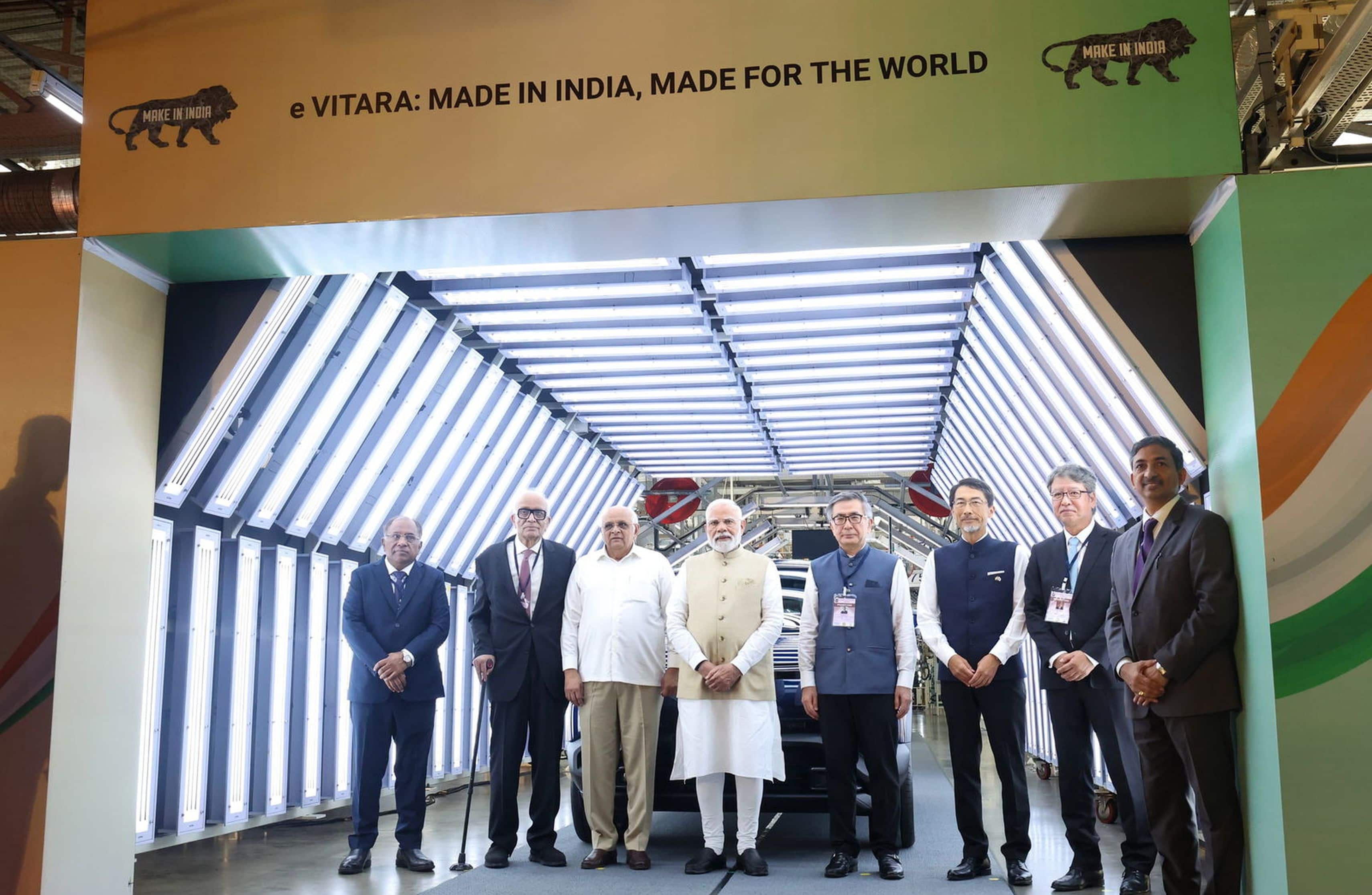
PM inaugurates and flags off the “e VITARA”, Suzuki’s first Made-in-India global strategic Battery Electric Vehicle
EVs made in India will be exported to 100 countries: PM
India has the power of democracy, the advantage of demography and a very large pool of skilled workforce, making it a win-win situation for every partner: PM
The world will drive EVs that say, Made in India!: PM
The Make in India initiative has created a favourable environment for both global and domestic manufacturers: PM
In the coming times, the focus will be on futuristic industries: PM
India is taking off in the Semiconductor sector, 6 plants are about to be set up in the country: PM

The popular Chief Minister of Gujarat, Shri Bhupendrabhai Patel, Ambassador of Japan to Bharat, Mr. Keiichi Ono San, President of Suzuki Motor Corporation, Toshihiro Suzuki San, Managing Director of Maruti Suzuki India Limited, Hisashi Takeuchi San, Chairman R.C. Bhargava, all employees of the Hansalpur Plant, other distinguished dignitaries, ladies and gentlemen!

Amidst the joy of Ganeshotsav, today a new chapter is being added to Bharat’s Make in India journey. This “Make in India, Make for the World” is a big leap towards our goal. From today, Electric Vehicles made in Bharat will be exported to 100 countries. Along with this, hybrid battery electrode manufacturing is also starting today. This day is also giving a new dimension to the friendship between Bharat and Japan. I extend my heartiest congratulations to all Indians, to Japan, and to Suzuki Company. In a way, thirteen marks the beginning of the teenage phase. Teenage is a time of spreading wings, of taking flight with dreams. In teenage, countless aspirations arise; it is almost as if the feet don’t touch the ground. I am happy that today Maruti is entering its teenage years. The entry of Maruti into its teenage years here in Gujarat means that in the coming days Maruti will spread new wings, move forward with fresh energy and enthusiasm. I have full faith in this.
Friends,

The seeds of this success story of Bharat were sown almost 13 years ago. In 2012, when I was the Chief Minister here, we allotted land to Maruti Suzuki in Hansalpur. Even at that time, the vision was of Atmanirbhar Bharat (self-reliant India), of Make in India. Our efforts back then are playing such a big role today in fulfilling the nation’s aspirations.

Friends,

On this occasion, I would like to fondly remember the late Osamu Suzuki San. Our government had the privilege of honouring him with the Padma Vibhushan. I am happy that the vision he had for Maruti-Suzuki India, today we are witnessing its grand expansion.

Friends,

Bharat has the power of democracy, and Bharat has the advantage of demography. We also have a very large pool of skilled workforce. This creates a win win situation for all our partners. Today you can see Suzuki Japan is manufacturing in Bharat, and the cars made here are being exported back to Japan. This not only reflects the strength of Bharat-Japan relations but also the trust that global companies have in Bharat. In a way, companies like Maruti Suzuki have become brand ambassadors of Make in India. For the past 4 consecutive years, Maruti has been Bharat’s largest car exporter. From today, EV exports will also begin on the same scale. Now, in dozens of countries around the world, the EVs running there will carry the mark—Made in India!
Friends,

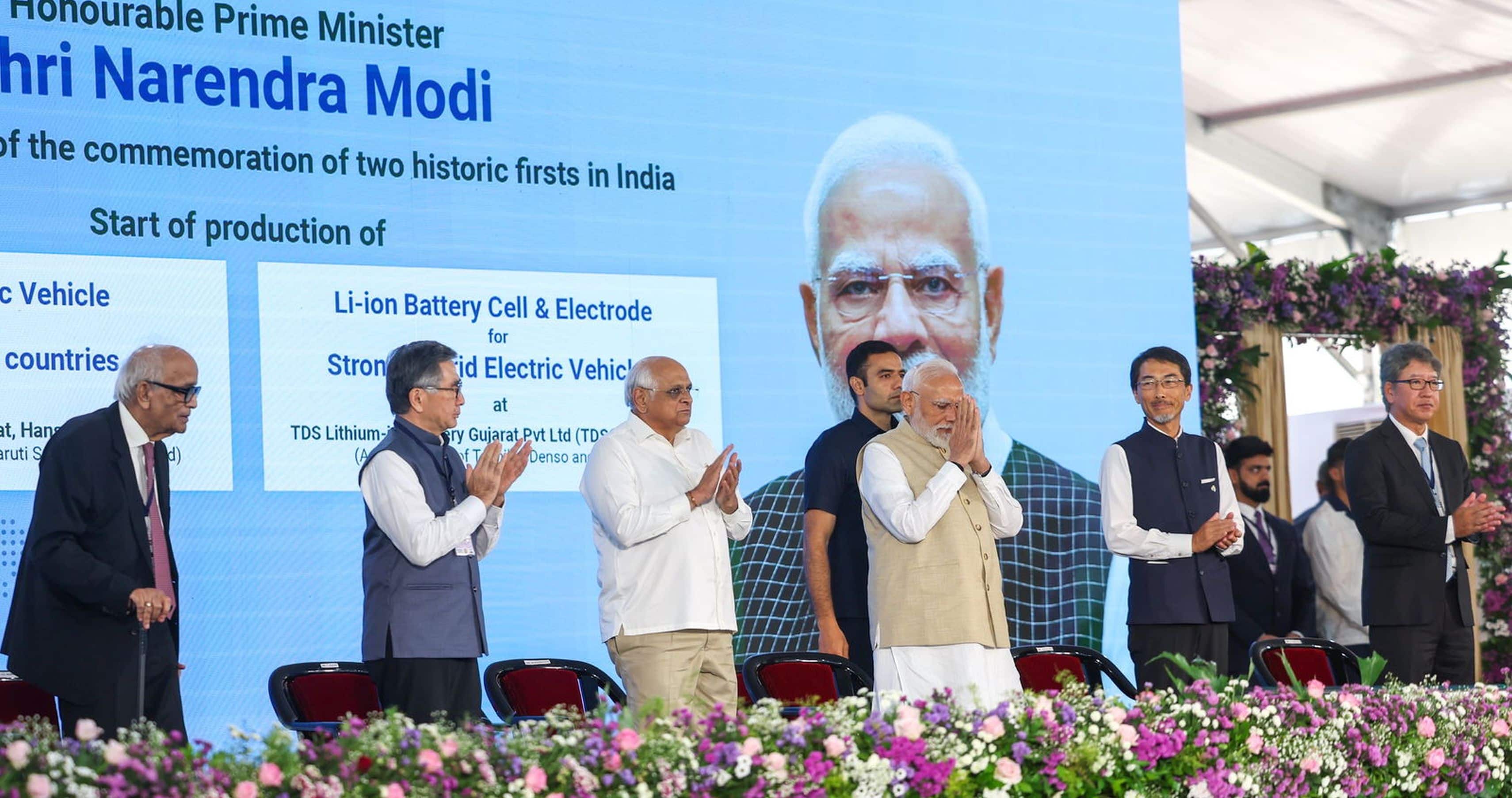
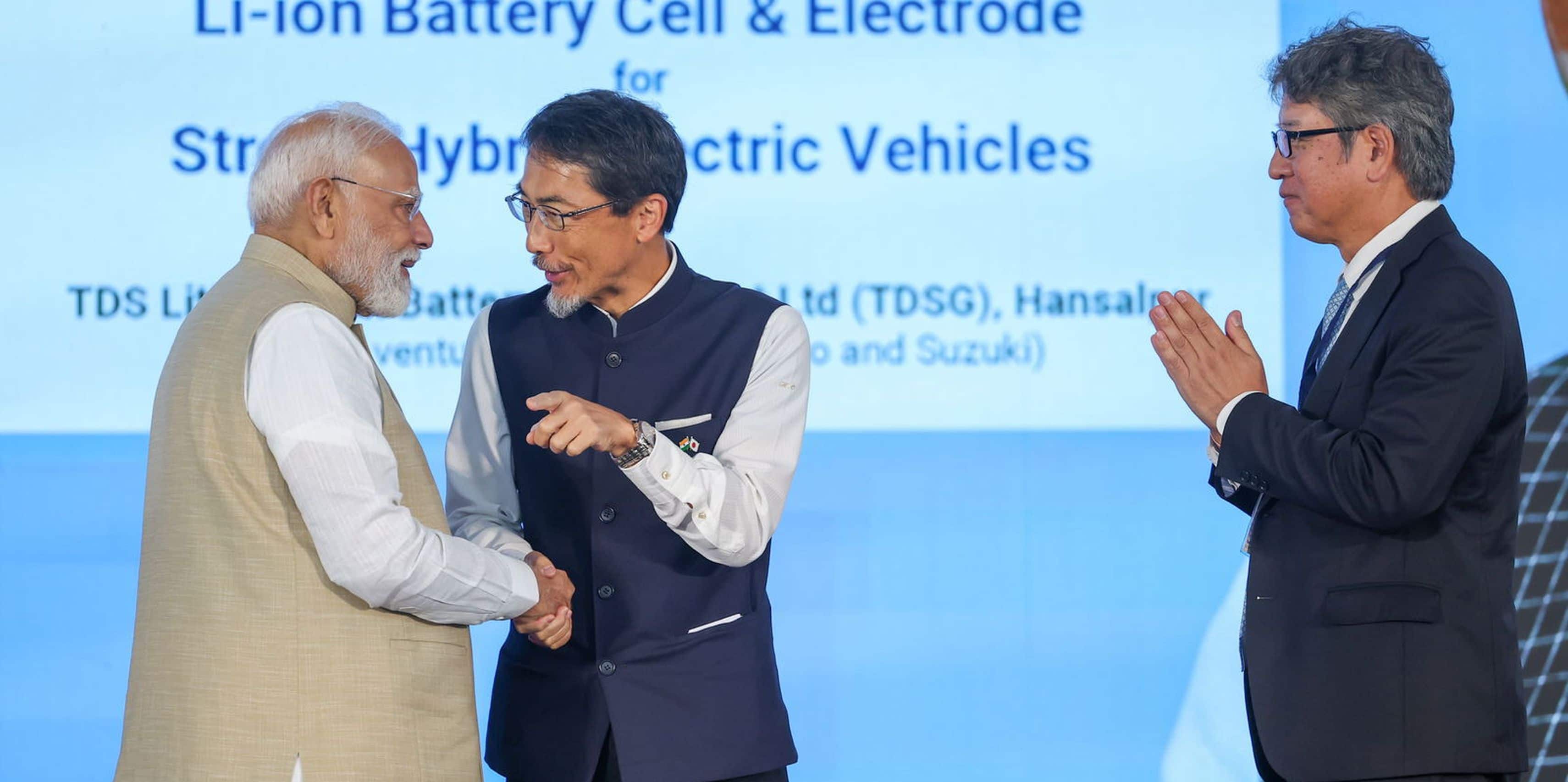
We all know that the most critical part of the EV ecosystem is the battery. Until a few years ago, batteries in Bharat were completely imported. To strengthen EV manufacturing, it was necessary that Bharat also manufacture batteries. With this vision, we laid the foundation of the TDSG battery plant here in 2017. Under a new initiative by TDSG, three Japanese companies together will manufacture cells in Bharat for the very first time in this factory. Even the electrodes for battery cells will now be produced locally in Bharat. This localization will give new strength to Bharat’s self reliance. It will also accelerate the growth of hybrid electric vehicles. I extend my heartiest congratulations to you all for this historic beginning.

Friends,

A few years ago, EVs were seen only as a new alternative. But I have always believed that EVs are a concrete solution to many problems. That’s why, during my visit to Singapore last year, I had said, we can convert our old vehicles, our old ambulances, into hybrid EVs. Maruti Suzuki accepted this challenge and, in just 6 months, developed a working prototype. I just saw this prototype of the hybrid ambulance myself. These hybrid ambulances perfectly fit into the PM E-DRIVE scheme. In this scheme of about 11,000 crore rupees, a dedicated budget has also been set aside for e-ambulances. Hybrid EVs will reduce pollution and also provide an option to transform old vehicles.

Friends,

Clean energy and clean mobility, this is our future. Through such efforts, Bharat will rapidly become a reliable centre for clean energy and clean mobility.
Friends,

Today, when the world is struggling with supply chain disruptions, it is clear how useful the policies framed by Bharat over the past decade have been for our nation. In 2014, when I was given the opportunity to serve the country, we immediately began preparations for this. We launched the Make in India campaign and created a favourable environment for both global and domestic manufacturers. To make manufacturing in Bharat efficient and globally competitive, we are developing industrial corridors, creating plug and play infrastructure, and building logistics parks. Bharat is also providing Production Linked Incentives (PLI) benefits to manufacturers in many sectors.

Friends,

Through major reforms, we have also removed old difficulties faced by investors. This has made it easier for investors to put their money into Indian manufacturing. The results are before us: in this decade, electronics production has increased by nearly 500 percent. Mobile phone production has increased by as much as 2,700 percent compared to 2014. Defence production too has grown by more than 200 percent in the past decade. These successes are motivating all Indian states, every single state, to compete in reforms and in attracting investments. This healthy competition is benefiting the entire country.

And I have been telling all the states in every meeting, in personal conversations, very publicly that we have to be proactive. We have to make pro development policies. We have to emphasize on single window clearance. We have to emphasize on reforms in the laws and this is the age of competition, the faster a state keeps its policies neat and clean, without ifs and buts, the more the investor’s confidence increases. The investor comes with courage to come. Today the whole world is looking towards India. In such a situation, no state should be left behind. Every state should take the opportunity. There should be such competition that an investor coming to India should have difficulty in thinking whether to go to this state or that state. There should be such clear cut competition, the country will benefit from this and therefore I invite all the states to compete for reforms, compete for good Governance, compete for pro development policies and ensure our participation in achieving the target of making a developed India by 2047 at a fast pace.
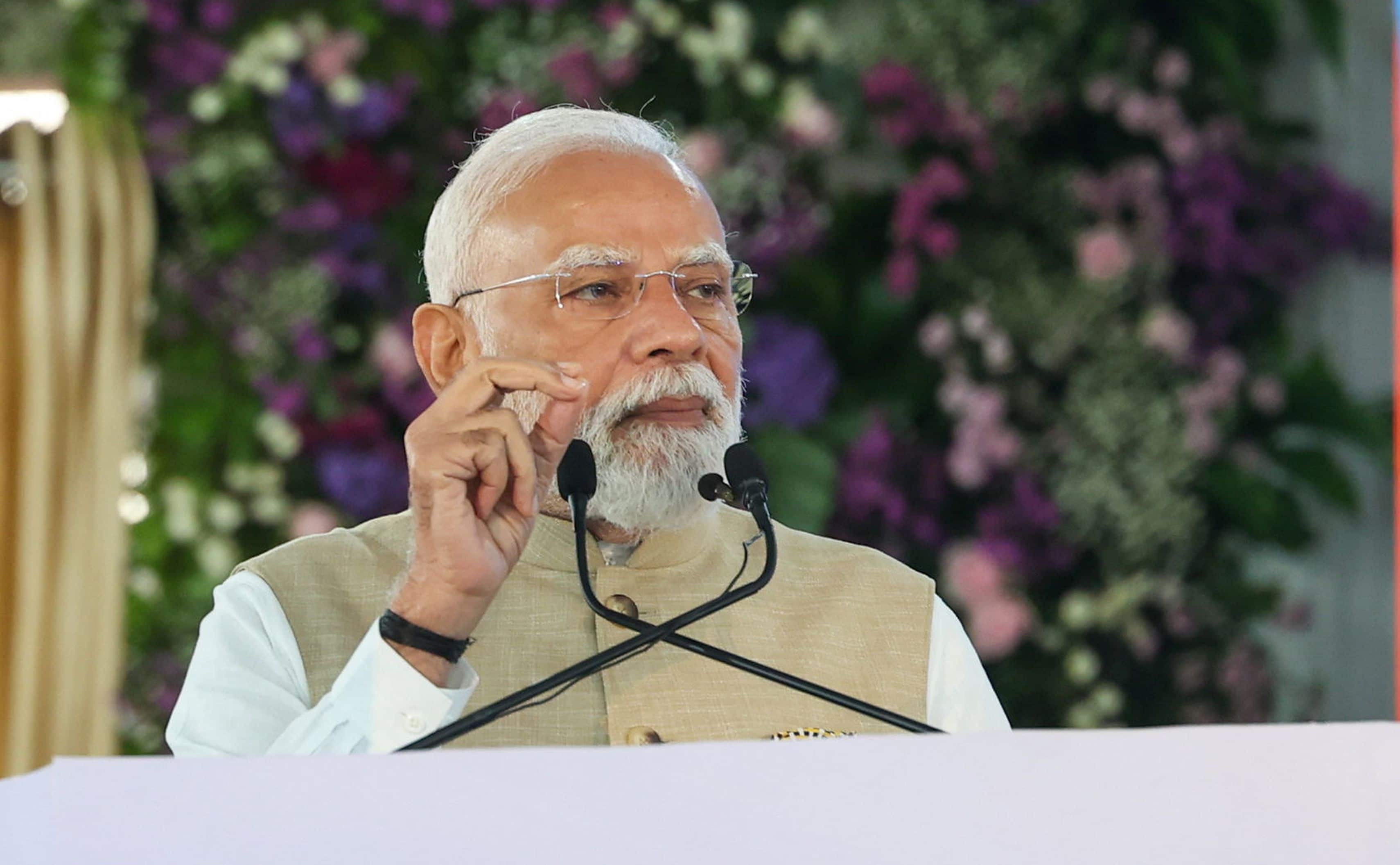
Friends,

India is not going to stop here. We have to do even better in the sectors in which we have performed well. For this, we are emphasizing on mission manufacturing. In the coming time,our focus will be on the futuristic industry. India is taking off in the semiconductor sector. 6 plants are about to be ready in the country. We have to take semiconductor manufacturing further.

Friends,

The Government of India is also aware of the difficulties faced by the auto industry due to shortages of rare earth magnets. To enhance the country’s capabilities in this direction, we have also launched the National Critical Mineral Mission. Under this, more than 1,200 exploration expeditions will be conducted at different places in the country, and critical minerals will be searched for.

Friends,

I am going to Japan next week. The relationship between India and Japan is beyond just diplomatic relations; it is a cultural and trust based relationship. We see our progress in each other's progress. The journey we started with Maruti Suzuki has now reached the speed of a bullet train.

The major initiative to realize the industrial possibilities of the Bharat–Japan partnership began right here in Gujarat. I remember, when we started the Vibrant Gujarat Summit 20 years ago, Japan was one of the key partners. Just think about it, a developing country, a small state organizing an investment summit, and a developed country like Japan being its partner. This shows how strong the foundation of Bharat Japan relations is. Today, as I recall the journey of Vibrant Gujarat, I see my friends sitting here, one of them was the Ambassador of Japan to Bharat back in 2003. He is retired now, but his love for Bharat and Gujarat remains the same. I warmly welcome him. The people of Gujarat also cared for the people of Japan with the same affection. We even printed industry-related rules and regulations in Japanese. When I was in Gujarat, I used to pay attention to every small detail. Even my visiting card was printed in Japanese. Whenever we made promotional videos, we ensured Japanese dubbing. I knew very well that I had to move forward strongly on this path. That is why I say to all other states, the sky is open, my friends, work hard, come forward, and you will gain a lot.
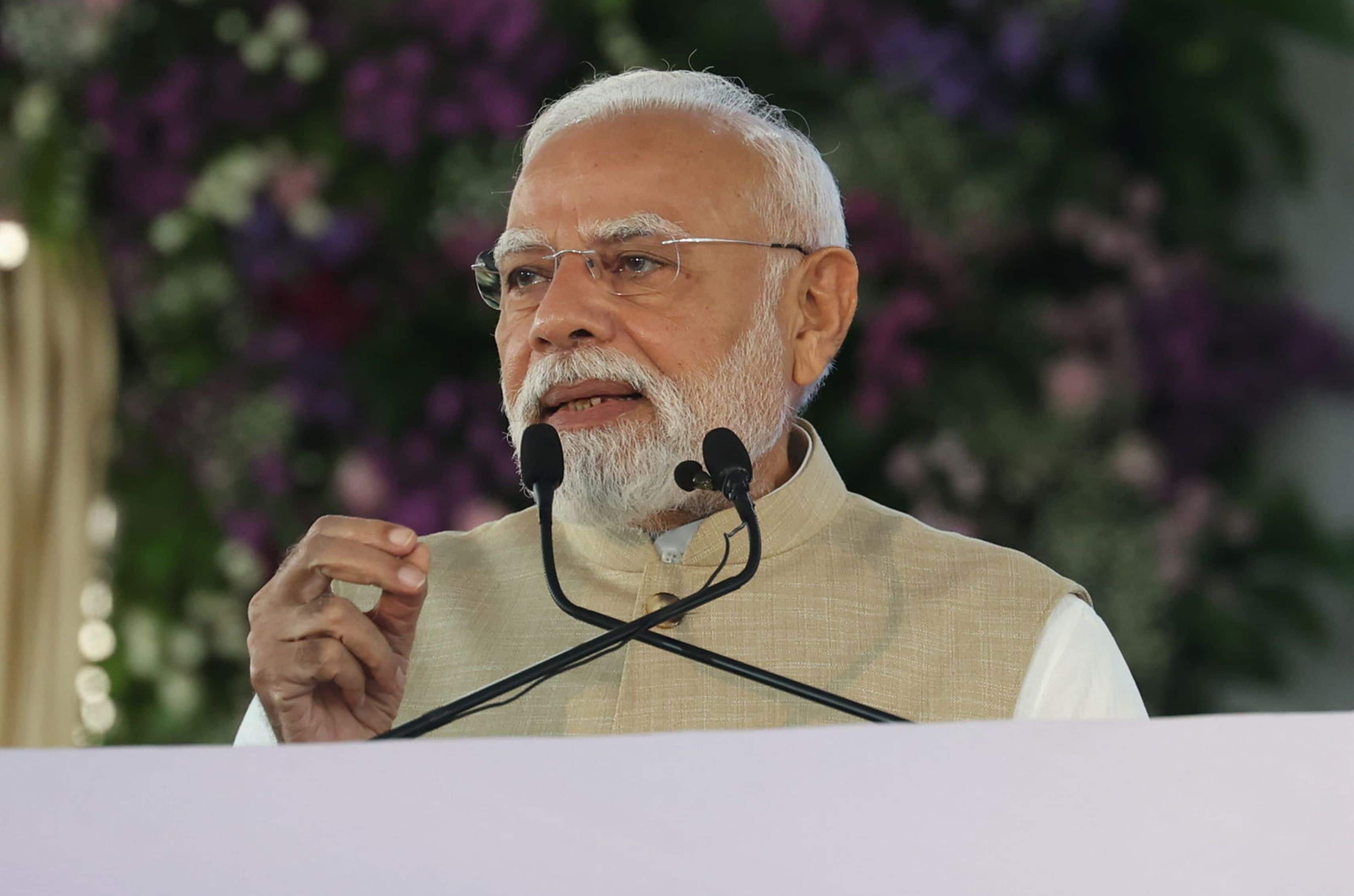
I also recall that in the early days, when our Japanese friends used to visit, gradually I grew closer to them and came to understand their way of life. I noticed one thing about the Japanese: their cultural ecosystem is always their top priority. They want their Japanese food. It’s quite similar to the people of Gujarat. In Gujarat, if they go out on a Saturday or Sunday, they may go to a restaurant and ask for Mexican food or Italian food. But if they travel outside Gujarat, they are always looking for Gujarati food. I found the same nature in the Japanese people. That is why I arranged for Japanese cuisine in Gujarat and even invited a hotel chain to provide it. Later, I was told that for the Japanese, life without golf is incomplete. So, I also gave that priority. Keeping our Japanese friends in mind, we developed 7–8 new golf courses in Gujarat, where earlier golf had no presence at all. See, if you want development, if you want to bring investment, if you want to attract the world, you have to pay attention to every detail. Many states in our country are doing this. To those states that are still behind, I say, treat every detail as an opportunity and move forward in a new direction of development. Not just that, my friends, in our schools, colleges, and universities, great emphasis is being given to teaching the Japanese language. Today, many Japanese language teachers are working in Gujarat. In several schools, Japanese is being taught.

Friends,

Through our efforts, the people-to-people connect between Bharat and Japan has grown tremendously. We are also able to meet each other’s needs when it comes to skills and human resources. I would like companies like Maruti-Suzuki to also become part of such initiatives and expand youth exchange programs.

Friends,

In the same way, we must move forward in all key sectors in the times to come. I am confident that the steps we are taking today will raise the edifice of a ‘Viksit Bharat’ in 2047 to new heights. I am equally confident that Japan will continue to walk with us as our trusted partner in this mission, our friendship will remain unbreakable. I often say that when it comes to the Bharat Japan relationship, it is a “made for each other” partnership. Today, I extend my best wishes especially to Maruti. Right now, you are only at the beginning of your teenage years. You have to spread your wings, weave new dreams. We are with you with full strength for your resolutions, for their fulfilment. With this confidence, let us all advance the campaign of Atmanirbhar Bharat (self-reliant India). Let us be Vocal for Local. Swadeshi should become our life mantra, my friends, walk proudly towards Swadeshi. And what Japan is producing here, that too is Swadeshi. My definition of Swadeshi is very simple: it doesn’t matter whose money is invested, whether it is dollars, pounds, whether the currency is black or white, it doesn’t matter to me. What matters is that in production, the sweat belongs to my countrymen. The money may be someone else’s, but the sweat is ours. The production will carry the fragrance of my motherland, of the soil of Bharat. With this spirit, come with me, friends. By 2047 we will build such a Bharat that your future generations will take pride in your sacrifices, will take pride in your contributions. For the bright future of your coming generations, for the mantra of Atmanirbhar Bharat, for the path of Swadeshi, I invite all my fellow citizens today. I invite you, let us all march ahead together. By 2047 we will surely build a ‘Viksit Bharat’. Bharat will continue to increase its contribution to the welfare of the world. With this spirit, I extend my best wishes to all of you!

Thank you very much!

Explore More
প্রধান মন্ত্রীনা শ্রী রাম জন্মভুমি মন্দির দ্বাজরোহন উৎসবতা পীখিবা ৱারোলগী মৈতৈলোন্দা হন্দোকপা

Popular Speeches

প্রধান মন্ত্রীনা শ্রী রাম জন্মভুমি মন্দির দ্বাজরোহন উৎসবতা পীখিবা ৱারোলগী মৈতৈলোন্দা হন্দোকপা
India most resilient emerging mkt, better placed to manage shocks: Moody's

Media Coverage

India most resilient emerging mkt, better placed to manage shocks: Moody's
NM on the go

Nm on the go

Always be the first to hear from the PM. Get the App Now!
...
Joint Statement on Enhanced Comprehensive Strategic Partnership between the Republic of India and the Socialist Republic of Vietnam
May 06, 2026

At the invitation of Prime Minister of India, H.E. Shri Narendra Modi, the General Secretary of Central Committee of Communist Party of Viet Nam, President of the Socialist Republic of Viet Nam, H.E. Mr. To Lam, paid a State Visit to India from 05 May to 07 May 2026. General Secretary, President H.E. Mr. To Lam was accompanied by a high-level delegation. A strong business delegation also accompanied the dignitary.

On 06 May 2026, General Secretary, President To Lam was accorded a ceremonial reception at Rashtrapati Bhavan. He visited Raj Ghat to pay floral tributes to Mahatma Gandhi. This was followed by bilateral talks between Prime Minister Modi and General Secretary, President To Lam. Thereafter, the two leaders witnessed the exchange of bilateral documents. Prime Minister Modi hosted a banquet lunch in honour of the visiting dignitary. General Secretary, President To Lam met President, H.E. Smt. Droupadi Murmu, who also hosted a banquet dinner for him. General Secretary, President To Lam delivered a policy speech at the Indian Council of World Affairs, and addressed the Viet Nam - India Innovation Forum. General Secretary, President To Lam is also scheduled to visit Mumbai for interactions and exchanges with the State Government and businesses, and address at the Viet Nam-India Business Forum.

POLITICAL

Prime Minister Modi and General Secretary, President To Lam held wide-ranging discussions in a warm and cordial atmosphere. They reviewed the entire gamut of bilateral relations and exchanged views on regional and global issues of mutual interest. Prime Minister Modi congratulated General Secretary To Lam on his election as President of Viet Nam and expressed confidence that under his leadership, Viet Nam will continue to make steady progress towards its development aspirations. General Secretary, President To Lam congratulated Prime Minister Modi for significant achievements in national development, high economic growth and for India’s initiatives to strengthen multilateralism and to promote Global South cooperation. The leaders underlined that deepening India – Viet Nam ties will continue to bring mutual benefit to their peoples and contribute meaningfully towards achieving their respective national goals, i.e. India’s Viksit Bharat 2047 and Viet Nam’s Vision 2045.

Sharing the common views on the transformative shifts in the global and regional landscape, the two leaders recognized the strong foundation of relations based on mutual trust, respect, understanding, shared outlook and effective cooperation across numerous fields. They therefore agreed to elevate the bilateral relations to Enhanced Comprehensive Strategic Partnership in the spirit of ‘shared vision, strategic convergence, substantive cooperation’, further translating the enormous goodwill into tangible outcomes.

They noted that 2026 marks the 10th anniversary of the India- Viet Nam Comprehensive Strategic Partnership and agreed to celebrate this occasion in a befitting manner. Welcoming the significant progress achieved in bilateral cooperation over the past decade, the two sides agreed to continue the effective implementation of the outcomes of high-level talks and visits in recent years, including the Joint Statement on Strengthening the Comprehensive Strategic Partnership between India and Viet Nam in August 2024, the India- Viet Nam Joint Vision for Peace, Prosperity and People in 2020, and the outcomes of the meetings between the leaders of the two countries. The leaders agreed to maintain regular engagements at all levels, including at the leadership-level.

Taking note of the constitution of India- Viet Nam Parliamentary Friendship Group in the Parliament of India, the leaders welcomed enhancing cooperation between the two countries’ legislatures and continuing close coordination between parliamentary delegations of both sides at multilateral forums, including at the Inter-Parliamentary Union and ASEAN Inter-Parliamentary Assembly.

The leaders acknowledged that regular dialogue and exchanges under existing institutional mechanisms across multiple sectors of the cooperation have deepened trust and enhanced mutual understanding. In this regard, they agreed that the Political Consultation & Strategic Dialogue; and the Joint Commission Meeting on Economic, Trade, Scientific Cooperation remain key pillars underpinning India- Viet Nam relations. The leaders also agreed that meetings under these mechanisms, particularly in the areas of defence, security maritime domain, trade and investment, agriculture, health, ICT, cyber, science & technology, space and atomic energy, be convened regularly. The two sides look forward to the establishment of Strategic Diplomacy - Defence Dialogue (2+2).

The leaders agreed to accelerate the effective implementation of the Plan of Action between India and Viet Nam for the period of 2024 – 2028 and this Joint Statement.

ECONOMIC, TRADE AND INVESTMENT

The two sides agreed to reinforce cooperation between the two rapidly growing economies at the level of governments and businesses for increasing two-way trade, investment and technological partnership. Noting the increase in bilateral trade in the last 10 years, the leaders emphasized the need to further enhance it in a balanced and mutually beneficial manner, and agreed on a new trade goal of 25 billion USD by 2030.

They decided that both sides will facilitate market access, including for agricultural products in respective countries. They welcomed the decision to grant market access for Indian Grapes and Vietnamese Durians. They also agreed to expedite market access for Indian Pomegranates and Vietnamese Pomelos, by quickly resolving technical issues through expedited bilateral consultations.

Both sides agreed to enhance the supply chains in sectors of mutual interest. Viet Nam affirmed its commitments to diversify its supply sources and to import more products from India to serve its domestic production and export needs. Both sides agreed to explore ways for a more conducive regulatory environment to facilitate ease of doing business for companies of both countries, including in standards compliance certification. They underlined the importance of maintaining constructive dialogue for resolving mutual concerns under bilateral institutional mechanisms.

The leaders agreed that the ongoing review of the ASEAN India Trade in Goods Agreement (AITIGA) should be concluded at the earliest. They concurred that the resulting agreement should be mutually beneficial, trade facilitative and relevant to current global trading practices.

The leaders agreed to encourage greater two-way investments to further strengthen India - Viet Nam economic ties, especially in the fields of high-technology, transport, manufacturing, logistics, renewable energy, smart agriculture, electric vehicles and information technology, healthcare, agriculture and agro-processing, aquaculture, tourism and hospitality, among others. They also agreed to strengthen the linkages between the two countries’ startup ecosystems and encourage substantive cooperation among innovation centers.

Commending the decades-old institutional linkages between India and Viet Nam in the field of oil and gas exploration, and recognizing the mutually beneficial cooperation in this sector, the leaders agreed to further enhance the exploration and production activities, including development of new wells where Indian companies are interested in participating, in accordance with Vietnamese law and international law, particularly the 1982 UNCLOS.

Recognizing the growing importance of e-commerce and the digital economy, the leaders agreed to strengthen cooperation in these areas, through enhanced sharing of experiences in developing enabling regulations and policies to support their growth and support businesses, especially MSMEs to participate in e-commerce to integrate deeply and sustainably in the regional and global value chains.

HEALTH

The leaders reaffirmed their commitment to strengthening cooperation in the health sector. Acknowledging the advancements made by the Indian pharmaceutical industry, the two sides agreed to explore ways for the potential participation of Indian companies in the procurement of medicines for Vietnamese public healthcare facilities from 2027, as mutually agreed. Recognizing the growing importance of technology, they encouraged cooperation in the digital transformation of healthcare, including the application of AI in the health sector.

Given the long history and rich heritage of traditional medicine in both countries, the leaders agreed to promote exchange of knowledge, research and best practices, while encouraging closer institutional linkages. They welcomed the progress towards the completion of the MoU on Traditional Medicine and the proposed MoU on the establishment of an Academic Chair in Ayurveda in Viet Nam.

DEFENCE AND SECURITY

The leaders reaffirmed that defence and security cooperation is a key pillar of the India- Viet Nam Comprehensive Strategic Partnership. They commended the effective implementation of the Joint Vision Statement on India- Viet Nam Defence Partnership towards 2030, which continues to guide the growing defence ties between the two countries.

The leaders agreed to further strengthen cooperation and enhance engagements in both traditional and emerging areas of defence cooperation, including defence policy dialogue, joint exercises, staff talks, joint research and co-production of new defence technologies, enhanced port calls by Naval vessels and Air force aircrafts, peacekeeping activities, information sharing, hydrography, defence exhibitions, capacity building, defence industrial cooperation, maritime security, maritime safety, and search and rescue operations based on mutual interest and priorities of the two countries, which will also contribute to greater stability in the wider Indo-Pacific region. They also decided to enhance defence systems procurement between the two countries.

The leaders welcomed the steady progress in the implementation of the Defence Lines of Credit extended by India for Viet Nam, which have contributed to strengthening Viet Nam’s defence capabilities and advancing bilateral defence cooperation.

The leaders expressed satisfaction on the implementation of the bilateral defence agreements, including Mutual Logistics Support Agreement; Memorandum of Agreement on Submarine Search and Rescue Support and Cooperation; and Letter of Intent on Strengthening Defence Industrial Cooperation.

The leaders welcomed the inaugural joint hydrographic survey by the two navies in May 2025 off the coast of Viet Nam and agreed to regularly conduct similar exercises in the future.

Viet Nam appreciated the training offered by India for Vietnamese defence personnel under the Indian Technical and Economic Cooperation (ITEC) Programme, through Indian Army, Navy, and Air Force Training Teams at the Telecommunications University (TCU), Naval Academy, Airforce College, Nha Trang towards capacity building; India’s support for the establishment of the Army Software Park at TCU, Nha Trang. The leaders welcomed that two countries would co-chair the ASEAN Defence Ministers' Meeting-Plus Experts' Working Group (ADMM-Plus EWG) on Cyber Security for the 2027 - 2030 cycle.

The leaders agreed to strengthen cooperation in legal and judicial fields between the two countries through the effective implementation of the MoU between the Ministry of Law and Justice of India and the Ministry of Justice of Viet Nam.

Both sides agreed to deepen cooperation between the Ministry of Public Security of Viet Nam and the National Security Council Secretariat of India to realize shared objectives. They further agreed to broaden collaboration in the fields of information sharing, cybersecurity, counterterrorism and combating high-tech crime, transnational crime, money laundering and online scams. In addition, both sides underscored the importance of effectively utilizing existing cooperation mechanisms, including the India- Viet Nam Security Dialogue.

The leaders welcomed the successful convening of the First India - Viet Nam Cyber Policy Dialogue, during which both sides exchanged views on recent developments in cyber policies, reviewed cyber threat landscape, identified areas of bilateral cooperation, and discussed joint capacity building activities and cooperation at multilateral fora on ICT issues.

The two sides agreed to enhance the exchange of experience and expand cooperation in the security domain, including promoting cooperation in training and capacity building for law enforcement officers, support for professional training, foreign language training, cybersecurity incident response skills, UN Peacekeeping, and other cooperation activities as mutually agreed.

MARITIME

Recognizing that India and Viet Nam are maritime countries with a millennia-old history of exchanges, the leaders emphasized maritime domain as one of the key pillars of their cooperation and called for enhanced maritime cooperation between the two sides. They noted that the bilateral Maritime Security Dialogue has fostered mutual trust and better understanding of respective concerns and underscored the importance of convening it regularly. Viet Nam thanked India for invitation to assign an International Liaison Officer at the Information Fusion Centre – Indian Ocean Region (IFC-IOR) at Gurugram, India, to strengthen cooperation in Maritime Domain Awareness. Prime Minister Modi welcomed Viet Nam joining Indo-Pacific Oceans Initiative (IPOI) and looked forward to enhanced cooperation under that framework. Viet Nam will continue to coordinate with India and other partners within the framework of the IPOI, while fostering further synergies between IPOI and the ASEAN Outlook on the Indo-Pacific (AOIP) and promoting substantive cooperation in the ASEAN-India Year of Maritime Cooperation 2026.

Both leaders agreed to enhance collaboration in oceanography, including areas such as ocean observing platforms, data management, ocean prediction and services, capacity building and maritime scientific research. Prime Minister Modi welcomed cooperation with Viet Nam in the setting up of Pangasius breeding and farming facilities, and enabling Mussels’ breeding and procurement in India.

SCIENCE & TECHNOLOGY, INCLUDING CRITICAL AND EMERGING TECHNOLOGIES

The leaders reiterated the significance of digital technologies and welcomed the signing of the MoU between Reserve Bank of India and State Bank of Viet Nam on financial innovation and digital payments. They agreed to promote linkages for retail payment platforms via QR Codes that would facilitate tourism and businesses of both sides.

The leaders agreed to facilitate greater collaboration and partnership in critical and emerging technology areas such as Digital Public Infrastructure, 6G, Artificial Intelligence, space and nuclear technology, marine sciences, biotechnology, pharmaceuticals, advanced materials and critical minerals. Cooperation will focus on practical initiatives such as joint research, R&D centers, and product development as mutually beneficial.

The leaders acknowledged their respective climate, sustainable development goals and energy transition priorities and agreed to enhance cooperation in clean and renewable energy, as well as climate and disaster resilient technologies. They recognized the relevance of Mission LiFE (Lifestyle for Environment) and institutions such as International Solar Alliance (ISA) in this regard. India welcomed Viet Nam’s interest to join the Global Biofuels Alliance (GBA). The leaders also acknowledged the importance of the Coalition for Disaster Resilient Infrastructure (CDRI) in promoting international cooperation in disaster risk reduction and resilience. They encouraged further cooperation in applying digital and advanced technologies in smart agriculture, sustainable water management, and air pollution control.

The leaders noted with satisfaction the ongoing collaboration in the field of peaceful uses of atomic energy and agreed to intensify follow-up on various avenues of further cooperation emerging from the 4th India- Viet Nam Joint Committee Meeting on atomic energy. India appreciates Viet Nam’s invitation to participate in its nuclear power sector. Viet Nam thanked India for the supply of Cobalt-60 and both sides agreed to explore modalities for its continued supply to Viet Nam.

They noted the progress towards the establishment of the ASEAN-India tracking, data reception station and data processing facility in Viet Nam. Viet Nam agreed to expedite the remaining processes on its side with a view to facilitate the completion of project at the earliest.

The leaders welcomed the signing of MoU between IREL (India) Limited, Government of India, and the Institute for Technology of Radioactive and Rare Elements, VINATOM, Government of Viet Nam, on mutual cooperation in the field of Rare Earths, and emphasized its early and full implementation.

DEVELOPMENT PARTNERSHIP

The leaders commended the extensive and impactful development partnership between the two countries, underpinned by the Quick Impact Projects (QIPs) under Mekong-Ganga Cooperation framework, ITEC programmes, and educational scholarships. They noted with satisfaction implementation of 66 QIPs through India’s support across 32 out of Viet Nam’s 34 provinces, which have received widespread appreciation from local governments and communities for their grassroots socio-economic impact.

The leaders underscored that India’s ITEC programme is a key pillar of bilateral development cooperation. Viet Nam underlined its appreciation for India’s strong and continued support in capacity building of Vietnamese officials through the ITEC programme, including through specialized training courses tailored to their requirements, as well as the ICCR scholarships for students and scholars.

The leaders encouraged greater student, faculty and research exchanges between universities, think tanks and other institutions of the two countries. They welcomed the MoU between Nalanda University of India and Ho Chi Minh National Academy of Politics.

CULTURE, TOURISM COOPERATION AND PEOPLE-TO-PEOPLE EXCHANGES

Viet Nam expressed deep appreciation for India’s gesture in sending the Holy Relics of Lord Buddha to Viet Nam for exposition during May-June 2025. The leaders recognized that the profound response of the Vietnamese people to the Holy Relics reflected deep civilizational bonds, shared spiritual heritage and enduring friendship between the two countries.

The leaders acknowledged that tourism is a key driver of people-to-people ties and economic growth. They welcomed the signing of the MoU on Cooperation in the field of Tourism and decided to encourage growth of two-way tourism in a sustainable and inclusive manner, including cultural and heritage, medical and wellness tourism among others. Prime Minister Modi invited Viet Nam’s tourists and pilgrims to visit the Buddhist Circuit in India. Welcoming the increase in direct flights between the two countries, they encouraged their civil aviation authorities to discuss enhancing air connectivity.

The leaders welcomed the signing of the Cultural Exchange Programme for 2026 - 2030 and agreed to further promote cultural exchanges and people-to-people links.

Underlining the deep civilizational bonds between the two countries, the leaders encouraged greater exchange of Buddhist scholars, monks, pilgrims and students. Viet Nam appreciated India’s commitment to the preservation of My Son UNESCO World Heritage Site and the restoration and conservation work done by the Archaeological Survey of India in the A, H and K Blocks, as well as the ongoing work in the E & F Blocks, and Nhan Tower project in Dak Lak province of Viet Nam.

India appreciated Viet Nam’s support for the annual organization of the International Day of Yoga in a large number of Vietnamese cities and provinces. The leaders expressed support for greater cooperation among yoga institutions of the two countries. They also agreed to enhance cultural exchanges between the two countries and to establish ICCR Chairs of India Studies in Da Nang University and University of Social Sciences and Humanities.

The leaders welcomed the signing of an MoU on the Establishment of Friendship and Cooperation between Mumbai and Ho Chi Minh City and encouraged such cooperation and connectivity.

The two sides stressed upon the importance of cooperation in the field of mobility of human resources. Both sides welcomed establishment of a Consular Dialogue to address issues of mutual interest, including the facilitation of labour market mobility.

REGIONAL AND INTERNATIONAL COOPERATION

Acknowledging the evolving global geopolitical and economic landscape, the leaders underscored the growing strategic convergence between India and Viet Nam to promote international order based on international law, grounded in peace, stability, cooperation and prosperity in the region and beyond. They called for strengthening the voice and role of the Global South in global governance.

The leaders agreed to strengthen cooperation in multilateral fora, including the United Nations. Reaffirming their commitment to multilateralism, the leaders expressed strong support for reforms in international organizations, including the UNSC, so as to make them more representative and reflective of contemporary realities. Prime Minister Modi appreciated Viet Nam’s continued support for India’s permanent membership in a reformed UNSC.

Viet Nam welcomed India’s 2026 BRICS Chairmanship, while India reaffirmed its commitment to supporting Viet Nam’s role as a BRICS Partner Country.

The leaders recognized that Viet Nam is a key pillar in India’s Act East Policy, Vision MAHASAGAR and Indo-Pacific Vision, driving India’s engagement with the Mekong sub-region, ASEAN and Indo-Pacific. The leaders reaffirmed their shared vision for a free, open and rules-based Indo-Pacific region. Viet Nam appreciated India’s consistent support for ASEAN Unity and ASEAN Centrality in the evolving regional architecture for regional peace, stability and prosperity. The two sides supported further strengthening of the ASEAN-India Comprehensive Strategic Partnership, which complements bilateral relations with respective Member States.

Underlining the link between prosperity and security, the leaders reaffirmed the importance of maintaining peace, stability, security and freedom of navigation and overflight in the South China Sea, while pursuing the peaceful resolution of disputes in accordance with international law, particularly the 1982 United Nations Convention on the Law of the Sea (UNCLOS), without resorting to threat or use of force. The leaders underscored the importance of non-militarization and self-restraint in the conduct of all activities by claimants and all other states, and avoidance of actions that could further complicate the situation or escalate disputes affecting peace and stability. The leaders underlined that UNCLOS is the comprehensive legal framework governing all activities in the oceans and seas. The leaders further called for the full and effective implementation of the Declaration on the Conduct of Parties in the South China Sea (DOC) in its entirety and the early conclusion of negotiations towards a substantive and effective Code of Conduct in the South China Sea (COC) in accordance with international law, including UNCLOS, that does not prejudice the legitimate rights and interests of all nations, including those not party to these negotiations.

The leaders unequivocally condemned terrorism in all forms and manifestations, including cross-border terrorism. They called for zero tolerance of terrorism and for concerted international efforts to combat terrorism in a comprehensive and sustained manner, including through the UN and the FATF. The leaders called for disrupting of terror financing networks and safe havens, dismantling of terror infrastructure and bringing perpetrators of terrorism to justice swiftly.

General Secretary, President To Lam thanked Prime Minister Modi for the warm hospitality and excellent arrangements made for him and his delegation. He extended an invitation to Prime Minister Modi to visit Viet Nam.