The Northeast is the most diverse region of our diverse nation: PM
For us, EAST means - Empower, Act, Strengthen and Transform: PM
There was a time when the North East was merely called a Frontier Region.. Today, it is emerging as the ‘Front-Runner of Growth’: PM
The North East is a complete package for tourism: PM
Be it terrorism or Maoist elements spreading unrest, our government follows a policy of zero tolerance: PM
The North East is becoming a key destination for sectors like energy and semiconductors: PM

My colleagues in the Union Cabinet Jyotiraditya Scindia ji and Sukanta Majumdar ji, Governor of Manipur Ajay Bhalla ji, Chief Minister of Assam Himanta Biswa Sarma ji, Chief Minister of Arunachal Pradesh Pema Khandu ji, Chief Minister of Tripura Manik Saha ji, Chief Minister of Meghalaya Conrad Sangma ji, Chief Minister of Sikkim Prem Singh Tamang ji, Chief Minister of Nagaland Neiphiu Rio ji, Chief Minister of Mizoram Lalduhoma ji, all industry leaders, investors, ladies and gentlemen!

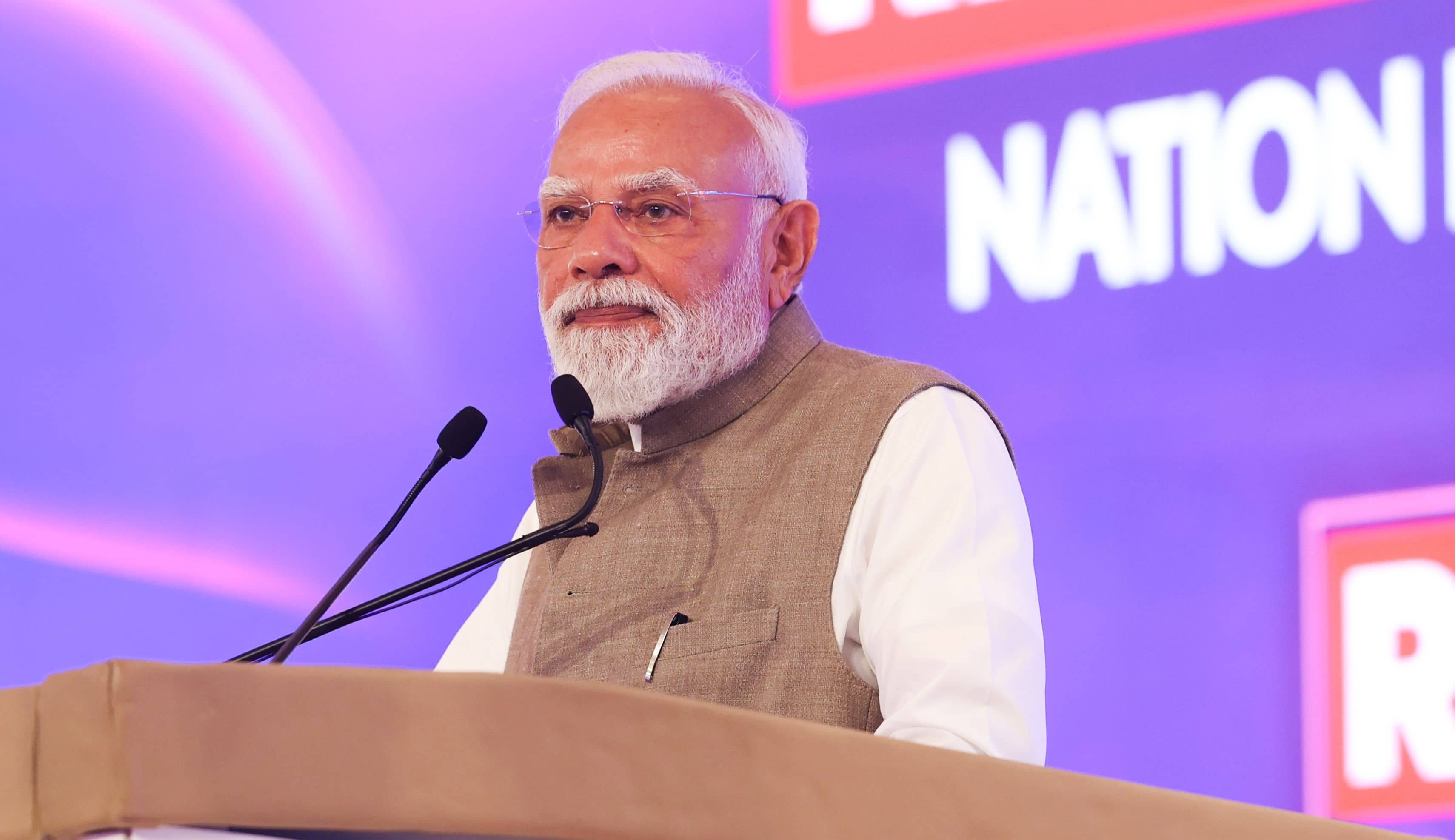
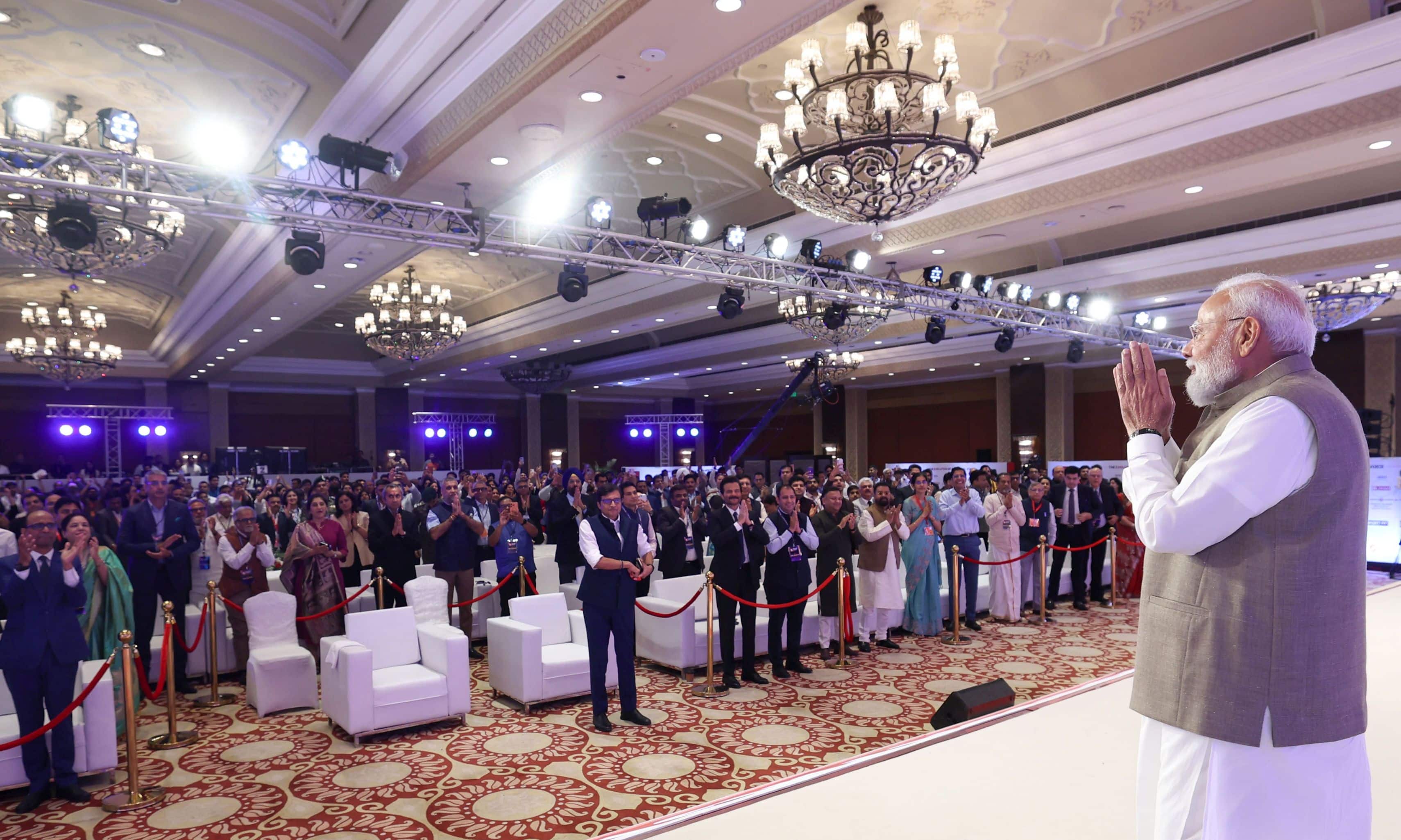
On this grand podium of Rising Northeast, I feel a sense of pride, warmth, belonging, and above all, immense confidence in the future. Just a few months ago, we celebrated the Ashtalakshmi Festival here at Bharat Mandapam. Today, we are celebrating a festival of investment in the Northeast. So many industry leaders have gathered here. This shows the enthusiasm, excitement, and new dreams that everyone has for the Northeast. I extend my heartfelt congratulations to all the ministries and the state governments for this achievement. Your efforts have created an excellent environment for investment there. On behalf of myself and the Government of Bharat, I wish you all the very best for the success of the North East Rising Summit.

Friends,

Bharat is considered the world’s most diverse nation, and our Northeast is the most diverse part of this diverse nation. From trade to tradition, from textiles to tourism, the diversity of the Northeast is its greatest strength. Northeast means bio-economy and bamboo; Northeast means tea production and petroleum; Northeast means sports and skill; Northeast is emerging as a hub of eco-tourism; Northeast represents a new world of organic products; Northeast is a powerhouse of energy. That is why, the Northeast is our Ashtalakshmi (eight forms of prosperity). With the blessings of this Ashtalakshmi, every state in the Northeast is saying—we are ready for investment, we are ready to lead.

Friends,

It is essential for Eastern Bharat to develop for the building of a ‘Viksit Bharat’ (Developed India). And the Northeast is the most important part of Eastern Bharat. For us, EAST is not just a direction—it stands for Empower, Act, Strengthen, and Transform. This is our government’s policy for Eastern Bharat. This same policy, this same priority, has brought Eastern Bharat—and our Northeast—to the centre stage of growth.

Friends,

The transformation that the Northeast has seen in the last 11 years is not just about numbers—it is change that can be felt on the ground. We have not just built a connection with the Northeast through government schemes—we have built a bond from the heart. You might be surprised to hear this: ministers from our central government have visited the Northeast more than 700 times. And it wasn’t just about visiting and leaving—the rule was to stay overnight. They experienced the land, they saw the hope in people’s eyes, and they turned that trust into a development-driven policy. We did not view infrastructure as just bricks and cement—we made it a medium for emotional connection. We moved beyond the Look East policy to embrace the mantra of Act East, and today, we are seeing the results. There was a time when the Northeast was only referred to as a frontier region. Today, it is becoming the front-runner of growth.

Friends,

Good infrastructure makes tourism more attractive. Where there is strong infrastructure, investors also gain greater confidence. Better roads, robust power infrastructure, and an efficient logistics network are the backbone of any industry. Trade thrives where there is seamless connectivity—in other words, quality infrastructure is the foundation and first requirement of any kind of development. That’s why we have initiated an Infrastructure Revolution in the Northeast. For a long time, the Northeast remained neglected. But now, the Northeast is becoming a land of opportunities. We have invested hundreds of thousands of crores of rupees in connectivity infrastructure in the Northeast. If you go to Arunachal Pradesh, you’ll see infrastructure projects like the Sela Tunnel. In Assam, you’ll witness mega projects like the Bhupen Hazarika Bridge. In just one decade, we have built 11,000 kilometres of new highways in the Northeast. Hundreds of kilometres of new railway lines have been laid. The number of airports in the Northeast has doubled. Waterways are being developed on the Brahmaputra and Barak rivers. Hundreds of mobile towers have been installed, and not just that—a 1,600-kilometre-long pipeline, the Northeast Gas Grid, has also been established. This ensures reliable gas supply for industry. In short—highways, railways, waterways, and i-ways—connectivity in every form is being strengthened in the Northeast. The ground has been prepared in the Northeast. Our industries must step forward and take full advantage of this opportunity. You must not miss out on the First Mover Advantage.

Friends,

In the coming decade, the trade potential of the Northeast is set to grow manyfold. Today, the trade volume between Bharat and ASEAN is around $125 billion. In the coming years, it will surpass $200 billion, and the Northeast will become a strong bridge for this trade—a gateway to ASEAN. We are rapidly developing the necessary infrastructure to support this vision. The Bharat-Myanmar-Thailand Trilateral Highway will establish direct connectivity to Thailand through Myanmar. This will ease Bharat’s connectivity with countries like Thailand, Vietnam, and Laos. Our government is also working swiftly to complete the Kaladan Multimodal Transit Project, which will connect the Kolkata Port to Sittwe Port in Myanmar, and further link the rest of the Northeast via Mizoram. This will significantly reduce the distance between West Bengal and Mizoram and prove to be a major boon for industry and trade.

Friends,

Today, cities like Guwahati, Imphal, and Agartala are being developed as multi-modal logistics hubs. In Meghalaya and Mizoram, Land Customs Stations are now giving a new boost to international trade. With all these efforts, the Northeast is emerging as a new name in trade with Indo-Pacific countries. That means a whole new sky of possibilities is opening up for you in the Northeast.

Friends,

We are working to establish Bharat as a global health and wellness solution provider. Our mission is to make the mantra “Heal in India” a global mantra. The Northeast is not only rich in nature, but it is also a perfect destination for an organic lifestyle. Its biodiversity, its climate—they work like natural medicine for wellness. That is why I urge you to explore the Northeast for investment opportunities in the Heal in India mission.

Friends,

Music, dance, and celebration are woven into the very culture of the Northeast. That makes it a fantastic destination for global conferences, concerts, and destination weddings. In many ways, the Northeast is a complete package for tourism. Now that the benefits of development are reaching every corner of the Northeast, we are also seeing a positive impact on tourism. The number of tourists has doubled, and this is not just about numbers—home stays are being built in villages, youth are getting new opportunities as guides, and a full tour and travel ecosystem is developing. Now we must take this to even greater heights. In eco-tourism and cultural tourism, there are plenty of new investment opportunities waiting for all of you.

Friends,

For the development of any region, the most important requirement is peace and law & order. Whether it is terrorism or Maoist insurgency, our government follows a zero-tolerance policy. There was a time when the Northeast was associated with bombs, guns, and blockades. Just the mention of the Northeast brought these images to mind. And this caused immense loss to the youth of the region—countless opportunities slipped away from their hands. Our focus is on the future of the youth of the Northeast. That’s why we have signed one peace agreement after another, giving young people the chance to join the mainstream of development. In the last 10–11 years, over 10,000 youth have chosen the path of peace by laying down their arms. Today, the youth of the Northeast are getting new opportunities for employment and self-employment right in their own region. Through the MUDRA Yojana, millions of youth in the Northeast have received financial assistance worth thousands of crores of rupees. The growing number of educational institutions is helping these youths enhance their skills. Now, the youth of the Northeast are not just internet users—they are becoming digital innovators. With more than 13,000 kilometres of optical fiber, 4G and 5G coverage, and emerging opportunities in technology, young people are now launching large-scale start-ups from their own towns. The Northeast is becoming Bharat’s digital gateway.

Friends,

We all know how important skills are for growth and a better future. The Northeast provides a favourable environment for this as well. The central government is making massive investments in the education and skill development ecosystem of the region. In the last decade, over 21,000 crore rupees have been invested in the Northeast’s education sector. Around 850 new schools have been established. The first AIIMS (All India Institute of Medical Sciences) in the Northeast is now operational. Nine new medical colleges have been built. Two new IIITs (Indian Institutes of Information Technology) have been established in the region. A campus of the Indian Institute of Mass Communication has been set up in Mizoram. Approximately 200 new skill development institutes have been established across the Northeast. The country’s first Sports University is also being built there. Under the Khelo India program, projects worth hundreds of crores of rupees are underway in the Northeast. There are 8 Khelo India Centres of Excellence and over 250 Khelo India Centres in the region alone. This means the best talent across all sectors is available in the Northeast. You must make the most of this opportunity.

Friends,

Today, the global demand for organic food is rising. There's a growing inclination toward holistic healthcare, and I have a dream — that every dining table in the world should have at least one Indian food brand. The Northeast has a crucial role to play in fulfilling this dream. In the last decade, the scope of organic farming in the Northeast has doubled. Our region is known for products like tea, pineapples, oranges, lemons, turmeric, and ginger — and their taste and quality are truly exceptional. The demand for these products is increasing globally, and this growing demand opens up great opportunities for all of you.

Friends,

The government is working to make it easier to set up food processing units in the Northeast. Improved connectivity is already helping, and in addition to that, we are building mega food parks, expanding the cold storage network and establishing testing laboratories. The government has also launched the Oil Palm Mission. The soil and climate of the Northeast are highly suitable for oil palm cultivation. This can become a significant source of income for our farmers, and it will also help reduce Bharat’s dependency on imported edible oils. Palm oil farming is a big opportunity for our industries as well.

Friends,

Our Northeast is emerging as a key destination for two more sectors: energy and semiconductors. Whether it's hydropower or solar power, the government is making major investments in every state of the Northeast. Projects worth thousands of crores of rupees have already been approved. You not only have investment opportunities in plants and infrastructure, but also a golden opportunity in manufacturing. Whether it's solar modules, cells, storage, or research, we need greater investments. This is our future — and the more we invest in it today, the less dependent we will be on foreign countries. Today, the Northeast — especially Assam — is playing a significant role in strengthening the country’s semiconductor ecosystem. Very soon, the first Made-in-India chip from a semiconductor plant in the Northeast will be available to the country. This plant has opened the doors of opportunity for the semiconductor sector and other cutting-edge technologies in the region.

Friends,

Rising Northeast is not just an investors' summit — it is a movement. It is a call to action. The future of Bharat will rise to new heights through the bright future of the Northeast. I have complete faith in all the business leaders. Come, let us together make our Ashtalakshmi an inspiration for a ‘Viksit Bharat’. I am fully confident that today’s collective efforts, your enthusiasm, and your commitment are turning hope into belief. And I am certain that by the time we hold the second Rising Northeast Summit, we will have achieved remarkable progress. Wishing you all the very best.

Thank you very much!


Explore More
প্রধান মন্ত্রীনা শ্রী রাম জন্মভুমি মন্দির দ্বাজরোহন উৎসবতা পীখিবা ৱারোলগী মৈতৈলোন্দা হন্দোকপা

Popular Speeches

প্রধান মন্ত্রীনা শ্রী রাম জন্মভুমি মন্দির দ্বাজরোহন উৎসবতা পীখিবা ৱারোলগী মৈতৈলোন্দা হন্দোকপা
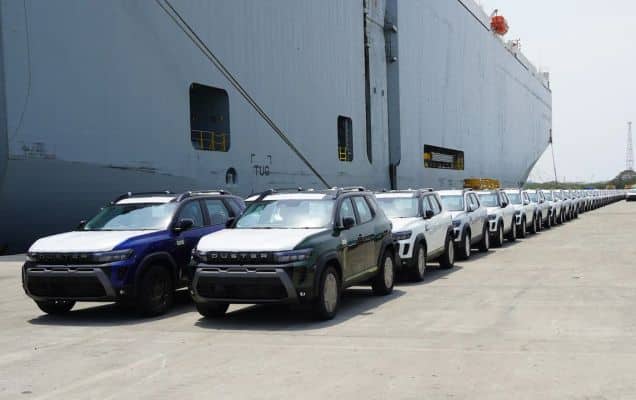
Made-In-India Renault Duster Goes Global, 750 Cars Shipped To Africa

Media Coverage

Made-In-India Renault Duster Goes Global, 750 Cars Shipped To Africa
NM on the go

Nm on the go

Always be the first to hear from the PM. Get the App Now!
...
India is not only a fast-growing economy, but also a credible one: PM Modi
June 22, 2026
India is not only a fast-growing economy, but also a credible one: PM
Along with being a rising power, India is also a reliable power: PM
For India, Nation First is the highest guiding principle: PM
Maoist terror is breathing its last in India: PM
The shift in mindset from "this can never be done" to "this will be done" is India's greatest achievement: PM
The government is empowering the poor and middle-class: PM
The collective efforts of 140 crore Indians will realise the dream of a Viksit Bharat: PM

Swar Sadhana, Manokamana, Aradhana - after such an auspicious beginning, it would have been wonderful if your program had continued. Greetings to all of you.

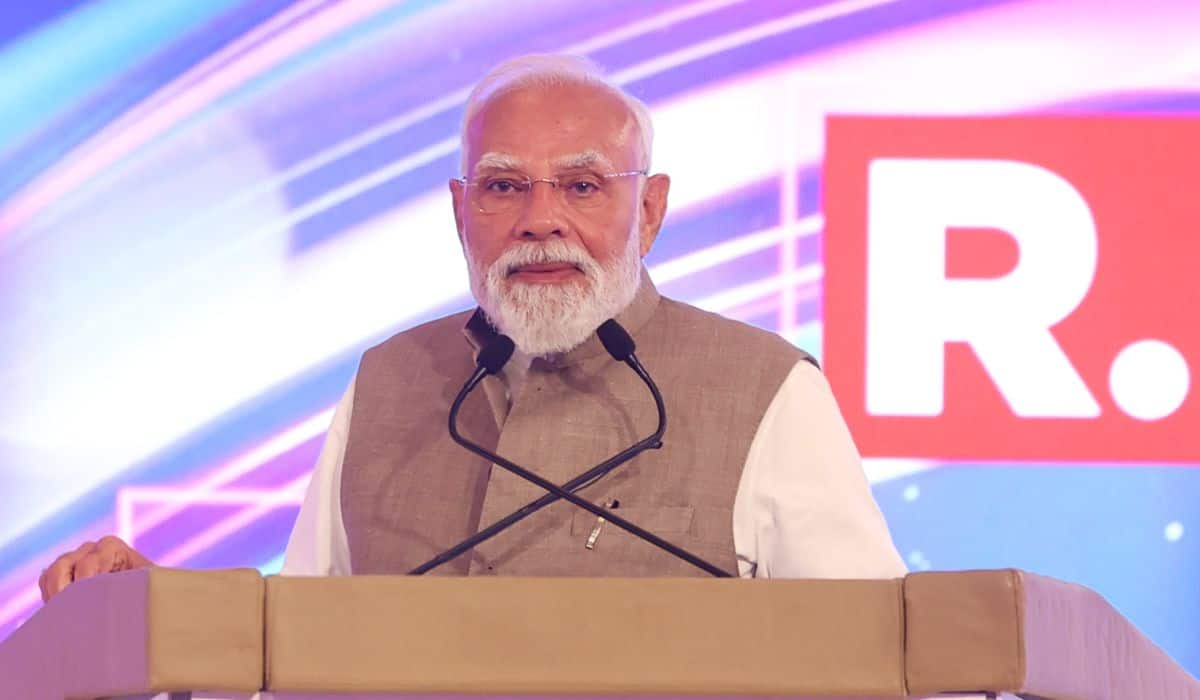
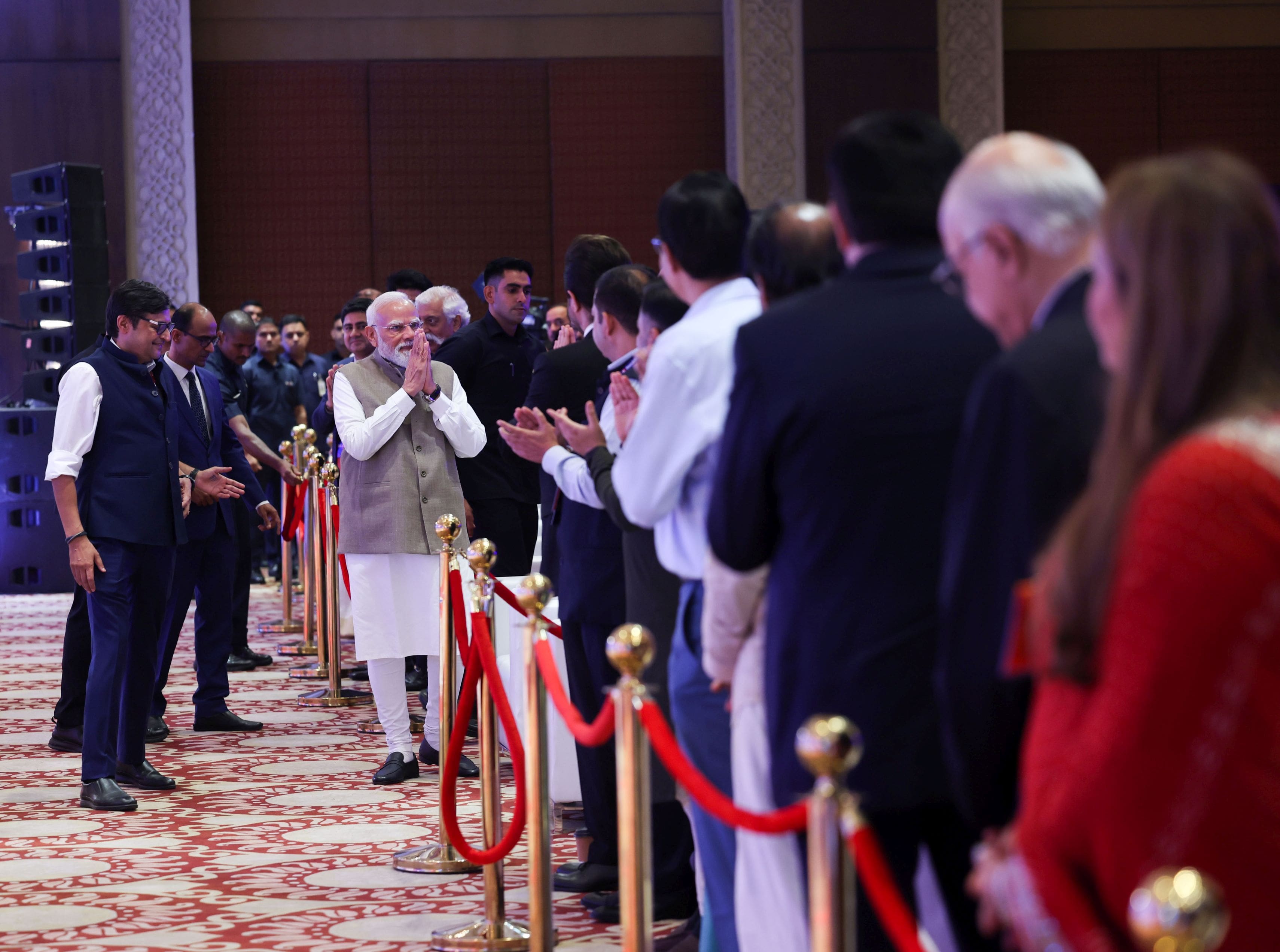
I extend my regards to all viewers of Republic TV Network, which now broadcasts in many languages. I also welcome all companions who have come to participate in this summit. In 24-hour news channels, breaking news holds great importance. And nowadays, if you look anywhere in the world, the entire world seems to be in breaking news mode. Amidst such hustle and bustle, you are hosting and participating in this summit, and therefore you deserve special congratulations. This time, your theme of discussion is equally significant: Great Power India: Nation First.

Friends,

Our scriptures say: Yato Dharmastato Jayah! - meaning, the root of victory and strength is Dharma. And Dharma means duty, Dharma means justice, Dharma means equality, Dharma means dialogue, Dharma means compassion. This very essence is embedded in the spirit of Nation First. India views its power through this lens, weighing it on this scale.

Friends,

India has another unique quality, which the world has now acknowledged. We are not a nation that reacts hastily to momentary events. We are a nation that has witnessed both development and destruction, endured them as well. We are a nation with the memory chip of ages embedded in our consciousness - a nation with the memory chip of millennia. That is why what India is doing today - and I say this with full responsibility - what India is doing today will write the future of the next thousand years. This is India’s greatest guarantee to the world. India is not only a fast-growing economy, it is also a credible economy. Alongside being a rising power - and you even stretched the dictionary to call it a superpower - I would certainly say that India is a reliable power. Just a few days ago, I returned from the G7 Summit, and every leader, every country understands very well that for today’s India, Nation First is the greatest mantra, the highest principle.

Friends,

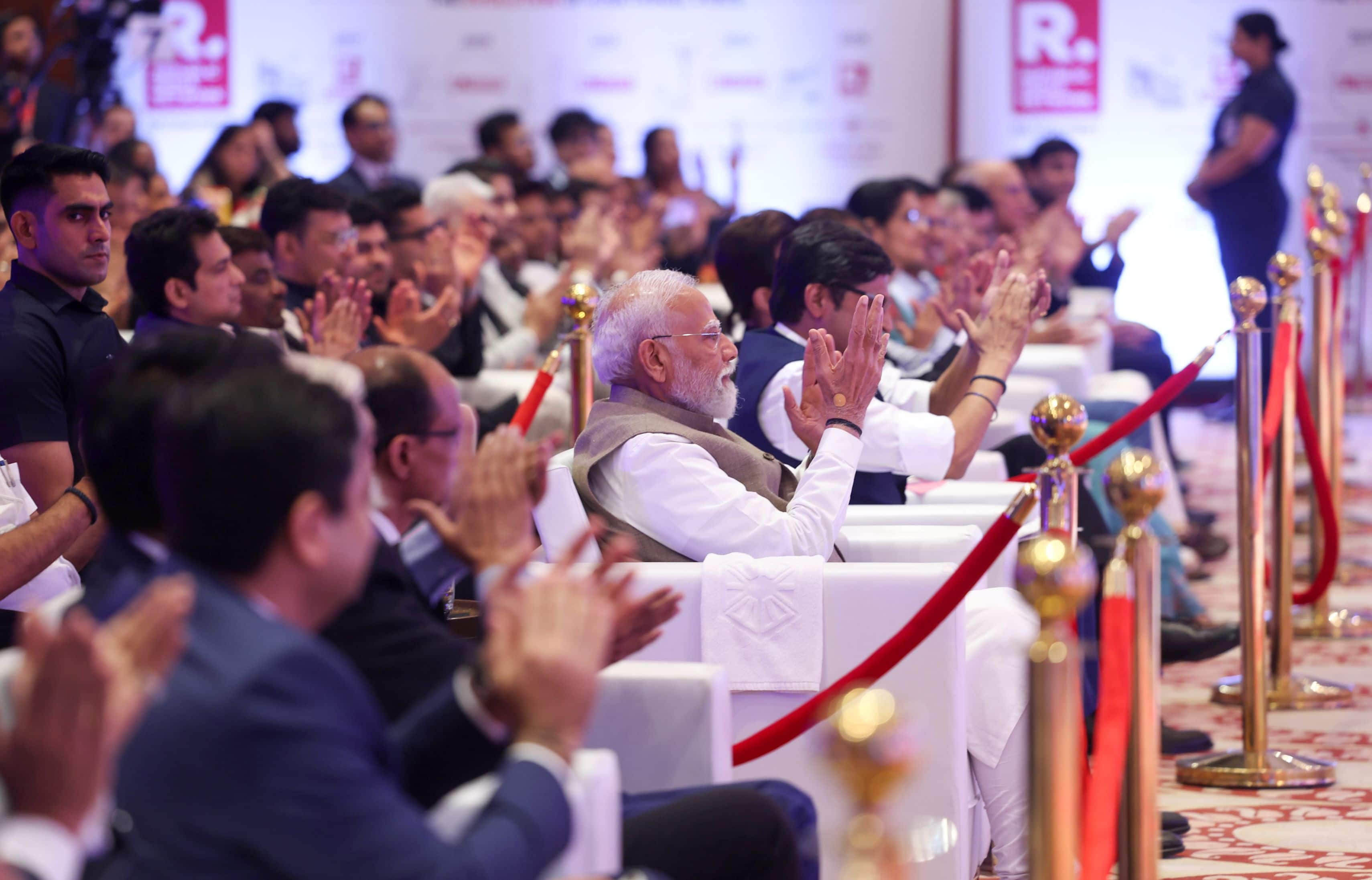
Just a few days ago, our government completed 12 years. Arnab even compelled you to clap for that. If you weigh the achievements of the past twelve years, you will find that at the core of every decision, every step, every effort lies the spirit of Nation First. From the Swachh Bharat Abhiyan to Make in India, from emphasizing khadi to encouraging local products - all these initiatives succeeded because the people of the country placed the nation above all and fulfilled their duty. I salute the citizens of this country.

Friends,

Here with us is our companion, Shri Sridhar Vembu ji. When our entrepreneurs walk with the spirit of Nation First, when they set their goals by understanding the needs of the nation, institutions are built and the country prospers. I don’t know how much has been discussed here about Shri Vembu ji’s work, but recently I went to VivaTech in France. There were nearly 1.5 to 2 lakh young people there. As I and the President of France walked through different stalls to see the innovations of the youth, we came to the Zoho stall. I was astonished and filled with pride to see the crowd of European youth gathered there, eager to understand what this new creation was. Perhaps in India it is not discussed as much, but what I saw in France was remarkable. Congratulations to you.

Friends,

The impact of Nation First in government policy and decisions can be seen in our tribal regions. I am not here to deliver philosophy, but let me share a few light examples so you can understand how work happens. I speak of tribal areas - a population of more than 100 million, the tribal society. We all know that for decades, Maoist terror had entrenched itself there. Even in the 21st century, these terrorists did not allow a single facility to reach those areas. No government vehicle could pass through; they would be riddled with bullets. Many governments came and went, generations passed, and it seemed this misfortune of violence would remain forever. You can imagine - between 2004 and 2014, in those ten years, due to Maoist terror, more than 17,000 violent incidents occurred, and nearly 7,000 lives were lost.

Friends,

For you, today’s headline or half-hour TV debate might be that Maoist terrorism has ended. But things don’t happen like that. It requires immense effort, and that is why I want to explain. Nowadays, some people keep waving the Constitution, but when they were in government, in Naxal-affected areas, even uttering the word “Constitution” could get you shot. At that time, they sat silently, their hands trembling, unable to hold up the Constitution. The Congress was hardly affected by that painful situation.

Friends,

After 2014, we moved forward with the spirit of Nation First to change the situation. We did not just talk, we did not just announce, we acted. We resolved to uproot Naxalism-Maoism completely, and today the whole country can see the result. Maoist terrorism in India is now counting its final breaths.

And friends,

Often the final outcome is so vast and significant that the hard work behind it goes unnoticed. I want to especially tell Republic TV viewers about this.

Friends,

In those Naxal-affected areas where even going out in daylight would terrify ordinary people - fearing abduction, extortion, or looting - where even speaking of development was impossible, we advanced with a pledge of progress. In the past 12 years, our government has built more than 12,000 kilometers of roads in such regions. Many times, our construction equipment was burned, contractors were chased away. If 25 people worked on a road, 200 police personnel had to guard them so the work could continue. We did all this because we had resolved to do it.

Friends,

We built more than 9,500 mobile towers. Earlier, even one tower could not be installed, and if installed, it would be destroyed. Because they always wanted to fuel anger. We brought mobile connectivity to nearly 45,000 villages. In Naxal-affected districts, more than 1,800 bank branches were opened. Around 75,000 banking correspondents and more than 6,000 new post offices were established. We did not rely only on bombs, guns, and bullets, friends - we invested every ounce of strength given by God to win hearts.

Friends,

With firm resolve, we went into Naxal-affected areas to fulfill the hopes and aspirations of ordinary people. You will be astonished - a notorious Naxalite, with a bounty of crores on his head, his mother received a ration card from us for the first time. Her son never allowed her to get one, because he wanted to run his terror regime. There are countless such incidents. I was shocked. And the government of that time sat silently, blind to the Constitution. But the result of all these efforts was a new wave of trust among the people. Today, look at Bastar - instead of bombs and guns, Bastar Olympics are celebrated with great enthusiasm. Two editions have already been held. In the first, more than 1.5 lakh youth participated, and in the second, nearly 4 lakh youth joined. Where once there was terror, now talent is finding opportunity, and sports are flourishing.

Friends,

One of the greatest achievements of these 12 years of service has been building an India filled with hope and aspiration, rising out of despair.

Friends,

Naxalism may have been concentrated in certain areas, but its pain was felt across every corner of India. And when news began to spread that Naxalism was ending, the sense of trust was not limited to those affected regions - it spread across the entire nation. In the ten years before 2014, under the Congress government, the discontent was not only about governance. The despair was far deeper. The nation had lost hope. People felt nothing could change, nothing could improve.

Friends,

In the past 12 years, India has transformed despair into hope, and this gives me the greatest satisfaction. Today, everyone feels that with a little more effort, things can be achieved. Gone are the days when the only refrain was “It cannot happen, it cannot happen.” That era has passed. Today, the spirit is “It will happen.” This new confidence is India’s true achievement, and this is real power. Challenges remain, and they always will. Challenges are shape-shifters, appearing in new forms. But whatever form they take, we will fight and we will win. When the nation moves forward with the belief that “it can be done and we will do it,” dreams are fulfilled.

Friends,

I want to speak here about more than 100 districts and over 500 blocks in India. These were left behind on every parameter of development, and earlier governments had stamped them as “backward districts” and “backward areas.” We lifted these vast regions out of the despair of backwardness and ignited aspirations for development. First, we changed their identity. We said these are “aspirational districts,” these are “aspirational blocks.” We created programs for aspirational districts and aspirational blocks, and the government began working meticulously on every parameter of development. In each district, we identified three aspects to overcome, in others six aspects, and focused efforts began. Today, these aspirational districts and blocks are driving the overall growth of states. Earlier, they dragged growth backward. These districts had large populations living in poverty and deprivation. In recent years, 250 million poor people have defeated poverty, and aspirational districts have played a major role in this.

Friends,

We see that when one person is cured of illness, it is not just that individual who recovers - the whole family feels relief. Similarly, when a son or daughter achieves something, it is not just their achievement, but the entire family is filled with pride and confidence. In the same way, when someone rises out of poverty, the entire society benefits, the nation benefits. When 250 million people have come out of poverty and entered the neo-middle class, the benefit is not limited to those families. The middle class also gains, because these are new consumers who drive the economy, ultimately creating opportunities for the middle class. Thus, poverty reduction is not merely a matter of welfare - it is a story of expanding opportunities, a source of new aspirations.

Friends,

The vast middle class that has emerged in the country over the past 12 years has been a major priority for the government. For the ease of living of the middle class, the government has worked at every level. Take the dream of owning a home. Every middle-class family desires to have their own house. In 2014, if a family wanted to buy a home, home loans came with double-digit interest rates. Today, loans are available from banks at 7–8 percent interest. Earlier, getting a loan was like winning a war, requiring immense effort. Today, it is possible from the comfort of one’s home. Here in Delhi-NCR, people know how thousands of urban middle-class homes were stuck incomplete. Families had paid their life savings to builders, who showed glossy pamphlets and dreams, but the houses were never delivered. Families had to pay rent while waiting endlessly for their homes. It was a terrible situation. To complete these stalled projects, we created a special fund of ₹25,000 crore. You will be glad to know that nearly 60,000 long-delayed homes have now been delivered across the country.

Friends,

Another aspect that affects daily life is connectivity and transport. Today, if you look at social media, tourists from around the world are amazed by our metro system.

Friends,

In 2014, about 2.8 million people traveled daily by metro. Today, nearly 12.8 million people travel by metro every day. Now, high-speed trains like Vande Bharat, Namo Bharat, and Amrit Bharat are connecting the nation. With better roads and highways, not only is time saved, but vehicle maintenance costs have also reduced. In recent years, the number of airports has doubled. This has given the middle class in many smaller cities the opportunity to fly for the first time.

Friends,

In the past 12 years, India has not only increased the earnings of the middle class but also their savings. In 2013–14, income up to about ₹2 lakh was taxable, and the middle class bore that burden. Today, income up to ₹12 lakh is tax-free. In other words, tax-free income has multiplied several times.

Friends,

GST reforms have also brought great convenience to the middle class. Filing taxes has become easier, saving both time and money. Income tax returns can now be filed from home, and even settlement issues are handled in a faceless manner.

Friends,

A major expense for middle-class families is treatment for diabetes and other lifestyle-related conditions. At Jan Aushadhi Kendras, such medicines are available at an 80 percent discount. If earlier you spent ₹1,000, today you spend only ₹200, saving ₹800. Over the years, this has resulted in savings of nearly ₹40,000 crore for countless families. Another significant portion of the middle-class budget goes toward healthcare for the elderly. Today, every citizen above 70 years of age is entitled to free treatment up to ₹5 lakh.

Friends,

It is human nature to forget past difficulties when conveniences become routine. Earlier, you paid tax on ₹2 lakh income; now, up to ₹12 lakh is tax-free. Yet applause comes only when reminded. On the other hand, if a bus or train is delayed, complaints pour in. This is the most vocal class.

Friends,

As I said, people forget old troubles. You may not even remember the difficulties once faced in getting a driving license or passport. Earlier, it was a struggle. Today, obtaining a driving license is easier, and passports are usually issued within three days.

Friends,

I know the way our government works has raised people’s aspirations. Once a demand is met, people immediately seek something better, something upgraded. If earlier the demand was for a new road, once built, the next question is: when will the metro arrive? Earlier, expectations were that trains should arrive on time and provide clean seating. Today, the demand is: why isn’t Vande Bharat running on our route?

Friends,

Some see this as dissatisfaction, but it is aspiration. In fact, even the Congress party constantly says, “Modi ji, this should happen, that should happen.” They trust that if anyone can deliver, it is this government.

Friends,

Aspirations arise only where people believe dreams can be fulfilled. This is the aspiration of India’s youth, poor, and middle class. Today, it is the driving energy of BJP-NDA governments.

Friends,

On one side, a large section of the nation is aspirational. On the other side, there is a political group whose life mantra has become “Always Against.” This group is filled with chronic dissatisfaction. Let me share some symptoms so Republic TV viewers can recognize them. They will say, “Why doesn’t this place have 24-hour electricity?” But the next day, they protest against dams, solar parks, thermal plants, or nuclear projects. One day they ask why there is no electricity, the next day they oppose power generation. These are the same people who once opposed mineral mining, but today ask where India’s rare earth mineral reserves and supply chains are, and why India doesn’t have an EV ecosystem like other countries. They once debated “data versus flour,” but now demand to know what India has done in AI. In one breath, they say AI should have advanced further, and in the next, they oppose data centers and semiconductor plants, listing endless drawbacks on social media, TV debates, and newspapers.

Friends,

These people bring up corruption indices from around the world to put India in the dock. Their ecosystem’s media amplifies it 24/7. But when action is taken against corruption, they are the first to cry foul, claiming raids and investigations are harassment. They question why action is taken now, why not then, why against A and not B. This is their game.

Friends,

It is vital for the nation to understand their character. Especially our youth, and Gen Z in particular, must recognize them quickly. Otherwise, as I say, “Suryavanshi has arrived,” and he explains swiftly.

Friends,

These people claim the armed forces lack freedom and weapons. But when the government makes a defense deal or buys modern arms, they are the first to question why. They challenge India’s diplomacy worldwide, but when India builds infrastructure projects for diplomacy and security, they protest loudly.

Friends,

At this crucial juncture, India must identify such people, understand their flawed arguments, and remain alert. Unfortunately, today the main opposition party, Congress, has been taken over by such elements. To imagine Congress speaking of Nation First, as it did in Gandhi ji’s time, is now a false dream.

Friends,

The world today is challenging old paradigms, and the scale of disruption is immense. But these challenges also bring new opportunities. Every youth, entrepreneur, innovator, and startup in India must focus on these opportunities. The government, with the spirit of Nation First, stands fully with the people. India is now riding the Reform Express. This momentum will only accelerate. From this Republic TV platform, I say again: our dreams are vast, and our efforts will be equally immense. The collective endeavor of 1.4 billion Indians will build a developed India. And I assure you, you will see this developed India with your own eyes. It will not be left for future generations to wait. With this confidence, I once again extend my best wishes to Republic TV, its viewers, and all of you. Thank you very much!