Shri Modi hears people's grievances at SWAGAT session

Published By : Admin | December 29, 2012 | 22:03 IST

Shri Narendra Modi revives SWAGAT after 3 months gap due to code of conduct

Shri Narendra Modi resolves to lend credibility to SWAGAT online programme through fast redressal of people’s grievances 


Shri Narendra Modi today made it a point to listen to people’s grievances stationed at different district places from Secretariat through SWAGAT online, immediately after presiding over his first State Cabinet meeting on Saturday 29th December 2012.

Speaking on the occasion, Mr. Modi said he was happy to start the proactive programme which remained suspended owing to code of conduct in force for nearly three months due to just concluded State Assembly elections. He understood there was increase in people’s problems during this period. It should be overcome now.

Mr. Modi expressed his resolve to implement the unique Aapno Taluko-Vibrant Taluko (ATVT) project a part of decentralization of administration down to Taluka level. There is need to lend credibility to dispensing justice and take the pro-poor schemes to the target groups.

Other members of his council of ministers were also present during the proceeding, besides Secretaries of departments concerned and officers of respective district administration, Chief Minister’s Secretary Shri A.K. Sharma, senior officers Shri J.P. Modha and Shri Chandresh Kotak.


SWAGAT- Redressing the Common Man’s Grievances

SWAGAT- functional from the year 2003 is an innovative concept that enables direct communication between the citizens and the Chief Minister.


During the session

•Grievances are logged in, transmitted and made available online to the officers concerned who have to reply within 3 to 4 hours.

•The departments concerned then have to be ready with the replies, before 3 p.m., when the Chief Minister holds video conference with all the districts concerned.

• Applicants are called one by one and the chief minister examines each complaint in detail.

•The information sent by the department is also reviewed online in the presence of the complainant and the Collector/District Development Officer/Superintendent of Police and other officials concerned.

•Attempts are made to offer a fair and acceptable solution on the same day and no applicant has ever left without any firm reply to his grievance


Shri Modi extended the SWAGAT program up to village level in the name of GRAM SWAGAT on 1st February 2011. Swagat Online program going rural has helped the rural people living even in remotest corner of the state get their problems solved quickly.

SWAGAT has been the recipient of various prestigious awards including the United Nations Public Service Award for 'Improving Transparency, Accountability and Responsiveness in Public Service'

Explore More
ശ്രീരാമജന്മഭൂമി ക്ഷേത്രത്തിലെ പതാക ഉയർത്തൽ ഉത്സവത്തിനിടെ പ്രധാനമന്ത്രി നടത്തിയ പ്രസം​ഗം

ജനപ്രിയ പ്രസംഗങ്ങൾ

ശ്രീരാമജന്മഭൂമി ക്ഷേത്രത്തിലെ പതാക ഉയർത്തൽ ഉത്സവത്തിനിടെ പ്രധാനമന്ത്രി നടത്തിയ പ്രസം​ഗം
UPI — an eventful journey

Media Coverage

UPI — an eventful journey
NM on the go

Nm on the go

Always be the first to hear from the PM. Get the App Now!
...
PM chairs 53rd PRAGATI Meeting
August 25, 2026
PM reviews six key infrastructure projects across the Railway, Road and Power sectors
Projects reviewed span across 9 States with cumulative investment of more than ₹30,000 crore
PM says Infrastructure projects should be viewed as an integrated whole, rather than as individual sections or packages
PM calls for continuous reforms across all stages of project implementation and a proactive work culture across Ministries and States
PM says Speed must go hand-in-hand with quality
While reviewing AgriStack, PM emphasises the need to leverage the latest digital technologies including AI to derive greater value from agricultural data
On cyber fraud and ‘digital arrest’, PM stresses training, public awareness, cyber-safety education and coordinated action

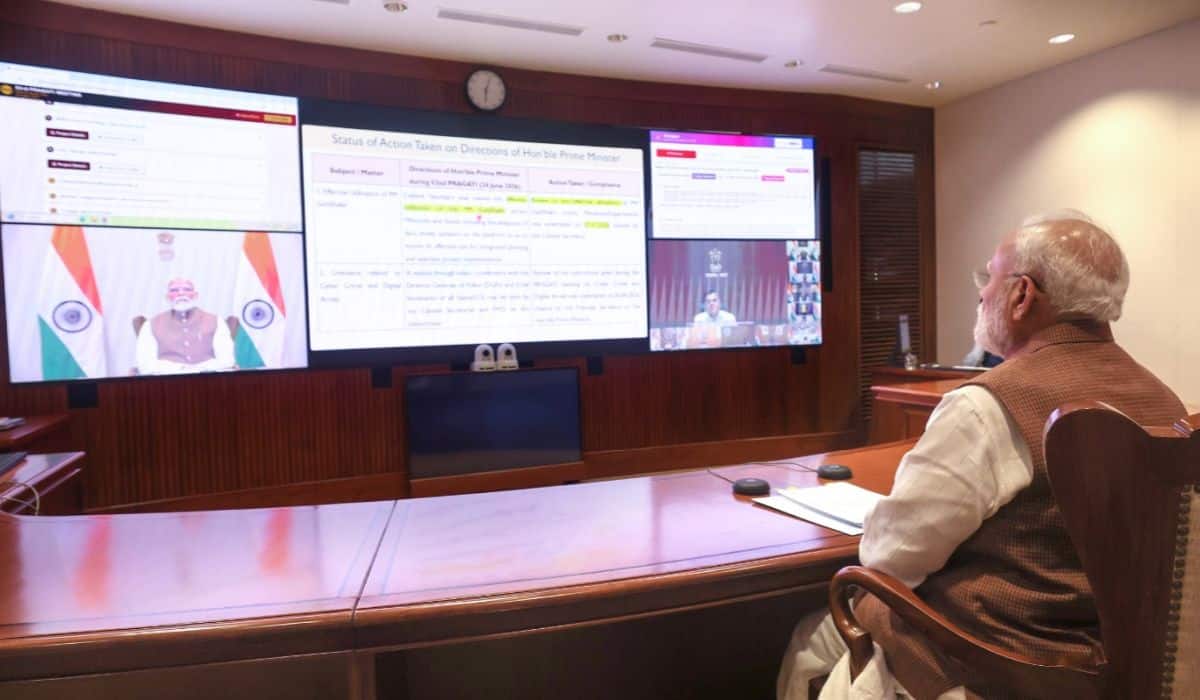
Prime Minister Shri Narendra Modi chaired the 53rd meeting of PRAGATI, the ICT-enabled, multi-modal platform for Pro-Active Governance and Timely Implementation, at Seva Teerth earlier today.

During the meeting, Prime Minister reviewed six key infrastructure projects across the Railway, Road and Power sectors, spanning nine States with a cumulative cost of more than ₹30,000 crore. The projects, significant for strengthening connectivity, supporting industrial and economic activity and improving public services, were reviewed with particular emphasis on adherence to timelines, inter-agency coordination, resolution of pending issues and expeditious completion.

Prime Minister emphasised that delays in infrastructure projects have consequences beyond cost escalation, as they also postpone the benefits intended for citizens, businesses and the economy. He said that infrastructure projects should be viewed and monitored as an integrated whole, rather than as isolated sections, stretches or packages. He noted that progress in individual packages should ultimately translate into timely completion and operationalisation of the entire project. Ministries and States were therefore asked to adopt an end-to-end approach, and address critical gaps that could delay the overall commissioning and delivery of benefits. He called for fostering a proactive work culture across Ministries and State Governments, with greater ownership at every level of project implementation.

Prime Minister stressed the need to explore common utility corridors for infrastructure services, wherever feasible, particularly while planning major transport and infrastructure projects. He called upon Ministries and States to examine such integrated approaches at the planning stage itself, keeping in view their technical and economic feasibility.

Prime Minister said that speed of execution must be accompanied by uncompromising quality. He called upon Ministries, States and implementing agencies to adopt modern technologies and strengthen quality assurance and supervision at every stage.

While reviewing AgriStack under the Digital Agriculture Mission, Prime Minister emphasised the need to leverage the latest digital technologies, including Artificial Intelligence, to derive greater value from agricultural data. He stressed that the data ecosystem should be effectively utilised across the agricultural value chain, from input planning to processing, enabling more informed interventions, better targeting and data-driven decision-making. He appreciated the efforts of the States and the Central Government in building the AgriStack ecosystem and called for further strengthening its use for delivering better outcomes for farmers.

During the review of cyber fraud cases, including incidents of digital arrest, Prime Minister said that prevention must be strengthened through a sustained focus on training, awareness and education. He stressed the need for continuous and targeted public-awareness campaigns, particularly for senior citizens, youth and other vulnerable sections, to familiarise them with common fraud techniques, warning signs and safe digital practices. He also called for regular capacity-building of personnel involved so that emerging modes of cyber fraud are identified and acted upon swiftly.