Inclusivity has been at the heart of India's G20 Presidency: PM Modi

Published By : Admin | November 30, 2023 | 09:52 IST

During G20 presidency, New Delhi revitalised multilateralism, amplified Global South’s voice, championed development, and fought for the empowerment of women

Today marks 365 days since India assumed the G20 presidency. It is a moment to reflect, recommit, and rejuvenate the spirit of “Vasudhaiva Kutumbakam” (OneEarth, One Family, One Future). As we undertook this responsibility last year, the global landscape grappled with multifaceted challenges— recovery from the Covid-19 pandemic, looming climate threats, financial instability, and debt distress in developing nations, all amid declining multilateralism. In the midst of conflicts and competition, development cooperation suffered, impeding progress.

Assuming the G20 Chair, India sought to offer the world an alternative to the status quo, a shift from GDP-centric to human-centric progress. India aimed to remind the world of what unites us, rather than what divides us. Finally, the global conversation had to evolve the interests of the few had to give way to the aspirations of the many. This required a fundamental reform of multilateralism as we knew it.

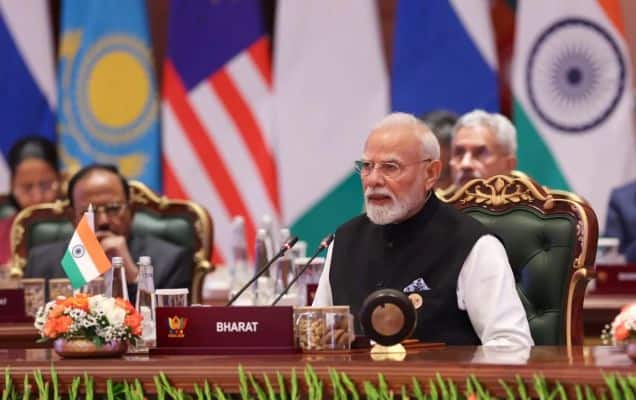
Inclusive, ambitious, action-oriented and decisive —these four words define our approach as G20 president, and the New Delhi Leaders’ Declaration (NDLD), unanimously adopted by all G20 members, is testimony to our commitment to deliver on these principles. Inclusivity has been at the heart of our presidency. The inclusion of the African Union(AU) as a permanent member of the G20 integrated 55 African nations into the forum, expanding it to encompass 80% of the global population. This proactive stance has fostered a more comprehensive dialogue on global challenges and opportunities.

The first-of-its-kind “Voice of the Global South Summit”, convened by India in two editions, heralded a new dawn of multilateralism. India main-streamed the Global South’s concerns in international discourse and has ushered in an era where developing countries take their rightful place in shaping the global narrative. Inclusivity also infused India’s domestic approach to G20, making it a people’s presidency that befits the world’s largest democracy. Through “Jan Bhagidari”(people's participation) events, G20 reached 1.4 billion citizens, involving all states and Union Territories (UTs) as partners, On substantive elements, India ensured that international attention was directed to broader developmental aims, aligning with G20's mandate.

At the critical midpoint of the 2030 Agenda, India delivered the G20 2023 Action Plan to Accelerate Progress on the Sustainable Development Goals (SDGs), taking a cross-cutting, action-oriented approach to interconnected issues, including health, education, gender equality and environmental sustainability. A key area driving this progress is robust Digital Public Infrastructure (DPI). Here, India was decisive in its recommendations, having witnessed the revolutionary impact of digital innovations like Aadhaar, UPI, and Digilockerfirst-hand. Through G20, we completed the Digital Public Infrastructure Repository, a significant stride in global technological collaboration. This repository, featuring over 50 DPIs from 16 countries, will help the Global South build, adopt, and scale DPI to unlock the power of inclusive growth.

For our One Earth, we introduced ambitious and inclusive aims to create urgent, lasting, and equitable change. The Declaration’s “Green DevelopmentPact” addresses the challenges of choosing between combating hunger and protecting the planet, by outlining a comprehensive roadmap where employment and ecosystems are complimentary, consumption is climate-conscious, and production is planet-friendly.

In tandem, the G20 Declaration calls for an ambitious tripling of global renewable energy capacity by 2030. Coupled with the establishment of the Global Biofuels Alliance and a concerted push for Green Hydrogen, the G20’s ambition to build a cleaner, greener world is undeniable. This has always been India’s ethos, and through Lifestyle for Environment (LiFE), the world can benefit from our age-old sustainable traditions.

Further, the Declaration underscores our commitment to climate justice and equity, urging substantial financial and technological support from the Global North. For the first time, there was a recognition of the quantum jump needed in the magnitude of development financing, moving from billions to trillions of dollars. The G20 acknowledged that developing countries require $5.9 trillion to fulfil their Nationally Determined Contributions (NDCs) by 2030. Given the monumental resources required, the G20 emphasised the importance of better, larger, and more effective Multilateral Development Banks. Concurrently, India is taking a leading role in UN reforms, especially in the restructuring of principal organs like the UN Security Council, that will ensure a more equitable global order.

Gender equality took centre stage in the Declaration, culminating in the formation of a dedicated Working Group on the Empowerment of Women next year. India’s Women’s Reservation Bill 2023, reserving one-third of India's Parliament and state legislative assembly seats for women, epitomises our commitment to women-led development.

The New Delhi Declaration embodies a renewed spirit of collaboration across these key priorities, focusing on policy coherence, reliable trade, and ambitious climate action. It is a matter of pride that during our Presidency, the G20 achieved 87 outcomes and 18 adopted documents, a marked rise from the past.

During our G20 presidency, India led deliberations on geopolitical issues and their impact on economic growth and development. Terrorism and the senseless killing of civilians are unacceptable, and we must address it with a policy of zero tolerance. We must embody humanitarianism over hostility and reiterate that this is not an era of war.

I am delighted that during our Presidency India achieved the extraordinary: It revitalised multilateralism, amplified the voice of the Global South, championed development, and fought for the empowerment of women, everywhere.

As we hand over the G20 Presidency to Brazil, we do so with the conviction that our collective steps for people, planet, peace, and prosperity, will resonate for years to come.

Explore More
Today, the entire country and entire world is filled with the spirit of Bhagwan Shri Ram: PM Modi at Dhwajarohan Utsav in Ayodhya

Popular Speeches

Today, the entire country and entire world is filled with the spirit of Bhagwan Shri Ram: PM Modi at Dhwajarohan Utsav in Ayodhya
India's crude supply secure, LPG production increased: Hardeep Puri

Media Coverage

India's crude supply secure, LPG production increased: Hardeep Puri
NM on the go

Nm on the go

Always be the first to hear from the PM. Get the App Now!
...
India AI Impact Summit 2026: Shaping a human-centric future for AI
February 22, 2026

At a defining moment in human history, the world gathered at the AI Impact Summit 2026 in New Delhi. For us in India, it was a moment of immense pride and joy to welcome heads of state and government, delegates, and innovators from across the world.

India brings scale and energy to everything it does, and this summit was no exception. Representatives from over 100 nations came together. Innovators showcased cutting-edge AI products and services. Thousands of young people could be seen in the exhibition halls, asking questions and imagining possibilities. Their curiosity made this the largest and most democratized AI summit in the world. I see this as an important moment in India’s development journey, because a mass movement for AI innovation and adoption has truly taken off.

Human history has witnessed many technological shifts that changed the course of civilization. Artificial intelligence belongs in the same league as fire, writing, electricity, and the Internet. But with AI, changes that once took decades can unfold within weeks and impact the entire planet.

AI is making machines intelligent, but it is even more of a force multiplier for human intent. Making AI human-centric instead of machine-centric is vital. At this summit, we placed human well-being at the heart of the global AI conversation, with the principle of “Sarvajana Hitaya, Sarvajana Sukhaya” (Welfare for All, Happiness of All).

I have always believed that technology must serve people, not the other way around. Whether it is digital payments through UPI or COVID vaccination, we have ensured that digital public infrastructure reaches everyone, leaving none behind. I could see the same spirit in the summit, in the work of our innovators in domains like agriculture, security, assistance for persons with disabilities, and tools for multilingual populations.

There are already examples of the empowering potential of AI in India. Recently, Sarlaben, an AI-powered digital assistant launched by Indian dairy cooperative AMUL, is providing real-time guidance to 3.6 million dairy farmers, mostly women, about cattle health and productivity in their own language. Similarly, an AI-based platform called Bharat VISTAAR gives multilingual inputs to farmers, empowering them with information about everything from weather to market prices.

Humans must not become data points, raw material for machines

Humans must never become mere data points or raw material for machines. Instead, AI must become a tool for global good, opening new doors of progress for the Global South. To translate this vision into action, India presented the MANAV framework for human-centric AI governance.

M – Moral and ethical systems: AI should be based on ethical guidelines.
A – Accountable governance: Transparent rules and robust oversight.
N – National sovereignty: Respect for national rights over data.
A – Accessible and inclusive: AI should not be a monopoly.
V – Valid and legitimate: AI must adhere to laws and be verifiable.

MANAV, which means “human,” offers principles that anchor AI in human values in the 21st century.

Trust is the foundation upon which AI’s future rests. As generative systems flood the world with content, democratic societies face risks from deepfakes and disinformation. Just as food carries nutrition labels, digital content must carry authenticity labels. I urge the global community to come together to create shared standards for watermarking and source verification. India has already taken a step in this direction by legally requiring clear labeling of synthetically generated content.

The welfare of our children is a matter close to our hearts. AI systems must be built with safeguards that encourage responsible, family-guided engagement, reflecting the same care we bring to education systems worldwide.

Technology yields its greatest benefit when shared, rather than guarded as a strategic asset. Open platforms can help millions of youth contribute to making technology safer and more human-centric. This collective intelligence is humanity’s greatest strength. AI must evolve as a global common good.

We are entering an era where humans and intelligent systems will co-create, co-work, and co-evolve. Entirely new professions will emerge. When the Internet began, no one could imagine the possibilities. It ended up creating a huge number of new opportunities, and so will AI.

I am confident that our empowered youth will be the true drivers of the AI age. We are encouraging skilling, reskilling, and lifelong learning by running some of the largest and most diverse skilling programs in the world.

India is home to one of the world’s largest youth populations and technology talent. With our energy capacity and policy clarity, we are uniquely positioned to harness AI’s full potential. At this summit, I was proud to see Indian companies launch indigenous AI models and applications, reflecting the technological depth of our young innovation community.

To fuel the growth of our AI ecosystem, we are building a robust infrastructure foundation. Under the India AI Mission, we have deployed thousands of Graphics processing units and are set to deploy more soon. By accessing world-class computing power at highly affordable rates, even the smallest start-ups can become global players. Further, we have established a national AI Repository, democratizing access to datasets and AI models. From semiconductors and data infrastructure to vibrant start-ups and applied research, we are focusing on the complete value chain.

India’s diversity, democracy, and demographic dynamism provide the right atmosphere for inclusive innovation. Solutions that succeed in India can serve humanity everywhere. That is why our invitation to the world is: Design and develop in India. Deliver to the world. Deliver to humanity.

Source: The Jerusalem Post

The writer is the Prime Minister of India.