Your Excellency President Xi Jinping,
Your Excellency President Jacob Zuma,
Your Excellency President Michel Teme,
Your Excellency President Vladimir Putin,
Distinguished Members of the BRICS Business Council.
It gives me great pleasure to welcome you to this meeting with the BRICS Business Council.
The Council reflects the full economic diversity and depth of business engagement between our countries.
I thank their contribution to the BRICS agenda of building inclusive economies through responsive and collective solutions.
Excellencies and Friends,
Promoting economic and commercial engagement has been a foundational impulse in the creation of BRICS.v It is, therefore, encouraging to see the BRICS Business Council take healthy shape three years after we set it up in Durban.
Our business communities are the strongest proponents for closer and faster commercial cooperation among BRICS.
Their partnerships create wealth and value in our societies.v And, enhance productivity and create jobs in our economies through technological innovations and capacity addition.
I applaud that vision. I share that vision.
Excellencies,
In India, we have undertaken substantial reforms in the last two years to streamline and simplify governance, especially doing business in India.
The results are clearly visible.
We have moved up in almost all global indices that measure such performances.
We have transformed India into one of the most open economies in the world today.
Growth is strong and we are taking steps to keep the momentum going.
I am happy to note that the BRICS Business Council also has matching priorities of ease of doing business, dismantling trade barriers, promoting skills development, establishing manufacturing supply chains and infrastructure development.
The Council’s work holds much promise for expansion of trade and business among BRICS countries.

Excellencies,
The New Development Bank is fully operational now. Its success is a concrete result of our common efforts.
We congratulate the NDB and its management for commencing the first batch of projects.
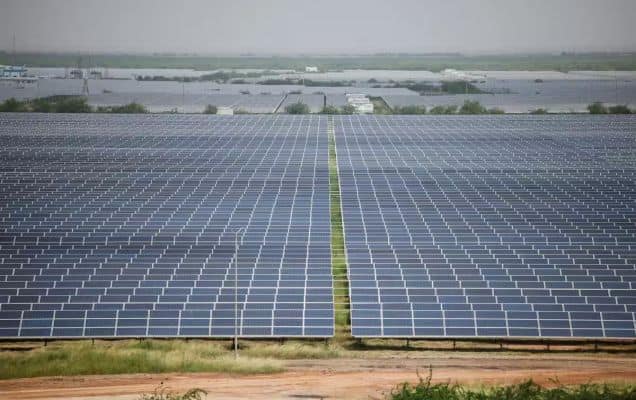
NDB has kept clean energy and green and sustainable infrastructure as its priority.
We welcome it.
We would encourage the BRICS Business Council to work closely with the NDB on identifying and implementing prospective economic projects.
India hosted the First BRICS Trade Fair in New Delhi two days ago with active participation from all your countries.
Such activities must be promoted to generate greater business awareness and commercial exchanges.
Excellencies,
Let me conclude by saying that as Governments, we count on the BRICS Business Council to work with us to achieve our common aim of:
Strengthening mutual trade;
Enhancing business opportunities;
Building investments linkages;
Promoting innovation; and
and removing bottlenecks to intra-BRICS commerce.
In a little while, we will hear from the BRICS Business Council and the leadership of NDB.
Thank you. Thank you very much.
The business of BRICS! Summit leaders meet with the @BRICS2016 Business Council pic.twitter.com/P1QyMQom8K
— Vikas Swarup (@MEAIndia) October 16, 2016
PM begins remarks at BRICS business council:Promoting economic &commercial engagement has been a foundational impulse in creation of BRICS pic.twitter.com/5Fdapdharj
— Vikas Swarup (@MEAIndia) October 16, 2016
PM:Business communities are strongest proponents for closer &faster commercial coop'n.Their p'ships create wealth &value in our societies. pic.twitter.com/8VueGFLHWl
— Vikas Swarup (@MEAIndia) October 16, 2016
PM:In India,we've undertaken substantial reforms in last 2 years to streamline &simplify governance,especially doing business in India pic.twitter.com/sXkhn5yBPz
— Vikas Swarup (@MEAIndia) October 16, 2016
PM:NDB's success is concrete result of our common efforts.It has kept clean energy,green &sustainable infra as its priority. We welcome it
— Vikas Swarup (@MEAIndia) October 16, 2016
PM:We would encourage the BRICS Business Council to work closely with the NDB on identifying and implementing prospective economic projects pic.twitter.com/hUNplJGk4R
— Vikas Swarup (@MEAIndia) October 16, 2016
PM concludes with listing Governments' aims: We count on the BRICS Business Council to work with us to achieve our common aim pic.twitter.com/oXlc6AbdGv
— Vikas Swarup (@MEAIndia) October 16, 2016