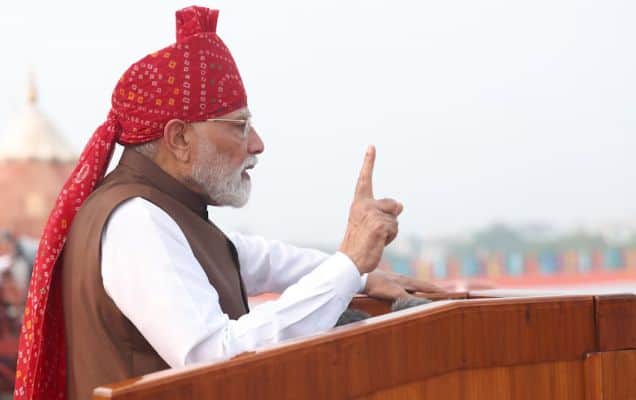
Lays foundation stone of ‘Petrochemical Complex at Bina Refinery’
Lays foundation stone of ‘Power and Renewable Energy Manufacturing Zone’ in Narmadapuram and Mega Industrial Park in Ratlam
Lays foundation stone of two IT Park in Indore and six new industrial Parks across the state
“Today’s projects indicate the enormity of our resolutions for Madhya Pradesh”
“For the development of any country or any state, it is necessary that governance is transparent and corruption is eliminated”
“India has left behind the mentality of slavery and has now started moving forward with the confidence of being independent”
“People should remain vigilant against those who want to break Sanatan, which has kept India united”
“The stupendous success of G20 is the success of 140 crore Indians”
“Bharat is showing its expertise in bringing the world together and emerging as a Vishwamitra”
“Priority to the deprived is the fundamental mantra of the Government”
“Track record of Modi's guarantee is in front of you”
“500th birth anniversary of Rani Durgavati will be celebrated with great pomp and show on October 5th 2023”
“The model of ‘Sabka Saath Sabka Vikas’ is showing way to the world today”

Bharat Mata ki – Jai!

Bharat Mata ki – Jai!

Chief Minister of Madhya Pradesh, Shri Shivraj ji, my colleague in the Union Cabinet, Hardeep Singh Puri, other ministers of Madhya Pradesh, Members of Parliament, MLAs, and my dear family members!

This land of Bundelkhand is the land of the brave, the land of warriors. This land has been blessed by the rivers Beena and Betwa. And for me, it is a privilege to have the opportunity to see all of you in Sagar for the second time this month. I also congratulate and thank the government of Shri Shivraj ji for allowing me to be among all of you today. The last time I was among you was for the groundbreaking ceremony of the magnificent memorial of Sant Ravidas ji. Today, I have the opportunity to perform the groundbreaking ceremony of several projects that will bring new momentum to the development of Madhya Pradesh. These projects will provide new energy to the industrial development of this region. The Central Government is spending more than 50,000 crore rupees on these projects. Can you imagine what fifty thousand crores mean? The entire annual budget of many states in our country is not as much as the Indian government is spending for just one program today. This shows how big our commitment is to Madhya Pradesh. All these projects will provide employment to thousands of youth in Madhya Pradesh in the coming times. These projects are going to fulfil the dreams of the poor and middle-class families. I congratulate the people of Madhya Pradesh for the expansion of the Bina Refinery and the inauguration of many new facilities.

Friends,

Every Indian has resolved to develop their India in this ‘Amrit Kaal’ of Independence. To achieve this resolution, it is essential that India becomes self-reliant, and we reduce our dependence on foreign imports as much as possible. Today, India imports not only petrol and diesel but also relies on other countries for petrochemical products. The foundation laying ceremony of the petrochemical complex in Bina today will work towards making India self-reliant in the production of such items. Many people may not be aware that petrochemicals play a significant role in making plastic pipes, bathroom buckets, mugs, plastic taps, plastic chairs, tables, house paint, car bumpers, dashboards, packaging materials, medical equipment, glucose bottles, medical syringes and various types of agricultural tools. Now, the modern petrochemical complex being established in Bina will take this entire region to new heights of development. I assure you of that. It will bring new industries here, benefit the local farmers, and small entrepreneurs. Most importantly, it will provide thousands of job opportunities for our youth.

The manufacturing sector is also undergoing a transformation in today’s new India. As the country's needs are increasing and evolving, it is equally important to modernize the manufacturing sector. With this vision, work has begun on 10 new industrial projects in Madhya Pradesh as part of this program. Whether it is the manufacturing zone in Narmadapuram related to renewable energy, two new IT parks in Indore, and a mega industrial park in Ratlam, all of these will further give a fillip to Madhya Pradesh's industrial strength. When the industrial strength of Madhya Pradesh grows, everyone will benefit. The youth, the farmers, and small entrepreneurs will all see an increase in their income, and everyone will have more opportunities.

My family members,

For the development of any country or state, it is crucial that governance operates with complete transparency and that corruption is curbed. Today's generation in Madhya Pradesh may not remember, but there was a time when Madhya Pradesh had a notorious reputation as one of the most dilapidated states in the country. The period after independence saw those who ruled in Madhya Pradesh for a long time providing nothing to the state except crime and corruption. At that time, Madhya Pradesh was known for criminal activities, and people had no faith in the law and order. In such a situation, how could industries be established in Madhya Pradesh? Who would dare to come here for business? When you gave us the opportunity to serve, when our colleagues were given the opportunity to serve, we made sincere efforts to change the fate of Madhya Pradesh. We freed Madhya Pradesh from fear, established law and order, and improved the situation. People of the previous generation would remember how the Congress had neglected Bundelkhand, depriving it of basic amenities like roads, electricity, and water. Today, under the BJP government, roads are reaching every village, and electricity is reaching every home. When connectivity has improved, a favourable and positive atmosphere has been created for industries and businesses. Today, top investors are interested in coming to Madhya Pradesh, and they want to establish new factories here. I believe that Madhya Pradesh is going to reach new heights of industrial development in the next few years.

My family members,

Today's new India is undergoing rapid transformation. You would remember that I discussed the freedom from slave mentality and the importance of ‘Sabka Prayas’ (everyone's efforts) in detail from the Red Fort. I am very proud today to see that India has moved beyond the slave mentality and has begun to progress with a sense of pride in its freedom. When any country makes such a determination, its transformation begins. You have just witnessed a glimpse of this during the G20 Summit. The word ‘G20’ is reverberating among children in every village with pride. You all have seen how India successfully hosted the G20 summit. Now tell me, my friends, will you tell me? Raise your hands and answer me, even those behind will respond. Will you tell me whether you felt proud of the success of the G20 Summit or not? Did you feel proud, or not? Did the country feel proud, or not? Is your head held high, or not? Did your chest swell with pride, or not?

My beloved family members,

The sense of achievement that you have, today, is the sentiment of the entire country. The success of the G20 Summit, this significant achievement, who does it belong to? Whose credit is it? It belongs to whom? Who demonstrated it? Who showed it? It's not just Modi, it's you all. It's your capability. It's the success of 1.4 billion Indians. It's proof of India's collective strength. During this summit, foreign guests from all over the world came to India, and they were saying that they had never seen an event like this before. India welcomed foreign guests in different cities across the country, showed them the places of India, and they were deeply impressed by the diversity, heritage, and prosperity of India. Even in Madhya Pradesh, we had G20 meetings in Bhopal, Indore, and Khajuraho, and the people who attended those meetings, the people who participated, they are praising you and they are singing your praises. I express my heartfelt gratitude to all of you for the successful organization of the G20 Summit. You have showcased Madhya Pradesh's cultural, tourism, agricultural, and industrial capabilities to the world. This has enhanced Madhya Pradesh's image on the global stage. I commend Shivraj ji and his entire team for ensuring the successful organization of the G20 Summit.

My family members,

On one hand, today's India is demonstrating the ability to connect with the world. Our India is emerging as a ‘Vishwamitra’ (global friend) on international platforms. On the other hand, there are certain groups that are actively engaged in dividing the country and society. They have formed an INDI Alliance. Some refer to this INDI Alliance as ‘Ghamandia Gathbandhan’ (arrogant coalition). Their leader is not clear, and there is confusion regarding leadership. However, in recent days, they held a meeting in Mumbai. I believe that in that meeting, they have laid out their strategy and tactics on how this ‘Ghamandia Gathbandhan’ will function. They have also prepared a hidden agenda, and what is this agenda? It's the policy of the INDI Alliance, the policy of the ‘Ghamandia Gathbandhan’, to attack India's culture. The decision of the INDI Alliance is to assault the faith of the Indian people. The intention of the INDI Alliance, the ‘Ghamandia Gathbandhan’ is to destroy what India has been connected to for thousands of years, its values, its culture, and its traditions. This INDI Alliance, this ‘Ghamandia Gathbandhan’ is determined to end that ancient culture which inspired Devi Ahilyabai Holkar to carry out social work in every corner of the country, launch a campaign for women's upliftment, and defend the nation's heritage. This ‘Ghamandia Gathbandhan’, this INDI Alliance, has come with the resolve to end those timeless Sanatana traditions and values.

It was the strength of Sanatana values when Rani Lakshmibai of Jhansi, calling out to the British, declared that she would not give up her Jhansi. The last words of Mahatma Gandhi who embraced Sanatana throughout his life and drew inspiration from Lord Shri Ram were "Hey Ram!" The same Sanatana that motivated him to lead a lifelong movement against untouchability, and yet, these INDI Alliance, these ‘Ghamandia Gathbandhan’ individuals, want to end that Sanatana tradition. The Sanatana values that inspired Swami Vivekananda to awaken people to various societal evils are now the target of the INDI Alliance. This INDI Alliance is hell bent to destroy the same Sanatana values that inspired Lokmanya Tilak to raise the banner of India's freedom, connect Ganesh Puja with the freedom movement, and establish the tradition of public Ganesh festivals.

Friends,

These were the strengths of our Sanatana values, where brave souls who faced the gallows during the freedom movement would say, "In my next birth, I want to be born in the lap of Mother India again." These are the same Sanatana values that represent Sant Ravidas, that signify Mother Shabri, that are the foundation of Maharishi Valmiki, and have bound India for thousands of years. Yet, these people, united as the INDI Alliance, want to dismantle these Sanatana values. Today, these individuals have started speaking openly, and they have openly launched an attack. In the future, they will escalate their attacks on us. Every Sanatani, every lover of this country, every admirer of its soil, and every one of the countless people who love this nation must stay vigilant. They want to eradicate Sanatana and plunge this country into another thousand years of slavery. But together, we must stop these forces and thwart their plans with the strength of our organization and our unity.

My family members,

The Bharatiya Janata Party is dedicated to patriotism, the worship of people's power, and the politics of public service. The fundamental principle of BJP's governance is to prioritize the marginalized. The BJP-led government is a compassionate government. Whether it's Delhi or Bhopal, today, the government strives to reach your homes and serve you. When the severe crisis of COVID-19 hit, the government conducted free vaccination for crores of citizens. We are your companions in both happiness and sorrow. Our government provided free rations to over 80 crore people. The hearth of the poor should keep burning, and their stomachs should not go empty. Our efforts aimed to ensure that no mother from a poor, Dalit, backward, or tribal family goes to sleep with a hungry child. Therefore, this son of the poor thought about the concerns of the poor's ration and the worries of the poor mother. And, with your blessings, I am still fulfilling this responsibility today.

My family members,

Our constant effort is that Madhya Pradesh reaches new heights of development and makes the lives of every family in Madhya Pradesh easier, and brings prosperity to every doorstep. The track record of Modi's guarantee is in front of you. Remember their track record and look at my track record. Modi had given a guarantee of a concrete house for the poor. Today, in Madhya Pradesh alone, more than 40 lakh families have received concrete houses. We guaranteed toilets in every home, and we have fulfilled that guarantee. We guaranteed free healthcare for the poorest of the poor. We guaranteed the opening of a bank account in every home. We guaranteed smoke-free kitchens for mothers and sisters. Today, Modi, your ‘sevak’, is fulfilling all these guarantees. Our government has reduced the prices of gas cylinders to protect the interests of our sisters. This means that the beneficiaries of Ujjwala Yojana are getting gas cylinders for Rs. 400 less. We all know how the Ujjwala scheme is saving the lives of our sisters and daughters. Our endeavour is that not a single sister or daughter has to cook in the midst of smoke. That's why yesterday the central government has taken another significant decision. Now, an additional 75 lakh sisters in the country will receive free gas connections. No sister will be left out of the gas connection; this is our goal. Once we have accomplished our work, but in some families, expansion has occurred, and the family has been divided, so another family needs a gas connection. For those whose names are on the list, we have come up with this new plan.

Friends,

We are working with complete honesty to fulfil every guarantee we have made. We promised to end middlemen and ensure that every beneficiary receives the full benefit. One example of this is the Prime Minister Kisan Samman Nidhi. Under this scheme, every farmer receives 28,000 rupees directly in their bank account. The government has spent over 2.6 lakh crore rupees on this scheme.

Friends,

Over the past 9 years, the central government has also made efforts to reduce the cost for farmers and provide them with cheaper fertilizers. During this period, our government has spent more than 10 lakh crore rupees from the government treasury. Today, a bag of urea, which farmers use in their fields, is sold in the United States for 3000 rupees. However, the same bag is made available to my fellow Indian farmers for just 300 rupees, and for this, the government has spent ten lakh crore rupees from the treasury. Remember, in the past, there were scams worth thousands of crores of rupees in the name of urea, and farmers had to face lathi charges just to get urea. Now, the same urea is readily available everywhere with great ease.

My family members,

The importance of irrigation is something that the people of Bundelkhand understand better than anyone else. The double-engine BJP government has worked on several irrigation projects in Bundelkhand. The Ken-Betwa Link Canal, along with other irrigation projects in this region, is going to be highly beneficial for lakhs of farmers, not just for a lifetime but also for future generations. Our government is continuously working to provide piped water to every home of our sisters. In just four years, nearly 10 crore new families across the country have been provided water through pipelines. In Madhya Pradesh alone, piped water has reached 65 lakh families. This has brought significant benefits to the mothers and sisters of my Bundelkhand. Under the Atal Bhujal Yojana in Bundelkhand, there is also substantial work being done to create water sources.

Friends,

Our government is fully committed to the development of this region and to enhance its pride. This year, on October 5th, we will be celebrating the 500th birth anniversary of Rani Durgavati ji. The double-engine government is also planning to celebrate this auspicious occasion with great enthusiasm.

Friends,

The efforts of our government have benefited the poor, Dalits, and tribal communities the most. The model of prioritizing the marginalized, ‘Sabka Saath, Sabka Vikas’ is showing the way to the world today. India is now working towards becoming one of the top three economies globally. Madhya Pradesh has a significant role in making India the top three (in the world) and Madhya Pradesh will fulfil that role. This will create new opportunities for the farmers, industries, and youth of this region. The next five years will bring new heights to the development of Madhya Pradesh. The projects we have initiated today will accelerate the rapid development of Madhya Pradesh. I am deeply grateful to all of you for participating in the celebration of development, for blessing us with your presence, and for your support. Many best wishes to all of you!

Speak along with me:

Bharat Mata ki – Jai!

Bharat Mata ki – Jai!

Bharat Mata ki – Jai!

Thanks.


Explore More
Today, the entire country and entire world is filled with the spirit of Bhagwan Shri Ram: PM Modi at Dhwajarohan Utsav in Ayodhya

Popular Speeches

Today, the entire country and entire world is filled with the spirit of Bhagwan Shri Ram: PM Modi at Dhwajarohan Utsav in Ayodhya
Semiconductors to clean energy: Inside PM Modi’s high-profile meeting with 16 Dutch CEOs in The Hague

Media Coverage

Semiconductors to clean energy: Inside PM Modi’s high-profile meeting with 16 Dutch CEOs in The Hague
NM on the go

Nm on the go

Always be the first to hear from the PM. Get the App Now!
...
India-Netherlands Joint Statement on the visit of Prime Minister of India to Netherlands
May 17, 2026

At the invitation of the Prime Minister of the Netherlands, Mr. Rob Jetten, Prime Minister Shri Narendra Modi paid an official visit to the Netherlands on 16-17 May 2026. This marked Prime Minister Modi’s second visit to Netherlands.

In the morning of May 16, Prime Minister Modi was hosted by Their Majesties King Willem Alexander and Queen Maxima of the Netherlands at the Royal Palace Huis ten Bosch in the Hague for a bilateral meeting. Their Majesties also hosted a luncheon for Prime Minister Modi.

Prime Minister Jetten and Prime Minister Modi met for restricted and delegation level talks, followed by a dinner in the evening of May 16. Both Prime Ministers recalled the longstanding and historical trade linkages, deep rooted people-to-people ties and robust bilateral relations between the two countries and expressed their desire for further expanding and deepening this multifaceted relationship. In this context, the two leaders noted with satisfaction the progress achieved in recent years across various cooperation programmes through regular interactions, including at the highest political level and through the fruitful collaboration during India’s Presidency of the G20 in 2023 and the AI Impact Summit in New Delhi in February 2026.

Acknowledging the strong momentum in the relationship and the growing convergences between the two countries, the two leaders decided to elevate the relations between India and the Netherlands to a 'Strategic Partnership'. In this context, they welcomed the adoption of a Strategic Partnership Roadmap under which both sides agreed to work through regular and structured cooperation in all areas, including political, trade and investment, defence & security cooperation, cyber security, critical & emerging technologies including semiconductors, space, AI & quantum system, science & innovation, sustainability, health, sustainable agriculture and food systems, water management, climate change and energy transition, sustainable transport, maritime development, education, culture and people-to-people ties. The two sides also agreed to explore exchanges in the domain of policy planning.

Both leaders welcomed in this regard the agreements concluded in December 2025 across different priority sectors, such as on defence, semiconductors and related emerging technologies, enhanced cooperation in digital and cyberspace, collaboration in pharmaceuticals and medical devices, the establishment of a Joint Trade and Investment Committee, as well as the cooperation between the maritime museums in Lothal and Amsterdam.

The two leaders noted the Pact for the Future and reaffirmed their commitment to upholding shared values and principles including democracy, human rights, international peace and security, and a rules-based international order in line with the purposes and principles of the UN Charter. Both governments also underscored their commitment to strengthen and reform the multilateral system including expansion of both permanent and non-permanent categories of membership of the UN Security Council to reflect contemporary realities and called for text-based negotiations within a fixed timeframe. Prime Minister Modi thanked Prime Minister Jetten for the continued Dutch support to India’s permanent membership of a reformed and expanded UN Security Council.

Both leaders reaffirmed their commitment to further deepen the India-EU Strategic Partnership and welcomed in this regard the conclusion of negotiations for a mutually beneficial India-EU Free Trade Agreement in January this year. They agreed that the free trade agreement will strengthen political and economic ties between the world's second and fourth largest economies, at a time of rising geopolitical tensions and global economic challenges and highlight the joint commitment to economic openness and rules-based trade. The two leaders further welcomed the simultaneous signing of the Security and Defence partnership that will strengthen EU and India’s dialogue and cooperation on security and defence, and deliver concrete results in areas such as maritime security, cyber, counterterrorism and defence industrial collaboration.

The leaders agreed on the importance of a free, open, secure and peaceful lndo-Pacific, based on respect for international law, sovereignty and territorial integrity, freedom of navigation, and absence of coercion and conflicts. Recalling the EU Strategy on the Indo-Pacific, Prime Minister Jetten announced the decision of the Netherlands to join the Indo-Pacific Oceans Initiative (IPOI) and co-lead the Capacity Building & Resource Sharing pillar along with Germany and the European Union.

On Ukraine, the two sides expressed concern over the ongoing war, which continues to cause immense human suffering and carries global consequences. Both leaders agreed to continue to support efforts towards the achievement of a comprehensive, just, and lasting peace in Ukraine through dialogue and diplomacy, based on the principles of the UN Charter and international law.

Both leaders expressed deep concern over the situation in West Asia / the Middle East, noting its serious implications for the region and the wider world, including immense human suffering and disruptions to global energy supplies and trade networks. The leaders welcomed the ceasefire announced on 08 April 2026. They underscored the importance of de-escalation, dialogue and diplomacy and expressed hope for lasting peace in West Asia / the Middle East. They also called for freedom of navigation and global flow of commerce through the Strait of Hormuz, while opposing any restrictive measures, and reaffirmed their support for ongoing efforts and initiatives in this regard.

Economic Cooperation, Trade & Investment

Both leaders noted that the Netherlands–India economic partnership stands out as a model of cooperation, driven by shared priorities such as sustainability, innovation, and long-term growth, creating mutual prosperity for both nations. They welcomed the growth in bilateral trade between the two countries, supported by efficient supply chains and shared commitment to open markets. The Netherlands, with its world class logistics network also serves as a strategic gateway to Europe for Indian exporters, including via its Port of Rotterdam whilst India offers a vast and dynamic market for Dutch companies who will also benefit significantly from upscaling opportunities, its business friendly environment, and the availability of a vast and skilled talent pool in India. At the same time, Indian businesses can leverage advanced Dutch expertise, particularly in water management, sustainable agriculture, and smart cities.

Expressing satisfaction with the existing economic collaboration between the two countries, the leaders emphasized the immense potential for further growth particularly in light of opportunities arising from the India-EU Free Trade Agreement. The Netherlands continues to remain one of India’s major trade and investment partners, reflecting the depth and resilience of the bilateral economic ties.

In order to further facilitate trade and investment, the Prime Ministers welcomed the signing of the Agreement on Mutual Administrative Assistance in Customs Matters, enabling the exchange of information between the customs authorities of the countries and thus contributing to enhanced customs enforcement and the facilitation of legitimate trade between India and the Netherlands.

The leaders reaffirmed their commitment to further advancing bilateral trade and investment through, amongst others, the India–Netherlands Joint Trade and Investment Committee and the Fast Track Mechanism. They agreed to focus on enhancing investment facilitation and strengthening innovation ecosystems to support sustainable growth, job creation and resilient value chains.

Both Prime Ministers underscored the strong potential for cooperation in startups and innovation, noting that solutions developed in India and the Netherlands can scale globally, including across Indian and EU markets. They agreed to further connect both countries’ startup ecosystems, facilitate exchanges, and explore digital soft-landing programmes, as well as increased participation in trade missions, innovation missions and technology summits.

Defence & Security Cooperation

Both leaders welcomed the signing of the Letter of Intent on Defence Cooperation and emphasized the importance of deepening of the defence cooperation between the two countries including through regular interaction between respective Ministries of Defence and staff level talks, to coordinate exchanges of information, visits, research, innovation and training activities. They also concurred to move towards further expanding the scope of Defence Industrial Cooperation between the two countries.

Both leaders also agreed to enhance cooperation in the defence sector, under EU mechanisms and with other partners, and will explore possibilities of establishing a Defense Industrial Roadmap in which defence industrial collaboration for manufacturing of defence equipment, systems, components and other key capabilities through co-development, transfer of technology and setting up of joint ventures for co-production towards meeting the needs of the Armed Forces of both countries are laid down.

The leaders agreed to further enhance the security co-operation, including through regular exchanges between the National Security Apparatus of both countries on traditional and non-traditional security issues, including defence, maritime security, economic security, critical and emerging technologies, cyber security, counter terrorism and other mutually agreed matters of international security.

Both leaders expressed satisfaction with the annual bilateral cyber consultations as well as noted the holding of 8th session of the online cyber school, as means to further strengthen cooperation between the two countries to ensure an open, free and secure cyberspace. In this context, the leaders welcomed the signing of the Letter of Intent on enhanced collaboration in cyberspace, including closer coordination in multilateral fora and joint efforts on countering cyber threats and cybercrime through capacity building and the exchange of knowledge.

Both leaders underlined the importance of an open, free, secure, stable, accessible and peaceful ICT environment, which is seen as an enabler for innovation and economic growth and innovation. In this regard Prime Minister Modi thanked the Netherlands for its constructive participation in the AI Impact Summit that took place on 19 February 2026 in New Delhi.

Prime Minister Jetten strongly condemned the heinous and abhorrent terrorist attack on civilians in Pahalgam, Jammu & Kashmir, India in April 2025 and expressed Netherlands’ solidarity and unwavering support to India in its fight against terrorism, including cross-border terrorism and the two leaders called for holding the perpetrators accountable. The two Prime Ministers unequivocally condemned terrorism in all its forms and manifestations. They called for zero tolerance approach to terrorism and rejected double standards in countering terrorism.

The two leaders reaffirmed the need to combat terrorism in a comprehensive and sustained manner through both bilateral and multilateral mechanisms, including in the UN and the FATF. They further called for concerted action against all terrorists and terrorist groups, including groups proscribed by the United Nations Security Council (UNSC) 1267 Sanctions Committee and their proxies, affiliates, sponsors, backers and financiers. Both sides also called upon all countries to continue to work towards eliminating terrorist safe havens and infrastructure as well as to disrupt terrorist networks and their financing and bring perpetrators of terrorism to justice swiftly, in accordance with international law. Prime Minister Jetten expressed support for India’s endeavors to establish a UN Comprehensive Convention on International Terrorism (CCIT).

Both leaders noted with concern the growing threats from the use of new and emerging technologies for terrorist purposes such as unmanned aircraft systems, use of virtual assets by terrorists, and terrorist entities and the misuse of information and communication technologies for radicalization.

Recognizing a shared commitment to combat terrorism and strengthen the framework for global cooperation in this regard, both leaders emphasized the importance of upholding international standards on anti-money laundering and combating the financing of terrorism by all countries.

Emerging technologies, Innovation, Science, and Education

Both leaders welcomed the signing of the MoU on a Partnership on Semiconductors and Related Emerging Technology, which provides the framework for intensified cooperation in semiconductors, including in the areas of investment, research and talent exchange.

Both leaders welcomed the ongoing cooperation in the field of science, technology and innovation, focusing on launching public-private partnerships and connecting the expertise of governments, businesses, and knowledge institutions, through the already active Joint Working Group on Science, Technology and Innovation, which facilitates joint R&D projects, talent mobility, and technology transfer, through regular bilateral dialogues. Both leaders reflected on the almost fifty large research and innovation programs which were jointly launched in the past years and underlined the growing importance of continued collaboration in the domain of key enabling technologies, aimed at addressing common societal challenges with shared solutions.

Both leaders also welcomed the initiative to connect the Dutch Semicon Competence Centre to the Indian Semiconductor Mission (ISM), which aims to support and strengthen the semiconductor sector, specifically industries, startups, scale-ups, SMEs, and their suppliers, through collaboration, technology and talent development. Further both Prime Ministers expressed their appreciation for the Indo-Dutch Semicon Online School and its continuation for next phase.

The two leaders welcomed the adoption of a Memorandum of Cooperation between Eindhoven University of Technology and University of Twente and six Indian leading Technical Institutes (IISc Bangalore, IIT Bombay, IIT Delhi, IIT Gandhinagar, IIT Guwahati and IIT Madras) for a brain bridge in semiconductors and related technologies, with industry partnership from NXP, ASML, TATA and CG Semi. This would catalyse the R&D and talent development with academia and industry participation from both sides.

Recognizing the strategic importance of critical minerals for continued innovation, and the need for global cooperation to build resilient and sustainable supply chains, the two leaders expressed their mutual interest in strengthening cooperation across the critical minerals value chain, including exploration, research and innovation, integration of value chains, supply chain resilience, circularity and ESG standards and related assessments. In this context, the leaders welcomed the signing of a Memorandum of Understanding on Critical Minerals.

The two leaders also welcomed the signing of a Memorandum of Understanding on Higher Education between the Ministry of Education of India and the Ministry of Education, Culture and Science of the Netherlands to promote cooperation between the higher education institutions of the two countries, in accordance with their respective academic and educational priorities and needs.

Both leaders also expressed satisfaction at the on-going institutional cooperation between Dutch and Indian universities including recent collaborations for example between: University of Groningen and Nalanda University; Delft University of Technology and Mumbai Metropolitan Regional Development Authority; Survey of India and ITC, University of Twente; Vrije Universiteit Amsterdam and Indian Institute of Technology Roorkee; and many more. Both leaders acknowledged that platforms like Indo-Dutch Education & Academic Network can play a significant part to further strengthen the educational and scientific collaboration.

Both leaders acknowledged the ongoing space partnership between India and the Netherlands and the possibility for intensifying the same, specifically on using space-based applications in addressing societal challenges including climate change, water issues, food security as well as air quality.

Energy Security and Transition / Circular Economy

Noting the active bilateral cooperation in biofuels and bio-chemicals, Prime Minister Modi welcomed the Netherlands joining the Global Biofuel Alliance that was launched during India’s Presidency of the G20. The two Prime Ministers also reaffirmed their commitment to work on bio-economy and reflected on the success of Mission Innovation Program on Biorefineries, co-chaired by India and the Netherlands.

Acknowledging the ongoing cooperation on ‘waste to value’, the leaders noted that the 2025 update of the Dutch National Circular Economy Programme 2023-2030 and the Indian presidency of the World Circular Economy Forum (WCEF) 2026 will provide the opportunity for expansion of the partnership in new areas. This includes industrial circularity, solid and liquid waste management for sustainable and climate resilient urban systems, by technology deployment in pilot and scalable projects, introduction of innovation, and opportunities for trade and investment promotion, such as through B2B partnerships for which Dutch companies were invited to join the Resource Efficiency and Circular Economy Industry Coalition (RECEIC). In the field of sustainable mobility, cooperation may be deepened in areas such as smart and inter operable charging infrastructure, battery technology and system integration, standardization and open protocols, heavy and medium-heavy zero-emission vehicles, smart urban mobility systems and multimodal integration, and, alternative fuels and active mobility.

With a view to further strengthening the partnership between India and the Netherlands in the field of Renewable Energy, the two leaders welcomed the establishment of a Joint Working Group under the Memorandum of Understanding on Renewable Energy which provides ample scope for a diversified agenda for cooperation in renewable energy, including innovative solar energy, green hydrogen, storage and investments in the renewable energy sector to facilitate energy transition.

To further strengthen the cooperation and two-way investments on renewable energy, the leaders launched the ambitious India-Netherlands Roadmap on the Development of Green Hydrogen. The leaders agreed that the roadmap will help support India’s ambition, vast potential and competitive advantages for production, usage and export of Green Hydrogen while also contributing to a swifter adoption of Green Hydrogen as a sustainable source of energy in both countries.

In addition to this, the renewal of the Joint Statement of Intent on Capacity Building for Energy Transition between NITI Aayog and the Netherlands will ensure continued collaboration in Energy Security and Transition areas.

The two leaders furthermore welcomed the signing of a Memorandum of Understanding between the University of Groningen (RUG) and 19 Indian Institutes for Technology (IITs) to strengthen academic cooperation. They also welcomed the establishment of a PhD Fellowship Programme on Hydrogen between the Department of Science and Technology of India and RUG.

Water Management

The two leaders noted the progress made under the Strategic Partnership on Water in building upon the synergies between the water related requirements of India and the expertise and experience of the Netherlands. Both Prime Ministers appreciated the joint efforts being undertaken in the field of water and river management, including partnership in the Namami Gange Mission, urban water management for climate resilience through Urban River Management Plans in combination with ‘Water as Leverage’, delta management, water quality management, waste water re-use and introduction of new water technologies. Both leaders emphasized the importance of safely managed sanitation and inclusive access to clean water and acknowledged the contribution of the Netherlands in sustainable finance for WASH related developmental projects internationally, aligned with India’s Swachh Bharat Mission goals.

Both leaders welcomed the establishment of a Centre of Excellence on Water under the aegis of Ministry of Jal Shakti, Government of India in collaboration with the Ministry of Infrastructure & Water Management, Government of the Netherlands at the Indian Institute for Technology (IIT) Delhi. The leaders also noted the progress under various ongoing joint programs in the states of Uttar Pradesh, Maharashtra, West Bengal, Tamil Nadu and Keralam.

Both leaders agreed to further enhance cooperation on the Kalpasar Project in Gujarat, where Dutch expertise and technical assistance in the Project can lead to the further strengthening of Strategic Partnership on Water.

The leaders noted the progress made so far on the Urban Water Infrastructure Resilience program of the India-led global Coalition for Disaster Resilient Infrastructure (CDRI), through which the Netherlands shares its expertise as part of its membership. Both leaders look forward to the roll-out of the developed training program both in Indian cities with the National Disaster Management Authority (NDMA) and globally in others of the 50+ CDRI member countries.

Maritime development

The two Prime Ministers noted the recently renewed Memorandum of Understanding on Maritime Cooperation and underscored the importance of continued collaboration towards a safe, secure and sustainable maritime sector, supporting the development of a strategic ‘Green and Digital Sea Corridor’ between India and the Netherlands, as outlined in the Letter of Intent signed in October 2025. In this context, they agreed to further deepen and broaden their partnership in the areas of smart and sustainable development of ports and inland waterways, supply chain optimization and green ports and shipping. As a next step, both Prime Ministers agreed to explore developing a comprehensive 'Strategic Roadmap on a Green and Digital Sea Corridor' which aims at working towards an environmentally sustainable, digitally integrated and economically efficient future-ready maritime corridor between India and the Netherlands.

Given the shared interest in global and regional maritime security, particularly in the Indo-Pacific region, both Prime Ministers agreed to exchange best practices – between relevant government entities, businesses and knowledge institutes – in the field of protecting critical infrastructure including cyber resilience in ports and inland waterways and promoting diversified and resilient supply chains (including critical raw materials, medicine and food).

Health Sector

Both leaders emphasized the importance of scaling up bilateral cooperation on health, particularly in addressing global public health risks such as infectious diseases and anti-microbial resistance, as well as the growing impact of non-communicable diseases. Both leaders agreed to encourage further cooperation in digital health (including AI and cybersecurity) and capacity building. They welcomed the renewal of the Memorandum of Understanding on Healthcare and Public Health and consideration of new co-operation initiatives in areas such as women’s health, capacity development for climate and health preparedness, and knowledge exchange on sustainable healthcare systems in both countries. In the light of this renewed Memorandum of Understanding. The two leaders also welcomed the recently signed Letter of Intent between the Dutch National Institute for Public Health and the Environment (RIVM) and the Indian Council of Medical Research (ICMR), focusing on areas such as infectious diseases, vector-borne diseases, One Health and disease surveillance.

Both leaders further underscored that, within the framework of the India-Netherlands strategic partnership, enhanced focus will be given to collaboration in pharmaceuticals and medical devices, to ensure high-quality, accessible, safe, and sustainable healthcare. In 2026, the first Joint Working Group meeting will be convened under the newly signed Memorandum of Understanding to discuss the implementation and further development of the Memorandum of Understanding and its WorkPlan, and to identify key opportunities for collaboration, including through academic cooperation, regulatory cooperation, business engagement, and knowledge exchange on market access.

Agriculture & food systems

Both leaders noted with satisfaction the on-going India-Netherlands collaboration in the field of agriculture, food systems and responsible value chains, including the exchange of knowledge and experience sharing through the Joint Working Group on Agriculture. The leaders welcomed the growing presence of Dutch companies in India in the field of protected cultivation, food processing, dairy and poultry. The leaders underscored the importance of leveraging the opportunities for co-operation between Indian and Dutch companies related to the agricultural sector including agri-tech.

The leaders reviewed the progress in setting up of Centers of Excellence in agri-related sectors in India, with Dutch expertise. These Centres are promoting technology in high-tech greenhouse agricultural productions as well as improved agricultural inputs and capacity building for smallholder farmers, leading to more sustainable and higher quality/productivity and reduced water and agro-chemical use.

The leaders underscored their commitment to further enhancing the impact and effectiveness of the Centers through continued collaboration and knowledge exchange. They also agreed to explore expanded collaboration in vocational education across various aspects of the food systems.

The leaders further welcomed the signing of a Joint Declaration between the Ministry of Fisheries, Animal Husbandry and Dairying and the Ministry of Agriculture, Fisheries, Food Security and Nature of the Netherlands as well as the establishment of an Indo-Dutch Center of Excellence on Training in Dairy at the Center of Excellence for Animal Husbandry (CEAH), Bengaluru. Both sides agreed to continue to explore cooperation in Dairy and other allied agricultural sectors including food processing.

The leaders noted the work being undertaken, to boost Indian-Dutch cooperation in horticulture for establishment of Clean Plant Centres (CPCs) under India’s ongoing Clean Plant Programme in order to promote the availability of disease free, quality planting material of high value horticultural and fruit crops for global competitiveness of Indian Horticulture Sector. In this regard, the leaders welcomed the conclusion of the Memorandum of Understanding on capacity building and support between Naktuinbouw and National Horticulture Board, Department of Agriculture & Farmers’ Welfare, Government of India

Underscoring the importance of food safety and security, both leaders welcomed the Memorandum of Understanding between Netherlands Food and Consumer Product Safety Authority (NVWA) and Food Safety and Standards Authority of India (FSSAI).

People-to-People Exchanges & Culture

The two Prime Ministers acknowledged the strong people-to-people ties which represent an important pillar of the India-Netherlands relationship. Prime Minister Jetten showed gratitude for the contribution made by the Indian community in the Netherlands to Dutch society. Both leaders reaffirmed their resolve to further facilitate people-to-people contacts between the two countries, particularly through youth, academia, professional workforce, sports, and cultural exchanges.

Noting the importance of facilitating fair migration and mobility between the two countries, both leaders welcomed the signing the Memorandum of Understanding on Migration and Mobility.

The two countries also agreed to further strengthen cooperation with a view to prevent and combat irregular migration and trafficking of human beings, and encourage the fair mobility of highly skilled professionals. This approach is guided by international standards that ensure migrant workers are treated with dignity and respect, including fair mobility, transparent visa processes, and the protection of workers' rights.

The two Prime Ministers agreed to deepen cultural ties between the two countries through enhanced cultural cooperation including by promoting exhibitions and cultural initiatives to deepen mutual knowledge, in fields such as, design, performing arts, visual arts, museum and heritage cooperation and exchanged views on the possible establishment of a Joint Working Group on Cultural Cooperation.

Highlighting the importance of mutual cultural appreciation, the leaders appreciated the efforts to showcase the artworks of Amrita Sher-Gil exhibition at the Drents Museum, as part of the Memorandum of Understanding between the Drents Museum and the National Gallery of Modern Art. They also looked forward to the return exhibition showcasing an artwork by Van Gogh and other Dutch artworks at the National Gallery of Modern Art.

Both Prime Ministers underscored the importance of cooperating in the return and restitution of cultural artifacts and in that regard welcomed the return of the Chola Era Copper Plates from the University of Leiden to the Indian authorities.

Recalling the centuries-old bilateral maritime history between India and the Netherlands, both leaders welcomed the signing of the Memorandum of Understanding for cooperation in development of the National Maritime Heritage Complex (NMHC) in Lothal (Gujarat), between National Maritime Museum of Amsterdam and the Ministry of Ports, Shipping and Waterways of India.

The talks were held in a friendly and cordial atmosphere, and both leaders expressed their confidence in the ample scope for further development of bilateral relations and of the multifaceted cooperation across sectors of India-Netherlands Strategic Partnership Roadmap. Prime Minister Modi thanked Prime Minister Jetten for the warm hospitality and extended an invitation to Prime Minister Jetten to visit India at his earliest convenience.