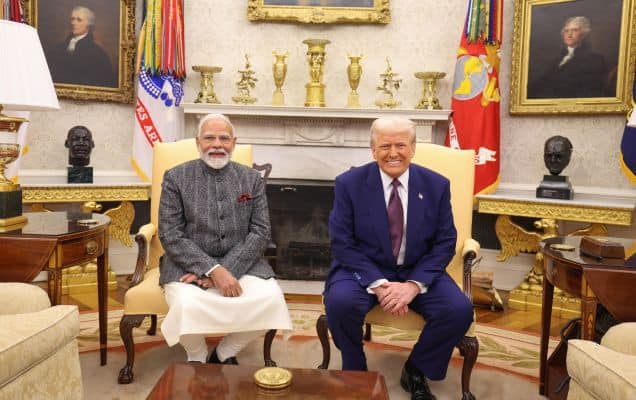
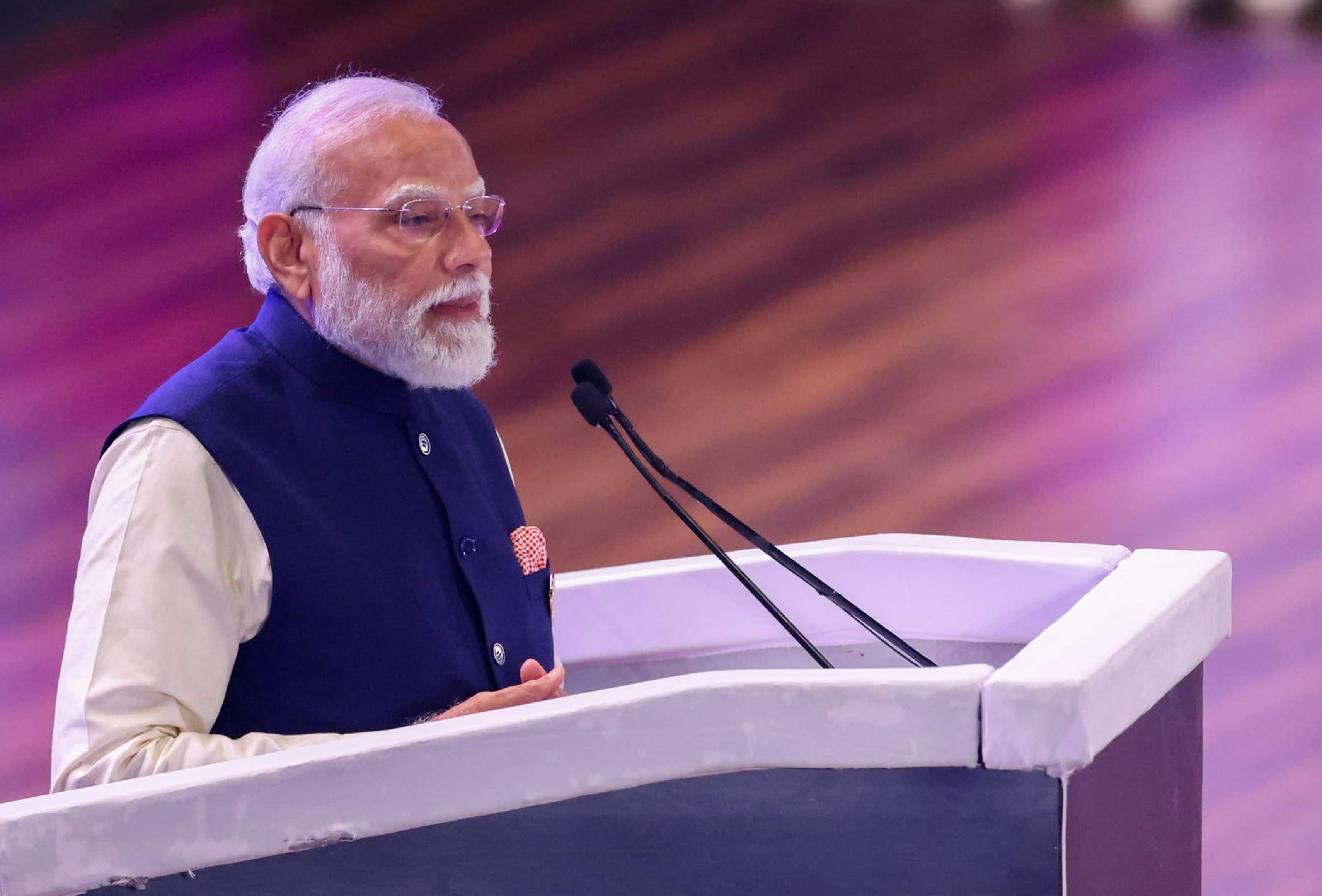
PM Modi outlines the M.A.N.A.V. vision for AI at India AI Impact Summit 2026

Published By : Admin | February 19, 2026 | 10:00 IST
Artificial Intelligence marks a transformative chapter in human history: PM
We must democratise AI; It must become a tool for inclusion and empowerment, particularly for the Global South: PM
PM outlines the M.A.N.A.V. vision for AI - Moral and Ethical Systems, Accountable Governance, National Sovereignty, Accessible and Inclusive, Valid and Legitimate
We are entering an era where humans and intelligent systems co-create, co-work and co-evolve; AI will make our work smarter, more efficient and more impactful: PM
We must develop a collective resolve of AI for Global Common Good: PM
In AI, India sees opportunity and the blueprint of tomorrow: PM

Excellencies, Honourable Ministers, Industry Leaders, Innovators, Entrepreneurs, Researchers, Delegates, distinguished guests, ladies and gentlemen - Namaste!

A heartfelt welcome to all of you at the world’s largest and historic AI Impact Summit. This summit is being held in India, a nation that represents one-sixth of humanity. India is home to the world’s largest youth population, the biggest pool of tech talent, and one of the most expansive tech-enabled ecosystems. India not only creates new technologies but also adopts them at an unprecedented pace. On behalf of 1.4 billion Indians who are eager to embrace innovation, I extend a warm welcome to all Heads of Government, leaders of the global AI ecosystem, and innovators present here. I express my deepest gratitude for your presence.

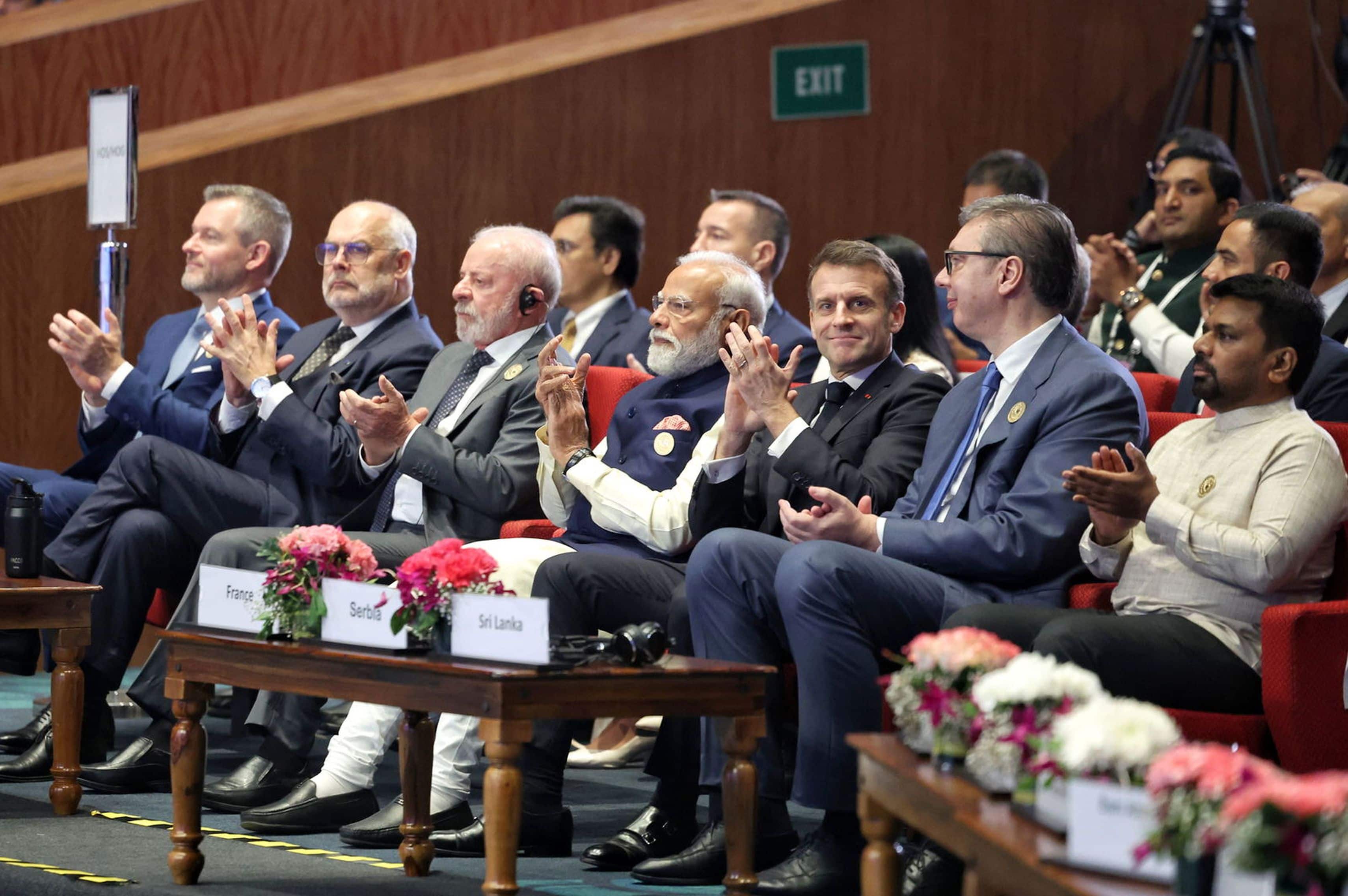
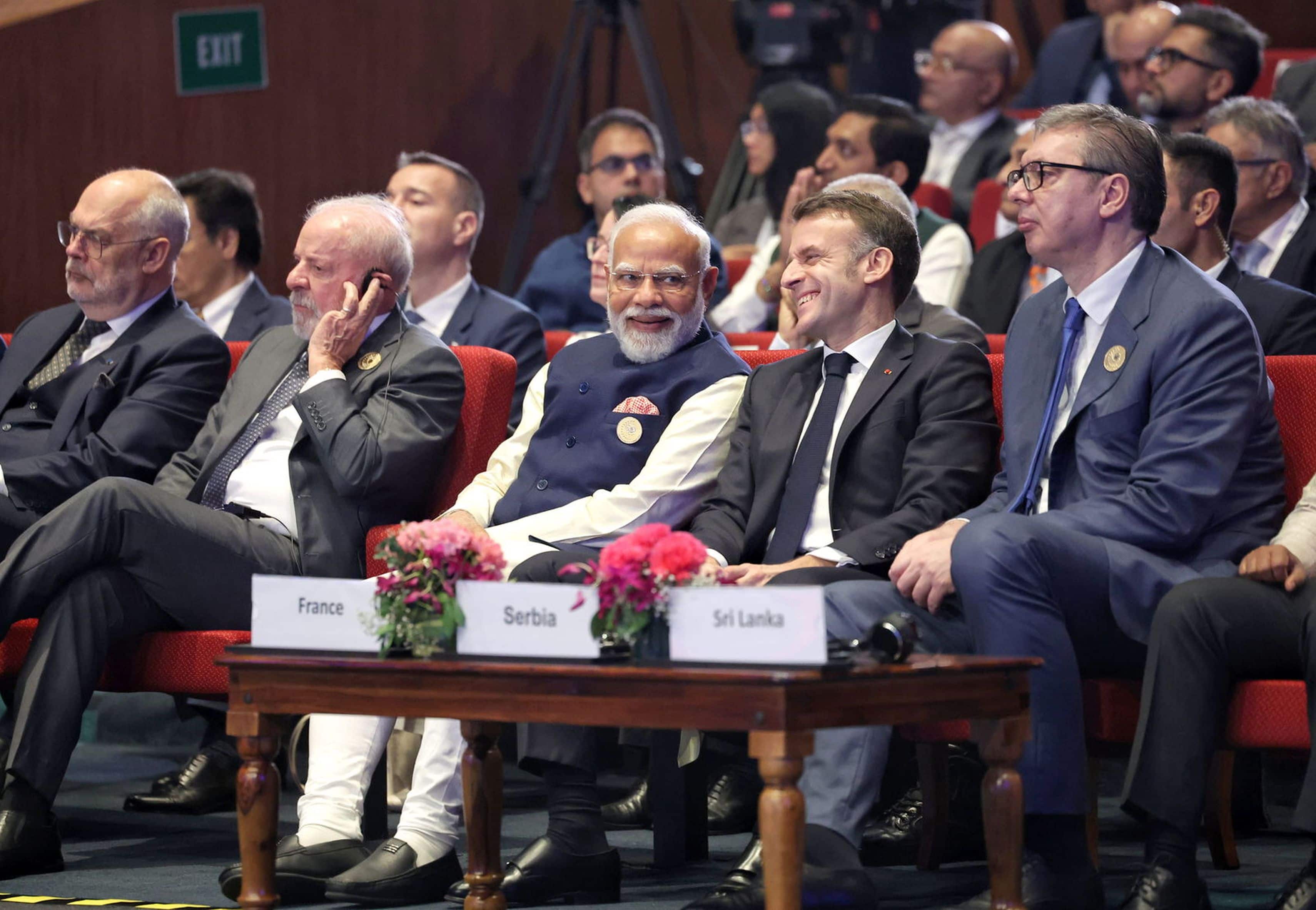
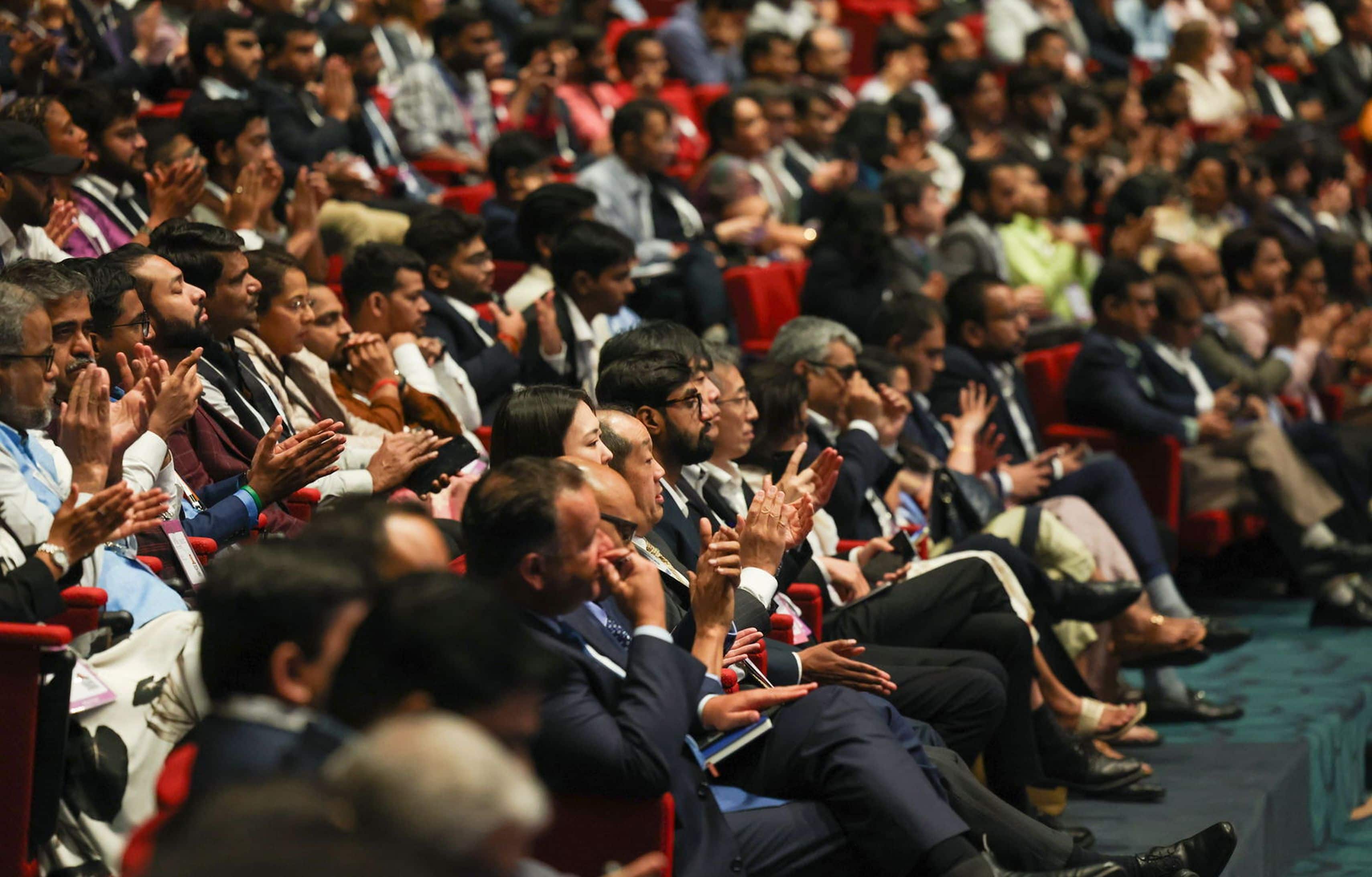
The fact that this summit is being hosted in India is a matter of pride not only for India but for the entire Global South. The who’s who of the AI world are here today. With representation from over 100 countries and distinguished participants from across the globe, this summit is reaching new heights of success. The strong presence of the younger generation instills fresh confidence. Normally, new technologies are met with skepticism in their early stages. Yet, the speed and trust with which the world’s youth are embracing AI, taking ownership of it, and using it, is truly extraordinary. The exhibition at this summit has also generated immense enthusiasm, especially among young talent who have come in large numbers. The solutions presented here - in agriculture, security, assistance for persons with disabilities, and addressing the needs of multilingual populations - are powerful examples of Made in India strength and India’s innovative capabilities.
Friends,

In human history, every few centuries a turning point arrives - one that resets the direction of civilization, changes the pace of development, and transforms the paradigms of how we think, understand, and work. The fascinating part is that when we are living through such a transformation, we rarely grasp its true impact. When sparks were first struck from stone, no one imagined that this would become the foundation of civilization. When speech was first turned into script, no one foresaw that written knowledge would become the backbone of future systems. When signals were first transmitted wirelessly, no one could have imagined that one day the entire world would be connected in real time.

Friends,

Artificial Intelligence is such a transformation in human history. What we see today, what we predict today, are only the early signs of its impact. AI is making machines intelligent, but more importantly, it is multiplying human capability many times over. The difference this time is that both the speed and the scale are unprecedented. Earlier, it took decades for technology to show its impact. Today, the journey from machine learning to learning machines is faster, deeper, and broader. Therefore, our vision must be equally expansive, and our responsibility equally profound. Alongside the present generation, we must also consider what form of AI we will hand over to future generations. The real question is not what Artificial Intelligence can do in the future, but what we choose to do with it today. Humanity has faced such questions before. The most powerful example is nuclear power - we have seen its destructive force, and we have seen its positive contributions. AI too is a transformative power: if directionless, it leads to disruption; if guided rightly, it becomes a solution. How to make AI human-centric rather than machine-centric, sensitive and responsible rather than reckless - this is the core purpose of the Global AI Impact Summit.

Friends,

India’s perspective on AI is clearly reflected in the theme of this summit: Sarvajan Hitaya, Sarvajan Sukhaya - Welfare for all, Happiness for all. This is our benchmark. AI must not reduce human beings to mere data points or raw material. Therefore, AI must be democratized. It must become a medium of inclusion and empowerment, especially across the Global South.
Friends,

We must give AI the open sky, but keep the command in our own hands. Just like GPS - it suggests the route, but the final decision of direction is ours. The path we choose for AI today will determine the future we create tomorrow.

Friends,

At the New Delhi AI Impact Summit, I present India’s vision for AI - M.A.N.A.V. (MANAV), meaning human. The MANAV vision stands for: M – Moral and Ethical Systems: means AI must be built on ethical guidelines. A – Accountable Governance: means Transparent rules and robust oversight. N – National Sovereignty: means Data belongs to those who generate it. A – means Accessible and Inclusive: AI must not be a monopoly, but a multiplier. V – means Valid and Legitimate: AI must be lawful and verifiable. India’s MANAV Vision will be a vital link for human welfare in the AI-driven world of the 21st century.

Friends,

Decades ago, when the internet began, no one imagined how many jobs it would create. The same is true for AI. Today, it is difficult to predict what kinds of jobs will emerge in this field. The future of work is not pre-defined; it will depend on our decisions and our course of action. I believe the future of work is a new opportunity. This is the era of humans and intelligent systems working together. “We are entering an era where humans and intelligent systems co-create, co-work, and co-evolve.” AI will make our work smarter, more efficient, and more impactful. We will design better, build faster, and make stronger decisions. More people will find higher-value, creative, and meaningful roles. This is a great opportunity for innovation, entrepreneurship, and new industries. Therefore, skilling, reskilling, and lifelong learning must become a mass movement.

Friends,

The future of work will be inclusive, trusted, and human-centric. If we move forward together, Artificial Intelligence will elevate the capacity of humanity to new heights.
Friends,

It is said: “Sunlight is the best disinfectant.” means Transparency is the greatest safeguard. Some countries and companies believe AI is a “strategic asset” and must be developed confidentially. But India thinks differently. We believe AI will benefit the world only when it is shared. When codes are open and shared, millions of young minds can make them safer and better. Therefore, let us resolve to develop AI as a Global Common Good.

Friends,

Another urgent need today is to establish global standards. Deepfakes and fabricated content are destabilizing open societies. In the physical world, we see nutrition labels on food so we know what we are consuming. Similarly, in the digital world, content must carry authenticity labels so people know what is real and what is AI-generated. As AI produces more text, images, and videos, the need for watermarking and clear source standards grows. That is why trust must be built into technology from the very beginning.

Friends,

We must become even more vigilant about children’s safety. Just as a school syllabus is carefully curated, the AI space too must be child-safe and family-guided.

Friends,

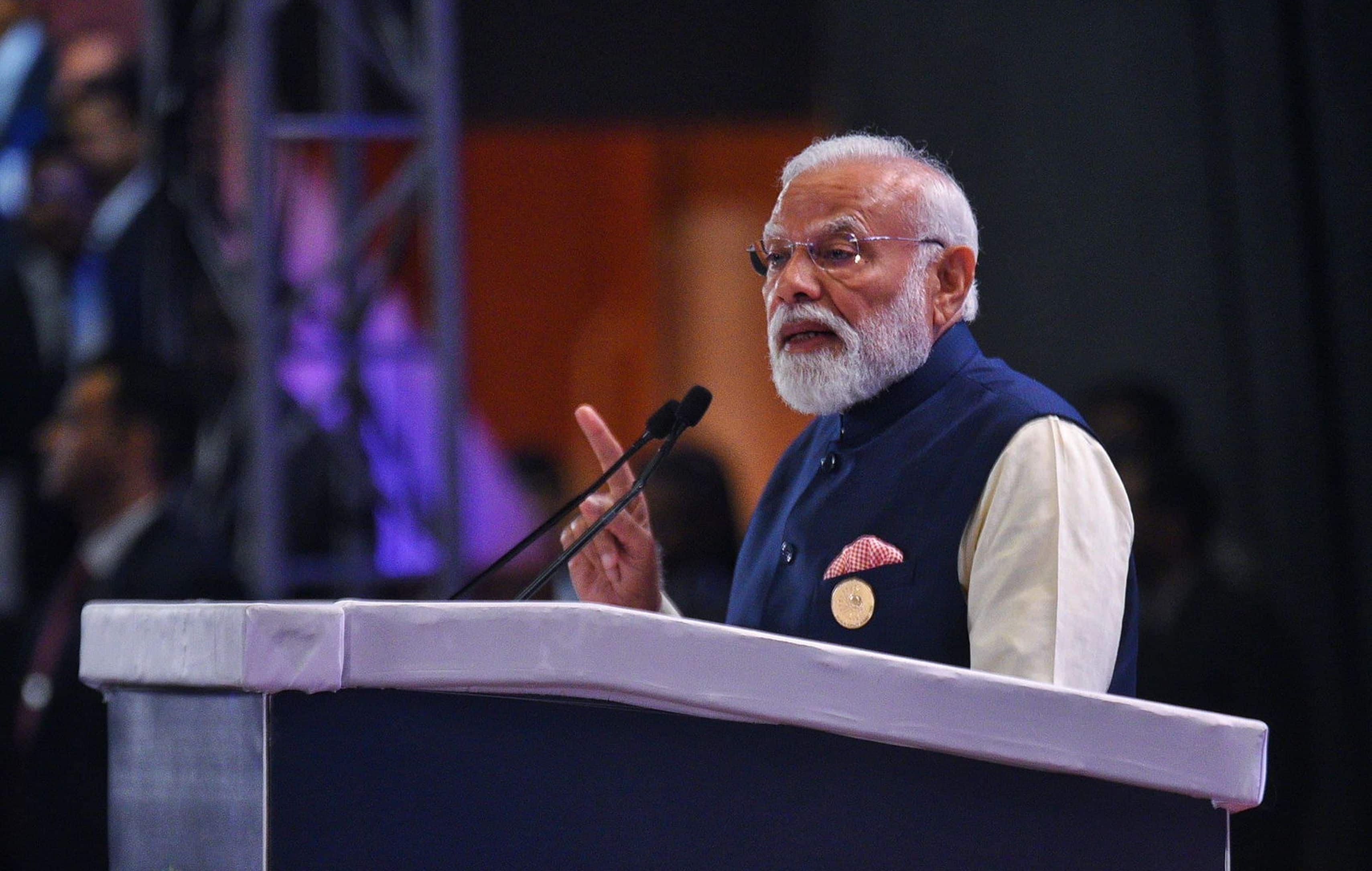
Today, the world is divided into two kinds of people: those who see fear in AI - and speak only of that fear - and those who see fortune in AI.
And friends,

I say this with responsibility and with pride: India does not see fear in AI. India sees fortune in AI. India sees the future in AI. We have the talent, we have the energy and capacity, and we have policy clarity. I am delighted to share that during this summit, three Indian companies have launched their own AI models and apps. These models showcase the talent of our youth and reflect the depth and diversity of the solutions India is offering.
Friends,

India is building a resilient ecosystem - from semiconductors and chip-making to quantum computing. Secure data centers, a strong IT backbone, and a dynamic startup ecosystem make India a natural hub for affordable, scalable, and secure AI solutions. India has diversity, demography, and democracy. Any AI model that succeeds in India can be deployed globally. Therefore, I invite all of you: Design and Develop in India. Deliver to the World. Deliver to Humanity. Once again, I extend my warmest wishes to all of you.

Thank you!

Explore More
Today, the entire country and entire world is filled with the spirit of Bhagwan Shri Ram: PM Modi at Dhwajarohan Utsav in Ayodhya

Popular Speeches

Today, the entire country and entire world is filled with the spirit of Bhagwan Shri Ram: PM Modi at Dhwajarohan Utsav in Ayodhya
Lakshadweep Tourist Numbers Soar After PM Modi’s Appeal, Maldives Sees Sharp Dip In Indian Visitors

Media Coverage

Lakshadweep Tourist Numbers Soar After PM Modi’s Appeal, Maldives Sees Sharp Dip In Indian Visitors
NM on the go

Nm on the go

Always be the first to hear from the PM. Get the App Now!
...
India-Italy Joint Declaration
May 20, 2026

At the invitation of the President of the Council of Ministers of the Italian Republic, Giorgia Meloni, the Prime Minister of India, Shri Narendra Modi, paid an official visit to Italy on 19-20 May 2026. The visit, following Prime Minister Modi’s visit to Italy in June 2024 for the G7 Summit and Prime Minister Meloni’s visit to India for the G20 Summit in 2023, provided renewed momentum to the bilateral ties. The two leaders decided to elevate India-Italy relations to the level of a Special Strategic Partnership.

Political Dialogue

The two Prime Ministers welcomed the strong momentum of high-level exchanges and agreed to hold annual meetings of leaders including on the sidelines of multilateral events, as well as regular Ministerial and institutional-level meetings.

They appreciated the concrete progress achieved across the diverse pillars of the Joint Strategic Action Plan 2025-2029 adopted by the two leaders in their meeting during the G20 Summit held in Rio de Janeiro in November 2024. They agreed to establish Foreign Ministers-led mechanism to review the India-Italy Joint Strategic Action Plan 2025-29 and provide strategic guidance to India-Italy Special Strategic Partnership.

Economic Cooperation and Investments

Both leaders expressed satisfaction at the growing dynamism of bilateral economic and industrial cooperation, with three high level business fora held since the last year. Building on the opportunities arising from India’s rapid and consistent economic growth and the successful conclusion of the negotiations for the EU–India Free Trade Agreement, they reaffirmed the shared objective of expanding bilateral trade in both direction with aim to reach to € 20 billion by 2029.

They welcomed the increase of bilateral investments in key sectors and encouraged the respective industries to forge industrial and technology partnerships in order to build resilient supply chains. They welcomed the prospect of greater investments, particularly in textiles, clean technologies, semiconductors, automotive, energy, tourism, pharmaceuticals and medical technologies, digital technologies, critical raw materials, steel, ports and infrastructure. They encouraged industries to utilize the policy incentives and schemes in place in both countries which seek to enhance business linkages and production facilities.

Both Prime Ministers agreed to encourage dialogue and cooperation among stock exchanges, investment funds, venture capital, banks, insurance companies and financial institutions.

They agreed to facilitate industrial partnerships, including between SMEs, to foster deeper integration of supply chains. They encouraged new sectoral missions in the coming months in priority areas of mutual interest.

The two Prime Ministers welcomed the signing of the Memorandum of Understanding for cooperation in Critical Minerals. They agreed to further strengthen and expand bilateral cooperation in field of critical minerals by establishing a structured framework for collaboration, with particular emphasis on sustainability and resilient supply chains. They underscored the importance of promoting joint efforts in recovery of critical minerals from unconventional sources, including electronic waste and mine tailings, as an integral component of circular economy initiatives. They also expressed satisfaction on signing of the Memorandum of Understanding for cooperation in the field of agriculture and agricultural research between respective ministries and institutions.

Connectivity

The two Prime Ministers reaffirmed their commitment to cooperate on the India-Middle East-Europe Economic Corridor (IMEC), recognising its transformational potential in reshaping and promoting global trade, connectivity and prosperity. Appreciating the preliminary discussions around the project, they encouraged the first IMEC Ministerial meeting to take concrete steps for advancing this initiative in 2026.

They welcomed the signing of an MoU on maritime transport and ports and directed their respective ministries/departments to establish a joint working group to implement the MoU at the earliest.

Science, Technology, Innovation, Start-ups and Artificial Intelligence

The two Prime Ministers reaffirmed that innovation, science and technology are core drivers of the India-Italy partnership.

They announced the creation of INNOVIT India, an innovation hub located in India aimed at strengthening cooperation between the respective innovation ecosystems, support startup acceleration programs, market access and business matching, joint research, university collaboration, and talent mobility in sectors including fintech, healthcare, semiconductors, logistics and supply chains, agritech, energy, quantum computing, and artificial intelligence. Both leaders welcomed the inaugural Science and Innovation Dialogue between Indian and Italian universities and research centres held in Delhi in April 2025 and look forward to holding its next edition in Italy later this year.

Both leaders underlined the importance of an open, free, secure, stable, accessible and peaceful ICT environment, which is an enabler for innovation and economic growth. PM Modi thanked PM Meloni for Italy’s constructive participation in the AI Impact Summit that took place on 19th February 2026 in New Delhi. Both leaders reaffirmed their commitment to a human-centric, secure, trustworthy and robust Artificial Intelligence. They agreed to collaborate in this domain including in third countries.

The two Prime Ministers placed particular emphasis on opportunities for cooperation in the field of supercomputing.

Building on the 2025–2027 Executive Program for Scientific Cooperation, they supported the implementation of joint projects and the facilitation of mobility of researchers in area of quantum technologies, renewable energy, green hydrogen and sustainable blue economy. They also welcomed the ongoing implementation of the Memorandum of Understanding for cooperation in the field of scientific research and the launching of a joint call for proposals to fund research projects.

The two Prime Ministers acknowledged the longstanding scientific collaboration between the Indian Academia and the International Centre for Theoretical Physics (ICTP) in Trieste and welcomed the signing of a Letter of Intent between the Indian Department of Science and Technology and the Elettra Sincrotrone center in Trieste, Italy in support of activities related to the access of synchrotron radiation facility at Elettra for Indian researchers.

Space

While appreciating the ongoing collaboration between Italian Space Agency and the Indian Space Research Organisation, the two leaders agreed to strengthen the partnership on Earth observation, heliophysics and space exploration, with focused thematic engagement and to explore cooperation on access to space and protection of space infrastructures. They expressed satisfaction with the recent reciprocal visits of their respective space industry delegations and looked forward to further promote commercial collaboration through exchanges of experts and joint initiatives also in third countries.

Defence

Both Prime Ministers expressed satisfaction with the deepening of defence cooperation including through Ministerial exchanges, service-to-service ties, port visits, and welcomed the adoption of a Joint Declaration of Intent and a Defence Industrial Roadmap which will promote partnerships for technological cooperation, co-production and co-development projects, including helicopters, naval platforms, marine armament and electronic warfare. They also recognized the importance of protecting critical infrastructures and their related supply chains through the strengthening of industrial resilience.

The two sides agreed to examine the feasibility of establishing an annual high level military structured dialogue, complementing the work of the Joint Defence Committee and the Military Cooperation Group, and to promote joint exercises and inter-force courses.

Both leaders agreed to launch a Dialogue on Maritime Security, with the aim of increasing maritime security cooperation, coordination, and the exchange of information and best practices in the maritime domain.

Security

The two leaders strongly condemned terrorism and violent extremism in all its forms and manifestations, including cross border terrorism. The two leaders strongly condemned the April 2025 Pahalgam terror attack and reiterated their commitment to cooperate in the fight against terrorists and terrorist groups and their affiliates including those listed in the UN Security Council 1267 Sanctions regime. They called upon all countries to continue to work towards eliminating terrorist safe havens and infrastructure, disrupting terrorist networks and combating the financing of terrorism, consistent with the Financial Action Task Force’s guidelines. Both leaders reiterated their commitment to work together at the UN, FATF and other multilateral platforms.

Both leaders welcomed the first meeting of the Permanent Task Force between India and Italy on countering the financing of terrorism and the upcoming meeting of the Joint Working Group on Counter Terrorism.

Both leaders welcomed the conclusion of an MoU between the Italian Guardia di Finanza and the Directorate of Enforcement of India and looked forward to early conclusion of the Agreement on Exchange and Mutual Protection of Classified Information and the Agreement on strengthening of Police Cooperation. They also welcomed the ongoing discussions on other agreements including Extradition Treaty and Mutual Legal Assistance Treaty.

Migration and Mobility

The two leaders agreed to enhance mobility of students, researchers and skilled workers, particularly in STEM sectors, and to expand cooperation on skills development, in line with the needs of the labour market, including through a specific Joint Declaration of Intent on the facilitation of mobility of nurses from India to Italy. In this context, they welcomed the ongoing discussions between relevant agencies on Social Security Agreement (SSA).

They welcomed the launch of "ICI - Italy Calls India: a University-Enterprise talent bridge” aimed at enhancing the talent of Indian students enrolled in Italian universities by offering concrete pathways for guidance, matching, and qualified integration into Italian enterprises.

They also discussed the possibility of strengthening the cooperation to fight against irregular migration, labour exploitation and human trafficking to ensure safe and legal migration.

Culture and Educational Exchanges

The two leaders highlighted culture as a key pillar of bilateral dialogue and welcomed the signing of an MoU regarding Italy’s participation in the development of the National Maritime Heritage Complex in Lothal. They acknowledged the Indian National Pavilion at the Venice Art Biennale in 2026. They expressed their intention to celebrate 2027 as the "Year of Culture and Tourism between Italy and India”, which will feature a broad calendar of initiatives, and pave the way to a major exhibition on ancient cultural relations between Italy and India to be co-organized by the two Ministries of Culture.

The two leaders encouraged the organization of an Italy–India Cultural Forum, bringing together institutions, experts, and representatives of the creative industries. The two leaders appreciated the launching of the twinning program between Indian and Italian sites inscribed on the UNESCO World Heritage List, aimed at strengthening cooperation in the protection, enhancement and management of cultural heritage.

The two leaders agreed to further develop the film and audio-visual cooperation between the two Nations, building on the strength and innovative capacities of their industries and on the legal framework provided by the bilateral co-production agreement.

The two Prime Ministers reaffirmed their intention to strengthening cooperation in higher education and welcomed the adoption of the Indo-Italian Roadmap on Higher Education and Research. Prime Minister Modi invited Italian universities and institutions of excellence to open campuses in India under India’s New Education Policy.

India-EU Relations

The Leaders welcomed the new Joint India–EU Comprehensive Strategic Agenda agreed at the India–EU Summit on 27 January 2026 and the conclusion of negotiations of the India–EU Free Trade Agreement which would elevate ties to a new level by enhancing market access, reducing trade barriers, and strengthening economic security and resilience through diversified value chains and new market opportunities.

They also reaffirmed their support for strengthening the India–EU Trade and Technology Council as a key platform for cooperation in trade, critical technologies, and economic security. The leaders welcomed the India–EU Security and Defence Partnership and appreciated progress in mobility cooperation, including the MoU on a Comprehensive Framework for Mobility.

Multilateral Cooperation

Both Leaders stressed the urgent need to reform the United Nations to make it more representative and suited to present-day realities.

Both Leaders emphasized the importance of working together in the United Nations and other global platforms including G20 to protect multilateralism and uphold a rules-based international order.

Recognizing the strategic priority both countries attach to Africa, the two Prime Ministers agreed to work together in trilateral initiatives with African partners in areas such as Digital Public Infrastructure (DPI), agriculture, education, healthcare, artificial intelligence, connectivity and infrastructure and renewable energy in line with India’s development partnership in Africa and Italy’s Mattei Plan.

The Leaders reaffirmed their shared commitment to a free, open, peaceful and prosperous Indo-Pacific, in line with international law, including UNCLOS. They look forward to their continued partnership in Science and Technology and Academic cooperation pillar of Indo-Pacific Ocean Initiatives.

Both leaders expressed deep concern over the situation in the West Asia/the Middle East and its effects in the region as well as the rest of the world. The leaders welcomed the ceasefire announced on 8 April 2026 and underlined the importance of de-escalation, dialogue and diplomacy for a lasting peace in the West Asia/the Middle East. They also called for freedom of navigation and the resumption of global flows through Strait of Hormuz.

Both leaders expressed concern over the ongoing war in Ukraine, which continues to cause immense human suffering and negative global consequences. They agreed to continue to support efforts towards the achievement of a comprehensive, just and lasting peace in Ukraine through dialogue and diplomacy, in accordance with the international law and the principles of the UN Charter.

Conclusion

Noting the impressive growth and deepening of India-Italy Special Strategic Partnership, the two leaders reaffirmed their commitment to further expand cooperation across all sectors and continue close high-level consultations on key global and regional developments.

Prime Minister Modi thanked Prime Minister Meloni for the warm hospitality extended by the Government and the people of the Italian Republic and invited Prime Minister Meloni to visit India at a mutually convenient time.