My Friend, Abe San

Published By : Admin | July 8, 2022 | 19:27 IST

Shinzo Abe - an outstanding leader of Japan, a towering global statesman, and a great champion of India-Japan friendship - is not among us anymore. Japan and the world have lost a great visionary. And, I have lost a dear friend.

I first met him in 2007, during my visit to Japan as the Chief Minister of Gujarat. Right from that first meeting, our friendship went beyond the trappings of office and the shackles of official protocol.

Our visit to Toji temple in Kyoto, our train journey on the Shinkansen, our visit to the Sabarmati Ashram in Ahmedabad, the Ganga Aarati in Kashi, the elaborate tea ceremony in Tokyo, the list of our memorable interactions is indeed long.


And, I will always cherish the singular honour of having been invited to his family home in Yamanashi prefecture, nestled among the foothills of Mt. Fuji.

Even when he was not the Prime Minister of Japan between 2007 and 2012, and more recently after 2020, our personal bond remained as strong as ever.

Every meeting with Abe San was intellectually stimulating. He was always full of new ideas and invaluable insights on governance, economy, culture, foreign policy, and various other subjects.

His counsel inspired me in my economic choices for Gujarat. And, his support was instrumental in building Gujarat’s vibrant partnership with Japan.

Later on, it was my privilege to work with him to bring about an unprecedented transformation of the strategic partnership between India and Japan. From a largely narrow, bilateral economic relationship, Abe San helped turn it into a broad, comprehensive one, which not only covered every field of national endeavour, but became pivotal for our two countries’ and the region’s security. For him, this was one of the most consequential relationships for the people of our two countries and the world. He was resolute in pursuing the civil nuclear agreement with India – a most difficult one for his country – and decisive in offering the most generous terms for the High Speed Rail in India. As in most important milestones in independent India’s journey, he ensured that Japan is there side by side as New India accelerates its growth.

His contribution to India-Japan relations was richly recognised by the conferment upon him of the prestigious Padma Vibhushan in 2021.

Abe San had a deep insight into the complex and multiple transitions taking place in the world, the vision to be ahead of his time to see its impact on politics, society, economy and international relations, the wisdom to know the choices that were to be made, the capacity to make clear and bold decisions even in the face of conventions and the rare ability to carry his people and the world with him. His far-reaching policies - Abenomics - reinvigorated the Japanese economy and re-ignited the spirit of innovation and entrepreneurship of his people.

Among his greatest gifts to us and his most enduring legacy, and one for which the world will always be indebted, is his foresight in recognising the changing tides and gathering storm of our time and his leadership in responding to it. Long before others, he, in his seminal speech to the Indian Parliament in 2007, laid the ground for the emergence of the Indo Pacific region as a contemporary political, strategic and economic reality - a region that will also shape the world in this century.

And, he led from the front in building a framework and architecture for its stable and secure, peaceful and prosperous future, based on values that he deeply cherished – respect for sovereignty and territorial integrity, adherence to international law and rules, peaceful conduct of international relations in a spirit of equality and shared prosperity through deeper economic engagement.

The Quad, the ASEAN-led forums, the Indo Pacific Oceans Initiative, the India-Japan Development Cooperation in the Indo-Pacific, including Africa and the Coalition for Disaster Resilient Infrastructure all benefited from his contributions. Quietly and without fanfare, and overcoming hesitation at home and scepticism abroad, he transformed Japan’s strategic engagement, including in defence, connectivity, infrastructure and sustainability, across the Indo Pacific region. For that, the region is more optimistic about its destiny and the world more confident about its future.

During my Japan visit in May this year, I had the opportunity to meet Abe San, who had just taken over as the Chair of the Japan-India Association. He was his usual self - energetic, captivating, charismatic and very witty. He had innovative ideas on how to further strengthen the India-Japan friendship. When I said goodbye to him that day, little did I imagine that it would be our final meeting. 

I will always be indebted for his warmth and wisdom, grace and generosity, friendship and guidance, and I will miss him dearly.

We in India mourn his passing as one of our own, just as he embraced us with an open heart. He died doing what he loved the most – inspiring his people. His life may have been cut short tragically, but his legacy will endure forever.

I extend heart-felt condolences on behalf of the people of India and on my own behalf to the people of Japan, especially to Mrs. Akie Abe and his family. Om Shanti.

Explore More
శ్రీరామ జన్మభూమి ఆలయ ధ్వజారోహణ ఉత్సవం సందర్భంగా ప్రధానమంత్రి ప్రసంగం

ప్రముఖ ప్రసంగాలు

శ్రీరామ జన్మభూమి ఆలయ ధ్వజారోహణ ఉత్సవం సందర్భంగా ప్రధానమంత్రి ప్రసంగం
The quiet foundations for India’s next growth phase

Media Coverage

The quiet foundations for India’s next growth phase
NM on the go

Nm on the go

Always be the first to hear from the PM. Get the App Now!
...
2025 – The year of reforms
December 30, 2025

India has emerged as the centre of global attention. This is due to the innovative zeal of our people. Today, the world sees India with hope and confidence. They appreciate the manner in which the pace of progress has been accelerated with next-generation reforms, which are cross-sectoral and amplify the nation’s growth potential.

I have been telling many people that India has boarded the Reform Express.

The primary engine of this Reform Express is India’s demography, our young generation and the indomitable spirit of our people.

2025 will be remembered as a year for India when it focused on reforms as a continuous national mission, building on the ground covered over the past 11 years. We modernised institutions, simplified governance, and strengthened the foundations for long-term, inclusive growth.

We moved ahead decisively…with higher ambition, faster execution and deeper transformation. The reforms have been about enabling citizens to live with dignity, entrepreneurs to innovate with confidence and institutions to function with clarity and trust.

Let me cite a few examples of the reforms undertaken.

GST reform:

• A clean two-slab structure of 5% and 18% has been implemented.

• The burden has been eased on households, MSMEs, farmers and labour-intensive sectors.

• The purpose is to ensure dispute reduction and better compliance.

• This reform has boosted consumer sentiment and demand. Sales have grown in the festive season.

Unparalleled relief for the middle class:

• In a first, individuals earning up to Rs. 12 lakh a year faced no income tax at all.

• Obsolete Income-tax Act of 1961 has been replaced with the modern and simple Income Tax Act, 2025.

• Together, these reforms mark India’s move towards a transparent, technology-driven tax administration.

Boost to small and medium businesses:

• Definition of “small companies” has been expanded to include firms with turnovers up to Rs. 100 crore.

• Compliance burdens and associated costs for thousands of companies will get reduced.

100% FDI Insurance reform:

• 100% FDI permitted in Indian insurance companies.

• This will give a fillip to insurance penetration and security for the people.

• Apart from enhanced competition, it would offer better insurance choices and improved service delivery for the people.

Securities Market Reform:

• Securities Market Code Bill has been introduced in Parliament. It will enhance governance norms in SEBI, also enhance investor protection, reduce compliance burden and enable a technology-driven securities market for a Viksit Bharat.

• Reforms will ensure savings thanks to reduced compliances and other overheads.

Maritime and Blue Economy Reforms:

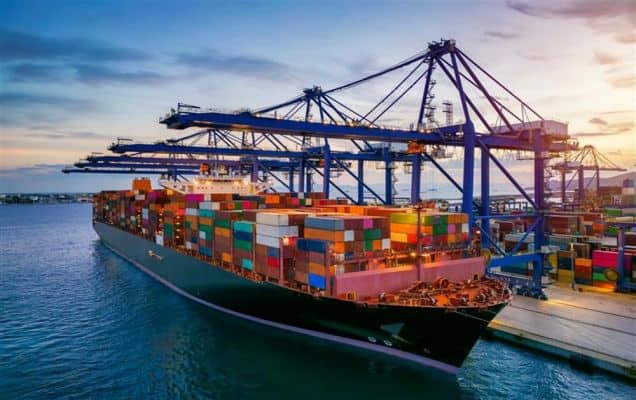
• In a single Parliament session, the Monsoon Session, five landmark maritime legislations were passed: the Bills of Lading Act, 2025; the Carriage of Goods by Sea Bill, 2025; the Coastal Shipping Bill, 2025; the Merchant Shipping Bill, 2025; and the Indian Ports Bill, 2025.

• These reforms simplify documentation, make dispute resolution easier and reduce logistics costs.

• Outdated Acts dating back to 1908, 1925 and 1958 have also been replaced.

Jan Vishwas…Ending the Era of Criminalisation:

• Hundreds of outdated laws have been scrapped.

• 71 Acts have been repealed through the Repealing and Amendment Bill, 2025.

Boosting Ease of Doing Business:

• A total of 22 QCOs were revoked across synthetic fibres, yarns, plastics, polymers, and base metals, while 53 QCOs were suspended in various steel, engineered, electrical, alloy, and consumer end product categories, covering a broad spectrum of industrial and consumer materials.

• This will increase India’s share of apparel exports; lower production costs in diverse industries like footwear, automobiles; ensure lower prices for domestic consumers for electronics, bicycles and automotive products.

Historic labour reforms:

• Labour laws have been reshaped, merging 29 fragmented laws into four modern codes.

• India has created a labour framework that secures the interests of workers while boosting the business ecosystem.

• The reforms focus on fair wages, timely payment of wages, smoother industrial relations, social security and safer workplaces.

• They ensure greater female participation in the workforce.

• Unorganised workers including contract workers are brought under the ESIC and EPFO expanding the coverage of formal workforce.

Diversified and expanded markets for Indian products:

Trade deals inked with New Zealand, Oman and Britain. These will add to investments, boost job creation and also encourage local entrepreneurs. They reinforce India’s position as a trusted and competitive partner in the global economy.

The FTA with the European Free Trade Association, comprising Switzerland, Norway, Iceland and Liechtenstein, has been operationalised. This marks India’s first FTA with developed European economies.

Nuclear Energy Reforms:

The SHANTI Act is a transformational step in India’s clean-energy and technology journey.

• Ensures a strong framework for the safe, secure and responsible expansion of nuclear science and technology.

• Enables India to meet the rising energy demands of the AI era, like powering data centres, advanced manufacturing, green hydrogen and high-technology industries.

• Promotes the peaceful application of nuclear technologies in healthcare, agriculture, food security, water management, industry, research and environmental sustainability, supporting inclusive growth and improved quality of life.

• Opens new pathways for private sector participation, innovation and skill development. Creates opportunities for India’s youth to lead in frontier technologies and next-generation energy solutions.

This is an opportune moment for investors, innovators and institutions to partner with India, to invest, innovate and build a clean, resilient and future-ready energy ecosystem.

A Landmark reform in Rural Employment guarantee:

• Viksit Bharat- G RAM G Act, 2025 Rozgar Guarantee framework raises employment guarantee from 100 to 125 days.

• This will result in increased spending towards strengthening village infrastructure and livelihoods.

• The aim is to turn rural work into a means to ensure higher incomes and better assets.

Education Reforms:

Bill has been introduced in Parliament. 

• Single, unified higher education regulator will be established.

• Multiple overlapping bodies like the UGC, AICTE, NCTE will be replaced with the Viksit Bharat Shiksha Adhishthan.

• Institutional autonomy will be strengthened, with innovation and research boosted.

What makes the reforms of 2025 significant is not only their dimension but also their underlying philosophy. Our Government has prioritised collaboration over control and facilitation over regulation in the true spirit of a modern democracy.

These reforms were designed with empathy, recognising the realities of small businesses, young professionals, farmers, workers and the middle class. They were shaped by consultation, guided by data and anchored in India’s constitutional values. They add momentum to our decade-long efforts to move away from a control-based economy to one that operates within a framework of trust, keeping the citizen at its core.

These reforms are aimed towards building a prosperous and self-reliant India. Building a Viksit Bharat is the polestar of our development trajectory. We will continue pursuing the reform agenda in the coming years.

I urge everyone in India and abroad to deepen their bond with the India growth story.

Keep trusting India and investing in our people!