India has made the democratic spirit a strong pillar of its governance: PM
In the past decade, India has achieved the democratisation of technology, today's India is among the most technologically inclusive societies in the world: PM
We have democratised digital technology, making it accessible to every citizen and every region of the country: PM
India has shown that technology is not just a tool of convenience, but also a means to ensure equality: PM
India Stack is a beacon of hope for the world, especially for the nations of the Global South: PM
We are not only sharing technology with other countries but also helping them develop it, and this is not digital aid, it is digital empowerment: PM
Thanks to the efforts of India's fintech community, our Swadeshi solutions are gaining global relevance: PM
In the field of AI, India's approach is based on three key principles - Equitable access, Population-scale skilling and Responsible deployment: PM
India has always supported a global framework for ethical AI: PM
For us, AI stands for All Inclusive: PM
We aim to create a fintech world where technology enriches both people and the planet: PM

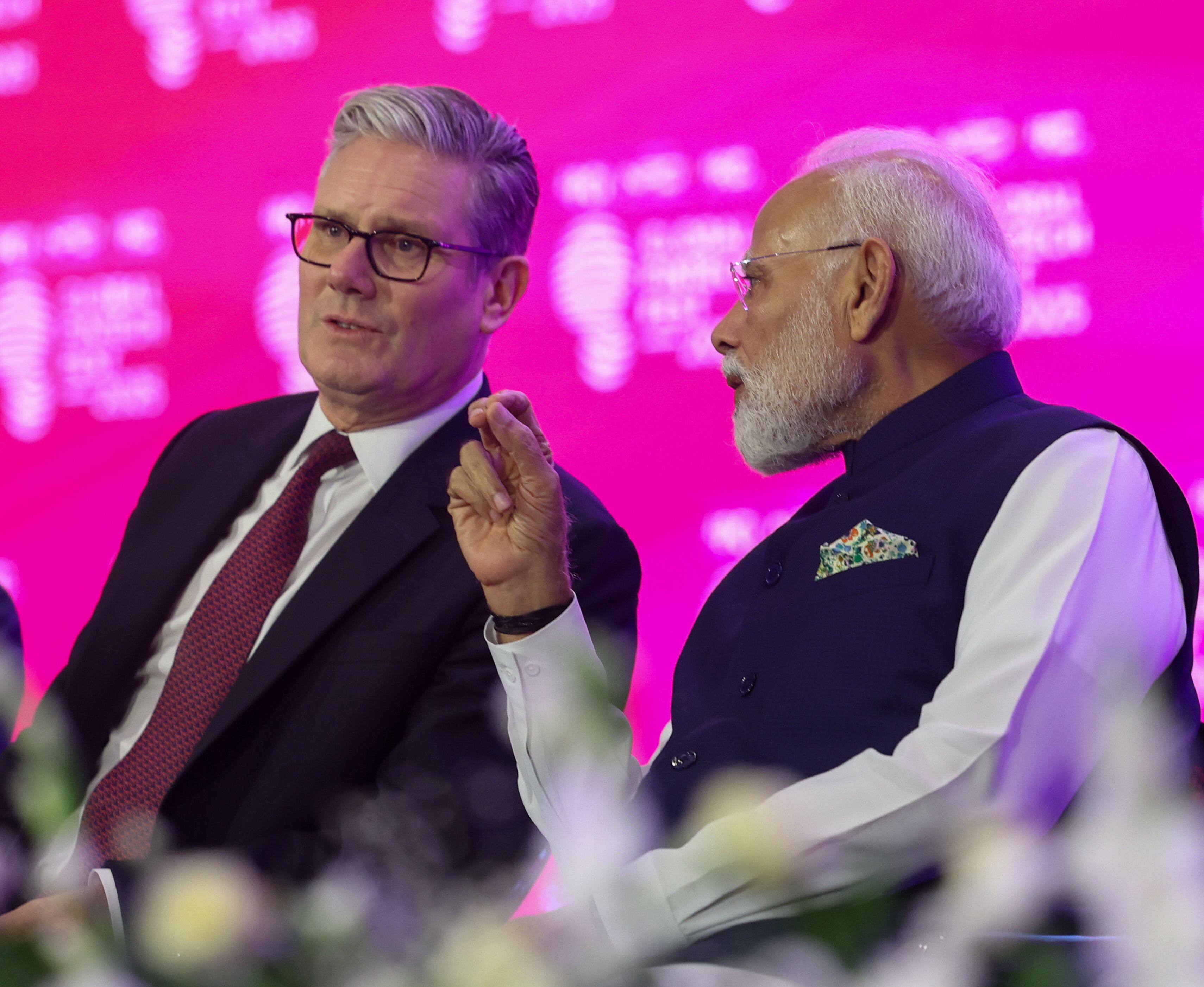
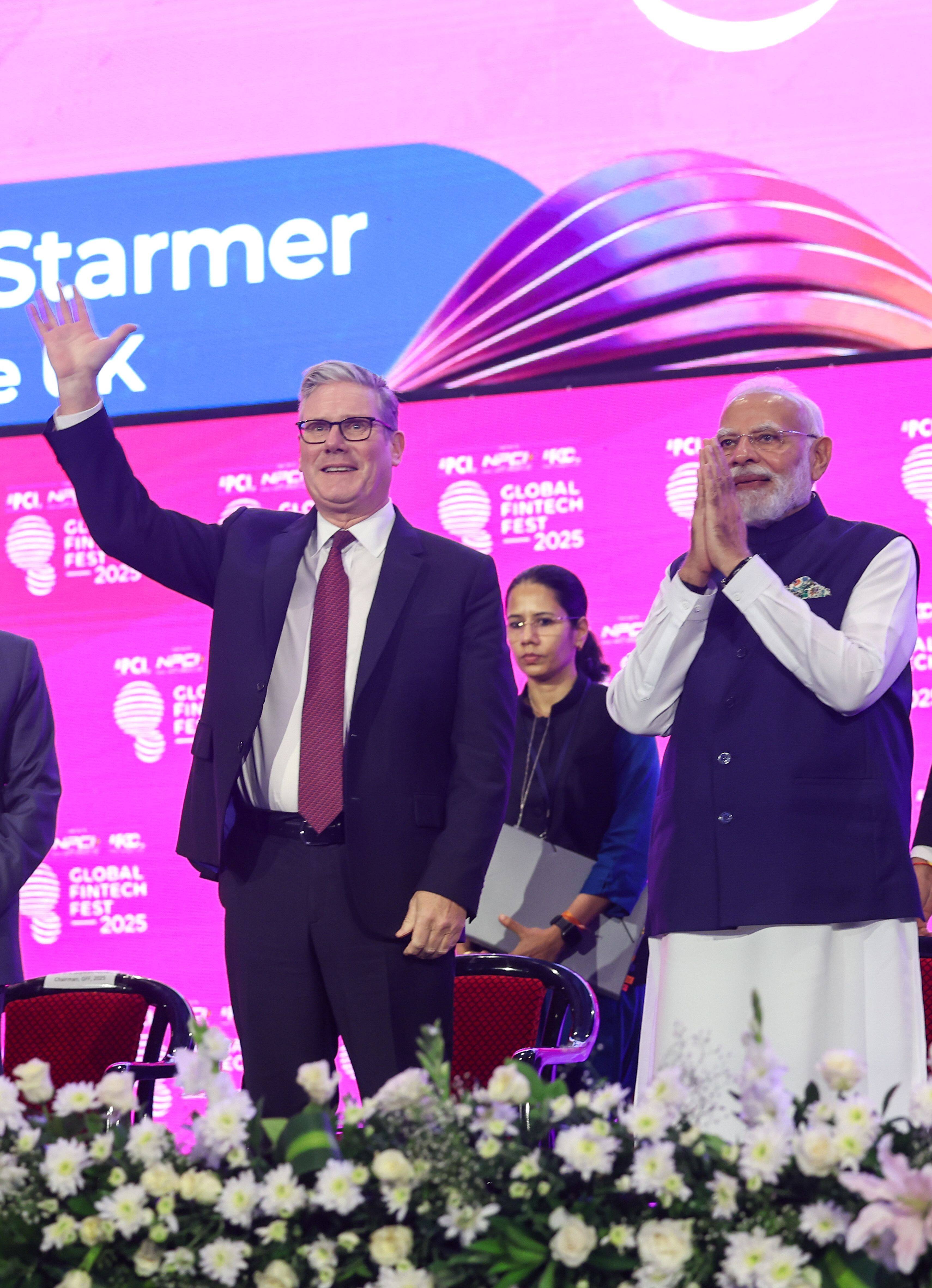
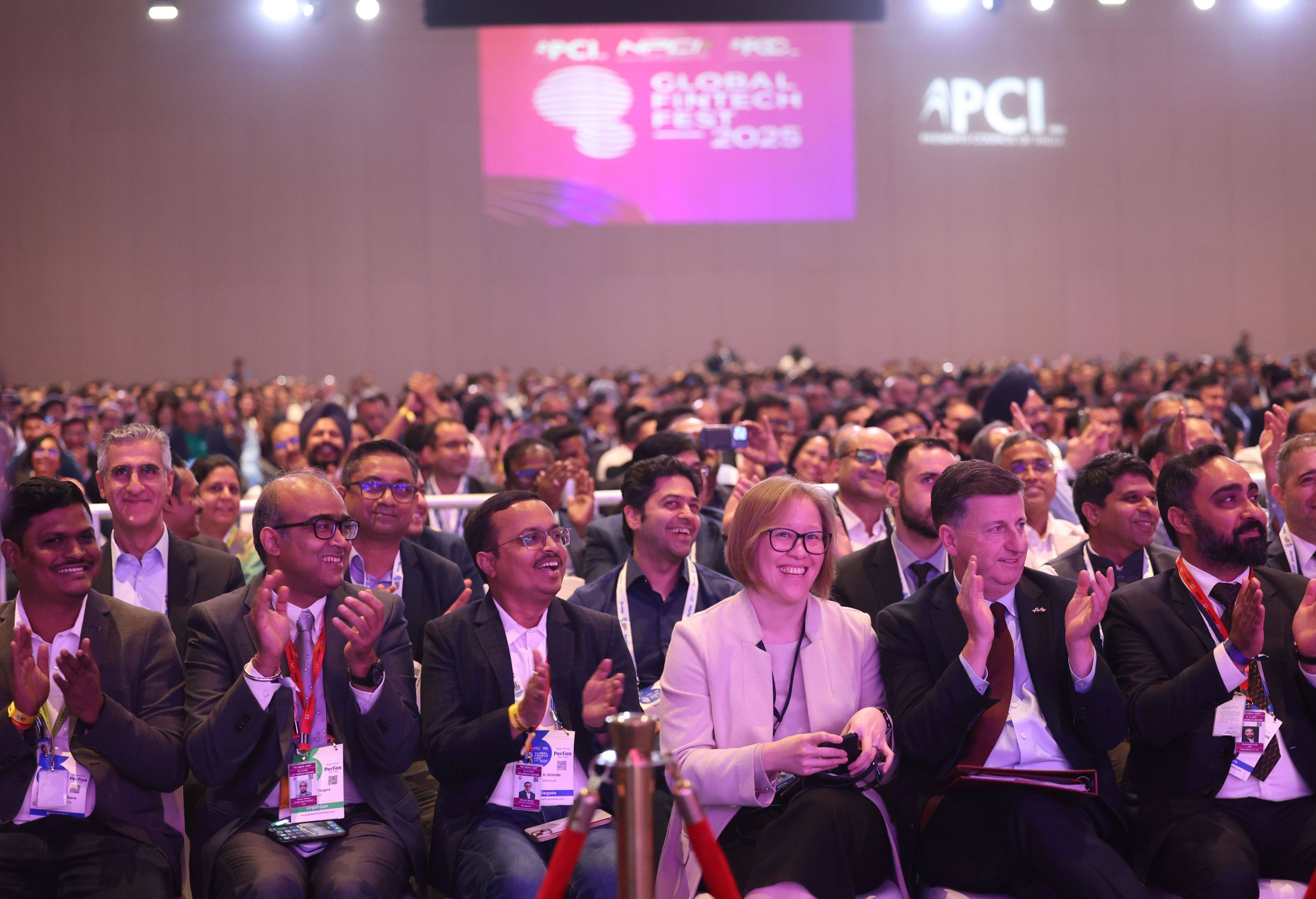
His Excellency, Prime Minister Keir Starmer, Governor of the Reserve Bank of India, innovators, leaders, and investors from the world of fintech, ladies and gentlemen! A very warm welcome to all of you in Mumbai!

Friends,

When I last attended this event, the 2024 elections were still pending. That day, I had said that I would return for the next edition of this program and at that moment you all gave the loudest applause. The political experts present here had then already concluded that “Modi is coming back.”

Friends,

Mumbai, i.e., the City of Energy; Mumbai, i.e., the City of Enterprise; Mumbai, i.e., the City of Endless Possibility! I extend a special welcome to my friend, Prime Minister Starmer in this very Mumbai. I am grateful to him for taking time out to attend the Global Fintech Festival.

Friends,

When the Global Fintech Festival began five years ago, the world was battling a global pandemic. Today, this festival has become a global platform for financial innovation and cooperation. This year, the United Kingdom has joined as a partner country. This partnership between two of the world’s largest democracies will further strengthen the global financial landscape. The atmosphere, the energy, the dynamism, which I can see here is truly remarkable. It reflects the global trust in Bharat’s economy and Bharat’s growth. I extend my heartfelt congratulations to Kris Gopalakrishnan ji, the RBI Governor, Sanjay Malhotra ji, and all the organizers and participants for this grand event.

Friends,

Bharat is the Mother of Democracy. When we talk about democracy, it is not limited only to elections or policymaking. Bharat has made the democratic spirit a strong pillar of governance, and the best example of this is technology. For a long time, the world talked about the technological divide and we cannot deny that there was truth in that discussion. Bharat, too, was untouched by it at that time. But Bharat has democratized technology in the past decade. Today’s Bharat is among the most technologically inclusive societies in the world!

Friends,

We have democratized digital technology as well and made it accessible to every citizen and every region of the country. Today, it has become the hallmark of Bharat’s good governance model. This is a model in which the government develops digital infrastructure in public interest, and then the private sector builds new and innovative products on that platform. Bharat has shown that technology is not just a tool of convenience, but it is also a means of equality.
Friends,

This inclusive approach has transformed our banking system too. Earlier, banking was a privilege, but digital technology has turned it into a means of empowerment. Today, digital payments have become a routine part of life in Bharat, and the major credit for this goes to the JAM Trinity, i.e., Jan Dhan, Aadhaar, and Mobile. Just look at UPI transactions! Every month, there are around 20 billion transactions, with a total value exceeding 25 trillion rupees, that is, over 25 lakh crore rupees. Today, out of every 100 real-time digital transactions in the world, 50 take place in Bharat alone.

Friends,

The theme of this year’s Global Fintech Fest also carries forward and strengthens this very democratic spirit of Bharat.

Friends,

Today, the entire world is talking about Bharat’s Digital Stack. Bharat’s Unified Payments Interface (UPI), Aadhaar Enabled Payment System, Bharat Bill Payment System, Bharat QR, DigiLocker, DigiYatra, and Government e-Marketplace (GeM) — all these form the backbone of Bharat’s digital economy. And I am happy that the India Stack is now giving rise to new open ecosystems. Many of you may not be familiar with it, but ONDC, i.e., the Open Network for Digital Commerce, is becoming a boon for small shopkeepers and MSMEs. It is helping them reach markets across the entire country. Similarly, OCEN (Open Credit Enablement Network) is making access to credit easier for small entrepreneurs. This system is helping address the issue of credit shortage faced by MSMEs. I am confident that the digital currency initiatives being pursued by the RBI will make things even better. All these efforts will turn Bharat’s untapped potential into the driving force of our growth story.

Friends,

The India Stack is not just a story of Bharat’s success. I had said during my last visit that I would return, and I’m just as certain now when I say this. What Bharat is doing today is a beacon of hope for the Global South countries. Bharat wants to enhance digital cooperation and digital partnerships across the globe through its digital innovations. That is why we are sharing both our experience and our open-source platforms for global public good. A great example of this is MOSIP (Modular Open-Source Identity Platform) developed in Bharat. Today, more than 25 countries are adopting it to build their own sovereign digital identity systems. We are not just sharing technology, but also helping other nations develop it. And this is not digital aid, as some in the world might like to call it that we are giving aid. Those who understand will know what I mean. This is digital empowerment, not aid.
Friends,

Thanks to the efforts of Bharat’s fintech community, our swadeshi solutions are gaining global relevance. Whether it is interoperable QR networks, open commerce, or open finance frameworks, the world is taking note of the growth of our start-ups. In fact, in just the first six months of this year, Bharat has become one of the top three most-funded fintech ecosystems in the world. And I am talking about this achievement which belongs to all of you.

Friends,

Bharat’s strength lies not just in scale. We are combining scale with inclusion, resilience, and sustainability. And this is where the role of AI begins. AI can reduce underwriting bias, detect fraud in real time, and enhance the quality of other services as well. To unlock this immense potential, we must invest collectively in data, skills, and governance.

Friends,

Bharat’s approach to AI is based on three key principles — Equitable Access, Population-scale Skilling, and Responsible Deployment. Under the India-AI Mission, we are building high-performance computing capacity so that every innovator and start-up can have affordable and easy access to AI resources. Our goal is to ensure that the benefits of AI reach every district and every language in the country. Our Centres of Excellence, skilling hubs, and indigenous AI models are making this possible.

Friends,

Bharat has always advocated for a global framework for ethical AI. Our experience with digital public infrastructure and our learning repositories can be extremely useful to the world. The level at which we have implemented Digital Public Infrastructure (DPI), we now aim to achieve the same in AI as well. For us, AI means something different. For us, AI stands for All Inclusive.

Friends,

Today, there is an ongoing debate about trust and safety rules for AI across the world. But Bharat has already built a ‘trust layer’ for this. The India AI Mission has the capacity to address both data and privacy concerns effectively. We want to develop AI platforms where innovators can build inclusive applications. In payments, our priorities are speed and assurance. In credit, our goals are approvals and affordability. In insurance, our targets are better policies and timely claims. And in investments, we want to be successful in access and transparency. AI can become the driving force of this transformation. But for that, AI applications must be people-centric. The person using digital finance for the first time should have the confidence that any errors will be resolved swiftly. It is this confidence that will strengthen digital inclusion and trust in financial services.

Friends,

A few years ago, the AI Safety Summit began in the United Kingdom. Next year, the AI Impact Summit will be held in Bharat. That means that the conversation on safety started in the UK, and the dialogue on impact will take place in Bharat. Bharat and the UK have already shown the world a win-win path in global trade and partnership. Our collaboration in AI and fintech further reinforces this spirit. The UK’s research strength and global financial expertise, combined with Bharat’s scale and talent, can open new doors of opportunity for the entire world. Today, we have resolved to strengthen the connect between start-ups, institutions, and innovation hubs. The UK–India Fintech Corridor will create opportunities for new start-ups to pilot and grow, and it will also open up new avenues of cooperation between the London Stock Exchange and GIFT City. This financial integration between our two countries will help our companies make the most of the Free Trade Agreement.
Friends,

We all have a great responsibility. From this platform, I invite every partner from the UK and across the world to join hands with Bharat. I invite every investor to grow with Bharat’s growth. We need to build a Fintech World where technology enriches both people and the planet and where innovation aims not only for growth but also for goodness, and where finance stands not just for numbers, but for human progress. With this call, I extend my best wishes to all of you, and heartfelt congratulations to the RBI. Thank you!

Explore More
Today, the entire country and entire world is filled with the spirit of Bhagwan Shri Ram: PM Modi at Dhwajarohan Utsav in Ayodhya

பிரபலமான பேச்சுகள்

Today, the entire country and entire world is filled with the spirit of Bhagwan Shri Ram: PM Modi at Dhwajarohan Utsav in Ayodhya
UN Hails India’s Banking Programme For Women As Global Model

Media Coverage

UN Hails India’s Banking Programme For Women As Global Model
NM on the go

Nm on the go

Always be the first to hear from the PM. Get the App Now!
...
PM Modi addresses Post Budget Webinar on Agriculture and Rural Transformation
March 06, 2026
This year’s Union Budget gives a strong push to agriculture and rural transformation : PM
Government has continuously strengthened the agriculture sector ,major efforts have reduced the risks for farmers and provided them with basic economic security: PM
If we scale high-value agriculture together, it will transform agriculture into a globally competitive sector: PM
As export-oriented production increases, employment will be created in rural areas through processing and value addition: PM
Fisheries can become a major platform for export growth, a high-value, high-impact sector of rural prosperity: PM
The government is developing digital public infrastructure for agriculture through AgriStack: PM
Technology delivers results when systems adopt it, institutions integrate it, and entrepreneurs build innovations on it: PM

Prime Minister Shri Narendra Modi addressed the third post Budget Webinar today, focusing on " Agriculture and Rural Transformation ". Reflecting on the previous sessions regarding technology and economic growth, the Prime Minister noted that stakeholders had provided valuable cooperation during the budget formulation. "Now, after the budget, it is equally important that the country reaps the benefits of its full potential, and your suggestions in this direction and this webinar is thus important ", Shri Modi emphasised.

The Prime Minister highlighted that agriculture remains the mainstay of the Indian economy and a strategic pillar for the nation's long-term developmental journey. Shri Modi emphasized several programs, such as the ‘PM Kisan Samman Nidhi’, and ‘Minimum Support Price (MSP)’ reforms that provide farmers with 1.5 times returns. " Our government has continuously strengthened the agriculture sector”, Shri Modi remarked.

Providing data on the success of existing schemes, the Prime Minister noted that 10 crore farmers have received over ₹4 lakh crore as PM Kisan Samman Nidhi, and nearly ₹2 lakh crore in insurance claims have been settled under ‘PM Fasal Bima Yojana’. Siri Modi also noted that the institutional credit coverage has become more than 75%. "Such numerous efforts have reduced the risks for farmers and provided them with basic economic security," Shri Modi affirmed.

On record production in food grains and pulses, the Prime Minister called for infusing the sector with new energy as the 21st century's second quarter begins. Highlighting that renewed efforts have been made in this direction in this year’s Union Budget, Shri Modi expressed confidence that the webinar's deliberations would fast-track the implementation of budget provisions. "I am confident that the discussion among you in this webinar and the resulting suggestions will help in implementing the budget provisions on the ground as quickly as possible", Shri Modi asserted.

The Prime Minister highlighted the shifting global demand and the necessity of making Indian agriculture export-oriented. He urged the full utilization of India's diverse climate to increase productivity and export strength. "In this webinar, it is essential to have maximum discussion on making our farming export-oriented.", Shri Modi remarked,

Focusing on high-value agriculture, the Prime Minister detailed budget proposals for region-specific promotion of crops like cocoa, cashew, and sandalwood. Shri Modi also highlighted the budget proposal of promotion of Agarwood in the North East,and Temperate Nut crops in the Himalayan states.The Prime Minister noted that export oriented production would lead to rural employment through processing and value addition. "If we scale high-value agriculture together, it will transform agriculture into a globally competitive sector",Shri Modi asserted.

The Prime Minister called for a unified approach involving experts, industry, and farmers to meet global branding and quality standards. He stressed the importance of setting clear goals to connect local farmers with global markets. "Discussions on all these topics will further enhance the importance of this webinar.", Shri Modi remarked.

Turning to the fisheries sector, the Prime Minister stated that India is the world's second-largest fish producer. Shri Modi further highlighted that while approximately 4.5 lakh tonnes of fish are currently produced in our various reservoirs and ponds, there exists a potential for an additional 20 lakh tonnes of production. "Fisheries can become a major platform for export growth.”, Shri Modi remarked.

The Prime Minister emphasized the need for new business models in hatcheries, feed, and logistics to realize the potential of the Blue Economy. He encouraged strong coordination between the fisheries department and local communities. "This can become a high-value, high-impact sector for rural prosperity, and you must deliberate on this together.", Shri Modi emphasised.

The Prime Minister stated that India is the world's largest milk producer today and ranks second in egg production. He highlighted that to take this further, the focus must be on breeding quality, disease prevention, and scientific management. Shri Modi further emphasized that the health of livestock is a crucial subject, noting, "When I speak of 'One Earth, One Health,' it includes the health of livestock."

Highlighting India's self-reliance in vaccine production, the Prime Minister noted the expansion of technology under the National Gokul Mission and the availability of Kisan Credit Cards for animal husbandry farmers. The Prime Minister stated that more than 125 crore doses have already been administered to protect animals from Foot and Mouth Disease. "To encourage private investment, the Animal Husbandry Infrastructure Development Fund has also been started," the Prime Minister added.

To mitigate risks, the Prime Minister advocated for crop diversification over single-crop dependency. He cited missions for edible oils, pulses, and natural farming as tools to boost the sector's strength. Shri Modi emphasized, "Therefore, we are focusing on crop diversification."

The Prime Minister reminded participants that since agriculture is a state subject, states must be inspired to fulfill their budgetary responsibilities. He called for strengthening budget provisions at the district level for maximum impact.

The Prime Minister spoke extensively on the "technology culture" in agriculture, referencing e-NAM and the development of digital public infrastructure. He noted the creation of Kisan IDs and digital land surveys as transformative steps. Shri Modi asserted, "The government places great emphasis on bringing a 'technology culture' to agriculture."

Highlighting the role of AI-based platforms and digital surveys, the Prime Minister stated that technology only yields results when it is integrated by institutions and entrepreneurs. He called for suggestions on how to effectively merge technology with traditional systems. The Prime Minister remarked, "The suggestions emerging from this webinar will play a major role in how we correctly integrate technology."

The Prime Minister reiterated the government's commitment to rural prosperity through schemes like PM Awas Yojana and PM Gram Sadak Yojana. He specifically noted the impact of Self-Help Groups on the rural economy. Shri Modi affirmed, "Our government is committed to building rural prosperity."

Discussing the 'Lakhpati Didi' campaign, the Prime Minister set a target of creating 3 crore more such successful women entrepreneurs by 2029. He sought suggestions on how to achieve this goal with greater speed. The PM stressed, "Your suggestions on how to achieve this goal even faster will be significant."

Closing his address, the Prime Minister pointed to the massive storage campaign and the need for innovation in agri-fintech and supply chains. He urged entrepreneurs to increase investment in these critical areas to energize the rural landscape. The Prime Minister concluded, "I am confident that the nectar emerging from your deliberations today will provide new energy to the rural economy."