Published By : Admin |
September 16, 2024 | 14:00 IST
Share
“With three major ports and seventeen non-major ports, Tamil Nadu has become a major hub for maritime trade”
“India is showing the world the path to sustainable and forward-thinking development”
“Innovation and collaboration are India’s greatest strengths on its development journey”
“India is becoming a major stakeholder in the global supply chain and this growing capacity is the foundation of our economic growth”
My colleagues in the Cabinet, Sarbananda Sonowal ji and Shantanu Thakur ji, officials and employees of Tuticorin Port, other distinguished guests, ladies and gentlemen,
Today marks a significant milestone in the journey of a ‘Viksit Bharat’ (Developed India). This new Tuticorin International Container Terminal is the new star of Bharat’s marine infrastructure. This terminal will also expand the capabilities of the V.O. Chidambaranar Port. With a draft deeper than fourteen meters and a berth longer than 300 meters, this new terminal will play a key role in increasing the capacity of this port. This will reduce logistics costs at V.O.C. Port and also save foreign exchange of Bharat. I extend my heartfelt congratulations to all of you and to the people of Tamil Nadu.
I remember I had the opportunity to inaugurate several projects related to V.O.C. Port two years ago. Back then, many works were initiated to increase the cargo handling capacity of this port. When I visited Tuticorin this February, many more port-related works had also started. Seeing these works rapidly progressing today doubles my joy. I am also delighted that 40% of the employees at this new terminal will be women. This means this terminal will also be a symbol of Women-Led Development in the maritime sector.
Friends,
The coastlines of Tamil Nadu have played an important role in the development of the country's economy. The port infrastructure here includes three major ports and seventeen non-major ports. Tamil Nadu is now a significant hub of the maritime trade network because of this capacity. To further accelerate the mission of port-led development, we are developing an Outer Harbour Container Terminal. More than seven thousand crore rupees are being invested in this. We are also continuously increasing the capacity of V.O.C. Port, which means V.O.C. Port is ready to write a new chapter in the maritime development of the country.
Friends,
Bharat’s maritime mission today is not just limited to infrastructure development. Bharat is now showing the world the path to sustainable and forward-thinking development, and this is clearly visible in our V.O.C. Port. This port is recognized as a Green Hydrogen hub and a Nodal Port for offshore wind. Our initiatives will prove very effective in dealing with the climate change challenges the world is currently facing.
Friends,
Innovation and collaboration are our greatest strengths in Bharat’s development journey. The new terminal inaugurated today is a testament to this strength. We are working collectively to build a well-connected Bharat. Today, connectivity has increased with the expansion of roadways, highways, waterways, and airways across the country. As a result, Bharat has significantly strengthened its position in global trade. Bharat is becoming a major stakeholder in the global supply chain. This growing strength of Bharat is the foundation of our economic growth. This same strength will rapidly make Bharat the world's third-largest economy. I am happy that Tamil Nadu is further enhancing Bharat’s capabilities. Once again, my heartfelt congratulations to all of you on the new terminal at V.O.C. Port. Thank you.
The commissioning of INS Agray, INS Dunagiri and INS Sanshodhak is a reflection of India's increasing self-reliance: PM Modi in Kolkata
June 21, 2026
Share
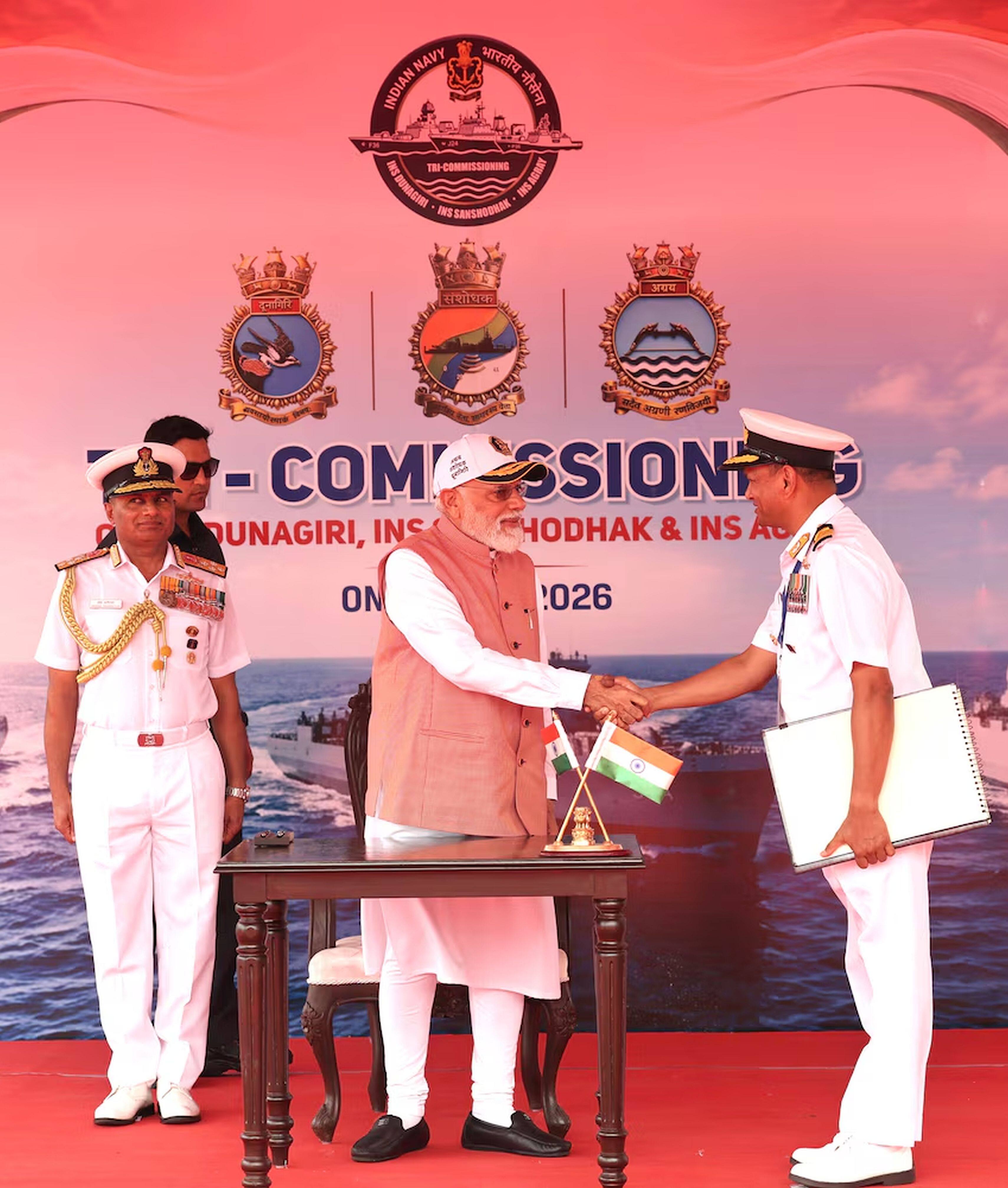
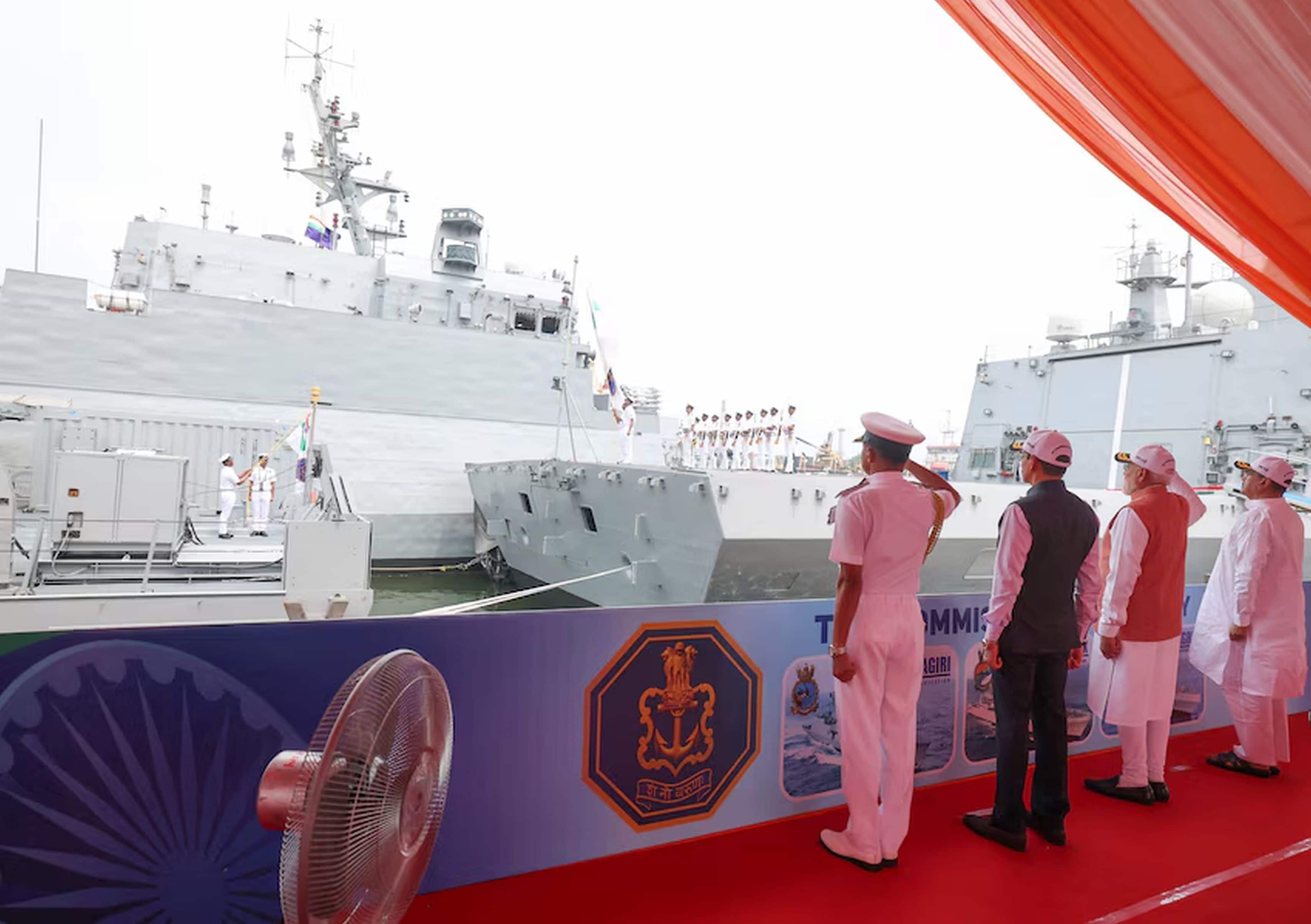
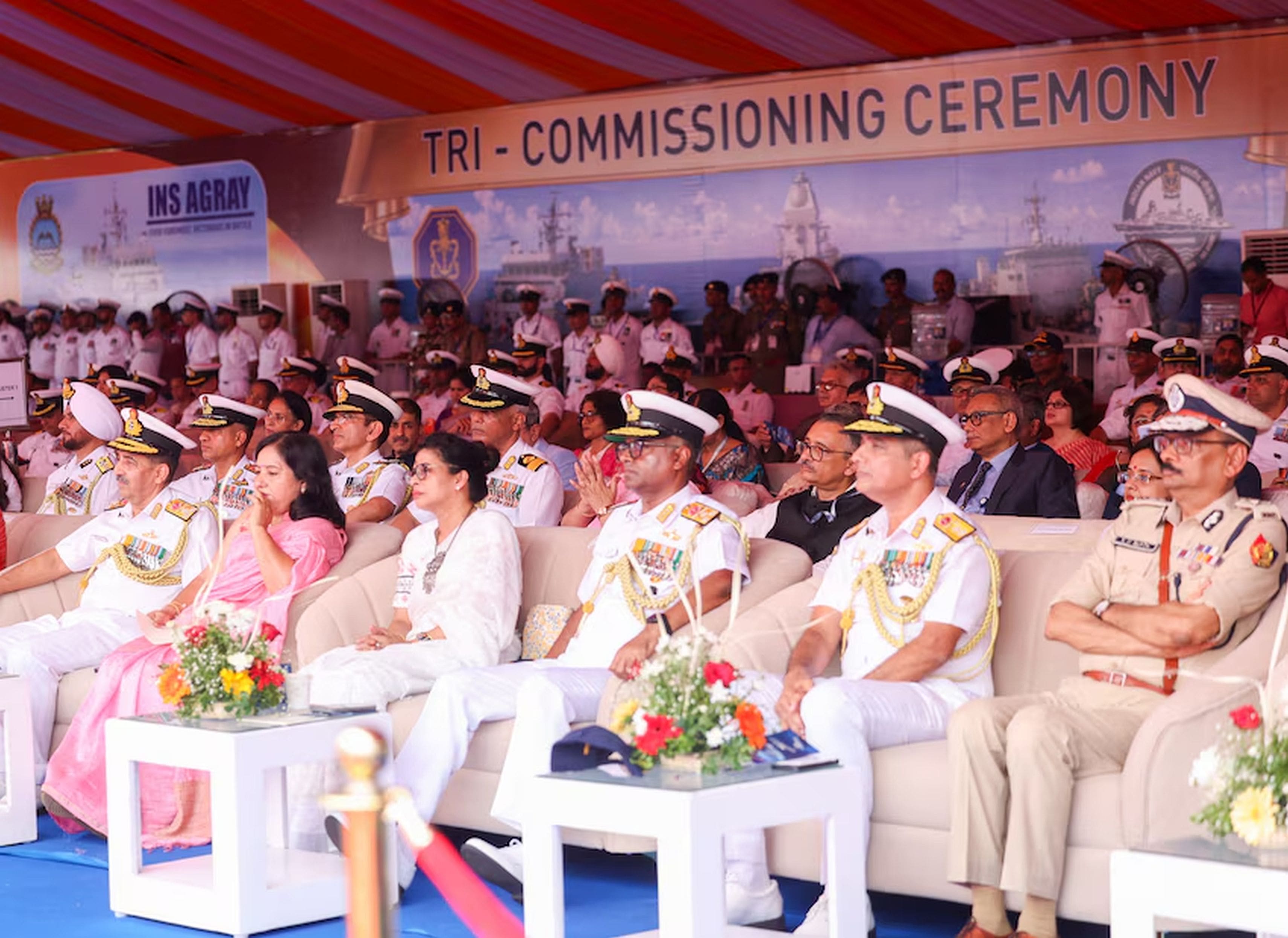
INS Agray, INS Dunagiri, and INS Sanshodhakhave been inducted into the Indian Navy: PM
It is a truly remarkable coincidence that we have commissioned India's most advanced hydrographic ship, INS Sanshodhak, on June 21, celebrated as World Hydrography Day: PM
The stronger a nation's maritime strength, the stronger its economic and strategic influence; India understands this reality and is preparing itself accordingly: PM
The journey from INS Vikrant to the commissioning of INS Agray, INS Dunagiri and INS Sanshodhak is a reflection of India's increasing self-reliance: PM
India has begun to move forward with a new vision for the shipbuilding sector; Special steps have been taken to enhance domestic construction capacity: PM
Shipbuilding, ship repair, and MRO are being viewed as part of a major national mission: PM
India views the ocean as a medium of cooperation, but also knows that strength safeguards peace, security protects prosperity and self-reliance builds the future: PM
Today, INS Agray, INS Dunagiri, and INS Sanshodhak have joined the Indian Navy as symbols of this very spirit: PM
Honorable Governor of West Bengal Shri R. N. Ravi ji, energetic Chief Minister Suvendu Adhikari ji, Chief of Naval Staff Krishna Swaminathan ji, distinguished ladies and gentlemen present here!
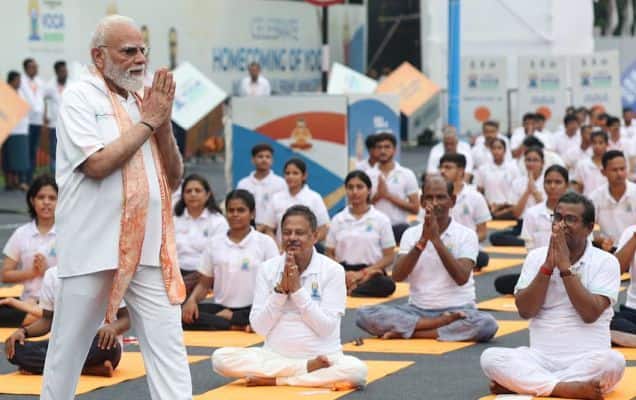
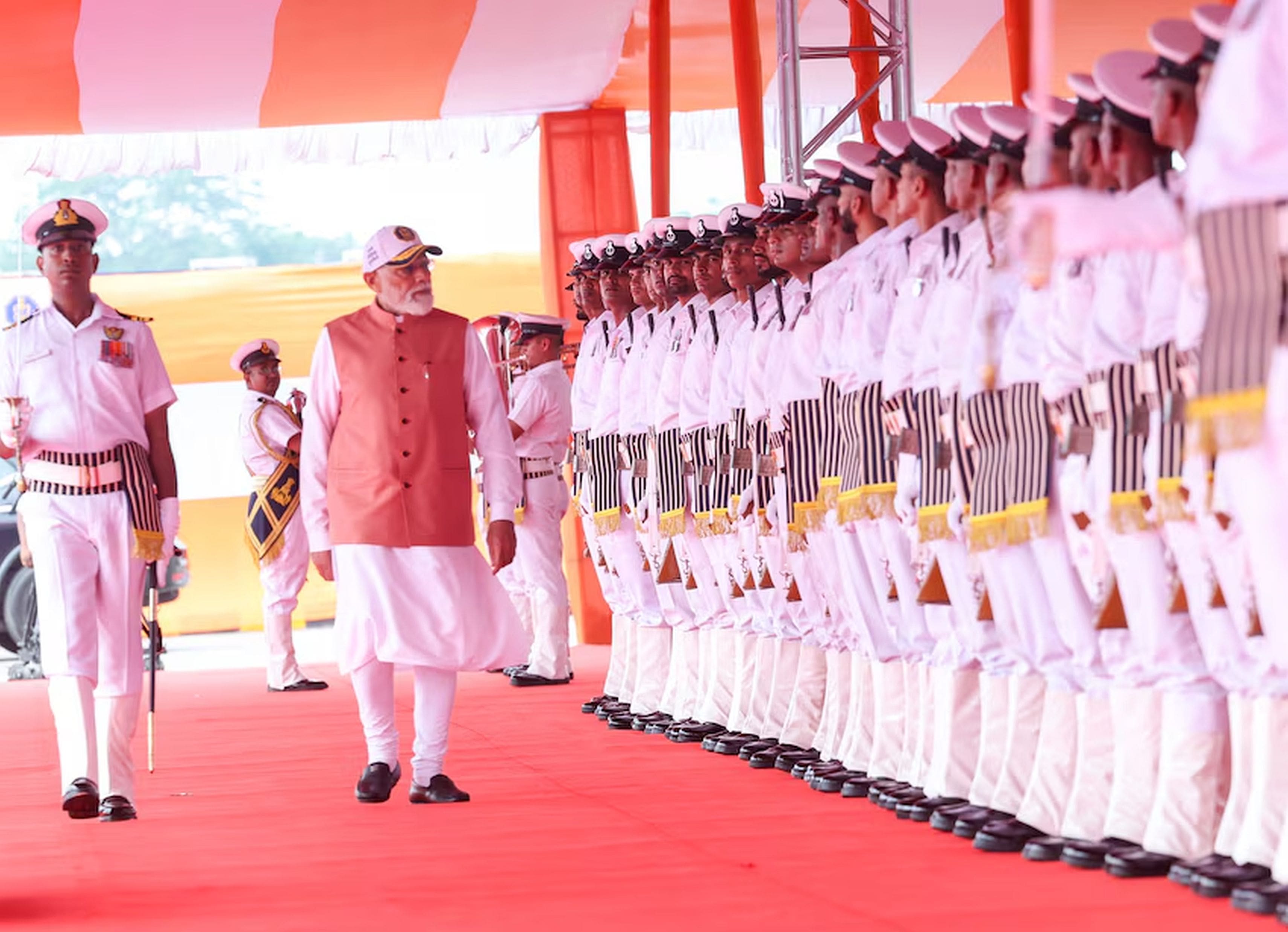
Today is special in many ways. The whole world is celebrating International Yoga Day. I am pleased that on this occasion I have had the opportunity to come to this great land of Bengal. This is the land that gave new direction to India’s ideas, that accelerated India’s renaissance, and that for centuries connected India to the world through the sea. Today, on this very soil, an important program linked to Atmanirbhar Bharat, Surakshit Bharat, and Viksit Bharat is taking place. Just a short while ago, INS Agray, INS Dunagiri, and INS Sanshodhak have been inducted into the Indian Navy. Incidentally, June 21 is also celebrated as “World Hydrography Day.” And it is a remarkable coincidence that on this very day, India’s most advanced hydrography ship, INS Sanshodhak, has been commissioned. I extend my warm congratulations and best wishes to the Indian Navy, to all the scientists, engineers, workers associated with these projects, and to my beloved countrymen.
Friends,
The world bears witness that no nation can become a great power without maritime capability. Development is linked to the seas, security is linked to the seas, prosperity is linked to the seas. Today, most of the world’s trade flows through maritime routes. The vast networks of data that connect the world pass beneath the oceans. In the coming times, critical minerals, deep-sea resources, and new sources of energy will also be connected to the seas. Therefore, the stronger a nation’s maritime strength, the stronger its economic and strategic influence. India understands this reality well. India is preparing itself for it. And today is proof of what our capability is, what our skill is.
Friends,
A few years ago, when we dedicated INS Vikrant to the nation, India announced a new chapter of its maritime strength. It was a declaration of our capability before the world. The journey from INS Vikrant to today is not just about new warships. It is also the journey of India’s growing self-reliance. Today, INS Agray, INS Dunagiri, and INS Sanshodhak are giving new momentum to that journey. These three ships are symbols of three important resolves of India. They have been built in India. Their designs were prepared in India. Their construction involved the talent of Indian industries, the skill of Indian engineers, and the hard work of Indian workers. And this is the greatest strength of New India.
Friends,
Today, India does not want to remain merely a buyer in the defense sector. Our military strength cannot be reduced to a marketplace for the world. The identity of our strength lies not in being a market, but in our self-reliance. India wants to be a manufacturer. And the day we become manufacturers, we will also become decisive. We are moving rapidly in this direction. In recent years, more than 40 Made in India warships and submarines have been inducted into the Navy. This means that almost every few weeks, the Indian Navy has gained new strength. Even now, 45 major naval platforms are under construction. This is not just a number. It is proof of India’s industrial capability. It is a signal of India’s future.
Friends,
In the coming years, India’s maritime sector has the capacity to generate millions of new jobs. That is why we do not see the maritime sector as an isolated sector. We see it as the employment engine of a developed India. A modern ship requires hundreds of tons of steel, electronics, machinery, and thousands of components. Behind all this, thousands of companies work - which means thousands of youth get employment. In the construction of the three ships commissioned today, more than 200 MSMEs have contributed. We can imagine the vast number of jobs created in these 200 MSMEs, in these small industries.
Friends,
The time has come for India to enter the next phase of maritime power. Therefore, India has begun to move forward with a new vision for the shipbuilding sector. In recent years, numerous policy reforms have been undertaken. Special measures have been taken to enhance domestic manufacturing capacity. Shipbuilding, ship repair, ship recycling, and MRO are now being seen as part of a major national mission.
Friends,
The incentive package of ₹70,000 crore announced for the shipping sector is not merely an economic decision. It is an investment in India’s maritime future. It is an investment in India’s industrial expansion.
Friends,
Today, India is strengthening its entire maritime ecosystem. That is why India is modernizing its ports, creating new capacity, building new connectivity, expanding river waterways, and developing a multi-modal logistics network. Campaigns like Sagarmala are part of this comprehensive vision. This is reducing the cost of trade, giving new momentum to industries, and creating new opportunities in coastal regions.
Friends,
There was a time when India was known as one of the world’s largest defense importers. This dependence posed both strategic and security challenges. After the government was formed in 2014, we resolved to change this situation. Major policy reforms were carried out, and self-reliance in the defense sector was prioritized. As a result, today new possibilities have emerged in defense design, manufacturing, and exports. Until 2014, the country’s total defense production was around ₹40,000 crore. Today, it has increased to nearly ₹1,80,000 crore.
And friends,
On one hand, defense production in the country has grown rapidly, and on the other hand, our defense exports have increased at an unprecedented pace. Until 2014, India exported defense products worth about ₹700 crore. Today, this figure has risen to nearly ₹40,000 crore. Defense equipment made in India is now reaching more than 80 countries around the world.
Friends,
In the journey of self-reliance, much remains to be done. In my view, this is only the beginning. But the progress achieved in 12 years shows that when policies are clear, when direction is right, and when we work together, such a massive transformation can take place in the country.
Friends,
When we talk about maritime heritage, the name of Bengal naturally comes to mind. This land has also been significant in India’s maritime connections. The currents of the Hooghly have witnessed history being reshaped, new chapters of trade being written, and new journeys of development unfolding. And see the coincidence - this port is named after Bengal’s son, the country’s first Industry Minister, Dr. Syama Prasad Mukherjee.
Friends,
In the new maritime era that India is moving towards, the role of West Bengal will be very important. Here, there is port capacity, industrial capacity, talent, skill, and the ability to take the maritime economy to new heights. I am confident that in the coming years, West Bengal will become a vital center for India’s Blue Economy, maritime manufacturing, logistics, and coastal development.
Friends,
India has always regarded the sea as a medium of cooperation. But India also knows that strength is equally necessary to safeguard peace. Security is essential to protect prosperity. And self-reliance is indispensable for building the future. Today, INS Agray, INS Dunagiri, and INS Sanshodhak have joined the Indian Navy as symbols of this very spirit. They represent the India that is recognizing its strength in the 21st century, trusting its own capabilities, and moving forward before the world with new confidence, with speed, energy, and determination.
Friends,
On this auspicious occasion, I extend my best wishes to all my companions in the Navy, to all my fellow citizens. Once again, I heartily congratulate the Indian Navy, all scientists, engineers, workers, and the people of the nation. Thank you.