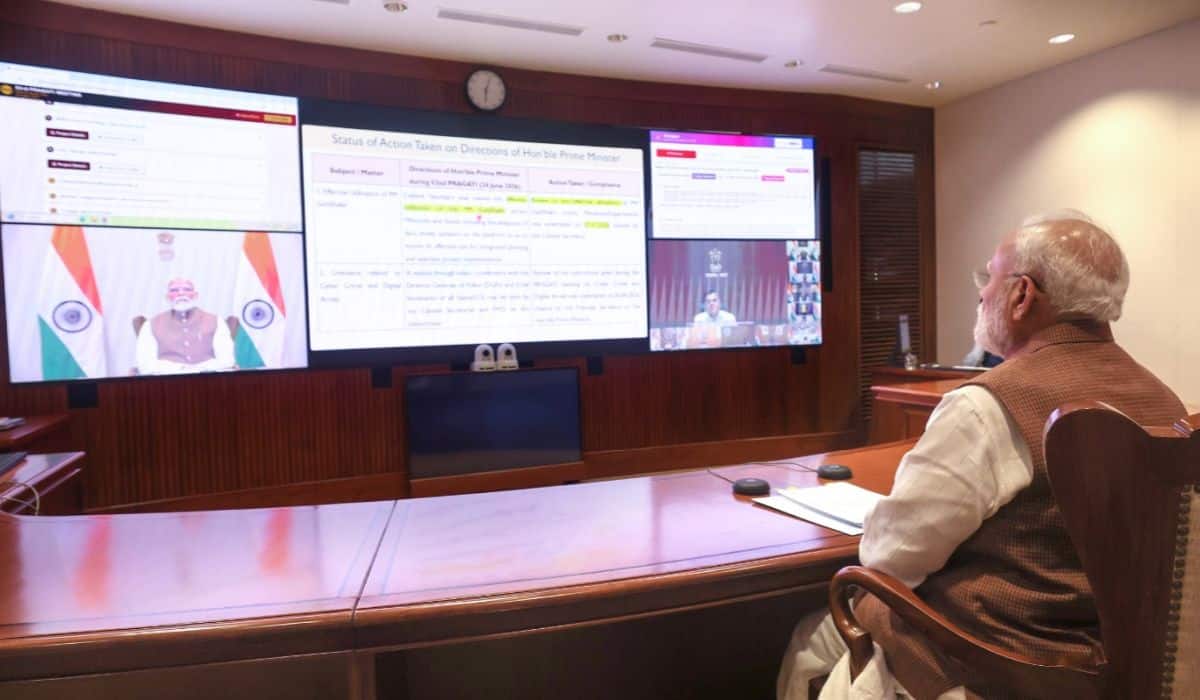
Addressing the event, the Prime Minister said a clear roadmap has been laid out in the Union Budget on how to expand the participation of the private sector and strengthen the Public sector institutions. He added the Government's vision of the country's financial sector is very clear. Our top priority is to ensure that the Depositor as well as Investor experience Trust and Transparency. The old ways and old systems of banking and non-banking sectors are being changed.

The Prime Minister said, in the name of Aggressive Lending, the banking sector and the financial sector in the country was severely harmed 10-12 years ago. Steps have been taken one by one to free the country from non-transparent credit culture. He said now instead of brushing the NPAs under the carpet, it is mandatory to report even one day NPA.
The Prime Minister assured the audience that the government understands the uncertainties of the business and recognizes that every business decision is not underlined by bad intentions. In such a scenario, it is the responsibility of the government to stand by business decisions taken with clear conscience, we are doing this and will continue to do so. Mechanisms like Insolvency and bankruptcy code, are assuring the lenders and borrowers, he said.
The Prime Minister listed the priorities of the Government as Income protection of common citizens, effective and leakage free delivery of government benefits to the poor, promotion of infrastructure related investment for the development of the country. All the financial reforms introduced during the past few years reflect these priorities. This Union Budget has carried forward this vision of strengthening India's financial sector. He said New Public Sector Policy announced recently includes the financial sector as well. There is a lot of potential for banking and insurance in our economy. In view of these possibilities, several initiatives have been announced in this budget including privatization of two public sector banks, permitting upto 74% FDI in insurance, listing Initial Public Offering for LIC, etc.
The Prime Minister said that private enterprises are being promoted wherever possible, still, along with this, an effective participation of the public sector in banking and insurance is still needed by the country.

To strengthen the public sector, equity capital infusion is being emphasized. Simultaneously, New ARC structure is being created which will keep track of NPAs of banks and will address loans in a focussed way. This will strengthen Public Sector Banks. He also talked of a new Development Finance Institution for development of infrastructure and industrial projects to cater long term finance needs of such projects. Shri Modi also talked of encouraging sovereign wealth funds, pension funds and insurance companies to invest in infrastructure.
The Prime Minister insisted that Aatmnirbhar Bharat will not be made only by big industry and big cities. Aatmnirbhar Bharat will be created in the villages by the hard work of small entrepreneurs and common people. AatmaNirbhar Bharat will be made up of farmers, units making better agricultural products. AatmaNirbhar Bharat will be made of our MSMEs and StartUps. Therefore special plans were made for MSMEs during the Corona period, about 90 lakh enterprises took advantage of these measures and received a credit of Rs 2.4 trillion. He said the government has done several reforms and opened many sectors like agriculture, coal and space for MSMEs.
The Prime Minister said as our economy gets bigger it is equally important for credit flow to start growing rapidly. He lauded the excellent work of our Fintech Startups in creating new and better financial products for new startups and their exploration of every possibility in this sector. He added our Fintechs have a very high participation in the Start Up Deals that have taken place in the Corona era as well. He cited experts that this year also there would be a great momentum for the financial sector in India.
The Prime Minister said, over the years, better use of technology and creation of new systems has played a very big role in financial inclusion in the country. He noted that today, in the country, 130 crore people have Aadhar Card and more than 41 crore countrymen have Jan Dhan accounts. About 55% of these Jan Dhan accounts are of women and about one and a half lakh crore rupees are deposited in them. He further said with the Mudra scheme itself, loans worth about Rs. 15 lakh crore have reached the small entrepreneurs. In this also about 70 percent are women and more than 50 percent are Dalit, deprived, tribal and backward class entrepreneurs.
The Prime Minister informed that under PM Kisan Svanidhi Scheme about 11 crore farmer families have received more than Rs 1 lakh 15 thousand crore directly in their accounts. He also mentioned PM Svanidhi for street vendors which was the first financial inclusion initiative for this section. About 15 lakh vendors have been given credit worth Rs 10 thousand crore. TREDS, PSB Digital Lending platforms are making easy loans available to MSME. Kisan Credit cards are freeing small farmers, animal husbandry and fishermen from the clutches of informal lending. The Prime Minister asked the financial sector to create innovative financial products for this section. He also suggested that Self Help Groups’ capability from services to manufacturing and their financial discipline make them an ideal channel for investment in the rural infrastructure. It is not just a welfare issue but is a great business model, said the Prime Minister.
The Prime Minister said that the country is rapidly moving towards financial empowerment after financial inclusion. A World Class Financial Hub is being built in IFSC GIFT City, as the Fintech market is estimated to be over 6 trillion in India in the next 5 years. He said construction of modern infrastructure in India is not only our aspiration but also the need of a aatmnirbhar Bharat. So in this budget, bold targets are kept for the infrastructure. He stressed the need for Investment to meet these goals and said that every effort is made to bring this investment. He said these goals will be achieved only with the active support of the entire financial sector. To strengthen our financial system, he said that the government is committed to strengthening its banking sector. So far Banking reforms have been carried out and they will still continue.
देश के फाइनेंशियल सेक्टर को लेकर सरकार का विजन बिल्कुल साफ है।
— PMO India (@PMOIndia) February 26, 2021
देश में कोई भी Depositor हो या कोई भी Investor, दोनों ही Trust और Transparency अनुभव करें, ये हमारी सर्वोच्च प्राथमिकता है: PM @narendramodi
Non-Transparent क्रेडिट कल्चर से देश को बाहर निकालने के लिए एक के बाद एक कदम उठाए गए हैं।
— PMO India (@PMOIndia) February 26, 2021
अब NPAs को कार्पेट के नीचे दबाने के बजाय, उसे यहां-वहां दिखाकर बचने के बजाय, 1 दिन का NPA भी रिपोर्ट करना ज़रूरी है: PM @narendramodi
बैंकिंग और नॉन बैंकिंग सेक्टर के पुराने तौर-तरीकों और पुरानी व्यवस्थाओं को बदला जा रहा है।
— PMO India (@PMOIndia) February 26, 2021
10-12 साल पहले Aggressive Lending के नाम पर कैसे देश के बैंकिंग सेक्टर को, फाइनेंशियल सेंकटर को नुकसान पहुंचाया गया, ये आप अच्छी तरह जानते भी हैं, समझते भी हैं: PM @narendramodi
सामान्य परिवारों की कमाई की सुरक्षा,
— PMO India (@PMOIndia) February 26, 2021
गरीब तक सरकारी लाभ की प्रभावी और लीकेज फ्री डिलिवरी,
देश के विकास के लिए इंफ्रास्ट्रक्चर से जुड़े निवेश को प्रोत्साहन,
ये हमारी प्राथमिकता हैं: PM
हमारा ये लगातार प्रयास है कि जहां संभव हो वहां प्राइवेट उद्यम को ज्यादा से ज्यादा प्रोत्साहित किया जाए।
— PMO India (@PMOIndia) February 26, 2021
लेकिन इसके साथ-साथ बैंकिंग और बीमा में पब्लिक सेक्टर की भी एक प्रभावी भागीदारी अभी देश की ज़रूरत है: PM @narendramodi
आत्मनिर्भर भारत किसानों से, कृषि उत्पादों को बेहतर बनाने वाली इकाइयों से बनेगा।
— PMO India (@PMOIndia) February 26, 2021
आत्मनिर्भर भारत, हमारे MSMEs से बनेगा, हमारे Start Ups से बनेगा: PM @narendramodi
आत्मनिर्भर भारत सिर्फ बड़े उद्योगों या बड़े शहरों से नहीं बनेगा।
— PMO India (@PMOIndia) February 26, 2021
आत्मनिर्भर भारत गांव में, छोटे शहरों में छोटे-छोटे उद्यमियों के, सामान्य भारतीयों के परिश्रम से बनेगा।
आत्मनिर्भर भारत किसानों से, कृषि उत्पादों को बेहतर बनाने वाली इकाइयों से बनेगा: PM @narendramodi
आप सभी भलीभांति जानते हैं कि हमारे Fintech Start ups आज बेहतरीन काम कर रहे हैं और इस सेक्टर में हर संभावनाओं एक्स्प्लोर कर रहे हैं।
— PMO India (@PMOIndia) February 26, 2021
कोरोना काल में भी जितनी Start Up Deals हुई हैं, उनमें हमारे Fintechs की हिस्सेदारी बहुत अधिक रही है: PM @narendramodi
आज देश में 130 करोड़ लोगों के पास आधार कार्ड, 41 करोड़ से ज्यादा देशवासियों के पास जनधन खाते हैं।
— PMO India (@PMOIndia) February 26, 2021
इनमें से करीब 55% जनधन खाते महिलाओं के हैं और इनमें करीब डेढ़ लाख करोड़ रुपए जमा हैं: PM
मुद्रा योजना से ही बीते सालों में करीब 15 लाख करोड़ रुपए का ऋण छोटे उद्यमियों तक पहुंचा है।
— PMO India (@PMOIndia) February 26, 2021
इसमें भी लगभग 70 प्रतिशत महिलाएं हैं और 50 प्रतिशत से ज्यादा दलित, वंचित, आदिवासी और पिछड़े वर्ग के उद्यमी हैं: PM @narendramodi