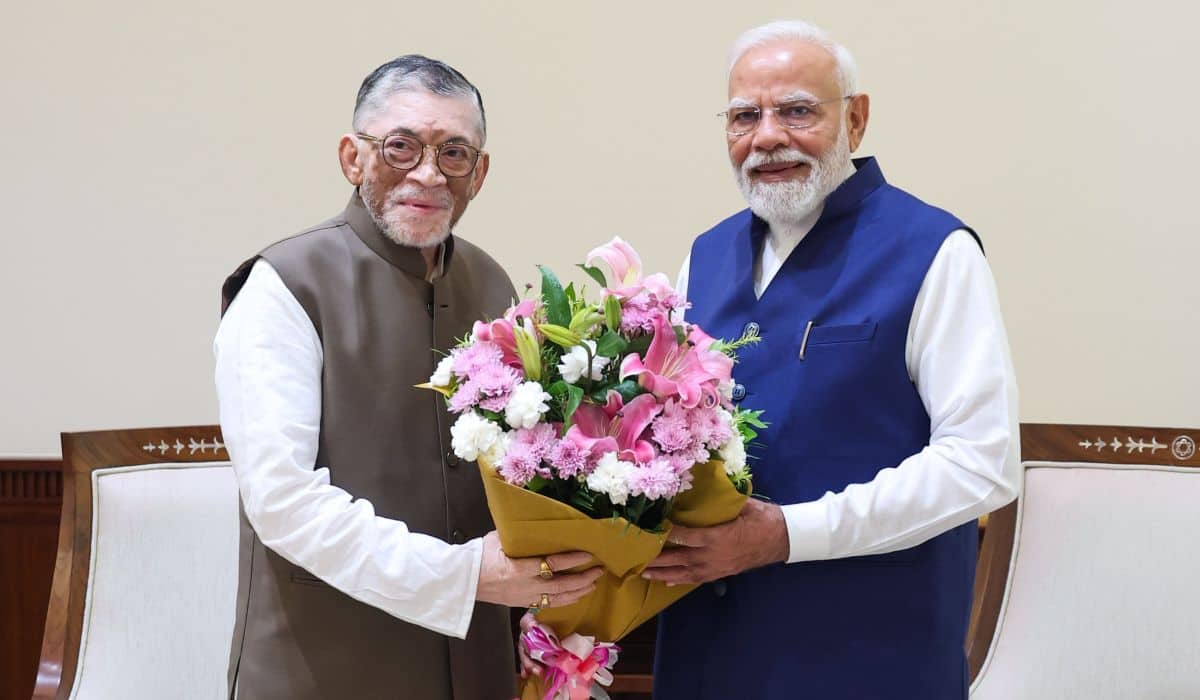
The Prime Minister Shri Narendra Modi addressed the Rozgar Mela via videoconferencing today. Speaking on the occasion, the Prime Minister remarked that this year’s festival of lights, Diwali, has brought new illumination into everyone’s lives. Amidst the festive celebrations, receiving appointment letters for permanent jobs adds a double dose of joy—both the cheer of the festival and the success of employment. Shri Modi highlighted that this happiness has reached over 51,000 youth across the country today. He acknowledged the immense joy this brings to their families and extended his congratulations to all the recipients and their family members. He conveyed his best wishes for this new beginning in their lives.
Highlighting the enthusiasm, capacity for hard work, and the self-confidence born from fulfilled dreams among the newly appointed youth, Shri Modi remarked that when this spirit is combined with a passion to serve the nation, their success transcends personal achievement and becomes a triumph for the country. The Prime Minister emphasized that today’s appointments are not merely government jobs, but opportunities to actively contribute to nation-building. He expressed confidence that the appointees will work with integrity and sincerity, and play a vital role in creating better systems for the India of the future. The Prime Minister further appealed to the new appointees to not forget the mantra of ‘Nagarik Devo Bhava’ and work by upholding the spirit of service and dedication.

“For the past 11 years, the nation has been advancing with a resolve to build a developed India, with the youth playing the most pivotal role in this journey”, highlighted the Prime Minister, emphasizing that youth empowerment remains a top priority for their government. He noted that Rozgar Melas have become a powerful medium to fulfill the aspirations of young Indians, with over 11 lakh appointment letters issued through these Melas in recent times. Shri Modi further stated that these efforts are not limited to government jobs alone. The government has launched the ‘PM Viksit Bharat Rozgar Yojana’ with a target to provide employment to 3.5 crore youth. He further remarked that initiatives like the Skill India Mission are equipping youth with necessary training, while platforms such as the National Career Service are connecting them with new opportunities. He also noted that through this platform, information on more than 7 crore vacancies has already been shared with the youth.
Prime Minister announced a major initiative for youth—the ‘Pratibha Setu Portal’—which offers opportunities to candidates who reached the final list of UPSC but were not selected. He emphasized that their efforts will not go in vain, as both private and public institutions are now engaging with these talented individuals through the portal. Shri Modi remarked that this optimal utilization of youth talent will showcase India’s youth potential to the world.

Highlighting that the festive season has been enriched by the GST Bachat Utsav, Shri Modi noted the significant reform in GST rate reductions across the country. He stated that the impact of these reforms goes beyond consumer savings, as next-generation GST reforms are also expanding employment opportunities. When everyday goods become cheaper, demand rises; increased demand accelerates production and supply chains; and higher factory output leads to the creation of new jobs. Therefore, the GST Bachat Utsav is also transforming into an Employment Festival. The Prime Minister pointed out the record-breaking sales witnessed during Dhanteras and Diwali, with new records set and old ones surpassed, demonstrating how GST reforms have given fresh momentum to the nation’s economy. He noted the positive impact of these reforms on the MSME sector and retail trade, which are now generating new employment opportunities in manufacturing, logistics, packaging, and distribution.
“India is currently the youngest country in the world and the strength of India’s youth is one of its greatest assets”, stated Shri Modi, emphasizing that this belief and confidence guide the nation’s progress across all sectors, including foreign policy, which is now being shaped with the interests of young Indians in mind. The Prime Minister highlighted that India’s diplomatic engagements and global MoUs increasingly incorporate provisions for youth training, upskilling, and employment generation. He noted that during the recent visit of the Prime Minister of the United Kingdom, both nations agreed to enhance investments in sectors such as AI, fintech, and clean energy. He added that the Free Trade Agreement signed a few months ago between India and the UK will also open up new opportunities. Similarly, investment partnerships with several European countries are expected to generate thousands of new jobs. Shri Modi remarked that agreements with countries like Brazil, Singapore, Korea, and Canada will boost investment, support startups and MSMEs, increase exports, and create new opportunities for youth to work on global projects.

Underlining that the successes and vision being discussed today will see significant contributions from the newly appointed youth in the times ahead, the Prime Minister emphasized the need for continuous efforts towards the goal of a developed India, asserting that young karmayogis like them will lead this resolve to fruition. He highlighted the utility of the ‘i-Got Karmayogi Bharat Platform’ in this journey, noting that nearly 1.5 crore government employees are already learning through it. He encouraged the new appointees to join the platform, which would instill a new work culture and a spirit of good governance. Shri Modi concluded by remarking that it is through their efforts that India’s future will take shape and the dreams of its citizens will be realized. He once again extended his best wishes to all the appointees.