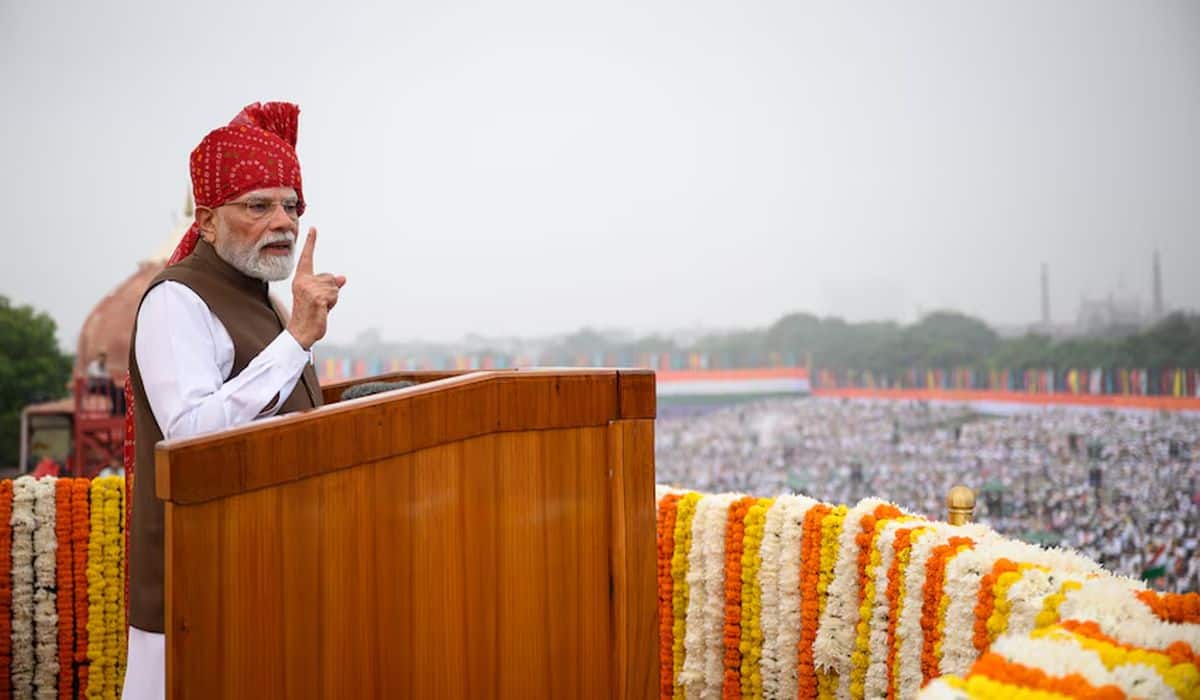
PM Modi addresses the onset of the Monsoon Session of Parliament

Published By : Admin | July 21, 2025 | 09:54 IST
The Monsoon Session stands as a proud moment for the nation, a true celebration of our collective achievements: PM
The world has witnessed the strength of India's military power; In Operation Sindoor, Indian soldiers achieved their objective with 100% success: PM
India has endured many violent challenges, be it terrorism or Naxalism, but today, the influence of Naxalism and Maoism is shrinking rapidly: PM
The Constitution prevails over bombs and guns. The red corridors of the past are now transforming into green zones of growth and development: PM
Digital India is making waves globally, with UPI gaining popularity across many countries, it has become a recognised name in the world of FinTech: PM
The brutal massacre in Pahalgam shocked the entire world. Rising above party lines, representatives from across India united to expose Pakistan's role: PM

The Prime Minister Shri Narendra Modi addressed the media before the start of the Monsoon Session of 2025 at the Parliament premises today. Welcoming everyone to the Monsoon session, the Prime Minister remarked that the monsoon symbolizes innovation and renewal, highlighting that current weather conditions across the country are progressing favourably, bringing beneficial forecasts for agriculture. He noted that rainfall plays a crucial role not only in the rural economy and the nation’s overall economic structure but also in the financial well-being of every household. Shri Modi stated that, based on current information, water reservoir levels this year have tripled compared to the past ten years. This increase, he emphasized, will significantly benefit India’s economy in the coming days.

“The current monsoon session is a moment of great pride for the nation, it represents a celebration of victory for India”, stated the Prime Minister, underlining the historic moment when the Indian tricolour flag was unfurled at the International Space Station for the first time, calling it a source of immense pride for every Indian citizen. He emphasized that this achievement has sparked new enthusiasm and excitement across the country for science, technology, and innovation. Shri Modi further noted that the entire Parliament—both Lok Sabha and Rajya Sabha—as well as the people of India are united in expressing their pride in this accomplishment. He added that this collective celebration will serve as inspiration and encouragement for India’s future space exploration missions.
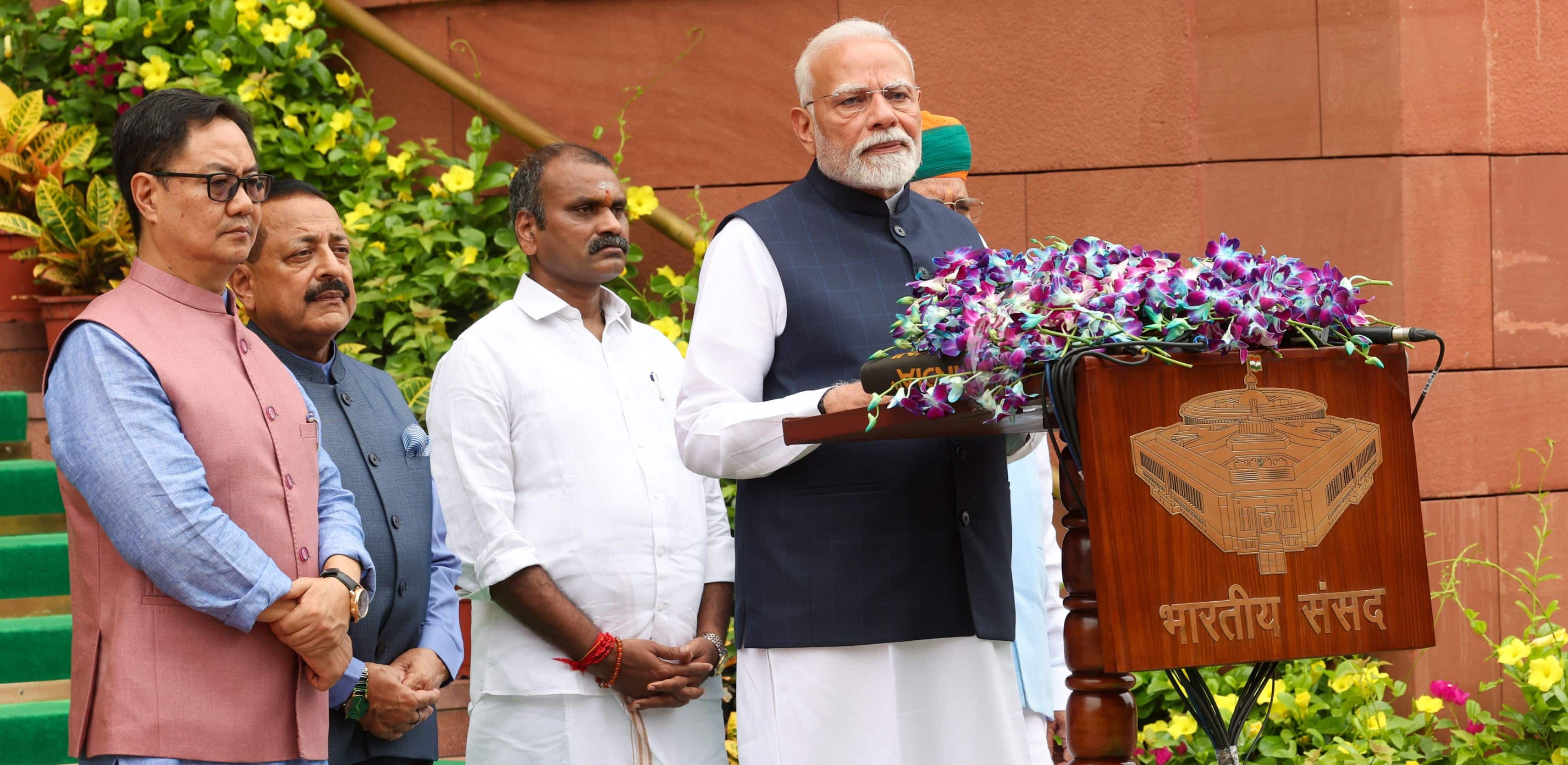
Describing the current monsoon session as a celebration of India’s victories, Shri Modi stated that the world has witnessed the strength and capability of India’s armed forces. Referring to Operation Sindoor, the Prime Minister highlighted that the Indian Army achieved its targeted objectives with 100 percent success. He emphasized that in just 22 minutes, under Operation Sindoor, India’s forces neutralized high-value targets at their own bases. He mentioned that he had announced this operation at a public event in Bihar, and the armed forces proved their mettle swiftly. Shri Modi noted growing global interest in India’s emerging “Made in India” defence capabilities, sharing that during his recent international interactions, world leaders have expressed admiration for India’s indigenously developed military equipment. He expressed confidence that as Parliament unites to celebrate this victory in one voice during the session, it will further energize and encourage India’s military strength. The Prime Minister remarked that this collective spirit will also inspire citizens and lend momentum to defence sector research, innovation, and manufacturing, creating new employment opportunities for India’s youth.

The Prime Minister observed that this decade reflects peace and progress advancing hand-in-hand, with a continuous sense of development at every step. He highlighted that the nation has long suffered from various violent incidents, be it terrorism or Naxalism, which have persisted since independence. Remarking that the geographical spread of Naxalism and Maoism is now rapidly shrinking, Shri Modi stated that India's security forces, with renewed confidence and accelerated efforts, are progressing steadily toward the goal of completely eliminating Naxalism and Maoism. With pride, he affirmed that hundreds of districts across the country are now breathing free, having emerged from the grip of Naxal violence. The Prime Minister emphasized that India’s Constitution is triumphing over weapons and violence. He noted that former ‘Red Corridor’ areas are now visibly transforming into ‘Green Growth Zones’, signaling a promising future for the country.

Underlining that each of these events represents moments of pride for every honourable Member of Parliament, driven by patriotism and dedication to the nation's welfare, Shri Modi emphasized that during this monsoon session of Parliament, the entire country will hear this celebration of national pride, voiced by every Member of Parliament and every political party.
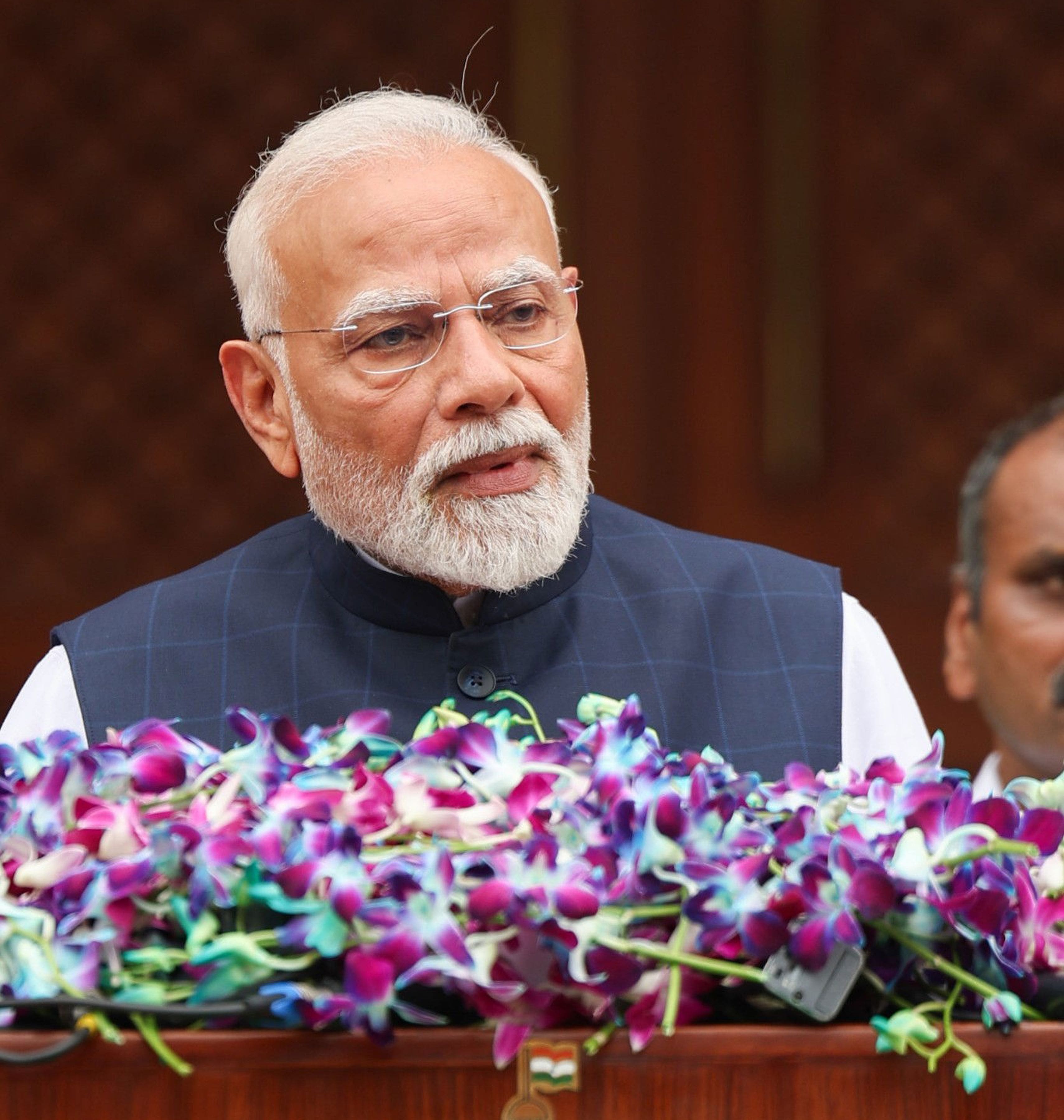
Highlighting that when their government took charge in 2014, India was part of the Fragile Five economies, the Prime Minister said that at that time, India held the 10th position in the global economic rankings, but today, India is moving rapidly toward becoming the world’s third-largest economy and is knocking on the doors of that milestone. He emphasized that 25 crore people have emerged from poverty, a transformation that has been widely recognized and appreciated by global institutions. Shri Modi noted that prior to 2014, India grappled with double-digit inflation. “Today, with inflation rates hovering around 2 percent, citizens are experiencing relief and improved ease of living. The low inflation coupled with high growth reflects a strong and steady development journey”, stated Shri Modi.

“Initiatives like Digital India and Unified Payments Interface (UPI) are showcasing India’s emerging capabilities to the world with global recognition and interest in India’s digital ecosystem are rapidly increasing”, said the Prime Minister. He remarked that UPI has established a strong presence in the fintech domain. He emphasized that India leads the world in real-time digital transactions, recording more than any other country globally.

Highlighting India's major achievements at a recent global summit of international organizations, Shri Modi cited the International Labour Organization (ILO), which reported that over 90 crore individuals in India are now covered under social security, a landmark accomplishment in social welfare. The Prime Minister also referenced the World Health Organization (WHO), which has declared India free of trachoma, an eye disease commonly seen during the monsoon season. He emphasized that this recognition marks a significant milestone in India's public health efforts.

Recalling the brutal killings in Pahalgam that shocked the world and brought global attention to terrorism and its sponsors, the Prime Minister remarked that in response, representatives from most political parties and states rose above partisan interests and embarked on international outreach in service of the nation. He highlighted the success of this unified diplomatic campaign, which exposed Pakistan as a sponsor of terrorism on the global stage. Shri Modi expressed deep appreciation for the Members of Parliament and political parties who carried out this vital national initiative. He stated that their efforts created a positive environment in the country and opened the minds of the international community to India’s perspective on terrorism, noting that it is his privilege to commend all involved for this significant contribution to national interest.

Emphasizing the power of unity and the spirit of one voice that inspires and energizes the nation, the Prime Minister said that the current monsoon session will reflect this spirit as a celebration of victory, honouring India’s military strength and national capability, and serving as a source of motivation for 140 crore citizens. Shri Modi expressed confidence that collective efforts will strengthen India’s pursuit of self-reliance in the defence sector. He urged the nation to recognize and applaud the strength of the armed forces. Addressing the public and political parties, the Prime Minister highlighted the strength that comes from unity and the impact of speaking in one voice. He called upon all Members of Parliament to advance this sentiment in Parliament. Acknowledging the diversity of political parties and their respective agendas, Shri Modi stated that while opinions may differ on party interests, there must be harmony of intent in matters of national interest. He concluded by reaffirming that this session will include several proposed bills aimed at boosting the nation’s development, empowering citizens, and strengthening India’s progress. He extended his best wishes to all Members of Parliament for productive and high-quality debates.

Click here to read full text speech

Explore More
Today, the entire country and entire world is filled with the spirit of Bhagwan Shri Ram: PM Modi at Dhwajarohan Utsav in Ayodhya

Popular Speeches

Today, the entire country and entire world is filled with the spirit of Bhagwan Shri Ram: PM Modi at Dhwajarohan Utsav in Ayodhya
‘Have to isolate dimaagi Naxals’: PM Modi in Independence Day speech from Red Fort

Media Coverage

‘Have to isolate dimaagi Naxals’: PM Modi in Independence Day speech from Red Fort
NM on the go

Nm on the go

Always be the first to hear from the PM. Get the App Now!
...
12 Years of Transformation: PM Modi Highlights India’s Progress in Independence Day Address
August 15, 2026

In his Independence Day address, Prime Minister Shri Narendra Modi highlighted India’s transformation over the last 12 years, outlining the progress made across manufacturing, digital infrastructure, basic amenities, energy security, youth empowerment, innovation, social security and other key sectors.

Key highlights from the Prime Minister’s address include:

1. Manufacturing: Scale and Self-Reliance

Over the last 12 years:

  • Defence production has increased nearly 4 times.
  • Khadi and Village Industries production has increased nearly 5 times.
  • Electronics manufacturing has increased nearly 7 times.
  • Modern railway coach production has increased 21 times.
  • Mobile phone production has increased 35 times.

2. Digital India and Innovation

The Prime Minister highlighted the rapid expansion of India’s digital and innovation ecosystem:

  • Internet consumers have increased nearly 4 times.
  • Patent grants have increased 4 times.
  • Digital transactions have increased around 100 times.
  • India has built a significantly larger digital and innovation ecosystem.

3. Faster Delivery of Basic Amenities

The Prime Minister highlighted the faster pace at which basic facilities are reaching ordinary citizens:

  • Tap-water connections have been provided at an average annual pace nearly 15 times faster.
  • LPG connections have been provided at an annual pace nearly 6 times faster.
  • Toilets for the poor have been constructed at an annual pace nearly 4 times faster.
  • Pucca houses for the poor have been provided at an annual pace nearly 3 times faster.
  • Hundreds of obsolete laws have been abolished.
  • Modern public transport, including metro systems, has reached several more cities.

4. Building the Semiconductor Ecosystem

The Prime Minister highlighted India’s progress in building domestic semiconductor capabilities:

  • India earlier had no major semiconductor manufacturing plant.
  • A complete semiconductor ecosystem is now being built in India.
  • Three semiconductor plants have been initiated.
  • India has also started exporting chips.

5. Securing Critical Minerals

Highlighting the importance of critical minerals for emerging technologies, the Prime Minister referred to the steps being taken to strengthen India’s capabilities in this sector:

  • National Critical Mineral Mission has been launched.
  • Critical Mineral Corridor has been announced in the Budget.
  • Agreements have been signed with several countries for critical mineral supplies.

6. Strengthening Energy Security

The Prime Minister underlined that energy security is an essential condition for building a developed India, particularly as technologies such as chips, AI and data centres require huge quantities of electricity.

Underlining the role of nuclear energy, the Prime Minister highlighted:

  • The SHANTI Act as a major reform in the nuclear energy sector.
  • India crossing an important milestone in Fast Breeder Nuclear Technology.
  • The potential of the technology to play a major role in making India self-reliant in nuclear fuel.

7. Expanding Oil and Gas Exploration

The Prime Minister highlighted the change in India’s approach towards offshore exploration:

  • Nearly 99% of India’s offshore area was earlier classified as a No-Go Area.
  • The approach has now changed from No-Go Area to Go Ahead Area.
  • Previously restricted areas have been opened for exploration.
  • This has created possibilities for discovering new oil and gas reserves.

8. Energy Diversification

The Prime Minister highlighted the rapid expansion in different sources of energy.

City Gas Distribution

  • 2014: Available in fewer than 70 cities.
  • Today: Available in around 700 cities.

Piped Cooking Gas


  • 2014: Around 20–22 lakh households.
  • Today: Nearly 1.75 crore households.

Solar Energy


  • 2014: Around 2 GW.
  • Today: Around 160 GW.

PM Surya Ghar Muft Bijli Yojana


  • The scheme has crossed 50 lakh households.
  • Lakhs of families are benefiting through lower or zero electricity bills.
  • Families can also sell surplus electricity and earn.
  • Assistance of up to around ₹80,000 per household is available.

9. Railways: Electrification and Future Fuels

The Prime Minister highlighted the transformation of Indian Railways:

  • In 2014, after nearly 90 years, only around 30% of the railway network had been electrified.
  • Today, Indian Railways has moved towards near-complete electrification.
  • India has started work on its first Made-in-India hydrogen train.
  • It is being developed as the world’s longest and most powerful hydrogen train.

10. India’s Resilience During Global Crises

The Prime Minister said that the capabilities built over the last 10–12 years were tested during:

  • COVID-19 pandemic.
  • Russia-Ukraine war.
  • Conflicts in West Asia.

11. Affordable Fertiliser for Farmers

Highlighting the Government’s efforts to protect farmers from high global fertiliser prices, the Prime Minister stated:

  • Urea: Around ₹3,000 per bag internationally; Indian farmers get it for less than ₹300.
  • DAP: More than ₹5,000 internationally; Indian farmers get it for ₹1,350.

12. Trade and Export Opportunities

The Prime Minister highlighted the new opportunities being created for Indian producers and exporters:

  • Since 2014, India has entered into FTAs with around 40 countries.
  • New opportunities have opened for agriculture, fisheries, MSMEs, textiles and other export sectors.

13. Youth at the Centre of Viksit Bharat

The Prime Minister said that India’s youth have a major role in building Viksit Bharat and highlighted the new pathways opened up for them:

  • Startup India: New avenues for innovation and entrepreneurship.
  • ₹1 lakh crore Research Fund: New opportunities for young researchers.
  • Digital India: Empowerment through affordable data.
  • Skill India: National skills ecosystem.
  • Space Sector: Opened for private participation.
  • National Drone Policy: New opportunities for young entrepreneurs and innovators.
  • Khelo India: Strengthened sports ecosystem.

14. Education and Innovation

The Prime Minister highlighted the expansion of educational and innovation opportunities:

  • National Education Policy 2020: Introduced after a gap of 35 years.
  • Universities: Fewer than 350 during 2004–2014; around 650 new universities added in the following decade.
  • Medical Colleges: Fewer than 400 before 2014; around 850 today.
  • More than 10,000 Atal Tinkering Labs have been established in schools.
  • Focus has been placed on developing a technology and innovation mindset from an early age.

15. Startups, Space and AI

The Prime Minister highlighted India’s growing startup and innovation ecosystem:

  • An Indian space startup has launched a Made-in-India rocket.
  • India now has around 2.5 lakh registered startups.
  • AI is creating new opportunities for young Indians.
  • India hosted the AI Impact Summit this year.

16. New Sectors and New Opportunities

Bioeconomy

  • 2014: Around ₹60,000 crore.
  • Today: Nearly ₹20 lakh crore.
  • The expansion is creating new jobs and entrepreneurial opportunities.

Electric Vehicles


  • Towards the end of the previous decade: Around 1.5 lakh EVs sold annually.
  • Last year: Around 25 lakh EVs sold.

Aviation


  • New airports and routes are creating employment.
  • MRO is opening new opportunities.
  • India is moving towards Made-in-India aircraft manufacturing.
  • The Made-in-India C-295 defence transport aircraft has successfully completed its flight.

17. Rural Empowerment through SVAMITVA

The Prime Minister highlighted the impact of the SVAMITVA initiative:

  • Around 3.25 crore families have received property cards.
  • Around ₹140 lakh crore of economic potential has been unlocked in rural areas.
  • Property records are enabling villagers to access bank loans against their property.
  • New avenues for rural employment, self-employment and entrepreneurship have opened up.

18. Growth in Defence Exports

The Prime Minister highlighted the expansion of India’s defence exports:

  • Defence exports have increased more than 50 times.
  • Indian defence equipment is now exported to around 100 countries.

19. Women-Led Development: Lakhpati Didi

Highlighting the growing role of women in India’s development:

  • The target of 3 crore Lakhpati Didis has been achieved.
  • Women from general, Dalit, backward and tribal families have become Lakhpati Didis.

20. Expanding Social Security

The Prime Minister highlighted the expansion of social security coverage:

  • Before 2014, around 25 crore people were covered by social security.
  • Today, around 100 crore Indians are covered by one or another social security scheme.

21. Ayushman Bharat

The Prime Minister highlighted the financial relief provided to families through Ayushman Bharat:

  • Beneficiary families have avoided an estimated ₹2 lakh crore in medical expenditure.