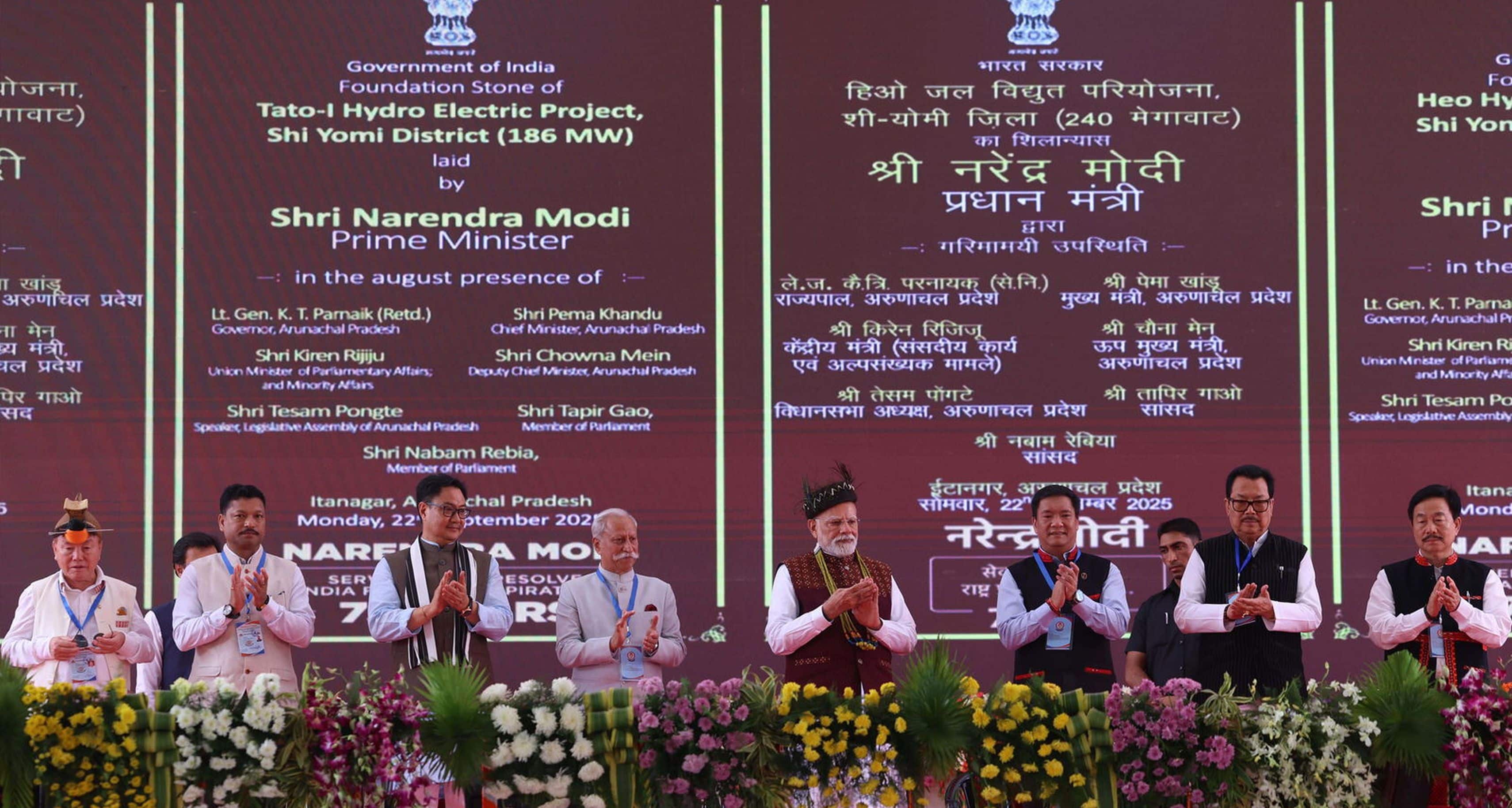
Prime Minister Shri Narendra Modi laid the foundation stone and inaugurated various development works worth over Rs 5,100 crore in Itanagar, Arunachal Pradesh today. Addressing the gathering on the occasion, he extended reverence to the Almighty Donyi Polo, praying for blessings upon all.
Prime Minister remarked that the journey from the helipad to the ground, meeting countless people along the way, and witnessing children and youth holding the national flag filled him with pride due to Arunachal Pradesh’s warm hospitality. He highlighted that Arunachal is not only the land of the rising sun but also a land of fervent patriotism. Just as the first colour of the national flag is saffron, Arunachal’s spirit too begins with saffron. Shri Modi noted that every individual in Arunachal is a symbol of valour and simplicity. He expressed his deep affection for the state, stating that every visit brings him immense joy and that every moment spent with the people is memorable. He acknowledged the love and affection shown to him as a great honour. “From the Tawang Monastery to the Golden Pagoda in Namsai, Arunachal Pradesh represents a confluence of peace and culture”, stated the Prime Minister saluting this sacred land, calling it the pride of Mother India.
Highlighting that his visit to Arunachal Pradesh today was special for three distinct reasons, the Prime Minister said that first, on the auspicious first day of Navratri, he had the privilege of witnessing the beautiful mountain ranges. He remarked that on this day, devotees worship Maa Shailputri, the daughter of the Himalayas. Second, he announced the implementation of next-generation GST reforms across the country and the launch of the GST Savings Festival. Shri Modi noted that during the festive season, citizens have received a double bonanza. Third, he emphasized the inauguration of numerous development projects in Arunachal Pradesh ranging across sectors including power, connectivity, tourism, and health. The Prime Minister stated that this reflects the double benefit of their Governments at the Union and the state and extended heartfelt congratulations to the people of Arunachal for these projects. He affirmed that the GST Savings Festival will bring in joy, prosperity and success to the people of India.
Mentioning that while Arunachal Pradesh is the first to receive the rays of the sun, it was unfortunate that the rays of rapid development took several decades to reach the region, Shri Modi recalled visiting Arunachal multiple times before 2014 and being among its people, noting that the state is abundantly blessed by nature—with its land, hardworking citizens, and immense potential. The Prime Minister highlighted that despite these strengths, those who governed from Delhi in earlier times consistently neglected Arunachal. He criticized few political parties for their mindset that Arunachal, with its small population and only two Lok Sabha seats, did not warrant attention. He stated that this approach caused significant harm to Arunachal and the entire Northeast, which was left far behind in the journey of development.
Shri Modi stated that after being given the opportunity to serve the nation in 2014, he resolved to free the country from the previous dispensation’s mindset. He emphasized that the guiding inspiration of his government is not the number of votes or seats in any state, but the principle of “Nation First.” He reiterated the government’s core mantra— ‘Nagarik Devobhava’. The Prime Minister remarked that those who were never acknowledged before are now revered by Modi. He highlighted that the Northeast, which was neglected during opposition rule, became central to development priorities post-2014. The budget for the region’s development was increased manifold, and last-mile connectivity and delivery were made hallmarks of our administration. He further asserted that governance would no longer be confined to Delhi; officers and ministers must frequently visit and stay in the Northeast.
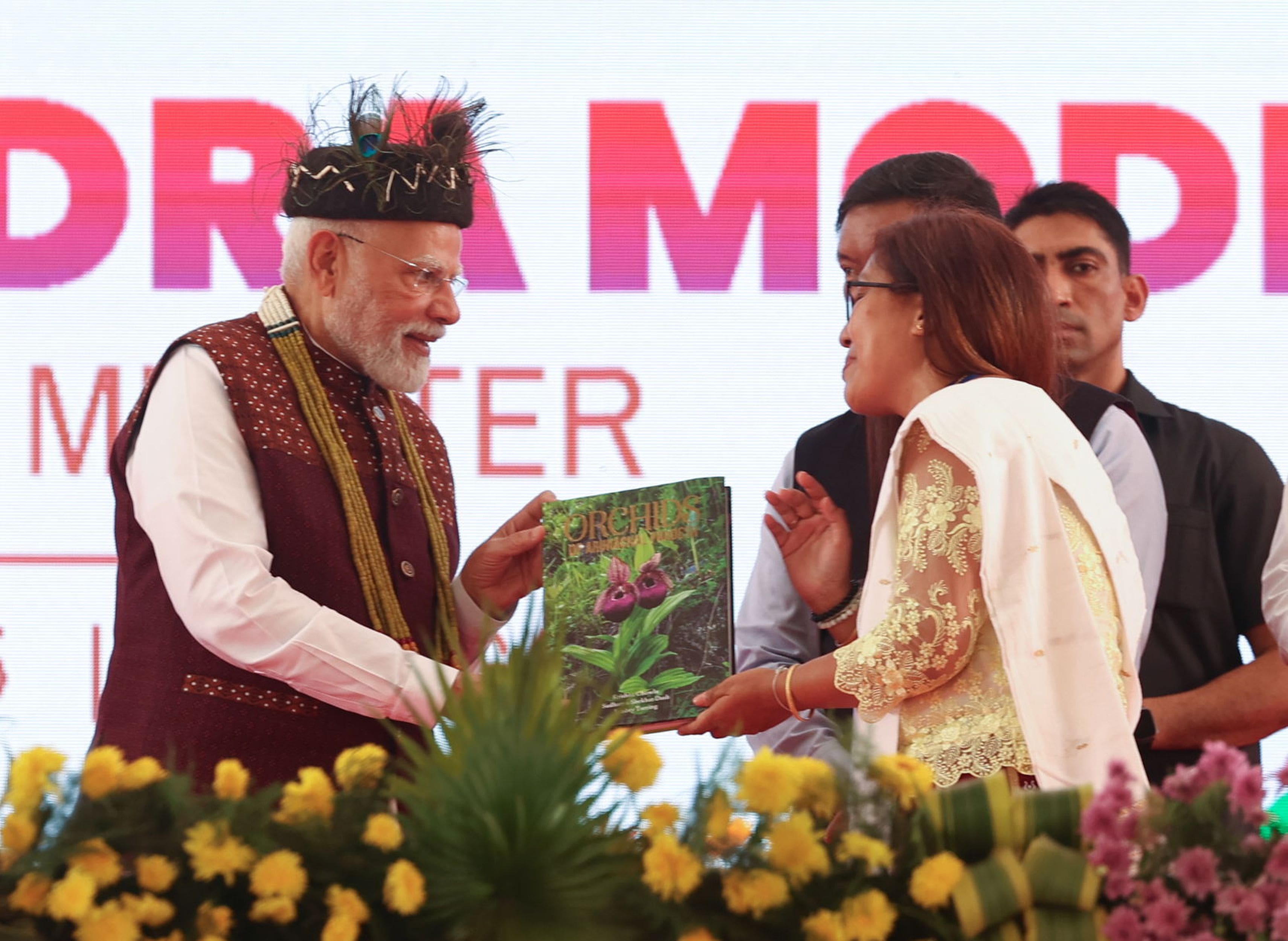
Underlining that during the previous dispensation’s regime, a Union Minister would visit the Northeast only once in two to three months. In contrast, Shri Modi said, under our government, Union Ministers have visited the Northeast over 800 times. He emphasized that these visits are not symbolic; ministers make efforts to stay overnight and engage meaningfully with the region. The Prime Minister said that he himself has visited the Northeast more than 70 times, adding that just last week, he travelled to Mizoram, Manipur, and Assam, and spent the night in Guwahati. He expressed his deep affection for the Northeast, stating that his government has bridged the emotional gap and brought Delhi closer to the people.
Emphasising that the eight states of the Northeast are revered as Ashtalakshmi, the Prime Minister said therefore cannot be left behind in the journey of development. He stressed that the Central Government is allocating substantial funds for the region’s progress. Citing an example, he explained that a portion of the taxes collected by the Centre is distributed to the states. During the previous regime, Arunachal Pradesh received only ₹6,000 crore from central taxes over ten years. In contrast, Shri Modi emphasised that under our government, Arunachal has received over ₹1 lakh crore in the same period—16 times more. He clarified that this figure pertains only to the tax share, and does not include additional expenditures under various schemes and major infrastructure projects being implemented in the state. The Prime Minister remarked that this is why Arunachal is witnessing such extensive and rapid development today.
Emphasizing that when intentions are noble and efforts are honest, results are visible, Shri Modi stated that the Northeast is emerging as a driving force in the nation’s development, with a strong focus on good governance. He affirmed that for his government, nothing is more important than the welfare of citizens. Shri Modi underscored that to make life easier, the government is working on Ease of Living; to reduce travel difficulties, Ease of Travel; to improve healthcare access, Ease of Medical Treatment; to support education, Ease of Education; and to facilitate business, Ease of Doing Business is being worked upon. The Prime Minister highlighted that their governments at Union and State are actively pursuing these goals. Areas where roads were once unimaginable are now witnessing the construction of quality highways. Infrastructure like the Sela Tunnel, which was once considered impossible, has now become a symbol of Arunachal’s progress, the PM stated.
Highlighting that the Union Government is working to establish heliports in remote areas of Arunachal Pradesh and the Northeast, integrating these regions under the UDAN scheme, Shri Modi noted that a new terminal building has been constructed at Hollongi Airport, which now offers direct flights to Delhi. This development benefits not only regular passengers, students, and tourists, but also supports local farmers and small industries. The Prime Minister remarked that transporting fruits, vegetables, and other produce to major markets across the country has now become much easier.
Prime Minister stated that the nation is collectively working towards the goal of becoming a developed country by 2047, and this vision can only be realized when every state progresses in alignment with national objectives. He expressed satisfaction that the Northeast is playing a significant role in achieving these goals. Citing the power sector as a prime example, the PM said that India has set a target of generating 500 GW of electricity from non-conventional sources by 2030, including solar, wind, and hydro power. Shri Modi highlighted that Arunachal Pradesh is actively contributing to this mission. He announced the foundation stone laying of two new power projects that will strengthen Arunachal’s position as a power producer, generate employment for thousands of youth, and provide affordable electricity for developmental activities. The PM criticized the opposition party for its longstanding tendency to avoid difficult development tasks, which adversely impacted Arunachal and the entire Northeast. He noted that challenging terrains—mountainous regions, forested areas—were often declared backward and neglected by opposition party. Shri Modi further added that tribal regions and districts in the Northeast suffered the most, and villages near the border were dismissed as “last villages,” allowing the previous dispensations to evade responsibility and conceal its failures. This neglect led to continuous migration from tribal and border areas.
Stating that their government has transformed the earlier approach towards regional development, Shri Modi said districts previously labelled as “backward” by previous dispensations have been redefined as “aspirational districts” and prioritized for growth. Border villages once dismissed as “last villages” have now been recognized as the nation’s “first villages.” The Prime Minister highlighted the positive outcomes of this shift, noting the accelerated pace of development in border areas. The success of the Vibrant Villages Programme has significantly improved the quality of life. In Arunachal Pradesh alone, over 450 such border villages have witnessed rapid progress, with essential infrastructure like roads, electricity, and internet now reaching these regions. The Prime Minister remarked that while migration from border areas to cities was once common, these villages are now emerging as new hubs of tourism.
Highlighting the immense potential for tourism in Arunachal Pradesh, the Prime Minister noted that as connectivity expands to newer regions, tourism is steadily increasing. He expressed satisfaction that the number of tourists visiting Arunachal has doubled over the past decade. He emphasized that Arunachal’s tourism strength goes beyond nature and culture, pointing to the global rise of conference and concert tourism. In this context, Shri Modi announced that the upcoming modern convention centre in Tawang will add a new dimension to the state’s tourism landscape. He further stated that the Vibrant Villages Programme launched by the Government of India is proving to be a milestone for villages located along the border, significantly aiding Arunachal’s development.
Underlining that the rapid development visible in Arunachal Pradesh today is a result of their governments working in both Delhi and Itanagar, the Prime Minister remarked that the combined energy of the Centre and the State is being channelled into development. He cited the commencement of work on a cancer institute and the establishment of medical colleges in the region. Shri Modi added that under the Ayushman Bharat scheme, numerous citizens have received free medical treatment. He affirmed that these achievements have been made possible through their governments at Union and the state.
Underscoring that due to the efforts of their governments at Union and state, Shri Modi remarked that Arunachal Pradesh is making significant strides in agriculture and horticulture. He noted that local produce such as kiwi, oranges, cardamom, and pineapples are giving the state a new identity. He remarked that the PM-Kisan Samman Nidhi scheme is proving highly beneficial for farmers in the region.
The Prime Minister emphasized that empowering mothers, sisters, and daughters is a major priority for his government. He reiterated his mission to create three crore “Lakhpati Didis” across the country and expressed satisfaction that Chief Minister Pema Khandu and his team are actively advancing this mission. He also mentioned the commencement of numerous working women hostels in the state, which will greatly benefit young women.
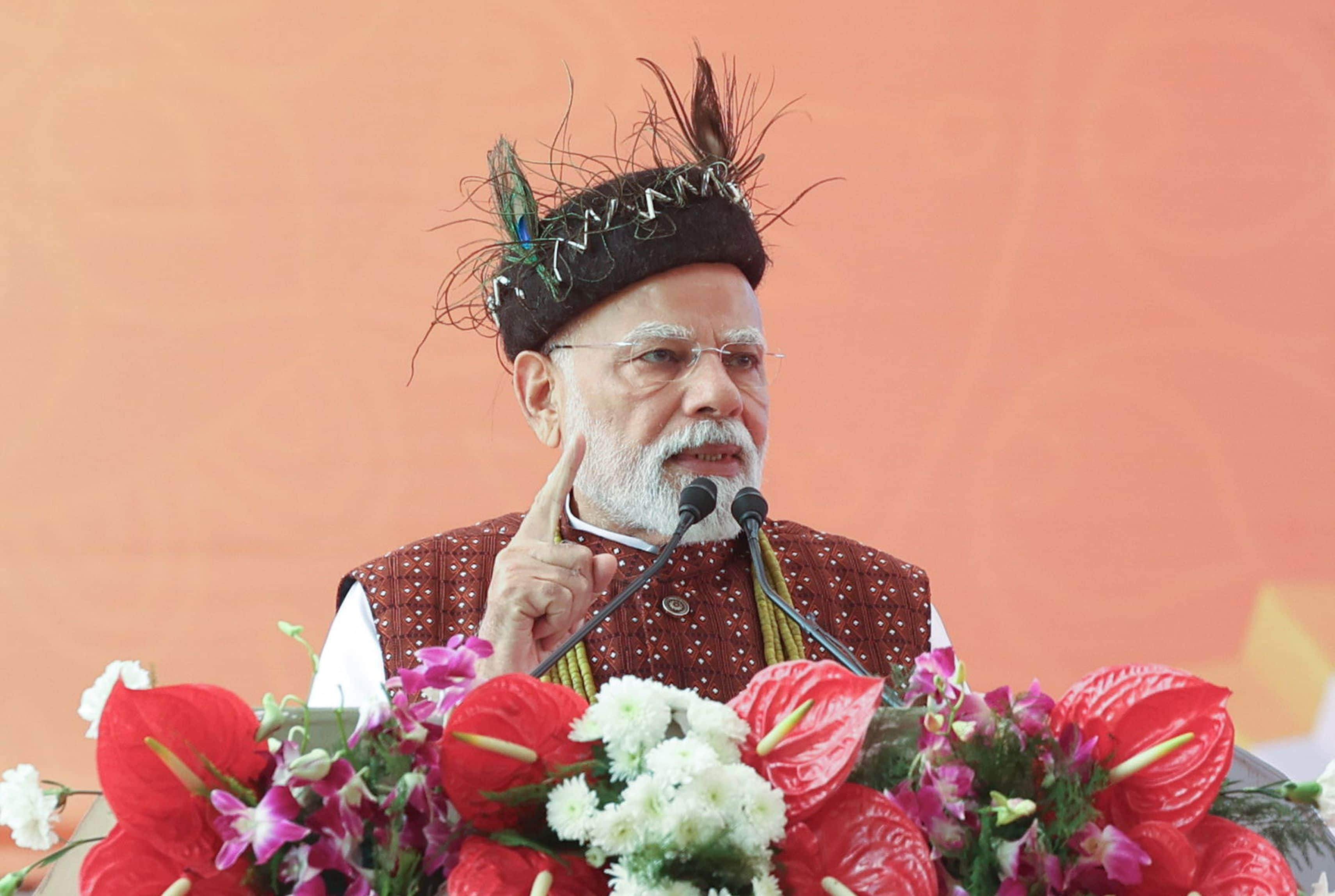
Acknowledging the large presence of women at the event and extended congratulations once again for the GST Savings Festival, Shri Modi emphasized that the benefits of the next-generation GST reforms will significantly impact them. He stated that households will now experience substantial relief in their monthly budgets. Essential items such as kitchen supplies, educational materials for children, and footwear and clothing have become more affordable, the PM said.
Urging the citizens to recall the pre-2014 period, highlighting the numerous challenges faced at the time, the Prime Minister remarked that inflation was soaring, major scams were rampant, and the then government continued to increase the tax burden on the public. He pointed out that even an annual income of ₹2 lakh was subject to income tax, and many essential items were taxed at rates exceeding 30 percent under the pre-2014 regime.
Recalling his commitment to enhancing both the income and savings of citizens, Shri Modi noted that despite facing major challenges over the years, his government consistently reduced income tax rates. This year, annual income up to ₹12 lakh has been made completely tax-free. He announced that GST has now been simplified to just two slabs—5 percent and 18 percent. Shri Modi emphasised that many items have become tax-free, and taxes on other goods have been significantly reduced. He highlighted that building a home, purchasing a scooter or bike, dining out, and travelling have all become more affordable. He affirmed that the GST Savings Festival will be a memorable milestone for the people.
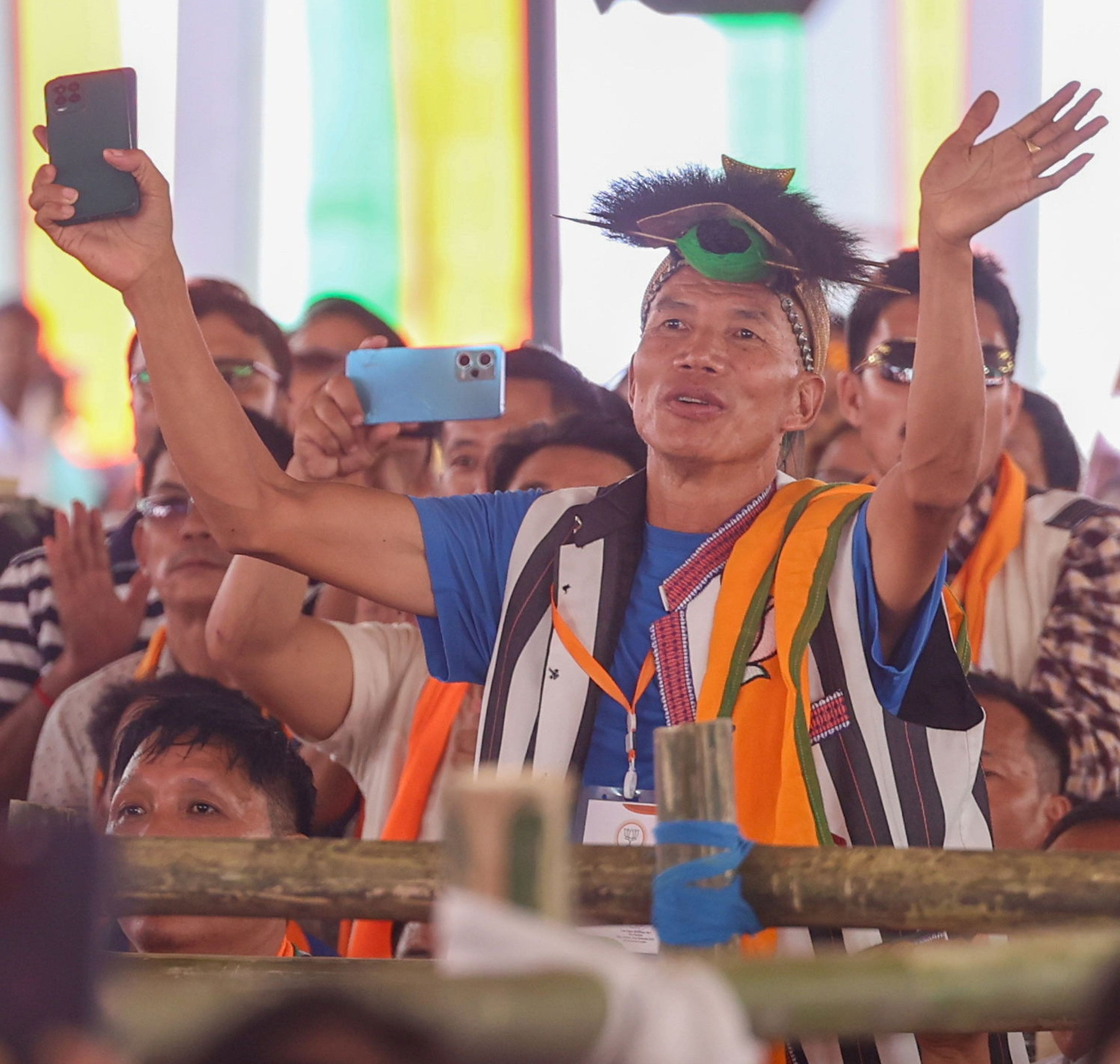
Lauding Arunachal Pradesh for its patriotic spirit, Shri Modi noted that people here say “Jai Hind” even before “Namaskar,” placing the nation above self. He emphasized that as the country collectively strives to build a developed India, there is a national expectation of self-reliance. He stated that India will become developed only when it becomes self-reliant, and for that, the mantra of “Swadeshi” is essential. The Prime Minister urged citizens to adopt Swadeshi, stressing the importance of buying and selling only products made in India and proudly declaring them as Swadeshi. He affirmed that following this mantra will accelerate the development of the nation, Arunachal Pradesh, and the entire Northeast. He concluded by extending his best wishes for the newly launched development projects.
Governor of Arunachal Pradesh, Lt Gen K T Parnaik (Retd), Chief Minister of Arunachal Pradesh, Shri Pema Khandu, Union Minister Shri Kiren Rijiju were present among other dignitaries at the event.
Background
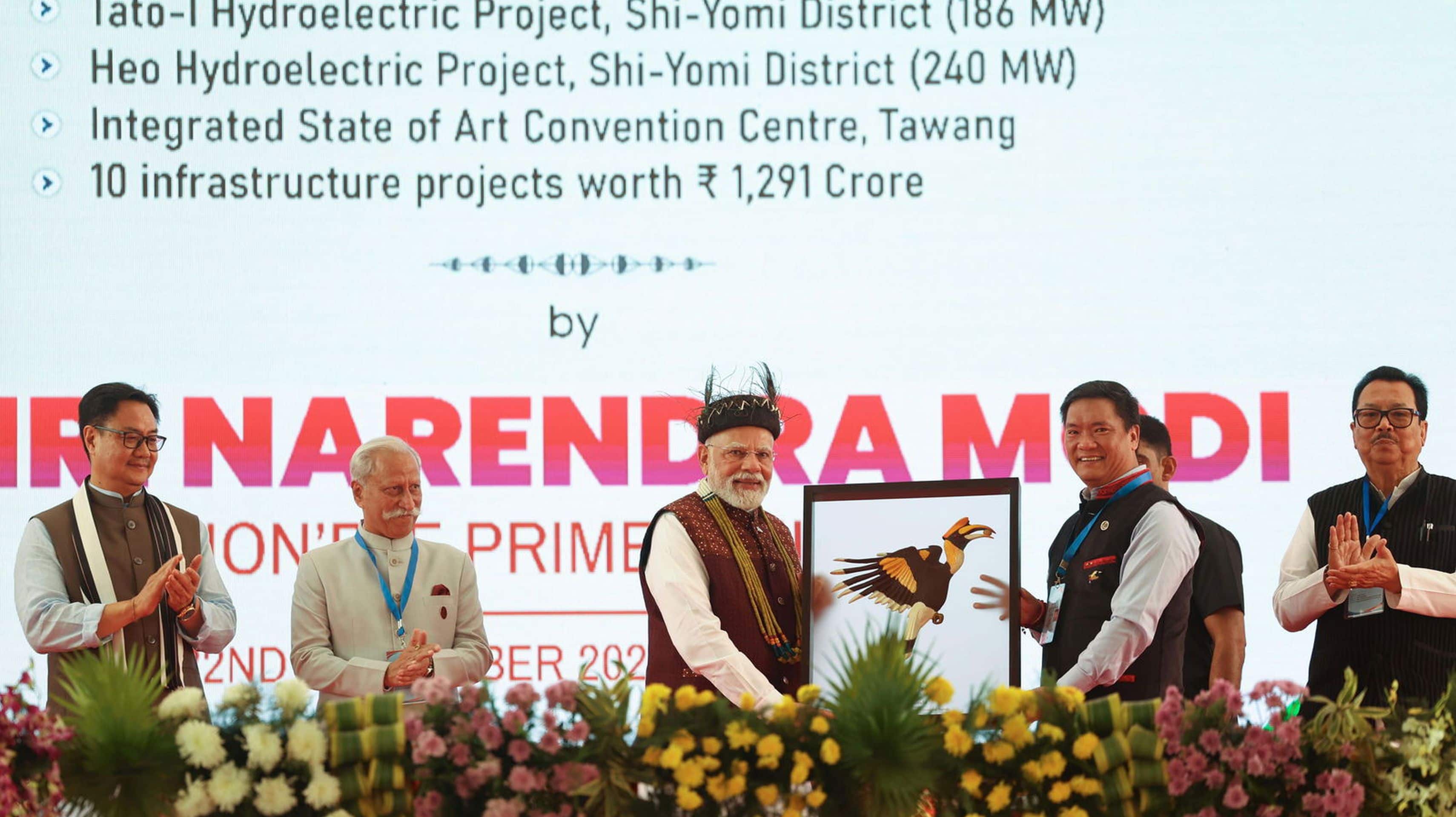
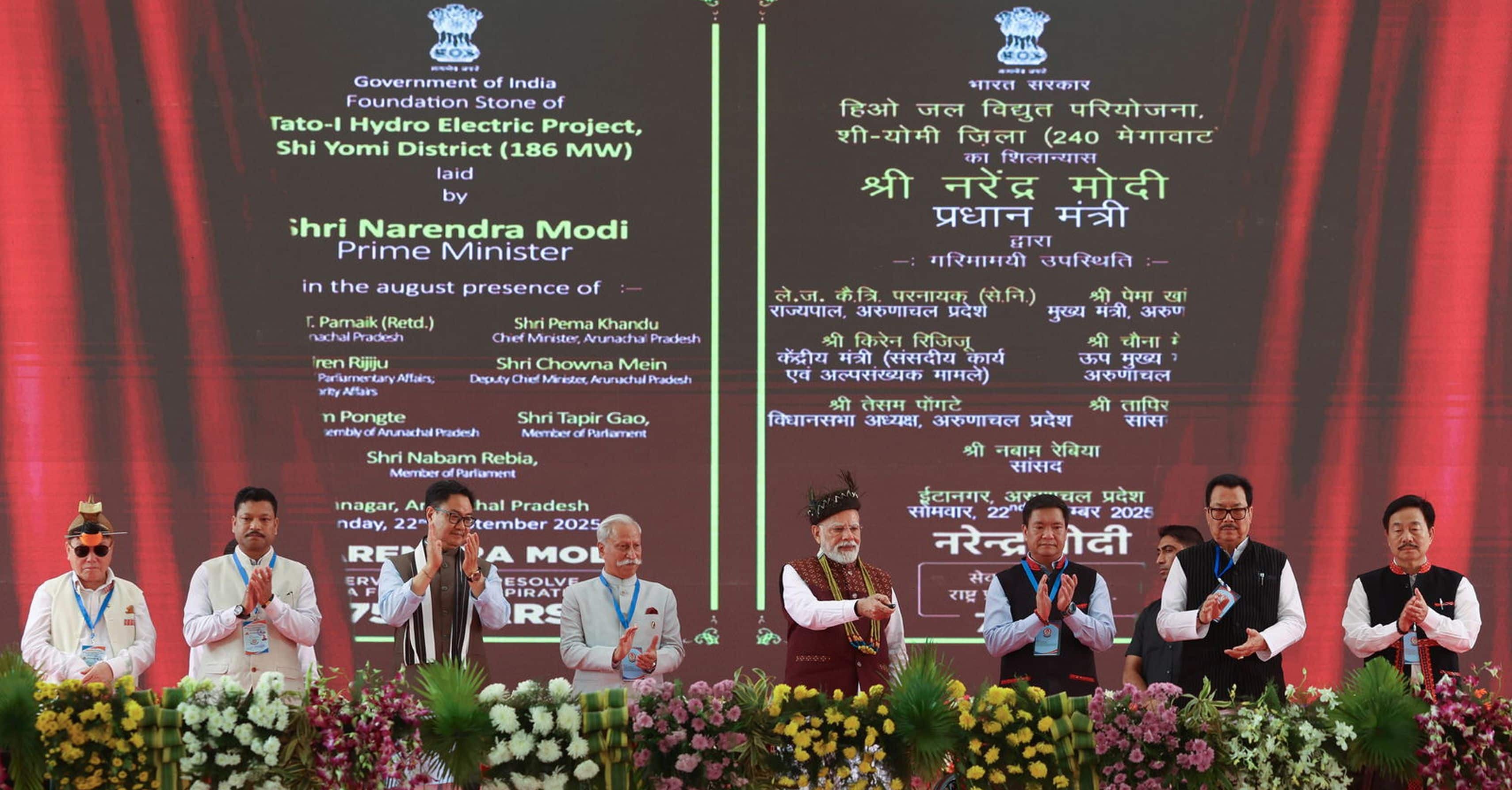
Harnessing the vast hydroelectric potential and promoting sustainable energy generation in the region, Prime Minister laid the foundation stone of two major hydropower projects worth over Rs 3,700 crore in Itanagar. The Heo Hydro Electric Project (240 MW) and Tato-I Hydro Electric Project (186 MW) will be developed in the Siyom sub-basin of Arunachal Pradesh.
Prime Minister also laid the foundation stone of a state-of-the-art Convention Center at Tawang. Located at over 9,820 feet in the frontier district of Tawang, the centre will serve as a landmark facility to host national and international conferences, cultural festivals, and exhibitions. With a capacity to host over 1,500 delegates, the Center will meet global standards and support the tourism and cultural potential of the region.

Prime Minister also launched multiple key infrastructure projects worth over Rs 1,290 crore, catering to various sectors including connectivity, health, fire safety, working women hostels among others. These initiatives are expected to catalyze economic activity, improve quality of life, and enhance connectivity in the region.
In line with his vision of ensuring ease of doing business and fostering a vibrant entrepreneurial ecosystem, Prime Minister also interacted with local taxpayers, traders, and industry representatives to discuss the impact of the recent GST rate rationalisation.
Click here to read full text speech
Arunachal Pradesh is a confluence of peace and culture... it is the pride of India. pic.twitter.com/vOal8eceHR
— PMO India (@PMOIndia) September 22, 2025
North East is the Ashtalakshmi of India. pic.twitter.com/ZuadicQ9YQ
— PMO India (@PMOIndia) September 22, 2025
The North East is becoming the driving force of the nation's development. pic.twitter.com/HYlMNyyrmd
— PMO India (@PMOIndia) September 22, 2025
The success of the Vibrant Village Programme has made people's lives easier. pic.twitter.com/mUXaDCalqc
— PMO India (@PMOIndia) September 22, 2025
GST is now simplified to 5% and 18%, reducing taxes on most items. pic.twitter.com/GAceR303cd
— PMO India (@PMOIndia) September 22, 2025