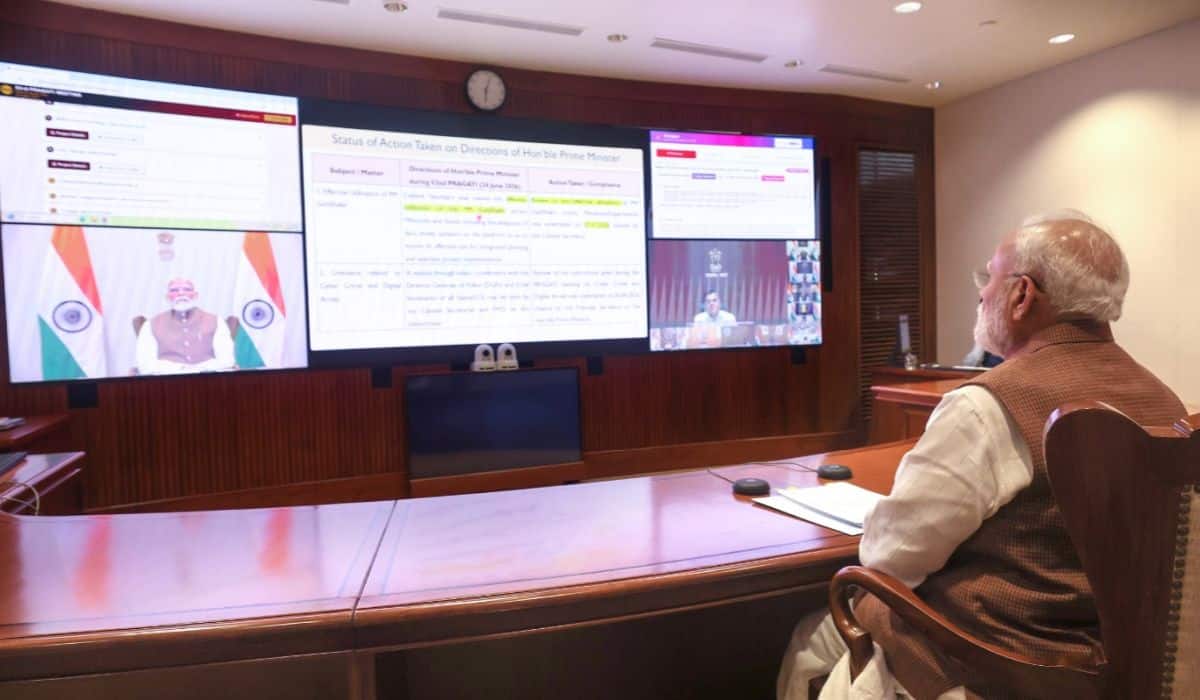
The Prime Minister, Shri Narendra Modi addressed a webinar on effective implementation of Budget provisions regarding Agriculture and Farmers’ Welfare through video conference. In this webinar experts from Agriculture, Dairy, Fisheries sector, stakeholders from Public, Private & Cooperative sector and Representatives from Banks funding the rural economy participated.Union Minister for Agriculture was present in the webinar.
Speaking on the occasion, the Prime Minister outlined the vision of the government with small farmers in the center. He added empowerment of these small farmers will greatly help in ridding Indian agriculture from many problems. He highlighted some of the provisions for Agriculture in this Union Budget like increasing the Agriculture Credit target to Rs 16,50,000 crores with priority to Animal husbandry, Dairy and Fisheries sector, increasing Rural Infrastructure Fund to Rs 40,000 crores, doubling the allocation for micro irrigation, expanding the scope of Operation Green Scheme to 22 perishable products and linking 1000 more mandis with e-NAM. He stressed India’s need for Post Harvest Revolution or Food Processing Revolution and Value Addition in the 21st century, amidst ever-increasing agricultural production. It would have been very good for the country if this work would have been done two-three decades ago, he commented.

The Prime Minister strongly emphasized on developing processing in every agriculture related sector such as foodgrains, vegetables, fruits, fisheries etc. He said, for this, it is critical that farmers should have the storage facilities near their villages. He called for the improvement of the system of taking the produce from the fields to processing units and emphasized that hand holding of these units be done by the Farmer Producer Organizations (FPOs). He stressed on the need for expanding the options for the country’s farmers to sell their produce. “We have to expand our country’s agriculture sector into the global market for processed food. We must increase the number of Agro-Industries Clusters near the village so that the people of the village can get employment related to farming in the village itself” said the Prime Minister. He said Organic Clusters and Export clusters will also play a major role in this. He envisioned that we have to move towards a scenario where agro based products move from the village to the cities and industrial products reach villages from cities. He also emphasized the need to explore ways to leverage One District, One Product scheme to take our products to the global markets.
The Prime Minister lamented that even though India is one of the world's major Fish Producers and Exporters, our presence in processed fish in the international market is very limited. He said to change this scenario, in addition to the reforms, the Government has announced production linked incentives worth about Rs 11,000 crores to encourage products such as Ready to Eat, Ready to cook, processed fruits and vegetables, processed SeaFood and Mozzarella cheese. He talked of Operation Greens, under which the 50 per cent subsidy is being given for the transportation of all fruits and vegetables. He said in the last 6 months alone, about 350 Kisan Rails were operated and about 1,00,000 metric tonnes of fruits and vegetables have been transported through these trains. This Kisan rail is a strong medium of cold storage for the entire country.

The Prime Minister said under the AatmaNirbhar Bharat campaign, emphasis is being laid on creating clusters for fruits and vegetables processing in the districts across the country. Under the Prime Minister Micro Food Processing Enterprises Upgradation Scheme, millions of Micro Food Processing Units are being helped. He stressed on the need for using modern technology to help the small farmers with cheap and effective options for hourly rental of tractors, straw machines or other farm machinery. Using truck aggregators to provide a cheap and effective means for farm produce to reach the market. He stressed the need for extending the facility of Soil Health Card in the country. He said increased awareness of the farmers about their soil’s health would improve the production of the crop.
The Prime Minister stressed on the need for more private sector contribution towards R&D in the agriculture sector. He added we now have to give such options to farmers in which they are not limited to growing wheat and rice. We can try from organic food to salad-related vegetables, there are several crops, he noted. He stressed on the need to tap the market for SeaWeed and Beeswax. He said Seaweed Farming and Beeswax would generate an additional revenue stream for our fishermen and Bee farmers. He added increased private sector participation will boost the confidence of the farmer.
The Prime Minister emphasized that contract farming has been present in India in some form or the other for a very long time. He stressed the need to ensure that contract farming doesn’t remain just a business concept but we should also fulfil our responsibility towards the land.
The Prime Minister gave a call to make concerted efforts in the farming of the country, to find a comprehensive technological solution from irrigation to sowing, till harvesting and earning. He said we have to promote startups associated with the agriculture sector and connect the youth. He said over the years, the Kisan Credit Card has been extended little by little to farmers, cattle ranchers and fishermen and more than 1.80 crore farmers have been given Kisan Credit Cards in the last one year. The provision of credit has also been more than doubled compared to 6-7 years ago. He said arrangements with 10,00 FPOs being built in the country is strengthening the Co-operatives.
लगातार बढ़ते हुए कृषि उत्पादन के बीच, 21वीं सदी में भारत को Post Harvest क्रांति या फिर Food Processing क्रांति और Value Addition की आवश्यकता है।
— PMO India (@PMOIndia) March 1, 2021
देश के लिए बहुत अच्छा होता अगर ये काम दो-तीन दशक पहले ही कर लिया गया होता: PM @narendramodi
खेत से Processing Unit तक पहुंचने की व्यवस्था सुधारी जाए,
— PMO India (@PMOIndia) March 1, 2021
Processing unit की हैंड होल्डिंग, Farmer Producer Organisations मिलकर करें: PM @narendramodi
आज हमें एग्रीकल्चर के हर सेक्टर में, हर खाद्यान्न, हर सब्जी, फल, फिशरीज, सभी में Processing पर सबसे ज्यादा फोकस करना है।
— PMO India (@PMOIndia) March 1, 2021
और Processing की व्यवस्था सुधारने के लिए जरूरी है-
किसानों को अपने गांव के पास ही स्टोरेज की आधुनिक सुविधा मिले: PM @narendramodi
हमें देश के एग्रीकल्चर सेक्टर का, Processed Food के वैश्विक मार्केट में विस्तार करना ही होगा।
— PMO India (@PMOIndia) March 1, 2021
हमें गांव के पास ही Agro-Industries Clusters की संख्या बढ़ानी ही होगी ताकि गांव के लोगों को गांव में ही खेती से जुड़े रोज़गार मिल सकें: PM @narendramodi
ऑपरेशन ग्रीन्स योजना के तहत किसान रेल के लिए सभी फलों और सब्जियों के परिवहन पर 50 प्रतिशत सब्सिडी दी जा रही है।
— PMO India (@PMOIndia) March 1, 2021
किसान रेल भी आज देश के कोल्ड स्टोरेज नेटवर्क का सशक्त माध्यम बनी है: PM @narendramodi
हमें अब किसानों को ऐसे विकल्प देने हैं जिसमें वो गेहूं-चावल उगाने तक ही सीमित न रहे।
— PMO India (@PMOIndia) March 1, 2021
ऑर्गेनिक फूड से लेकर सलाद से जुड़ी सब्जियों तक, ऐसी अनेक फसलें हैं, जो हम आज़मा सकते हैं: PM @narendramodi
एग्रीकल्चर सेक्टर में R&D को लेकर ज्यादातर योगदान पब्लिक सेक्टर का ही है।
— PMO India (@PMOIndia) March 1, 2021
अब समय आ गया है कि इसमें प्राइवेट सेक्टर की भागीदारी बढ़े: PM @narendramodi