Ushering in Unprecedented Transparency

Published By : Admin | May 26, 2015 | 13:02 IST

While the past decade has seen many tales of arbitrary decision making, corruption and discretion rather than policy dictating crucial decisions, the past year has been a welcome change.

After the Supreme Court Order cancelled the coal block allocations, Govt acted with unparalleled swiftness to ensure transparent & timely auctions. Auction and Allotment proceeds from 67 coal blocks have touched 3.35 lakh crores over the life of the mine. The Delhi High Court remarked:

“What has convinced us is the fact that the auction process has worked out well. The process by itself does not appear to us, to be arbitrary or irrational. There is, of course, no allegation that the auction process is designed to favour any particular bidder”

In the spectrum auctions the Govt’s approach ensured massive gains, in stark contrast to the zero loss theory of the past. The complex issue of defence band identification pending since more than seven years was resolved quickly & good quantity of 2100 MHz released by the Defence Ministry was put into the auction.Spectrum in 4 various bands - 800 MHz, 900 MHz, 1800 MHz and 2100 MHz were put into simultaneous and multiple rounds of auction for the first time, so that the operators could take informed decision. As against the approved reserve price of Rs 80277 crore, the auction fetched a record Rs.109875 crore.

In an innovative step to ensure transparency, Environment Ministry has started process of online submission of applications for Environment approvals. It is no longer needed to come to Ministry for approvals. Applications can be tracked online. GIS based Decision Support System (DSS) to facilitate informed, transparent, expeditious and predictable decisions on forest approval applications.

On the Black Money front, SIT was constituted on the first day of office. Government is working in coordination with Swiss Government & getting information of cases investigated by IT Department. The Government approved the Undisclosed Foreign Income and Assets (Imposition of Tax) Bill 2015. Provisions of the Bill include severe penalties & punishment for undisclosed foreign income and assets. It is also mandatory to quote PAN for purchase /sale of above Rs. 1 lakh.

Explore More
ਸ੍ਰੀ ਰਾਮ ਜਨਮ-ਭੂਮੀ ਮੰਦਿਰ ਧਵਜਾਰੋਹਣ ਉਤਸਵ ਦੌਰਾਨ ਪ੍ਰਧਾਨ ਮੰਤਰੀ ਦੇ ਭਾਸ਼ਣ ਦਾ ਪੰਜਾਬੀ ਅਨੁਵਾਦ

Popular Speeches

ਸ੍ਰੀ ਰਾਮ ਜਨਮ-ਭੂਮੀ ਮੰਦਿਰ ਧਵਜਾਰੋਹਣ ਉਤਸਵ ਦੌਰਾਨ ਪ੍ਰਧਾਨ ਮੰਤਰੀ ਦੇ ਭਾਸ਼ਣ ਦਾ ਪੰਜਾਬੀ ਅਨੁਵਾਦ
India leads globally in renewable energy; records highest-ever 31.25 GW non-fossil addition in FY 25-26: Pralhad Joshi.

Media Coverage

India leads globally in renewable energy; records highest-ever 31.25 GW non-fossil addition in FY 25-26: Pralhad Joshi.
NM on the go

Nm on the go

Always be the first to hear from the PM. Get the App Now!
...
6 Years of Jal Jeevan Mission: Transforming Lives, One Tap at a Time
August 14, 2025
Jal Jeevan Mission has become a major development parameter to provide water to every household.” - PM Narendra Modi

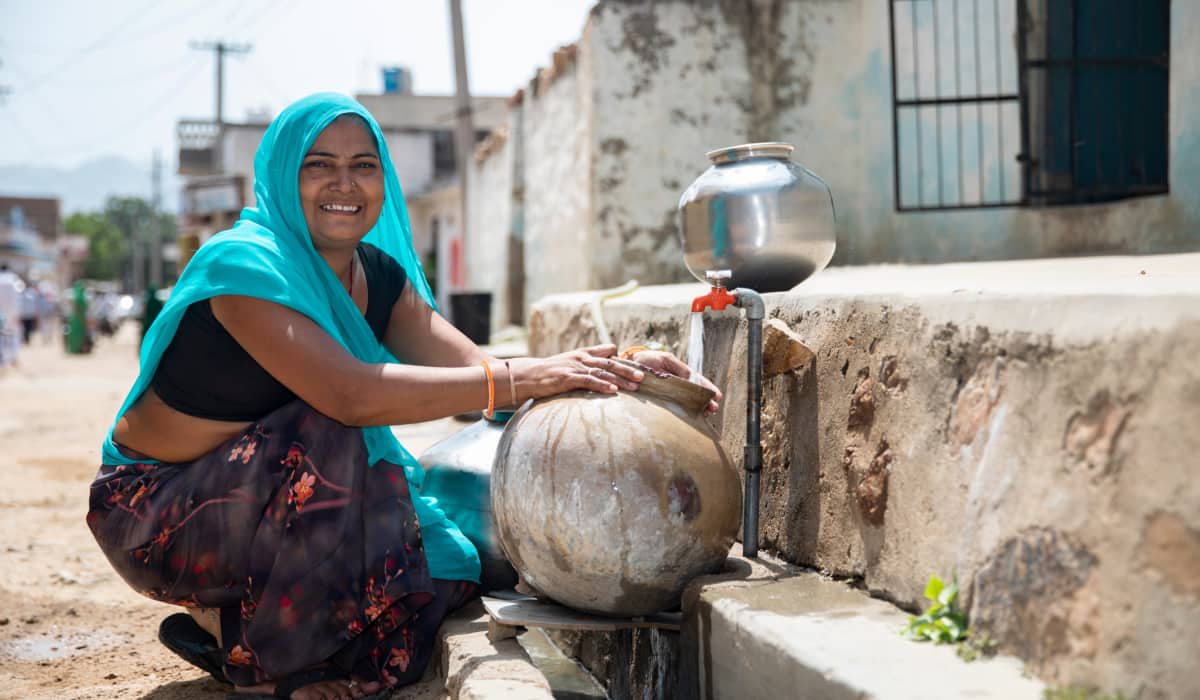
For generations, the sight of women carrying pots of water on their heads was an everyday scene in rural India. It was more than a chore, it was a necessity that was an integral part of their everyday life. The water was brought back, often just one or two pots which had to be stretched for drinking, cooking, cleaning, and washing. It was a routine that left little time for rest, education, or income-generating work, and the burden fell most heavily on women.

Before 2014 water scarcity, one of India’s most pressing problems, was met with little urgency or vision. Access to safe drinking water was fragmented, villages relied on distant sources, and nationwide household tap connections were seen as unrealistic.

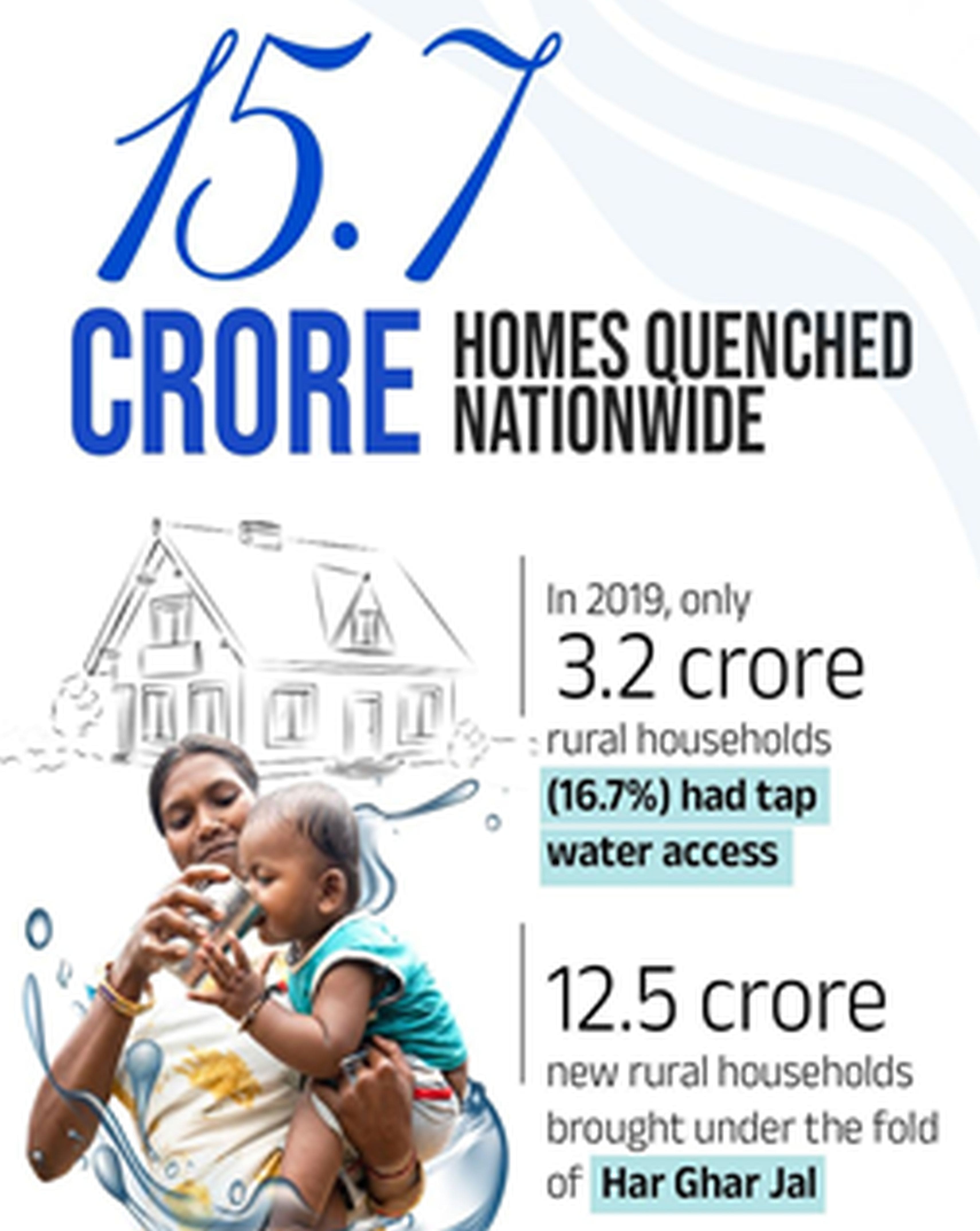
This reality began to shift in 2019, when the Government of India launched the Jal Jeevan Mission (JJM). A centrally sponsored initiative which aims at providing a Functional Household Tap Connection (FHTC) to every rural household. At that time, only 3.2 crore rural households, a modest 16.7% of the total, had tap water. The rest still depended on community sources, often far from home.

As of July 2025, the progress under the Har Ghar Jal program has been exceptional, with 12.5 crore additional rural households connected, bringing the total to over 15.7 crore. The program has achieved 100% tap water coverage in 200 districts and over 2.6 lakh villages, with 8 states and 3 union territories now fully covered. For millions, this means not just access to water at home, but saved time, improved health, and restored dignity. Nearly 80% of tap water coverage has been achieved in 112 aspirational districts, a significant rise from less than 8%. Additionally, 59 lakh households in LWE districts have gained tap water connections, ensuring development reaches every corner. Acknowledging both the significant progress and the road ahead, the Union Budget 2025–26 announced the program’s extension until 2028 with an increased budget.

The Jal Jeevan Mission, launched nationally in 2019, traces its origins to Gujarat, where Narendra Modi, as Chief Minister, tackled water scarcity in the arid state through the Sujalam Sufalam initiative. This effort formed a blueprint for a mission that would one day aim to provide tap water to every rural household in India.

Though drinking water is a State subject, the Government of India has taken on the role of a committed partner, providing technical and financial support while empowering States to plan and implement local solutions. To keep the Mission on track, a strong monitoring system links Aadhaar for targeting, geo-tags assets, conducts third-party inspections, and uses IoT devices to track village water flow.

The Jal Jeevan Mission’s objectives are as much about people as they are about pipes. By prioritizing underserved and water-stressed areas, ensuring that schools, Anganwadi centres, and health facilities have running water, and encouraging local communities to take ownership through contributions or shramdaan, the Mission aims to make safe water everyone’s responsibility..

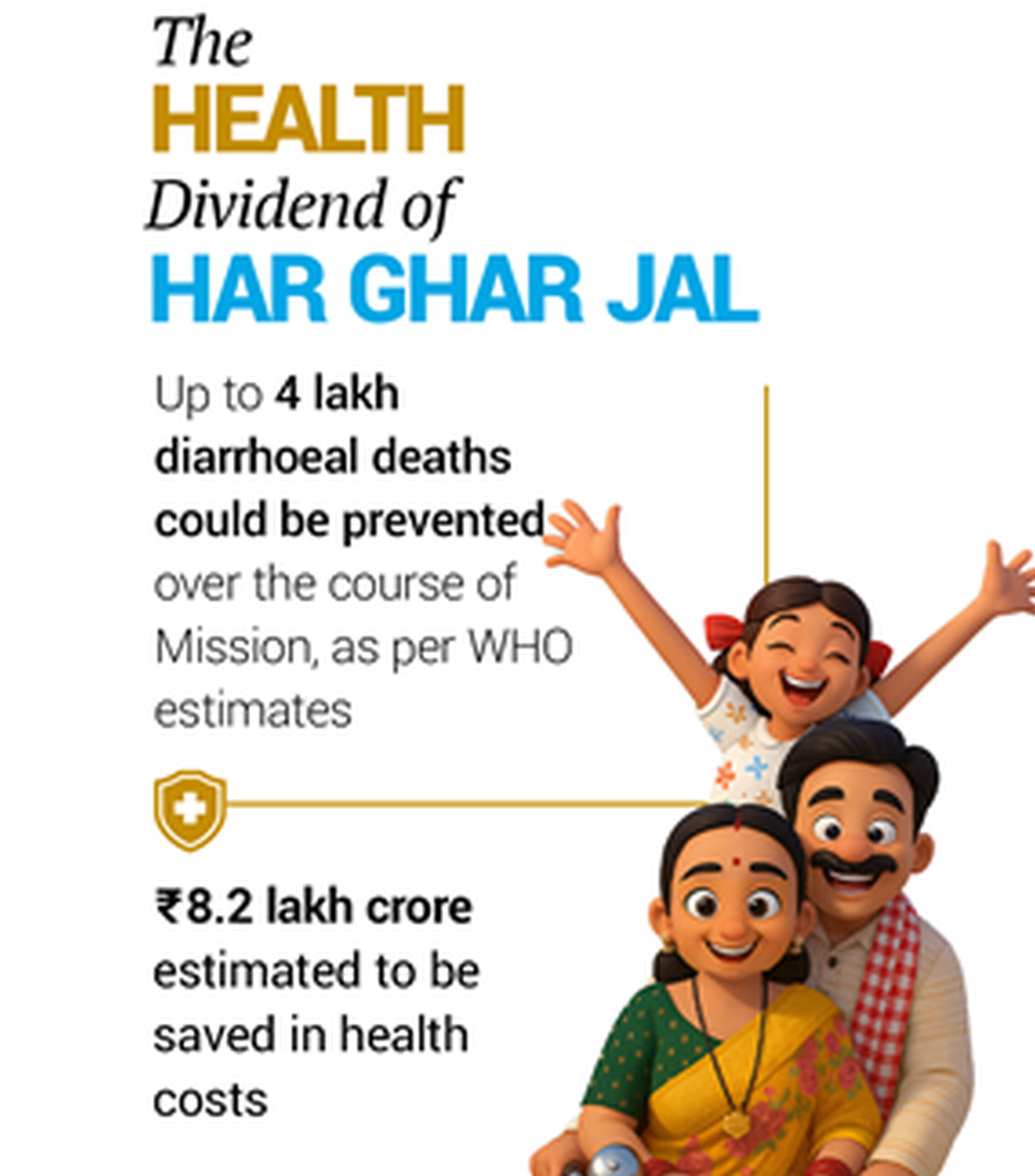
The impact reaches far beyond convenience. The World Health Organization estimates that achieving JJM’s targets could save over 5.5 crore hours each day, time that can now be spent on education, work, or family. 9 crore women no longer need to fetch water from outside. WHO also projects that safe water for all could prevent nearly 4 lakh deaths from diarrhoeal disease and save Rs. 8.2 lakh crores in health costs. Additionally, according to IIM Bangalore and the International Labour Organization, JJM has generated nearly 3 crore person-years of employment during its build-out, with nearly 25 lakh women are trained to use Field testing Kits.

From the quiet relief of a mother filling a glass of clean water in her kitchen, to the confidence of a school where children can drink without worry, the Jal Jeevan Mission is changing what it means to live in rural India.