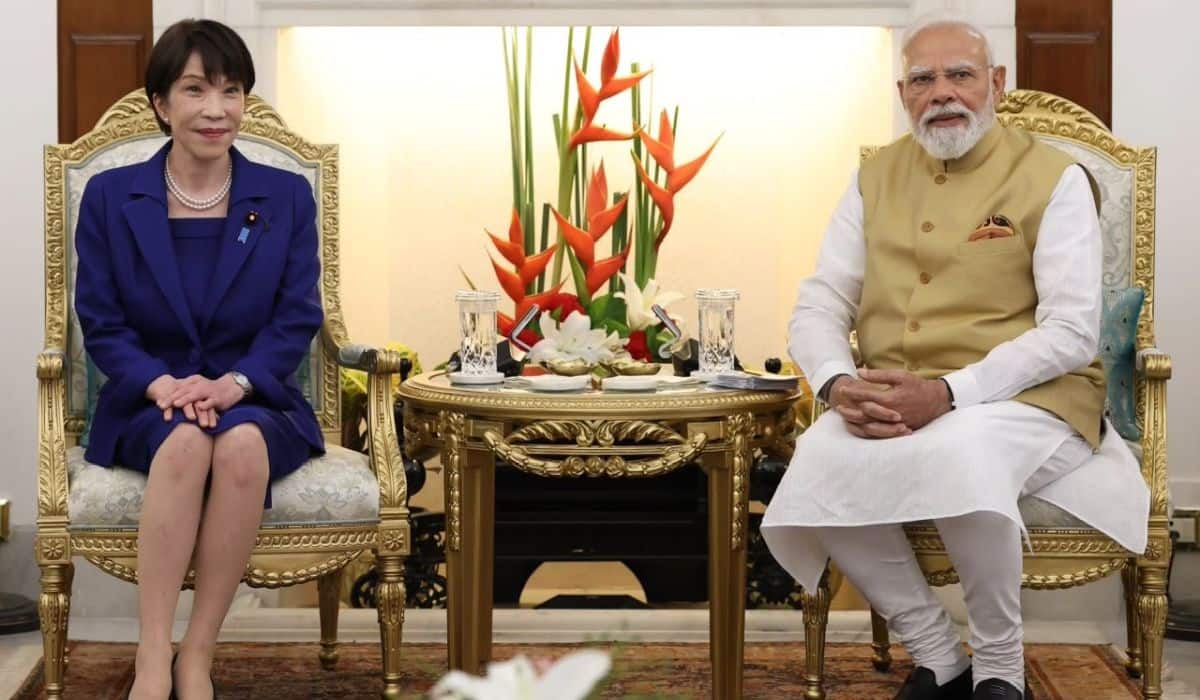
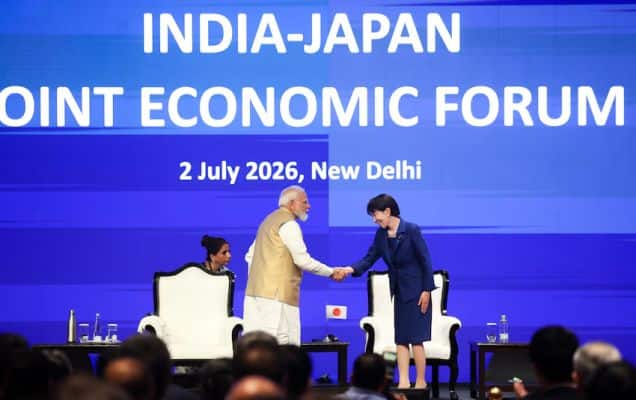
The Prime Minister, Shri Narendra Modi, today addressed the Economic Times Global Business Summit in New Delhi, on the theme: New Economy – New Rules.
Noting that the Union Government is going to complete four years of assuming office in a few months, he said that a definite change is now visible. He said this change in the economic and social content, represents the essence of the New Rules for the New India and the New Economy.

The Prime Minister said that within the last four years, the discourse has changed from India being a “Fragile Five” economy, to the target of India becoming a “Five Trillion Dollar” economy. The Prime Minister presented facts and figures to indicate how India is playing a key role in the entire world’s growth. He said that in nominal terms, India’s share of the world GDP has risen from 2.4% in 2013, to 3.1% in 2017. He said India is performing better on various macro-economic parameters.
The Prime Minister said that this change has come about due to a new approach and a new work culture. He said India’s competitiveness is being validated by the entire world today.
Shri Narendra Modi recalled that when he had last attended this Global Business Summit, GST was still, just a possibility. Today, he added, it is a reality, which has delivered a better tax compliance system and a better revenue system. The Prime Minister mentioned other reforms such as the Insolvency and Bankruptcy Code.
The Prime Minister said that speed, scale and sensitivity are important to ensure the success of the Government’s initiatives. He gave some examples of the increase in pace in the infrastructure sector.

The Prime Minister said that there is unprecedented investment being made today in infrastructure, agriculture, technology, health sector, and education sector.
The Prime Minister mentioned the initiatives taken in the health sector, such as Mission Indradhanush, Jan Aushadhi Stores, and the Ayushman Bharat scheme.
Talking about the Digital India Mission, the Prime Minister said that the trinity of 100 crore bank accounts, 100 crore Aadhaar cards and 100 crore mobile phones, would create a unique ecosystem, not seen anywhere else in the world. He also spoke of initiatives taken for the MSME sector.
The Prime Minister recalled that in his last address at the Economic Times Global Business Summit, he had spoken of Housing for All,Power for All, Clean Cooking for All, Health for All,and Insurance for All. He outlined the steps that have been taken in this regard in house construction, Saubhagya Yojana, Ujjwala Yojana, and insurance. Saying that the Government’s initiatives are aimed at empowering the poor, the Prime Minister also mentioned the construction of toilets, distribution of loans through the Mudra Yojana, and distribution of soil health cards.
The Prime Minister mentioned the announcement in the recent Union Budget, on MSP.
The Prime Minister appealed that those entrusted with the responsibility of ensuring rules and ethics in various financial institutions, should work with full dedication – especially those who are responsible for supervising and monitoring. He made it clear that the Government would take strict action against irregularities in financial matters. He said that the illegal accumulation of people’s money is unacceptable, and this is the basic mantra of “New Economy – New Rules.”
चार साल पहले पूरी दुनिया में जब भारत की अर्थव्यवस्था की चर्चा होती थी, तो कहा जाता था Fragile Five। आज Fragile Five की नहीं, भारत के Five Trillion Dollar Economy के लक्ष्य की चर्चा होती है। अब दुनिया भारत के साथ कंधे से कंधा मिलाकर चलना चाहती है: PM @narendramodi
— PMO India (@PMOIndia) February 23, 2018
पिछले तीन-चार वर्षों में भारत ने अपने साथ ही पूरी दुनिया की economic growth को मजबूती दी है।
— PMO India (@PMOIndia) February 23, 2018
IMF के आंकड़ों के अनुसार, वर्ष 2013 के अंत में भारत का World GDP में Nominal Term में कंट्रीब्यूशन 2.4 प्रतिशत था। हमारी सरकार के लगभग 4 वर्षों में ये बढ़कर 3.1 प्रतिशत हो गया है: PM pic.twitter.com/4nAV0xQfae
आज आप कोई भी Macro-Economic पैरामीटर देख लीजिए, चाहे वो inflation हो, Current Account Deficit हो, Fiscal Deficit हो, GDP Growth हो, Interest rate हो, FDI Inflow हो, भारत सभी में बेहतर Perform कर रहा है: PM
— PMO India (@PMOIndia) February 23, 2018
Inflation Rate नियंत्रित रहने और High Productivity Growth की वजह से रुपए का Outlook भी बेहतर बना हुआ है। ब्याज दर में एक प्रतिशत से ज्यादा की कमी का लाभ ग्राहकों, हाउसिंग सेक्टर और अन्य उद्योगों को हो रहा है: PM
— PMO India (@PMOIndia) February 23, 2018
3 वर्ष में देश के Economic World ने एक नई चीज सीखी है, और वो है Competitiveness. जब आगे बढ़ने की होड़ नहीं होगी, जब healthy Competition नहीं होगा, तो फिर न speed आ पाएगी औऱ न ही ऊंचे horizons पर जाकर सोच पाएंगे। आज भारत की इस Competitiveness को पूरी दुनिया validate कर रही है:PM pic.twitter.com/h3MTfS9U2U
— PMO India (@PMOIndia) February 23, 2018
जब पानी को उबालने के लिए रखते हैं तो एक खास temperature पर पहुंचने के बाद ही steam में transform होता है। उस तापमान पर पहुंचने से पहले ना पानी उबलता है और ना steam बनती है। इसी तरह सरकार के initiatives लोगों तक पहुंचे, इसके लिए Speed, Scale और Sensitivity की आवश्यकता होती है: PM
— PMO India (@PMOIndia) February 23, 2018
जब Speed , Scale, Sensitivity के साथ काम होता है तो Success भी मिलती है। हमारी सरकार ने अटकाने-भटकाने-लटकाने वाला पहले का कल्चर खत्म कर दिया है। इसकी वजह से पूरे सिस्टम में एक नई तेजी आई है: PM @narendramodi
— PMO India (@PMOIndia) February 23, 2018
पहले की सरकार में जिस स्पीड से रेलवे लाइनों को ब्रॉड गेज में बदला जा रहा था, आज उससे दोगुनी रफ्तार से रेल लाइनों को ब्रॉड गेज में बदला जा रहा है: PM pic.twitter.com/OOF2YR1Jpk
— PMO India (@PMOIndia) February 23, 2018
Achieving Speed & Scale with Sensitivity. pic.twitter.com/pMFtiRHdtF
— PMO India (@PMOIndia) February 23, 2018
पिछले चार वर्षों में हमारी सरकार ने देश में Job Centric के साथ ही People Centric Growth पर जोर दिया है। एक ऐसी अर्थव्यवस्था जिसमें देश के गरीबों का financial inclusion भी हो, जो Middle Class की Aspiration का भी ध्यान रखे: PM
— PMO India (@PMOIndia) February 23, 2018
पहले दिन से हमारी कोशिश रही है कि सिस्टम में Horizontally और Vertically Sensitivity को percolate किया जाए। कई बार जो theoretical solutions बहुत Perfect नजर आते हैं, वही कई Practical Problems का origin बन जाते हैं: PM
— PMO India (@PMOIndia) February 23, 2018
जैसे bamboo पर हाल में लिया फैसला, यूरिया की 100% नीम कोटिंग , ग्रुप सी और ग्रुप डी की नौकरी में इंटरव्यू खत्म, गजटेड ऑफीसर से Attest कराने की बाध्यता खत्म करने का फैसला, ये कार्य पहले भी किए जा सकते थे, लेकिन Sensitivity की कमी ने जनता से कनेक्ट की कमी ने ऐसा होने नहीं दिया: PM
— PMO India (@PMOIndia) February 23, 2018
हमारे यहां हेल्थ एक ऐसा सेक्टर रहा है, जो holistic attention से हमेशा दूर रहा। हेल्थ से जुड़ी योजनाएं पहले भी बनीं, लेकिन उनमें भी Sensitivity की कमी रही। हम Good Healthcare के साथ-साथ Good Health भी Insure कर रहे हैं: PM pic.twitter.com/yzn8PiqH7F
— PMO India (@PMOIndia) February 23, 2018
MSME का ecosystem, हमारी अर्थव्यवस्था की backbone है। इस सेक्टर को मजबूत करने के लिए लगातार काम कर रही है। ज्यादा से ज्यादा लघु उद्योगों को Formal Sector में लाने के लिए Higher Credit Support, Capital और Interest Subsidy और Innovations पर ध्यान दिया जा रहा है: PM @narendramodi
— PMO India (@PMOIndia) February 23, 2018
जब मैं इससे पहले आपके इस आयोजन में आया था तो मैंने Housing for All, Power for All, Clean Cooking for All, Health for All, Insurance for All की बात कही थी: PM @narendramodi pic.twitter.com/1XqH7qa8Z3
— PMO India (@PMOIndia) February 23, 2018
एक अपील मैं ये भी करना चाहता हूं कि विभिन्न Financial institutions में नियम और नीयत यानि Ethics बनाए रखने का दायित्व जिन्हें दिया गया है वो पूरी निष्ठा से अपना कर्तव्य निभाएं। विशेषकर जिन्हें निगरानी और मॉनीटरिंग की जिम्मेदारी सौंपी गई है: PM @narendramodi
— PMO India (@PMOIndia) February 23, 2018
मैं स्पष्ट करना चाहूंगा कि ये सरकार आर्थिक विषयों से संबंधित अनियमितताओं के विरुद्ध कड़ी कार्रवाई कर रही है, करेगी और करती रहेगी। जनता के पैसे का अनियमित अर्जन, इस सिस्टम को स्वीकार नहीं होगा: PM @narendramodi
— PMO India (@PMOIndia) February 23, 2018
मुझे लगता है कि इस तरह के कार्यक्रमों में लोकसभा और विधानसभा के चुनाव एक साथ कराने पर जो Positive Economic Impact देश पर पड़ेगा, उसकी भी चर्चा होनी चाहिए: PM @narendramodi
— PMO India (@PMOIndia) February 23, 2018