Middle Class India is Now Proud of India

Published By : Admin | March 14, 2019 | 15:39 IST

India’s prime minister, Shri Narendra Modi is a common citizen who hails from a humble background. His rise in home turf as well as at the global front has made every common Indian, especially the middle class, extremely proud. Those who have no family legacy and have risen through the ranks purely on merit and hard work see a reflection of themselves in India’s Prime Minister. He is an ordinary Indian who set himself on a voyage to achieve extraordinary things; similar to the masses who compete with millions, crack examinations, and make the most of the opportunities that come our way.

For the middle class Indian who works at a public or private sector enterprise or runs her own business, there has been a steady conditioning of the limitations that come her way. Inadvertently, she used to limit her ambitions based on her social and economic status. It was an unsaid rule that to make to the top, one had to give bribes, deal with corruption and use gaps in the system to one’s advantage. None of these hurdles to success hold true anymore.

With the Prime Minister determined to ingrain a culture of honesty and integrity by slew of reforms such as encouraging digital payments, implementing Real Estate (Regulation and Development) Act, 2016 and Insolvency and Bankruptcy Code, 2016 middle-class Indians have begun to believe and practice that they can get clearances and permissions for basic utilities like new electricity and water connection without paying commissions or bribes. The culture of giving high-profile references to get work done is being replaced by single-window automated systems. Minimum human intervention and maximum technology is institutionalizing transparency like never before in the fabric of India.

For a decade, India under the UPA was plagued by corruption, scams, money laundering and ever-increasing disparity in distribution of wealth. International perception of India took a beating. This image too has been recast in the past 5 years. The Prime Minister is a global ambassador of India, whose visits in foreign countries are celebrated by both, the diaspora and the local population. It was a matter of great pride when he delivered the keynote address at the World Economic Forum in Davos in 2018 in Hindi. He took Hindi global, at placed it at the world’s most discussed gathering of economists. It was at this forum that he had mentioned the three greatest threats to civilization are climate change, terrorism and the backlash against globalization.

After the horrendous terrorist attack on CRPF Jawans in Pulwama in Jammu and Kashmir, India received unprecedented global and diplomatic support. The global leadership stood in solidarity with India and against terrorism. Numerous prayer meetings for victims of Pulwama were organized across the globe. India is emerging as the new pole of soft power and an example of strong leadership. The middle class Indian has begun to aspire and dream global, primarily because of the global visibility we have received under the leadership of Narendra Modi. The national pride he is able to evoke with every speech is reflected by the sheer volume of people who throng to hear him and see him in person.

Varanasi, the world’s oldest city was limited to being a temple city before the Prime Minister not only contested from the constituency, he also started various programs to refurbish the city and put it back on the world tourist map. Under the Namami Gange program, India’s holy river Ganga is being cleaned. Steps like accompanying global leaders to Varanasi and Akshardham temple instill a sense of cultural pride, which was conspicuous by its absence.

The scale and size of celebration of Diwali in Ayodhya, which according to Ramayana marks the homecoming of Lord Ram, Sita and Lakshman after 14 years of exile, is a spectacle for the entire world. The Kumbh Mela 2019 organized at Prayagraj attracted tourists and media attention from across the globe. As it found place in Guinness Book for the largest human gathering, it was a day for the Nation to celebrate and take pride in its heritage and roots.

With Narendra Modi at the helm of affairs, every self-made citizen is convinced that it is possible to succeed and make a difference by virtue of perseverance and dedication.

Explore More
ਸ੍ਰੀ ਰਾਮ ਜਨਮ-ਭੂਮੀ ਮੰਦਿਰ ਧਵਜਾਰੋਹਣ ਉਤਸਵ ਦੌਰਾਨ ਪ੍ਰਧਾਨ ਮੰਤਰੀ ਦੇ ਭਾਸ਼ਣ ਦਾ ਪੰਜਾਬੀ ਅਨੁਵਾਦ

Popular Speeches

ਸ੍ਰੀ ਰਾਮ ਜਨਮ-ਭੂਮੀ ਮੰਦਿਰ ਧਵਜਾਰੋਹਣ ਉਤਸਵ ਦੌਰਾਨ ਪ੍ਰਧਾਨ ਮੰਤਰੀ ਦੇ ਭਾਸ਼ਣ ਦਾ ਪੰਜਾਬੀ ਅਨੁਵਾਦ
India’s space programme, a people’s space journey

Media Coverage

India’s space programme, a people’s space journey
NM on the go

Nm on the go

Always be the first to hear from the PM. Get the App Now!
...
6 Years of Jal Jeevan Mission: Transforming Lives, One Tap at a Time
August 14, 2025
Jal Jeevan Mission has become a major development parameter to provide water to every household.” - PM Narendra Modi

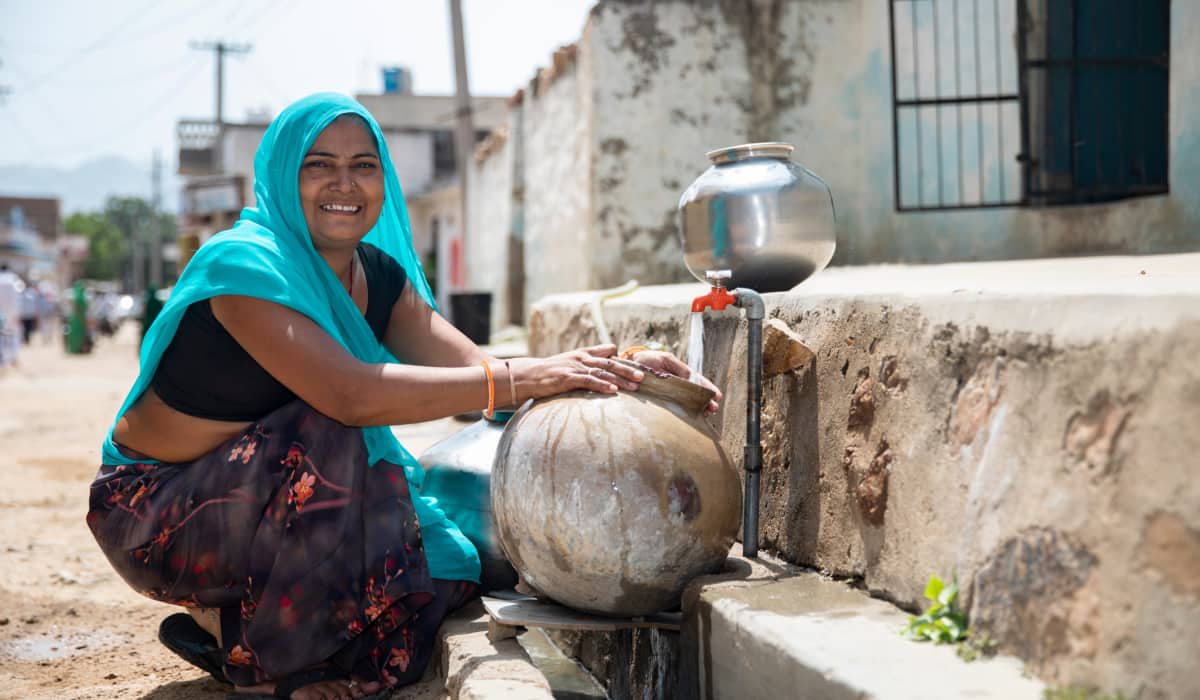
For generations, the sight of women carrying pots of water on their heads was an everyday scene in rural India. It was more than a chore, it was a necessity that was an integral part of their everyday life. The water was brought back, often just one or two pots which had to be stretched for drinking, cooking, cleaning, and washing. It was a routine that left little time for rest, education, or income-generating work, and the burden fell most heavily on women.

Before 2014 water scarcity, one of India’s most pressing problems, was met with little urgency or vision. Access to safe drinking water was fragmented, villages relied on distant sources, and nationwide household tap connections were seen as unrealistic.

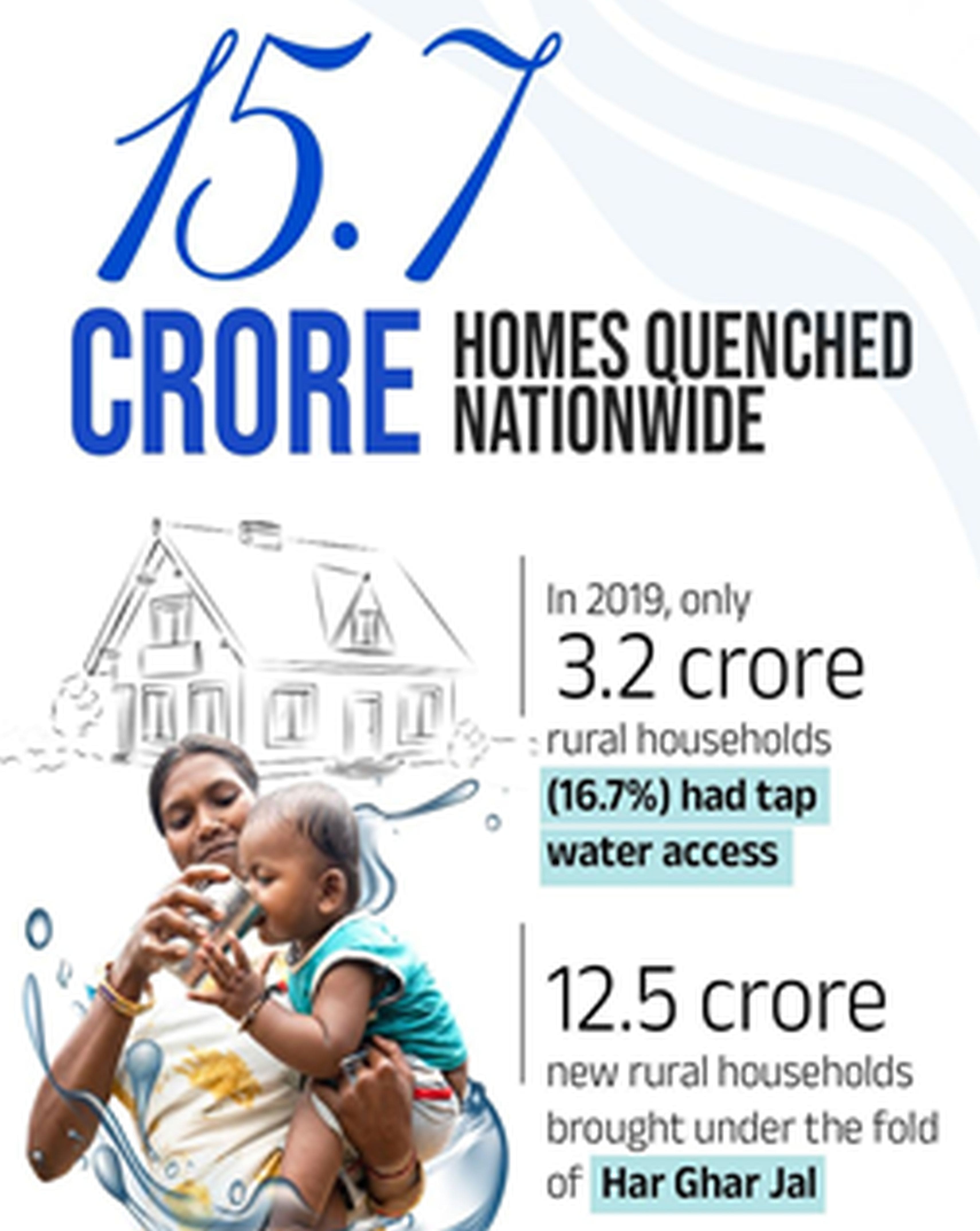
This reality began to shift in 2019, when the Government of India launched the Jal Jeevan Mission (JJM). A centrally sponsored initiative which aims at providing a Functional Household Tap Connection (FHTC) to every rural household. At that time, only 3.2 crore rural households, a modest 16.7% of the total, had tap water. The rest still depended on community sources, often far from home.

As of July 2025, the progress under the Har Ghar Jal program has been exceptional, with 12.5 crore additional rural households connected, bringing the total to over 15.7 crore. The program has achieved 100% tap water coverage in 200 districts and over 2.6 lakh villages, with 8 states and 3 union territories now fully covered. For millions, this means not just access to water at home, but saved time, improved health, and restored dignity. Nearly 80% of tap water coverage has been achieved in 112 aspirational districts, a significant rise from less than 8%. Additionally, 59 lakh households in LWE districts have gained tap water connections, ensuring development reaches every corner. Acknowledging both the significant progress and the road ahead, the Union Budget 2025–26 announced the program’s extension until 2028 with an increased budget.

The Jal Jeevan Mission, launched nationally in 2019, traces its origins to Gujarat, where Narendra Modi, as Chief Minister, tackled water scarcity in the arid state through the Sujalam Sufalam initiative. This effort formed a blueprint for a mission that would one day aim to provide tap water to every rural household in India.

Though drinking water is a State subject, the Government of India has taken on the role of a committed partner, providing technical and financial support while empowering States to plan and implement local solutions. To keep the Mission on track, a strong monitoring system links Aadhaar for targeting, geo-tags assets, conducts third-party inspections, and uses IoT devices to track village water flow.

The Jal Jeevan Mission’s objectives are as much about people as they are about pipes. By prioritizing underserved and water-stressed areas, ensuring that schools, Anganwadi centres, and health facilities have running water, and encouraging local communities to take ownership through contributions or shramdaan, the Mission aims to make safe water everyone’s responsibility..

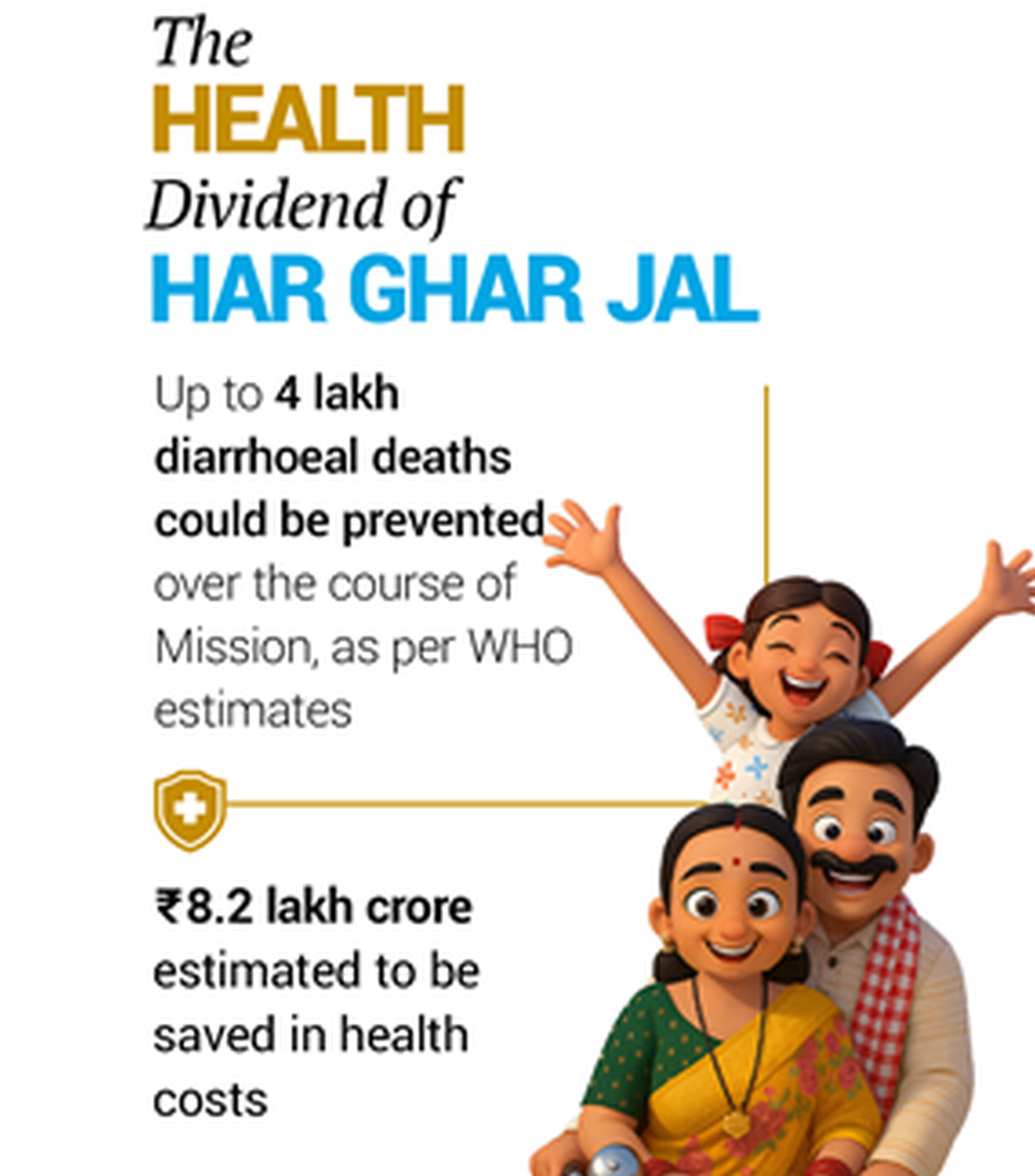
The impact reaches far beyond convenience. The World Health Organization estimates that achieving JJM’s targets could save over 5.5 crore hours each day, time that can now be spent on education, work, or family. 9 crore women no longer need to fetch water from outside. WHO also projects that safe water for all could prevent nearly 4 lakh deaths from diarrhoeal disease and save Rs. 8.2 lakh crores in health costs. Additionally, according to IIM Bangalore and the International Labour Organization, JJM has generated nearly 3 crore person-years of employment during its build-out, with nearly 25 lakh women are trained to use Field testing Kits.

From the quiet relief of a mother filling a glass of clean water in her kitchen, to the confidence of a school where children can drink without worry, the Jal Jeevan Mission is changing what it means to live in rural India.