Make in India

Published By : Admin | May 26, 2015 | 13:29 IST

The ‘Make in India’ initiative is based on four pillars to boost entrepreneurship in India, not only in manufacturing but also in other sectors.

New Processes: ‘Make in India’ recognizes ‘ease of doing business’ as the single most important factor to promote entrepreneurship. A number of initiatives have already been undertaken to ease business environment. The aim is to de-license and de-regulate the industry during the entire life cycle of a business.

New Infrastructure: Availability of modern and facilitating infrastructure is a very important requirement for the growth of industry. Government intends to develop industrial corridors and smart cities to provide infrastructure based on state-of-the-art technology with modern high-speed communication and integrated logistic arrangements. Existing infrastructure to be strengthened through upgradation of infrastructure in industrial clusters.

New Sectors: ‘Make in India’ has identified 25 sectors in manufacturing, infrastructure and service activities and detailed information is being shared through interactive web-portal and professionally developed brochures.

New Mindset: Industry is accustomed to see Government as a regulator. ‘Make in India’ intends to change this by bringing a paradigm shift in how Government interacts with industry. The Government will partner with industry in the economic development of the country. Our approach will be that of a facilitator and not that of a regulator.


‘Make in India’ has created fans and admirers domestically, among business leaders as well as foreign leaders. The world is eager to partner India in this landmark


We have created a roadmap for the single largest manufacturing initiative undertaken by any nation in recent history. This demonstrates the transformational power of public-private partnership. This collaborative model has also been successfully extended to include India’s global partners as well.

In a short space of time, the obsolete and obstructive frameworks of the past have been dismantled and replaced with a transparent and user-friendly system that is helping drive investment, foster innovation, develop skills, protect IP and build best-in-class manufacturing infrastructure.


With the easing of investment caps and controls, India’s high-value industrial sectors – defence, construction and railways – are now open to global participation. Policy in Defence sector liberalised and FDI cap raised from 26% to 49%. Portfolio investment in Defence sector permitted upto 24% under the automatic route. 100% FDI allowed in Defence sector for modern and state- of- the- art technology on case to case labels.100% FDI under automatic route permitted in construction, operation and maintenance in specified Rail Infrastructure projects.

Simplified Tax system has been formulated for Ease of doing Business. Basic customs duty on 22 inputs/raw materials has reduced manufacturing cost in various sectors. GAAR to be deferred by two years. Rate of Income Tax on royalty and fees from technical services reduced from 25% to 10% to facilitate technology inflow.

Number of documents required for export and import of goods have been reduced to three. 14 Government of India Services through online single window portal of eBiz. Investor Facilitation Cell created to guide, assist and handhold investors. Process of applying for Industrial Licence & Industrial Entrepreneur Memorandum made online on 24x7 basis through eBiz portal.  Validity of Industrial license extended to three years. Major components of Defence products’ list excluded from industrial licensing. Requirement of NOC/Consent to establish for new electricity connection eliminated.


GOI is also building a pentagon of corridors across the country to boost manufacturing and to project India as a Global Manufacturing destination of the world.


PM’s speech at the launch of Make in India 

For more details visit: https://www.makeinindia.com/

Explore More
ਸ੍ਰੀ ਰਾਮ ਜਨਮ-ਭੂਮੀ ਮੰਦਿਰ ਧਵਜਾਰੋਹਣ ਉਤਸਵ ਦੌਰਾਨ ਪ੍ਰਧਾਨ ਮੰਤਰੀ ਦੇ ਭਾਸ਼ਣ ਦਾ ਪੰਜਾਬੀ ਅਨੁਵਾਦ

Popular Speeches

ਸ੍ਰੀ ਰਾਮ ਜਨਮ-ਭੂਮੀ ਮੰਦਿਰ ਧਵਜਾਰੋਹਣ ਉਤਸਵ ਦੌਰਾਨ ਪ੍ਰਧਾਨ ਮੰਤਰੀ ਦੇ ਭਾਸ਼ਣ ਦਾ ਪੰਜਾਬੀ ਅਨੁਵਾਦ
'Will walk shoulder to shoulder': PM Modi pushes 'Make in India, Partner with India' at Russia-India forum

Media Coverage

'Will walk shoulder to shoulder': PM Modi pushes 'Make in India, Partner with India' at Russia-India forum
NM on the go

Nm on the go

Always be the first to hear from the PM. Get the App Now!
...
6 Years of Jal Jeevan Mission: Transforming Lives, One Tap at a Time
August 14, 2025
Jal Jeevan Mission has become a major development parameter to provide water to every household.” - PM Narendra Modi

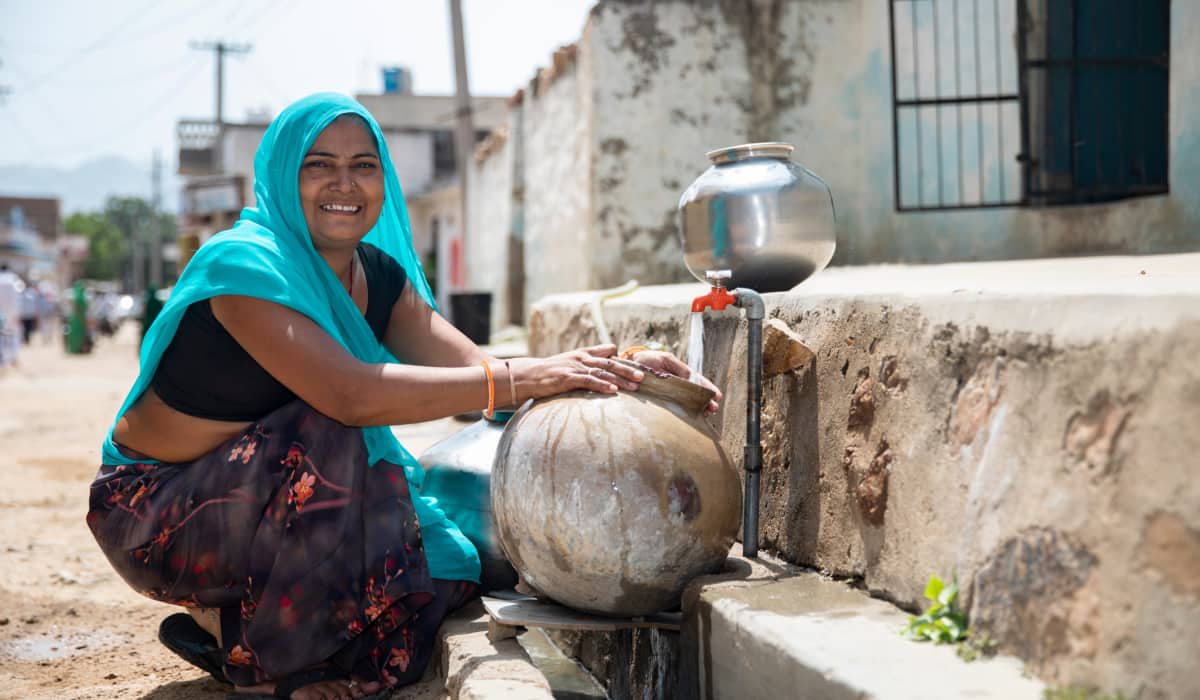
For generations, the sight of women carrying pots of water on their heads was an everyday scene in rural India. It was more than a chore, it was a necessity that was an integral part of their everyday life. The water was brought back, often just one or two pots which had to be stretched for drinking, cooking, cleaning, and washing. It was a routine that left little time for rest, education, or income-generating work, and the burden fell most heavily on women.

Before 2014 water scarcity, one of India’s most pressing problems, was met with little urgency or vision. Access to safe drinking water was fragmented, villages relied on distant sources, and nationwide household tap connections were seen as unrealistic.

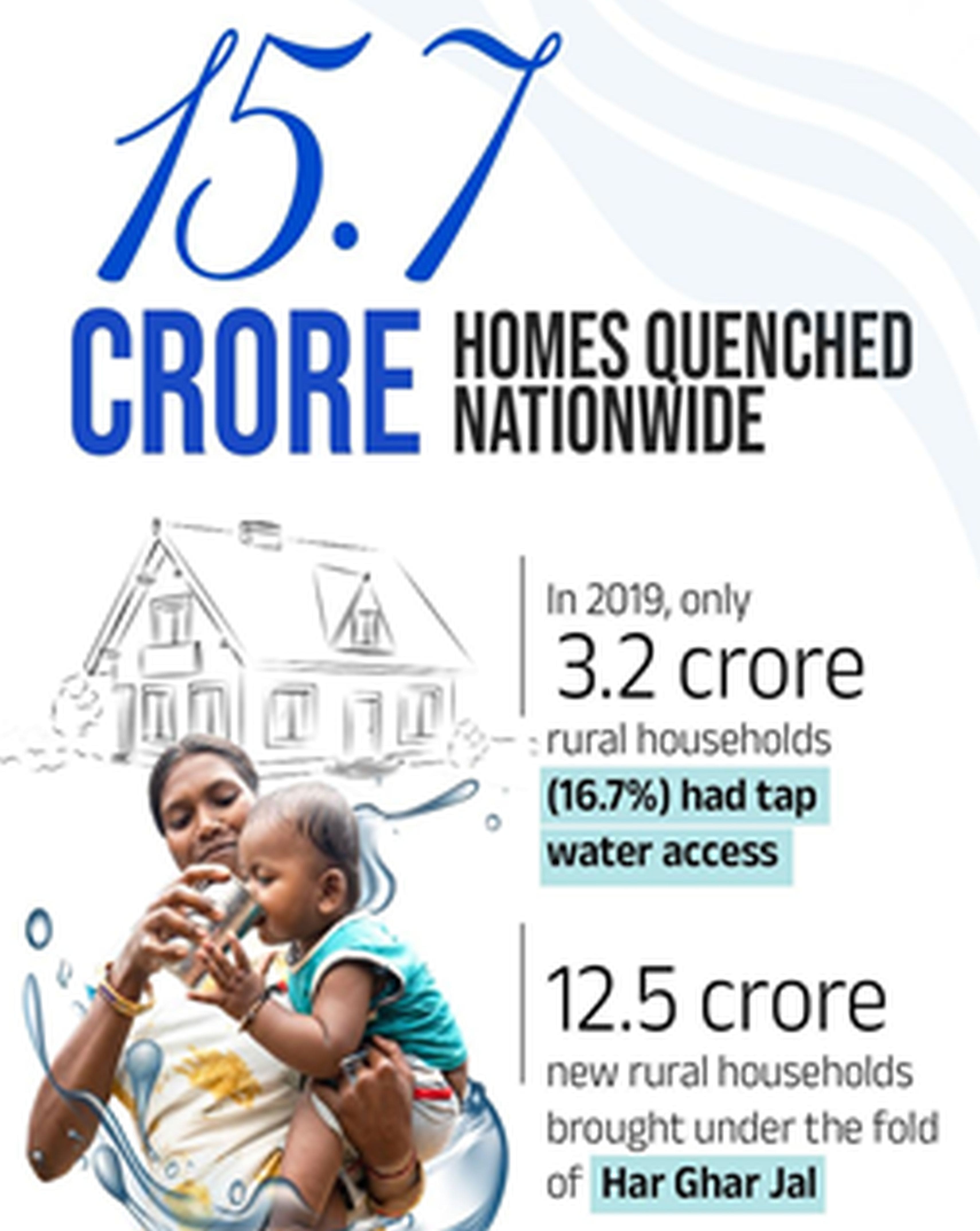
This reality began to shift in 2019, when the Government of India launched the Jal Jeevan Mission (JJM). A centrally sponsored initiative which aims at providing a Functional Household Tap Connection (FHTC) to every rural household. At that time, only 3.2 crore rural households, a modest 16.7% of the total, had tap water. The rest still depended on community sources, often far from home.

As of July 2025, the progress under the Har Ghar Jal program has been exceptional, with 12.5 crore additional rural households connected, bringing the total to over 15.7 crore. The program has achieved 100% tap water coverage in 200 districts and over 2.6 lakh villages, with 8 states and 3 union territories now fully covered. For millions, this means not just access to water at home, but saved time, improved health, and restored dignity. Nearly 80% of tap water coverage has been achieved in 112 aspirational districts, a significant rise from less than 8%. Additionally, 59 lakh households in LWE districts have gained tap water connections, ensuring development reaches every corner. Acknowledging both the significant progress and the road ahead, the Union Budget 2025–26 announced the program’s extension until 2028 with an increased budget.

The Jal Jeevan Mission, launched nationally in 2019, traces its origins to Gujarat, where Narendra Modi, as Chief Minister, tackled water scarcity in the arid state through the Sujalam Sufalam initiative. This effort formed a blueprint for a mission that would one day aim to provide tap water to every rural household in India.

Though drinking water is a State subject, the Government of India has taken on the role of a committed partner, providing technical and financial support while empowering States to plan and implement local solutions. To keep the Mission on track, a strong monitoring system links Aadhaar for targeting, geo-tags assets, conducts third-party inspections, and uses IoT devices to track village water flow.

The Jal Jeevan Mission’s objectives are as much about people as they are about pipes. By prioritizing underserved and water-stressed areas, ensuring that schools, Anganwadi centres, and health facilities have running water, and encouraging local communities to take ownership through contributions or shramdaan, the Mission aims to make safe water everyone’s responsibility..

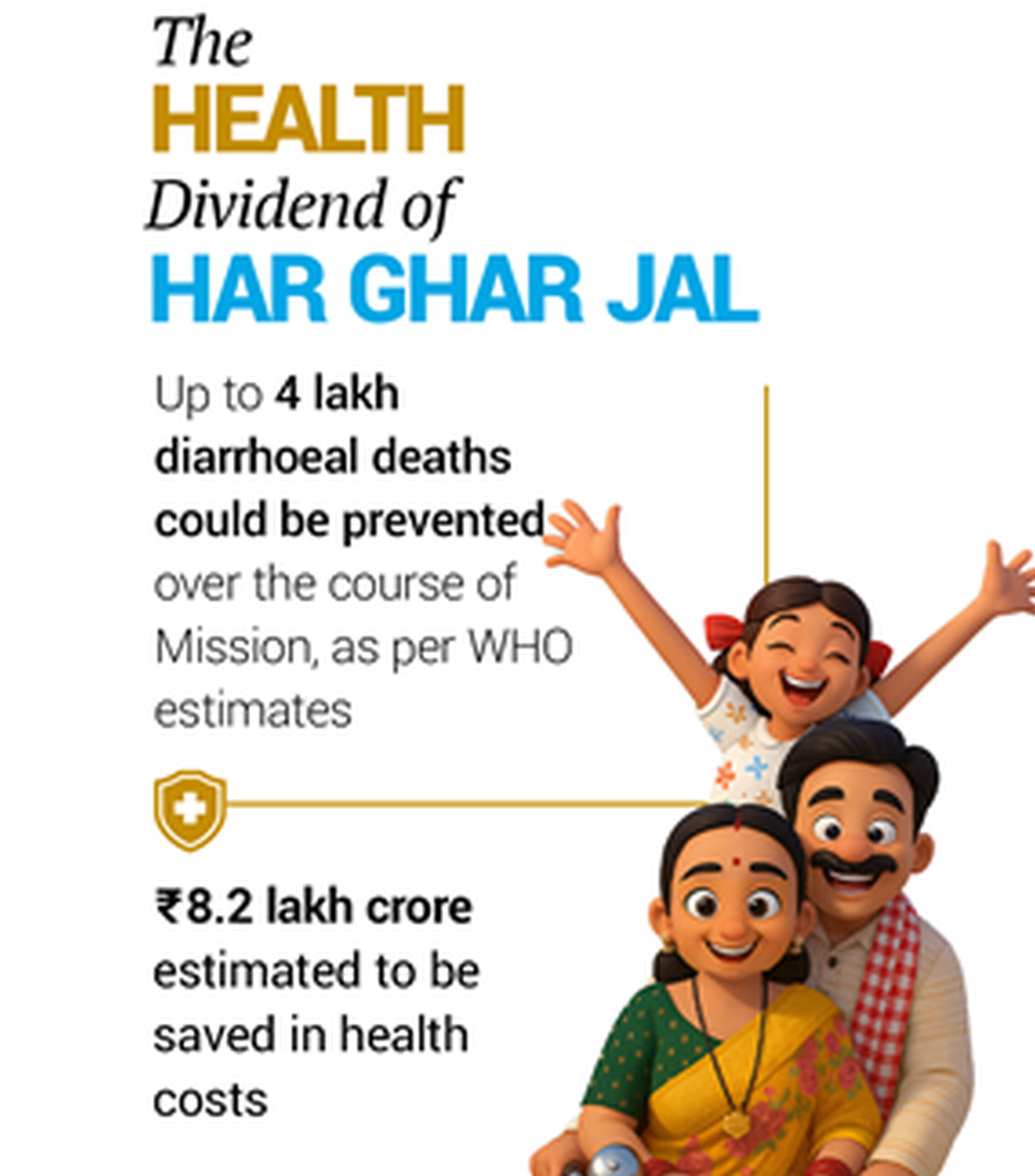
The impact reaches far beyond convenience. The World Health Organization estimates that achieving JJM’s targets could save over 5.5 crore hours each day, time that can now be spent on education, work, or family. 9 crore women no longer need to fetch water from outside. WHO also projects that safe water for all could prevent nearly 4 lakh deaths from diarrhoeal disease and save Rs. 8.2 lakh crores in health costs. Additionally, according to IIM Bangalore and the International Labour Organization, JJM has generated nearly 3 crore person-years of employment during its build-out, with nearly 25 lakh women are trained to use Field testing Kits.

From the quiet relief of a mother filling a glass of clean water in her kitchen, to the confidence of a school where children can drink without worry, the Jal Jeevan Mission is changing what it means to live in rural India.