My cabinet colleague Shri Piyush Goyal ji, friends from the startup ecosystem who have come from across the country, other distinguished guests, ladies and gentlemen!
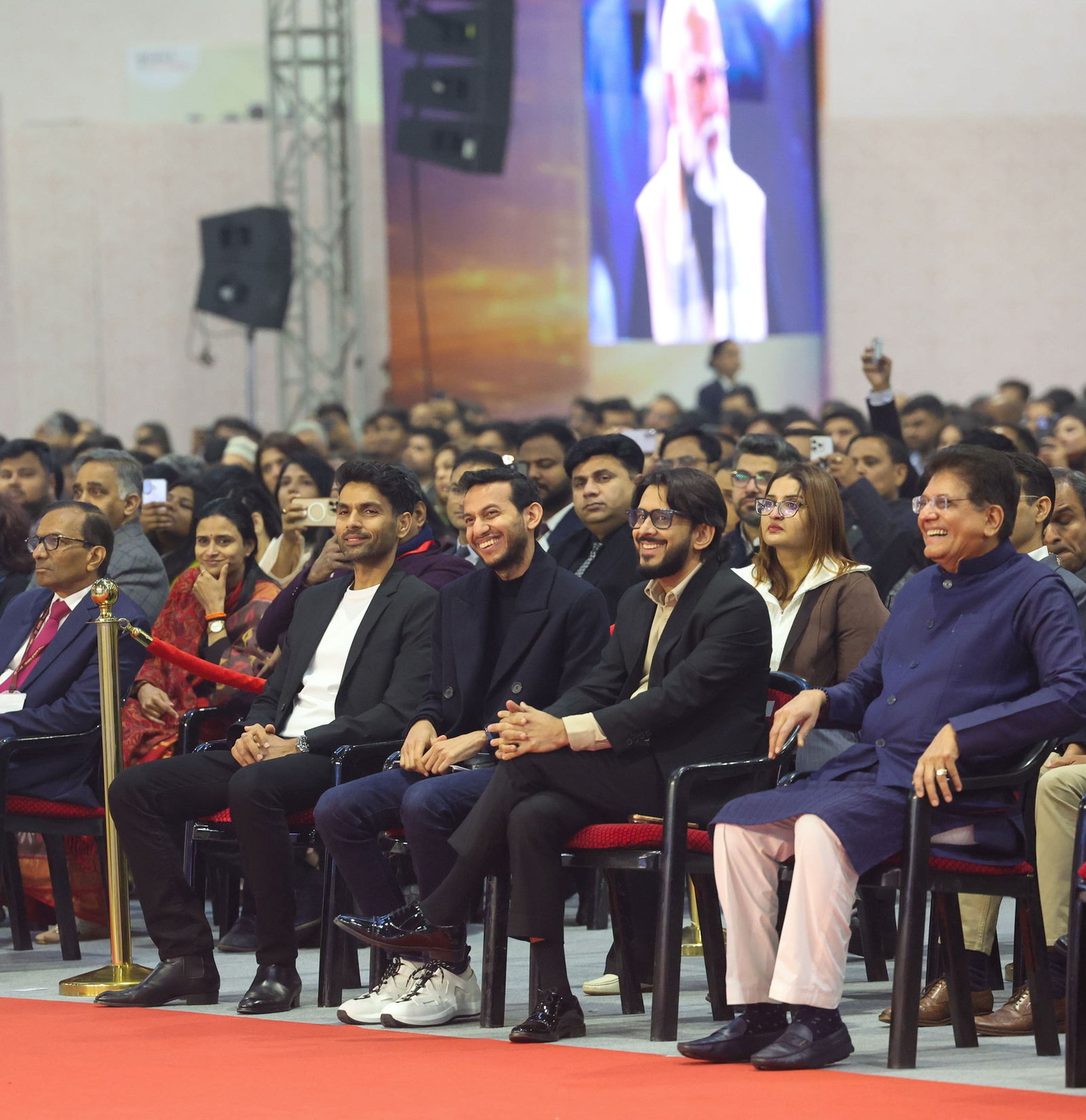
Today, we are all gathered here on a very special occasion. On this occasion of National Startup Day, with this gathering of startup founders and innovators, I see before me the future of a new and evolving India.
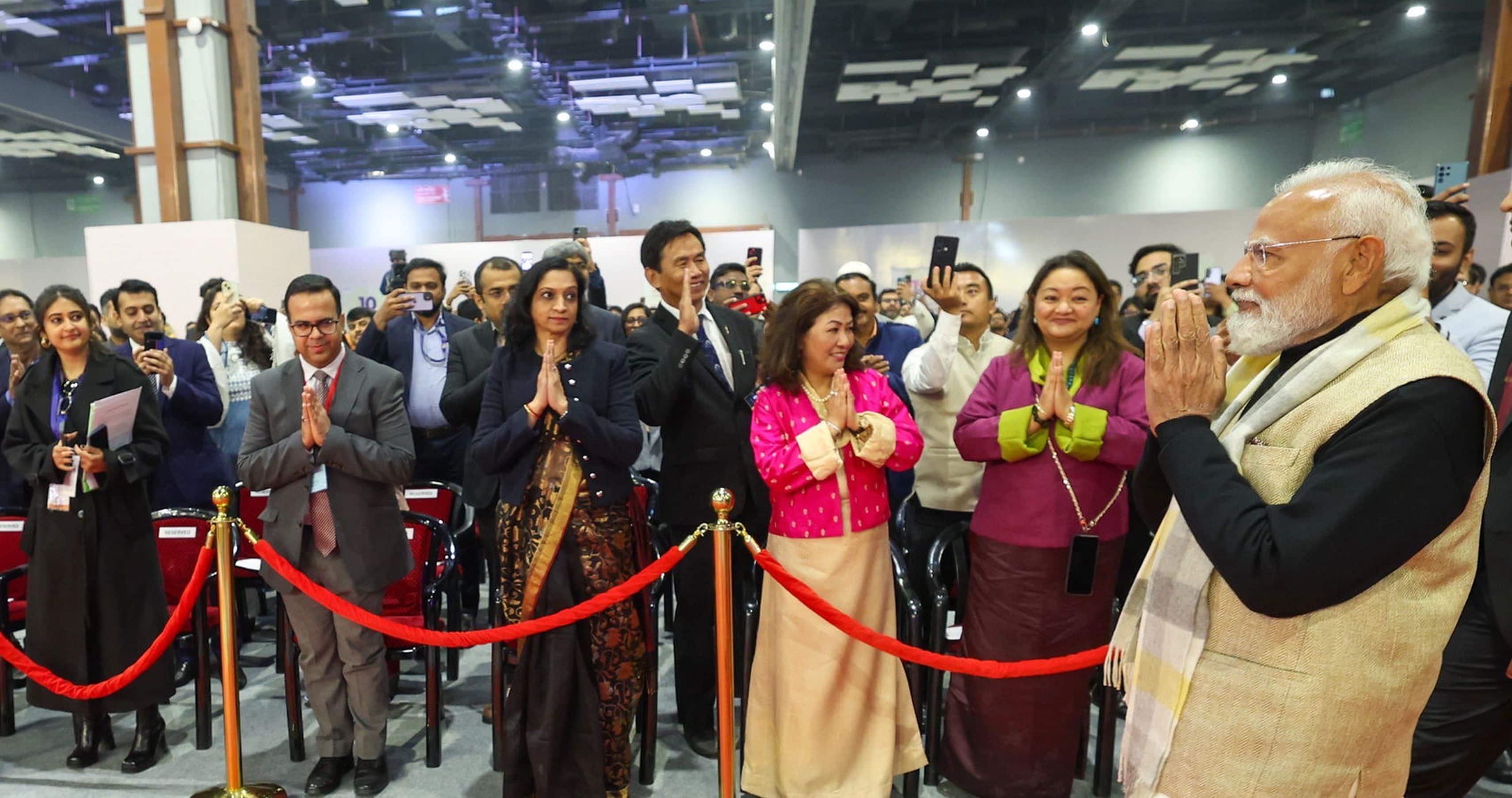
Just now, I had the opportunity to meet some people from the world of startups, to see their achievements and experiments, and to listen to some of them. Startups working in agriculture, fintech, mobility, health, and sustainability—their ideas are not only impressive to me but to everyone. Yet, what impressed me most was your confidence and your ambitions.
Ten years ago, in Vigyan Bhavan, this program began among 500–700 young people. Ritesh is sitting here today—his journey began then. At that time, I was listening to the experiences of those who were just entering the startup world. I remember a young woman who had left her corporate job to move towards startups. She went to Kolkata to meet her mother and told her, “I have left my job.” Her mother asked, “Why?” She narrated this at Vigyan Bhavan that day. She said, “I just want to do a startup now.” And her mother replied, “This is ruin—why are you going down the path of destruction?”
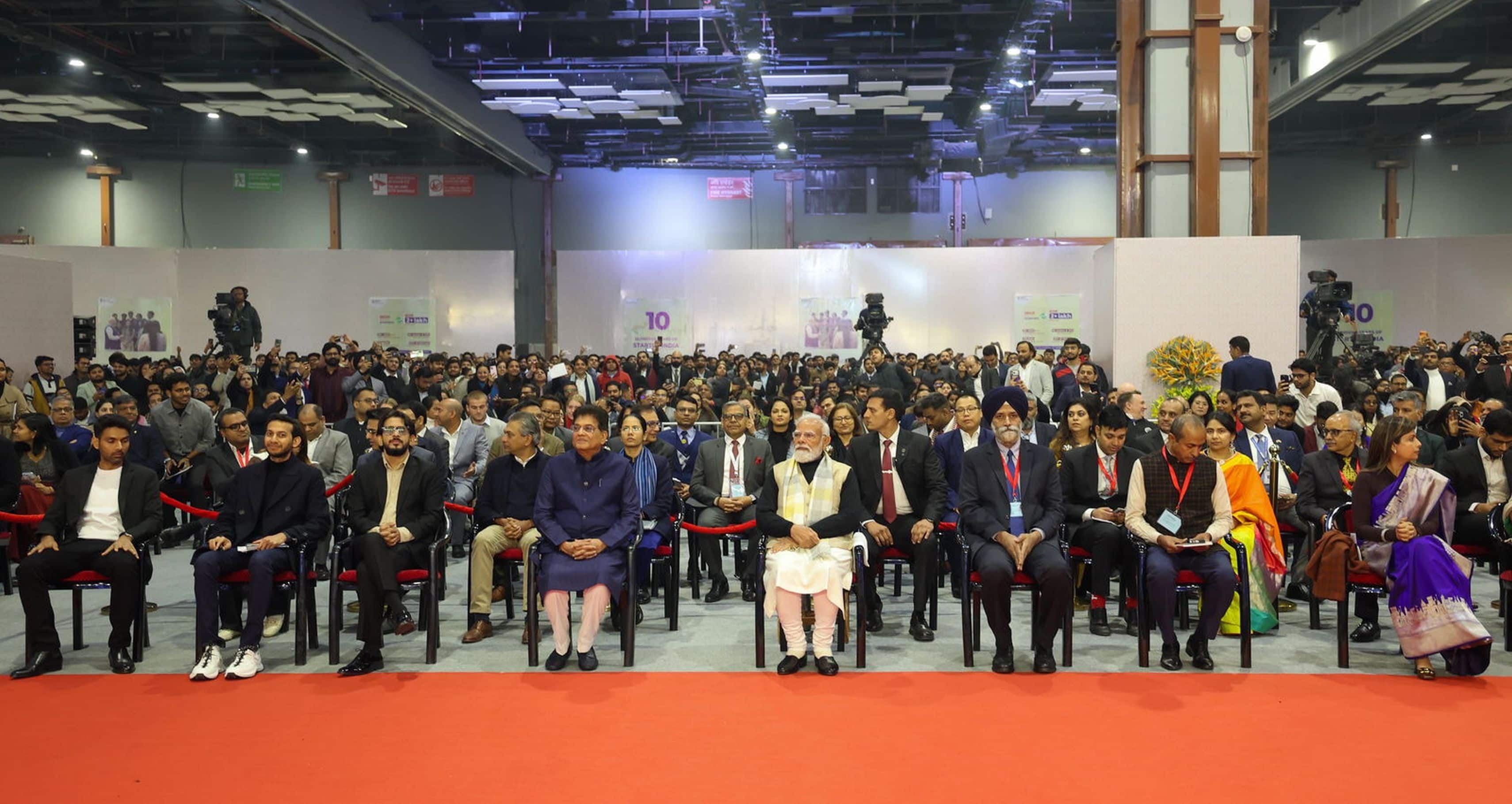
This was the mindset in our country regarding startups then. And today, look how far we have come—from Vigyan Bhavan to Bharat Mandapam, where there is no space left! It is my privilege that within just one week, I have had the opportunity to meet the youth of the nation twice. On January 12, National Youth Day, I spent two and a half hours listening to nearly 3,000 young people from across the country and sitting with them. And today, I have the fortune of listening to all of you and witnessing the strength of my country’s youth.
Friends,
The most important thing is that the focus of India’s youth is on solving real problems. Our young innovators, who have dared to dream new dreams—I deeply appreciate each and every one of them.
Friends,
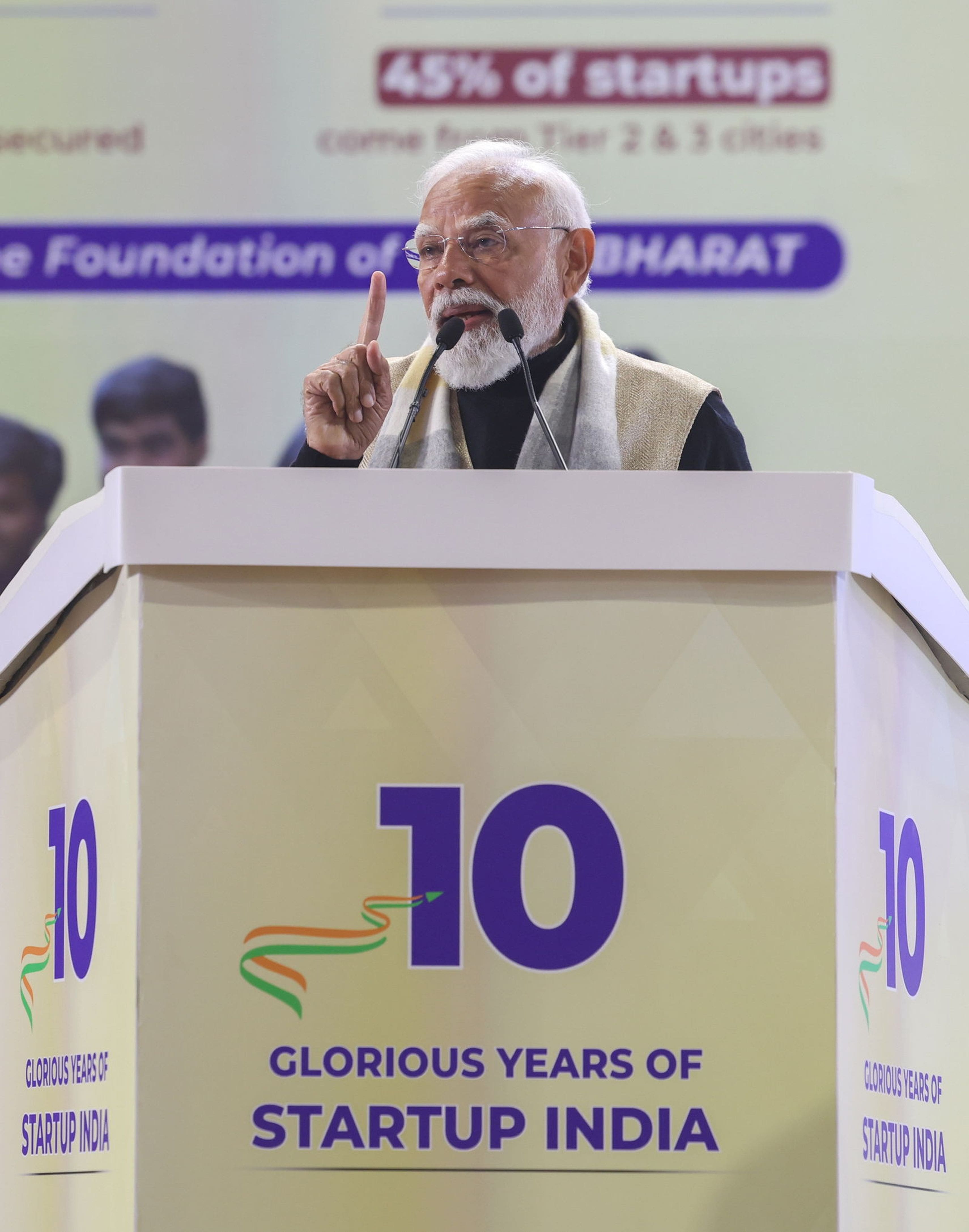
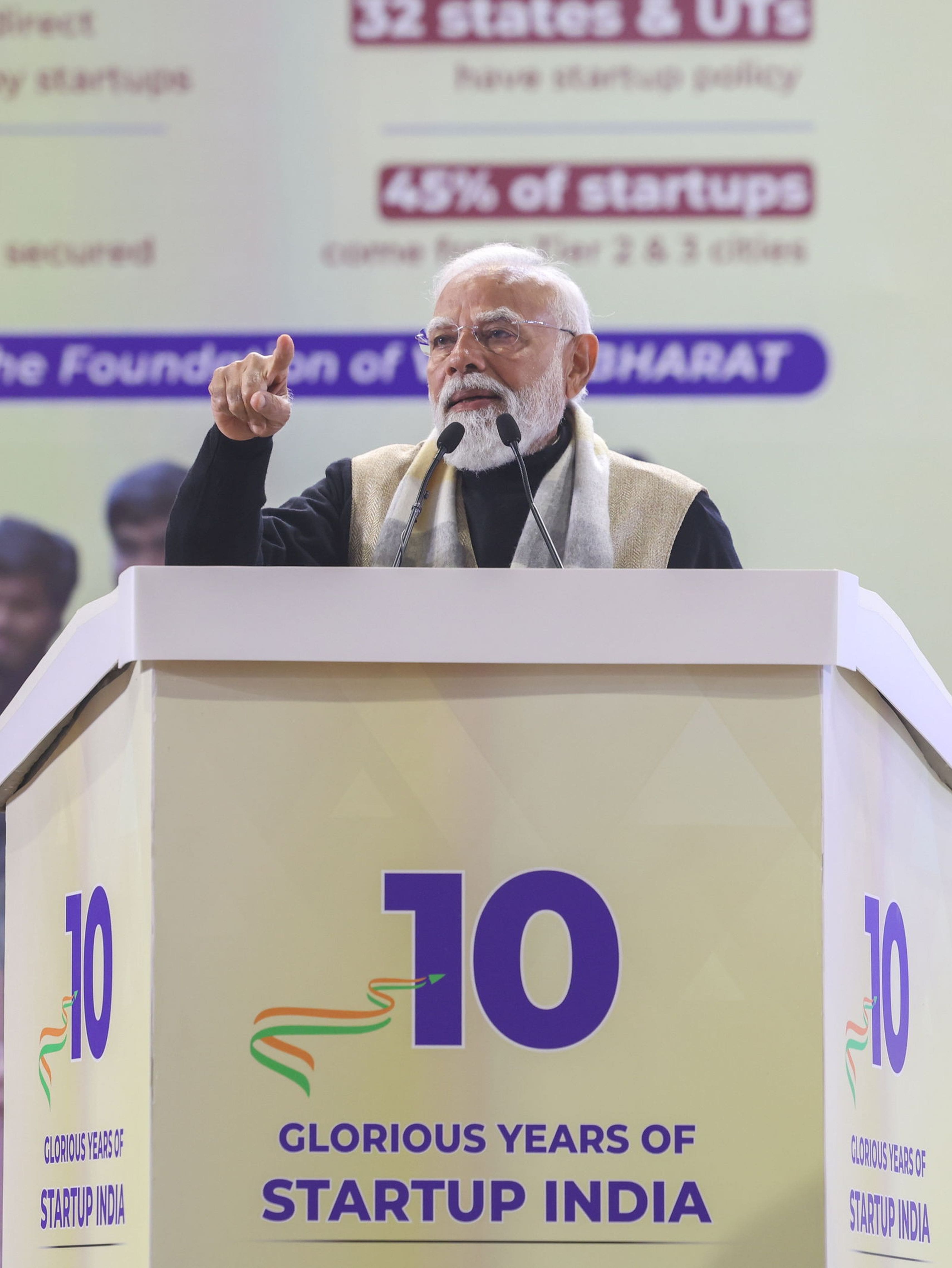
Today we are celebrating the milestone of ten years of Startup India. This ten-year journey is not merely the success story of a government scheme. It is the journey of thousands and millions of dreams like yours. It is the story of countless imaginations becoming reality. Recall what the situation was ten years ago—there was hardly any scope for individual efforts and innovation. We challenged those circumstances, we launched the Startup India programme. We gave our youth an open sky, and today the results are before us. In just ten years, the Startup India mission has become a revolution. India today is the world’s third-largest startup ecosystem. Ten years ago, there were fewer than 500 startups in the country; today, this number has risen to more than 200,000. In 2014, India had only four unicorns; today, India has nearly 125 active unicorns. The world is watching this success story with amazement. In the times to come, when the journey of India’s startups is discussed, many of the young people sitting in this hall will themselves become shining case studies.
Friends,
I am even more pleased to see that the momentum of Startup India is continuously accelerating. Today’s startups are becoming unicorns, unicorns are launching their IPOs, and more and more jobs are being created. Just last year, in 2025, nearly 44,000 new startups were registered. This is the biggest jump in any single year since the beginning of Startup India. These figures testify to how our startup ecosystem is driving innovation and growth.
Friends,
I am delighted that Startup India has given birth to a new culture in the country. Earlier, new businesses and ventures were mostly started by children of large industrial families, because they alone had easy access to funding and support. Most children from middle-class and poor families could only dream of jobs. But the Startup India programme has changed this mindset. Now, youth from Tier-2 and Tier-3 cities, even from villages, are opening their own startups. And these very young people are striving to solve the most pressing grassroots problems. This spirit of doing something for society and the nation is of immense importance to me.
Friends,
In this transformation, the daughters of the country have played a major role. Today, in more than 45 percent of recognized startups, there is at least one woman director or partner. In terms of women-led startup funding, India has become the world’s second-largest ecosystem. This inclusive momentum of startups is further strengthening India’s capabilities.
Friends,
Today, the nation sees its future in the startup revolution. If I were to ask you why startups matter so much, perhaps you would all have different answers. Some would say India is the world’s youngest country, and therefore there are opportunities for startups. Others would say India is the fastest-growing major economy, and hence new opportunities exist for startups. Some would say India is building world-class infrastructure, new sectors are emerging, and therefore the startup system is advancing. All these answers, all these facts are correct. But what touches my heart is the startup spirit. The youth of my country today are not ready to spend their lives in a comfort zone. They do not accept walking on a worn-out path. They want to carve out new roads for themselves, because they seek new destinations, new milestones.
Friends,
And how are new destinations achieved? For that, we must demonstrate the pinnacle of hard work. That is why it is said: उद्यमेन हि सिद्ध्यन्ति, कार्याणि न मनोरथैः। work is accomplished through enterprise, not merely by wishful thinking. And the first condition for enterprise is courage. To reach where you are today, you must have shown immense courage, you must have staked much. Earlier, risk-taking was discouraged in the country, but today risk-taking has become mainstream. Those who think beyond a monthly salary are not only accepted but respected. Ideas that were once considered fringe are now becoming fashionable.
Friends,
I have always laid special emphasis on risk-taking, because it has long been my own habit. The tasks that no one is ready to take up, the work that governments for decades avoided out of fear of losing elections or power—those very tasks, which people would call “too much of a political risk,” I have always considered my responsibility to undertake. Just like you, I believe that the work which is necessary for the nation must be done by someone, and someone must take the risk. If there is a loss, it will be mine; but if there is a gain, then millions of families in my country will benefit.
Friends,
In the past ten years, the country has built an ecosystem that promotes innovation. We established Atal Tinkering Labs in schools so that children could develop a spirit of innovation. We started hackathons so that our youth could provide solutions to the nation’s problems. We created incubation centres so that ideas would not die due to lack of resources.
Friends,
At one time, complex compliances, long approval cycles, and the fear of inspector raj were the biggest obstacles to innovation. That is why we created an atmosphere of trust and transparency. Under the Jan Vishwas Act, more than 180 provisions have been decriminalised. We saved your time so that you could focus on innovation, and not waste it in litigation. Especially for startups, we introduced self-certification in many laws. We made mergers and exits easier.
Friends,
Startup India is not merely a scheme, but a “rainbow vision.” It is a means of connecting different sectors with new opportunities. Look at defence manufacturing—earlier, could startups even imagine competing with established players? Through iDEX, we opened new avenues of procurement for startups in strategic sectors. The space sector, which was earlier completely closed to private participation, has now been opened. Today, nearly 200 startups are working in the space sector, and they are gaining global recognition. Similarly, look at the drone sector—India lagged behind for years due to the absence of an enabling framework. We removed outdated rules and placed trust in innovators.
Friends,
In public procurement, we have expanded market access through GeM, the Government e-Marketplace. Today, nearly 35,000 startups and small businesses are onboarded on GeM. They have received close to 500,000 orders worth around ₹50,000 crore. In a way, startups, through their success, are opening new avenues of growth for every sector.
Friends,
We all know that without capital, even the best ideas cannot reach the market. That is why we have focused on ensuring access to finance for innovators. Through the Fund of Funds for Startups, investments of more than ₹25,000 crore have been made. Schemes such as the Startup India Seed Fund, IN-SPACe Seed Fund, and NIDHI Seed Support Programme are providing seed funding to startups. To improve credit access, we also launched the Credit Guarantee Scheme, so that lack of collateral does not become an obstacle in the path of creativity.
Friends,
Today’s research becomes tomorrow’s intellectual property. To promote this, we have launched the Research, Development and Innovation Scheme with an outlay of ₹1 lakh crore. To support long-term investment in sunrise sectors, we have also created a Deep Tech Fund of Funds.
Friends,
Now we must prepare for the future. We need to work on new ideas. Many domains are emerging today that will play a crucial role in the country’s economic security and strategic autonomy tomorrow. AI is a clear example before us. The nation that advances furthest in the AI revolution will have the greatest advantage. For India, this task must be carried forward by our startups. And you all know, in February, the global AI conference—the AI Impact Summit—is being hosted here. This is a great opportunity for all of you. I am aware of challenges such as high computing costs in this field. Through the India AI Mission, we are providing solutions. We have onboarded more than 38,000 GPUs. Our effort is to make big technology easily available even to small startups. We are also ensuring that indigenous AI is developed by Indian talent, on Indian servers. Similar efforts are being made in semiconductors, data centres, green hydrogen, and many other sectors.
Friends,
As we move forward, our ambition should not be limited to partnership alone. We must aim for global leadership. Work on new ideas, solve problems. In past decades, we have achieved remarkable success in digital startups and the services sector. Now the time has come for our startups to focus more on manufacturing. We must create new products. We must produce the best quality products in the world. We must take the lead in technology by working on unique ideas. The future belongs to this. I assure you, the government stands with you in every effort. I have deep faith in your capacity. India’s future is being shaped by your courage, confidence, and innovation. The past ten years have proven the nation’s capabilities. Our goal must be that in the coming ten years, India leads the world in new startup trends and technologies.
Once again, I extend my heartfelt congratulations to all of you. Thank you very much.