WASMO: A Dynamic force in decentralizing Gujarat’s Rural Water Supply!

Published By : Admin | April 10, 2013 | 15:14 IST
"Shri Narendra Modi has empowered rural communities in managing drinking water supply with a the special purpose vehicle, WASMO."
"The formation of Pani Samitis (Water committees) has encouraged rural citizen’s participation in the decision making process of water management."
"Shri Modi’s attitude in bringing people at the centre of governance and leveraging local leadership has truly delineated decentralization."

It has been rightly said by Thomas Fuller, “We never know the worth of water till the well is dry." Gujarat has been a State where 20% area had 71% water resources and the remaining 80% areas had merely 29% water resources and  rural regions have been most affected by this crisis. Managing water resources has been one of the biggest challenges for the State Government.

However, it was Shri Narendra Modi’s political nerve which turned this crisis into an opportunity. He went a step ahead and created a ‘Special Purpose Vehicle’ called WASMO (Water and Sanitation Management Organization) in 2002 to empower the rural communities in managing drinking water supply and sanitation. It would thus be noteworthy to further learn more on how this community driven project has yielded marvelous tangible as well as intangible outcomes in molding decentralized, self-sustained villages.

One of the key drivers for involving rural citizens in the decision-making process of water supply has been the formation of Pani Samitis as sub-committees of the Gram Panchayat. The distinctiveness of these committees lies in the very aspect that women and marginalized groups have been assured adequate representation. WASMO carried out an extensive capacity-building programme to instill confidence among the committee members to carry out the financial activities of the Samiti.

The members of the Samiti are also directed to contribute towards ten percent of the capital costs in order to nurture a sense of ownership as well as responsibility towards welfare of the village. Pani Samitis have particularly institutionalized the involvement of women leading to a positive impact in terms of sanitation, health, checking water-borne diseases and reduction in drudgery. The number of Pani Samitis has powerfully grown from 82 to 18,076 between the years 2002 and 2012.

Moving ahead in ensuring safe drinking water to rural regions, WASMO implemented the Rural Drinking Water Quality and Surveillance Programme.Various sector partners of the Organization such as Gujarat Water Supply and Sewerage Board (GWSSB)and UNICEF played a role in this process. By the end of 2012, 16,676 water quality teams have been formed in different villages that hold the key responsibility in generating awareness safe drinking water and personal hygiene practices. Interestingly, these teams not only include activists from the Pani Samiti, Self-Help Groups (SHG), anganwadis but also make students and school teachers a part of the hygiene campaign.

The communitisation of rural water supply through WASMO has not only fulfilled Shri Narendra Modi’s idea of harnessing Jal-Shakti and making it an integral part of our culture and value system but was also been honored internationally with the United Nations Public Service Award –2009 under the category of “Fostering participation in policy-making decisions through innovative mechanisms” for “Institutionalization of Community Managed Drinking Water Supply Programme and User Level Water Quality”.

The far-reaching effects of decentralization through a social process driven approach adapted by WASMO can be witnessed in the improvement in the quality of rural lives. By the end of 2011, 72.22% of the households had tap connectivity in contrast to the national average of 26.6%. The rate of women who were affected by poor life condition in rural regions has substantially reduced from 53.8% to 7.7%. Moreover, the dependency on tankers for water supply has been momentously decreased from 3961 villages in 2003 to 7 villages in 2011.

The holistic nature of the State Government’s schemes for rural water supply implemented by WASMO has dealt with many issues such as travelling long distances to fetch water, conflicts in water distribution, dependence on external agencies etc.

Shri Narendra Modi’s attitude in bringing people at the centre of governance and leveraging local leadership has undoubtedly fulfilled Gandhiji’s idea of “Surajya” by strengthening the system of Panchayati Raj! WASMO has been a dynamic force in amalgamating people’s participation with governance.

Explore More
ശ്രീരാമജന്മഭൂമി ക്ഷേത്രത്തിലെ പതാക ഉയർത്തൽ ഉത്സവത്തിനിടെ പ്രധാനമന്ത്രി നടത്തിയ പ്രസം​ഗം

ജനപ്രിയ പ്രസംഗങ്ങൾ

ശ്രീരാമജന്മഭൂമി ക്ഷേത്രത്തിലെ പതാക ഉയർത്തൽ ഉത്സവത്തിനിടെ പ്രധാനമന്ത്രി നടത്തിയ പ്രസം​ഗം
Jan Dhan accounts hold Rs 2.75 lakh crore in banks: Official

Media Coverage

Jan Dhan accounts hold Rs 2.75 lakh crore in banks: Official
NM on the go

Nm on the go

Always be the first to hear from the PM. Get the App Now!
...
6 Years of Jal Jeevan Mission: Transforming Lives, One Tap at a Time
August 14, 2025
Jal Jeevan Mission has become a major development parameter to provide water to every household.” - PM Narendra Modi

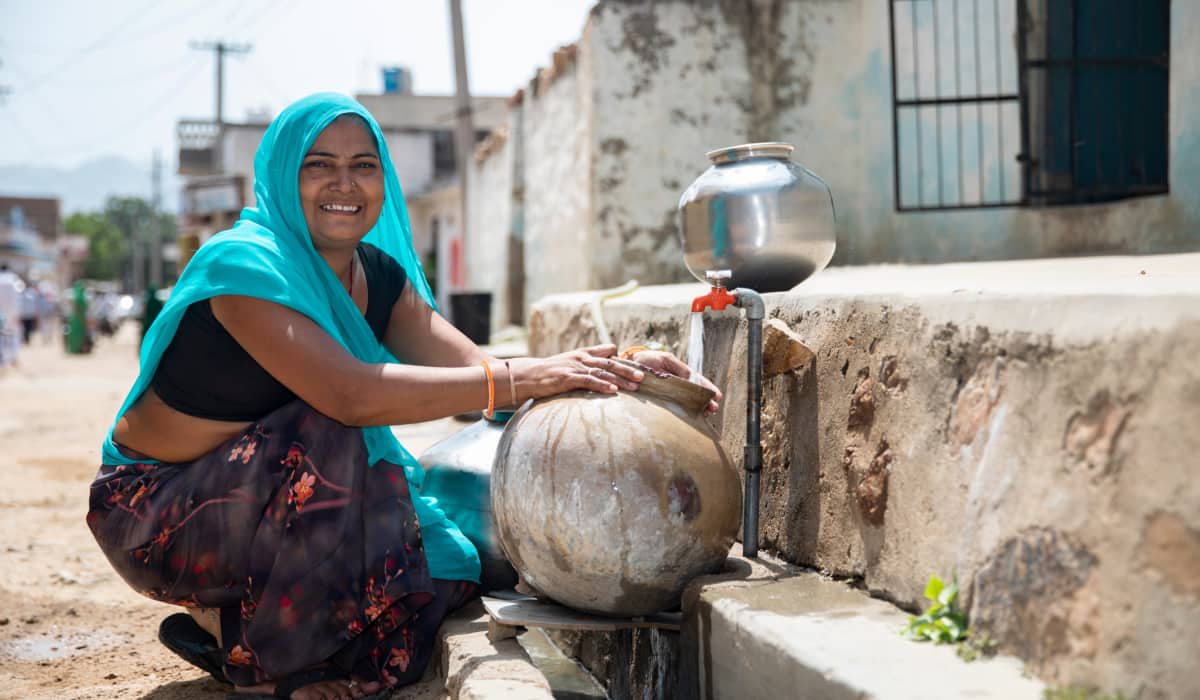
For generations, the sight of women carrying pots of water on their heads was an everyday scene in rural India. It was more than a chore, it was a necessity that was an integral part of their everyday life. The water was brought back, often just one or two pots which had to be stretched for drinking, cooking, cleaning, and washing. It was a routine that left little time for rest, education, or income-generating work, and the burden fell most heavily on women.

Before 2014 water scarcity, one of India’s most pressing problems, was met with little urgency or vision. Access to safe drinking water was fragmented, villages relied on distant sources, and nationwide household tap connections were seen as unrealistic.

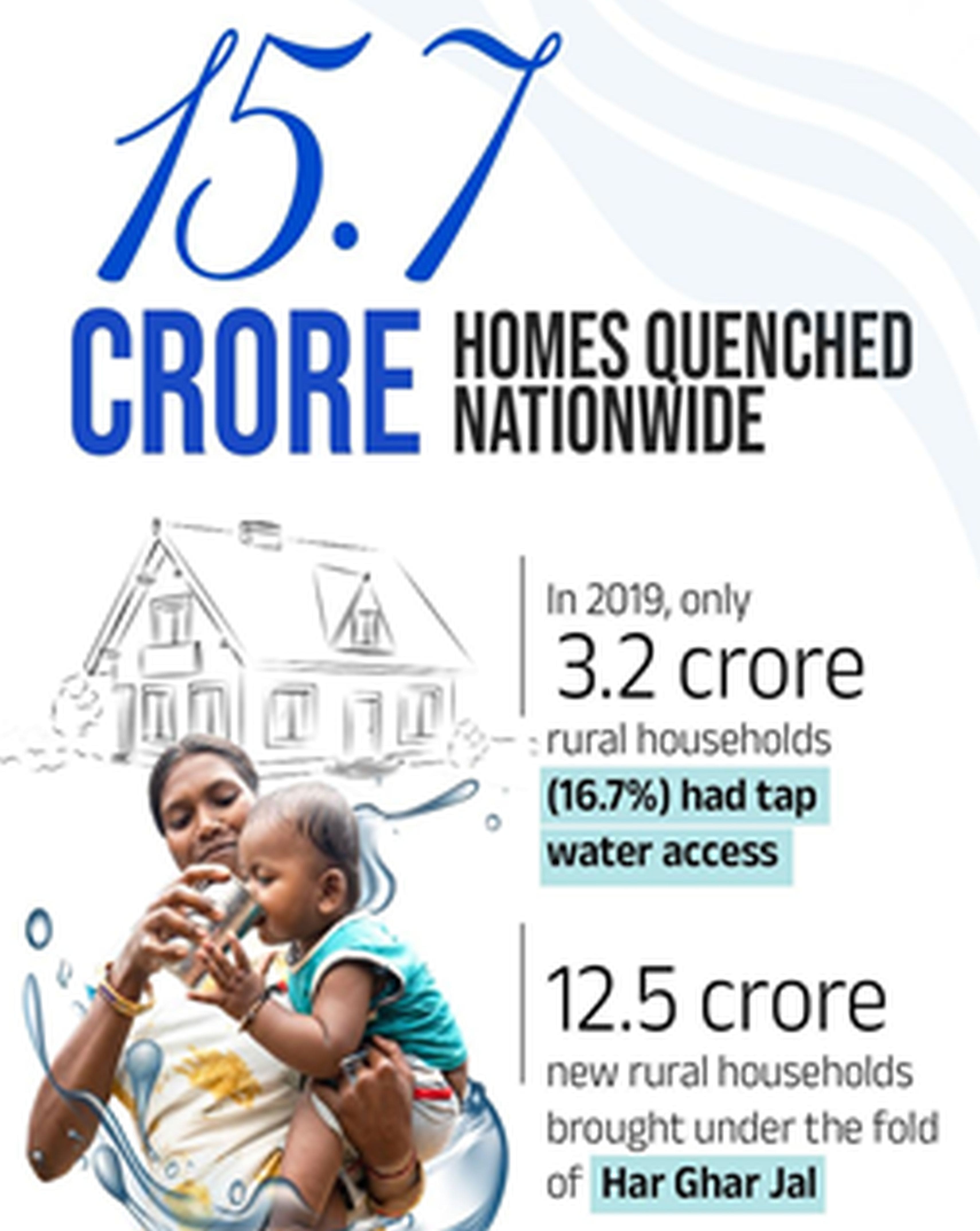
This reality began to shift in 2019, when the Government of India launched the Jal Jeevan Mission (JJM). A centrally sponsored initiative which aims at providing a Functional Household Tap Connection (FHTC) to every rural household. At that time, only 3.2 crore rural households, a modest 16.7% of the total, had tap water. The rest still depended on community sources, often far from home.

As of July 2025, the progress under the Har Ghar Jal program has been exceptional, with 12.5 crore additional rural households connected, bringing the total to over 15.7 crore. The program has achieved 100% tap water coverage in 200 districts and over 2.6 lakh villages, with 8 states and 3 union territories now fully covered. For millions, this means not just access to water at home, but saved time, improved health, and restored dignity. Nearly 80% of tap water coverage has been achieved in 112 aspirational districts, a significant rise from less than 8%. Additionally, 59 lakh households in LWE districts have gained tap water connections, ensuring development reaches every corner. Acknowledging both the significant progress and the road ahead, the Union Budget 2025–26 announced the program’s extension until 2028 with an increased budget.

The Jal Jeevan Mission, launched nationally in 2019, traces its origins to Gujarat, where Narendra Modi, as Chief Minister, tackled water scarcity in the arid state through the Sujalam Sufalam initiative. This effort formed a blueprint for a mission that would one day aim to provide tap water to every rural household in India.

Though drinking water is a State subject, the Government of India has taken on the role of a committed partner, providing technical and financial support while empowering States to plan and implement local solutions. To keep the Mission on track, a strong monitoring system links Aadhaar for targeting, geo-tags assets, conducts third-party inspections, and uses IoT devices to track village water flow.

The Jal Jeevan Mission’s objectives are as much about people as they are about pipes. By prioritizing underserved and water-stressed areas, ensuring that schools, Anganwadi centres, and health facilities have running water, and encouraging local communities to take ownership through contributions or shramdaan, the Mission aims to make safe water everyone’s responsibility..

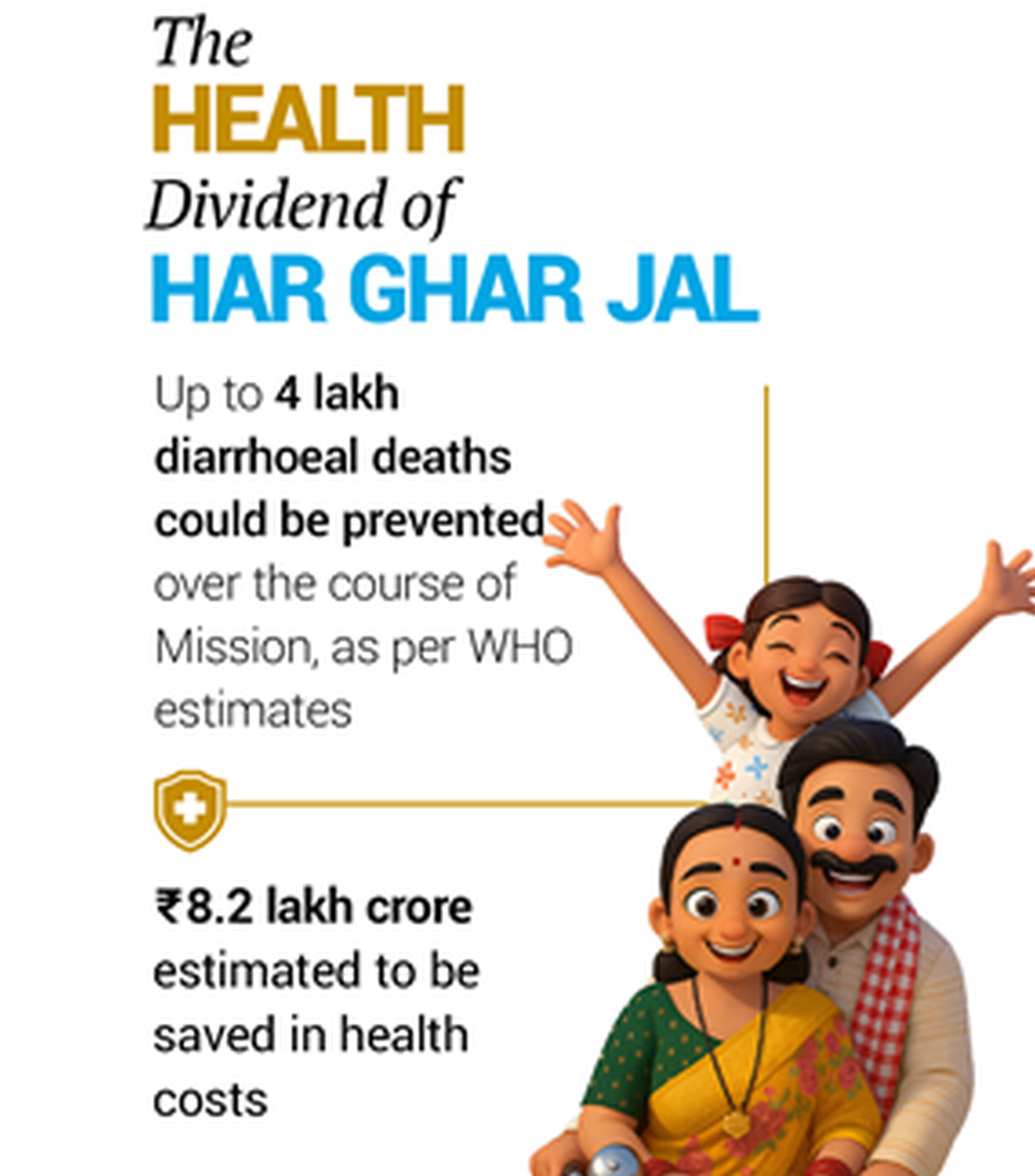
The impact reaches far beyond convenience. The World Health Organization estimates that achieving JJM’s targets could save over 5.5 crore hours each day, time that can now be spent on education, work, or family. 9 crore women no longer need to fetch water from outside. WHO also projects that safe water for all could prevent nearly 4 lakh deaths from diarrhoeal disease and save Rs. 8.2 lakh crores in health costs. Additionally, according to IIM Bangalore and the International Labour Organization, JJM has generated nearly 3 crore person-years of employment during its build-out, with nearly 25 lakh women are trained to use Field testing Kits.

From the quiet relief of a mother filling a glass of clean water in her kitchen, to the confidence of a school where children can drink without worry, the Jal Jeevan Mission is changing what it means to live in rural India.