A few days ago, we lost one of our senior-most leaders, Shri Vijay Kumar Malhotra Ji. He lived a long and accomplished life, but more importantly, he led a life of relentless hard work, determination and service. A glimpse of his life will make everyone understand the core ethos of the RSS, the Jana Sangh, and the BJP…courage in the face of adversity, service above self and a deep-rooted commitment to national and cultural values.

The family of VK Malhotra Ji suffered the horrors of partition. The trauma and displacement did not make him bitter or inward-looking. Instead, he immersed himself in serving others. He found his calling in the ideology of the RSS and the Jana Sangh. Those were indeed very challenging times. Malhotra Ji dedicated himself to social work, helping thousands of displaced families, who had lost everything, rebuild their lives. This was also the guiding spirit of the Jana Sangh. His fellow Karyakartas in those days included Madanlal Khurana Ji and Kidar Nath Sahni Ji. People like them and countless others were at the forefront of selfless service, which resonated with the people of Delhi.

It is well known that the Lok Sabha and various state assembly elections of 1967 were a shocker for the all-powerful Congress. A lesser-known election which took place was the first-ever Delhi Metropolitan Council election. In the national capital, the Jana Sangh secured a resounding victory. Shri LK Advani Ji became the Chairman of the Council and Malhotra Ji was given the responsibility of being the Chief Executive Councillor, which is roughly equivalent to being Chief Minister. He was only 36 then. He used his tenure to address the needs of Delhi, especially on infrastructure and civic issues.

This responsibility also deepened Malhotra Ji’s bond with Delhi. Whenever there was an issue of public importance, Malhotra Ji was not a bystander but an active participant speaking the voice of the public. He took part in the cow protection movement in the late 1960s, where he also became a victim of police excesses. He was at the forefront of the anti-Emergency movement. When Sikhs were being brutally butchered on the streets of Delhi, he was a voice of calm and peace and stood strongly with the Sikh community. He believed that politics, in addition to electoral success, was about principles and protecting people as well as values when it mattered most.

From the late 1960s onwards, VK Malhotra Ji remained a permanent figure in public life. Few leaders can claim to have such a long, unbroken span of public engagement. He was a tireless Karyakarta, an excellent organiser and an institution builder. He had the wonderful ability to traverse the worlds of electoral politics and organisational politics with equal ease, providing stable leadership to the Jana Sangh and the BJP’s Delhi unit.

Be it civic administration, state legislature or the Parliament, Malhotra Ji had seen it all. His 1999 Lok Sabha electoral victory against Dr. Manmohan Singh is still remembered by supporters and opponents. It was a high-profile election, where he was pitted against an important Congress leader. The full might of the Congress ecosystem descended upon his South Delhi constituency, but Malhotra Ji never reduced the level of discourse. He ran a positive campaign, ignoring vile attacks and won with over 50% of the vote! This victory was achieved due to Malhotra Ji’s strong connect on the ground. He was skilled at nurturing close relationships with Karyakartas and understanding the aspirations of the voters.

When Malhotra Ji spoke in Parliament, it was always well-researched and well-presented. His tenure as Deputy Leader of the Opposition during UPA-1 offers valuable lessons to students of politics and Parliamentary democracy. He effectively opposed the ineffective UPA Government, especially on its dismal track record of corruption and terrorism. During those days, I was serving as the Chief Minister of Gujarat and would often interact with Malhotra Ji, who was always curious to know about Gujarat’s development strides.

Politics was one facet of VK Malhotra Ji’s persona. He was an excellent academician. I learnt from his family about how he secured double promotions during his school years. He completed matriculation and graduation ahead of schedule. His Hindi proficiency meant that the task of translating Dr. Syama Prasad Mookerjee’s speeches to Hindi often came to him.

One of Malhotra Ji’s greatest traits was his role as an institution builder. He was among the top leaders who founded and nurtured several institutions related to the RSS. Through his efforts, many cultural, educational and social organisations found growth and mentorship. These institutions became nurseries of talent and service, carrying forward the vision of a self-reliant, value-driven society.

Beyond politics and academia, Malhotra Ji made an indelible mark in the world of sports. Archery was his great passion and he served as the President of the Archery Association of India for several decades. Under his leadership, Indian archery gained global recognition and he tirelessly worked to provide athletes with platforms and opportunities. His role in sports administration reflected the same traits he displayed in public life: dedication, organisational ability and the pursuit of excellence.

Shri VK Malhotra Ji’s impact is not just in the positions he held, but in the ethos, he carried forward… of putting service before self, of staying rooted in values and of embracing challenges with courage and perseverance. He was the ideal Party man, never speaking anything that could embarrass our Karyakartas or ideology.

A few days ago, I was at the programme to inaugurate the new Headquarters of the Delhi BJP, where I fondly recalled Shri VK Malhotra Ji. He was thrilled when the BJP formed the Government in Delhi earlier this year after over three decades and had immense expectations, which we are committed to fulfilling for our beloved national capital. May his life and accomplishments continue to remain a role model for generations of public servants in the times to come.

Explore More
ശ്രീരാമജന്മഭൂമി ക്ഷേത്രത്തിലെ പതാക ഉയർത്തൽ ഉത്സവത്തിനിടെ പ്രധാനമന്ത്രി നടത്തിയ പ്രസം​ഗം

ജനപ്രിയ പ്രസംഗങ്ങൾ

ശ്രീരാമജന്മഭൂമി ക്ഷേത്രത്തിലെ പതാക ഉയർത്തൽ ഉത്സവത്തിനിടെ പ്രധാനമന്ത്രി നടത്തിയ പ്രസം​ഗം
India’s 500 GW clean energy goal could create 44 lakh jobs, says study

Media Coverage

India’s 500 GW clean energy goal could create 44 lakh jobs, says study
NM on the go

Nm on the go

Always be the first to hear from the PM. Get the App Now!
...
Italy and India: A Strategic Partnership for the Indo-Mediterranean
May 20, 2026

The relationship between India and Italy has now reached a decisive stage. In recent years, our ties have expanded with unprecedented momentum, evolving from a cordial friendship into a special strategic partnership grounded in the values of freedom and democracy, and a common vision for the future.

At a time when the international system is undergoing a profound change, the partnership between Italy and India is guided by regular exchanges at higher political and institutional levels, and is gaining a new and higher dimension that combines our economic dynamism, societal creativity, and millennia-old civilisational wisdom. Our cooperation mirrors our shared awareness that prosperity and security in the 21st century will be shaped by the ability of nations to innovate, manage energy transitions, and strengthen strategic sovereignty. To this end, we have committed to deepen and diversify our bilateral relationship with a view to pursuing new objectives and pooling our complementary strengths. We aim to forge a powerful synergy between Italian design, manufacturing excellence, and world-class supercomputers - reflecting Italy's position as an industrial powerhouse - and India's rapid economic growth, engineering talent, scale, and innovation and entrepreneurial ecosystem with over 100 unicorns and 200,000 start-ups. This is not a simple integration, but a co-creation of value where our respective industrial strengths amplify one another.

The Free Trade Agreement between the European Union and India paves the way for increased trade and investment in both directions. We want to reach and exceed the Euro 20 billion target for trade between Italy and India by 2029, with a focus on defence and aerospace, clean technologies, machinery, automotive components, chemicals, pharmaceuticals, textiles, agri-food, tourism and more.

"Made in Italy" has always been synonymous with excellence worldwide, and today it finds a natural synergy with the high-quality goals of the "Make in India" initiative. In this context, the growing interest of Italian businesses in the production for India and the increasing presence of Indian industries in Italy, numbering over 1,000 from both sides now, is a positive sign that will strengthen the integration of our supply chains.

Technological innovation lies at the very heart of our partnership. The coming decades will be shaped by a technological revolution of unmeasurable scope, marked by advances in sectors such as Artificial Intelligence, quantum computing, advanced manufacturing, critical minerals, and digital infrastructure. India's dynamic innovation ecosystem, coupled with highly skilled professional talent pool, and Italy's advanced industrial capabilities make our cooperation in the above sectors both natural and strategic. The growing partnership between our universities and research centres will support this.

India's Digital Public Infrastructure is already finding resonance with a large number of countries particularly in the Global South. Artificial Intelligence, in particular, is already impacting our societies and the global economy. Italy and India have long been collaborating to ensure that Al development is responsible and human-centred. From this perspective, India and Italy also see Al as a powerful instrument for inclusive development, especially for the Global South, where digital public infrastructure and accessible, multilingual technologies can bridge divides rather than deepen them. Building on India's vision of MANAV-putting human at the centre of technology and Italy's leadership in promoting a human-centric 'algor-ethics' rooted in its humanist tradition, our partnership seeks to ensure that Al acts as a catalyst for social empowerment. Our approach combines India's digital scale with Italy's ethical and industrial expertise, ensuring technology serves human dignity. By sharing best practices in secure digital cooperation, capacity-building and resilient cyber infrastructure, we aim to create an open, trustworthy and equitable digital space in which every nation can shape and benefit from Al. This perspective forms the core of Italy's G7 Presidency and outcomes of the Al Impact Summit 2026, held in New Delhi. Conceiving Al as a tool created by humans for humans means firmly asserting that technology cannot replace individuals or undermine their fundamental rights, nor be used to manipulate public debate or alter democratic processes. Our approach to defending freedom and human dignity in an increasingly interconnected world hinges on this very challenge.

Our cooperation also covers the space sector. India's impressive advancements in space exploration and satellite technology, together with Italy's aerospace engineering excellence, offer significant opportunities for joint initiatives and next-generation technology development.

Security and stability remain essential to ensuring nations' prosperity. Italy and India intend to further strengthen their cooperation in sectors such as defence, security and strategic technologies. Our collaboration will help ensure the security of critical maritime routes, strengthen resilience in the face of threats, such as terrorism, international criminal networks, drug trafficking, cyber-crimes and human trafficking.

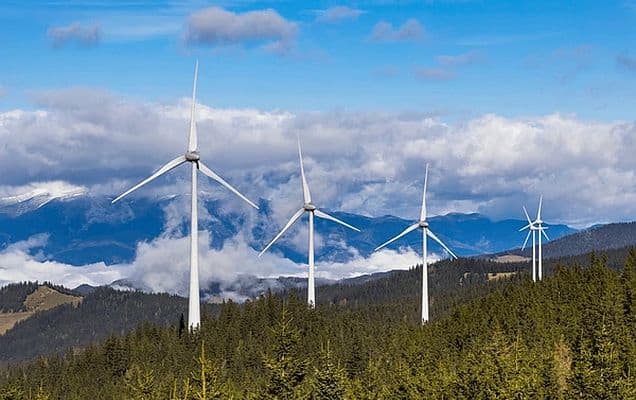
Energy is another key pillar of our partnership. The global transition towards diversified energy sources requires innovation, investment, and cooperation. India and Italy are collaborating from renewable energy to hydrogen technologies, and from smart grids to resilient infrastructure. While India's push for becoming a hub for green hydrogen exports offers immense potential, it perfectly complements Italy's advanced technology in renewable infrastructure and its strategic role as an energy gateway for Europe. Our collaboration along with other countries in key India-led initiatives - International Solar Alliance (ISA), Coalition for Disaster Resilient Infrastructure (CDRI) and Global Biofuels Alliance (GBA) - is also important in this context.

Physical, digital and human connectivity is the thread that weaves us together. Both India and Italy are located at the very heart of two crucial hubs of the global economy, the Indo-Pacific and the Mediterranean-regions that cannot be viewed as separate spheres, but instead as increasingly interconnected spaces.

As a matter of fact, we are witnessing the emergence of what might be termed the Indo-Mediterranean, an important corridor for trade, technology, energy, data and ideas tying the Indian Ocean to Europe. It is precisely within this interconnected space that our bond naturally evolves into a special strategic partnership-one that bridges two continents and shapes new global dynamics.

In this context, the India-Middle East-Europe Economic Corridor represents a vision aimed at connecting our regions through modern transport and infrastructure, digital networks, energy systems, and resilient supply chains. India and Italy are also committed to working together with other partners to make this vision a reality.

We can address our shared challenges by drawing upon the profound partnership and the enduring cultural ties between our nations. Within Indian culture, the concept of "Dharma" evokes the sense of responsibility that must guide our actions, whilst the principle of "Vasudhaiva Kutumbakam" - the world is one family-resonates powerfully in this interconnected digital age. Such values find a natural echo in Italy's humanist tradition, rooted in the Renaissance, which highlights the dignity of each individual and the power of culture to unite peoples and societies.

Our shared vision, therefore, aims to lay the foundation for a strong and forward-looking India-Italy partnership with our people at the centre.

(By Narendra Modi, Prime Minister of India and Giorgia Meloni, Prime Minister of Italy)