A New Security Paradigm for Women Empowerment

Published By : Admin | March 22, 2019 | 14:11 IST

When it comes to women, security is typically conceived in terms of physical safety and security and not beyond. However, in a New India, the government has gone beyond the physicality to address women’s issues and taken a more holistic view of things.Now the government has sought to foster women empowerment in a comprehensive programme that deals with five components of security: health security of the mother and child, social security, financial security, security of the future through educational and financial programmes through growing up years, and last but not the least, the physical safety of women.

Securing Health of the Mother and Child

Through a slew of programmes, the scheme aims at complete health of mother and child throughpre, during and post-pregnancy stages by ensuring safe pregnancythroughtimely vaccination of mother and child backed by adequate nutritional support even extending benefits such as sufficient number of maternity leaves for working women.


Social Security & Empowerment

Again, through a host of programmes such as building of toilets in schools and public spaces, givingpriority in housing, ensuring smokeless kitchens through free gas cylinders, changing of passport rules in their favour, and the legislative initiative on the regressive triple talaq, the government has made sure that the women empowerment no more remains a mere slogan.


Financial Security & Empowerment

Recognising the financial need of the New India’s woman, this government has ensured institutional credit to encourage entrepreneurship among women, financially securing future of girl children, accessing banking and financial institutions while encouraging rise of SHGs in rural areas andensuring higher take-home salaries for working women.


Securing Future of Girl Child

By way of a series of landmark initiatives, the government has attempted to changepeople’s mindsets encouraging a culture where the birth of a daughter is a matter of pride and girl child’s education becomes a priority supported through scholarships while making her future financially secure through opening up of bank accounts in her name.


Women Safety

Recognising the gravity of women safety today, the government has sought to introduce tough legislations against child rape and trafficking while enabling them to file complaints on several platforms including online along with a phone-based application for instant security alerts – all backed by a dedicated fund towards the cause of their safety.

Thus, through the above measures, the government has expanded the idea of women’s security to a more comprehensive security paradigm, where they feel safe, secure and free to pursue their dreams.

Explore More
ശ്രീരാമജന്മഭൂമി ക്ഷേത്രത്തിലെ പതാക ഉയർത്തൽ ഉത്സവത്തിനിടെ പ്രധാനമന്ത്രി നടത്തിയ പ്രസം​ഗം

ജനപ്രിയ പ്രസംഗങ്ങൾ

ശ്രീരാമജന്മഭൂമി ക്ഷേത്രത്തിലെ പതാക ഉയർത്തൽ ഉത്സവത്തിനിടെ പ്രധാനമന്ത്രി നടത്തിയ പ്രസം​ഗം
PM Modi pens heartfelt letter to BJP's new Thiruvananthapuram mayor; says

Media Coverage

PM Modi pens heartfelt letter to BJP's new Thiruvananthapuram mayor; says "UDF-LDF fixed match will end soon"
NM on the go

Nm on the go

Always be the first to hear from the PM. Get the App Now!
...
6 Years of Jal Jeevan Mission: Transforming Lives, One Tap at a Time
August 14, 2025
Jal Jeevan Mission has become a major development parameter to provide water to every household.” - PM Narendra Modi

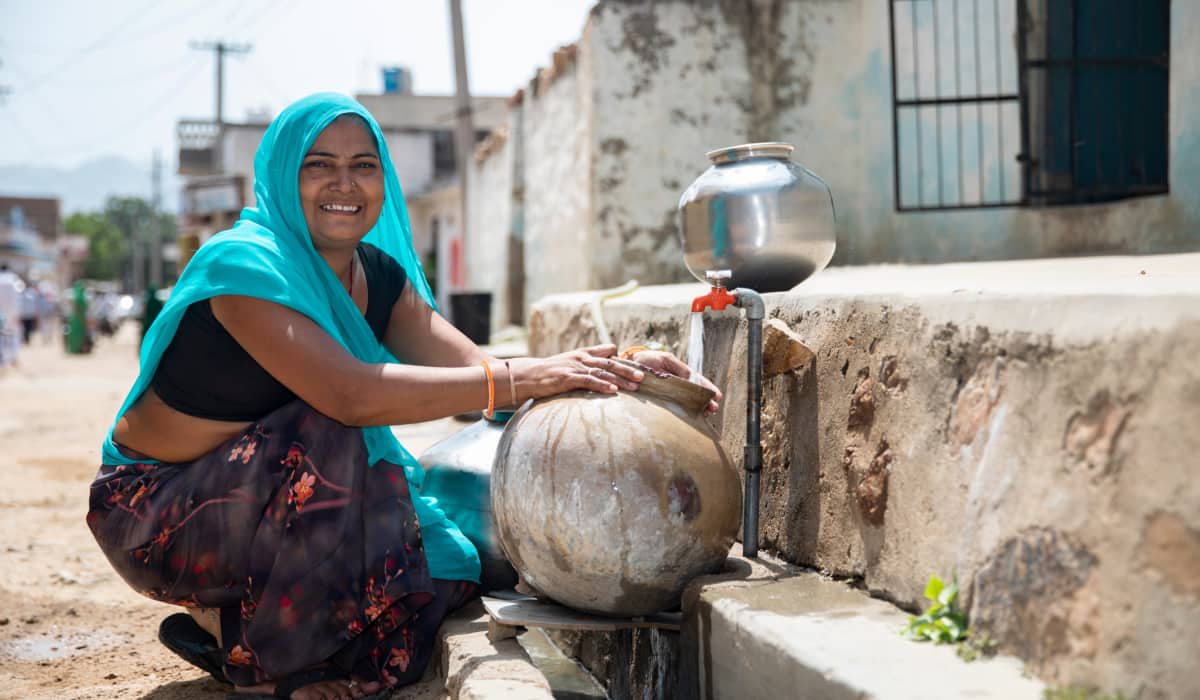
For generations, the sight of women carrying pots of water on their heads was an everyday scene in rural India. It was more than a chore, it was a necessity that was an integral part of their everyday life. The water was brought back, often just one or two pots which had to be stretched for drinking, cooking, cleaning, and washing. It was a routine that left little time for rest, education, or income-generating work, and the burden fell most heavily on women.

Before 2014 water scarcity, one of India’s most pressing problems, was met with little urgency or vision. Access to safe drinking water was fragmented, villages relied on distant sources, and nationwide household tap connections were seen as unrealistic.

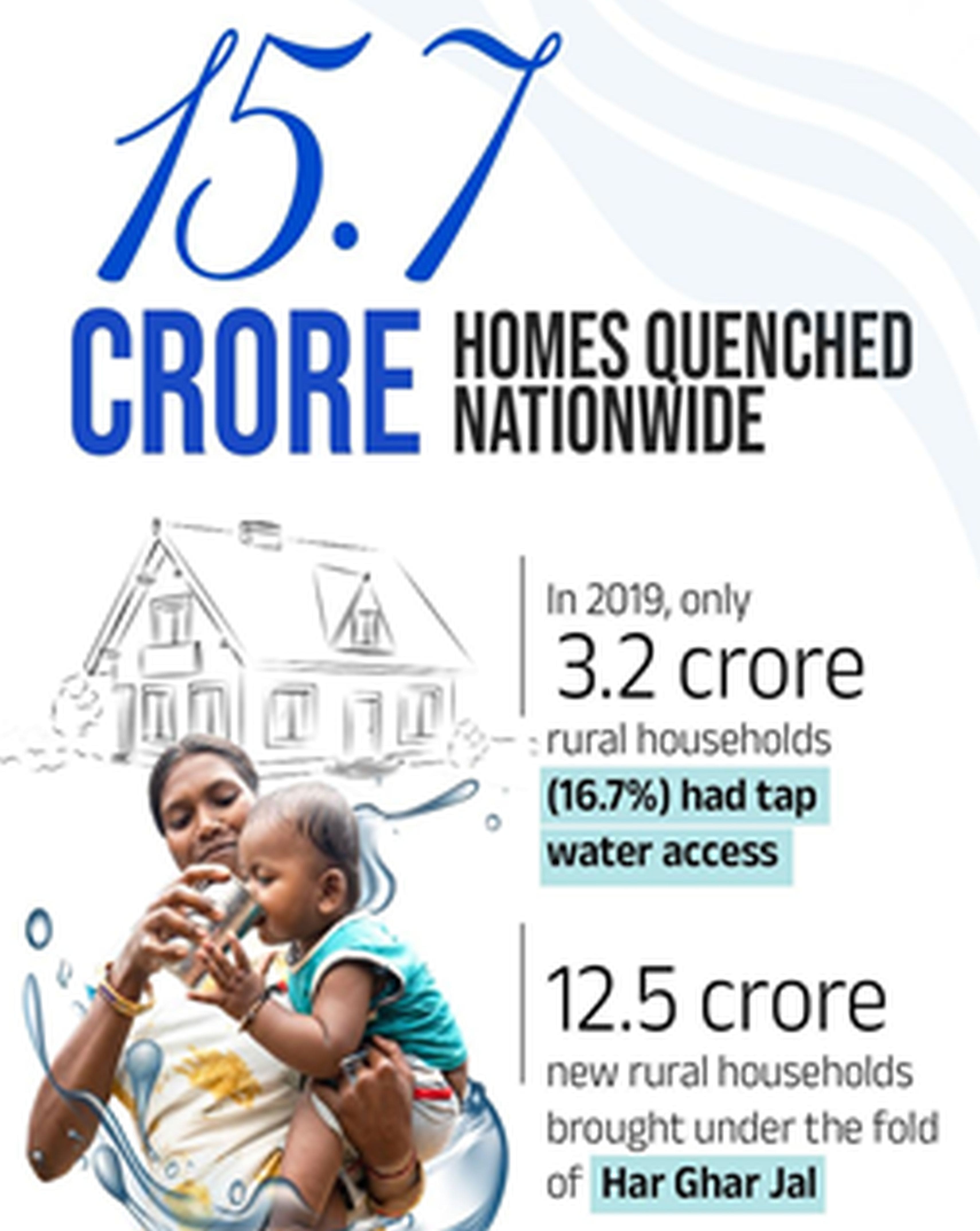
This reality began to shift in 2019, when the Government of India launched the Jal Jeevan Mission (JJM). A centrally sponsored initiative which aims at providing a Functional Household Tap Connection (FHTC) to every rural household. At that time, only 3.2 crore rural households, a modest 16.7% of the total, had tap water. The rest still depended on community sources, often far from home.

As of July 2025, the progress under the Har Ghar Jal program has been exceptional, with 12.5 crore additional rural households connected, bringing the total to over 15.7 crore. The program has achieved 100% tap water coverage in 200 districts and over 2.6 lakh villages, with 8 states and 3 union territories now fully covered. For millions, this means not just access to water at home, but saved time, improved health, and restored dignity. Nearly 80% of tap water coverage has been achieved in 112 aspirational districts, a significant rise from less than 8%. Additionally, 59 lakh households in LWE districts have gained tap water connections, ensuring development reaches every corner. Acknowledging both the significant progress and the road ahead, the Union Budget 2025–26 announced the program’s extension until 2028 with an increased budget.

The Jal Jeevan Mission, launched nationally in 2019, traces its origins to Gujarat, where Narendra Modi, as Chief Minister, tackled water scarcity in the arid state through the Sujalam Sufalam initiative. This effort formed a blueprint for a mission that would one day aim to provide tap water to every rural household in India.

Though drinking water is a State subject, the Government of India has taken on the role of a committed partner, providing technical and financial support while empowering States to plan and implement local solutions. To keep the Mission on track, a strong monitoring system links Aadhaar for targeting, geo-tags assets, conducts third-party inspections, and uses IoT devices to track village water flow.

The Jal Jeevan Mission’s objectives are as much about people as they are about pipes. By prioritizing underserved and water-stressed areas, ensuring that schools, Anganwadi centres, and health facilities have running water, and encouraging local communities to take ownership through contributions or shramdaan, the Mission aims to make safe water everyone’s responsibility..

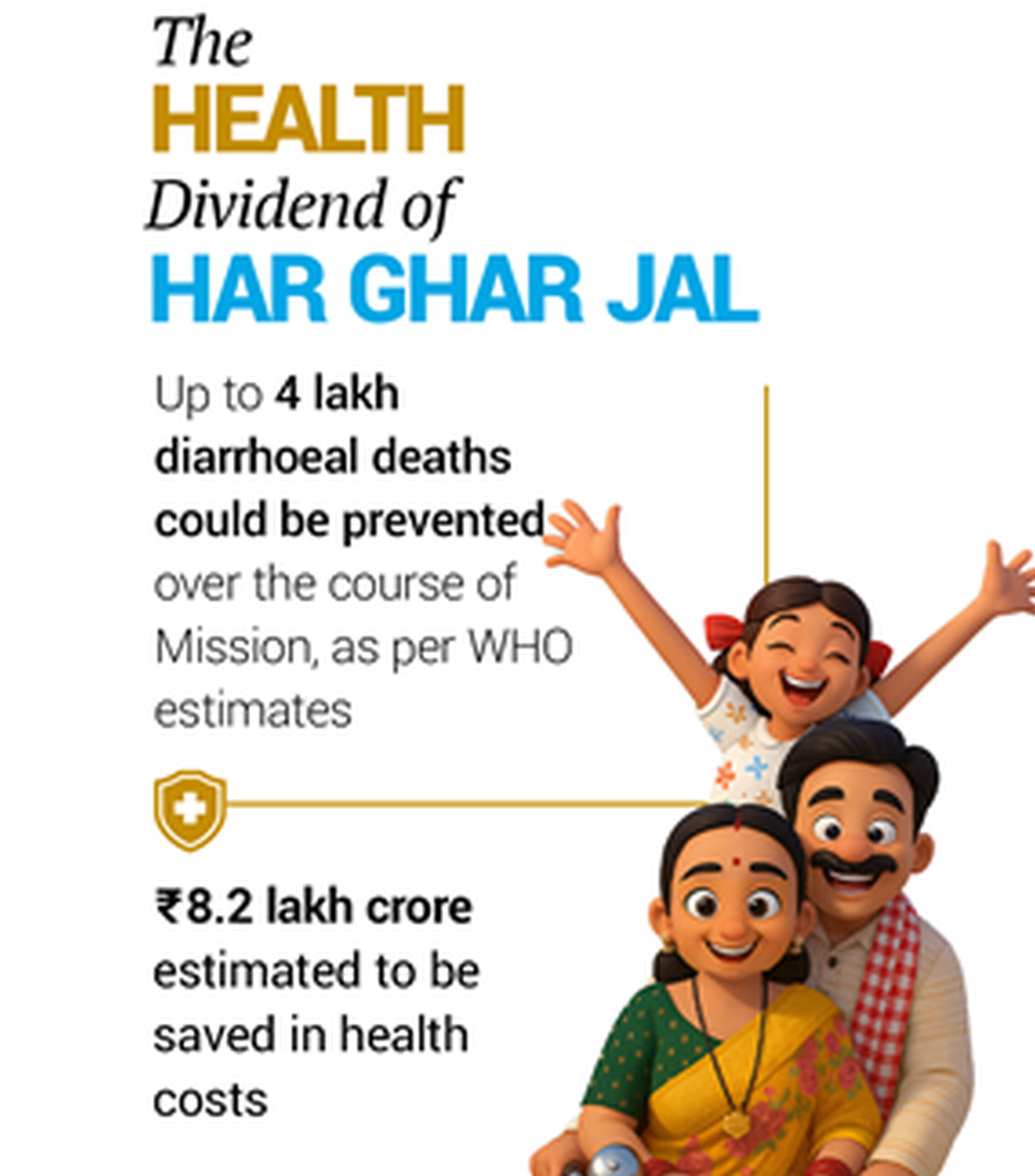
The impact reaches far beyond convenience. The World Health Organization estimates that achieving JJM’s targets could save over 5.5 crore hours each day, time that can now be spent on education, work, or family. 9 crore women no longer need to fetch water from outside. WHO also projects that safe water for all could prevent nearly 4 lakh deaths from diarrhoeal disease and save Rs. 8.2 lakh crores in health costs. Additionally, according to IIM Bangalore and the International Labour Organization, JJM has generated nearly 3 crore person-years of employment during its build-out, with nearly 25 lakh women are trained to use Field testing Kits.

From the quiet relief of a mother filling a glass of clean water in her kitchen, to the confidence of a school where children can drink without worry, the Jal Jeevan Mission is changing what it means to live in rural India.