Prime Minister Narendra Modi to address PM SVANidhi Beneficiaries in Delhi

Published By : Admin | March 13, 2024 | 19:10 IST
PM to distribute loans under the scheme to 1 lakh street vendors
PM to lay foundation stone of two additional corridors of Delhi Metro’s Phase 4
These corridors are from Lajpat Nagar – Saket-G Block and Inderlok – Indraprastha

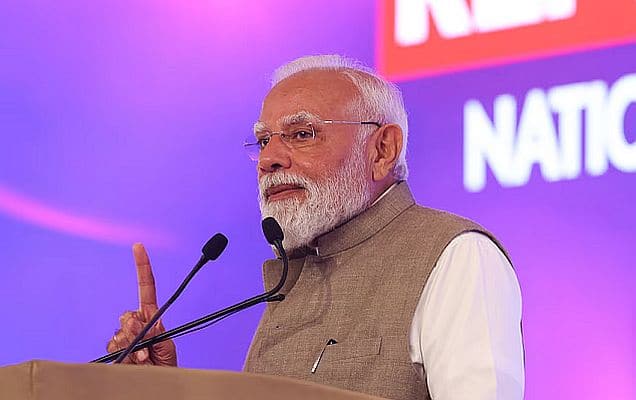
Prime Minister Shri Narendra Modi will address beneficiaries of PM SVANidhi scheme on 14th March at 5 PM at JLN Stadium in Delhi. He will also distribute loans under the scheme to 1 lakh street vendors (SVs), including 5,000 SVs from Delhi on this occasion. Prime Minister will also lay the foundation stone of two additional corridors of Delhi Metro’s Phase 4 during the programme.

Guided by the vision of the Prime Minister to provide economic support to the marginalised sections, PM SVANidhi was launched on 1st June, 2020 amidst the global economic crisis caused by the pandemic. It has proven to be transformative for the marginalised communities of street vendors. Till now, more than 82 lakh loan, amounting to over Rs. 10,978 crore, have been disbursed to more than 62 lakh street vendors across the country. Delhi alone has witnessed the distribution of nearly 2 lakh loans, amounting to Rs. 232 crores. The scheme continues to be a beacon of financial inclusion and holistic welfare for those who have been historically underserved.

During the programme, Prime Minister will also lay the foundation stone of two additional corridors of Delhi Metro: Lajpat Nagar – Saket-G Block and Inderlok – Indraprastha. These corridors will together be of more than 20 Km length and will help improve connectivity and further reduce traffic congestion.

The stations on Lajpat Nagar to Saket G- Block corridor will include: Lajpat Nagar, Andrews Ganj, Greater Kailash – 1, Chirag Delhi, Pushpa Bhawan, Saket District Centre, Pushp Vihar, Saket G – Block. The stations on Inderlok – Indraprastha corridor will include Inderlok, Daya Basti, Sarai Rohilla, Ajmal Khan Park, Nabi Karim, New Delhi, LNJP Hospital, Delhi Gate, Delhi Sachivalaya, Indraprastha.

Explore More
ಶ್ರೀರಾಮ ಜನ್ಮಭೂಮಿ ಮಂದಿರದ ಧ್ವಜಾರೋಹಣ ಉತ್ಸವ ಉದ್ದೇಶಿಸಿ ಪ್ರಧಾನಮಂತ್ರಿ ಅವರ ಭಾಷಣ

ಜನಪ್ರಿಯ ಭಾಷಣಗಳು

ಶ್ರೀರಾಮ ಜನ್ಮಭೂಮಿ ಮಂದಿರದ ಧ್ವಜಾರೋಹಣ ಉತ್ಸವ ಉದ್ದೇಶಿಸಿ ಪ್ರಧಾನಮಂತ್ರಿ ಅವರ ಭಾಷಣ
India records highest-ever startup surge with 55,200 recognised in FY26

Media Coverage

India records highest-ever startup surge with 55,200 recognised in FY26
NM on the go

Nm on the go

Always be the first to hear from the PM. Get the App Now!
...
Cabinet approves Continuation of Pradhan Mantri Gram Sadak Yojana-III till March 2028
April 18, 2026

The Union Cabinet, chaired by the Prime Minister Shri Narendra Modi, today has given its approval for the continuation of Pradhan Mantri Gram Sadak Yojana-III (PMGSY-III) beyond March 2025 upto March 2028. It involves consolidation of Through Routes and Major Rural Links connecting habitations to Gramin Agricultural Markets (GrAMs), Higher Secondary Schools and Hospitals. The revised outlay of the scheme will be Rs.83,977 crore.

The Cabinet further, amongst other things, approved the following:

  • Extension of timeline till March 2028 for completion of roads and bridges in plain areas and roads in hilly areas.
  • Extension of timeline till March 2029 for completion of bridges in hilly areas.
  • Works sanctioned before 31.03.2025 but un-awarded till now may be taken up for tender/award.
  • Long Span Bridges (LSBs) (161 Nos. with estimated cost of Rs.961 crore) pending for sanction but lying on the alignment of already sanctioned roads may be sanctioned and tendered/awarded.
  • Revision of outlay to Rs. 83,977 crore from original outlay of Rs.80,250 crore.

Benefits:

The extension of the timeline of PMGSY-III will enable the full realization of its intended socio-economic benefits by ensuring completion of targeted upgradation of rural roads. It will significantly boost the rural economy and trade by enhancing market access for agricultural and non-farm products, reducing transportation time and costs, and thereby improving rural incomes. Improved connectivity will facilitate better access to education and healthcare institutions, ensuring timely delivery of essential services, particularly in remote and underserved areas.

The continued implementation will also generate substantial employment opportunities, both directly through construction activities and indirectly by promoting rural enterprises and services. Overall, the extension will contribute to inclusive and sustainable development by bridging the rural-urban divide and advancing the vision of Viksit Bharat 2047.