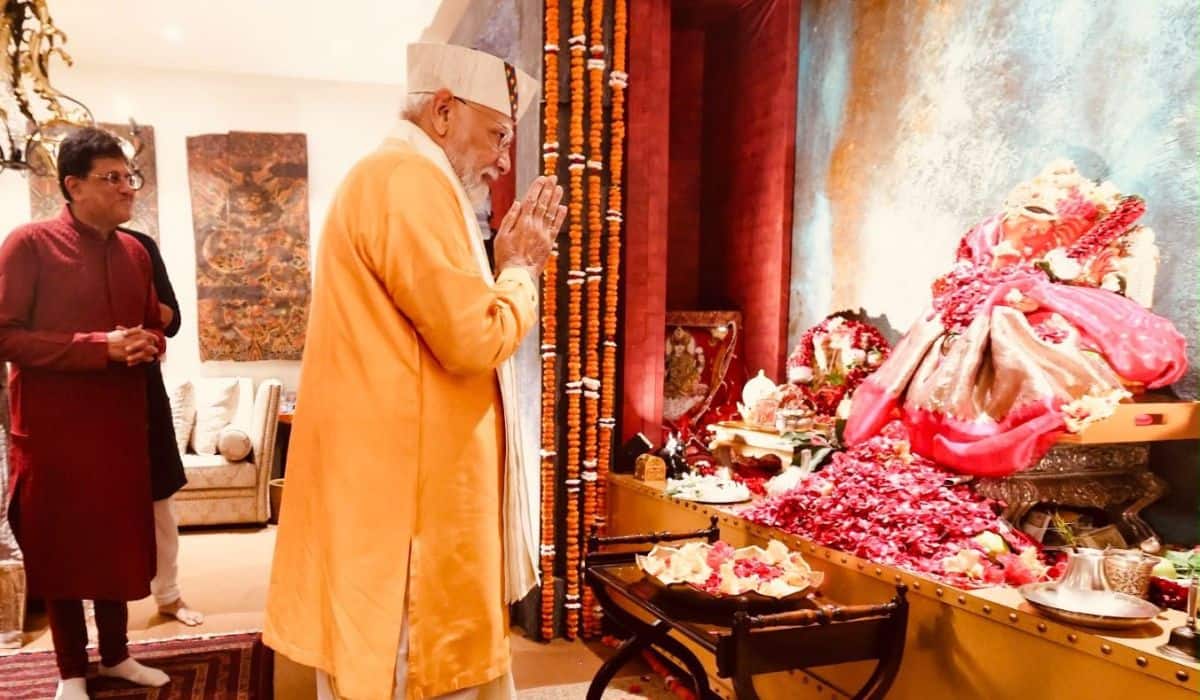
In the run-up to the Punjab assembly elections, PM Narendra Modi addressed a public meeting in Pathankot today. Paying tributes to Sant Ravidas Ji, PM Modi said, “Today is also the birth anniversary of Sant Ravidas Ji. Before coming here, I had the honour to visit and pray at Guru Ravidas Vishram Dham Temple in Delhi. Our government is working according to the words said by Sant Ravidas Ji.”

Speaking at a huge rally, he said, “Today due to Corona in several big countries, the poor are facing all kinds of problems, there is a problem of food. But, despite the pandemic, India is giving free ration to crores of citizens including the poor of Punjab. We made all the efforts and ensured that no one is left hungry. Welfare of the poor is our government's top priority.”

“I urge the people of Punjab to give us five years to work for you. Wherever BJP established itself, the remote-control family (Congress) from Delhi was wiped out. Wherever there is peace, appeasement has been given a farewell, the same farewell has to be given in Punjab also,” said PM Modi in Pathankot.
Citing the misdeeds that Congress did against the pride of Punjab and the country, PM Modi remarked, “When Pathankot was attacked by Pakistani terrorists, then the country was united on that sensitive occasion. But what were the Congress party leaders doing? They were raising questions on the bravery of the army. They were questioning on the martyrdom of our martyrs. And even on the anniversary of Pulwama attack, the people of Congress kept attacking them. Now, they are again asking for proof of the bravery of our army.”
PM Modi appealed the people of Punjab to vote for BJP on February 20, keeping in mind the security of the state. He said, “Vote for BJP on February 20 for peace and tranquillity in Punjab. Vote for BJP on February 20 for the development of Punjab. ‘Punjabiyat’ is of umpteen importance to us, while the Opposition views Punjab from the lens of 'Siyasat'. Hence, we got the privilege of developing the Kartarpur Sahib Corridor.”

Taking a dig at Congress and AAP, the PM reiterated, “Now the Congress party has also got 'Partner-in-Crime' to support their misdeeds. There are lots of similarities between both the parties. They together opposed building of Ram Temple in Ayodhya. If Congress is original copy, AAP is its xerox. One looted Punjab while the other one is involved in scam after scam in Delhi. Despite being 'Ek hi thali ke chatte batte' they (AAP & Congress) are playing 'noora kushti' in Punjab, pretending to be against each other.”

Highlighting the commitments fulfilled by his government, PM Modi said, “At present there is no double engine government in Punjab. Right now, only the engine of the central government is working. Even in these conditions, we are doing our best to build new highways, expressways, promote industries here in Punjab.”
Talking on farmers’ welfare, he said, “Record procurement of crops are being done from the farmers of Punjab at MSP. The amount of money that the BJP government has sent directly to the bank accounts of the farmers of Punjab has never happened before.”
During the rally, PM Modi urged everyone to vote of BJP and its alliance on this 20th February. In Punjabi he said, “‘Assi Majboor Nahi Majboot Punjab Banwange. Punjab Nu Mood Khushaal Banawange’. This time give a chance to the dreams of Punjab, give a chance to the Nawa Punjab.”
मैं पठानकोट की इस पवित्र धरती से मुक्तेश्वर महादेव मंदिर और अमृतसर के दुर्गयांना मंदिर को प्रणाम करता हूँ।
— narendramodi_in (@narendramodi_in) February 16, 2022
ये धरती हरिमंदिर साहिब और करतारपुर साहिब की भी धरती है।
इस पवितर धरती से मैं सभी गुरुओं को नमन करता हूँ: PM @narendramodi in Pathankot, Punjab
आज संत रविदास जी की जयंती भी है।
— narendramodi_in (@narendramodi_in) February 16, 2022
यहाँ आने से पहले मैं दिल्ली में गुरु रविदास विश्रामधाम मंदिर होकर आया हूँ: PM @narendramodi
दुनिया के बड़े-बड़े देशों में आज कोरोना की वजह से गरीब को हर तरह की दिक्कतें आ रही हैं, खाने-पीने की समस्या हो रही है।
— narendramodi_in (@narendramodi_in) February 16, 2022
लेकिन इसी संकट काल में भारत करोड़ों देशवासियों को मुफ्त में राशन उपलब्ध करा रहा है।
पंजाब के भी लाखों गरीबों को दो साल से मुफ्त राशन मुहैया कराया जा रहा है: PM
माझा की इस मिट्टी ने मुझे माँ जैसा प्यार दिया है, माँ जैसा स्नेह दिया है: PM @narendramodi in Pathankot, Punjab
— narendramodi_in (@narendramodi_in) February 16, 2022
जनता जब भाजपा को मौका देती है, फिर न जनता हमारा साथ छोड़ती है और न हम जनता की सेवा का काम छोड़ते हैं: PM @narendramodi
— narendramodi_in (@narendramodi_in) February 16, 2022
जहां एक बार भाजपा के पैर जम जाते हैं, वहाँ दिल्ली में बैठकर रिमोट कंट्रोल से सरकार चलाने वाले परिवार की छुट्टी हो जाती है।
— narendramodi_in (@narendramodi_in) February 16, 2022
मतलब, जहां विकास आया, वहाँ वंशवाद का हुआ सफाया!
जहां शांति और सुरक्षा आई, वहाँ तुष्टीकरण और भ्रष्टाचार की विदाई!
यही विदाई इस बार पंजाब में भी देनी है: PM
इन्होंने सेना के शौर्य पर सवाल उठाए या नहीं उठाए?
— narendramodi_in (@narendramodi_in) February 16, 2022
इन्होंने शहीदों की शहादत पर कीचड़ उछाला या नहीं उछाला?
और पुलवामा हमले की बरसी पर भी कांग्रेस के लोग बाज नहीं आ रहे हैं।
वो हमारी सेना की बहादुरी का फिर से सबूत मांग रहे हैं: PM @narendramodi
काँग्रेस ने पंजाब और देश की शान के खिलाफ क्या क्या कुकृत्य नहीं किए!
— narendramodi_in (@narendramodi_in) February 16, 2022
इसी पठानकोट पर जब पाकिस्तानी आतंकियों ने हमला किया था, तब देश उस संवेदनशील मौके पर एकजुट था!
लेकिन काँग्रेस पार्टी के नेता क्या कर रहे थे? - PM @narendramodi
20 फरवरी को पंजाब की सुरक्षा को ध्यान में रखते हुए भाजपा को, एनडीए को वोट देना है।
— narendramodi_in (@narendramodi_in) February 16, 2022
20 फरवरी को पंजाब में शांति और अमन के लिए भाजपा को वोट देना है।
20 फरवरी को पंजाब के विकास के लिए भाजपा को वोट देना है: PM @narendramodi
हम पंजाब को पंजाबियत की नज़र से देखते हैं, हमारे विरोधी पंजाब को सियासत के चश्मे से देखते हैं।
— narendramodi_in (@narendramodi_in) February 16, 2022
इसलिए, हमें करतारपुर साहिब कॉरिडॉर के विकास का सौभाग्य मिला: PM @narendramodi
हम सिख दंगों के आरोपियों को सजा दिलवाते हैं। ये उन्हें अपनी पार्टी में बड़े ओहदे देते हैं।
— narendramodi_in (@narendramodi_in) February 16, 2022
यही वो लोग हैं, जिन्होंने राममंदिर के निर्माण को रोकने के लिए पूरी ताकत लगा दी थी।
काशी विश्वनाथ धाम बना, तो उस पुण्य काम का भी ये लोग विरोध कर रहे थे: PM @narendramodi
जब भारत के जांबांज अपना शौर्य दिखाते हैं, तो दूसरी पार्टी के नेता वही बोलते हैं जो पाकिस्तान से बोला जाता है।
— narendramodi_in (@narendramodi_in) February 16, 2022
एक ने पंजाब के युवाओं को नशे के जाल में धकेला, दूसरी पार्टी, दिल्ली के युवाओं को शराब का लती बना रही है: PM @narendramodi
काँग्रेस पार्टी की करतूतों का साथ देने के लिए अब उन्हें ‘पार्टनर- इन- क्राइम’ भी मिल गया है।
— narendramodi_in (@narendramodi_in) February 16, 2022
आप देखिए, कितनी समानता है, दोनों दलों में।
जब अयोध्या में राम मंदिर बनता है, तो दोनों मिलकर विरोध करते हैं: PM @narendramodi
एक ने पंजाब को लूटा, दूसरी दिल्ली में एक के बाद एक घोटाले कर रही है।
— narendramodi_in (@narendramodi_in) February 16, 2022
एक ही थाली के चट्टे-बट्टे होने के बावजूद, अब ये दोनों पार्टियां मिलकर पंजाब में आमने-सामने होने का दिखावा कर रही हैं।
जबकि सच्चाई ये है कि कांग्रेस अगर ओरिजनल है, दूसरी उसकी फोटो कॉपी है: PM @narendramodi
अभी पंजाब में डबल इंजन की सरकार नहीं है।
— narendramodi_in (@narendramodi_in) February 16, 2022
अभी केवल केंद्र सरकार का इंजन काम कर रहा है।
इन स्थितियों में भी हमने पंजाब में नए हाइवेज बनाने, एक्सप्रेसवेज बनाने, यहाँ उद्योगों को बढ़ावा देने का पूरा प्रयास किया: PM @narendramodi
पंजाब के किसानों की फसल की MSP पर रिकॉर्ड खरीद हो रही है।
— narendramodi_in (@narendramodi_in) February 16, 2022
जितना पैसा भाजपा सरकार ने सीधे पंजाब के किसानों के बैंक खातों में भेजा है, वो पहले कभी नहीं हुआ: PM @narendramodi