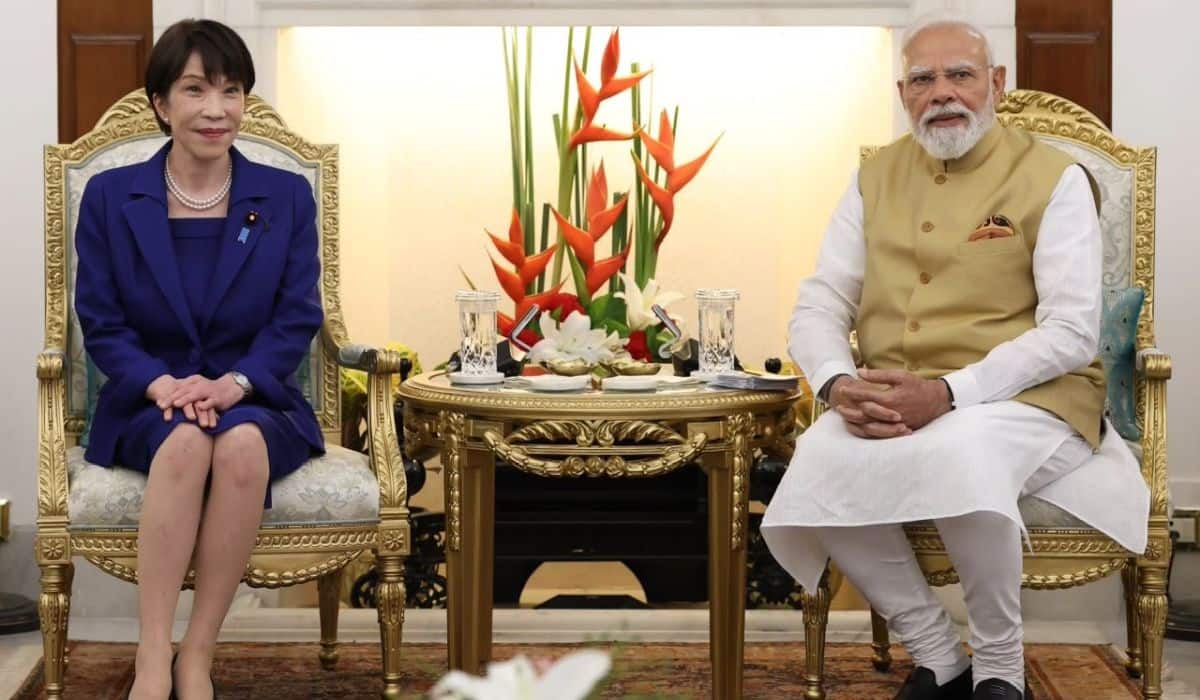
The Prime Minister, Shri Narendra Modi addressed the Economic Times Global Business Summit today. Broad theme of the Global Business Summit 2020 is ‘Collaborate to Create: Sustainable Growth in a Fractured World’.
Addressing the delegates from around the world, the Prime Minister said that the vision of Collaborate to create for Sustainable Growth, is a need of the day and also the basis for the future. “The idea of Collaborate To Create is as old as it is relevant,” he added. He stressed that new challenges emerge in every era which further strengthens our spirit of Collaborate To Create. He said today, a huge challenge in the form of "Covid-19 Novel Coronavirus" is in front of the world. “We have to face this challenge together and emerge victorious with the resolve power of Collaborate To Create,” he added.

The Prime Minister said there was a time when things used to run according to the predictions of a particular class and their opinion was considered to be the final. But with the development of technology and the 'Democratization' of Discourse, now Opinion Matter is done by people of every section of society, he added.
The Prime Minister said the path in front of us was to walk on the same path as has been going on before, or to make our own path. We created a new route, moved ahead with a new approach and gave the highest priority to people's aspirations, he added.
Shri Modi emphasized that there is no harm in saying the right thing. But a class is hated, irritated by those who follow Doing the Right Things. So when there is a change in the Status Quo, such people start to see some kind of disruptions, he added.
PM contrasted that those who enlighten the world about refugee rights oppose the CAA for refugees. Those who cry for the constitution day and night, oppose the implementation of the constitution in Jammu and Kashmir, for removing the temporary system like Article 370.
Referring to the quote in RamcharitManas “It's easier to preach than really act”, the Prime Minister said nation building, development of the country, governance are conviction and not convenience. “Conviction To Do The Right Thing, Conviction To Break The Status Quo,” he added.

The Prime Minister listed the actions taken by the government to free all the systems of the country from the imprisonment of old ideas and the Convenience of Inaction, like DBT, RERA legislation, IBC, Mudra scheme, creation of the post of Chief of Defense Staff, giving 10 percent reservation to the poor of the general class.
The Prime Minister said since 2014, the country has moved ahead with Cooperation in Spirit, Collaboration in Action and Combination of Ideas. “Today, India is creating a model of Sustainable Growth, which is beneficial for the whole world. 21st century India is learning a lot and is equally ready to benefit the development of the people of the country,” he added.
The Prime Minister listed out the achievements which were clearly visible in different sectors in the last six years, like the pace of Highways Construction, the pace of Railway electrification, capacity addition in airports, increased cargo handling at our Major Ports and reduced turnaround time at Major Ports. The Prime Minister stressed that this was achieved by removing silos in government departments and emphasizing collaboration.
The Prime Minister said that economic or social, today the country is going through a big phase of change. In the last few years, India has become an even stronger part of the Global Economy System in spite of the weak Global Economy, he added. “Recently, India has become the 5th largest economy in the world. Just 6-7 years ago we were at number 11. In such a short time we have come to 5th,” he said.
The Prime Minister announced the government is working at four different levels to achieve the goal of an economy of $ 5 trillion.
First - Connect with private sector
Second-Fair Competition
Third- Wealth Creation
And fourth - Deletion of Archaic Laws
He further said that the Government has prepared a roadmap for investment of more than Rs 100 lakh crore in the field of infrastructure and chosen a path of Powerful Progressive Push (PPP) for the development of the country through Public-Private Partnership (PPP) !!! “Government is opening more and more sectors of the economy to the private sector,” he added. He said that to enhance Fair Competition, both Corruption and Cronyism are strictly dealt with. He stressed that the Government has focused on Simplification, Rationalization, Transparency. The Prime Minister said that today, India is among the major countries in the world where Corporate Tax is the lowest and has improved 77 ranks in Ease of Doing Business's rankings in just 5 years. “In 2019, the Foreign Direct Investment of about 48 Billion Dollar came in the country. This growth was more than 16 percent. Similarly, Private Equity and Venture Capital Investment of 19 Billion Dollars came to India last year. It also grew more than 53%,” he added.
The Prime Minister said that the government is in constant contact with all stakeholders, taking feedback continuously, taking major decisions at every level. By liberating the country from the status quo, we are moving towards creation by cooperation not only at the national level but also internationally, he added. The Prime Minister also listed out the role of India in building international level institutions like International Solar Alliance, Coalition for Disaster Resilient Infrastructure.
The Prime Minister said that the 21st century itself is full of many possibilities. “Amidst these possibilities, there is a lack of a Common Global Voice today. Today, the question before the whole world is to somehow adjust to the changing circumstances or to develop a new path in a new way,” he added.
The Prime Minister said that in the midst of changing global conditions, India has also made very wide changes. There was a period when India was neutral by creating equal distance between countries. Even today India is neutral, but by equal friendship, he added. “Keeping distance in that period, an attempt was made to escape. Today, we are trying to keep friendship and walk together. This is the very essence of India's foreign policy, today's economic policy of India,” he added.
The Prime Minister concluded with the quote of Mahatma Gandhi ji "I want the rise of India so that the whole world can benefit from it" and said that this quote has the Indian thinking of Globalisation and the mantra of collaboration for the future.
विचारों के इस प्रवाह में जो Common Thread है, वो है - ‘Collaborate To Create’.
— PMO India (@PMOIndia) March 6, 2020
Sustainable Growth के लिए ‘Collaborate To Create’ का ये विजन, आज की आवश्यकता भी है और भविष्य का आधार भी: PM @narendramodi
हर युग में नए-नए challenges सामने आते हैं - हमारी ‘Collaborate To Create’ की spirit को test करने के लिए उसे और मज़बूत करने के लिए।
— PMO India (@PMOIndia) March 6, 2020
जैसे आज “Covid-19 नोवल करोंना वाइरस” के रूप में एक बहुत बड़ा चैलेंज दुनिया के सामने है: PM @narendramodi
एक दौर ऐसा था जब एक खास वर्ग के Predictions के अनुसार ही चीजें चला करती थीं।
— PMO India (@PMOIndia) March 6, 2020
जो राय उसने दे दी, वही फाइनल समझा जाता था।
लेकिन Technology के विकास से और Discourse के ‘Democratization’ से, अब आज समाज के हर वर्ग के लोगों की Opinion Matter करती है: PM @narendramodi
हमारे सामने मार्ग था कि पहले से जो चलता आ रहा है, उसी मार्ग पर चलें या फिर अपना नया रास्ता बनाएं, नई अप्रोच के साथ आगे बढ़ें।
— PMO India (@PMOIndia) March 6, 2020
हमने नया मार्ग बनाया, नई अप्रोच के साथ आगे बढ़े और इसमें सबसे बड़ी प्राथमिकता दी- लोगों के Aspirations को: PM @narendramodi
सही बात कहने में कोई बुराई भी नहीं हैं।
— PMO India (@PMOIndia) March 6, 2020
लेकिन इस वर्ग को ऐसे लोगों से नफरत है, चिढ़ है, जो ‘Doing The Right Things’ पर चलते हैं।
इसलिए जब Status Quo में बदलाव आता है, तो ऐसे लोगों को कुछ खास तरह के Disruptions दिखाई देने लगते हैं: PM @narendramodi
जो लोग दुनिया भर को शरणार्थी अधिकारों के लिए ज्ञान देते हैं, वो शरणार्थियों के लिए बने CAA का विरोध करते हैं।
— PMO India (@PMOIndia) March 6, 2020
जो लोग दिन रात संविधान की दुहाई देते हैं, वो आर्टिकल 370 जैसी अस्थाई व्यवस्था हटाकर, जम्मू-कश्मीर में पूरी तरह संविधान को लागू करने का विरोध करते हैं: PM @narendramodi
हमारे लिए राष्ट्र निर्माण, देश का विकास, Good Governance, Convenience का विषय नहीं, बल्कि हमारा Conviction है।
— PMO India (@PMOIndia) March 6, 2020
Conviction To Do The Right Things, Conviction To Break The Status Quo: PM @narendramodi
Direct Benefit Transfer के जरिए हम Status Quo में बहुत बड़ा बदलाव लाए और हजारों करोड़ रुपए को गलत हाथों में जाने से बचाए।
— PMO India (@PMOIndia) March 6, 2020
RERA कानून बनाकर हमने रीयल इस्टेट सेक्टर को कालेधन के बंधन से मुक्त करने का प्रयास किया, और मध्यम वर्ग की पहुंच, उसके सपनों के घर तक बनाई: PM @narendramodi
हमने Chief of Defence Staff (CDS ) बनाकर Status Quo बदला और हमारी सेनाओं में बेहतर Synergy और Collaboration को सुनिश्चित किया: PM @narendramodi
— PMO India (@PMOIndia) March 6, 2020
2014 के बाद से देश Co-Operation In Spirit, Collaboration In Action और Combination Of Ideas को लेकर आगे चला है।
— PMO India (@PMOIndia) March 6, 2020
आज भारत Sustainable Growth का एक ऐसा मॉडल Create कर रहा है, जो पूरे विश्व के लिए लाभकारी है: PM @narendramodi
अलग-अलग सेक्टरों पर, अलग-अलग क्षेत्रों में इसके परिणाम स्पष्ट दिखाई दे रहे हैं।
— PMO India (@PMOIndia) March 6, 2020
6 साल पहले देश में Highways Construction की Speed, per day करीब 12 किलोमीटर थी। आज ये 30 किलोमीटर के आसपास है: PM @narendramodi
ये 5-6 उदाहरण Connectivity से जुड़े हुए हैं। यहां इस हॉल में बैठे प्रत्येक व्यक्ति को मालूम है कि इसका कितना बड़ा प्रभाव Economic Activities पर पड़ता है।
— PMO India (@PMOIndia) March 6, 2020
क्या इतना बड़ा परिवर्तन ऐसे ही हो गया?
नहीं: PM @narendramodi
Economic हो या Social, आज देश परिवर्तन के एक बड़े दौर से गुजर रहा है।
— PMO India (@PMOIndia) March 6, 2020
बीते कुछ वर्षों में भारत Global Economy System का और भी मजबूत अंग बना है।
लेकिन अलग-अलग कारणों से अंतर्राष्ट्रीय स्थितियां ऐसी हैं कि Global Economy कमजोर और कठिन हालत में है: PM @narendramodi
ये भी एक अनुभव रहा है जिस क्षेत्र में प्राइवेट सेक्टर को Compete करने की छूट दी जाती है, वो तेजी से आगे बढ़ता है।
— PMO India (@PMOIndia) March 6, 2020
इसलिए हमारी सरकार अर्थव्यवस्था के ज्यादा से ज्यादा सेक्टर्स को Private Sector के लिए खोल रही है: PM @narendramodi
बैंकिंग हो, FDI पॉलिसीज हों, या फिर Natural Resources का Allotment, क्रोनिज्म को हर जगह से हटाया जा रहा है।
— PMO India (@PMOIndia) March 6, 2020
हमने ध्यान दिया है – Simplification पर, Rationalization पर, Transparency पर: PM @narendramodi
2019 में देश में करीब 48 Billion Dollar का Foreign Direct Investment आया। ये ग्रोथ रही 16 परसेंट से ज्यादा।
— PMO India (@PMOIndia) March 6, 2020
इसी तरह भारत में पिछले साल 19 Billion Dollars का Private Equity And Venture Capital Investment आया। इसमें भी ग्रोथ रही 53 परसेंट से ज्यादा: PM @narendramodi
हमारी सरकार सारे स्टेकहोल्डर्स के साथ निरंतर संपर्क में है, लगातार फीडबैक लेते हुए, हर स्तर पर बड़े फैसले ले रही है।
— PMO India (@PMOIndia) March 6, 2020
Status Quo से देश को मुक्ति दिलाते हुए, हम राष्ट्रीय स्तर पर ही नहीं, बल्कि अंतरराष्ट्रीय स्तर पर भी Collaboration से Creation की तरफ बढ़ रहे हैं: PM @narendramodi
21वीं सदी अपने आप में बहुत सी संभावनाओं से भरी हुई है।
— PMO India (@PMOIndia) March 6, 2020
इन संभावनाओं के बीच, आज एक Common Global Voice की कमी महसूस हो रही है।
एक ऐसी Voice, जिसमें स्वर भले अलग-अलग हों, लेकिन ये मिलकर एक सुर का निर्माण करें, एक सुर में अपनी आवाज उठाएं: PM @narendramodi
एक समय था जब लोग समान दूरी बनाकर तटस्थ थे, हम समान दोस्ती करके तटस्थ हैं।
— PMO India (@PMOIndia) March 6, 2020
उस कालखंड में दूरी रखकर, बचने की कोशिश की गई।
आज हम दोस्ती रखकर, साथ चलने की कोशिश कर रहे हैं: PM @narendramodi