

Your Excellency, Mr. President,
Distinguished delegates from both countries,
Friends from the media,
Namaskar!
First and foremost, on behalf of all Indians, I extend my heartfelt congratulations to His Excellency the President and the people of Maldives on the historic occasion of the 60th anniversary of their Independence.
On this historic occasion, I sincerely thank His Excellency the President for inviting me as the Guest of Honour.
This year also marks 60 years of diplomatic relations between India and the Maldives. However, the roots of our relationship are older than history itself and is as deep as the ocean. The commemorative stamp released today, featuring the traditional boats of both our countries is a reflection of the fact that we are not just neighbours, but also fellow voyagers on a shared journey.
Friends,
India is the closest neighbour of the Maldives. The Maldives holds a key place in both India’s "Neighbourhood First" policy and our MAHASAGAR vision. India also takes pride in being the Maldives’s most trusted friend. Be it natural disasters or pandemics, India has always stood by the Maldives as the ‘First Responder’. Whether it was ensuring the supply of essential commodities or supporting economic recovery post-COVID, India has always worked hand-in-hand with the Maldives.
For us, it is always friendship first.
Friends,
During President’s visit to India last October, we shared a vision for a comprehensive economic and maritime security partnership. That vision is now becoming a reality. As a result, our bilateral ties are reaching new heights, and several important projects have been inaugurated.
The four thousand social housing units built with India’s support will now mark a new beginning for many families in the Maldives — a place they can truly call home. Projects like the Greater Male Connectivity Project, the Addu Road Development Project, and the redevelopment of Hanimaadhoo International Airport will transform this entire region into a vital hub for transit and economic activity.
Very soon, with the launch of the ferry system, connectivity between the various islands will become even easier. After that, distances between islands will not be measured by GPS, but simply by ferry time!
To give a new momentum to our development partnership, we have decided to extend a Line of Credit of 565 million dollars — approximately five thousand crore rupees — to the Maldives. This will be used for infrastructure development projects aligned with the priorities of the Maldivian people.
Friends,
We have taken several steps to accelerate our economic partnership. To boost mutual investment, we will soon work towards finalizing a Bilateral Investment Treaty. Discussions on a Free Trade Agreement have also begun. Our goal now is — From paperwork to prosperity!
With the local currency settlement system, trade can now take place directly in Rupees and Rufiyaa. The rapid adoption of UPI in the Maldives will further strengthen both tourism and the retail sectors.
Friends,
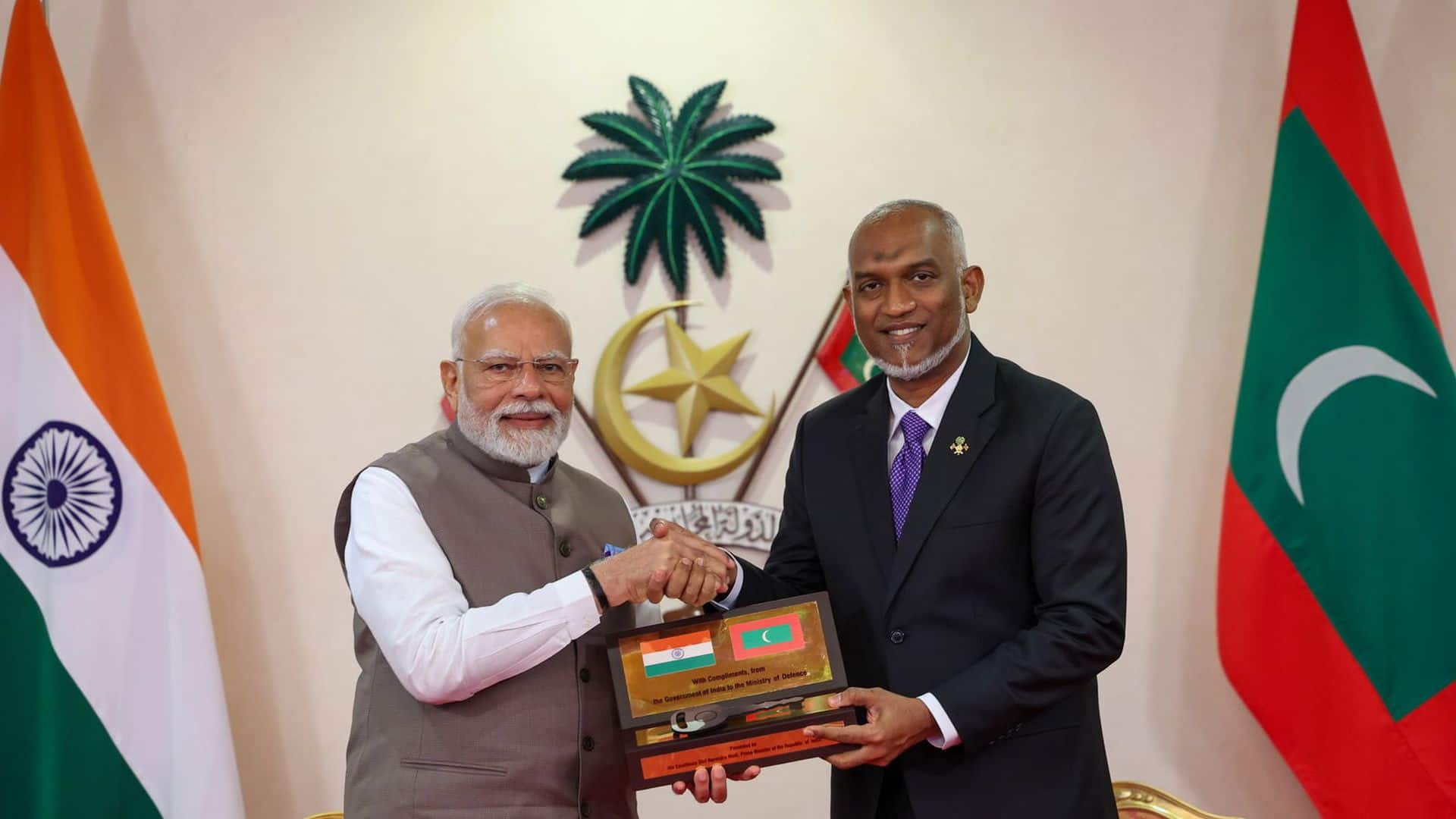
Cooperation in the field of defence and security is a reflection of mutual trust. The Ministry of Defence building, being inaugurated today, is a concrete symbol of that trust — an embodiment of our strong partnership.
Our collaboration will now also extend to weather science. No matter what the weather, our friendship will always remain bright and clear!
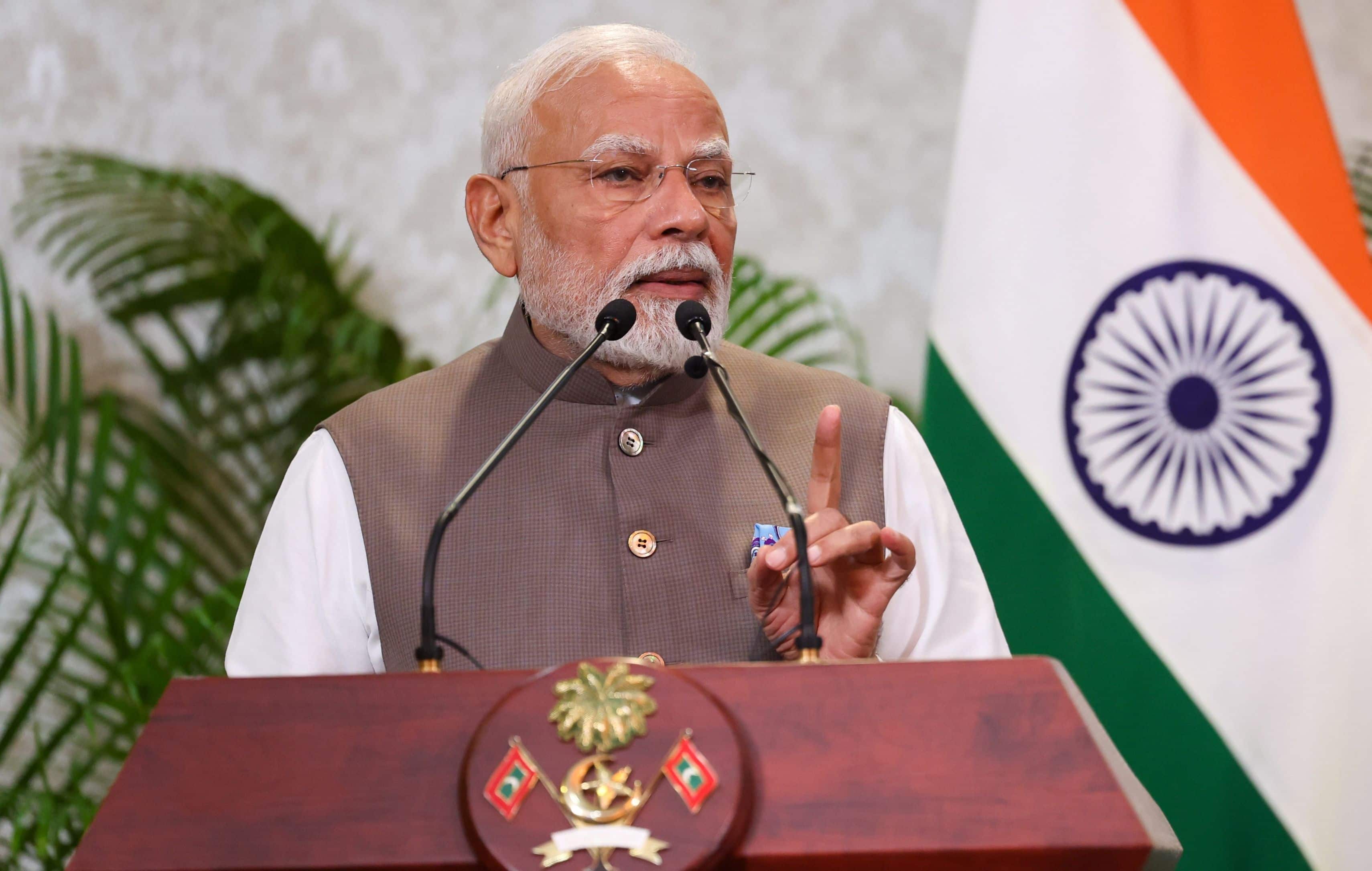
India will continue to support the development of Maldives' defence capabilities. Peace, stability, and prosperity in the Indian Ocean Region is our shared objective. Together, through the Colombo Security Conclave, we will strengthen regional maritime security.
Climate change is a major challenge for both our nations. We have agreed to promote renewable energy, and in this area, India will share its experience with the Maldives.
Excellency,
Once again, on this historic occasion, I extend my heartfelt congratulations to you and the people of Maldives. I also thank you all for the warm welcome.
I reaffirm that India will stand with Maldives at every step on its path to development and prosperity.
Thank you very much!
सभी भारतवासियों की ओर से, मैं राष्ट्रपति जी और मालदीव के लोगों को स्वतंत्रता के 60 वर्षों की ऐतिहासिक वर्षगांठ पर हार्दिक शुभकामनाएँ देता हूँ।
— PMO India (@PMOIndia) July 25, 2025
इस ऐतिहासिक अवसर पर Guest of Honour के रूप में आमंत्रित करने के लिए मैं राष्ट्रपति जी का हृदय से आभार व्यक्त करता हूँ: PM @narendramodi
भारत, मालदीव का सबसे करीबी पड़ोसी है।
— PMO India (@PMOIndia) July 25, 2025
मालदीव, भारत की "Neighbourhood First" Policy और MAHASAGAR विज़न दोनों में एक अहम स्थान रखता है: PM @narendramodi
भारत के सहयोग से बनाये गए चार हज़ार सोशल हाउसिंग यूनिट्स, अब मालदीव में कई परिवारों के लिए नयी शुरुआत बनेंगे। नया आशियाना होंगे।
— PMO India (@PMOIndia) July 25, 2025
Greater Male Connectivity Project, Addu road development project और redevelop किए जा रहे हनिमाधू अंतरराष्ट्रीय हवाई अड्डे से, यह पूरा क्षेत्र एक…
हमारी development पार्टनरशिप को नयी उड़ान देने के लिए, हमने मालदीव के लिए 565 मिलियन डॉलर, यानि लगभग पांच हज़ार करोड़ रुपये की “लाइन ऑफ क्रेडिट” देने का निर्णय लिया है।
— PMO India (@PMOIndia) July 25, 2025
यह मालदीव के लोगों की प्राथमिकताओं के अनुरूप, यहाँ के इंफ्रास्ट्रक्चर के विकास से जुड़ी परियोजनाओं के लिए…
रक्षा और सुरक्षा क्षेत्र में आपसी सहयोग, आपसी विश्वास का परिचायक है।
— PMO India (@PMOIndia) July 25, 2025
रक्षा मंत्रालय की बिल्डिंग, जिसका आज उद्घाटन किया जा रहा है, यह trust की concrete इमारत है। हमारी मजबूत साझेदारी का प्रतीक है: PM @narendramodi