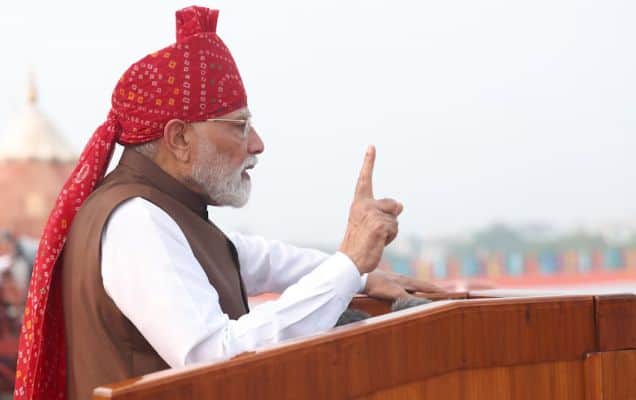
یو پی ایس آئی ڈی اے ایگرو پارک کرکھیاؤں میں بناس کاشی سنکول ملک پروسیسنگ یونٹ کا افتتاح
ایچ پی سی ایل کے ایل پی جی بوٹلنگ پلانٹ ، یو پی ایس آئی ڈی اے ایگرو پارک میں مختلف بنیادی ڈھانچہ جاتی کام اور سلک فیبرک پرنٹنگ کامن فیسلٹی کا افتتاح
متعدد سڑک منصوبوں کا افتتاح اور سنگ بنیاد رکھا
وارانسی میں متعدد شہری ترقیات، سیاحت اور روحانی سیاحت کے منصوبوں کا افتتاح اور سنگ بنیاد رکھا
نیشنل انسٹی ٹیوٹ آف فیشن ٹیکنالوجی(این آئی ایف ٹی)، وارانسی کا سنگ بنیاد رکھا
بی ایچ یو میں نئے میڈیکل کالج اور نیشنل سنٹر آف ایجنگ کا سنگ بنیاد رکھا
سِگرا اسپورٹس اسٹیڈیم فیز-1 اور ڈسٹرکٹ رائفل شوٹنگ رینج کا افتتاح کیا
’’دس سالوں میں بنارس نے مجھے بنارسی بنا دیا‘‘
’’کسان اور پشو پالک حکومت کی سب سے بڑی ترجیح ہیں‘‘
’’بناس کاشی سنکول 3 لاکھ سے زیادہ کسانوں کی آمدنی میں اضافہ کرے گا‘‘
’’مویشی پروری خواتین کی خود انحصاری کا بہترین ذریعہ ہے‘‘
’’ہماری حکومت خوراک فراہم کرنے والے کو توانائی فراہم کرنے والا بنانے کے ساتھ ساتھ اسے کھاد فراہم کرنے والا بنانے پر بھی کام کر رہی ہے‘‘
’’آتم نر بھر بھارت وکست بھارت کی بنیاد بنے گا‘‘

ہر ہر مہا دیو!

اسٹیج پر موجود اتر پردیش حکومت کے وزیر اعلیٰ یوگی آدتیہ ناتھ جی، مرکزی کابینہ کے میرے ساتھی مہیندر ناتھ پانڈے جی، نائب وزیر اعلیٰ برجیش پاٹھک جی، بناس ڈیری کے چیئرمین شنکر بھائی چودھری، بھارتیہ جنتا پارٹی کے ریاستی صدرجناب بھوپیندر چودھری جی، ریاست کے دیگر وزراء، عوامی نمائندے اور کاشی کے میرے  بھائیوں اور بہنوں۔

کاشی کی سرزمین پر آج ایک بار پھر آپ لوگن کے بیچ آوے کا موقع ملل ہے۔ جب تک بنارس نہیں آئیت، تب تک ہمارن من ناہی مانیلا۔ دس سال پہلے آپ لوگ ہم کے بنارس کا سانسد بنائیلا۔ اب دس سال میں بناس ہم کے بنارسی بنا دے لیس۔

بھائیوں اور بہنوں،

آپ سب اتنی بڑی تعداد میں آئے ہیں، ہمیں آشیرواد دے رہے ہیں۔ یہ منظر ہمیں مسحور کر دیتا ہے۔ آپ لوگوں کی محنت کی وجہ سےآج کاشی کو مسلسل نیا  بنانے کی مہم جاری ہے۔ آج بھی یہاں 13 ہزار کروڑ روپے سے زیادہ کے ترقیاتی منصوبوں کا سنگ بنیاد رکھا گیا ہے اور ان کا افتتاح کیا گیا ہے۔ یہ پروجیکٹ کاشی کے ساتھ ساتھ پوروانچل، مشرقی ہندوستان کی ترقی کو رفتار دیں گے۔ اس میں ریل، سڑک، ہوائی اڈے سے متعلق پراجیکٹس شامل ہیں، اس میں مویشی پروری، صنعت، کھیل، ہنر کے فروغ سے متعلق بہت سے منصوبے شامل ہیں، اس میں صحت، صفائی ستھرائی، روحانیت، سیاحت، ایل پی جی گیس اور بہت سے دوسرے شعبوں سے متعلق بہت سے  علمی کام بھی شامل ہیں۔ اس سے بنارس سمیت پورے پوروانچل کے لیے روزگار کے بہت سے نئے مواقع پیدا ہوں گے۔ آج یہاں سے سنت رویداس جی کی جائے پیدائش سے متعلق کئی منصوبوں کا افتتاح بھی کیا گیا ہے۔ میں ان تمام پروجیکٹوں کے لیے آپ سب کو بہت بہت مبارکباد دیتا ہوں۔

ساتھیوں،

اگر کاشی اور پوروانچل میں کچھ اچھا ہوتا ہے، تو میرا خوش ہونا فطری ہے۔ آج میرے نوجوان دوست بھی بڑی تعداد میں آئے ہیں۔ کل رات میں سڑک کے راستے بابت پور سےبی ایل ڈبلیو گیسٹ ہاؤس آیا ہوں۔ جب میں چند ماہ پہلے بنارس آیا تھا تو میں نے پھلواریہ فلائی اوور کا افتتاح کیا تھا۔ یہ صاف نظر آرہا ہے کہ بنارس میں یہ فلائی اوور کتنی بڑی نعمت ثابت ہوا  ہے۔ پہلے اگر کسی کو بی ایل ڈبلیو سے بابت پور جانا ہوتا تھا تو لوگ تقریباً 2سے3 گھنٹے پہلے گھر سے نکل جاتے تھے۔ پہلے منڈوا ڈیہہ میں جام، پھر محمور گنج میں جام، کینٹ میں جام، چوکا گھاٹ پر جام، ندیسر پر جام، یعنی فلائٹ سے دہلی جانے میں جتنا وقت لگتا تھا، اس سے زیادہ وقت فلائٹ پکڑنے میں لگ جاتا تھا، لیکن ایک فلائی اوور کے بننے سےاس میں لگنے والا وقت تقریباً آدھا ہو گیا ہے۔


اور کل رات تو خاص طور پر میں وہاں جا کر ہر چیز کو دیکھ کر آیا ہوں، اس کے  انتظامات کو سمجھ کر آیا ہوں، دیر رات پیدل چل کر وہاں گیا تھا۔ اسی طرح بنارس کی ترقی کی رفتار بھی پچھلے 10 برسوں میں کئی گنا بڑھ گئی ہے۔ ابھی کچھ دیر پہلے یہاں سگرا اسٹیڈیم کے پہلے مرحلے کے کام کا بھی افتتاح کیا گیا تھا۔ بنارس کے نوجوان کھلاڑیوں کے لیے ایک جدید شوٹنگ رینج کا بھی افتتاح کیا گیا ہے۔ اس سے بنارس اور اس خطے کے نوجوان کھلاڑیوں کو بہت مدد ملے گی۔

ساتھیوں،

یہاں آنے سے پہلے میں بناس ڈیری پلانٹ گیا تھا۔ وہاں مجھے کئی مویشی پالنے والی بہنوں سے بات کرنے کا موقع ملا۔ ہم نے 2سے3 سال پہلے کسان خاندانوں کی ان بہنوں کو دیسی نسل کی گائیں دی تھیں۔ اس کا مقصد پوروانچل میں دیسی گایوں کی بہتر نسل کے بارے میں معلومات کو بڑھانا تھا تاکہ کسانوں اور مویشی پروری کرنے والے لوگوں  کو اس سے فائدہ ہو۔ مجھے بتایا گیا ہے کہ آج یہاں گیر گایوں کی تعداد 350 کے قریب پہنچ گئی ہے۔ بات چیت کے دوران ہماری بہنوں نے مجھے یہ بھی بتایا کہ پہلے جہاں ایک عام گائے 5 لیٹر دودھ دیتی تھی اب ایک گیر گائے 15 لیٹر تک دودھ دیتی ہے۔ مجھے یہ بھی بتایا گیا کہ ایک کنبے میں ایسا معاملہ سامنے آیا ہے کہ ایک گائے تو 20 لیٹر تک دودھ دینے لگی ہے،  جس کی وجہ سے یہ بہنیں ہر ماہ ہزاروں روپے کی اضافی آمدنی حاصل کر رہی ہیں۔ اس کی وجہ سے ہماری بہنیں بھی لکھپتی دیدی بن رہی ہیں اور یہ اپنی مدد آپ گروپوں سے وابستہ ملک کی 10 کروڑ بہنوں کے لیے ایک عظیم ترغیب ہے۔

ساتھیوں،

میں نے 2 سال پہلے بناس ڈیری پلانٹ کا سنگ بنیاد رکھا تھا۔ تب میں نے وارانسی سمیت پوروانچل کے تمام مویشی پالنے والوں اور گائے پالنے والوں  کو گارنٹی دی تھی کہ یہ پروجیکٹ جلد مکمل ہو جائے گا۔ آج مودی کی گارنٹی آپ کے سامنے ہے اور اسی لیے تو لوگ کہتے ہیں کہ مودی کی گارنٹی  یعنی پورا ہونے کی گارنٹی۔صحیح سرمایہ کاری سے روزگار کے موقع کیسے پیدا ہوتے ہیں، بناس ڈیری اس کی ایک بہترین مثال ہے۔ اس وقت بناس ڈیری وارانسی، مرزا پور، غازی پور، رائے بریلی، ان اضلاع کے مویشی کسانوں سے تقریباً 2 لاکھ لیٹر دودھ اکٹھا کر رہی ہے۔


اس پلانٹ کے شروع ہونے سے بلِیا، چندولی، پریاگ راج، جونپور اور دیگر اضلاع کے لاکھوں مویشی کسانوں کو بھی فائدہ پہنچے گا۔ اس پروجیکٹ کے ساتھ وارانسی، جونپور، چندولی، غازی پور، اعظم گڑھ اضلاع کے 1000 سے زیادہ دیہاتوں میں دودھ کی منڈیاں بنیں گی۔ اگر مویشی پروری کرنے والوں کا دودھ زیادہ قیمت پر فروخت  ہوگا، تو مویشی پروری کرنے والے ہر کسان  کنبے کی زیادہ آمدنی ہونا طے ہے۔ یہ پلانٹ کسانوں اور مویشی پالنے والوں کو جانوروں کی بہتر نسلوں اور بہتر چارے کے بارے میں بیداری  اور تربیت فراہم کرے گا۔

ساتھیوں،

اتنا ہی نہیں، یہ بناس کاشی سنکل  روزگار کے  بھی ہزاروں نئے مواقع پیدا کرے گا۔ الگ الگ  کاموں میں روزگار کے مواقع پیدا ہوں  گے۔ ایک اندازے کے مطابق اس سنکل سے پورے علاقے کے 3 لاکھ سے زیادہ کسانوں کی آمدنی میں اضافہ ہوگا۔ یہاں دودھ کے علاوہ چھاچھ، دہی، لسی، آئس کریم، پنیر اور کئی قسم کی مقامی مٹھائیاں بنائی جائیں گی۔ اتنا بن جائے گا تو بیچنے والوں کو بھی روزگار ملے گا۔ یہ پلانٹ بنارس کی مشہور مٹھائیوں کو ملک کے کونے کونے تک پہنچانے میں بڑا کردار ادا کرے گا۔ دودھ کی نقل و حمل سے متعلق کاروبار میں بھی بہت سے لوگوں کو روزگار ملے گا۔ اس سے جانوروں کی خوراک سے متعلق دکانداروں اور مقامی تقسیم کاروں کا دائرہ بھی بڑھے گا۔ اس میں بہت سے روزگار بھی پیدا ہوں گے۔

ساتھیوں،

ان کوششوں کے درمیان، میری بناس ڈیری کے کام سے وابستہ سینئر ساتھیوں سے بھی ایک درخواست ہے۔ میں چاہوں گا کہ آپ دودھ کی رقم براہ راست بہنوں کے اکاؤنٹ میں ڈیجیٹل طریقے سے بھیجیں، پیسے کسی مرد کے حوالے نہ کریں۔ میرا تجربہ ہے کہ اس سے بہت ہی شاندار نتائج سامنے آتے ہیں۔ مویشی پروری ایک ایسا سیکٹر ہے جس میں ہماری بہنیں سب سے زیادہ شامل ہیں۔ بہنوں کو خود انحصار بنانے کا یہ ایک بہترین ذریعہ ہے۔ چھوٹے کسانوں اور بے زمین خاندانوں کے لیے بھی مویشی پروری  ایک بڑا سہارا ہے۔ یہی وجہ ہے کہ ڈبل انجن والی حکومت مویشی پروری اور ڈیری کے شعبے کو اتنا فروغ دے رہی ہے۔

ساتھیوں،

اَنّ داتا کو توانائی فراہم کرنے والا بنانے کے ساتھ ساتھ، ہماری حکومت ان داتا کو کھاد فراہم کرنے والا بنانے پر بھی کام کر رہی ہے۔ کھاد کے عطیہ دہندہ بنیں، ہم مویشی پروری کرنے  والوں کو دودھ کے علاوہ گوبر سے آمدنی کے مواقع فراہم کر رہے ہیں۔ ہمارے ڈیری پلانٹس میں گائے کے گوبر سے بائیو سی این جی بنائی جا سکتی ہے اور اس عمل سے تیار ہونے والی نامیاتی کھاد کسانوں کو کم قیمت پر دستیاب ہونی چاہیے، اس پر کام ہو رہا ہے۔ اس سے قدرتی کاشتکاری کو مزید تقویت ملے گی۔ ویسے بھی گنگا کے کنارے قدرتی کھیتی کرنے کا رجحان اب بڑھتا جا رہا ہے۔ آج گوبردھن یوجنا کے تحت گائے کے گوبر یا دیگر کچرے سے بائیو گیس اور بائیو سی این جی بنائی جارہی ہے۔ اس سے صفائی بھی برقرار رہتی ہے اور فضلے کے لیے رقم حاصل کرنے میں بھی مدد ملتی ہے۔

ساتھیوں،

کاشی میں بھی کچرے سے کنچن بنانے کے معاملے میں یہ ملک میں ایک مثال  بن کر ابھر رہی ہے۔ آج یہاں ایسے ہی ایک اور پلانٹ کا افتتاح کیا گیا ہے۔ یہ پلانٹ شہر سے روزانہ پیدا ہونے والے 600 ٹن فضلے کو 200 ٹن چارکول میں تبدیل کر دے گا۔ ذرا سوچئے کہ اگر یہی کچرا کسی کھیت میں پھینک دیا جائے تو کچرے کا کتنا بڑا پہاڑ بن جاتا۔ کاشی میں سیوریج سسٹم کو بہتر بنانے کے لیے کئی کام کیے گئے ہیں۔


ساتھیوں،

کسان اور مویشی پروری کرنے  والے ہمیشہ بی جے پی حکومت کی سب سے بڑی ترجیح رہے ہیں۔ ابھی دو دن پہلے ہی حکومت نے گنے کی کم از کم قیمت بڑھا کر 340 روپے فی کوئنٹل کر دی ہے۔ مویشی پروری،  کسانوں کے مفاد کو مدنظر رکھتے ہوئے  مویشیوں کے بیمے کے پروگرام کو بھی آسان بنایا گیا ہے۔ آپ پروانچل کا اُو سمے یاد کرا، گنا کے بھگتان کے لئے پہلے والا سرکار کتننا مِنّت کراوت رہے۔ لیکن اب یہ بی جے پی کی حکومت ہے کہ جس میں  نہ  کہ صرف و کسانوں کے واجبات ادا کیے جا رہے ہیں ، بلکہ فصلوں کی قیمتوں میں بھی اضافہ کیا جا رہا ہے۔

بھائیوں اور بہنوں،

خود کفیل ہندوستان کی بنیاد،  ایک ترقی یافتہ ہندوستان  پر ہی ہوگی۔  ہندوستان اپنی ضرورت کی ہر چیز باہر سے درآمد کرکے ترقی یافتہ نہیں بن سکتا۔ پہلے کی حکومتوں اور ہماری حکومت کی سوچ میں یہی سب سے بڑا فرق ہے۔ ہندوستان تب ہی خود کفیل ہوگا جب ملک کی ہر چھوٹی سے چھوٹی طاقت بیدار ہوگی۔ جب چھوٹے کسانوں، مویشی پالنے والوں، کاریگروں، دستکاروں، چھوٹے کاروباریوں کو مدد دی جائے گی۔ اس لئے میں لوکل کے لئے ووکل رہتا ہی ہوں اور جب میں مقامی مصنوعات کے لیے آواز اٹھاتا ہوں تو یہ ان بنکروں اوران چھوٹے کاروباریوں کی تشہیر ہے، جو لاکھوں روپے خرچ کرکے اخبارات اور ٹی وی میں اشتہار نہیں دے سکتے۔ مودی مقامی چیزیں تیار کرنے والے ہر شراکت دار تشہیر خود کرتے ہیں۔

آج مودی ملک کے ہر چھوٹے کسان اور ہر چھوٹے کاروباری کے سفیر ہیں۔ جب میں کھادی خریدنے، کھادی پہننے کی ترغیب دیتا ہوں، تو میں ہر گاؤں میں کھادی سے منسلک بہنوں، دلتوں، پسماندہ لوگوں، ان کی محنت کو بازار سے جوڑتا ہوں۔ جب میں ملک میں بنے کھلونے خریدنے کی بات کرتا ہوں تو اس سے ان خاندانوں کی زندگی بہتر ہوتی ہے جو نسلوں سے کھلونے بنا رہے ہیں۔ جب میں میک ان انڈیا کہتا ہوں، میں ان چھوٹی اور کاٹیج صنعتوں، ہماری ایم ایس ایم ایز کی صلاحیت کو نئی بلندیوں پر پہنچانے کی کوشش کرتا ہوں۔ جب میں کہتا ہوں کہ ہمارے ملک کو دیکھو،تب میں اپنے ملک میں سیاحت کو فروغ دیتا ہوں۔

ہم کاشی میں یہ تجربہ کر رہے ہیں کہ اس سے مقامی لوگوں کے روزگار اور خود روزگار میں کیسے اضافہ ہوتا ہے۔ جب سے وشوناتھ دھام کی دوبارہ تعمیر ہوئی ہے، 12 کروڑ سے زیادہ لوگ کاشی آ چکے ہیں،  جس کی وجہ سے دکانداروں، ڈھابے والے، ریہڑی پٹری والے، رکشہ چلانے والوں، پھول والے، ناؤ والے، سب کا روزگار بڑھ گیا ہے۔

آج ایک اور نئی شروعات ہوئی ہے۔ آج کاشی اور ایودھیا کے لیے چھوٹے  الیکٹرک جہازوں کی منصوبہ بندی شروع ہو گئی ہے۔ اس سے کاشی اور ایودھیا آنے والے عقیدت مندوں کا تجربہ اور بھی بہتر ہونے والا ہے۔


بھائیوں اور بہنوں،

کئی دہائیوں کی اقربا پروری، بدعنوانی اور خوشامد نے یوپی کو ترقی میں پیچھے رکھا ہے۔ پچھلی حکومتوں نے یوپی کو ایک بیمار ریاست بنا کر نوجوانوں سے ان کا مستقبل چھین لیا۔ لیکن آج جب یوپی بدل رہا ہے، جب یوپی کے نوجوان اپنا نیا مستقبل رقم کر رہے ہیں، تو یہ خاندانی سیاست کرنے  والے کیا کر رہے ہیں؟ میں ان کی باتیں سن کر حیران ہوں۔کانگریس کے شاہی کنبے کے یوراج کا کہنا ہے اورآپ کو حیرانی ہوگی کہ کانگریس کے یوراج کے کنبے نےکیا کہا۔وہ کاشی کی سرزمین پر آ کر کہہ رہے ہیں  کہ کاشی کے نوجوان، یو پی کے نوجوان نشیڑی ہیں۔ یہ کیسی زبان ہے؟

مودی کو گالی دیتے ہوئے تو انہوں نے دو دہائیاں گزاردیں۔لیکن اب ایشور کے روپ میں عوام پر اور  یوپی کے نوجوانوں پروہ اپنی جھنجھلاہٹ نکال رہے ہیں،  جو لوگ خود ہی اپنا ہوش و حواس کھو چکے ہیں وہ یوپی اور میرے کاشی کے بچوں کو نشے کا عادی کہہ رہے ہیں۔ ارے انتہائی خاندان پرست، کاشی اور یوپی کے نوجوان ترقی یافتہ یوپی بنانے میں مصروف ہیں، وہ اپنا خوشحال مستقبل لکھنے کے لیے اپنی محنت کی انتہا کر رہے ہیں۔ ہندوستانی اتحاد کے ذریعہ یوپی کے نوجوانوں کی توہین کو کوئی نہیں بھولے گا۔

ساتھیوں،

یہ انتہا پسند خاندان پرستوں کی حقیقت ہے۔ خاندان پرست ہمیشہ نوجوانوں کی طاقت سے ڈرتے ہیں، نوجوان کے ہنر  سے ڈرتے ہیں۔ انہیں  لگتا ہے کہ اگر ایک عام نوجوان کو موقع ملا تو وہ ہر جگہ چیلنج کرے گا۔ وہ صرف انہیں  لوگوں کو پسند کرتے ہیں جو دن رات ان کی  خوشامد کرتے رہتے ہیں۔ آج کل ان کے غصے اور مایوسی کی ایک اور وجہ ہے۔ انہیں کاشی اور ایودھیا کی نئی شکل بالکل پسند نہیں ہے۔ آپ دیکھیں کہ وہ اپنی تقریروں میں رام مندر کے بارے میں کیسی باتیں کرتے ہیں۔ وہ ہر طرح کی چیزوں پر حملہ کرتے ہیں۔ میں نہیں جانتا تھا کہ کانگریس کو بھگوان شری رام سے اتنی نفرت ہے۔

بھائیوں اور بہنوں،

وہ اپنے خاندان اور اپنے ووٹ بینک سے باہر نہیں دیکھ سکتے اور نہ سوچ سکتے ہیں۔ اسی لیے وہ ہر الیکشن کے دوران اکٹھے ہوتے ہیں اور جب نتیجہ آتا ہے تو ‘‘نِل بٹا سنّاٹا’ پھر الگ ہو جاتے ہیں، ایک دوسرے کو گالی دیتے ہیں۔ لیکن یہ لوگ نہیں جانتے - یہ بنارس ہے، یہاں ہر کوئی گرو ہے۔ انڈیا اتحاد کی چالبازی یہاں کام نہیں آئی۔ بنارس نہیں.... میں پورے یوپی کے بارے میں جانتا ہوں۔ سامان وہی ہے، پیکنگ نئی ہے۔ اس بار انہیں ضمانت بچانے کے لیے کافی جدوجہد کرنی پڑے گی۔


دوستوں،

آج پورے ملک کا ایک ہی مزاج ہے - اس بار این ڈی اے 400 کے پار ۔ مودی کی گارنٹی ہے- ہر استفادہ کنندہ کو 100فیصد فائدہ۔ مودی فائدہ اٹھانے والوں کی سوفیصد گارنٹی دے رہا ہے، لہذا، یوپی نے بھی تمام سیٹیں مودی کو دینے کا فیصلہ کیا ہے۔ اس کا مطلب ہے کہ اس بار یوپی میں 100 فیصد سیٹیں این ڈی اے کے نام ہونے والی ہیں۔

بھائیو ں اور بہنوں،

مودی حکومت کی تیسری مدت کار پوری دنیا میں ہندوستان کے اقتدار کا سب سے شاندار دور ہونے والا ہے۔ اس میں ہندوستان کا معاشی، سماجی، اسٹریٹجک، ثقافتی ہر شعبہ نئی بلندیوں پر ہوگا۔ گزشتہ 10 برسوں میں، ہندوستان 11ویں نمبر سے بڑھ کر 5ویں اقتصادی طاقت بن گیا ہے۔ آنے والے 5 برسوں میں ہندوستان دنیا کی تیسری بڑی اقتصادی سپر پاور بن جائے گا۔

پچھلے 10 برسوں میں آپ نے ملک میں دیکھا ہے کہ سب کچھ ڈیجیٹل ہو گیا ہے۔ آج آپ چار لین، چھ لین، آٹھ لین کی چوڑی سڑکیں دیکھ رہے ہیں، ریلوے اسٹیشنوں کو جدید بنایا جا رہا ہے۔ وندے بھارت، امرت بھارت، نمو بھارت جیسی تیز رفتار اور جدید ٹرینیں چلتی نظر آ رہی ہیں، اور اس نئے ہندوستان میں آئندہ  5 برسوں میں اس طرح کے ترقیاتی کاموں میں مزید تیزی آنے والی ہے اور ملک سنورنے والا ہے۔

مودی نے توگارنٹی دی ہے کہ وہ مشرقی ہندوستان کو جو ترقی سے محروم تھا، ترقی یافتہ ہندوستان کا گروتھ انجن بنائیں گے۔ وارانسی سے اورنگ آباد تک چھ لین ہائی وے کا پہلا مرحلہ مکمل ہو گیا ہے۔ اگر یہ آنے والے 5 برسوں میں مکمل ہوجاتا ہے، تو یوپی اور بہار کو بہت فائدہ ہوگا۔ وارانسی-رانچی-کولکتہ ایکسپریس وے بہار، جھارکھنڈ اور مغربی بنگال کے درمیان فاصلے کو مزید کم کرنے جا رہا ہے۔ مستقبل میں بنارس سے کولکتہ کا سفر کا وقت تقریباً آدھا رہ جائے گا۔

دوستوں،

آنے والے 5 برسوں میں یوپی اور کاشی کی ترقی میں نئی ​​جہتیں شامل ہوں گی۔ پھر کاشی روپ وے کی طرح جدید ٹرانسپورٹ میں سفر کرے گا۔ ہوائی اڈے کی گنجائش کئی گنا زیادہ ہو گی۔ کاشی نہ صرف یوپی بلکہ ملک میں کھیلوں کا ایک شہر بن جائے گا۔ آنے والے 5 برسوں  میں میری کاشی میڈ ان انڈیا، خود انحصار ہندوستان کی مہم کو مزید تقویت دے گی۔ آنے والے 5 برسوں میں سرمایہ کاری، نوکریوں، ہنر اور روزگار کے مرکز کے طور پر کاشی کے کردار کو مزید مضبوط کیا جائے گا۔

کاشی کا نیشنل انسٹی ٹیوٹ آف فیشن ٹیکنالوجی کیمپس آنے والے 5 برسوں میں تیار ہو جائے گا۔ اس سے یوپی کے نوجوانوں کو ہنر اور روزگار کے بہت سے مواقع ملیں گے۔ اس کے ساتھ، ہمارے بنکر ساتھیوں اور ہمارے کاریگروں کو نئی ٹیکنالوجی اور نئی مہارتیں فراہم کرنا آسان ہو جائے گا۔

ساتھیوں،

پچھلی دہائی میں ہم نے کاشی کو صحت اور تعلیم کے مرکز کے طور پر ایک نئی شناخت دی ہے۔ اب اس میں ایک نیا میڈیکل کالج بھی شامل ہونے جا رہا ہے۔ بی ایچ یو میں نیشنل سینٹر آف ایجنگ کے ساتھ ساتھ 35 کروڑ روپے کی کئی تشخیصی مشینوں اور آلات کا بھی آج افتتاح کیا جا رہا ہے۔ اس کے ساتھ ہی سپر اسپیشلٹی اسپتال میں آنے والے مریضوں کی جگہ پر ہی تشخیص کرنا آسان ہوجائے گا۔ کاشی میں، اسپتالوں  سے پیدا ہونے والے بائیو کچرے کو ٹھکانے لگانے کی ایک نئی سہولت بھی جلد ہی تیار ہونے والی ہے۔


ساتھیوں،

کاشی، یوپی اور ملک کی تیز رفتار ترقی کو اب رکنے نہیں دینا ہے۔ کاشی کے ہر باشندے کو اب متحد ہونا ہوگا۔ اگر ملک اور دنیا کو مودی کی گارنٹی پر اتنا بھروسہ ہے تو ایسا آپ کی قربت اور بابا کے آشیرواد کی وجہ سے ہے۔ ایک بار پھر آپ سب کو اپنے نئے پروجیکٹس کے لیے مبارکباد۔ میرے ساتھ بولیں۔

بھارت ماتا کی جے!

بھارت ماتا کی جے!

بھارت ماتا کی جے!

ہر ہر مہا دیو!


Explore More
شری رام جنم بھومی مندر دھوجاروہن اتسو کے دوران وزیر اعظم کی تقریر کا متن

Popular Speeches

شری رام جنم بھومی مندر دھوجاروہن اتسو کے دوران وزیر اعظم کی تقریر کا متن
Chips, defence, clean energy: India, Netherlands upgrade ties to strategic level

Media Coverage

Chips, defence, clean energy: India, Netherlands upgrade ties to strategic level
NM on the go

Nm on the go

Always be the first to hear from the PM. Get the App Now!
...
India-Netherlands Joint Statement on the visit of Prime Minister of India to Netherlands
May 17, 2026

At the invitation of the Prime Minister of the Netherlands, Mr. Rob Jetten, Prime Minister Shri Narendra Modi paid an official visit to the Netherlands on 16-17 May 2026. This marked Prime Minister Modi’s second visit to Netherlands.

In the morning of May 16, Prime Minister Modi was hosted by Their Majesties King Willem Alexander and Queen Maxima of the Netherlands at the Royal Palace Huis ten Bosch in the Hague for a bilateral meeting. Their Majesties also hosted a luncheon for Prime Minister Modi.

Prime Minister Jetten and Prime Minister Modi met for restricted and delegation level talks, followed by a dinner in the evening of May 16. Both Prime Ministers recalled the longstanding and historical trade linkages, deep rooted people-to-people ties and robust bilateral relations between the two countries and expressed their desire for further expanding and deepening this multifaceted relationship. In this context, the two leaders noted with satisfaction the progress achieved in recent years across various cooperation programmes through regular interactions, including at the highest political level and through the fruitful collaboration during India’s Presidency of the G20 in 2023 and the AI Impact Summit in New Delhi in February 2026.

Acknowledging the strong momentum in the relationship and the growing convergences between the two countries, the two leaders decided to elevate the relations between India and the Netherlands to a 'Strategic Partnership'. In this context, they welcomed the adoption of a Strategic Partnership Roadmap under which both sides agreed to work through regular and structured cooperation in all areas, including political, trade and investment, defence & security cooperation, cyber security, critical & emerging technologies including semiconductors, space, AI & quantum system, science & innovation, sustainability, health, sustainable agriculture and food systems, water management, climate change and energy transition, sustainable transport, maritime development, education, culture and people-to-people ties. The two sides also agreed to explore exchanges in the domain of policy planning.

Both leaders welcomed in this regard the agreements concluded in December 2025 across different priority sectors, such as on defence, semiconductors and related emerging technologies, enhanced cooperation in digital and cyberspace, collaboration in pharmaceuticals and medical devices, the establishment of a Joint Trade and Investment Committee, as well as the cooperation between the maritime museums in Lothal and Amsterdam.

The two leaders noted the Pact for the Future and reaffirmed their commitment to upholding shared values and principles including democracy, human rights, international peace and security, and a rules-based international order in line with the purposes and principles of the UN Charter. Both governments also underscored their commitment to strengthen and reform the multilateral system including expansion of both permanent and non-permanent categories of membership of the UN Security Council to reflect contemporary realities and called for text-based negotiations within a fixed timeframe. Prime Minister Modi thanked Prime Minister Jetten for the continued Dutch support to India’s permanent membership of a reformed and expanded UN Security Council.

Both leaders reaffirmed their commitment to further deepen the India-EU Strategic Partnership and welcomed in this regard the conclusion of negotiations for a mutually beneficial India-EU Free Trade Agreement in January this year. They agreed that the free trade agreement will strengthen political and economic ties between the world's second and fourth largest economies, at a time of rising geopolitical tensions and global economic challenges and highlight the joint commitment to economic openness and rules-based trade. The two leaders further welcomed the simultaneous signing of the Security and Defence partnership that will strengthen EU and India’s dialogue and cooperation on security and defence, and deliver concrete results in areas such as maritime security, cyber, counterterrorism and defence industrial collaboration.

The leaders agreed on the importance of a free, open, secure and peaceful lndo-Pacific, based on respect for international law, sovereignty and territorial integrity, freedom of navigation, and absence of coercion and conflicts. Recalling the EU Strategy on the Indo-Pacific, Prime Minister Jetten announced the decision of the Netherlands to join the Indo-Pacific Oceans Initiative (IPOI) and co-lead the Capacity Building & Resource Sharing pillar along with Germany and the European Union.

On Ukraine, the two sides expressed concern over the ongoing war, which continues to cause immense human suffering and carries global consequences. Both leaders agreed to continue to support efforts towards the achievement of a comprehensive, just, and lasting peace in Ukraine through dialogue and diplomacy, based on the principles of the UN Charter and international law.

Both leaders expressed deep concern over the situation in West Asia / the Middle East, noting its serious implications for the region and the wider world, including immense human suffering and disruptions to global energy supplies and trade networks. The leaders welcomed the ceasefire announced on 08 April 2026. They underscored the importance of de-escalation, dialogue and diplomacy and expressed hope for lasting peace in West Asia / the Middle East. They also called for freedom of navigation and global flow of commerce through the Strait of Hormuz, while opposing any restrictive measures, and reaffirmed their support for ongoing efforts and initiatives in this regard.

Economic Cooperation, Trade & Investment

Both leaders noted that the Netherlands–India economic partnership stands out as a model of cooperation, driven by shared priorities such as sustainability, innovation, and long-term growth, creating mutual prosperity for both nations. They welcomed the growth in bilateral trade between the two countries, supported by efficient supply chains and shared commitment to open markets. The Netherlands, with its world class logistics network also serves as a strategic gateway to Europe for Indian exporters, including via its Port of Rotterdam whilst India offers a vast and dynamic market for Dutch companies who will also benefit significantly from upscaling opportunities, its business friendly environment, and the availability of a vast and skilled talent pool in India. At the same time, Indian businesses can leverage advanced Dutch expertise, particularly in water management, sustainable agriculture, and smart cities.

Expressing satisfaction with the existing economic collaboration between the two countries, the leaders emphasized the immense potential for further growth particularly in light of opportunities arising from the India-EU Free Trade Agreement. The Netherlands continues to remain one of India’s major trade and investment partners, reflecting the depth and resilience of the bilateral economic ties.

In order to further facilitate trade and investment, the Prime Ministers welcomed the signing of the Agreement on Mutual Administrative Assistance in Customs Matters, enabling the exchange of information between the customs authorities of the countries and thus contributing to enhanced customs enforcement and the facilitation of legitimate trade between India and the Netherlands.

The leaders reaffirmed their commitment to further advancing bilateral trade and investment through, amongst others, the India–Netherlands Joint Trade and Investment Committee and the Fast Track Mechanism. They agreed to focus on enhancing investment facilitation and strengthening innovation ecosystems to support sustainable growth, job creation and resilient value chains.

Both Prime Ministers underscored the strong potential for cooperation in startups and innovation, noting that solutions developed in India and the Netherlands can scale globally, including across Indian and EU markets. They agreed to further connect both countries’ startup ecosystems, facilitate exchanges, and explore digital soft-landing programmes, as well as increased participation in trade missions, innovation missions and technology summits.

Defence & Security Cooperation

Both leaders welcomed the signing of the Letter of Intent on Defence Cooperation and emphasized the importance of deepening of the defence cooperation between the two countries including through regular interaction between respective Ministries of Defence and staff level talks, to coordinate exchanges of information, visits, research, innovation and training activities. They also concurred to move towards further expanding the scope of Defence Industrial Cooperation between the two countries.

Both leaders also agreed to enhance cooperation in the defence sector, under EU mechanisms and with other partners, and will explore possibilities of establishing a Defense Industrial Roadmap in which defence industrial collaboration for manufacturing of defence equipment, systems, components and other key capabilities through co-development, transfer of technology and setting up of joint ventures for co-production towards meeting the needs of the Armed Forces of both countries are laid down.

The leaders agreed to further enhance the security co-operation, including through regular exchanges between the National Security Apparatus of both countries on traditional and non-traditional security issues, including defence, maritime security, economic security, critical and emerging technologies, cyber security, counter terrorism and other mutually agreed matters of international security.

Both leaders expressed satisfaction with the annual bilateral cyber consultations as well as noted the holding of 8th session of the online cyber school, as means to further strengthen cooperation between the two countries to ensure an open, free and secure cyberspace. In this context, the leaders welcomed the signing of the Letter of Intent on enhanced collaboration in cyberspace, including closer coordination in multilateral fora and joint efforts on countering cyber threats and cybercrime through capacity building and the exchange of knowledge.

Both leaders underlined the importance of an open, free, secure, stable, accessible and peaceful ICT environment, which is seen as an enabler for innovation and economic growth and innovation. In this regard Prime Minister Modi thanked the Netherlands for its constructive participation in the AI Impact Summit that took place on 19 February 2026 in New Delhi.

Prime Minister Jetten strongly condemned the heinous and abhorrent terrorist attack on civilians in Pahalgam, Jammu & Kashmir, India in April 2025 and expressed Netherlands’ solidarity and unwavering support to India in its fight against terrorism, including cross-border terrorism and the two leaders called for holding the perpetrators accountable. The two Prime Ministers unequivocally condemned terrorism in all its forms and manifestations. They called for zero tolerance approach to terrorism and rejected double standards in countering terrorism.

The two leaders reaffirmed the need to combat terrorism in a comprehensive and sustained manner through both bilateral and multilateral mechanisms, including in the UN and the FATF. They further called for concerted action against all terrorists and terrorist groups, including groups proscribed by the United Nations Security Council (UNSC) 1267 Sanctions Committee and their proxies, affiliates, sponsors, backers and financiers. Both sides also called upon all countries to continue to work towards eliminating terrorist safe havens and infrastructure as well as to disrupt terrorist networks and their financing and bring perpetrators of terrorism to justice swiftly, in accordance with international law. Prime Minister Jetten expressed support for India’s endeavors to establish a UN Comprehensive Convention on International Terrorism (CCIT).

Both leaders noted with concern the growing threats from the use of new and emerging technologies for terrorist purposes such as unmanned aircraft systems, use of virtual assets by terrorists, and terrorist entities and the misuse of information and communication technologies for radicalization.

Recognizing a shared commitment to combat terrorism and strengthen the framework for global cooperation in this regard, both leaders emphasized the importance of upholding international standards on anti-money laundering and combating the financing of terrorism by all countries.

Emerging technologies, Innovation, Science, and Education

Both leaders welcomed the signing of the MoU on a Partnership on Semiconductors and Related Emerging Technology, which provides the framework for intensified cooperation in semiconductors, including in the areas of investment, research and talent exchange.

Both leaders welcomed the ongoing cooperation in the field of science, technology and innovation, focusing on launching public-private partnerships and connecting the expertise of governments, businesses, and knowledge institutions, through the already active Joint Working Group on Science, Technology and Innovation, which facilitates joint R&D projects, talent mobility, and technology transfer, through regular bilateral dialogues. Both leaders reflected on the almost fifty large research and innovation programs which were jointly launched in the past years and underlined the growing importance of continued collaboration in the domain of key enabling technologies, aimed at addressing common societal challenges with shared solutions.

Both leaders also welcomed the initiative to connect the Dutch Semicon Competence Centre to the Indian Semiconductor Mission (ISM), which aims to support and strengthen the semiconductor sector, specifically industries, startups, scale-ups, SMEs, and their suppliers, through collaboration, technology and talent development. Further both Prime Ministers expressed their appreciation for the Indo-Dutch Semicon Online School and its continuation for next phase.

The two leaders welcomed the adoption of a Memorandum of Cooperation between Eindhoven University of Technology and University of Twente and six Indian leading Technical Institutes (IISc Bangalore, IIT Bombay, IIT Delhi, IIT Gandhinagar, IIT Guwahati and IIT Madras) for a brain bridge in semiconductors and related technologies, with industry partnership from NXP, ASML, TATA and CG Semi. This would catalyse the R&D and talent development with academia and industry participation from both sides.

Recognizing the strategic importance of critical minerals for continued innovation, and the need for global cooperation to build resilient and sustainable supply chains, the two leaders expressed their mutual interest in strengthening cooperation across the critical minerals value chain, including exploration, research and innovation, integration of value chains, supply chain resilience, circularity and ESG standards and related assessments. In this context, the leaders welcomed the signing of a Memorandum of Understanding on Critical Minerals.

The two leaders also welcomed the signing of a Memorandum of Understanding on Higher Education between the Ministry of Education of India and the Ministry of Education, Culture and Science of the Netherlands to promote cooperation between the higher education institutions of the two countries, in accordance with their respective academic and educational priorities and needs.

Both leaders also expressed satisfaction at the on-going institutional cooperation between Dutch and Indian universities including recent collaborations for example between: University of Groningen and Nalanda University; Delft University of Technology and Mumbai Metropolitan Regional Development Authority; Survey of India and ITC, University of Twente; Vrije Universiteit Amsterdam and Indian Institute of Technology Roorkee; and many more. Both leaders acknowledged that platforms like Indo-Dutch Education & Academic Network can play a significant part to further strengthen the educational and scientific collaboration.

Both leaders acknowledged the ongoing space partnership between India and the Netherlands and the possibility for intensifying the same, specifically on using space-based applications in addressing societal challenges including climate change, water issues, food security as well as air quality.

Energy Security and Transition / Circular Economy

Noting the active bilateral cooperation in biofuels and bio-chemicals, Prime Minister Modi welcomed the Netherlands joining the Global Biofuel Alliance that was launched during India’s Presidency of the G20. The two Prime Ministers also reaffirmed their commitment to work on bio-economy and reflected on the success of Mission Innovation Program on Biorefineries, co-chaired by India and the Netherlands.

Acknowledging the ongoing cooperation on ‘waste to value’, the leaders noted that the 2025 update of the Dutch National Circular Economy Programme 2023-2030 and the Indian presidency of the World Circular Economy Forum (WCEF) 2026 will provide the opportunity for expansion of the partnership in new areas. This includes industrial circularity, solid and liquid waste management for sustainable and climate resilient urban systems, by technology deployment in pilot and scalable projects, introduction of innovation, and opportunities for trade and investment promotion, such as through B2B partnerships for which Dutch companies were invited to join the Resource Efficiency and Circular Economy Industry Coalition (RECEIC). In the field of sustainable mobility, cooperation may be deepened in areas such as smart and inter operable charging infrastructure, battery technology and system integration, standardization and open protocols, heavy and medium-heavy zero-emission vehicles, smart urban mobility systems and multimodal integration, and, alternative fuels and active mobility.

With a view to further strengthening the partnership between India and the Netherlands in the field of Renewable Energy, the two leaders welcomed the establishment of a Joint Working Group under the Memorandum of Understanding on Renewable Energy which provides ample scope for a diversified agenda for cooperation in renewable energy, including innovative solar energy, green hydrogen, storage and investments in the renewable energy sector to facilitate energy transition.

To further strengthen the cooperation and two-way investments on renewable energy, the leaders launched the ambitious India-Netherlands Roadmap on the Development of Green Hydrogen. The leaders agreed that the roadmap will help support India’s ambition, vast potential and competitive advantages for production, usage and export of Green Hydrogen while also contributing to a swifter adoption of Green Hydrogen as a sustainable source of energy in both countries.

In addition to this, the renewal of the Joint Statement of Intent on Capacity Building for Energy Transition between NITI Aayog and the Netherlands will ensure continued collaboration in Energy Security and Transition areas.

The two leaders furthermore welcomed the signing of a Memorandum of Understanding between the University of Groningen (RUG) and 19 Indian Institutes for Technology (IITs) to strengthen academic cooperation. They also welcomed the establishment of a PhD Fellowship Programme on Hydrogen between the Department of Science and Technology of India and RUG.

Water Management

The two leaders noted the progress made under the Strategic Partnership on Water in building upon the synergies between the water related requirements of India and the expertise and experience of the Netherlands. Both Prime Ministers appreciated the joint efforts being undertaken in the field of water and river management, including partnership in the Namami Gange Mission, urban water management for climate resilience through Urban River Management Plans in combination with ‘Water as Leverage’, delta management, water quality management, waste water re-use and introduction of new water technologies. Both leaders emphasized the importance of safely managed sanitation and inclusive access to clean water and acknowledged the contribution of the Netherlands in sustainable finance for WASH related developmental projects internationally, aligned with India’s Swachh Bharat Mission goals.

Both leaders welcomed the establishment of a Centre of Excellence on Water under the aegis of Ministry of Jal Shakti, Government of India in collaboration with the Ministry of Infrastructure & Water Management, Government of the Netherlands at the Indian Institute for Technology (IIT) Delhi. The leaders also noted the progress under various ongoing joint programs in the states of Uttar Pradesh, Maharashtra, West Bengal, Tamil Nadu and Keralam.

Both leaders agreed to further enhance cooperation on the Kalpasar Project in Gujarat, where Dutch expertise and technical assistance in the Project can lead to the further strengthening of Strategic Partnership on Water.

The leaders noted the progress made so far on the Urban Water Infrastructure Resilience program of the India-led global Coalition for Disaster Resilient Infrastructure (CDRI), through which the Netherlands shares its expertise as part of its membership. Both leaders look forward to the roll-out of the developed training program both in Indian cities with the National Disaster Management Authority (NDMA) and globally in others of the 50+ CDRI member countries.

Maritime development

The two Prime Ministers noted the recently renewed Memorandum of Understanding on Maritime Cooperation and underscored the importance of continued collaboration towards a safe, secure and sustainable maritime sector, supporting the development of a strategic ‘Green and Digital Sea Corridor’ between India and the Netherlands, as outlined in the Letter of Intent signed in October 2025. In this context, they agreed to further deepen and broaden their partnership in the areas of smart and sustainable development of ports and inland waterways, supply chain optimization and green ports and shipping. As a next step, both Prime Ministers agreed to explore developing a comprehensive 'Strategic Roadmap on a Green and Digital Sea Corridor' which aims at working towards an environmentally sustainable, digitally integrated and economically efficient future-ready maritime corridor between India and the Netherlands.

Given the shared interest in global and regional maritime security, particularly in the Indo-Pacific region, both Prime Ministers agreed to exchange best practices – between relevant government entities, businesses and knowledge institutes – in the field of protecting critical infrastructure including cyber resilience in ports and inland waterways and promoting diversified and resilient supply chains (including critical raw materials, medicine and food).

Health Sector

Both leaders emphasized the importance of scaling up bilateral cooperation on health, particularly in addressing global public health risks such as infectious diseases and anti-microbial resistance, as well as the growing impact of non-communicable diseases. Both leaders agreed to encourage further cooperation in digital health (including AI and cybersecurity) and capacity building. They welcomed the renewal of the Memorandum of Understanding on Healthcare and Public Health and consideration of new co-operation initiatives in areas such as women’s health, capacity development for climate and health preparedness, and knowledge exchange on sustainable healthcare systems in both countries. In the light of this renewed Memorandum of Understanding. The two leaders also welcomed the recently signed Letter of Intent between the Dutch National Institute for Public Health and the Environment (RIVM) and the Indian Council of Medical Research (ICMR), focusing on areas such as infectious diseases, vector-borne diseases, One Health and disease surveillance.

Both leaders further underscored that, within the framework of the India-Netherlands strategic partnership, enhanced focus will be given to collaboration in pharmaceuticals and medical devices, to ensure high-quality, accessible, safe, and sustainable healthcare. In 2026, the first Joint Working Group meeting will be convened under the newly signed Memorandum of Understanding to discuss the implementation and further development of the Memorandum of Understanding and its WorkPlan, and to identify key opportunities for collaboration, including through academic cooperation, regulatory cooperation, business engagement, and knowledge exchange on market access.

Agriculture & food systems

Both leaders noted with satisfaction the on-going India-Netherlands collaboration in the field of agriculture, food systems and responsible value chains, including the exchange of knowledge and experience sharing through the Joint Working Group on Agriculture. The leaders welcomed the growing presence of Dutch companies in India in the field of protected cultivation, food processing, dairy and poultry. The leaders underscored the importance of leveraging the opportunities for co-operation between Indian and Dutch companies related to the agricultural sector including agri-tech.

The leaders reviewed the progress in setting up of Centers of Excellence in agri-related sectors in India, with Dutch expertise. These Centres are promoting technology in high-tech greenhouse agricultural productions as well as improved agricultural inputs and capacity building for smallholder farmers, leading to more sustainable and higher quality/productivity and reduced water and agro-chemical use.

The leaders underscored their commitment to further enhancing the impact and effectiveness of the Centers through continued collaboration and knowledge exchange. They also agreed to explore expanded collaboration in vocational education across various aspects of the food systems.

The leaders further welcomed the signing of a Joint Declaration between the Ministry of Fisheries, Animal Husbandry and Dairying and the Ministry of Agriculture, Fisheries, Food Security and Nature of the Netherlands as well as the establishment of an Indo-Dutch Center of Excellence on Training in Dairy at the Center of Excellence for Animal Husbandry (CEAH), Bengaluru. Both sides agreed to continue to explore cooperation in Dairy and other allied agricultural sectors including food processing.

The leaders noted the work being undertaken, to boost Indian-Dutch cooperation in horticulture for establishment of Clean Plant Centres (CPCs) under India’s ongoing Clean Plant Programme in order to promote the availability of disease free, quality planting material of high value horticultural and fruit crops for global competitiveness of Indian Horticulture Sector. In this regard, the leaders welcomed the conclusion of the Memorandum of Understanding on capacity building and support between Naktuinbouw and National Horticulture Board, Department of Agriculture & Farmers’ Welfare, Government of India

Underscoring the importance of food safety and security, both leaders welcomed the Memorandum of Understanding between Netherlands Food and Consumer Product Safety Authority (NVWA) and Food Safety and Standards Authority of India (FSSAI).

People-to-People Exchanges & Culture

The two Prime Ministers acknowledged the strong people-to-people ties which represent an important pillar of the India-Netherlands relationship. Prime Minister Jetten showed gratitude for the contribution made by the Indian community in the Netherlands to Dutch society. Both leaders reaffirmed their resolve to further facilitate people-to-people contacts between the two countries, particularly through youth, academia, professional workforce, sports, and cultural exchanges.

Noting the importance of facilitating fair migration and mobility between the two countries, both leaders welcomed the signing the Memorandum of Understanding on Migration and Mobility.

The two countries also agreed to further strengthen cooperation with a view to prevent and combat irregular migration and trafficking of human beings, and encourage the fair mobility of highly skilled professionals. This approach is guided by international standards that ensure migrant workers are treated with dignity and respect, including fair mobility, transparent visa processes, and the protection of workers' rights.

The two Prime Ministers agreed to deepen cultural ties between the two countries through enhanced cultural cooperation including by promoting exhibitions and cultural initiatives to deepen mutual knowledge, in fields such as, design, performing arts, visual arts, museum and heritage cooperation and exchanged views on the possible establishment of a Joint Working Group on Cultural Cooperation.

Highlighting the importance of mutual cultural appreciation, the leaders appreciated the efforts to showcase the artworks of Amrita Sher-Gil exhibition at the Drents Museum, as part of the Memorandum of Understanding between the Drents Museum and the National Gallery of Modern Art. They also looked forward to the return exhibition showcasing an artwork by Van Gogh and other Dutch artworks at the National Gallery of Modern Art.

Both Prime Ministers underscored the importance of cooperating in the return and restitution of cultural artifacts and in that regard welcomed the return of the Chola Era Copper Plates from the University of Leiden to the Indian authorities.

Recalling the centuries-old bilateral maritime history between India and the Netherlands, both leaders welcomed the signing of the Memorandum of Understanding for cooperation in development of the National Maritime Heritage Complex (NMHC) in Lothal (Gujarat), between National Maritime Museum of Amsterdam and the Ministry of Ports, Shipping and Waterways of India.

The talks were held in a friendly and cordial atmosphere, and both leaders expressed their confidence in the ample scope for further development of bilateral relations and of the multifaceted cooperation across sectors of India-Netherlands Strategic Partnership Roadmap. Prime Minister Modi thanked Prime Minister Jetten for the warm hospitality and extended an invitation to Prime Minister Jetten to visit India at his earliest convenience.