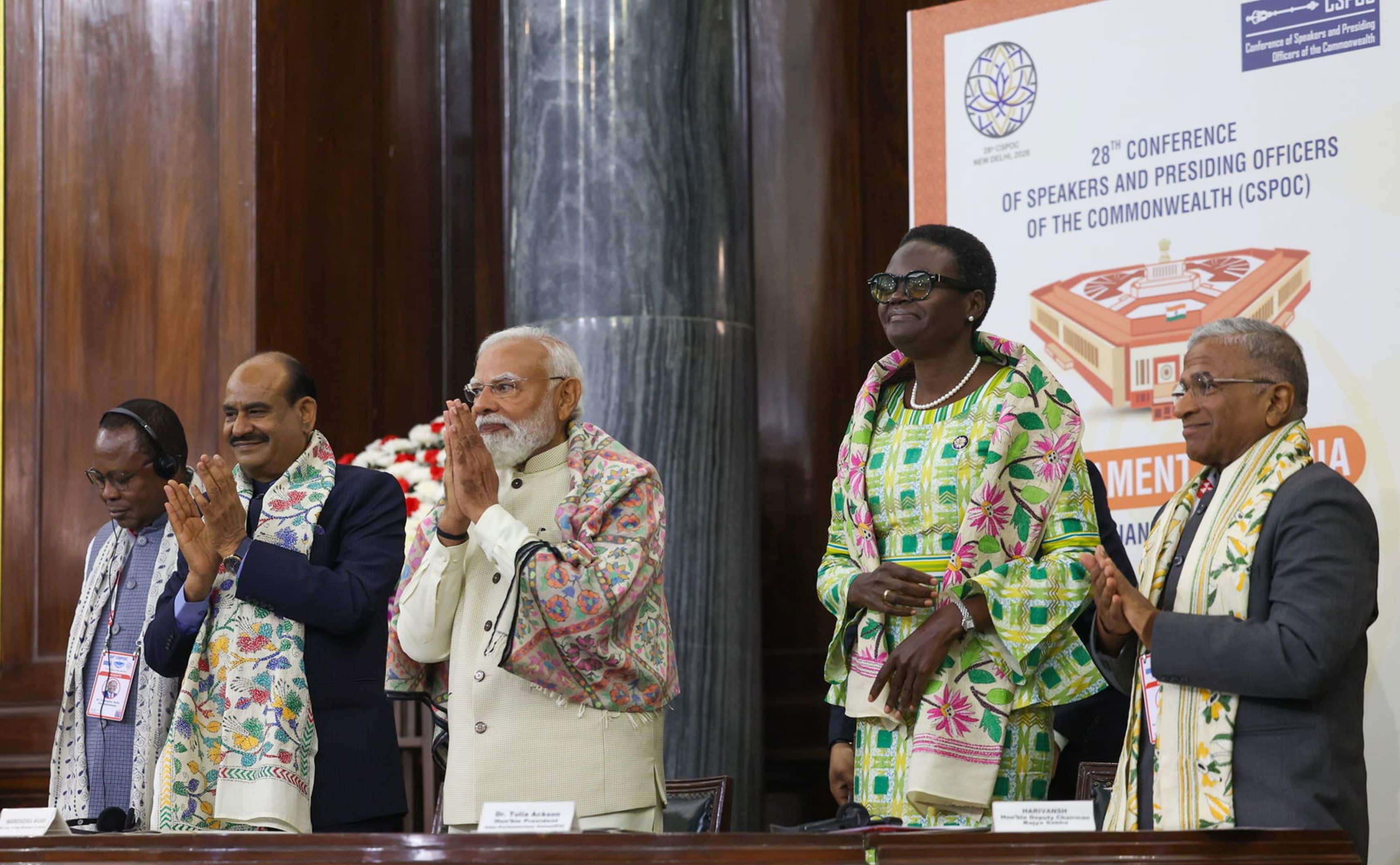
లోక్సభ స్పీకర్ శ్రీ ఓం బిర్లా, రాజ్యసభ డిప్యూటీ చైర్మన్ శ్రీ హరివంశ్, అంతర్-పార్లమెంటరీ యూనియన్ అధ్యక్షురాలు శ్రీమతి టూలియా అక్సన్, కామన్వెల్త్ పార్లమెంటరీ అసోసియేషన్ అధ్యక్షులు శ్రీ క్రిస్టోఫర్ కలిలా, కామన్వెల్త్ దేశాల స్పీకర్లు, అధ్యక్లులు, ఇతర ప్రతినిధులు, సోదరసోదరీలారా!
మిత్రులారా,
పార్లమెంటరీ ప్రజాస్వామ్యంలో మీ పాత్ర స్పీకర్ అనేది. ఆసక్తికరమైన విషయం ఏమిటంటే స్పీకర్కు ఎక్కువగా మాట్లాడే అవకాశం ఉండదు. ఇతరులు మాట్లాడే దానిని వినడం, ప్రతి ఒక్కరికీ మాట్లాడే అవకాశం లభించేలా చూడడం వారి ప్రధాన బాధ్యత. స్పీకర్లందరిలో కనిపించే ఒక సాధారణ లక్షణం సహనం. గొడవ చేసే, అతిగా ఉత్సాహం చూపించే సభ్యులను కూడా వారు చిరునవ్వుతోనే ఎదుర్కొంటారు.
మిత్రులారా,
ఈ ప్రత్యేక సందర్భంలో మీ అందరికీ నేను హృదయపూర్వక స్వాగతం పలుకుతున్నాను. ఈ రోజు మీరు మా మధ్య ఉండటం మాకు గౌరవంగా భావిస్తున్నాం.
మిత్రులారా,
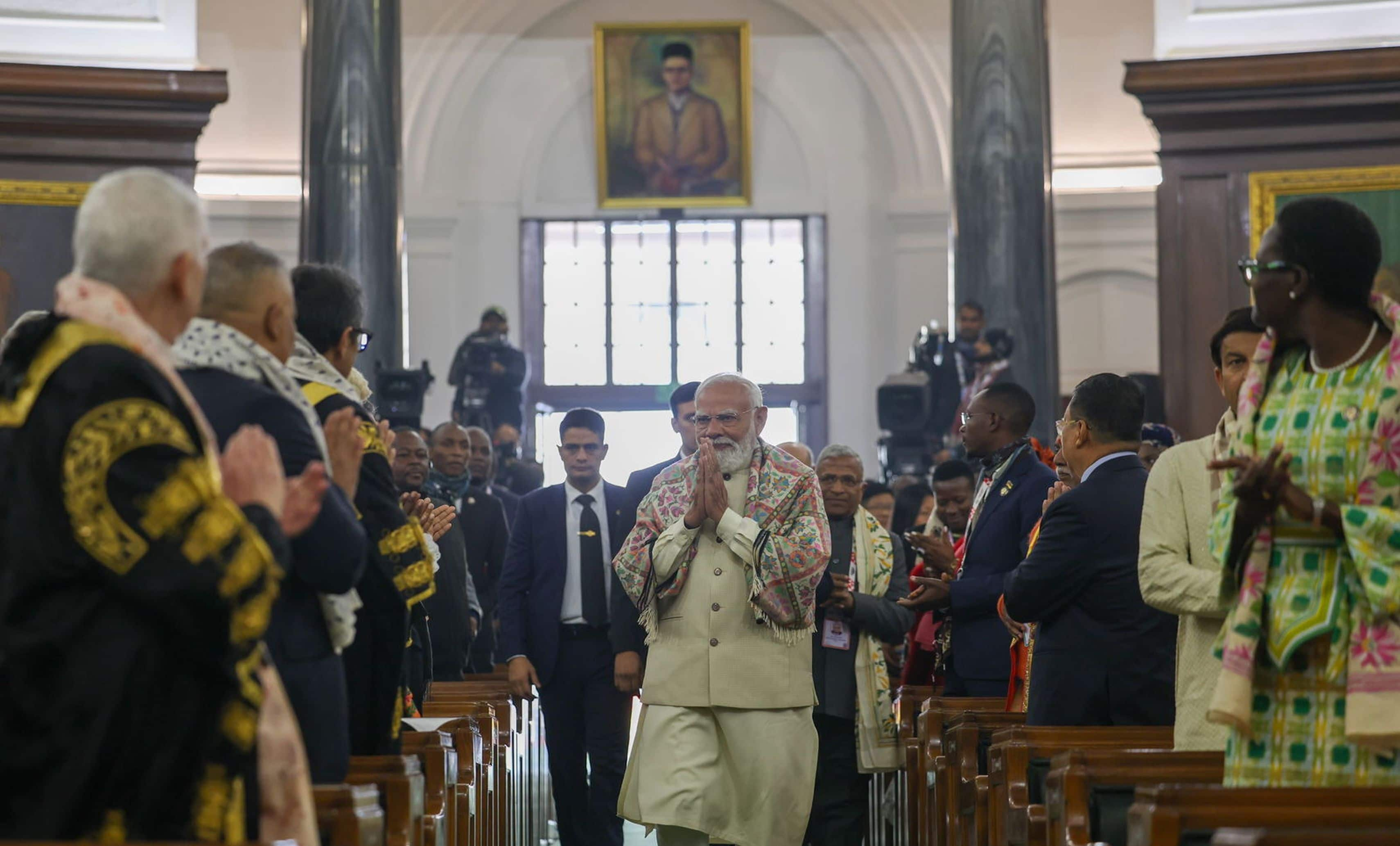
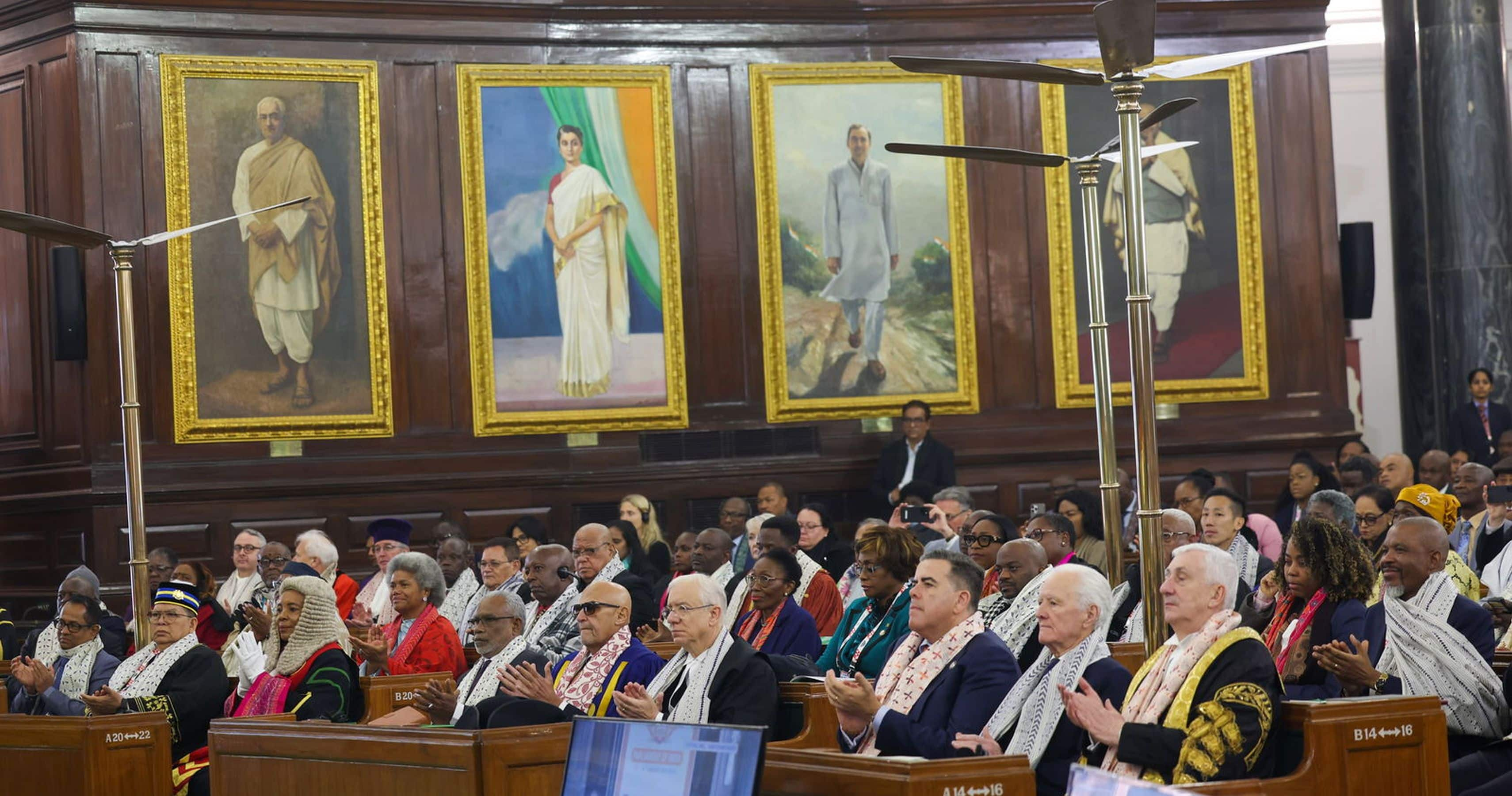
భారతదేశ ప్రజాస్వామ్య ప్రయాణంలో మీరు కూర్చున్న ఈ స్థానం ఎంతో ప్రాముఖ్యత కలిగినది. వలస పాలన చివరి ఏళ్లలో దేశానికి స్వాతంత్య్రం తథ్యమని తేలినప్పుడు భారత రాజ్యాంగాన్ని రూపొందించడానికి రాజ్యాంగ పరిషత్తు సమావేశమైంది ఈ సెంట్రల్ హాల్లోనే. స్వాతంత్య్రం వచ్చిన తర్వాత 75 ఏళ్ల పాటు ఈ భవనం భారత పార్లమెంటుగా సేవలందించింది. దేశ భవిష్యత్తును తీర్చిదిద్దే లెక్కలేనన్ని చర్చలు, నిర్ణయాలు ఈ హాల్లోనే జరిగాయి. ఇప్పుడు ప్రజాస్వామ్యానికి అంకితమైన ఈ ప్రదేశానికి రాజ్యాంగ భవనం అని పేరు పెట్టారు. ఇటీవలే భారత్ తన రాజ్యాంగం అమలులోకి వచ్చి 75 ఏళ్లు పూర్తయిన సందర్భాన్ని జరుపుకుంది. ఈ రాజ్యంగ భవనంలో మీ ఉనికి భారత ప్రజాస్వామ్యానికి చాలా ప్రత్యేకమైనది.
మిత్రులారా,
దేశంలో కామన్వెల్త్ స్పీకర్లు, అధ్యక్షుల సమావేశం జరగడం ఇది నాలుగోసారి. ఈ సదస్సు ‘‘పార్లమెంటరీ ప్రజాస్వామ్యాన్ని సమర్థవంతంగా నిర్వహించడం’’ అనే ఇతివృత్తంతో జరుగుతోంది. దేశానికి స్వాతంత్య్రం వచ్చినప్పుడు, ఇంతటి వైవిధ్యం ఉన్న దేశంలో ప్రజాస్వామ్యం మనుగడ సాగించగలదా అనే సందేహాలు వ్యక్తమయ్యాయని మీ అందరికీ తెలుసు. కానీ భారత్ ఈ వైవిధ్యాన్ని తన ప్రజాస్వామ్య బలంగా మార్చుకుంది. ఒకవేళ ప్రజాస్వామ్యం ఎలాగోలా మనుగడ సాగించినా.. భారత్ ఎప్పటికీ అభివృద్ధి చెందలేదనేది మరో ప్రధాన సందేహం. కానీ ప్రజాస్వామ్య సంస్థలు, ప్రజాస్వామ్య ప్రక్రియలు స్థిరత్వాన్ని, వేగాన్ని, స్థాయిని అందిస్తాయని భారత్ నిరూపించింది.
భారత్ ప్రపంచంలోనే అత్యంత వేగంగా వృద్ధి చెందుతున్న ప్రధాన ఆర్థిక వ్యవస్థ. నేడు భారతీయ యూపీఐ ప్రపంచంలోనే అతిపెద్ద డిజిటల్ చెల్లింపు వ్యవస్థగా ఉంది. భారత్ ప్రపంచంలోనే అతిపెద్ద వ్యాక్సిన్ ఉత్పత్తిదారు కూడా. ఉక్కు ఉత్పత్తిలో దేశం రెండో స్థానంలో ఉంది. ప్రపంచంలోనే మూడో అతిపెద్ద స్టార్టప్ వ్యవస్థను భారత్ కలిగి ఉంది. దేశం మూడవ అతిపెద్ద విమానయాన మార్కెట్. భారత్ నాలుగో అతిపెద్ద రైలు వ్యవస్థను కలిగి ఉంది. ప్రపంచంలోనే మూడవ అతిపెద్ద మెట్రో రైలు నెట్వర్క్ మనదే. పాల ఉత్పత్తిలో భారత్ ప్రథమ స్థానంలో ఉండగా, బియ్యం ఉత్పత్తిలో రెండో స్థానంలో ఉంది.
మిత్రులారా,
దేశంలో ప్రజాస్వామ్యం అంటే చివరి వ్యక్తి వరకు సేవలను అందించడం. ప్రజా సంక్షేమ స్ఫూర్తితో, మేం ఎలాంటి వివక్ష లేకుండా ప్రతి వ్యక్తి కోసం పని చేస్తాం. ఈ ప్రజా సంక్షేమ స్ఫూర్తి కారణంగానే ఇటీవలి సంవత్సరాలలో దేశంలో 25 కోట్ల మంది ప్రజలు పేదరికం నుంచి బయటపడ్డారు. దేశంలో ప్రజాస్వామ ఫలితాలను అందిస్తుంది.
మిత్రులారా,
భారతదేశంలో ప్రజాస్వామ్యం ఫలితాలను అందిస్తుంది ఎందుకంటే మాకు దేశ ప్రజలు అత్యున్నతమైనవారు. మా పౌరుల ఆకాంక్షలు, వారి కలలకు మేం ప్రాధాన్యత ఇచ్చాం. వారి మార్గంలో ఎలాంటి అడ్డంకులు రాకుండా చూసుకోవడానికి విధానాల నుంచి సాంకేతికత వరకు అన్నింటినీ ప్రజాస్వామ్యీకరించాం. ఈ ప్రజాస్వామ్య స్ఫూర్తి మా నరనరాల్లో, మా ఆలోచనల్లో, మా సంస్కృతిలో ప్రవహిస్తోంది.
నేను మీకు ఒక ఉదాహరణ చెప్తాను. కొన్ని సంవత్సరాల క్రితం ప్రపంచమంతా కోవిడ్-19 మహమ్మారితో పోరాడుతున్నప్పుడు భారత్ కూడా అనేక సవాళ్లను ఎదుర్కొంది. అయినప్పటికీ, ఆ కష్టకాలంలో కూడా భారత్ 150 కంటే ఎక్కువ దేశాలకు మందులు, వ్యాక్సిన్లను సరఫరా చేసింది. ప్రజల సంక్షేమం, వారి శ్రేయస్సు, వారి ప్రయోజనాలే మా లక్ష్యం.
మిత్రులారా,
మీలో చాలా మందికి భారత్ ప్రపంచంలోనే అతిపెద్ద ప్రజాస్వామ్య దేశంగా తెలుసు. నిజంగానే మా ప్రజాస్వామ్య పరిధి అసాధారణమైనది. 2024లో జరిగిన భారత సార్వత్రిక ఎన్నికలను ఒకసారి గమనించండి. అదిప మానవ చరిత్రలోనే అతిపెద్ద ప్రజాస్వామ్య ప్రక్రియ. దాదాపు తొంభై ఎనిమిది కోట్ల మంది పౌరులు ఓటర్లుగా నమోదయ్యారు. ఈ సంఖ్య కొన్ని ఖండాల జనాభా కంటే కూడా ఎక్కువ. ఈ ఎన్నికల్లో ఎనిమిది వేల మందికి పైగా అభ్యర్థులు, ఏడు వందల కంటే ఎక్కువ రాజకీయ పార్టీలు పాల్గొన్నాయి. ఈ ఎన్నికలలో మహిళా ఓటర్లు కూడా రికార్డు స్థాయిలో పాల్గొనడం విశేషం.
నేడు భారతీయ మహిళలు కేవలం పాల్గొనడమే కాకుండా ముందుండి నడిపిస్తున్నారు. భారతదేశ ప్రథమ పౌరురాలు, మన రాష్ట్రపతి ఒక మహిళ. ప్రస్తుతం మనం ఉన్న ఢిల్లీ ముఖ్యమంత్రి కూడా ఒక మహిళే. గ్రామీణ, స్థానిక ప్రభుత్వ సంస్థల్లో దేశంలో దాదాపు 15 లక్షల మంది ఎన్నికైన మహిళా ప్రతినిధులు ఉన్నారు. క్షేత్రస్థాయిలో ఉన్న నాయకుల్లో వీరు దాదాపు 50 శాతం మందికి ప్రాతినిధ్యం వహిస్తున్నారు. ఇది ప్రపంచంలోనే సాటిలేని విషయం. భారత ప్రజాస్వామ్యం వైవిధ్యంతో విరాజిల్లుతోంది. ఇక్కడ వందలాది భాషలు మాట్లాడతారు. వివిధ భాషల్లో తొమ్మిది వందలకు పైగా టెలివిజన్ ఛానెల్లు ఉన్నాయి. వేలాది వార్తాపత్రికలు, మ్యాగజైన్లు ప్రచురితమవుతున్నాయి. ఇంతటి భారీ స్థాయి వైవిధ్యాన్ని నిర్వహించే దేశాలు ప్రపంచంలో చాలా తక్కువ. మన ప్రజాస్వామ్యానికి బలమైన పునాది ఉన్నందున భారత్ ఈ వైవిధ్యాన్ని వేడుకగా జరుపుకుంటుంది. మా ప్రజాస్వామ్యం లోతైన వేర్లు కలిగిన ఒక పెద్ద వృక్షం వంటిది. మాకు చర్చలు, సంభాషణలు, సామూహిక నిర్ణయాధికారానికి సంబంధించిన సుదీర్ఘ సంప్రదాయం ఉంది. భారత్ను ప్రజాస్వామ్యానికి మాత అని పిలుస్తారు. మన పవిత్ర గ్రంథాలైన వేదాలు అయిదు వేల ఏళ్ల కంటే పురాతనమైనవి. ప్రజల సమస్యలపై చర్చించడానికి సమావేశమయ్యే సభల గురించి వాటిలో ప్రస్తావన ఉంది. చర్చలు, ఏకాభిప్రాయం తర్వాతే నిర్ణయాలు తీసుకునేవారు. మనది భగవాన్ బుద్ధుని భూమి. బౌద్ధ సంఘాల్లో బహిరంగ, నిర్మాణాత్మక చర్చలు జరిగేవి. నిర్ణయాలు ఏకాభిప్రాయం లేదా ఓటింగ్ ద్వారా తీసుకునేవారు.
అంతేకాకుండా దేశంలోని తమిళనాడు రాష్ట్రంలో 10వ శతాబ్దానికి చెందిన ఒక శాసనం ఉంది. ఇది ప్రజాస్వామ్య విలువలతో పని చేసిన ఒక గ్రామ సభను వివరిస్తుంది. జవాబుదారీతనం, నిర్ణయాధికారం కోసం అక్కడ స్పష్టమైన నియమాలు ఉండేవి. మన ప్రజాస్వామ్య విలువలు కాలంతో పాటు పరీక్షలను ఎదుర్కొన్నాయి. వైవిధ్యంతో మద్దతు పొందాయి. తరతరాలుగా మరింత బలోపేతం అయ్యాయి.
మిత్రులారా,
కామన్వెల్త్ దేశాల మొత్తం జనాభాలో దాదాపు 50 శాతం మంది భారత్లోనే నివసిస్తున్నారు. అన్ని దేశాల అభివృద్ధికి సాధ్యమైనంతవరకు సహకారం అందించాలనేది మా నిరంతర ప్రయత్నం. కామన్వెల్త్ నిర్దేశించుకున్న సుస్థిర అభివృద్ధి లక్ష్యాలైన.. ఆరోగ్యం, వాతావరణ మార్పు, ఆర్థిక వృద్ధి, ఆవిష్కరణల విషయంలో మా బాధ్యతలను మేం పూర్తి నిబద్ధతతో నెరవేరుస్తున్నాం. మీ అందరి నుంచి నేర్చుకోవడానికి భారత్ నిరంతరం ప్రయత్నిస్తుంది. అదేవిధంగా దేశ అనుభవాలు ఇతర కామన్వెల్త్ భాగస్వామ్య దేశాలకు ప్రయోజనం చేకూర్చాలని మేం ఆకాంక్షిస్తున్నాం.
మిత్రులారా,
నేడు ప్రపంచం మునుపెన్నడూ లేని మార్పులను ఎదుర్కొంటున్న తరుణంలో అభివృద్ధి చెందుతున్న దేశాల కోసం కొత్త మార్గాలను సృష్టించాల్సిన సమయం ఆసన్నమైంది. ప్రతి అంతర్జాతీయ వేదికపైనా భారత్ పశ్చిమ దేశాల ఆందోళనలను బలంగా వినిపిస్తోంది. జీ20 అధ్యక్ష పదవిలో ఉన్న కాలంలో భారత్ ఈ సమస్యలను ప్రపంచ అజెండాలో ప్రధానాంశంగా ఉంచింది. ఏ ఆవిష్కరణలు చేసినా అవి మొత్తం పశ్చిమ దేశాలు, కామన్వెల్త్ దేశాలకు ప్రయోజనం చేకూర్చాలన్నదే భారత్ నిరంతర ప్రయత్నం. మా భాగస్వామ్య దేశాలు కూడా భారత్లో ఉన్నటువంటి వ్యవస్థలకు సమానమైన వ్యవస్థలను అభివృద్ధి చేయగలిగేలా మేం ఓపెన్-సోర్స్ సాంకేతిక వేదికలను కూడా నిర్మిస్తున్నాం.
మిత్రులారా,
పార్లమెంటరీ ప్రజాస్వామ్య జ్ఞానాన్ని, అవగాహనను వివిధ మార్గాల్లో ఎలా పెంపొందించాలో అన్వేషించడం ఈ సదస్సు ప్రధాన లక్ష్యాలలో ఒకటి. ఇందులో స్పీకర్లు, అధ్యక్షుల పాత్ర చాలా కీలకం. ఈ పని ప్రజలను దేశంలోని ప్రజాస్వామ్య ప్రక్రియతో మరింత సన్నిహితంగా అనుసంధానిస్తుంది. భారత పార్లమెంటు ఇప్పటికే ఇలాంటి ప్రయత్నాల్లో నిమగ్నమై ఉంది. అధ్యయన పర్యటనలు, ప్రత్యేక శిక్షణ కార్యక్రమాలు, ఇంటర్న్షిప్ల ద్వారా పౌరులు పార్లమెంటును మరింత దగ్గరగా అర్థం చేసుకునే అవకాశం పొందారు. మన పార్లమెంటులో చర్చలను, సభా కార్యకలాపాలను వేగంగా ప్రాంతీయ భాషల్లోకి అనువదించడానికి మేం కృత్రిమ మేధను ఉపయోగించడం ప్రారంభించాం. పార్లమెంటుకు సంబంధించిన వనరులను కూడా ఏఐ సహాయంతో మరింత వినియోగదారులకు అనుకూలంగా మారుస్తున్నాం. ఇది మన యువతరానికి పార్లమెంటును అర్థం చేసుకోవడానికి మెరుగైన అవకాశాలను కల్పిస్తుంది.
మిత్రులారా,
ఇప్పటి వరకు మీ సంస్థకు అనుబంధంగా ఉన్న 20 కంటే ఎక్కువ సభ్య దేశాలను సందర్శించే అవకాశం నాకు లభించింది. పలు దేశాల పార్లమెంటులను ఉద్దేశించి ప్రసంగించే గౌరవం కూడా నాకు దక్కింది. నేను ఎక్కడికి వెళ్లినా చాలా విషయాలు నేర్చుకున్నాను. ప్రతి ఉత్తమ విధానాన్ని నేను వెంటనే మన లోక్సభ స్పీకర్, రాజ్యసభ ఛైర్మన్, డిప్యూటీ ఛైర్మన్లతో పంచుకున్నాను. నేర్చుకోవడం, పంచుకోవడం అనే ప్రక్రియను ఈ సదస్సు మరింత సుసంపన్నం చేస్తుందని నేను నమ్ముతున్నాను. ఈ ఆశతో మీ అందరికీ నా శుభాకాంక్షలు తెలియజేస్తున్నాను.
ధన్యవాదాలు!