Your Excellency President William Ruto,
Delegates from both countries,
Friends from the media,
Namaskar!

I am delighted to welcome President Ruto and his delegation to India.

I am glad that his visit comes shortly after the African Union joins the G20.

Africa has always been given a high priority position in India's foreign policy.

Over the last decade or so, we have increased our cooperation with Africa in mission mode.

I am confident that President Ruto's visit will give new impetus to our bilateral relations as well as our engagement with the entire African continent.

Friends,

This year we commemorate the sixtieth anniversary of diplomatic relations between India and Kenya, but our relations have a history spanning thousands of years.

The vast Indian Ocean, connecting Mumbai and Mombasa, has been witness to our ancient relations.

Based on this robust foundation, we have been moving forward together for centuries. In the last century, we together opposed colonialism.

India and Kenya are countries that have a common past, and future too.

Friends,

Today we decided to strengthen our cooperation in all fields, laying the foundation for a progressive future. And also identified many new initiatives.

Significant strides have been made in mutual trade and investment between India and Kenya, and we are committed to exploring new opportunities to fully realize the potential of our economic cooperation.

India has been a reliable and committed development partner for Kenya.

India has made a significant contribution to the skill development and capacity building of the people of Kenya through ITEC and ICCR scholarships.

As two agrarian economies, we agreed to share our experiences.

We have also decided to provide a Line of Credit of two hundred and fifty million dollars to modernize Kenya's agricultural sector.

In alignment with the demands of modern times, we are also enhancing our cooperation in technology and innovation. We are fully prepared to share India's achievements in Digital Public Infrastructure with Kenya. The agreement being reached today on this important subject will strengthen our efforts.

Clean energy remains a top priority for both nations, and Kenya's Africa Climate Summit initiative is a commendable step in that direction. It also reflects President Ruto's commitment to unitedly address all global challenges.

I am glad that Kenya has decided to join the Global Biofuels Alliance and the International Solar Alliance.

Additionally, Kenya's decision to join the International Big Cat Alliance will help us strengthen global efforts to conserve big cats.

Our growing cooperation in the field of defense is a symbol of our deep mutual trust and common interests. In today's discussion, we emphasized on military exercises, capacity building as well as linking the defense industries of both the countries.

We also discussed using space technology for public welfare. We agreed to share India's successful experience with Kenya in this important area.

With this commitment and spirit of friendship, we will continue our efforts to increase our cooperation in all fields.

Friends,

In today's meeting, a wide range of global and regional issues were discussed. As countries connected to the Indian Ocean, maritime security, piracy and drug trafficking are matters of our common priority.

To strengthen mutual cooperation in this important area, we are issuing a Joint Vision Statement on Maritime Cooperation.

Close cooperation between Kenya and India will strengthen all our efforts in the Indo-Pacific.

India and Kenya are unanimous that terrorism is the most serious challenge to humanity.

In this regard, we have decided to increase mutual cooperation in the field of counter-terrorism.

Friends,

The approximately eighty thousand individuals of Indian origin, who consider Kenya as their second home, are the biggest strength of our relations. I extend my personal gratitude to President Ruto for the support Kenya provides to their well-being.

Our mutual closeness will further increase with the signing of a cultural exchange agreement today. Kenya's long distance and marathon runners are world renowned. Similarly, cricket is also popular in both the countries.

An important agreement has been agreed upon to strengthen mutual cooperation in the field of sports between the two countries.

Along with Bollywood, the popularity of Yoga and Ayurveda is also increasing in Kenya.

We will continue efforts to deepen people-to-people ties between the two countries.

Excellency,

Once again, you and your delegation are warmly welcomed to India.

Thank you very much.

Explore More
శ్రీరామ జన్మభూమి ఆలయ ధ్వజారోహణ ఉత్సవం సందర్భంగా ప్రధానమంత్రి ప్రసంగం

ప్రముఖ ప్రసంగాలు

శ్రీరామ జన్మభూమి ఆలయ ధ్వజారోహణ ఉత్సవం సందర్భంగా ప్రధానమంత్రి ప్రసంగం
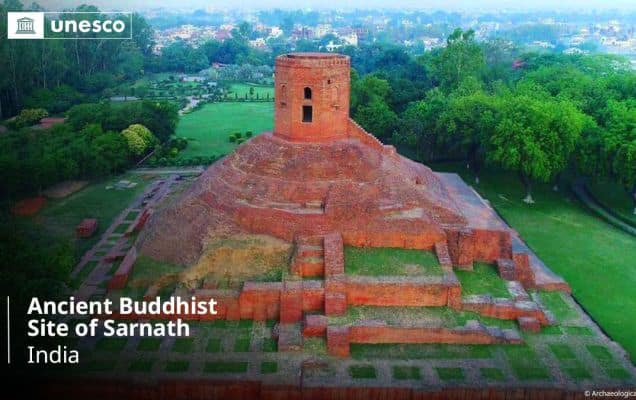
Proud Moment For Every Indian: PM Modi On Sarnath Being Inscribed On UNESCO World Heritage List

Media Coverage

Proud Moment For Every Indian: PM Modi On Sarnath Being Inscribed On UNESCO World Heritage List
NM on the go

Nm on the go

Always be the first to hear from the PM. Get the App Now!
...
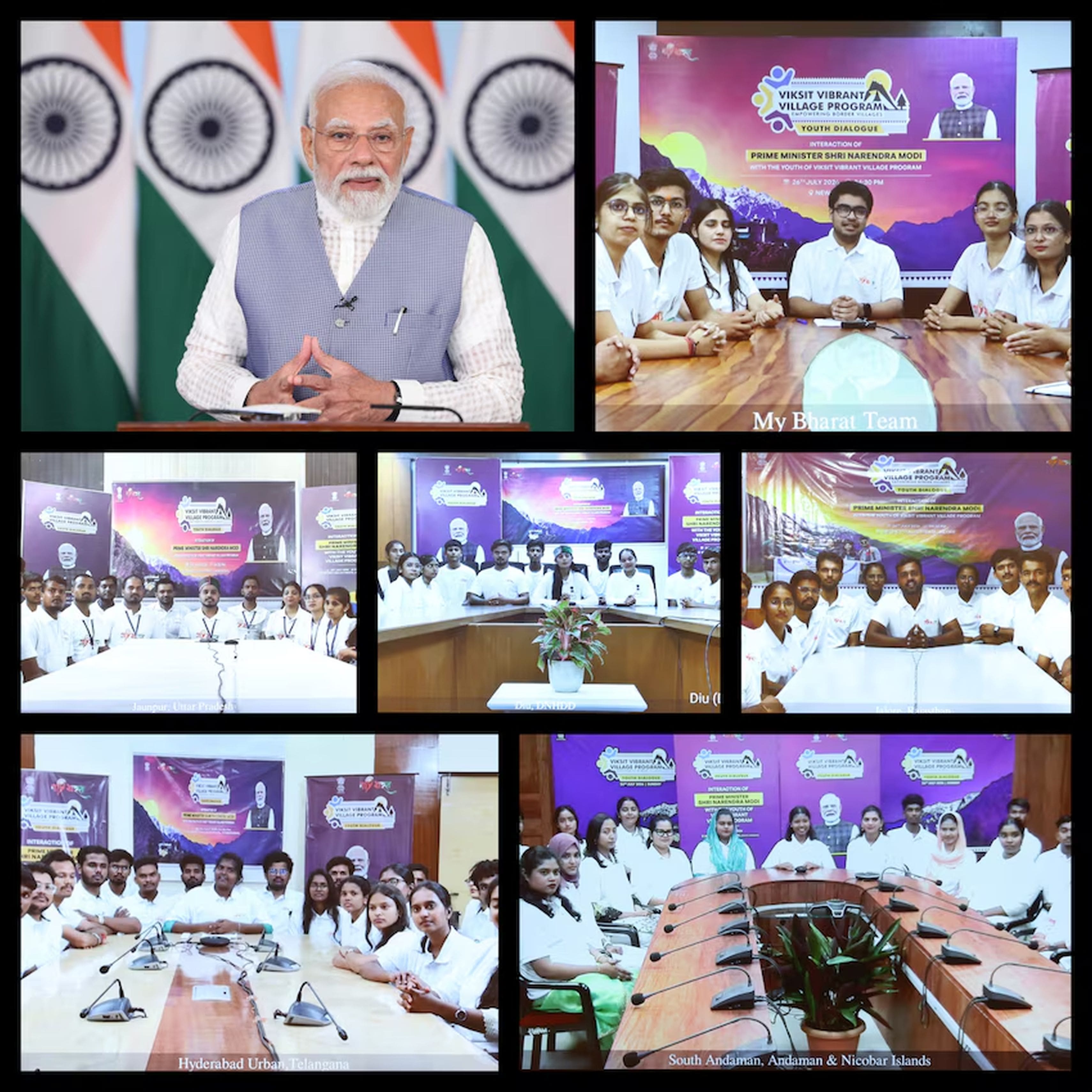
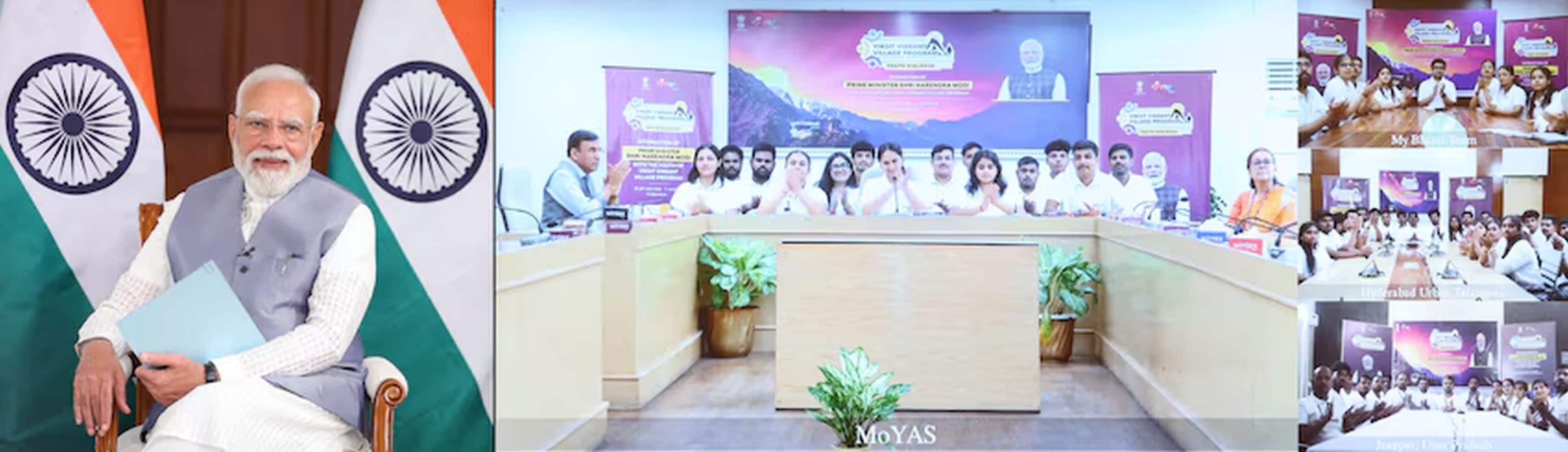
Participants of Viksit Vibrant Village Programme share their experiences with PM Modi
July 26, 2026
Solo travel is a way of discovering the world while discovering oneself: PM
Every young person and every daughter of the country should move forward with confidence and self-belief: PM
Border villages may be geographically distant, but their residents are emotionally deeply connected with the nation: PM
Those who were last in priority earlier are now the first: PM
Journey of young participants reflects the spirit of Ek Bharat, Shreshtha Bharat: PM
Citizens should spend at least five per cent of their travel budget on purchasing local products: PM

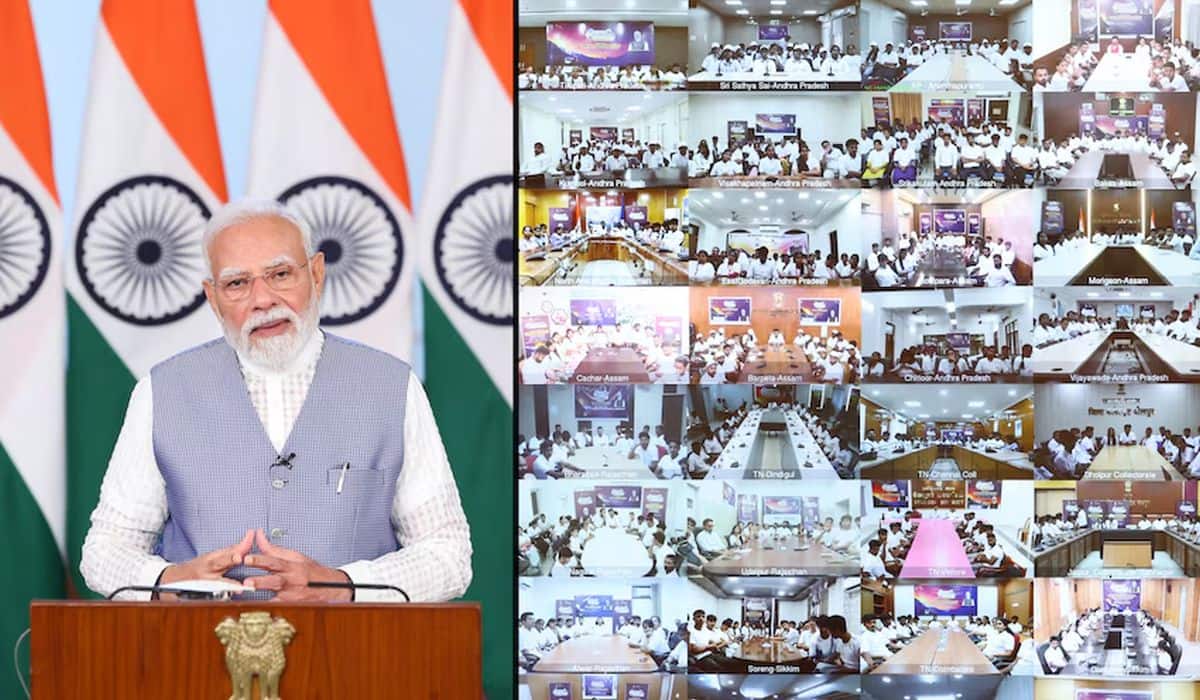
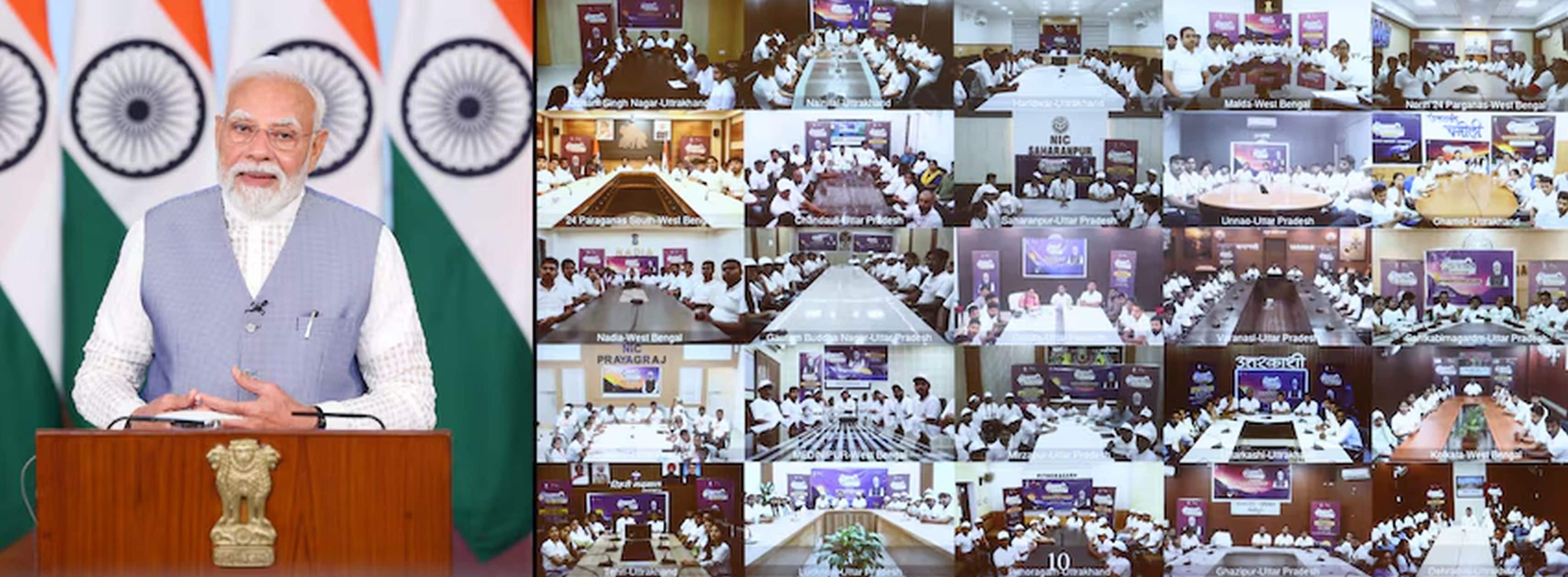
Prime Minister Shri Narendra Modi today interacted virtually with participants of the Viksit Vibrant Village Programme 2026, during which young MYBharat Volunteers shared their experiences from border villages in Himachal Pradesh, Uttarakhand and Ladakh. The interaction highlighted the transformation of these villages through improved infrastructure, connectivity and public services, along with women-led development, tourism, community participation and stronger national integration. More than 5,000 MYBharat Volunteers from 245 districts across the country joined the programme virtually.

Introducing the programme, MYBharat Volunteer Shri Divyansh Joshi from Dadra and Nagar Haveli and Daman and Diu outlined initiatives including the Viksit Bharat Young Leaders Dialogue, Viksit Bharat Youth Parliament, Budget Twist, mentorship and volunteering programmes. He said more than 2.30 crore young people had benefitted from MYBharat initiatives, while 2.86 lakh youth participated in the nationwide quiz through which 403 volunteers were selected to visit border villages. Recounting his visit to Leo village in Kinnaur district of Himachal Pradesh, he highlighted interactions with residents, senior citizens and schoolchildren, career counselling for local youth, sports and cultural activities, the leadership of the woman Sarpanch and the functioning of the Ayushman Arogya Mandir. He said his homestay experience showed that belonging transcends language and State boundaries, adding that the volunteers paid homage to the country’s brave soldiers at the Kargil War Memorial and would compile their experiences for submission to the Prime Minister while remaining committed to the vision of Viksit Bharat.

MYBharat Volunteer Ms Nikita Pravin Solanki from Dadra and Nagar Haveli and Daman and Diu said her selection through the MYBharat quiz enabled her first independent journey to Dhar Chango Nichla village in Kinnaur district. The affectionate welcome extended by the villagers strengthened her confidence and reflected changing societal attitudes towards women. Through her interactions with the woman Pradhan, Panchayat representatives, farmers, senior citizens and children, she witnessed the multiple responsibilities shouldered by rural women and found, contrary to her earlier perceptions, quality roads, regular electricity, drinking-water connections and digital connectivity, which residents attributed to the Pradhan Mantri Gram Sadak Yojana, Jal Jeevan Mission and Ayushman Bharat. She also participated in cleanliness, sports and cultural activities, recalled the curiosity of village children about her home region and said she continued to remain in touch with her host family.

Recalling his Diwali visit to the Chango region in 2016, the Prime Minister said Ms Solanki’s journey reflected the growing confidence of India’s daughters and that MYBharat had transformed individual journeys into one national family. “Solo travelling is a way of discovering the world while discovering yourself,” observed Shri Modi.

MYBharat Volunteer Shri Sunil Kumar Kela from Jalore, Rajasthan, said that being from a border village himself enabled him to connect readily with the people of Dhar Chango Uprela village in Himachal Pradesh. Despite geographical and climatic differences, he found the people of both regions united by courage, patriotism and warmth. He remained connected with his family through video calls, showing them the Sutlej River, school, Jan Aushadhi Kendra, hospital and sports facilities, while his social-media posts encouraged friends to explore MYBharat. His initial apprehensions regarding roads, accommodation, electricity and mobile connectivity were dispelled by the high-quality roads reaching the homestay, solar-energy installations and improved infrastructure that had transformed daily life. He added that he remained in contact with his host family and had invited them to visit Rajasthan.

The Prime Minister observed that young people from border villages across Rajasthan, Kashmir, Himachal Pradesh and the North-East shared a common outlook and that border residents, though geographically distant, remained emotionally deeply connected with the nation. “Those who were last in priority earlier are now the first,” remarked Shri Modi.

MYBharat Volunteer Ms Bhavya Shri from Chittoor district of Andhra Pradesh said her desire to learn beyond academics led her to MYBharat and to Harsil Valley in Uttarkashi district of Uttarakhand. Her initial concerns about the unfamiliar climate, food, culture and lifestyle were dispelled by the hospitality of local residents and officials, while interactions with Indo-Tibetan Border Police personnel deepened her appreciation of their discipline, humility, dedication and commitment to the nation. She said participants from different States, languages and cultures arrived as strangers but returned as one family, reflecting the spirit of Ek Bharat, Shreshtha Bharat. Photographs of the Nelang and Jadung Valleys and apple orchards generated considerable interest among her friends, many of whom subsequently registered on MYBharat. She also recalled the equipment provided to help participants adapt to the cold climate, the resilience of a resident who chose to remain in his landslide-affected native village despite hardship, and the peaceful, meditative character of the Garhwali dance in contrast with the energetic folk dances of her home State.

Recalling his visit to Mukhwa village in Uttarakhand, the Prime Minister said the interaction reaffirmed his belief that India’s youth place the nation first. “The manner in which all of you have lived the spirit of Ek Bharat, Shreshtha Bharat will inspire many more young people,” observed Shri Modi.

Twenty-one-year-old MYBharat Volunteer Ms Sayantika Mistry from the Andaman and Nicobar Islands thanked the Prime Minister for envisioning MYBharat as a platform enabling crores of young people to contribute to nation-building. Recounting her journey from sea level to Maan village in Ladakh at an altitude of nearly 17,000 feet, she described suffering from acute mountain sickness and the care extended by the MYBharat team and ITBP personnel, including doctors who prioritised treating her as their guest before attending to their own personnel. She said the experience showed that ITBP personnel not only protected the borders but also cared deeply for citizens and made her appreciate the resilience required to live in high-altitude conditions. Contrary to her family’s expectation of poor connectivity, she found reliable internet, QR-code and UPI payment facilities and Wi-Fi in the border region. She also interacted with local children, one of whom expressed a desire to visit the Andaman and Nicobar Islands, and highlighted the community spirit through which residents collectively organised weddings and monastery events, restored a damaged mobile tower and constructed a storage facility for its batteries.

Encouraging Ms Mistry to document her experience through articles or a book so that others could better understand the country’s vastness, people and shared sense of belonging, Shri Modi remarked, “When you share joy, it multiplies.”

MYBharat Volunteer Shri Ashish Soni from Jaunpur district of Uttar Pradesh, who is preparing for the Civil Services Examination, thanked the Prime Minister for enabling young people to contribute suggestions during the Budget-making process. Sharing his experience of Kaza Khas in Himachal Pradesh’s Spiti region, he said his parents, who remembered a time when mobile connectivity in remote areas was difficult, were astonished when he video-called them from nearly 14,000 feet. Describing MYBharat as a bridge between a generation that had witnessed struggle and another witnessing transformation, he recounted writing letters from the world’s highest post office at Hikkim to the Prime Minister, his family, the Ministry of Youth Affairs, the Defence Minister and his District Magistrate. He said India was connected not only through metros and airports but also through institutions serving its remotest regions and highlighted QR-code payments at around 14,500 feet as evidence that Digital India had become a source of trust across the country. His interactions with women’s self-help groups introduced him to entrepreneurship through homestays, digital platforms and sea buckthorn-based products, while discussions on the PM MUDRA Yojana and Deendayal Antyodaya Yojana focused on expanding livelihood opportunities. He also highlighted the role of the Border Roads Organisation-built Chicham Bridge in improving connectivity, tourism and economic activity, besides noting the region’s potential for night tourism.

Observing that technology had reached every corner of the country and that purchasing local products would generate employment, support livelihoods and carry regional identities across India, Shri Modi urged, “Wherever you travel, spend at least five per cent of your travel budget on buying products from local people.”

Concluding the interaction, the Prime Minister extended his best wishes to the young participants. The programme highlighted MYBharat’s role in enabling young people to experience first-hand the transformation of India’s border villages, dispel outdated perceptions and deepen their understanding of the country’s cultural diversity, developmental progress, community participation and the spirit of Ek Bharat, Shreshtha Bharat.