PM launches the Gyan Bharatam Portal - a dedicated digital platform to accelerate manuscript digitisation, preservation, and public access
Gyan Bharatam Mission is set to become the voice of India's culture, literature and consciousness: PM
Today, India has the world's largest collection of about one crore manuscripts: PM
Throughout history, crores of manuscripts were destroyed, but the ones that remain show how devoted our ancestors were to knowledge, science and learning: PM
India's knowledge tradition is built on four pillars of Preservation, Innovation, Addition & Adaptation: PM
India's history is not just about the rise and fall of dynasties: PM
India is itself a living stream, shaped by its ideas, ideals and values: PM
India's manuscripts contain footprints of the development journey of the entire humanity: PM

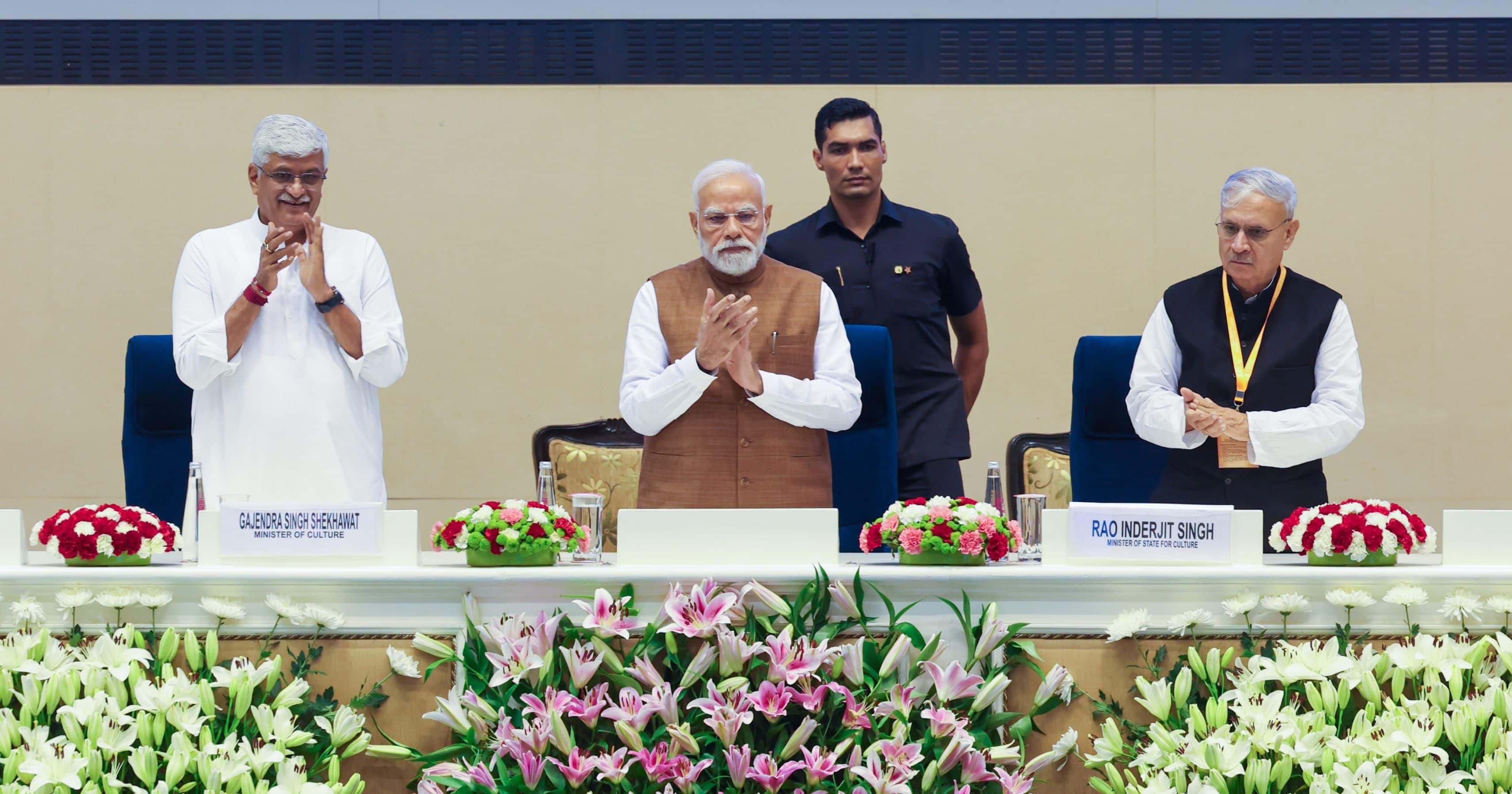
Union Minister of Culture and Tourism Shri Gajendra Singh Shekhawat ji, Minister of State for Culture Rao Indrajit Singh ji, all the scholars, ladies and gentlemen!

Today Vigyan Bhawan is witnessing the renaissance of India's golden past. Just a few days ago, I announced the Gyan Bharatam Mission. And today in such a short time we are organizing the Gyan Bharatam International Conference. The portal associated with it has also been launched recently. This is not a government or academic event; the Gyan Bharatam Mission is going to become a proclamation of India's culture, literature and consciousness. The thoughts and contemplation of thousands of generations, the wisdom and research of the great sages and scholars of India, our knowledge traditions, our scientific heritage, we are going to digitize them through the Gyan Bharatam Mission. I congratulate all the countrymen for this mission. I wish all the best to the entire team of Gyan Bharatam and also to the Ministry of Culture.

Friends,

When we look at a manuscript, that experience is like time travel. This thought also comes to mind that there is a huge difference between the circumstances of today and earlier. Today we can write so much with the help of keyboard, there is also the option of delete and correction, we can make thousands of copies of a page with the help of printers, but imagine the world of hundreds of years ago, at that time there were no such modern material resources, our ancestors had to depend on intellectual resources only. How much attention was required while writing each letter, so much hard work was required for each book, and even at that time the people of India had built the biggest libraries in the world. Even today India has the world's largest manuscript collection. We have about 1 crore manuscripts. And the figure of 1 crore is not less.
Friends,

In the cruel blows of history, millions of manuscripts were burnt and disappeared, but those that survived bear witness to how deep and wide was the devotion of our ancestors towards knowledge, science, reading and teaching. Fragile texts made of Bhojpatra and Palm leaves (ताड़पत्र), words written on copper plates (ताम्रपत्र) were at risk of metal corrosion, but our ancestors considered words as God and served them with ‘अक्षर ब्रह्म भाव’. Generation after generation, families kept preserving those books and manuscripts. Immense respect for knowledge, concern for future generations, responsibility towards society, sense of dedication towards the country - where can we find a bigger example than this.

Friends,

India's knowledge tradition has remained so rich till today because its foundation is based on 4 main pillars. First- Preservation, second- Innovation, third- Addition and fourth- Adaptation.

Friends,

If I talk about preservation, you know that our most ancient scriptures, Vedas are considered to be the basis of Indian culture, Vedas are supreme. Earlier the Vedas were passed on to the next generation on the basis of 'Shruti'. And for thousands of years, the Vedas were preserved with authenticity without any error. The second pillar of this tradition of ours is innovation. We have continuously innovated in Ayurveda, Vastu Shastra, Astrology and metallurgy. Every generation progressed beyond the previous one, and made the old knowledge more scientific. Texts like Surya Siddhanta and Varahamihira Samhita were being written continuously, and new knowledge kept getting added to them. The third pillar of our preservation is addition. That is, every generation, along with preserving the old knowledge, also contributed something new. For example, after the original Valmiki Ramayana, many Ramayanas were written. We got texts like Ramcharitmanas. Annotations were written on the Vedas and Upanishads. Our acharyas gave explanations like Dvaita and Advaita.

Friends,

Similarly, the fourth pillar is – adaptation. That is, we also did self-introspection over time, and changed ourselves as per the need. We emphasized on discussions and followed the tradition of Shastrartha. Then the society abandoned the ideas that had become irrelevant, and accepted new ideas. In the medieval period, when many evils came into the society, there also came such eminent personalities who kept the conscience of the society awakened and saved and preserved the heritage.

Friends,

Apart from the modern concepts of nations, India has a cultural identity, its own consciousness, its own soul. The history of India is not just about the victories and defeats of sultanates. The geography of our princely states and kingdoms kept changing, but from the Himalayas to the Indian Ocean, India remained intact. Because India is a living flow in itself, which is created by its thoughts, ideals and values. In the ancient manuscripts of India, we see the lines of the continuous flow of India. These manuscripts are a declaration of our unity in diversity, a proclamation as well. Manuscripts are present in about 80 languages ​​in our country. We have a vast ocean of knowledge in so many languages ​​like Sanskrit, Prakrit, Assamese, Bengali, Kannada, Kashmiri, Konkani, Maithili, Malayalam, Marathi. Gilgit manuscripts tell us the authentic history of Kashmir. I went to see the small exhibition that is being held right now. It is described in detail there and its pictures are also present. In the manuscript of Kautilya Artha shastra, we get to know about India's understanding of political science and economics. In the manuscript of Kalpa sutra of Acharya Bhadrabahu, the ancient knowledge of Jainism is preserved. The knowledge of Lord Buddha is available in the manuscripts of Sarnath. Manuscripts like Ras Manjari and Gita Govinda have preserved the diverse colors of devotion, beauty and literature.

Friends,

These manuscripts of India contain the footprints of the development journey of entire humanity. There is philosophy as well as science in these manuscripts. They contain medicine as well as metaphysics. There is art, astronomy, and architecture in these. You can take as many examples as you want. From Mathematics to binary based Computer Science, the foundation of the entire modern science is based on zero. You all know that zero was discovered in India. And, the evidence of that ancient use of zero and mathematical formulas is still preserved in the Bakhshali Manuscript. The Bower Manuscript of Yashomitra tells us about the centuries old medical science. Manuscripts of texts like Charak Samhita and Sushruta Samhita have preserved the knowledge of Ayurveda till date. In Sulva Sutra we get ancient geometrical knowledge. In Krishi Parashara we get information about traditional knowledge of agriculture. Manuscripts of texts like Natya Shastra help us understand the journey of emotional development of human beings.

Friends,

Every country presents its historical things to the world as a civilizational asset and greatness. If the countries of the world have any manuscript, any artifact, they preserve it as a national treasure. And India has such a huge treasure of manuscripts, it is the pride of the country. Recently, I went to Kuwait, so during my stay, I try to find 4-6 influencers there, and if I have time, I spend some time with them, try to understand their thinking. I met a gentleman in Kuwait who has so many documents on how sea trade was conducted from India centuries ago, and he has collected so much, and he came to me with so much pride, that is, with great pride, I saw what all would be there, where all would it be, we have to preserve all this. Now India is going to present this glory to the world with pride. It was just said here that we should search and bring back all the manuscripts in the world and then it was quietly said that the Prime Minister should do it. But you know that the idols stolen from us were returned in very small quantities earlier, today old idols are being returned in hundreds. They are not coming back because they are coming to give it to me after deciding on my chest, it is not like that. They have faith that if they hand it over to such hands, then every effort will be made to increase its glory. Today India has created this faith in the world, people feel that this is the right place. When I went to Mongolia, I was interacting with Buddhist monks there and I saw that they had a lot of manuscripts. So, I requested them that I could do something with it. I brought all those manuscripts, digitalized them and gave them back to them and now it has become their treasure.

Friends,

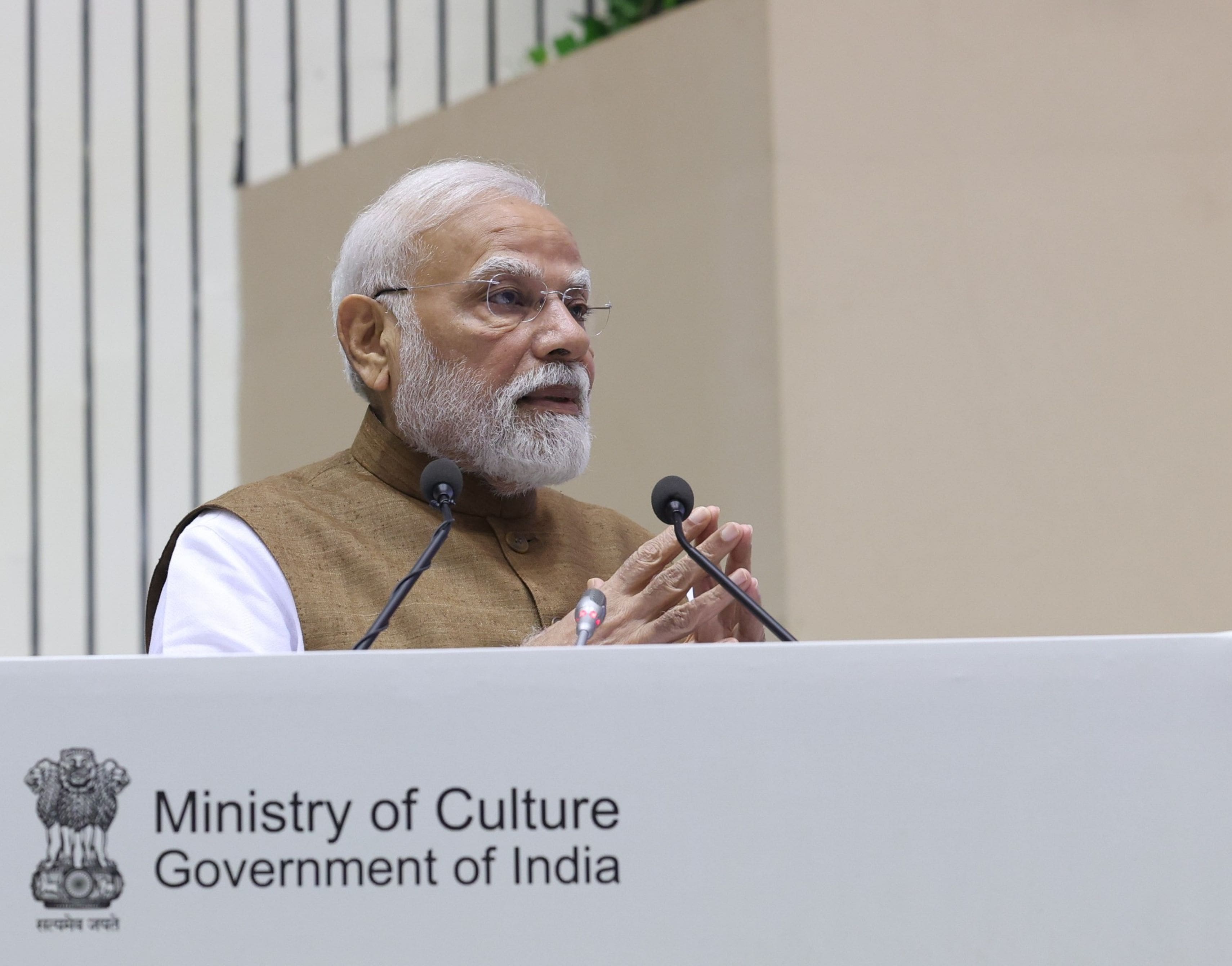
Gyan Bharatam Mission is an important part of this great campaign. Many organizations of the country are working with the government in this effort with the spirit of public participation. Kashi Nagari Pracharani Sabha, Asiatic Society of Kolkata, 'Dharohar' of Udaipur, Acharya Shri Kailashsuri Gyan Mandir in Koba, Gujarat, Patanjali of Haridwar, Bhandarkar Oriental Research Institute of Pune, Saraswati Mahal Library of Thanjavur, with the cooperation of hundreds of such organizations, more than one million manuscripts have been digitized so far. So many countrymen have come forward and made their family heritage available for the country. I thank all these organizations and all such countrymen. I would definitely like to focus on one topic, I met some animal lovers recently, why did you laugh? There are many such people in our country, and the specialty is that they do not consider cow as an animal. So, while talking to him I told him that in our country there is a lot of knowledge about animal treatment written in the scriptures; many manuscripts are possible. When I was in Gujarat, I had an interest in the Asiatic Lion of Gujarat and I used to show a lot of interest in it. So, I used to find out that if they hunted too much and if they were in trouble, then they knew that there is a tree and its fruit should be eaten because vomiting can happen, the animal knew this. This means that wherever there are lion settlements, it is necessary to have such fruit trees. Now this is written in our scriptures. We have many manuscripts in which all these things have been written. What I mean to say is that we have so much knowledge available to us, and it is written down, we have to search it, explore it and interpret it in today's context.
Friends,

India has never measured its knowledge with the power of money in the past. Our sages have also said - विद्या-दानमतः परम्।. That is, knowledge is the greatest donation. That is why, in ancient times, the people of India have also donated manuscripts freely. When the Chinese traveler Hiuen Tsang came to India, he took with him more than six hundred and fifty manuscripts. And the President of China once told me that he had spent most of his time in my village, where I was born in Vadnagar. But when he returned to China from here, he lived at the birthplace of President Xi. So, he took me to his village and I went with him to see the place where Hiuen Tsang had lived, and President Xi showed me the manuscripts in full detail, and there were some paragraphs of the description of India in it, which the interpreter explained to me there. It is very impressive to the mind. He would look at each and every thing and wonder what treasure he might have. Many manuscripts of India have still reached Japan from China. In 7th century Japan they were preserved as a national treasure at Horyuji Monastery. Even today, ancient manuscripts of India are kept in many countries of the world. Under the Gyan Bharatam Mission, we will also try to unite this shared heritage of humanity.

Friends,

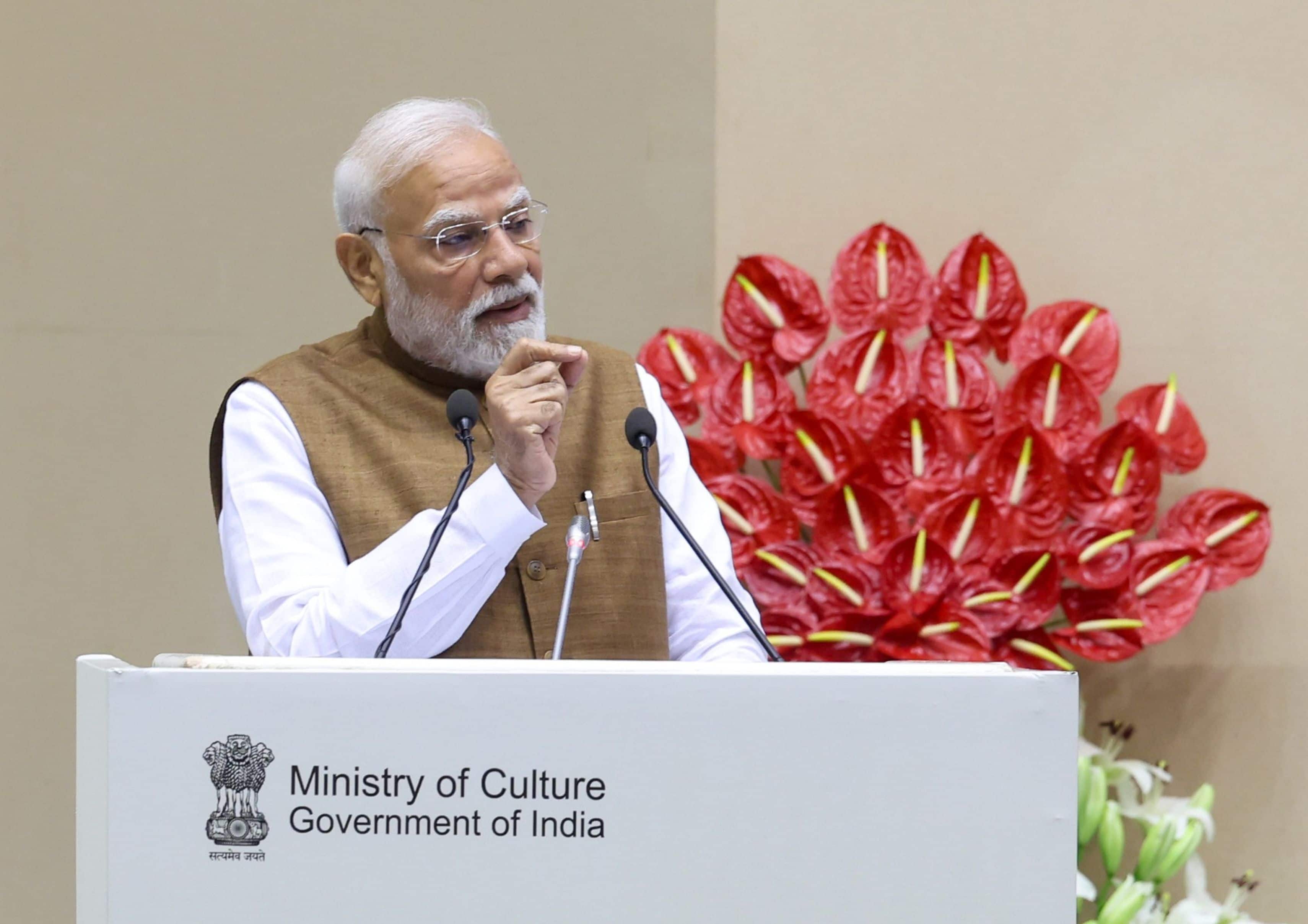
We had also taken this initiative during the G-20 cultural dialogue. We are involving countries which have centuries-old cultural ties with India in this campaign. We gifted reprinted volumes of the Mongolian Kanjur to the Ambassador of Mongolia. In 2022, these 108 volumes were also distributed in monasteries of Mongolia and Russia. We have signed MoUs with universities in Thailand and Vietnam. We are training scholars there to digitize old manuscripts. As a result of these efforts, many manuscripts in Pali, Lanna and Cham languages ​​have been digitized. We will expand these efforts further through the Gyan Bharatam Mission.
Friends,

Another big challenge will also be addressed through the Gyan Bharatam Mission. Many important information related to India's traditional knowledge system, which we have been using for centuries, are copied and patented by others. It is also necessary to stop this piracy. These efforts will gain more momentum through digital manuscripts, and intellectual piracy will be curbed. The world will also get to know the original sources with authenticity on all subjects.

Friends,

Gyan Bharatam Mission has another very important aspect. For this, we are opening many new domains of research and innovation. Today, the world has a cultural and creative industry worth about two and a half trillion dollars. Digitized manuscripts will feed the value chains of this industry. These millions of manuscripts and the ancient information hidden in them will also serve as a huge database. These will give a new push to 'data driven innovation'. This will create new opportunities for the youth in the tech field. As the manuscripts are digitized, new possibilities will be created for academic research.
Friends,

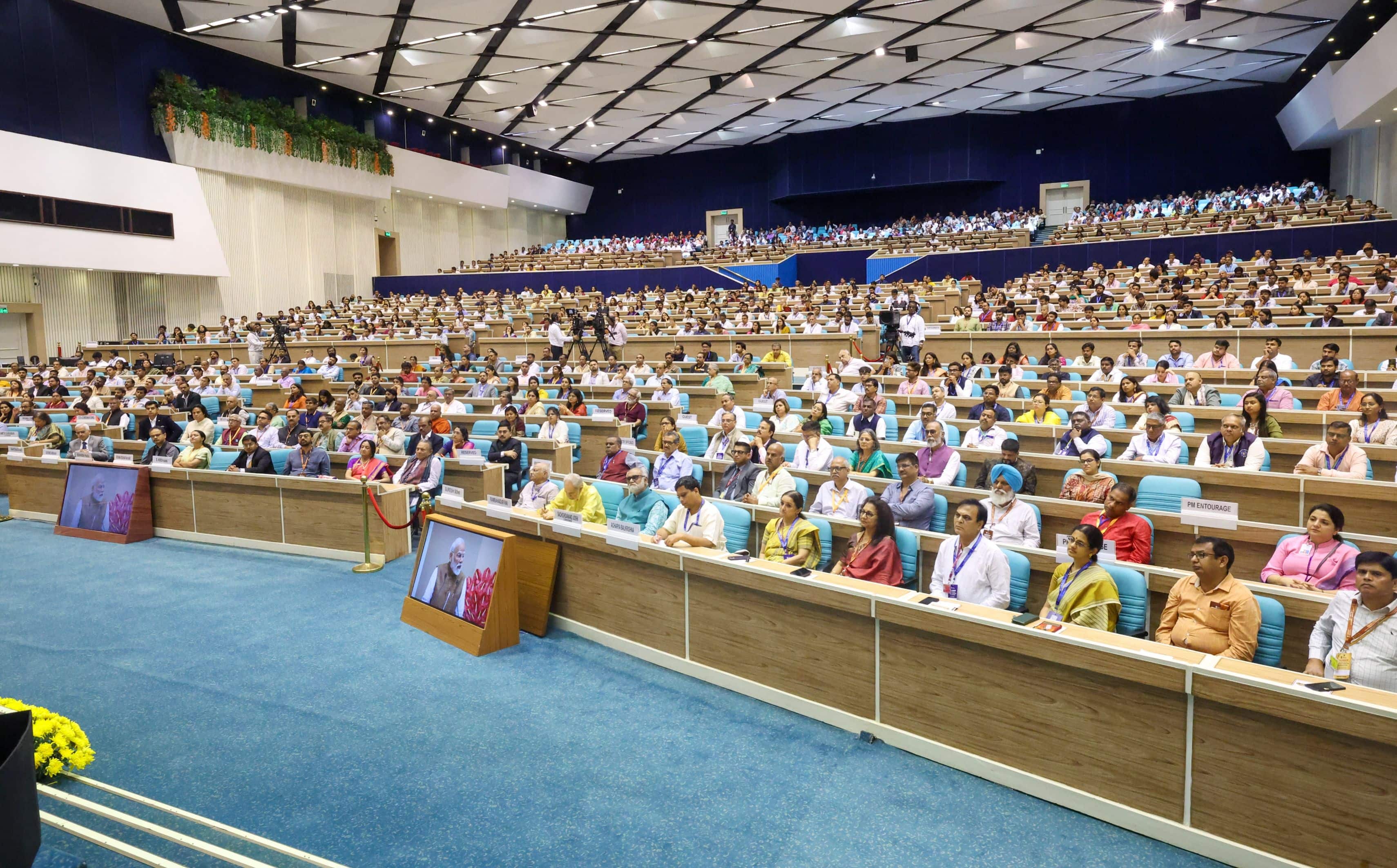
We have to increase the use of new technologies like AI to study these digitized manuscripts. I agree with what was said in the presentation here that AI cannot replace talent or human resources and we also want that it should not be replaced, otherwise we will become victims of new slavery. It is a support system, it strengthens us, boosts our strength, boosts our speed. With the help of AI, these ancient manuscripts can be understood deeply and can also be analyzed. Now see, not all Vedic mathematics texts are available, if we try through AI, then it is possible that many new formulas can be discovered. We can discover them. AI can also be used to bring the knowledge contained in these manuscripts to the world. Another problem is that our manuscripts are scattered, and presented in different ways, in different periods. The advantage of AI will be that all these can be collected and we can get a very good tool to extract nectar from it, that if there are things lying at 10 places, then with the help of AI we can bring them together and observe them. We may... as it was mentioned in the presentation in the beginning that the same words have many uses, it may be that once we solve them, we will make 100 questions, today we are stuck with lakhs of questions, we will bring it to 100. It may be that when we connect with human power, it will bring results, but there are many such difficulties, but there are ways also.

Friends,

I appeal to all the youth of the country to come forward and join this campaign. And the Minister Ji was just telling me that from yesterday till today, 70% of the people who are participating in this are youth. I think this is the biggest sign of its success. If the youth start taking interest in this, then I am sure that we will achieve success very quickly. How can we explore the past through technology? How can we make this knowledge accessible to humanity on evidence-based parameters? We should make efforts in this direction. Our universities and institutes should also take new initiatives for this. Today, the whole country is moving forward with the spirit of Swadeshi and the resolve of self-reliant India. This campaign is also an extension of that. We have to make our heritage synonymous with our strength, i.e. power. I believe that a new chapter of the future is going to begin with the Gyan Bharatam Mission. I know that these are such subjects in which there is no glamour, no glitter. But its power is so much that no one can shake it for centuries, we have to connect with this power. With this belief, best wishes to all of you once again.

Thank you very much.

Explore More
Today, the entire country and entire world is filled with the spirit of Bhagwan Shri Ram: PM Modi at Dhwajarohan Utsav in Ayodhya

பிரபலமான பேச்சுகள்

Today, the entire country and entire world is filled with the spirit of Bhagwan Shri Ram: PM Modi at Dhwajarohan Utsav in Ayodhya
Project Cheetah: How A Species Declared Extinct During Nehru Era Returned To India Under Modi Govt

Media Coverage

Project Cheetah: How A Species Declared Extinct During Nehru Era Returned To India Under Modi Govt
NM on the go

Nm on the go

Always be the first to hear from the PM. Get the App Now!
...
Text of PM’s address at laying of foundation stone/dedication of various development works in Daman
June 05, 2026
A new development push for Daman with the launch of projects across healthcare, aviation, tourism and infrastructure; These initiatives will transform lives across the Union Territory: PM
The data released today clearly shows how strong the foundation of India's economy is; In the year 2025–26, India achieved a growth rate of 7.7%, And in the previous quarter, which ended on March 31, India's growth stood at 7.8% as well: PM
Even amidst this severe global crisis, the collective efforts of 1.4 billion citizens have ensured that India is not just sustaining itself, but also succeeding in its endeavors to stay ahead of the curve: PM
How our government prioritizes health is clearly proven by the findings of the National Family Health Survey; Previously, most child deliveries in India did not occur in hospitals; Today, over 90 percent of all deliveries in the country happen in hospitals: PM
Because of Mission Indradhanush, India has seen robust progress in child immunization; Before 2014, only 60 percent of children were fully vaccinated;Today, this statistic has climbed to nearly 90 percent: PM

Bharat Mata Ki Jai!
Bharat Mata Ki Jai!

Administrator of Dadra and Nagar Haveli, Daman and Diu, Praful Bhai Patel, my colleague in Parliament Kalaben Delkar, President of Daman Municipal Council Deepika Tandel Ji, Chairman of Daman District Panchayat Dharm Babu Patel, Chairman of Silvassa Municipal Council Somnath Devre Ji, Chairperson of Dadra Nagar Haveli District Panchayat Nisha Bhavsar Ji, Chairman of Diu Municipal Council Harish Kapadia Ji, Chairperson of Diu District Panchayat Kotia Ranjitaben, and my dear brothers and sisters who have gathered here in such a large number,

Just as you have gathered here, in Lakshadweep too a large number of people are connected with us through video, because today a new beginning of development in Lakshadweep, a new project that will bring revolutionary change in the lives of the people of Lakshadweep, has also been inaugurated and foundation stones have been laid for some schemes.

Friends,
A few years ago, when I came among you, I had said that our Daman is rapidly becoming Mini India, and today I see, on the left side is entire Bengal and on the right side is entire Assam. Daman has become a living example of Mini India. The diversity here, people from different regions residing here, gives a beautiful glimpse of the whole of India among you. You all have come in such large numbers to bless us, for this I thank you all very much.

Brothers and sisters,
I have had the opportunity to come to Daman and Diu many times. I also keep visiting Dadra and Nagar Haveli, and when I was not Chief Minister or Prime Minister, I used to come here many times. But now when I come here and see the good governance, the governance model, it feels very good. Every time I feel that compared to the last time, this region has moved miles ahead on the path of development.

Friends,

Dadra and Nagar Haveli, Daman and Diu had dreamt of development for decades. The generations who dreamt earlier have passed away. But today the present generation is seeing with their own eyes that the dreams their parents and grandparents used to see are now being fulfilled before their eyes. Even today, many projects related to connectivity, health, education, tourism, and urban infrastructure have been inaugurated and foundation stones laid here. These development works will make life easier for the people of Daman and the entire Union Territory. They will create new opportunities for the youth. Behind these works, the vision of Praful Bhai Patel, his and his team’s hard work is clearly visible. For this, I also appreciate Praful Bhai and his entire team. I extend many congratulations and best wishes to the people of Lakshadweep and Dadra-Nagar Haveli.

Friends,

Today as I have come among you, a pleasant news has arrived. I had already left Delhi this morning, but the figures that have just come, the news that has arrived, is truly delightful, and I also want to share this happiness with you. The figures that have come today clearly show how strong the foundation of India’s economy is. In the year 2025-26, that is, the financial year that has just ended, India has achieved a growth rate of 7.7 percent, 7.7, and the last quarter that ended on 31st March also recorded India’s growth at 7.8 percent, 7.8. And this is the fastest-growing large economy in the world. Every Indian should feel proud, this is its pace. Today the country is running on the Reform Express, today the country is witnessing such massive infrastructure development, such large-scale work is being done for the welfare of the poor, and the result of all these efforts is that today the country is moving ahead as the fastest-growing large economy. And we all know, the world is engulfed in crises, the economies of the whole world are buried under question marks, but even in this worst period of global crisis, with the collective efforts of 1.4 billion countrymen, India is not only able to sustain itself but also succeeding in staying ahead. I extend many congratulations to the countrymen for achieving this new height in the economic field, and I once again assure the nation that while facing these crises prevailing across the world, the country will continue to move forward with firm resolve, on the path of Reform, Perform, and Transform, at a rapid pace. This is my guarantee to the countrymen.

Friends,

Today development is as important for us as ensuring that our development model is sustainable. Today, on World Environment Day, our Union Territory State is realizing this resolution. Today, on one hand, development projects worth thousands of crores have been inaugurated and foundation stones laid here. At the same time, about one lakh one trees in the name of mother, one lakh saplings are also being planted here. I am proud that this is such a Union Territory which has achieved the feat of 100 percent use of solar energy in government buildings. Today, in Diu, the entire daytime electricity demand is being met only by solar power, and we have to take this further. Electricity should also be available in homes through solar energy, and not only that, families should also earn income from surplus electricity. For this, the initiative of installing rooftop solar plants has begun. I also appreciate you all for these achievements.

Friends,

Along with this, I have also been informed that the people of Daman are running a cleanliness campaign these days. This shows how cleanliness has become a part of the culture of Daman’s public life, and this culture is visible in the cleanliness efforts. I congratulate the people of Daman for these participatory efforts.

Friends,

Dadra Nagar Haveli, Daman and Diu, being a Union Territory, are also the identity and heritage of India. Therefore, our goals for its development are not ordinary. I remember, when I came to Silvassa last year, I gave you the example of Singapore. I had said that once Singapore was a small fishing village. But the people of Singapore dreamt, they set big goals, and today that same Singapore has become the world’s biggest business hub. Today Dadra and Nagar Haveli, Daman and Diu are also dreaming the same dream. These projects like Namo Airport, the iconic bridge to be built on the Damanganga river, the convention center to be built on the ‘Beach Front’, through such infrastructure we are laying the foundation of big resolutions for the future. Through these projects, your movement will become easier. New possibilities for business will be created here. The pace of development on both sides of Daman will become faster.

Friends,

Here opportunities related to the hospitality economy will increase, and along with that, facilities like Transport Nagar will also give new momentum to trade and logistics.

Friends,
The vision we have prepared for the Blue Economy in this region will also be realized only through the strength of hi-tech infrastructure. That is why, today itself, the foundation stone of modern ports is being laid in Kalpeni and Kadmat islands of Lakshadweep. All these efforts will increase the country’s strength in the Blue Economy, and as I said, these are initiatives that will change the destiny of Lakshadweep.

Friends,
In the BJP government, in our NDA government, the first criterion of development for us is-change in the lives of the poor, the deprived, the tribal, and the middle class! For this, the health sector is our very big priority. In the past years, the country has moved forward with a holistic vision for healthcare. We have solved every concern related to treatment. Today even the poorest have the facility of Ayushman Card. They have the assurance of free treatment up to 5 lakh rupees. To ensure timely diagnosis of diseases, there is the arrangement of Pradhan Mantri Ayushman Arogya Mandirs. Affordable medicines are also available through Jan Aushadhi Kendras. To make these facilities even better and more modern, today health services are being connected with technology through the Ayushman Bharat Digital Mission.

Friends,
Due to Ayushman Cards and Jan Aushadhi Kendras alone, the poor and middle class have saved nearly 2.25 lakh crore rupees from being spent.

Brothers and sisters,
The policies of the central government have greatly benefited the people of this region too. At one time, there was a lack of good treatment facilities here. There was not even a medical college here. But now there is a medical college, and post-graduation studies have also started in it. Silvassa’s Namo Hospital has been serving thousands of people since last year. Today, Namo Hospital has also been inaugurated in Daman. The people of this region will now get the benefit of even better healthcare.

Friends,
How our government is prioritizing health is also evident in the results of the National Family Health Survey. At one time, most deliveries in India did not take place in hospitals. Today, more than 90 percent of deliveries in the country are happening in hospitals, which has greatly reduced maternal mortality and infant mortality. Due to Mission Indradhanush, India has also made good progress in the field of child vaccination. Before 2014, only 60 percent of children were fully vaccinated. Today this figure has increased to about 90 percent. There has also been a big change in the field of health security. Before 2014, less than 30 percent of families were connected with health insurance schemes. Today Ayushman Bharat has changed those figures too. Now more than 60 percent of families are getting this protection.

Friends,
If anyone has benefited the most from these efforts of the government in the field of health, it is the women power of my country.

Friends,
Earlier the youth of this region also had to go outside for higher education. But today, not one but many national-level institutes have been established here. In recent years, new school buildings have been built here, smart classrooms have also been built in schools. More than 40 thousand students are benefiting from them. I am happy that the Union Territory is gradually moving forward in the field of education. Many constructions like Swami Vivekananda Education Hub are happening here.

Brothers and sisters,
It is also our resolve that our daughters should not lag behind in this education revolution. For this, many big efforts are being made. Schemes like Saraswati Cycle Scheme and Saraswati Vidya Yojana are helping the daughters here a lot.

Friends,
Today India is trying that the youth of the country should get the right direction along with the degree. They should get such exposure that connects local talent with global opportunities. In fields like design, law, engineering, medical education, IT, drone, and renewable energy, our present preparation will strengthen India’s workforce. Therefore, the expansion of professional institutions is very important.

Friends,
Today the foundation stone of the eighteenth campus of NIFT has been laid. This institution will connect the youth here with global exposure. New courses like Drone Technician have also started in ITI Daman. Training programs related to PM Vishwakarma and PM Surya Ghar Free Electricity Scheme are also benefiting the youth.

Friends,
Sports in the country have also been advanced with new thinking. Our sports are no longer limited to big cities or big stadiums. Efforts like Khelo India have given youth a new platform to showcase their talent. Because of this, children from small regions are coming forward at the national level in the field of sports, and this region has also benefited from it. Diu has emerged as a big center of beach sports today. The Beach Games held at Ghoghla Beach have also drawn the country’s attention to this region. Today modern sports infrastructure is continuously being developed here. The Football Center in Khanvel and the Volleyball Training Center in Daman are strengthening the sports culture here.

Friends,
Today the country’s big focus is also on tourism. Our effort is that tourism should promote local art and culture. Small places should also be connected with big opportunities. Efforts like ‘Dekho Apna Desh’ have inspired people to know about the diversity of the country. Today heritage tourism, beach tourism, eco-tourism, adventure tourism in India are getting new energy.

Friends,
In Dadra and Nagar Haveli, Daman and Diu, tourism is also a sector with immense possibilities. This region has been blessed with natural beauty. That is why the policies the country has worked on regarding tourism have greatly benefited Dadra and Nagar Haveli, Daman and Diu. In 2021, about 6 lakh tourists came here. In 2025, this number increased to about 50 lakh. That means in just a few years, tourism footfall has increased nearly tenfold. This has been possible due to better infrastructure, better facilities, and clean beaches. Daman Night Market, Ramsetu Sea-Front, Namopath Sea-Front, Nani Daman Fort, Gangeshwar Temple Complex, such numerous places are today becoming the new identity of this entire region.

Friends,
To fulfill the dreams of Dadra and Nagar Haveli, Daman and Diu, we also have to increase the industrial strength here. It is also a matter of pride that this Union Territory has made its distinct identity in the field of man-made fiber. Dadra and Nagar Haveli are recognized as the National Man-Made Fibre Capital. This region is also continuously progressing in plastic export. The government has also made continuous efforts to support industries and MSMEs here. MSMEs and other industries here have been provided financial assistance of more than crores of rupees. New opportunities are opening up for small and cottage industries of the Union Territory. I am confident that in the coming time this region will become a big hub of manufacturing.

Friends,
When sensitive governance is combined with the vision of development, transformation rapidly takes shape on the ground. Seeing the impact of our efforts in Dadra and Nagar Haveli, Daman and Diu gives satisfaction. I have full faith in the people of this land. The youth here, the mothers and sisters here, the farmers, artisans, laborers, and entrepreneurs here will take this development journey further in the coming years. I assure you, the central government will stand shoulder to shoulder with you to fulfill your dreams. With this belief, I once again extend many congratulations to you for the development projects. Say with me, Bharat Mata Ki Jai! Bharat Mata Ki Jai! Bharat Mata Ki Jai!

Thank you very much.