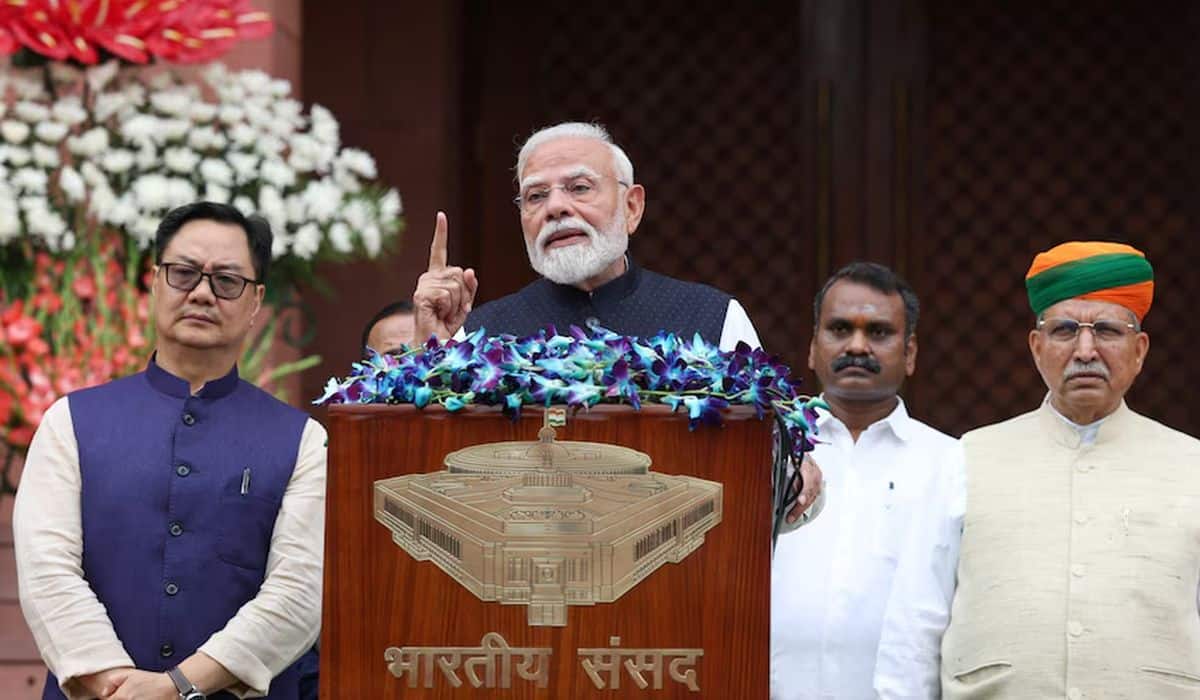
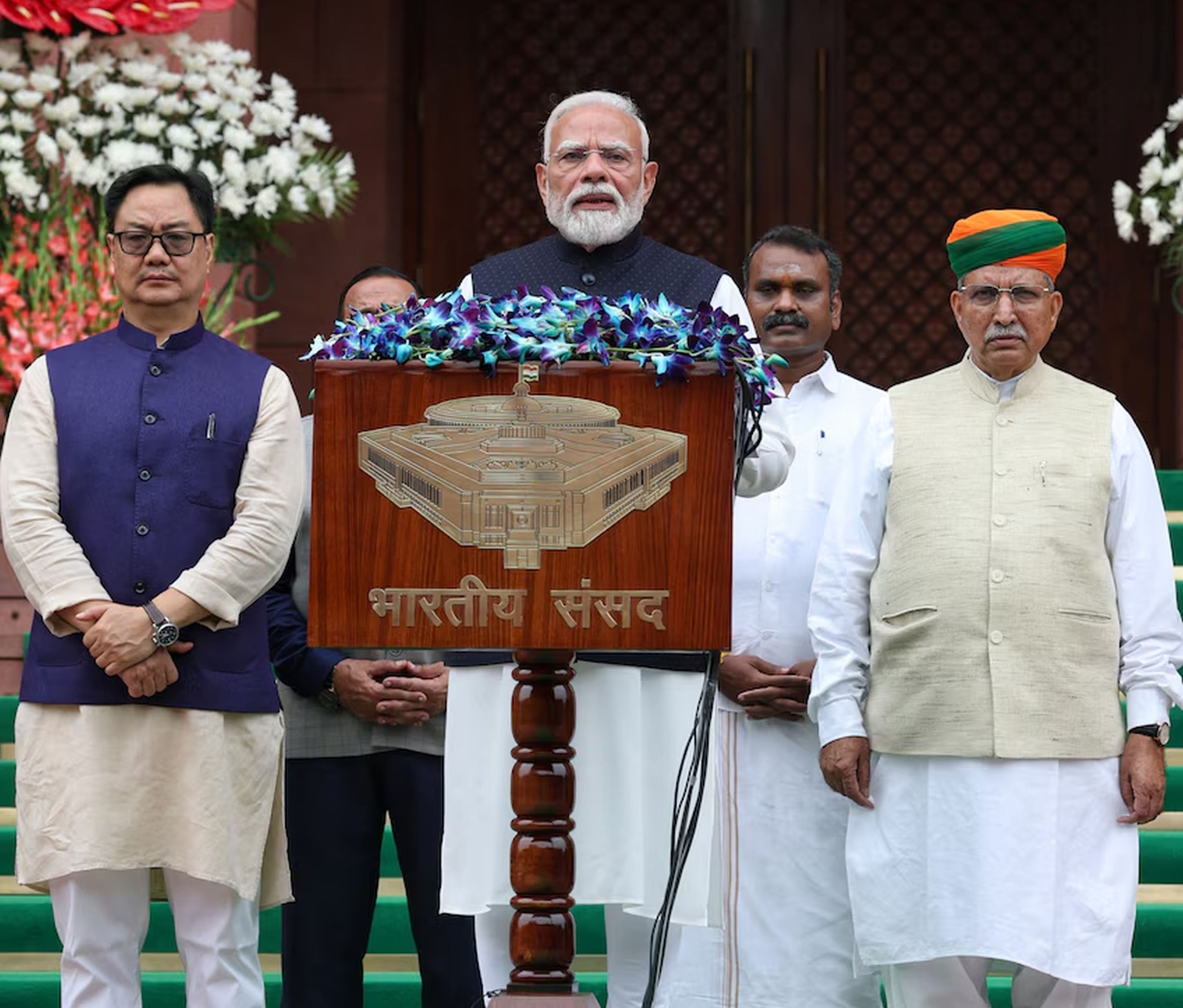
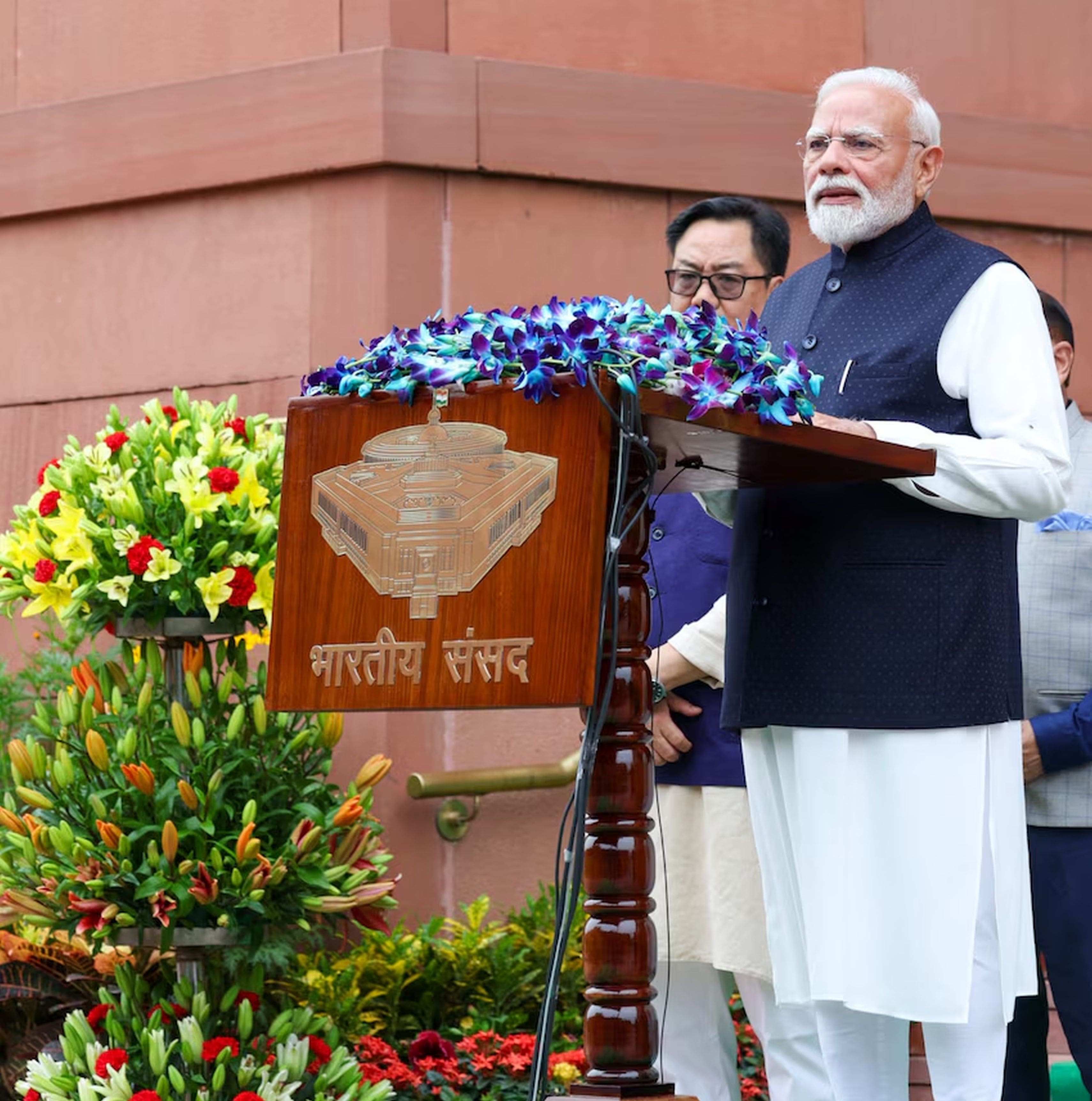
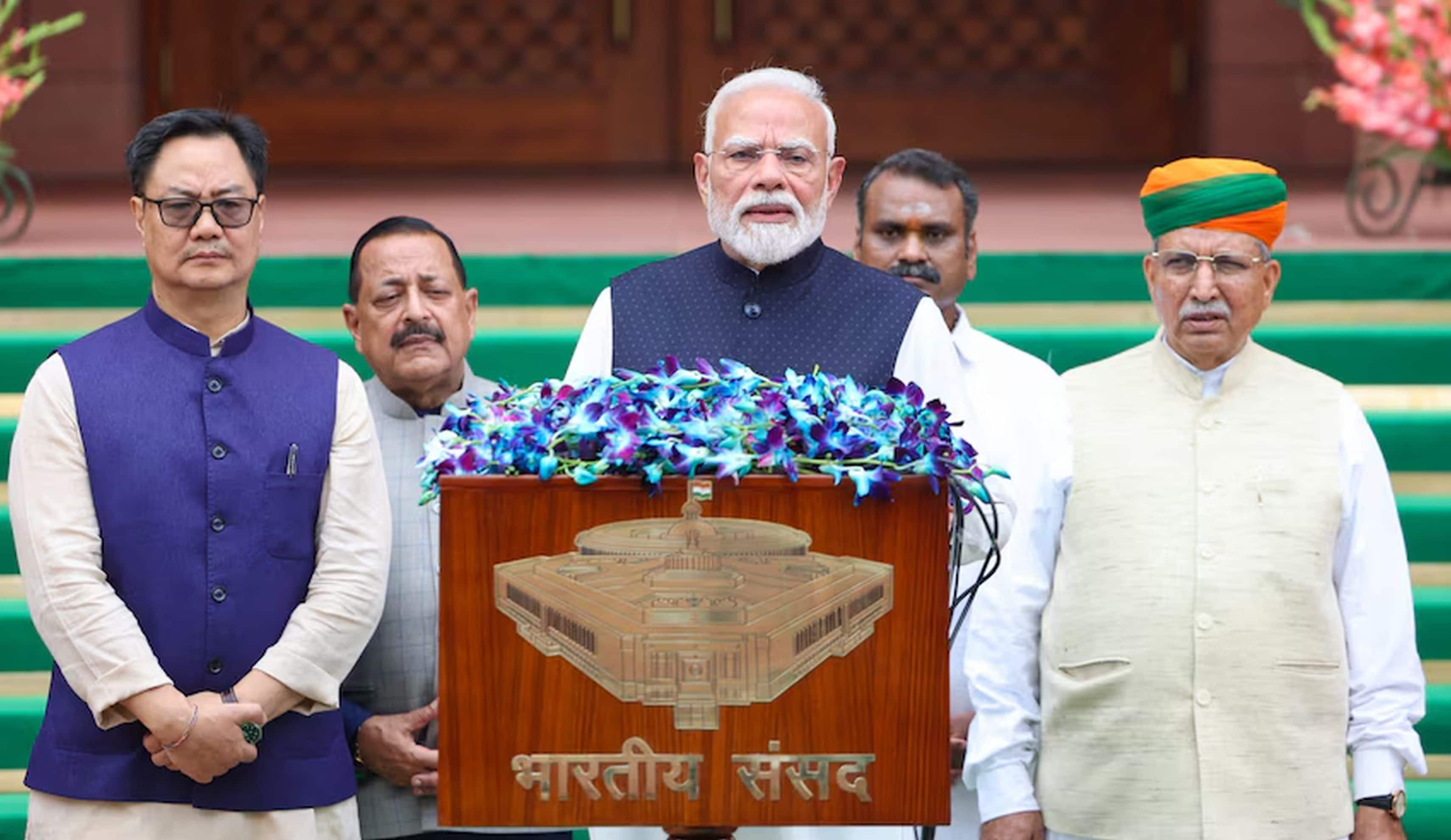
Shri Narendra Modi's speech on Pravasi Bhartiya Divas 2012 at Jaipur.

Published By : Admin | January 9, 2012 | 19:53 IST
"It is always a pleasure to return to this event year on year. The Pravasi Bhartiya Divas is a unique platform which gives us an opportunity to deliberate the development agenda with the Overseas Indians. This interaction gives a world’s view on our development process."
"India has the largest Diaspora in the world after China, estimated at 25 million"
"This includes a large number of Gujaratis, who have travelled to foreign lands and made it big."
"The Non-resident Gujaratis are now spread all around the globe and are settled in various countries including USA, UK, Canada, New Zealand, South Africa, Uganda, Kenya, Tanzania, Australia and the Gulf."
"I think we need a major shift in the way we have been thinking. We need to think afresh. We need to change our strategies and theories from the roots."

Place : Jaipur,  Date : 9-01-2012


Hon’ble Union Minister, my colleague Chief Ministers,Distinguished Overseas Indians, Honoured Guests, Ladies and Gentlemen!

It is always a pleasure to return to this event year on year. The Pravasi Bhartiya Divas is a unique platform which gives us an opportunity to deliberate the development agenda with the Overseas Indians. This interaction gives a world’s view on our development process.

With the efforts of all of us, India has emerged in the frontline of the world economy. It is not only the efforts of industrious people residing in this country but also the support and dedication of all of you – India's sons and daughters – that has enabled us to grow faster. This event provides us an opportunity to reaffirm our commitment to make India stronger each day, in every sphere.

India has the largest Diaspora in the world after China, estimated at 25 million, as per UNDP 2010 report. India is also one of the largest ‘sending’ nations in Asia, with an emigration rate of 0.8%, of which 72% work in other Asian countries. Also, as per UNESCO Institute for Statistics, the number of Indian students abroad tripled from 51,000 in 1999 to over 153,000 in 2007, making India second after China among the world’s largest ‘sending’ countries for tertiary students. This includes a large number of Gujaratis, who have travelled to foreign lands and made it big.

The Gujarati Diaspora forms an important part of the great Indian Diaspora. The Non-resident Gujaratis are now spread all around the globe and are settled in various countries including USA, UK, Canada, New Zealand, South Africa, Uganda, Kenya, Tanzania, Australia and the Gulf. Being an important component of the host societies, providing services in sectors as diverse as medicine, engineering, hospitality, retail, information technology and financial services, they are making immense contribution to the socio-economic, cultural and political life of the host countries.

The Diaspora is very special to Gujarat. Residing in distant lands, its members have succeeded spectacularly in their chosen professions by dint of their single-minded dedication and hard work. What is more, they have retained their emotional, cultural and spiritual links with the land of their origin. It is manifest in the Diaspora’s desire to make emotional and socio-economic contribution and investment in Gujarat by promoting and establishing hospitals, schools, colleges and various other public assets. They have successfully lobbied in their host countries for foreign investment in India and in influencing policies that are in India’s interests. Their role in getting the latest technology and their contribution to the enrichment of religious and cultural life cannot be exaggerated.

Friends!, when we say India is emerging, we must see that every Indian benefits from the growth. In fact, all economies around the world are putting stress on inclusive growth today. We all know what inclusive growth means and how important it is. But the million dollar question is ‘How do we achieve that?’Unfortunately, there are very few models left on which we can rely. Many philosophies have been tested. Many techniques have been tried. The human race has mastered how to make anything and it also knows how to destroy it. But when it comes to “inclusive growth”, no strategy, no science, no management theory has proved to be enough. How do we overcome this? I think we need a major shift in the way we have been thinking. We need to think afresh. We need to change our strategies and theories from the roots.

I strongly feel that the biggest problem of the present model of development is that it is based on exploitation. The way natural resources are depleting, the way the gap between the rich and the poor is widening, the way consumerism is flourishing, the way ill-will among nations is increasing; are all due to this basic lacunae of our present model. This cannot sustain.

We must bring a paradigm shift from this model of exploitation to the model of nurturing and fostering.We have to find and exchange technologies which ensure optimum utilization of natural resources. We have to find ways that ensure maximum satisfaction and value for the consumers and workers, not just the producers.We need to broaden our horizon. We cannot limit the terms ‘development’ and ‘growth’ to economic development. Moreover, we also need to think beyond the present needs.A model with a holistic view of human life and the surroundings is essential for our sustainable development- a model that combines the people, resources and amenities; a model that combines the past, the present and the future; a model that does not just consume but also regenerates resources. I can say that such models are available in many emerging nations. I have the humility to say that India has the best answer to this. I am proud to say that the great son of Gujarat, Mahatma Gandhi has showed us a way in this direction.

We, in India, have been taught “SarveJanahaSukhinoBhavantu” (let all be happy).We have been taught to worship the elements of nature. Serving the deprived and the disadvantaged has been imbibed in our social traditions. These thoughts have been embedded in our epics and scriptures since ancient times. And our modern Mahatmagaveus a golden rule for translating these values and concepts into action. Gandhiji gave a one liner. He said, “If you are in a dilemma, just remember the face of the last person who is going to be affected by your decision”. ‘UNTO THE LAST’ is thus the best guiding principle for inclusive growth.However, we have misinterpreted it to mean just ‘trickle down’ of wealth and development. This is not enough. Just distribution is not enough. It will not reach till the last person. It will not reach to him at the time when he needs it. It will not be available in the manner and form in which he needs it. What we need is models of development where people are not just beneficiaries. Rather they are made equal partners in the process of development. People should be involved right from the beginning of the development cycle, not just at the end. And that is why in Gujarat we are working on the mantra “SabkaSaath, SabkaVikaas” (Development of all with co-operation of all). This is a total shift from the traditional approach wherein the government is perceived as the giver and the people as takers. In Gujarat, efforts for inclusive growth are made not only through Government policies but by the action of the society as a whole. Development is with involvement of the private sector through PPP projects, through ‘Jan Bhagidari’ (people’s involvement) and with better involvement of public servants.

Let me give you a few examples. We have not only created robust and world class infrastructure like ports & roads on PPP basis, but have also given access to good medical facilities to the poor, through Chiranjeevi & Balsakha Yojana, by involving private sector gynaecologists and paediatricians.This has saved lives of many mothers and infants in recent years. In the water sector, we have created lakhs of water harvesting structures like farm ponds, boribunds and checkdams through ‘jan bhagidari’ We are also involving the community in helping the poor like the drive for collection of toys for poor children, giving food to the children of Aanganwadis (Teethi Bhojan), collecting milk for the poor and so on. We encourage the public servants to take up social development projects under the ‘Swantah Sukhay’ scheme. My cabinet colleagues, bureaucrats and their families enjoy being a part of drives like Kanya Kelavani Rath Yatra (for promoting girl child education) and drive for promoting quality education (Gunotsav). Our agriculture scientists and other administrative staff tread in villages for a month in scorching heat to educate our farmers about modern scientific practices in agriculture during Krishi Mahotsav.

And the results are there for all to see. Gujarat is consistently achieving double digit growth in GDP since last so many years. The State which was never known for agriculture development has now achieved an unprecedented double digit growth in agriculture against an average national growth of 2 to 3%. The ground water tables are rising due to the water conservation drive. As per Census 2011, the State has shown more than 13 per cent increase in female literacy in the last decade, one of the highest among Indian States. School drop-out rate has reduced drastically by 29.77 per cent. These are but a few examples of the success of our approach to inclusive growth.

The best of intentions can go haywire without efficient delivery mechanisms. To address this, we organise Garib Kalyan Melas to deliver assistance under various schemes under one umbrella. This has led to time bound and efficient delivery, ending the scope for middlemen or manipulation. We have decentralised our administration upto Taluka (sub district) level and are reinvigorating the grass root administration through the concept of Apno Taluko, Vibrant Taluko (our sub-district be vibrant).

One factor that has contributed substantially to the success of our robust yet inclusive model is e–governance. It has been a great enabler for efficient and transparent delivery. Having connected all our villages through WAN and broadband, we track the health of mothers and new-borns with e-mamta, we track the school drop-out rates with software, our farmer knows the profile of his soil through soil health card, we redress the grievances of common citizens through SWAGAT online. We are now moving on to M-governance by sending SMS alerts to citizens for immunisation and other services.

Friends !, when we talk of inclusive growth, we also pay special attention on certain less developed sections and regions. Schemes were being run for these sections since years together. But they were fragmented among multiple departments of the government with the result that both the government and the beneficiaries were clueless regarding the actual meaningful impact on the life of the beneficiaries. We have addressed this through a unique convergence approach. We have clubbed the benefits under various schemes under a package so that what the beneficiaries get is more meaningful and holistic rather than just for the sake of it. Our flagship Programmes of Vanbandhu Kalyan Yojana for Tribal belts, Sagarkhedu Sarvangi Vikas Yojana for Coastal belts and Garib Samruddhi Yojanafor Urban poor take a holistic view of the needs of the people.

You will be happy to know that inclusiveness has been so well engrained in our approach and systems that even our Vibrant Gujarat Global Investment Summits, which are more known for attracting huge investments and participation of who’s who of the business world, have a special focus on social sectors like health care, urban poor, education, women empowerment etc. In the Vibrant Summitof 2011, the limelight projectwas creation of Mission Mangalam for empowerment of poor, especially the women. The State Government and the Corporates have joined hands and created Gujarat Livelihood Promotion Company Ltd. (GLPC)to run this programme. It seeks to mobilize the poor into Self Help Groupsand build capacities, nurture skills, assist them with micro finance and proper market linkages. You will also be happy to know that more than 50% of the 8000 plus MOUs signed during the last Vibrant Summit are for medium and small enterprises.

Friends !, our model of inclusive growth not only takes care of the present but also the future generations. Inclusiveness thus Includes Sustainability.Gujarat has set up a dedicated Department for Climate Change – the first provincial Government in the world to do so. We are focussing on non renewable energy in a big way. We are setting up a 500 MW Solar Park. Wehave signedPPA for 1000 MW of Solar Power. With an installed capacity of 2255 MW of wind power, weare contributing more than 4500 million units of electricity. More importantly,we are also simultaneously focussing on conserving energy through technologies that ensure higher energy efficiency, on reduction of transmission and distribution losses and on adopting green technologies. I have listed some thoughts on this in my book on climate change which is titled ‘Convenient Action: Gujarat’s response to Challenges of Climate Change’.Our mass transportation project BRTS in Ahmedabad has been acclaimed worldwide. Our state-wide gas and water grids are not mere distribution systems but also a measure to reduce distribution losses. We are popularising micro irrigation in a big way to save water and energy. This is how we include climate justice for the posterity in our model of inclusive growth.

It is quite gratifying that our efforts in governance are being applauded the world over. We have received more than 200 national and international awards in last nine years for Good Governance. We are getting such awards on weekly basis nowin recognition of excellence in various fields. However, we treat these awards as another milestone in our journey. They are only indicators that we are in the right direction. We want to do still better because we want India to do better. The Diaspora has arich experience of systems, disciplines and work culture at the global level. Many of them also have an understanding of our local issues. Let us bring the best available in the world to India to bring more and more smiles on the face of every Indian.


Vande Mataram !

Jai Jai Garvi Gujarat !

Explore More
Today, the entire country and entire world is filled with the spirit of Bhagwan Shri Ram: PM Modi at Dhwajarohan Utsav in Ayodhya

பிரபலமான பேச்சுகள்

Today, the entire country and entire world is filled with the spirit of Bhagwan Shri Ram: PM Modi at Dhwajarohan Utsav in Ayodhya
PM Modi's record run: Assessing 12 years of governance and change

Media Coverage

PM Modi's record run: Assessing 12 years of governance and change
NM on the go

Nm on the go

Always be the first to hear from the PM. Get the App Now!
...
Daman has become a living example of Mini India: PM Modi
June 05, 2026
The launch of projects across healthcare, aviation, tourism and infrastructure marks a new development push for Daman that will transform lives across the UT: PM
The data released today reflects the strength of India's economy, with growth of 7.7% in FY 2025–26 and 7.8% in the quarter ending March 31: PM
Even amid severe global challenges, the collective efforts of 1.4 billion Indians have ensured that India is not only sustaining itself but also staying ahead of the curve: PM
The National Family Health Survey clearly reflects the government's focus on healthcare. While most deliveries in India earlier took place outside hospitals, today over 90% of all deliveries occur in hospitals: PM
Thanks to Mission Indradhanush, child immunization coverage in India has risen from 60% before 2014 to nearly 90% today: PM

Bharat Mata Ki Jai!
Bharat Mata Ki Jai!

Administrator of Dadra and Nagar Haveli, Daman and Diu, Praful Bhai Patel, my colleague in Parliament Kalaben Delkar, President of Daman Municipal Council Deepika Tandel Ji, Chairman of Daman District Panchayat Dharm Babu Patel, Chairman of Silvassa Municipal Council Somnath Devre Ji, Chairperson of Dadra Nagar Haveli District Panchayat Nisha Bhavsar Ji, Chairman of Diu Municipal Council Harish Kapadia Ji, Chairperson of Diu District Panchayat Kotia Ranjitaben, and my dear brothers and sisters who have gathered here in such a large number,

Just as you have gathered here, in Lakshadweep too a large number of people are connected with us through video, because today a new beginning of development in Lakshadweep, a new project that will bring revolutionary change in the lives of the people of Lakshadweep, has also been inaugurated and foundation stones have been laid for some schemes.

Friends,
A few years ago, when I came among you, I had said that our Daman is rapidly becoming Mini India, and today I see, on the left side is entire Bengal and on the right side is entire Assam. Daman has become a living example of Mini India. The diversity here, people from different regions residing here, gives a beautiful glimpse of the whole of India among you. You all have come in such large numbers to bless us, for this I thank you all very much.

Brothers and sisters,
I have had the opportunity to come to Daman and Diu many times. I also keep visiting Dadra and Nagar Haveli, and when I was not Chief Minister or Prime Minister, I used to come here many times. But now when I come here and see the good governance, the governance model, it feels very good. Every time I feel that compared to the last time, this region has moved miles ahead on the path of development.

Friends,

Dadra and Nagar Haveli, Daman and Diu had dreamt of development for decades. The generations who dreamt earlier have passed away. But today the present generation is seeing with their own eyes that the dreams their parents and grandparents used to see are now being fulfilled before their eyes. Even today, many projects related to connectivity, health, education, tourism, and urban infrastructure have been inaugurated and foundation stones laid here. These development works will make life easier for the people of Daman and the entire Union Territory. They will create new opportunities for the youth. Behind these works, the vision of Praful Bhai Patel, his and his team’s hard work is clearly visible. For this, I also appreciate Praful Bhai and his entire team. I extend many congratulations and best wishes to the people of Lakshadweep and Dadra-Nagar Haveli.

Friends,

Today as I have come among you, a pleasant news has arrived. I had already left Delhi this morning, but the figures that have just come, the news that has arrived, is truly delightful, and I also want to share this happiness with you. The figures that have come today clearly show how strong the foundation of India’s economy is. In the year 2025-26, that is, the financial year that has just ended, India has achieved a growth rate of 7.7 percent, 7.7, and the last quarter that ended on 31st March also recorded India’s growth at 7.8 percent, 7.8. And this is the fastest-growing large economy in the world. Every Indian should feel proud, this is its pace. Today the country is running on the Reform Express, today the country is witnessing such massive infrastructure development, such large-scale work is being done for the welfare of the poor, and the result of all these efforts is that today the country is moving ahead as the fastest-growing large economy. And we all know, the world is engulfed in crises, the economies of the whole world are buried under question marks, but even in this worst period of global crisis, with the collective efforts of 1.4 billion countrymen, India is not only able to sustain itself but also succeeding in staying ahead. I extend many congratulations to the countrymen for achieving this new height in the economic field, and I once again assure the nation that while facing these crises prevailing across the world, the country will continue to move forward with firm resolve, on the path of Reform, Perform, and Transform, at a rapid pace. This is my guarantee to the countrymen.

Friends,

Today development is as important for us as ensuring that our development model is sustainable. Today, on World Environment Day, our Union Territory State is realizing this resolution. Today, on one hand, development projects worth thousands of crores have been inaugurated and foundation stones laid here. At the same time, about one lakh one trees in the name of mother, one lakh saplings are also being planted here. I am proud that this is such a Union Territory which has achieved the feat of 100 percent use of solar energy in government buildings. Today, in Diu, the entire daytime electricity demand is being met only by solar power, and we have to take this further. Electricity should also be available in homes through solar energy, and not only that, families should also earn income from surplus electricity. For this, the initiative of installing rooftop solar plants has begun. I also appreciate you all for these achievements.

Friends,

Along with this, I have also been informed that the people of Daman are running a cleanliness campaign these days. This shows how cleanliness has become a part of the culture of Daman’s public life, and this culture is visible in the cleanliness efforts. I congratulate the people of Daman for these participatory efforts.

Friends,

Dadra Nagar Haveli, Daman and Diu, being a Union Territory, are also the identity and heritage of India. Therefore, our goals for its development are not ordinary. I remember, when I came to Silvassa last year, I gave you the example of Singapore. I had said that once Singapore was a small fishing village. But the people of Singapore dreamt, they set big goals, and today that same Singapore has become the world’s biggest business hub. Today Dadra and Nagar Haveli, Daman and Diu are also dreaming the same dream. These projects like Namo Airport, the iconic bridge to be built on the Damanganga river, the convention center to be built on the ‘Beach Front’, through such infrastructure we are laying the foundation of big resolutions for the future. Through these projects, your movement will become easier. New possibilities for business will be created here. The pace of development on both sides of Daman will become faster.

Friends,

Here opportunities related to the hospitality economy will increase, and along with that, facilities like Transport Nagar will also give new momentum to trade and logistics.

Friends,
The vision we have prepared for the Blue Economy in this region will also be realized only through the strength of hi-tech infrastructure. That is why, today itself, the foundation stone of modern ports is being laid in Kalpeni and Kadmat islands of Lakshadweep. All these efforts will increase the country’s strength in the Blue Economy, and as I said, these are initiatives that will change the destiny of Lakshadweep.

Friends,
In the BJP government, in our NDA government, the first criterion of development for us is-change in the lives of the poor, the deprived, the tribal, and the middle class! For this, the health sector is our very big priority. In the past years, the country has moved forward with a holistic vision for healthcare. We have solved every concern related to treatment. Today even the poorest have the facility of Ayushman Card. They have the assurance of free treatment up to 5 lakh rupees. To ensure timely diagnosis of diseases, there is the arrangement of Pradhan Mantri Ayushman Arogya Mandirs. Affordable medicines are also available through Jan Aushadhi Kendras. To make these facilities even better and more modern, today health services are being connected with technology through the Ayushman Bharat Digital Mission.

Friends,
Due to Ayushman Cards and Jan Aushadhi Kendras alone, the poor and middle class have saved nearly 2.25 lakh crore rupees from being spent.

Brothers and sisters,
The policies of the central government have greatly benefited the people of this region too. At one time, there was a lack of good treatment facilities here. There was not even a medical college here. But now there is a medical college, and post-graduation studies have also started in it. Silvassa’s Namo Hospital has been serving thousands of people since last year. Today, Namo Hospital has also been inaugurated in Daman. The people of this region will now get the benefit of even better healthcare.

Friends,
How our government is prioritizing health is also evident in the results of the National Family Health Survey. At one time, most deliveries in India did not take place in hospitals. Today, more than 90 percent of deliveries in the country are happening in hospitals, which has greatly reduced maternal mortality and infant mortality. Due to Mission Indradhanush, India has also made good progress in the field of child vaccination. Before 2014, only 60 percent of children were fully vaccinated. Today this figure has increased to about 90 percent. There has also been a big change in the field of health security. Before 2014, less than 30 percent of families were connected with health insurance schemes. Today Ayushman Bharat has changed those figures too. Now more than 60 percent of families are getting this protection.

Friends,
If anyone has benefited the most from these efforts of the government in the field of health, it is the women power of my country.

Friends,
Earlier the youth of this region also had to go outside for higher education. But today, not one but many national-level institutes have been established here. In recent years, new school buildings have been built here, smart classrooms have also been built in schools. More than 40 thousand students are benefiting from them. I am happy that the Union Territory is gradually moving forward in the field of education. Many constructions like Swami Vivekananda Education Hub are happening here.

Brothers and sisters,
It is also our resolve that our daughters should not lag behind in this education revolution. For this, many big efforts are being made. Schemes like Saraswati Cycle Scheme and Saraswati Vidya Yojana are helping the daughters here a lot.

Friends,
Today India is trying that the youth of the country should get the right direction along with the degree. They should get such exposure that connects local talent with global opportunities. In fields like design, law, engineering, medical education, IT, drone, and renewable energy, our present preparation will strengthen India’s workforce. Therefore, the expansion of professional institutions is very important.

Friends,
Today the foundation stone of the eighteenth campus of NIFT has been laid. This institution will connect the youth here with global exposure. New courses like Drone Technician have also started in ITI Daman. Training programs related to PM Vishwakarma and PM Surya Ghar Free Electricity Scheme are also benefiting the youth.

Friends,
Sports in the country have also been advanced with new thinking. Our sports are no longer limited to big cities or big stadiums. Efforts like Khelo India have given youth a new platform to showcase their talent. Because of this, children from small regions are coming forward at the national level in the field of sports, and this region has also benefited from it. Diu has emerged as a big center of beach sports today. The Beach Games held at Ghoghla Beach have also drawn the country’s attention to this region. Today modern sports infrastructure is continuously being developed here. The Football Center in Khanvel and the Volleyball Training Center in Daman are strengthening the sports culture here.

Friends,
Today the country’s big focus is also on tourism. Our effort is that tourism should promote local art and culture. Small places should also be connected with big opportunities. Efforts like ‘Dekho Apna Desh’ have inspired people to know about the diversity of the country. Today heritage tourism, beach tourism, eco-tourism, adventure tourism in India are getting new energy.

Friends,
In Dadra and Nagar Haveli, Daman and Diu, tourism is also a sector with immense possibilities. This region has been blessed with natural beauty. That is why the policies the country has worked on regarding tourism have greatly benefited Dadra and Nagar Haveli, Daman and Diu. In 2021, about 6 lakh tourists came here. In 2025, this number increased to about 50 lakh. That means in just a few years, tourism footfall has increased nearly tenfold. This has been possible due to better infrastructure, better facilities, and clean beaches. Daman Night Market, Ramsetu Sea-Front, Namopath Sea-Front, Nani Daman Fort, Gangeshwar Temple Complex, such numerous places are today becoming the new identity of this entire region.

Friends,
To fulfill the dreams of Dadra and Nagar Haveli, Daman and Diu, we also have to increase the industrial strength here. It is also a matter of pride that this Union Territory has made its distinct identity in the field of man-made fiber. Dadra and Nagar Haveli are recognized as the National Man-Made Fibre Capital. This region is also continuously progressing in plastic export. The government has also made continuous efforts to support industries and MSMEs here. MSMEs and other industries here have been provided financial assistance of more than crores of rupees. New opportunities are opening up for small and cottage industries of the Union Territory. I am confident that in the coming time this region will become a big hub of manufacturing.

Friends,
When sensitive governance is combined with the vision of development, transformation rapidly takes shape on the ground. Seeing the impact of our efforts in Dadra and Nagar Haveli, Daman and Diu gives satisfaction. I have full faith in the people of this land. The youth here, the mothers and sisters here, the farmers, artisans, laborers, and entrepreneurs here will take this development journey further in the coming years. I assure you, the central government will stand shoulder to shoulder with you to fulfill your dreams. With this belief, I once again extend many congratulations to you for the development projects. Say with me, Bharat Mata Ki Jai! Bharat Mata Ki Jai! Bharat Mata Ki Jai!

Thank you very much.