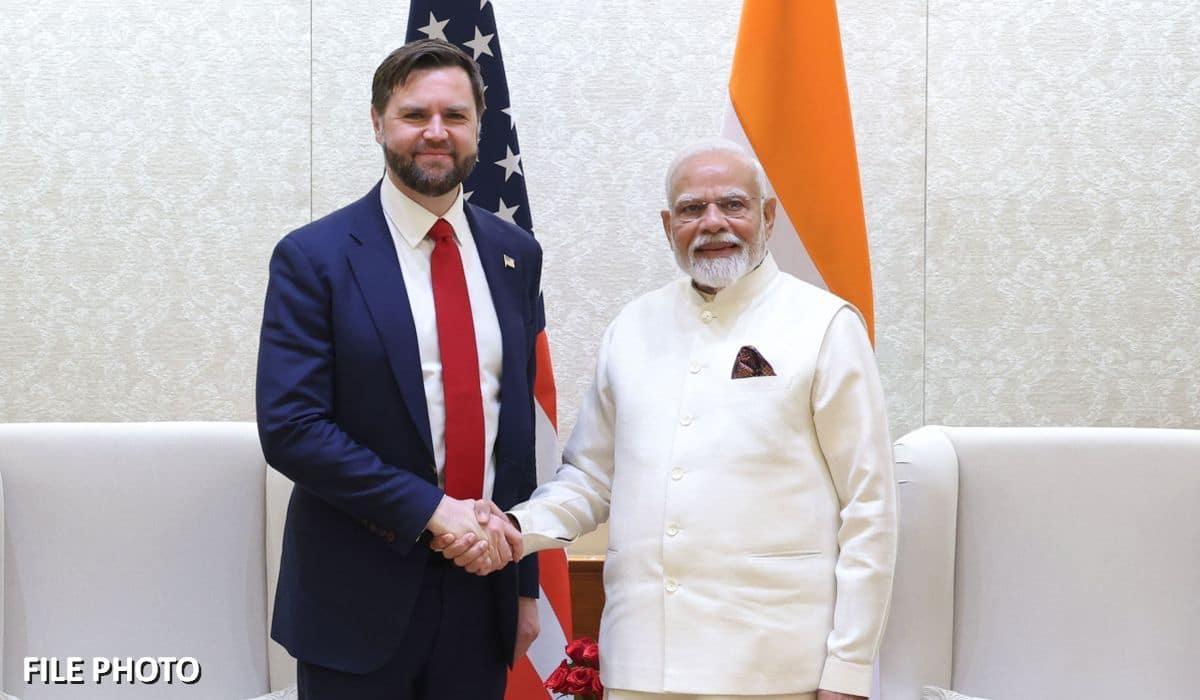
At the invitation of Prime Minister Narendra Modi, the President of the Republic of Seychelles Dr. Patrick Herminie is on a State Visit to India from 5 to 10 February 2026.
President Herminie’s State Visit coming around 100 days after his inauguration signals the shared commitment of India and Seychelles to strengthen, expand and deepen our longstanding and multifaceted bilateral partnership. The State Visit has added significance as it coincides with the 50th year of Independence of Seychelles, and the 50th year of establishment of diplomatic relations between the two countries.
During their meeting on 9 February 2026, Prime Minister Modi and President Herminie had comprehensive and productive discussions covering the entire spectrum of bilateral relations. Prime Minister Modi congratulated President Herminie for his success in the elections held in October 2025. The two leaders reaffirmed that India and Seychelles, as close maritime neighbours, enjoy a special and time-tested partnership built on ties of history and kinship, and nurtured by the shared values of democracy and pluralism. The leaders acknowledged that Seychelles-India ties are people-centric and reinforce security and stability in the Western Indian Ocean Region. The leaders also reaffirmed Seychelles' role as an important pillar in India's Vision MAHASAGAR (Mutual and Holistic Advancement for Security and Growth Across Regions).
Recalling the rich and historic people-to-people ties connecting India and Seychelles, both leaders emphasized the need for closer engagement on national development priorities to enhance security, prosperity and well-being of the peoples of Seychelles and India.
President Herminie underlined India’s role as a trusted partner for Seychelles and the region. He expressed gratitude to India for the longstanding assistance and cooperation extended to Seychelles in achieving its development agenda.
Underlining the respective strengths of both nations and recognising the importance of the relationship, the two leaders announced a Joint Vision for Sustainability, Economic Growth and Security through Enhanced Linkages (SESEL).
Political Exchanges
The leaders acknowledged the importance of regular high-level political meetings, visits and consultations between Seychelles and India. Both sides agreed to intensify political and socio-economic engagements at leadership, Ministerial and Senior Official levels.
Both leaders agreed to deepen cooperation and intensify Parliamentary Exchanges between the two countries, including the sharing of best practices on parliamentary proceedings and capacity building.
Development Partnership
President Herminie acknowledged India’s steadfast support for the development and security needs and aspirations of Seychelles through lines of credit, grants, capacity building and high-impact community development projects (HICDP). Prime Minister Modi reaffirmed India’s commitment to remaining a pivotal and reliable partner in Seychelles’ national development agenda, with particular focus on sustainability, defence and maritime security, capacity building, resilience and inclusive growth.
Reaffirming their commitment to work closely to expand and intensify the people-centric development partnership between the two countries, India announced a ‘Special Economic Package’ of USD 175 million, which will include a blended financial assistance of USD 125 million in Rupee-denominated Line of Credit and USD 50 million in Grant assistance for development cooperation projects, capacity building for civilians and defence officials, maritime security, etc.
Recognising that India’s rapid digitalization is a force for good in the Global South, the two leaders agreed to work closely in the sphere of digital transformation. Noting the need for Seychelles to digitise governance for the benefit of its citizens, India agreed to undertake comprehensive efforts on the buildout of Digital Public Infrastructure (DPI), including digital payments, in accordance with the needs and requirements of Seychelles.
Cooperation in the fields of Health and Essential Commodities
President Herminie expressed gratitude to Prime Minister Modi for the donation of 10 ambulances (Basic Life Support and Advance Life Support). These ambulances, fitted with the latest equipment will support emergency health services in Seychelles. This gesture underlines the people-centric approach of the India-Seychelles partnership.
The two leaders agreed that recognition of Indian Pharmacopoeia (IP) by Seychelles would streamline procurement of quality assured essential medicines and facilitate access to affordable medicines through collaboration under India’s Jan Aushadhi initiative.
Both leaders agreed to:
• Implement training programmes and exchange visits in the area of mental health through institutional linkages.
• Support recruitment and deputation of medical specialists, nurses, paramedics and technicians from India to meet the needs of Seychelles.
• Strengthen bilateral cooperation in public health through exchange of visits and institutional linkages.
• Work together to support the construction of a new hospital in Seychelles.
Acknowledging that high cost of living remains a major concern for the Government of Seychelles, both leaders agreed to:
• Collaborate on long term augmentation of healthcare infrastructure of Seychelles, including measures to enhance affordability and reliable access to medicines and medical equipment.
• Work together to institutionalize a mechanism to procure quality and cost-effective food and essential commodities from India.
• President Herminie expressed gratitude to the Prime Minister Modi for the donation of 1000 metric tons of grains to Seychelles. This donation of food will strengthen food security in Seychelles and bring down the cost of food for the people of Seychelles.
Capacity Building, Human Resource Development and Institutional Linkages
President Herminie conveyed deep appreciation for India’s continued support to enhance Seychelles’ institutional and administrative competencies. Both sides underscored the strong cooperation in capacity building, including through the Indian Technical and Economic Cooperation (ITEC) programme, training programmes for civil servants, defence personnel, and health professionals. The leaders agreed to explore more training programmes and institutional linkages in policing, finance, agriculture, climate change, marine conservation, and other domains in line with the needs and requirements of Seychelles.
On education and vocational training, the leaders urged expansion of skill development initiatives, interactions between academic institutions and digital education platforms.
Both leaders agreed to:
• Implement the customised training programme for Seychellois civil servants in India through the National Centre for Good Governance (NCGG).
• Strengthen capacity building, cooperation and exchanges in the areas of cybersecurity and financial intelligence.
• Facilitate the deputation of experts from India to Seychelles, and capacity building in the areas of technology, health, education, renewable energy, law, auditing, maritime security, finance, land and infrastructure development, tax administration, women empowerment, fisheries and other realms of mutual interest.
• Advance capacity building and institutional linkages between India and Seychelles in the area of marine sciences and conservation through Government and non-Government institutions.
• Cooperate and collaborate for promotion of Micro, Small and Medium Enterprises (SMEs).
• Customise training programs according to the needs of Seychelles in collaboration with Sushma Swaraj Institute of Foreign Service.
Renewables, Climate Action, and Sustainability
Both sides reaffirmed their commitment to deepen cooperation in renewable energy and climate resilience, including through innovative clean energy solutions. President Herminie acknowledged India’s steadfast support in assisting Seychelles to achieve its renewable energy objectives. He noted that the solar power projects implemented under the aegis of the International Solar Alliance, with the support of the Government of India, have delivered tangible and community-level benefits, particularly in the agriculture and healthcare sectors of Seychelles.
In order to further deepen the cooperation in the areas of preparedness and mitigation of effects of climate change, both leaders agreed to support the implementation of Multi-Hazard Early Warning Systems in Seychelles.
India agreed to extend technical assistance to Seychelles in managing its power grid, in support of the country’s transition to a green public transport system. Both sides also agreed to explore new avenues of cooperation and projects in energy conservation, sustainability, renewable energy and green mobility domains to cater to the needs of Seychelles.
Both leaders acknowledged that access to finance remains a key challenge for SIDS such as Seychelles. President Herminie expressed his hope that Seychelles can continue to rely on India’s strong and constructive voice in international platforms to support consideration of multidimensional vulnerability, including the Multidimensional Vulnerability Index (MVI), as a complementary and important analytical tool, while taking into account equity, Common But Differentiated Responsibilities and Respective Capabilities (CBDR-RC), and nationally determined needs in relevant engagements with Multilateral Development Banks, International Financial Institutions, and UN development partners.
Both leaders agreed that Seychelles would join the Coalition for Disaster Resilient Infrastructure (CDRI).
Trade, Investment, Connectivity and Tourism
President Herminie stressed the need for Indian companies and businesses to see Seychelles as a major investment hub and benefit from trade and business opportunities offered by Seychelles in the affordable housing, digital technology and AI, financial services, blue economy, tourism and fisheries sectors.
Both leaders acknowledged that direct flights increased the number of Indian tourists visiting Seychelles. They underlined that the increase in tourists visiting from India has strengthened the resilience of the tourism sector in Seychelles. Further, both sides agreed to work together to explore enhancing more flight connectivity between the two countries.
The leaders underscored the need for exploiting the full potential of bilateral trade for the shared objective of economic growth and prosperity of Seychelles and India.
Cooperation in Hydrography
Both leaders agreed to step up bilateral cooperation in the field of hydrography to support Seychelles’ efforts in accelerating its blue economy growth through the conduct of more joint hydrographic surveys. In this regard, Seychelles will establish a Seychelles Hydrographic Unit (SHU) with Indian assistance. To give direction and momentum to this area of bilateral cooperation, it was decided that the 3rd JCM on Hydrography will be held in Seychelles in early 2026.
Defence Cooperation and Maritime Security
Prime Minister Modi and President Herminie underlined that maritime security and defence constituted a key and time-tested pillar of the bilateral partnership. Prime Minister Modi noted that Seychelles is an important maritime partner in India’s vision of MAHASAGAR (Mutual and Holistic Advancement for Security and Growth Across Regions) and reiterated India’s continued support and assistance to Seychelles in meeting its maritime security and defence needs.
Both leaders acknowledged that a strong Seychelles-India partnership in the maritime security and defence domain reinforces regional stability and security and advances the well-being and prosperity of the people of Seychelles and India.
The leaders further reaffirmed that Seychelles and India remain committed to ensuring a free, open, safe and secure Indian Ocean Region, underpinned by respect for international law, freedom of navigation and a rules-based maritime order. They reiterated their resolve to work closely to counteract maritime challenges such as piracy, smuggling of narcotics and human trafficking, illegal, unregulated and unreported fishing, and other transnational crimes, including those with linkages to organized crime and terrorism financing, and to reinforce peace, security and stability in the Indian Ocean Region through enhanced maritime domain awareness, information sharing, capacity building and coordinated operational management.
President Herminie conveyed his appreciation to Prime Minister Modi for the steadfast support to Seychelles for joint maritime surveillance, hydrography surveys, bilateral exercises, information sharing and capacity building for the Seychelles Defence Forces (SDF). Both leaders agreed to strengthen bilateral cooperation in the maritime security and defence sphere through customised training and provision of naval and air assets and transport vehicles.
Both leaders agreed to initiate the process to elevate institutional engagement in order to ensure greater effectiveness, enhanced coordination and higher-level engagement.
President Herminie appreciated India’s participation in Seychelles’ National Day celebrations through Indian Armed Forces contingents. Both sides agreed to continue this tradition for the 50th National Day celebrations.
President Herminie expressed gratitude to India for its continued support towards the refit of PS Zoroaster through grant assistance. He also acknowledged the recent donation of 10 utility vehicles and 5 sets of laser radial boats to Seychelles. This will cater to the logistical needs of the Seychelles Defence Forces.
Regional and Multilateral Cooperation
Acknowledging the role of regional mechanisms in furthering maritime security and addressing common challenges in the Indian Ocean Region, both leaders agreed to work closely to exchange views on issues of mutual interest.
Prime Minister Modi welcomed the decision of Seychelles to become a full member of the Colombo Security Conclave (CSC). He also expressed his gratitude to President Herminie for the support given by Seychelles to India for various candidatures to regional and international bodies. President Herminie reaffirmed Seychelles’ support for India’s permanent membership at the UN Security Council.
People-to-People and Cultural Ties
Recognising the deep historical ties between India and Seychelles, Prime Minister Modi and President Herminie highlighted the contributions of Seychellois of Indian heritage to the economic, social, and cultural fabric of Seychelles. Both leaders also acknowledged the contribution of Indian professionals to the economy and infrastructure of Seychelles. Both leaders agreed to institutionalise cooperation in the fields of culture, tourism, education, and youth engagement.
The two leaders expressed satisfaction at the comprehensive discussions covering all aspects of bilateral relations. They concluded the meeting with the shared understanding that the Seychelles-India partnership remains a cornerstone for stability and development in the Indian Ocean Region. They expressed confidence that the decisions taken today will elevate and strengthen the bilateral partnership and deliver tangible benefits to the peoples of both nations.
President Herminie thanked Prime Minister Modi for the warm hospitality extended on his State Visit to India. He also extended an invitation to Prime Minister Modi to undertake an official visit to Seychelles at a mutually convenient time.