PM Modi addresses the Karmayogi Sadhana Saptah

Published By : Admin | April 2, 2026 | 10:31 IST
The core principle of governance we are following today is ‘Nagrik Devo Bhava” with focus on making public services more capable, more sensitive to citizens: PM
Today's India is aspirational, every citizen has dreams and goals, and upon all of us lies the responsibility to provide maximum support to fulfil them: PM
Before every decision, when we think what our duty demands, the impact of our decisions will multiply many times over by itself : PM
We must see our efforts in the context of the future, how one decision can impact countless lives, and how individual transformation drives institutional change: PM
A better administrator, a better public servant, will be one who possesses a strong understanding of technology and data, this will form the very basis of decision-making: PM
We have to break silos and move forward with better coordination, shared understanding and a whole-of-government approach, only then will every mission succeed: PM

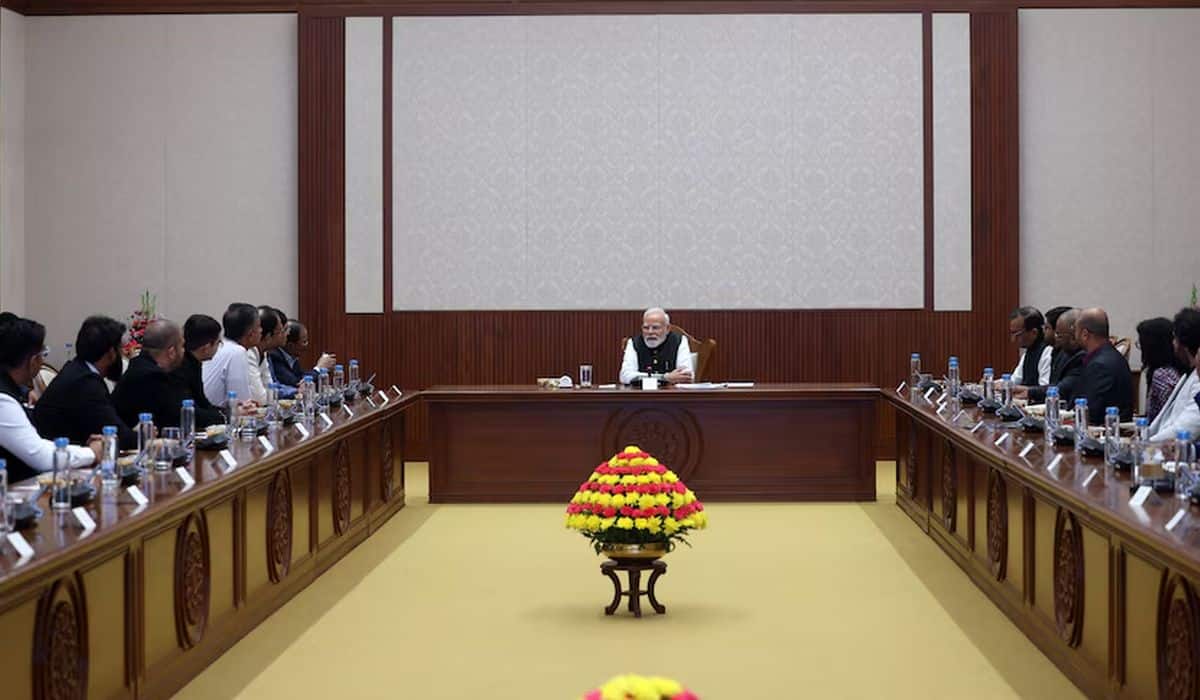
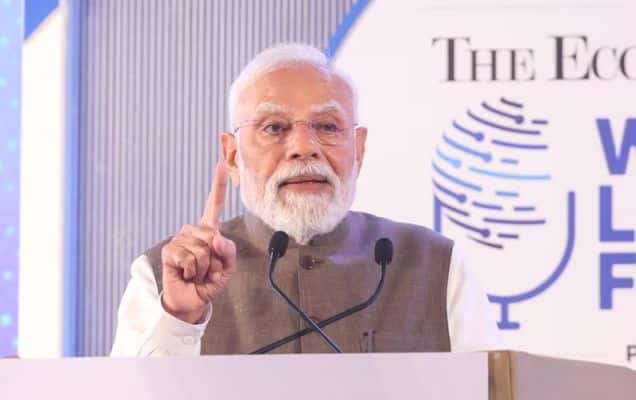
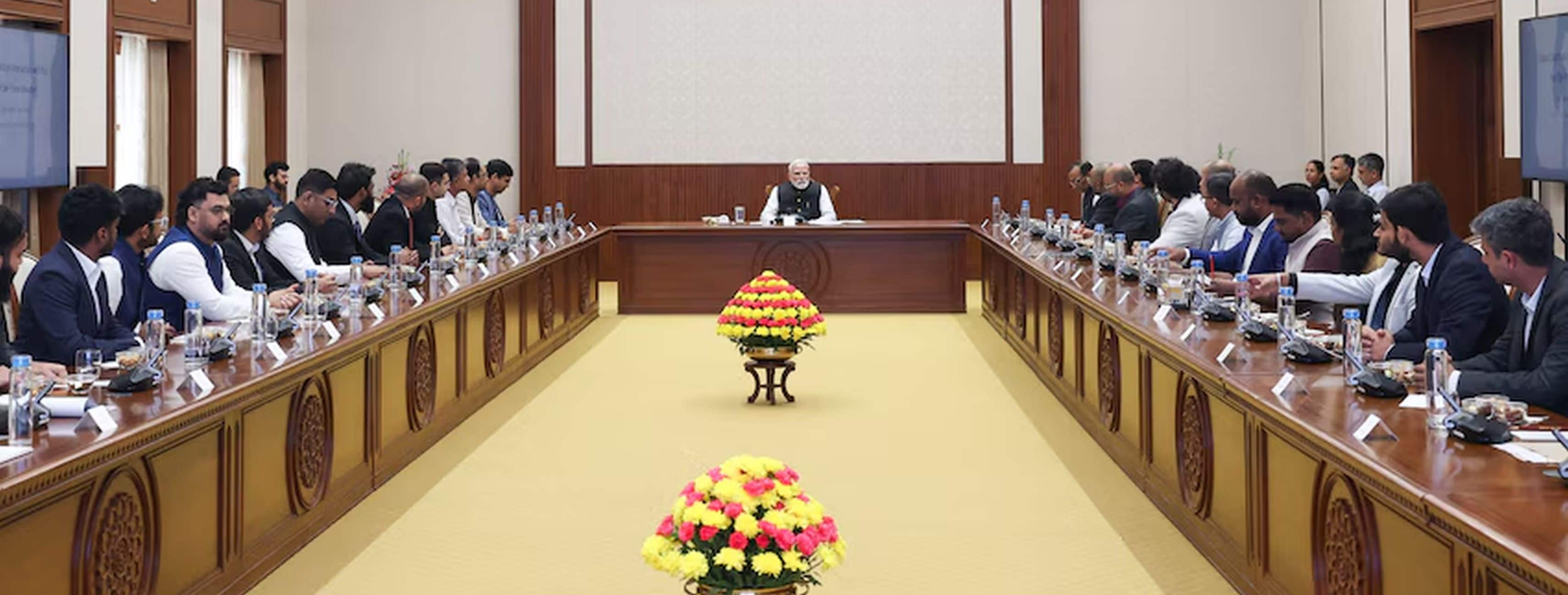
Prime Minister Shri Narendra Modi, today addressed the Karmayogi Sadhna Saptah through a video message, extending his best wishes to all participants. The event coincides with the foundation day of the Capacity Building Commission (CBC).

Underscoring the need for public service to keep pace with a rapidly transforming world, the Prime Minister highlighted that India is advancing swiftly amidst fast-changing global systems and must continuously update its governance machinery. "Karmayogi Sadhna Saptah is an important link in that very effort to ensure our public service stays relevant and responsive in the 21st century," said Shri Modi.

Elaborating on the guiding philosophy of governance today, the Prime Minister noted that the core mantra driving the administration is "Nagrik Devo Bhava" treating the citizen as supreme. He emphasised that public service is being reoriented to be more capable and more sensitive towards citizens. "Governance is now being given a new identity by making it truly citizen-centric," PM Modi remarked.

Reflecting on the genesis of the Capacity Building Commission, the Prime Minister observed that while many institutions had been working with varied focuses since independence, there was a clear need for a dedicated body aimed at enhancing the capability of every government employee. "This very thinking gave birth to the Capacity Building Commission, which is focused on empowering every Karmayogi in the system," he noted. Congratulating CBC on its foundation day and acknowledging the successful role of iGOT Mission Karmayogi, Shri Modi expressed confidence that these efforts will build a team of modern, capable, dedicated and sensitive Karmayogis.

Linking the initiative to the broader vision of Viksit Bharat, the Prime Minister recalled his recent address at the inauguration of Seva Teerth and reaffirmed the need for fast economic growth, modern infrastructure, technology adoption and a large skilled workforce. He stressed that public institutions and public servants have a critical role to play in achieving these goals. "Today's India is deeply aspirational, every citizen has dreams and goals, and upon all of us lies the responsibility to provide maximum support to fulfil them," affirmed Shri Modi.

Highlighting that governance must be the benchmark for improving Ease of Living and Quality of Life for citizens, the Prime Minister urged public servants to learn something new every day and mould themselves in the true spirit of a Karmayogi. "Our governance should ensure that the quality of life of citizens improves day by day, this is our true benchmark," Shri Modi asserted.

Calling for a fundamental shift in administrative culture, the Prime Minister pointed out that the old system placed excessive emphasis on being an 'officer,' whereas the country's focus today is firmly on the spirit of duty. He reminded that the Constitution itself grants rights through the fulfilment of duties. "Before every decision, when you think about what your duty demands, the impact of your decisions will automatically multiply many times over," said PM Modi.

Urging public servants to view their present work on the larger canvas of the future, he asked them to constantly reflect on how their individual decisions can transform the lives of millions and how individual transformation can lead to institutional transformation. Drawing from personal experience, the Prime Minister noted that such transformative work demands enormous energy. "This energy can come only and only from the spirit of selfless service," he remarked.

Turning to the critical importance of technology, the Prime Minister pointed to the deep integration of technology into government functioning over the past eleven years, spanning governance, service delivery and the economy. With the advent of Artificial Intelligence, he noted, these changes are set to accelerate even further. "A better administrator, a better public servant, will be one who possesses a strong understanding of technology and data , this will form the very basis of decision-making," emphasised Shri Modi. He expressed hope that capacity building and continuous learning in AI would be a key focus area during the Sadhna Saptah.

Drawing attention to India's federal structure, the Prime Minister stressed that the country's success is the collective success of all its states. He observed that decades-old categorisations, forward states, backward states, BIMARU states ,are being dismantled, and gaps between states must be bridged through uniform intensity of effort. "We have to break silos and move forward with better coordination, shared understanding and a whole-of-government approach, only then will every mission succeed," affirmed PM Modi.

In his concluding remarks, the Prime Minister reminded public servants that for the common citizen, the local government office is the face of the entire government. He underlined that the working style and behaviour of officials directly shape public trust in democracy and constitutional institutions. "Whatever we do, at whatever level, we must safeguard that trust, it is the foundation of our democracy," said Shri Modi. He once again congratulated the Capacity Building Commission and expressed confidence that the Karmayogi Sadhna Saptah will become an important chapter in India's journey towards becoming a Viksit Bharat.

Click here to read full text speech

Explore More
Today, the entire country and entire world is filled with the spirit of Bhagwan Shri Ram: PM Modi at Dhwajarohan Utsav in Ayodhya

Popular Speeches

Today, the entire country and entire world is filled with the spirit of Bhagwan Shri Ram: PM Modi at Dhwajarohan Utsav in Ayodhya
PM Modi’s Indonesia’s Prambanan Temple Visit Part Of His Mission To Revive Civilisational Heritage

Media Coverage

PM Modi’s Indonesia’s Prambanan Temple Visit Part Of His Mission To Revive Civilisational Heritage
NM on the go

Nm on the go

Always be the first to hear from the PM. Get the App Now!
...
India-Australia Joint Declaration on Defence and Security Cooperation
July 09, 2026

We, the Prime Ministers of India and Australia, drawn together by our ever closer bilateral ties, united in our determination to strengthen our nations’ strategic partnership and motivated by a common ambition for an open, peaceful, stable and prosperous Indo-Pacific, hereby commit to this Joint Declaration on Defence and Security Cooperation.

We reaffirm the vitality of our Comprehensive Strategic Partnership (CSP), established in 2020. Since the launch of our CSP, our strategic convergence has accelerated, our economic ties have deepened and the connections between our peoples – the living bridge between our nations – have grown stronger. We note our close engagement, both bilaterally and multilaterally, including with other partners through regional forums such as the Quad and other multilateral institutions, benefits both nations, and contributes to the security and prosperity of our shared region.

We also reflect on the great strides in our partnership fostered by the India-Australia Joint Declaration on Security Cooperation of 2009. We appreciate the enriching contributions to the partnership through various bilateral mechanisms including the Foreign Ministers’ Framework Dialogue (FMFD), the 2+2 Foreign and Defence Ministerial Dialogue and the Defence Ministers’ Dialogue.

We note with concern geostrategic uncertainty, and threats to regional peace and stability. We encourage all parties to work together peacefully and call for the resolution of disputes without the threat or use of force or coercion and in accordance with international law.

We reaffirm our unwavering commitment to an open, peaceful, stable and prosperous Indo-Pacific region underpinned by: a rules-based architecture based on adherence to international law; respect for sovereignty and territorial integrity; an open, stable and secure maritime domain underpinned by adherence to the 1982 United Nations Convention on the Law of the Sea (UNCLOS) including freedom of navigation and overflight; and effective, inclusive and transparent institutions.

We reaffirm our support for the Indian Ocean Rim Association (IORA), ASEAN and ASEAN-centred regional architecture, and the Pacific Islands Forum (PIF) as the premier forums for addressing challenges in these regions.

We recognise that our partnership must evolve to meet changing strategic circumstances, and commit to an acceleration in our advanced, integrated, and top-tier defence and security partnership. We will continue to strengthen strategic exchanges and conduct regular ministerial engagement that reflects the convergence of our strategic interests. We recognise a long-term vision of defence and security collaboration to enhance collective strength. This collaboration will contribute to both countries’ security and make an important contribution to regional peace and security.

We commit to strengthening our comprehensive defence cooperation, deepening strategic dialogue and intensifying cooperation, including by:

a. undertaking to consult on defence-related developments in the Indo-Pacific that affect shared interests;

b. increasing the complexity of our defence exercises, including with partners;

c. accelerating efforts to build interoperability and information sharing between defence forces;

d. expanding aircraft deployments from each other’s territories;

e. deepening connections between defence force personnel, including through exchanges, education and training, and liaison roles; and

f. exploring opportunities to cooperate in recruiting for skilled defence workforces.

We recognise the centrality of the maritime domain to our defence, security and economic interests, and will increase the depth, sophistication and regularity of maritime security cooperation. We will strengthen maritime cooperation through a India-Australia Maritime Security Collaboration Roadmap.

We will embrace the growing potential of defence industries on both sides through encouraging integration, industry engagement, and building supply chain resilience. We will deepen collaboration between our defence innovation ecosystems and develop arrangements for advanced defence science and technology collaboration.

We will work to promote the meaningful participation and leadership of women in the prevention of conflicts, the delivery of relief and recovery efforts, and the forging of lasting peace, affirming our commitment to uphold gender equality in peacekeeping operations and to advance the Women, Peace and Security agenda.

We commit to cooperating bilaterally, and with partners, to support regional economic prosperity and resilience. We will develop more diverse and resilient supply chains, critical infrastructure and connectivity, including for critical minerals and clean energy technologies.

We will work together to help shape a technology environment that meets our shared vision for a secure and resilient Indo-Pacific. We will work together to harness the potential of our cyber security and critical and emerging technology cooperation and information sharing mechanisms under the Australia-India Partnership on Cyber, Critical Technologies and Supply Chains (Australia-India PACTS), and bolster cooperation on strategic technologies.

We commit to increase information sharing on terrorist threats in our region, including entities and individuals, and explore opportunities for enhanced collaboration to counter violent extremism and terrorism in sectors, including in:

a. new and emerging technology;

b. financing of terrorism;

c. critical infrastructure and crowded spaces;

d. the maritime domain; and

e. online radicalisation.

We will continue our cooperation under the Migration and Mobility Partnership Arrangement, signed in 2023, which outlines ways to cooperate on the prevention of irregular migration, people smuggling, and trafficking in human beings. We will also continue our cooperation to combat transnational organised crime.

We seek a peaceful world free of nuclear weapons, and to this end reiterate our commitment to non-proliferation and global, complete, non-discriminatory and verifiable nuclear disarmament.

We commit to continued cooperation with other Indo-Pacific partners, including trilateral cooperation mechanisms and deeper engagement with partners through the Indo-Pacific Oceans Initiative. We will expand our cooperation with the United States of America and Japan, to build capability and cooperation towards our positive vision for an open, stable, peaceful and prosperous Indo-Pacific region.

We commit to deepen collaboration in Humanitarian Assistance and Disaster Relief (HADR) to offer rapid, coordinated and sustainable disaster response recognising our shared commitment to regional peace, security, prosperity and resilience. We will strengthen cooperation including through:

a. information sharing and expert exchanges; and

b. joint HADR exercises, including the Quad Indo-Pacific Logistics Network, which supports civilian response to large-scale natural disasters.

We commit to exploring opportunities for sharing of contingency planning, joint response and coordination during disasters and crises, including to support regional and global evacuation operations in third countries.

In the spirit of our Comprehensive Strategic Partnership, we commit fully to implementing this ambitious agenda to support a peaceful and stable Indo-Pacific region.